+ In the name of the Father, and the Son, and the Holy Spirit. Amen
Opening prayer:
Almighty and merciful God,
it is only by your grace that your faithful people
offer you true and laudable service:
Grant that we may run without stumbling
to obtain your heavenly promises;
through Jesus Christ our Lord,
who lives and reigns with you and the Holy Spirit,
one God, now and for ever. Amen.
“[Apollos] explained to them that Jesus was the Messiah.”
(Acts 18:28)
18:17 When Ahab saw him, he exclaimed, “So, is it really you, you troublemaker of Israel?”
+ “I have made no trouble for Israel,” Elijah replied. “You and your family are the troublemakers, for you have refused to obey the commands of the Lord and have worshiped the images of Baal instead. Now summon all Israel to join me at Mount Carmel, along with the 450 prophets of Baal and the 400 prophets of Asherah who are supported by Jezebel.”
18:30 Then Elijah called to the people, “Come over here!” They all crowded around him as he repaired the altar of the Lord that had been torn down. He took twelve stones, one to represent each of the tribes of Israel, and he used the stones to rebuild the altar in the name of the Lord. Then he dug a trench around the altar large enough to hold about three gallons. He piled wood on the altar, cut the bull into pieces, and laid the pieces on the wood.
Then he said, “Fill four large jars with water, and pour the water over the offering and the wood.”
+ After they had done this, he said, “Do the same thing again!” And when they were finished, he said, “Now do it a third time!” So they did as he said, and the water ran around the altar and even filled the trench.
+ At the usual time for offering the evening sacrifice, Elijah the prophet walked up to the altar and prayed, “O Lord, God of Abraham, Isaac, and Jacob, prove today that you are God in Israel and that I am your servant. Prove that I have done all this at your command. O Lord, answer me! Answer me so these people will know that you, O Lord, are God and that you have brought them back to yourself.”
+ Immediately the fire of the Lord flashed down from heaven and burned up the young bull, the wood, the stones, and the dust. It even licked up all the water in the trench! And when all the people saw it, they fell face down on the ground and cried out, “The Lord—he is God! Yes, the Lord is God!”
+ Then Elijah commanded, “Seize all the prophets of Baal. Don’t let a single one escape!” So the people seized them all, and Elijah took them down to the Kishon Valley and killed them there.
18:24 Meanwhile, a Jew named Apollos, an eloquent speaker who knew the Scriptures well, had arrived in Ephesus from Alexandria in Egypt. He had been taught the way of the Lord, and he taught others about Jesus with an enthusiastic spirit and with accuracy. However, he knew only about John’s baptism. When Priscilla and Aquila heard him preaching boldly in the synagogue, they took him aside and explained the way of God even more accurately.
18:27 Apollos had been thinking about going to Achaia, and the brothers and sisters in Ephesus encouraged him to go. They wrote to the believers in Achaia, asking them to welcome him. When he arrived there, he proved to be of great benefit to those who, by God’s grace, had believed. He refuted the Jews with powerful arguments in public debate. Using the Scriptures, he explained to them that Jesus was the Messiah.
O God, our heavenly Father, you manifested your love by sending your only begotten Son into the world, that all might live through him: Pour out your Spirit on your Church, that we may fulfill his command to preach the Gospel to all people. Send forth laborers into your harvest; defend them in all dangers and temptations; and hasten the time when the fullness of the Gentiles shall be gathered in, and faithful Israel shall be saved; through your Son Jesus Christ our Lord. Amen.
Almighty God our Savior: Grant that our hearts may ache for a lost and broken world. May your Holy Spirit work through our words, deeds, and prayers, that the lost may be found and the dead made alive, and that all your redeemed may rejoice around your throne; through Jesus Christ our Lord. Amen.
Go before us, O Lord, in all our doings with your most gracious favor, and further us with your continual help; that in all our works begun, continued, and ended in you, we may glorify your holy Name, and finally, through your mercy, obtain everlasting life; through Jesus Christ our Lord. Amen.
+ In the Name of the Father, and the Son, and the Holy Spirit. Amen.
Opening:
Almighty and merciful God,
it is only by your grace that your faithful people
offer you true and laudable service:
Grant that we may run without stumbling
to obtain your heavenly promises;
through Jesus Christ our Lord,
who lives and reigns with you and the Holy Spirit,
one God, now and for ever. Amen.
“When Priscilla and Aquila heard [Apollos] preaching boldly in the synagogue, they took him aside and explained the way of God even more accurately.”
(Acts 18:26)
give thanks give thanks to god and
call on his name so the nations may know
sing to him sing praises due him
tell of his wonder glory his name
remember remember
when israel was few
and strangers in the land to be given
they wandered in nations
god allowed no one to oppress them
but when he called down famine on the land
he sent joseph as a slave before
with shackles on feet and hand
all foretold came to pass as god planned
give thanks give thanks to god and
call on his name so the nations may know
sing to him sing praises due him
tell of his wonder glory his name
when israel was in egypt
strangers strong in the land of ham
the lord made them fruitful
too numerous for foes and their hearts turned against
but god sent his servants
moses and his brother aaron
they displayed miracles and signs miracles and wonders in the land
remember remember remember
darkness waters
frogs and swarms of flies and gnats everywhere
hail and lightning
locust and grasshopper
the lord took all of egypt’s firstborn
the firstfruits of their manhood
before israel left with silver and gold
give thanks give thanks to god and
call on his name so the nations may know
sing to him sing praises due him
tell of his wonder glory his name
remember remember remember
__________
OT Reading: Genesis 36:1-8 (NLT)
Descendants of Esau
36:1 This is the account of the descendants of Esau (also known as Edom). Esau married two young women from Canaan: Adah, the daughter of Elon the Hittite; and Oholibamah, the daughter of Anah and granddaughter of Zibeon the Hivite. He also married his cousin Basemath, who was the daughter of Ishmael and the sister of Nebaioth. Adah gave birth to a son named Eliphaz for Esau. Basemath gave birth to a son named Reuel. Oholibamah gave birth to sons named Jeush, Jalam, and Korah. All these sons were born to Esau in the land of Canaan.
Esau took his wives, his children, and his entire household, along with his livestock and cattle—all the wealth he had acquired in the land of Canaan—and moved away from his brother, Jacob. There was not enough land to support them both because of all the livestock and possessions they had acquired. So Esau (also known as Edom) settled in the hill country of Seir.
__________
You Deserve The Glory – Jew & Arab Worship Together [Live]@SOLUIsrael
__________
NT Reading: Acts 18:24-28 (NLT)
Apollos Instructed at Ephesus
18:24 Meanwhile, a Jew named Apollos, an eloquent speaker who knew the Scriptures well, had arrived in Ephesus from Alexandria in Egypt. He had been taught the way of the Lord, and he taught others about Jesus with an enthusiastic spirit and with accuracy. However, he knew only about John’s baptism. When Priscilla and Aquila heard him preaching boldly in the synagogue, they took him aside and explained the way of God even more accurately.
Apollos had been thinking about going to Achaia, and the brothers and sisters in Ephesus encouraged him to go. They wrote to the believers in Achaia, asking them to welcome him. When he arrived there, he proved to be of great benefit to those who, by God’s grace, had believed. He refuted the Jews with powerful arguments in public debate. Using the Scriptures, he explained to them that Jesus was the Messiah.
+ Gracious and holy Father, please give me intellect to understand you, reason to discern you, diligence to seek you, wisdom to find you, a spirit to know you, a heart to meditate upon you, ears to hear you, eyes to see you, a tongue to proclaim you, a way of life pleasing to you, patience to wait for you, and perseverance to look for you. Grant me a perfect end, your holy presence, a blessed resurrection, and life everlasting. Amen.
+ Blessed Lord, who caused all Holy Scriptures to be written for our learning: Grant us so to hear them, read, mark, learn, and inwardly digest them, that by patience and the comfort of your Holy Word we may embrace and ever hold fast the blessed hope of everlasting life, which you have given us in our Savior Jesus Christ; who lives and reigns with you and the Holy Spirit, one God, for ever and ever. Amen.
+ In the Name of the Father, and the Son, and the Holy Spirit. Amen.
Opening:
God and Father, your Son, at his ascension, promised the Holy Spirit to his apostles. They received abundant graces of wisdom from heaven: grant us, also, we pray, the gifts of your Spirit. Through our Lord Jesus Christ, your Son, who lives and reigns with you in the unity of the Holy Spirit, one God, for ever and ever. Amen.
“I came from the Father into the world,
and now I will leave the world and return to the Father.”
A Reading from the Gospels: John 16:23-28 (NLT)
At that time you won’t need to ask me for anything. I tell you the truth, you will ask the Father directly, and he will grant your request because you use my name. You haven’t done this before. Ask, using my name, and you will receive, and you will have abundant joy.
“I have spoken of these matters in figures of speech, but soon I will stop speaking figuratively and will tell you plainly all about the Father. Then you will ask in my name. I’m not saying I will ask the Father on your behalf, for the Father himself loves you dearly because you love me and believe that I came from God. Yes, I came from the Father into the world, and now I will leave the world and return to the Father.”
__________
Responsorial Psalm 47:2-3, 8-9, 10 (NLT)T
+ The Lord Most High is awesome. He is the great King of all the earth.
He subdues the nations before us,
putting our enemies beneath our feet.
+ The Lord Most High is awesome. He is the great King of all the earth.
God reigns above the nations,
sitting on his holy throne.
+ The Lord Most High is awesome. He is the great King of all the earth.
The rulers of the world have gathered together
with the people of the God of Abraham.
+ The Lord Most High is awesome. He is the great King of all the earth.
For all the kings of the earth belong to God.
He is highly honored everywhere.
+ The Lord Most High is awesome. He is the great King of all the earth.
__________
A Reading from the Book of Acts 18:23-28 (NLT)
Apollos Instructed at Ephesus
Meanwhile, a Jew named Apollos, an eloquent speaker who knew the Scriptures well, had arrived in Ephesus from Alexandria in Egypt. He had been taught the way of the Lord, and he taught others about Jesus with an enthusiastic spirit and with accuracy. However, he knew only about John’s baptism. When Priscilla and Aquila heard him preaching boldly in the synagogue, they took him aside and explained the way of God even more accurately.
Apollos had been thinking about going to Achaia, and the brothers and sisters in Ephesus encouraged him to go. They wrote to the believers in Achaia, asking them to welcome him. When he arrived there, he proved to be of great benefit to those who, by God’s grace, had believed. He refuted the Jews with powerful arguments in public debate. Using the Scriptures, he explained to them that Jesus was the Messiah.
__________
The Lord Reigns – Lindell Cooley Lyrics Living Waters Ministries
__________
Closing: John 16:27-28 (NLT)
“The Father himself loves you dearly because you love me and believe that I came from God. Yes, I came from the Father into the world, and now I will leave the world and return to the Father.”
+ In the Name of the Father, and the Son, and the Holy Spirit. Amen.
+ In the Name of the Father, and the Son, and the Holy Spirit. Amen.
Opening: (A Collect for Sabbath Rest – Saturday)
Almighty God, who after the creation of the world rested from all your works and set aside a day of rest for all your creatures: Grant that we, putting away all earthly anxieties, may be duly prepared to meet you in worship, and that our rest here upon earth may be a preparation for the eternal rest promised to your people in heaven; through Jesus Christ our Lord. Amen.
__________
Paul stayed in Corinth for some time after that, then said good-bye to the brothers and sisters and went to nearby Cenchrea. There he shaved his head according to Jewish custom, marking the end of a vow. Then he set sail for Syria, taking Priscilla and Aquila with him.
They stopped first at the port of Ephesus, where Paul left the others behind. While he was there, he went to the synagogue to reason with the Jews. They asked him to stay longer, but he declined. As he left, however, he said, “I will come back later, God willing.” Then he set sail from Ephesus. The next stop was at the port of Caesarea. From there he went up and visited the church at Jerusalem and then went back to Antioch.
After spending some time in Antioch, Paul went back through Galatia and Phrygia, visiting and strengthening all the believers.
Apollos Instructed at Ephesus
Meanwhile, a Jew named Apollos, an eloquent speaker who knew the Scriptures well, had arrived in Ephesus from Alexandria in Egypt. He had been taught the way of the Lord, and he taught others about Jesus with an enthusiastic spirit and with accuracy. However, he knew only about John’s baptism. When Priscilla and Aquila heard him preaching boldly in the synagogue, they took him aside and explained the way of God even more accurately.
Apollos had been thinking about going to Achaia, and the brothers and sisters in Ephesus encouraged him to go. They wrote to the believers in Achaia, asking them to welcome him. When he arrived there, he proved to be of great benefit to those who, by God’s grace, had believed. He refuted the Jews with powerful arguments in public debate. Using the Scriptures, he explained to them that Jesus was the Messiah.
Paul’s Third Missionary Journey
While Apollos was in Corinth, Paul traveled through the interior regions until he reached Ephesus, on the coast, where he found several believers. “Did you receive the Holy Spirit when you believed?” he asked them.
“No,” they replied, “we haven’t even heard that there is a Holy Spirit.”
“Then what baptism did you experience?” he asked.
And they replied, “The baptism of John.”
Paul said, “John’s baptism called for repentance from sin. But John himself told the people to believe in the one who would come later, meaning Jesus.”
As soon as they heard this, they were baptized in the name of the Lord Jesus. Then when Paul laid his hands on them, the Holy Spirit came on them, and they spoke in other tongues and prophesied. There were about twelve men in all.
Paul Ministers in Ephesus
Then Paul went to the synagogue and preached boldly for the next three months, arguing persuasively about the Kingdom of God. But some became stubborn, rejecting his message and publicly speaking against the Way. So Paul left the synagogue and took the believers with him. Then he held daily discussions at the lecture hall of Tyrannus. This went on for the next two years, so that people throughout the province of Asia—both Jews and Greeks—heard the word of the Lord.
God gave Paul the power to perform unusual miracles. When handkerchiefs or aprons that had merely touched his skin were placed on sick people, they were healed of their diseases, and evil spirits were expelled.
A group of Jews was traveling from town to town casting out evil spirits. They tried to use the name of the Lord Jesus in their incantation, saying, “I command you in the name of Jesus, whom Paul preaches, to come out!” Seven sons of Sceva, a leading priest, were doing this. But one time when they tried it, the evil spirit replied, “I know Jesus, and I know Paul, but who are you?” Then the man with the evil spirit leaped on them, overpowered them, and attacked them with such violence that they fled from the house, naked and battered.
The story of what happened spread quickly all through Ephesus, to Jews and Greeks alike. A solemn fear descended on the city, and the name of the Lord Jesus was greatly honored. Many who became believers confessed their sinful practices. A number of them who had been practicing sorcery brought their incantation books and burned them at a public bonfire. The value of the books was several million dollars. So the message about the Lord spread widely and had a powerful effect.
Afterward Paul felt compelled by the Spirit to go over to Macedonia and Achaia before going to Jerusalem. “And after that,” he said, “I must go on to Rome!” He sent his two assistants, Timothy and Erastus, ahead to Macedonia while he stayed awhile longer in the province of Asia.
The Riot in Ephesus
About that time, serious trouble developed in Ephesus concerning the Way. It began with Demetrius, a silversmith who had a large business manufacturing silver shrines of the Greek goddess Artemis. He kept many craftsmen busy. He called them together, along with others employed in similar trades, and addressed them as follows:
“Gentlemen, you know that our wealth comes from this business. But as you have seen and heard, this man Paul has persuaded many people that handmade gods aren’t really gods at all. And he’s done this not only here in Ephesus but throughout the entire province! Of course, I’m not just talking about the loss of public respect for our business. I’m also concerned that the temple of the great goddess Artemis will lose its influence and that Artemis—this magnificent goddess worshiped throughout the province of Asia and all around the world—will be robbed of her great prestige!”
At this their anger boiled, and they began shouting, “Great is Artemis of the Ephesians!” Soon the whole city was filled with confusion. Everyone rushed to the amphitheater, dragging along Gaius and Aristarchus, who were Paul’s traveling companions from Macedonia. Paul wanted to go in, too, but the believers wouldn’t let him. Some of the officials of the province, friends of Paul, also sent a message to him, begging him not to risk his life by entering the amphitheater.
Inside, the people were all shouting, some one thing and some another. Everything was in confusion. In fact, most of them didn’t even know why they were there. The Jews in the crowd pushed Alexander forward and told him to explain the situation. He motioned for silence and tried to speak. But when the crowd realized he was a Jew, they started shouting again and kept it up for about two hours: “Great is Artemis of the Ephesians! Great is Artemis of the Ephesians!”
At last the mayor was able to quiet them down enough to speak. “Citizens of Ephesus,” he said. “Everyone knows that Ephesus is the official guardian of the temple of the great Artemis, whose image fell down to us from heaven. Since this is an undeniable fact, you should stay calm and not do anything rash. You have brought these men here, but they have stolen nothing from the temple and have not spoken against our goddess.
“If Demetrius and the craftsmen have a case against them, the courts are in session and the officials can hear the case at once. Let them make formal charges. And if there are complaints about other matters, they can be settled in a legal assembly. I am afraid we are in danger of being charged with rioting by the Roman government, since there is no cause for all this commotion. And if Rome demands an explanation, we won’t know what to say.” Then he dismissed them, and they dispersed.
Paul Goes to Macedonia and Greece
When the uproar was over, Paul sent for the believers and encouraged them. Then he said good-bye and left for Macedonia. While there, he encouraged the believers in all the towns he passed through. Then he traveled down to Greece, where he stayed for three months. He was preparing to sail back to Syria when he discovered a plot by some Jews against his life, so he decided to return through Macedonia.
Several men were traveling with him. They were Sopater son of Pyrrhus from Berea; Aristarchus and Secundus from Thessalonica; Gaius from Derbe; Timothy; and Tychicus and Trophimus from the province of Asia. They went on ahead and waited for us at Troas.
This letter is from Paul, chosen by the will of God to be an apostle of Christ Jesus, and from our brother Sosthenes.
I am writing to God’s church in Corinth, to you who have been called by God to be his own holy people. He made you holy by means of Christ Jesus, just as he did for all people everywhere who call on the name of our Lord Jesus Christ, their Lord and ours.
May God our Father and the Lord Jesus Christ give you grace and peace.
Paul Gives Thanks to God
I always thank my God for you and for the gracious gifts he has given you, now that you belong to Christ Jesus. Through him, God has enriched your church in every way—with all of your eloquent words and all of your knowledge. This confirms that what I told you about Christ is true. Now you have every spiritual gift you need as you eagerly wait for the return of our Lord Jesus Christ. He will keep you strong to the end so that you will be free from all blame on the day when our Lord Jesus Christ returns. God will do this, for he is faithful to do what he says, and he has invited you into partnership with his Son, Jesus Christ our Lord.
Divisions in the Church
I appeal to you, dear brothers and sisters, by the authority of our Lord Jesus Christ, to live in harmony with each other. Let there be no divisions in the church. Rather, be of one mind, united in thought and purpose. For some members of Chloe’s household have told me about your quarrels, my dear brothers and sisters. Some of you are saying, “I am a follower of Paul.” Others are saying, “I follow Apollos,” or “I follow Peter,” or “I follow only Christ.”
Has Christ been divided into factions? Was I, Paul, crucified for you? Were any of you baptized in the name of Paul? Of course not! I thank God that I did not baptize any of you except Crispus and Gaius, for now no one can say they were baptized in my name. (Oh yes, I also baptized the household of Stephanas, but I don’t remember baptizing anyone else.) For Christ didn’t send me to baptize, but to preach the Good News—and not with clever speech, for fear that the cross of Christ would lose its power.
The Wisdom of God
The message of the cross is foolish to those who are headed for destruction! But we who are being saved know it is the very power of God. As the Scriptures say,
“I will destroy the wisdom of the wise and discard the intelligence of the intelligent.”
So where does this leave the philosophers, the scholars, and the world’s brilliant debaters? God has made the wisdom of this world look foolish. Since God in his wisdom saw to it that the world would never know him through human wisdom, he has used our foolish preaching to save those who believe. It is foolish to the Jews, who ask for signs from heaven. And it is foolish to the Greeks, who seek human wisdom. So when we preach that Christ was crucified, the Jews are offended and the Gentiles say it’s all nonsense.
But to those called by God to salvation, both Jews and Gentiles, Christ is the power of God and the wisdom of God. This foolish plan of God is wiser than the wisest of human plans, and God’s weakness is stronger than the greatest of human strength.
Remember, dear brothers and sisters, that few of you were wise in the world’s eyes or powerful or wealthy when God called you. Instead, God chose things the world considers foolish in order to shame those who think they are wise. And he chose things that are powerless to shame those who are powerful. God chose things despised by the world, things counted as nothing at all, and used them to bring to nothing what the world considers important. As a result, no one can ever boast in the presence of God.
God has united you with Christ Jesus. For our benefit God made him to be wisdom itself. Christ made us right with God; he made us pure and holy, and he freed us from sin. Therefore, as the Scriptures say, “If you want to boast, boast only about the Lord.”
__________
Morning Reflection:
“Christ crucified” – offensive and foolish
The message of the cross is foolish to those who are headed for destruction! But we who are being saved know it is the very power of God.
– 1 Corinthians 1:18 –
Today’s reading spans a lot of time and covers a lot of territory. But at its center is the message of the cross – offensive to some and foolish to others, but to those who believe the power and wisdom of God.
The resistance to the message of “Christ crucified” was both virulent and varied. In Ephesus Jews and Greeks alike rioted and attacked believers in their homes. In spite of this, many of them became believers and confessed their sinful practices. The Ephesian “Chamber of Commerce” got into the act when their livelihood was threatened, causing an uproar that required the civil authorities to quell. In Syria a plot to kill Paul was discovered. And everywhere Paul and his companions traveled their personal safety was in jeopardy.
But our two readings are especially relevant for believers today. In communities and countries where there is a significant Christian presence we are sometimes surprised at the virulence and violence of the resistance. But we shouldn’t be, our reading in 1 Corinthians clarifies what’s at stake – foolishness or nonsense to unbelievers vs the very power of God to those who are being saved.
Christ crucified is fundamentally divisive and disruptive – it challenges and confronts the secular wisdom of our times. And they won’t give up without a fight.
So where does this leave the philosophers, the scholars, and the world’s brilliant debaters? God has made the wisdom of this world look foolish.
– 1 Corinthians 1:20 –
This foolish plan of God is wiser than the wisest of human plans, and God’s weakness is stronger than the greatest of human strength.
– 1 Corinthians 1:25 –
Questions for consideration:
When you consider your family, friends, and neighbors, what do they think of the message of the cross – foolishness or powerful? Please explain.
When you consider peoples’ resistance to the message of the cross – what offends them? What do they have to lose by accepting Christ crucified? Please explain.
Compare the tenets of prevailing human wisdom with the tenets of God’s wisdom. What challenges do you face trusting in God’s wisdom? Please explain.
__________
Morning Prayer: –
Thank you heavenly Father for adopting us into your family and enriching our lives through faith in your Son Jesus Christ
Fill us with your Spirit as we eagerly await his return.
Strengthen us and free us to live holy, blameless lives.
It’s in Christ that we are made pure and holy. It’s in him that we are freed from sin and made right with you. And it’s through him that we ask you to empower and strengthen us. Amen.
__________
“The Power of the Cross” – Stuart Townend
__________
Closing:
May the peace of the Lord Christ go with you, wherever He may send you. May He guide you through the wilderness, and protect you through the storm. May He bring you home rejoicing at the wonders He has shown you. May He bring you home rejoicing once again into our doors.
+ In the name of the Father, and of the Son, and of the Holy Spirit. Amen
One thing I have asked of the Lord, this is what I seek: that I may dwell in the house of the Lord all the days of my life; to behold the beauty of the Lord and to seek Him in His temple.
Praise to You, Lord Jesus Christ, King of endless glory.
Reading in Full: Acts 17-18 (NLT)
Trouble in Thessalonica
Acts 17:1-9 (NLT) – Paul and Silas then traveled through the towns of Amphipolis and Apollonia and came to Thessalonica, where there was a Jewish synagogue. As was Paul’s custom, he went to the synagogue service, and for three Sabbaths in a row he used the Scriptures to reason with the people. He explained the prophecies and proved that the Messiah must suffer and rise from the dead. He said, “This Jesus I’m telling you about is the Messiah.” Some of the Jews who listened were persuaded and joined Paul and Silas, along with many God-fearing Greek men and quite a few prominent women.
But some of the Jews were jealous, so they gathered some troublemakers from the marketplace to form a mob and start a riot. They attacked the home of Jason, searching for Paul and Silas so they could drag them out to the crowd. Not finding them there, they dragged out Jason and some of the other believers instead and took them before the city council. “Paul and Silas have caused trouble all over the world,” they shouted, “and now they are here disturbing our city, too. And Jason has welcomed them into his home. They are all guilty of treason against Caesar, for they profess allegiance to another king, named Jesus.”
The people of the city, as well as the city council, were thrown into turmoil by these reports. So the officials forced Jason and the other believers to post bond, and then they released them.
Belief in Berea
Acts 17:10-15 (NLT) – That very night the believers sent Paul and Silas to Berea. When they arrived there, they went to the Jewish synagogue. And the people of Berea were more open-minded than those in Thessalonica, and they listened eagerly to Paul’s message. They searched the Scriptures day after day to see if Paul and Silas were teaching the truth. As a result, many Jews believed, as did many of the prominent Greek women and men.
But when some Jews in Thessalonica learned that Paul was preaching the word of God in Berea, they went there and stirred up trouble. The believers acted at once, sending Paul on to the coast, while Silas and Timothy remained behind. Those escorting Paul went with him all the way to Athens; then they returned to Berea with instructions for Silas and Timothy to hurry and join him.
Debate in Athens
Acts 17:16-21 (NLT) – While Paul was waiting for them in Athens, he was deeply troubled by all the idols he saw everywhere in the city. He went to the synagogue to reason with the Jews and the God-fearing Gentiles, and he spoke daily in the public square to all who happened to be there.
He also had a debate with some of the Epicurean and Stoic philosophers. When he told them about Jesus and his resurrection, they said, “What’s this babbler trying to say with these strange ideas he’s picked up?” Others said, “He seems to be preaching about some foreign gods.”
Then they took him to the high council of the city. “Come and tell us about this new teaching,” they said. “You are saying some rather strange things, and we want to know what it’s all about.” (It should be explained that all the Athenians as well as the foreigners in Athens seemed to spend all their time discussing the latest ideas.)
The Unknown God is Revealed
Acts 17:22-34 (NLT) – So Paul, standing before the council, addressed them as follows: “Men of Athens, I notice that you are very religious in every way, for as I was walking along I saw your many shrines. And one of your altars had this inscription on it: ‘To an Unknown God.’ This God, whom you worship without knowing, is the one I’m telling you about.
“He is the God who made the world and everything in it. Since he is Lord of heaven and earth, he doesn’t live in man-made temples, and human hands can’t serve his needs—for he has no needs. He himself gives life and breath to everything, and he satisfies every need. From one man he created all the nations throughout the whole earth. He decided beforehand when they should rise and fall, and he determined their boundaries.
“His purpose was for the nations to seek after God and perhaps feel their way toward him and find him—though he is not far from any one of us. For in him we live and move and exist. As some of your own poets have said, ‘We are his offspring.’ And since this is true, we shouldn’t think of God as an idol designed by craftsmen from gold or silver or stone.
“God overlooked people’s ignorance about these things in earlier times, but now he commands everyone everywhere to repent of their sins and turn to him. For he has set a day for judging the world with justice by the man he has appointed, and he proved to everyone who this is by raising him from the dead.”
When they heard Paul speak about the resurrection of the dead, some laughed in contempt, but others said, “We want to hear more about this later.” That ended Paul’s discussion with them, but some joined him and became believers. Among them were Dionysius, a member of the council, a woman named Damaris, and others with them.
Hospitality in Corinth
Acts 18:1-10 (NLT) – Then Paul left Athens and went to Corinth. There he became acquainted with a Jew named Aquila, born in Pontus, who had recently arrived from Italy with his wife, Priscilla. They had left Italy when Claudius Caesar deported all Jews from Rome. Paul lived and worked with them, for they were tentmakers just as he was.
Each Sabbath found Paul at the synagogue, trying to convince the Jews and Greeks alike. And after Silas and Timothy came down from Macedonia, Paul spent all his time preaching the word. He testified to the Jews that Jesus was the Messiah. But when they opposed and insulted him, Paul shook the dust from his clothes and said, “Your blood is upon your own heads—I am innocent. From now on I will go preach to the Gentiles.”
Then he left and went to the home of Titius Justus, a Gentile who worshiped God and lived next door to the synagogue. Crispus, the leader of the synagogue, and everyone in his household believed in the Lord. Many others in Corinth also heard Paul, became believers, and were baptized.
One night the Lord spoke to Paul in a vision and told him, “Don’t be afraid! Speak out! Don’t be silent! For I am with you, and no one will attack and harm you, for many people in this city belong to me.” So Paul stayed there for the next year and a half, teaching the word of God.
Case Thrown Out of Court
Acts 18:11-17 (NLT) – But when Gallio became governor of Achaia, some Jews rose up together against Paul and brought him before the governor for judgment. They accused Paul of “persuading people to worship God in ways that are contrary to our law.”
But just as Paul started to make his defense, Gallio turned to Paul’s accusers and said, “Listen, you Jews, if this were a case involving some wrongdoing or a serious crime, I would have a reason to accept your case. But since it is merely a question of words and names and your Jewish law, take care of it yourselves. I refuse to judge such matters.” And he threw them out of the courtroom.
The crowd then grabbed Sosthenes, the leader of the synagogue, and beat him right there in the courtroom. But Gallio paid no attention.
Return to Jerusalem & Antioch
Acts 18:18-23 (NLT) – Paul stayed in Corinth for some time after that, then said good-bye to the brothers and sisters and went to nearby Cenchrea. There he shaved his head according to Jewish custom, marking the end of a vow. Then he set sail for Syria, taking Priscilla and Aquila with him.
They stopped first at the port of Ephesus, where Paul left the others behind. While he was there, he went to the synagogue to reason with the Jews. They asked him to stay longer, but he declined. As he left, however, he said, “I will come back later, God willing.” Then he set sail from Ephesus. The next stop was at the port of Caesarea. From there he went up and visited the church at Jerusalem and then went back to Antioch.
After spending some time in Antioch, Paul went back through Galatia and Phrygia, visiting and strengthening all the believers.
Apollos Instructed at Ephesus
Acts 18:24-28 (NLT) – Meanwhile, a Jew named Apollos, an eloquent speaker who knew the Scriptures well, had arrived in Ephesus from Alexandria in Egypt. He had been taught the way of the Lord, and he taught others about Jesus with an enthusiastic spirit and with accuracy. However, he knew only about John’s baptism. When Priscilla and Aquila heard him preaching boldly in the synagogue, they took him aside and explained the way of God even more accurately.
Apollos had been thinking about going to Achaia, and the brothers and sisters in Ephesus encouraged him to go. They wrote to the believers in Achaia, asking them to welcome him. When he arrived there, he proved to be of great benefit to those who, by God’s grace, had believed. He refuted the Jews with powerful arguments in public debate. Using the Scriptures, he explained to them that Jesus was the Messiah.
__________
May the peace of the Lord Christ go with you, wherever He may send you. May He guide you through the wilderness, protect you through the storm. May He bring you home rejoicing at the wonders He has shown you. May He bring you home rejoicing once again into our doors.
__________
+ In the name of the Father, and the Son, and the Holy Spirit. Amen!

 18:27 Apollos had been thinking about going to Achaia, and the brothers and sisters in Ephesus encouraged him to go. They wrote to the believers in Achaia, asking them to welcome him. When he arrived there, he proved to be of great benefit to those who, by God’s grace, had believed. He refuted the Jews with powerful arguments in public debate. Using the Scriptures, he explained to them that Jesus was the Messiah.
 Apollos had been thinking about going to Achaia, and the brothers and sisters in Ephesus encouraged him to go. They wrote to the believers in Achaia, asking them to welcome him. When he arrived there, he proved to be of great benefit to those who, by God’s grace, had believed. He refuted the Jews with powerful arguments in public debate. Using the Scriptures, he explained to them that Jesus was the Messiah.
 At that time you won’t need to ask me for anything. I tell you the truth, you will ask the Father directly, and he will grant your request because you use my name. You haven’t done this before. Ask, using my name, and you will receive, and you will have abundant joy.
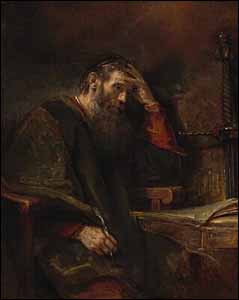 At this their anger boiled, and they began shouting, “Great is Artemis of the Ephesians!” Soon the whole city was filled with confusion. Everyone rushed to the amphitheater, dragging along Gaius and Aristarchus, who were Paul’s traveling companions from Macedonia. Paul wanted to go in, too, but the believers wouldn’t let him. Some of the officials of the province, friends of Paul, also sent a message to him, begging him not to risk his life by entering the amphitheater.
 The message of the cross is foolish to those who are headed for destruction! But we who are being saved know it is the very power of God. As the Scriptures say,