+ In the name of the Father, and the Son, and the Holy Spirit. Amen!
Opening
“Rejoice, O people of Zion! Shout in triumph, O people of Jerusalem! Look, your king is coming to you. He is righteous and victorious, yet he is humble, riding on a donkey—riding on a donkey’s colt.” (Zechariah 9:9)
Blessed is he who comes in the name of the Lord; peace in heaven; glory in the highest heavens.
__________
“Hosanna” – Hillsong
__________
Gospel Reading: Mark 11:1-11 (NLT)
As Jesus and his disciples approached Jerusalem, they came to the towns of Bethphage and Bethany on the Mount of Olives. Jesus sent two of them on ahead. “Go into that village over there,” he told them. “As soon as you enter it, you will see a young donkey tied there that no one has ever ridden. Untie it and bring it here. If anyone asks, ‘What are you doing?’ just say, ‘The Lord needs it and will return it soon.’”
The two disciples left and found the colt standing in the street, tied outside the front door. As they were untying it, some bystanders demanded, “What are you doing, untying that colt?” They said what Jesus had told them to say, and they were permitted to take it. Then they brought the colt to Jesus and threw their garments over it, and he sat on it.
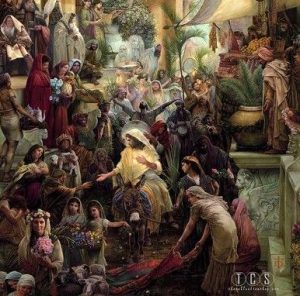
Many in the crowd spread their garments on the road ahead of him, and others spread leafy branches they had cut in the fields. Jesus was in the center of the procession, and the people all around him were shouting,
“Praise God! Blessings on the one who comes in the name of the Lord! Blessings on the coming Kingdom of our ancestor David! Praise God in highest heaven!”
So Jesus came to Jerusalem and went into the Temple. After looking around carefully at everything, he left because it was late in the afternoon. Then he returned to Bethany with the twelve disciples.
Gospel Reading: Mark 15:1-39 (NLT)
Very early in the morning the leading priests, the elders, and the teachers of religious law—the entire high council—met to discuss their next step. They bound Jesus, led him away, and took him to Pilate, the Roman governor.
Pilate asked Jesus, “Are you the king of the Jews?”
Jesus replied, “You have said it.”
Then the leading priests kept accusing him of many crimes, and Pilate asked him, “Aren’t you going to answer them? What about all these charges they are bringing against you?” But Jesus said nothing, much to Pilate’s surprise.
Now it was the governor’s custom each year during the Passover celebration to release one prisoner—anyone the people requested. One of the prisoners at that time was Barabbas, a revolutionary who had committed murder in an uprising. The crowd went to Pilate and asked him to release a prisoner as usual.
“Would you like me to release to you this ‘King of the Jews’?” Pilate asked. (For he realized by now that the leading priests had arrested Jesus out of envy.) But at this point the leading priests stirred up the crowd to demand the release of Barabbas instead of Jesus. Pilate asked them, “Then what should I do with this man you call the king of the Jews?”
They shouted back, “Crucify him!”
“Why?” Pilate demanded. “What crime has he committed?”
But the mob roared even louder, “Crucify him!”
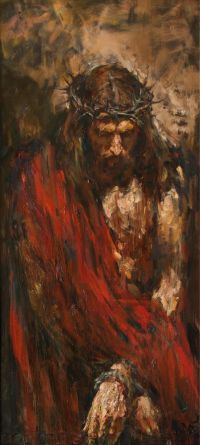
So to pacify the crowd, Pilate released Barabbas to them. He ordered Jesus flogged with a lead-tipped whip, then turned him over to the Roman soldiers to be crucified.
The soldiers took Jesus into the courtyard of the governor’s headquarters (called the Praetorium) and called out the entire regiment. They dressed him in a purple robe, and they wove thorn branches into a crown and put it on his head. Then they saluted him and taunted, “Hail! King of the Jews!” And they struck him on the head with a reed stick, spit on him, and dropped to their knees in mock worship. When they were finally tired of mocking him, they took off the purple robe and put his own clothes on him again. Then they led him away to be crucified.
A passerby named Simon, who was from Cyrene, was coming in from the countryside just then, and the soldiers forced him to carry Jesus’ cross. (Simon was the father of Alexander and Rufus.) And they brought Jesus to a place called Golgotha (which means “Place of the Skull”). They offered him wine drugged with myrrh, but he refused it.
Then the soldiers nailed him to the cross. They divided his clothes and threw dice to decide who would get each piece. It was nine o’clock in the morning when they crucified him. A sign announced the charge against him. It read, “The King of the Jews.” Two revolutionaries were crucified with him, one on his right and one on his left.
The people passing by shouted abuse, shaking their heads in mockery. “Ha! Look at you now!” they yelled at him. “You said you were going to destroy the Temple and rebuild it in three days. Well then, save yourself and come down from the cross!”
The leading priests and teachers of religious law also mocked Jesus. “He saved others,” they scoffed, “but he can’t save himself! Let this Messiah, this King of Israel, come down from the cross so we can see it and believe him!” Even the men who were crucified with Jesus ridiculed him.
At noon, darkness fell across the whole land until three o’clock. Then at three o’clock Jesus called out with a loud voice, “Eloi, Eloi, lema sabachthani?” which means “My God, my God, why have you abandoned me?”
Some of the bystanders misunderstood and thought he was calling for the prophet Elijah. One of them ran and filled a sponge with sour wine, holding it up to him on a reed stick so he could drink. “Wait!” he said. “Let’s see whether Elijah comes to take him down!”
Then Jesus uttered another loud cry and breathed his last. And the curtain in the sanctuary of the Temple was torn in two, from top to bottom.
When the Roman officer who stood facing him saw how he had died, he exclaimed, “This man truly was the Son of God!”
__________
Prayers of Intercession:
Gracious God: As we journey this week with Christ from His joyous reception through His death and resurrection, have mercy on us and show us the way of the cross. We pray especially –
+ For the Church and its leaders around the world, that we may be strengthened to take up our cross, follow in His way, and share in His redeeming work…. Lord, have mercy
+ For our own Church family, that we may empty ourselves of pride and privilege as Christ did, serving in unselfish love…. Lord, have mercy
+ For all who are preparing for Baptism, that You will lead them through dying and rising to New Life in Christ…. Lord, have mercy.
+ For peace throughout the world and an end to violence, that we may respond to all who cry out for food, justice, dignity and peace…. Lord, have mercy.
+ For all who endure shame or threat, and for the weary and all who suffer, that we may be bearers of Your strength and hope…. Lord, have mercy.
+ For those who have died in Christ, that they may rest in Christ and be raised triumphantly into His endless glory…. Lord, have mercy.
Blessed are you, O Lord our God, who sent your Son among us to bear the pain and grief of all. Hear our prayers for all those in need in every place and give us courage and grace to follow His example of obedient love, to walk in the way of the cross, and to share in His glorious resurrection, that we may live in the power of His Spirit, now and forever. Amen.
__________
“Jesus remember me” – Taizé
__________
Blessing – Jude 24-25
“Now to him who is able to keep you from stumbling and to present you blameless before the presence of his glory with great joy, to the only God, our Savior, through Jesus Christ our Lord, be glory, majesty, dominion, and authority, before all time and now and forever. Amen.”
__________
+ In the name of the Father, and the Son, and the Holy Spirit. Amen!
One thing I have asked of the Lord, this is what I seek: that I may dwell in the house of the Lord all the days of my life; to behold the beauty of the Lord and to seek Him in His temple.
Praise to You, Lord Jesus Christ, King of endless glory.
Reading: 1 Corinthians 7-8 (NLT)
Instruction on Marriage
1 Corinthians 7 (NLT)
+ Sex in marriage – Now regarding the questions you asked in your letter. Yes, it is good to abstain from sexual relations. But because there is so much sexual immorality, each man should have his own wife, and each woman should have her own husband.
+ Mutual fulfillment – The husband should fulfill his wife’s sexual needs, and the wife should fulfill her husband’s needs. The wife gives authority over her body to her husband, and the husband gives authority over his body to his wife.
+ Mutual agreement – Do not deprive each other of sexual relations, unless you both agree to refrain from sexual intimacy for a limited time so you can give yourselves more completely to prayer. Afterward, you should come together again so that Satan won’t be able to tempt you because of your lack of self-control. I say this as a concession, not as a command. But I wish everyone were single, just as I am. Yet each person has a special gift from God, of one kind or another.
+ Singleness is not for everyone – So I say to those who aren’t married and to widows—it’s better to stay unmarried, just as I am. But if they can’t control themselves, they should go ahead and marry. It’s better to marry than to burn with lust.
+ Marriage is forever – But for those who are married, I have a command that comes not from me, but from the Lord. A wife must not leave her husband. But if she does leave him, let her remain single or else be reconciled to him. And the husband must not leave his wife.
+ Believers bring holiness to marriage – Now, I will speak to the rest of you, though I do not have a direct command from the Lord. If a fellow believer has a wife who is not a believer and she is willing to continue living with him, he must not leave her. And if a believing woman has a husband who is not a believer and he is willing to continue living with her, she must not leave him. For the believing wife brings holiness to her marriage, and the believing husband brings holiness to his marriage. Otherwise, your children would not be holy, but now they are holy. (But if the husband or wife who isn’t a believer insists on leaving, let them go. In such cases the believing husband or wife is no longer bound to the other, for God has called you to live in peace.) Don’t you wives realize that your husbands might be saved because of you? And don’t you husbands realize that your wives might be saved because of you?
+ Remain as you are – Each of you should continue to live in whatever situation the Lord has placed you, and remain as you were when God first called you. This is my rule for all the churches. For instance, a man who was circumcised before he became a believer should not try to reverse it. And the man who was uncircumcised when he became a believer should not be circumcised now. For it makes no difference whether or not a man has been circumcised. The important thing is to keep God’s commandments.
+ Remember, God paid a high price for you – Yes, each of you should remain as you were when God called you. Are you a slave? Don’t let that worry you—but if you get a chance to be free, take it. And remember, if you were a slave when the Lord called you, you are now free in the Lord. And if you were free when the Lord called you, you are now a slave of Christ. God paid a high price for you, so don’t be enslaved by the world. Each of you, dear brothers and sisters, should remain as you were when God first called you.
+ In the present crisis – Now regarding your question about the young women who are not yet married. I do not have a command from the Lord for them. But the Lord in his mercy has given me wisdom that can be trusted, and I will share it with you. Because of the present crisis, I think it is best to remain as you are. If you have a wife, do not seek to end the marriage. If you do not have a wife, do not seek to get married. But if you do get married, it is not a sin. And if a young woman gets married, it is not a sin. However, those who get married at this time will have troubles, and I am trying to spare you those problems.
+ The remaining time is short – But let me say this, dear brothers and sisters: The time that remains is very short. So from now on, those with wives should not focus only on their marriage. Those who weep or who rejoice or who buy things should not be absorbed by their weeping or their joy or their possessions. Those who use the things of the world should not become attached to them. For this world as we know it will soon pass away.
+ The freedom to serve God – I want you to be free from the concerns of this life. An unmarried man can spend his time doing the Lord’s work and thinking how to please him. But a married man has to think about his earthly responsibilities and how to please his wife. His interests are divided. In the same way, a woman who is no longer married or has never been married can be devoted to the Lord and holy in body and in spirit. But a married woman has to think about her earthly responsibilities and how to please her husband. I am saying this for your benefit, not to place restrictions on you. I want you to do whatever will help you serve the Lord best, with as few distractions as possible.
+ Passion management– But if a man thinks that he’s treating his fiancée improperly and will inevitably give in to his passion, let him marry her as he wishes. It is not a sin. But if he has decided firmly not to marry and there is no urgency and he can control his passion, he does well not to marry. So the person who marries his fiancée does well, and the person who doesn’t marry does even better.
A wife is bound to her husband as long as he lives. If her husband dies, she is free to marry anyone she wishes, but only if he loves the Lord. But in my opinion it would be better for her to stay single, and I think I am giving you counsel from God’s Spirit when I say this.
Food Sacrificed to Idols
1 Corinthians 8 (NLT)
+ Love strengthens the church – Now regarding your question about food that has been offered to idols. Yes, we know that “we all have knowledge” about this issue. But while knowledge makes us feel important, it is love that strengthens the church. Anyone who claims to know all the answers doesn’t really know very much. But the person who loves God is the one whom God recognizes.
+ There is only one God – So, what about eating meat that has been offered to idols? Well, we all know that an idol is not really a god and that there is only one God. There may be so-called gods both in heaven and on earth, and some people actually worship many gods and many lords. But for us,
There is one God, the Father, by whom all things were created, and for whom we live. And there is one Lord, Jesus Christ, through whom all things were created, and through whom we live.
+ We can’t win God’s approval – However, not all believers know this. Some are accustomed to thinking of idols as being real, so when they eat food that has been offered to idols, they think of it as the worship of real gods, and their weak consciences are violated. It’s true that we can’t win God’s approval by what we eat. We don’t lose anything if we don’t eat it, and we don’t gain anything if we do.
+ But we can accommodate other believers – But you must be careful so that your freedom does not cause others with a weaker conscience to stumble. For if others see you—with your “superior knowledge”—eating in the temple of an idol, won’t they be encouraged to violate their conscience by eating food that has been offered to an idol? So because of your superior knowledge, a weak believer for whom Christ died will be destroyed. And when you sin against other believers by encouraging them to do something they believe is wrong, you are sinning against Christ. So if what I eat causes another believer to sin, I will never eat meat again as long as I live—for I don’t want to cause another believer to stumble.
__________
May the peace of the Lord Christ go with you, wherever He may send you. May He guide you through the wilderness, protect you through the storm. May He bring you home rejoicing at the wonders He has shown you. May He bring you home rejoicing once again into our doors.
__________
+ In the name of the Father, and the Son, and the Holy Spirit. Amen!
One thing I have asked of the Lord, this is what I seek: that I may dwell in the house of the Lord all the days of my life; to behold the beauty of the Lord and to seek Him in His temple.
Praise to You, Lord Jesus Christ, King of endless glory.
Reading: Mark 3-4 (NLT)
Jesus Heals on the Sabbath
Mark 3 (NLT)
Jesus went into the synagogue again and noticed a man with a deformed hand. Since it was the Sabbath, Jesus’ enemies watched him closely. If he healed the man’s hand, they planned to accuse him of working on the Sabbath.
Jesus said to the man with the deformed hand, “Come and stand in front of everyone.” Then he turned to his critics and asked, “Does the law permit good deeds on the Sabbath, or is it a day for doing evil? Is this a day to save life or to destroy it?” But they wouldn’t answer him.
He looked around at them angrily and was deeply saddened by their hard hearts. Then he said to the man, “Hold out your hand.” So the man held out his hand, and it was restored! At once the Pharisees went away and met with the supporters of Herod to plot how to kill Jesus.
Crowds Follow Jesus
Jesus went out to the lake with his disciples, and a large crowd followed him. They came from all over Galilee, Judea, Jerusalem, Idumea, from east of the Jordan River, and even from as far north as Tyre and Sidon. The news about his miracles had spread far and wide, and vast numbers of people came to see him.
+ Kingdom healing – Jesus instructed his disciples to have a boat ready so the crowd would not crush him. He had healed many people that day, so all the sick people eagerly pushed forward to touch him. And whenever those possessed by evil spirits caught sight of him, the spirits would throw them to the ground in front of him shrieking, “You are the Son of God!” But Jesus sternly commanded the spirits not to reveal who he was.
Jesus Chooses the Twelve Apostles
+ Kingdom authority – Afterward Jesus went up on a mountain and called out the ones he wanted to go with him. And they came to him. Then he appointed twelve of them and called them his apostles. They were to accompany him, and he would send them out to preach, giving them authority to cast out demons.
These are the twelve he chose: Simon (whom he named Peter), James and John (the sons of Zebedee, but Jesus nicknamed them “Sons of Thunder”), Andrew, Philip, Bartholomew, Matthew, Thomas, James (son of Alphaeus), Thaddaeus, Simon (the zealot), Judas Iscariot (who later betrayed him).
Jesus and the Prince of Demons
One time Jesus entered a house, and the crowds began to gather again. Soon he and his disciples couldn’t even find time to eat. When his family heard what was happening, they tried to take him away. “He’s out of his mind,” they said.
But the teachers of religious law who had arrived from Jerusalem said, “He’s possessed by Satan, the prince of demons. That’s where he gets the power to cast out demons.”
+ Kingdom authority – Jesus called them over and responded with an illustration. “How can Satan cast out Satan?” he asked. “A kingdom divided by civil war will collapse. Similarly, a family splintered by feuding will fall apart. And if Satan is divided and fights against himself, how can he stand? He would never survive. Let me illustrate this further. Who is powerful enough to enter the house of a strong man and plunder his goods? Only someone even stronger—someone who could tie him up and then plunder his house.
+ The unforgivable sin – “I tell you the truth, all sin and blasphemy can be forgiven, but anyone who blasphemes the Holy Spirit will never be forgiven. This is a sin with eternal consequences.” He told them this because they were saying, “He’s possessed by an evil spirit.”
The True Family of Jesus
Then Jesus’ mother and brothers came to see him. They stood outside and sent word for him to come out and talk with them. There was a crowd sitting around Jesus, and someone said, “Your mother and your brothers are outside asking for you.”
Jesus replied, “Who is my mother? Who are my brothers?” Then he looked at those around him and said, “Look, these are my mother and brothers. Anyone who does God’s will is my brother and sister and mother.”
Kingdom Stories and Illustrations
Mark 4 (NLT)
Once again Jesus began teaching by the lakeshore. A very large crowd soon gathered around him, so he got into a boat. Then he sat in the boat while all the people remained on the shore. He taught them by telling many stories in the form of parables, such as this one:
The Story of Farmer Scattering Seed
+ The Story – “Listen! A farmer went out to plant some seed. As he scattered it across his field, some of the seed fell on a footpath, and the birds came and ate it. Other seed fell on shallow soil with underlying rock. The seed sprouted quickly because the soil was shallow. But the plant soon wilted under the hot sun, and since it didn’t have deep roots, it died. Other seed fell among thorns that grew up and choked out the tender plants so they produced no grain. Still other seeds fell on fertile soil, and they sprouted, grew, and produced a crop that was thirty, sixty, and even a hundred times as much as had been planted!” Then he said, “Anyone with ears to hear should listen and understand.”
+ Do you understand? – Later, when Jesus was alone with the twelve disciples and with the others who were gathered around, they asked him what the parables meant.
He replied, “You are permitted to understand the secret of the Kingdom of God. But I use parables for everything I say to outsiders, so that the Scriptures might be fulfilled:
‘When they see what I do, they will learn nothing. When they hear what I say, they will not understand. Otherwise, they will turn to me and be forgiven.’”
+ The Story explained – Then Jesus said to them, “If you can’t understand the meaning of this parable, how will you understand all the other parables? The farmer plants seed by taking God’s word to others. The seed that fell on the footpath represents those who hear the message, only to have Satan come at once and take it away. The seed on the rocky soil represents those who hear the message and immediately receive it with joy. But since they don’t have deep roots, they don’t last long. They fall away as soon as they have problems or are persecuted for believing God’s word. The seed that fell among the thorns represents others who hear God’s word, but all too quickly the message is crowded out by the worries of this life, the lure of wealth, and the desire for other things, so no fruit is produced. And the seed that fell on good soil represents those who hear and accept God’s word and produce a harvest of thirty, sixty, or even a hundred times as much as had been planted!”
The Story of the Lamp
Then Jesus asked them, “Would anyone light a lamp and then put it under a basket or under a bed? Of course not! A lamp is placed on a stand, where its light will shine. For everything that is hidden will eventually be brought into the open, and every secret will be brought to light. Anyone with ears to hear should listen and understand.”
+ Pay attention – Then he added, “Pay close attention to what you hear. The closer you listen, the more understanding you will be given—and you will receive even more. To those who listen to my teaching, more understanding will be given. But for those who are not listening, even what little understanding they have will be taken away from them.”
The Story of the Growing Seed
Jesus also said, “The Kingdom of God is like a farmer who scatters seed on the ground. Night and day, while he’s asleep or awake, the seed sprouts and grows, but he does not understand how it happens. The earth produces the crops on its own. First a leaf blade pushes through, then the heads of wheat are formed, and finally the grain ripens. And as soon as the grain is ready, the farmer comes and harvests it with a sickle, for the harvest time has come.”
The Story of the Mustard Seed
Jesus said, “How can I describe the Kingdom of God? What story should I use to illustrate it? It is like a mustard seed planted in the ground. It is the smallest of all seeds, but it becomes the largest of all garden plants; it grows long branches, and birds can make nests in its shade.”
+ Jesus taught using stories – Jesus used many similar stories and illustrations to teach the people as much as they could understand. In fact, in his public ministry he never taught without using parables; but afterward, when he was alone with his disciples, he explained everything to them.
Jesus Calms the Storm
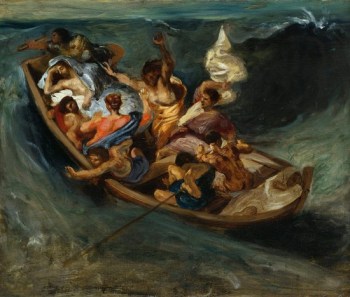
+ Fear over faith – As evening came, Jesus said to his disciples, “Let’s cross to the other side of the lake.” So they took Jesus in the boat and started out, leaving the crowds behind (although other boats followed). But soon a fierce storm came up. High waves were breaking into the boat, and it began to fill with water.
Jesus was sleeping at the back of the boat with his head on a cushion. The disciples woke him up, shouting, “Teacher, don’t you care that we’re going to drown?”
+ Faith over fear – When Jesus woke up, he rebuked the wind and said to the waves, “Silence! Be still!” Suddenly the wind stopped, and there was a great calm. Then he asked them, “Why are you afraid? Do you still have no faith?”
The disciples were absolutely terrified. “Who is this man?” they asked each other. “Even the wind and waves obey him!”
__________
May the peace of the Lord Christ go with you, wherever He may send you. May He guide you through the wilderness, protect you through the storm. May He bring you home rejoicing at the wonders He has shown you. May He bring you home rejoicing once again into our doors.
__________
+ In the name of the Father, and the Son, and the Holy Spirit. Amen!
One thing I have asked of the Lord, this is what I seek: that I may dwell in the house of the Lord all the days of my life; to behold the beauty of the Lord and to seek Him in His temple.
Praise to You, Lord Jesus Christ, King of endless glory.
Reading: Jeremiah 1-6 (NLT)
Jeremiah 1 (NLT)
These are the words of Jeremiah son of Hilkiah, one of the priests from the town of Anathoth in the land of Benjamin. The Lord first gave messages to Jeremiah during the thirteenth year of the reign of Josiah son of Amon, king of Judah. The Lord’s messages continued throughout the reign of King Jehoiakim, Josiah’s son, until the eleventh year of the reign of King Zedekiah, another of Josiah’s sons. In August of that eleventh year the people of Jerusalem were taken away as captives.
Jeremiah’s Call and First Visions
The Lord gave me this message:
“I knew you before I formed you in your mother’s womb. Before you were born I set you apart and appointed you as my prophet to the nations.”
“O Sovereign Lord,” I said, “I can’t speak for you! I’m too young!”
+ I will be with you – The Lord replied, “Don’t say, ‘I’m too young,’ for you must go wherever I send you and say whatever I tell you. And don’t be afraid of the people, for I will be with you and will protect you. I, the Lord, have spoken!” Then the Lord reached out and touched my mouth and said,
+ I appoint you – “Look, I have put my words in your mouth! Today I appoint you to stand up against nations and kingdoms. Some you must uproot and tear down, destroy and overthrow. Others you must build up and plant.”
Then the Lord said to me, “Look, Jeremiah! What do you see?”
+ I am watching – And I replied, “I see a branch from an almond tree.”
And the Lord said, “That’s right, and it means that I am watching, and I will certainly carry out all my plans.”
Then the Lord spoke to me again and asked, “What do you see now?”
+ I will judge Jerusalem – And I replied, “I see a pot of boiling water, spilling from the north.”
“Yes,” the Lord said, “for terror from the north will boil out on the people of this land. Listen! I am calling the armies of the kingdoms of the north to come to Jerusalem. I, the Lord, have spoken!
“They will set their thrones at the gates of the city. They will attack its walls and all the other towns of Judah. I will pronounce judgment on my people for all their evil—for deserting me and burning incense to other gods. Yes, they worship idols made with their own hands!
+ I have made you strong – “Get up and prepare for action. Go out and tell them everything I tell you to say. Do not be afraid of them, or I will make you look foolish in front of them. For see, today I have made you strong like a fortified city that cannot be captured, like an iron pillar or a bronze wall. You will stand against the whole land—the kings, officials, priests, and people of Judah. They will fight you, but they will fail. For I am with you, and I will take care of you. I, the Lord, have spoken!”
The Lord’s Case against His People
Jeremiah 2 (NLT)
The Lord gave me another message. He said, “Go and shout this message to Jerusalem. This is what the Lord says:
“I remember how eager you were to please me as a young bride long ago, how you loved me and followed me even through the barren wilderness. In those days Israel was holy to the Lord, the first of his children. All who harmed his people were declared guilty, and disaster fell on them. I, the Lord, have spoken!”
Listen to the word of the Lord, people of Jacob—all you families of Israel! This is what the Lord says:
“What did your ancestors find wrong with me that led them to stray so far from me? They worshiped worthless idols, only to become worthless themselves. They did not ask, ‘Where is the Lord who brought us safely out of Egypt and led us through the barren wilderness—a land of deserts and pits, a land of drought and death, where no one lives or even travels?’
“And when I brought you into a fruitful land to enjoy its bounty and goodness, you defiled my land and corrupted the possession I had promised you. The priests did not ask, ‘Where is the Lord?’ Those who taught my word ignored me, the rulers turned against me, and the prophets spoke in the name of Baal, wasting their time on worthless idols. Therefore, I will bring my case against you,” says the Lord. “I will even bring charges against your children’s children in the years to come.
“Go west and look in the land of Cyprus; go east and search through the land of Kedar. Has anyone ever heard of anything as strange as this? Has any nation ever traded its gods for new ones, even though they are not gods at all? Yet my people have exchanged their glorious God for worthless idols! The heavens are shocked at such a thing and shrink back in horror and dismay,” says the Lord.
“For my people have done two evil things: They have abandoned me—the fountain of living water. And they have dug for themselves cracked cisterns that can hold no water at all!
The Results of Israel’s Sin
+ Your alliances have made you slaves – “Why has Israel become a slave? Why has he been carried away as plunder? Strong lions have roared against him, and the land has been destroyed. The towns are now in ruins, and no one lives in them anymore. Egyptians, marching from their cities of Memphis and Tahpanhes, have destroyed Israel’s glory and power. And you have brought this upon yourselves by rebelling against the Lord your God, even though he was leading you on the way!
+Your wickedness will bring shame – “What have you gained by your alliances with Egypt and your covenants with Assyria? What good to you are the streams of the Nile or the waters of the Euphrates River? Your wickedness will bring its own punishment. Your turning from me will shame you. You will see what an evil, bitter thing it is to abandon the Lord your God and not to fear him. I, the Lord, the Lord of Heaven’s Armies, have spoken!
+ You have become corrupt – “Long ago I broke the yoke that oppressed you and tore away the chains of your slavery, but still you said, ‘I will not serve you.’ On every hill and under every green tree, you have prostituted yourselves by bowing down to idols. But I was the one who planted you, choosing a vine of the purest stock—the very best. How did you grow into this corrupt wild vine? No amount of soap or lye can make you clean. I still see the stain of your guilt. I, the Sovereign Lord, have spoken!
Israel, an Unfaithful Wife
+ You chase after foreign gods – “You say, ‘That’s not true! I haven’t worshiped the images of Baal!’ But how can you say that? Go and look in any valley in the land! Face the awful sins you have done. You are like a restless female camel desperately searching for a mate. You are like a wild donkey, sniffing the wind at mating time. Who can restrain her lust? Those who desire her don’t need to search, for she goes running to them! When will you stop running? When will you stop panting after other gods? But you say, ‘Save your breath. I’m in love with these foreign gods, and I can’t stop loving them now!’
+ You turn your back on me – “Israel is like a thief who feels shame only when he gets caught. They, their kings, officials, priests, and prophets—all are alike in this. To an image carved from a piece of wood they say, ‘You are my father.’ To an idol chiseled from a block of stone they say, ‘You are my mother.’ They turn their backs on me, but in times of trouble they cry out to me, ‘Come and save us!’ But why not call on these gods you have made? When trouble comes, let them save you if they can! For you have as many gods as there are towns in Judah. Why do you accuse me of doing wrong? You are the ones who have rebelled,” says the Lord.
+ You have killed your prophets – “I have punished your children, but they did not respond to my discipline. You yourselves have killed your prophets as a lion kills its prey.
+ You have forgotten me – “O my people, listen to the words of the Lord! Have I been like a desert to Israel? Have I been to them a land of darkness? Why then do my people say, ‘At last we are free from God! We don’t need him anymore!’ Does a young woman forget her jewelry, or a bride her wedding dress? Yet for years on end my people have forgotten me.
+ You flit from one ally to another – “How you plot and scheme to win your lovers. Even an experienced prostitute could learn from you! Your clothing is stained with the blood of the innocent and the poor, though you didn’t catch them breaking into your houses! And yet you say, ‘I have done nothing wrong. Surely God isn’t angry with me!’ But now I will punish you severely because you claim you have not sinned. First here, then there—you flit from one ally to another asking for help. But your new friends in Egypt will let you down, just as Assyria did before. In despair, you will be led into exile with your hands on your heads, for the Lord has rejected the nations you trust. They will not help you at all.
Jeremiah 3 (NLT)
+ You have prostituted yourself – “If a man divorces a woman and she goes and marries someone else, he will not take her back again, for that would surely corrupt the land. But you have prostituted yourself with many lovers, so why are you trying to come back to me?” says the Lord.
“Look at the shrines on every hilltop. Is there any place you have not been defiled by your adultery with other gods? You sit like a prostitute beside the road waiting for a customer. You sit alone like a nomad in the desert. You have polluted the land with your prostitution and your wickedness. That’s why even the spring rains have failed. For you are a brazen prostitute and completely shameless. Yet you say to me, ‘Father, you have been my guide since my youth. Surely you won’t be angry forever! Surely you can forget about it!’ So you talk, but you keep on doing all the evil you can.”
Judah Follows Israel’s Example
During the reign of King Josiah, the Lord said to me, “Have you seen what fickle Israel has done? Like a wife who commits adultery, Israel has worshiped other gods on every hill and under every green tree. I thought, ‘After she has done all this, she will return to me.’ But she did not return, and her faithless sister Judah saw this. She saw that I divorced faithless Israel because of her adultery. But that treacherous sister Judah had no fear, and now she, too, has left me and given herself to prostitution. Israel treated it all so lightly—she thought nothing of committing adultery by worshiping idols made of wood and stone. So now the land has been polluted. But despite all this, her faithless sister Judah has never sincerely returned to me. She has only pretended to be sorry. I, the Lord, have spoken!”
Hope for Wayward Israel
Then the Lord said to me, “Even faithless Israel is less guilty than treacherous Judah! Therefore, go and give this message to Israel. This is what the Lord says:
+ Confess and come home – “O Israel, my faithless people, come home to me again, for I am merciful. I will not be angry with you forever. Only acknowledge your guilt. Admit that you rebelled against the Lord your God and committed adultery against him by worshiping idols under every green tree. Confess that you refused to listen to my voice. I, the Lord, have spoken!
+ I will guide you – “Return home, you wayward children,” says the Lord, “for I am your master. I will bring you back to the land of Israel—one from this town and two from that family—from wherever you are scattered. And I will give you shepherds after my own heart, who will guide you with knowledge and understanding.
+ I want to give you your inheritance – “And when your land is once more filled with people,” says the Lord, “you will no longer wish for ‘the good old days’ when you possessed the Ark of the Lord’s Covenant. You will not miss those days or even remember them, and there will be no need to rebuild the Ark. In that day Jerusalem will be known as ‘The Throne of the Lord.’ All nations will come there to honor the Lord. They will no longer stubbornly follow their own evil desires. In those days the people of Judah and Israel will return together from exile in the north. They will return to the land I gave your ancestors as an inheritance forever.
+ I want to give you this land – “I thought to myself, ‘I would love to treat you as my own children!’ I wanted nothing more than to give you this beautiful land—the finest possession in the world. I looked forward to your calling me ‘Father,’ and I wanted you never to turn from me. But you have been unfaithful to me, you people of Israel! You have been like a faithless wife who leaves her husband. I, the Lord, have spoken.”
Voices are heard high on the windswept mountains, the weeping and pleading of Israel’s people. For they have chosen crooked paths and have forgotten the Lord their God.
+ I will heal your wayward hearts – “My wayward children,” says the Lord, “come back to me, and I will heal your wayward hearts.” “Yes, we’re coming,” the people reply, “for you are the Lord our God. Our worship of idols on the hills and our religious orgies on the mountains are a delusion. Only in the Lord our God will Israel ever find salvation. From childhood we have watched as everything our ancestors worked for—their flocks and herds, their sons and daughters—was squandered on a delusion. Let us now lie down in shame and cover ourselves with dishonor, for we and our ancestors have sinned against the Lord our God. From our childhood to this day we have never obeyed him.”
Jeremiah 4 (NLT)
“O Israel,” says the Lord, “if you wanted to return to me, you could. You could throw away your detestable idols and stray away no more. Then when you swear by my name, saying, ‘As surely as the Lord lives,’ you could do so with truth, justice, and righteousness. Then you would be a blessing to the nations of the world, and all people would come and praise my name.”
Coming Judgment against Judah
This is what the Lord says to the people of Judah and Jerusalem:
“Plow up the hard ground of your hearts! Do not waste your good seed among thorns. O people of Judah and Jerusalem, surrender your pride and power. Change your hearts before the Lord, or my anger will burn like an unquenchable fire because of all your sins.
“Shout to Judah, and broadcast to Jerusalem! Tell them to sound the alarm throughout the land: ‘Run for your lives!
Flee to the fortified cities!’ Raise a signal flag as a warning for Jerusalem: ‘Flee now! Do not delay!’ For I am bringing terrible destruction upon you from the north.”
A lion stalks from its den, a destroyer of nations. It has left its lair and is headed your way. It’s going to devastate your land! Your towns will lie in ruins, with no one living in them anymore. So put on clothes of mourning and weep with broken hearts, for the fierce anger of the Lord is still upon us.
“In that day,” says the Lord, “the king and the officials will tremble in fear. The priests will be struck with horror, and the prophets will be appalled.”
Then I said, “O Sovereign Lord, the people have been deceived by what you said, for you promised peace for Jerusalem. But the sword is held at their throats!”
The time is coming when the Lord will say to the people of Jerusalem, “My dear people, a burning wind is blowing in from the desert, and it’s not a gentle breeze useful for winnowing grain. It is a roaring blast sent by me! Now I will pronounce your destruction!”
Our enemy rushes down on us like storm clouds! His chariots are like whirlwinds. His horses are swifter than eagles. How terrible it will be, for we are doomed! O Jerusalem, cleanse your heart that you may be saved. How long will you harbor your evil thoughts? Your destruction has been announced from Dan and the hill country of Ephraim.
“Warn the surrounding nations and announce this to Jerusalem: The enemy is coming from a distant land, raising a battle cry against the towns of Judah. They surround Jerusalem like watchmen around a field, for my people have rebelled against me,” says the Lord. “Your own actions have brought this upon you. This punishment is bitter, piercing you to the heart!”
Jeremiah Weeps for His People
My heart, my heart—I writhe in pain! My heart pounds within me! I cannot be still. For I have heard the blast of enemy trumpets and the roar of their battle cries. Waves of destruction roll over the land, until it lies in complete desolation. Suddenly my tents are destroyed; in a moment my shelters are crushed. How long must I see the battle flags and hear the trumpets of war?
“My people are foolish and do not know me,” says the Lord. “They are stupid children who have no understanding. They are clever enough at doing wrong, but they have no idea how to do right!”
Jeremiah’s Vision of Coming Disaster
I looked at the earth, and it was empty and formless. I looked at the heavens, and there was no light. I looked at the mountains and hills, and they trembled and shook. I looked, and all the people were gone. All the birds of the sky had flown away. I looked, and the fertile fields had become a wilderness. The towns lay in ruins, crushed by the Lord’s fierce anger.
This is what the Lord says: “The whole land will be ruined, but I will not destroy it completely. The earth will mourn
and the heavens will be draped in black because of my decree against my people. I have made up my mind and will not change it.”
At the noise of charioteers and archers, the people flee in terror. They hide in the bushes and run for the mountains. All the towns have been abandoned—not a person remains! What are you doing, you who have been plundered? Why do you dress up in beautiful clothing and put on gold jewelry? Why do you brighten your eyes with mascara? Your primping will do you no good! The allies who were your lovers despise you and seek to kill you.
I hear a cry, like that of a woman in labor, the groans of a woman giving birth to her first child. It is beautiful Jerusalem gasping for breath and crying out, “Help! I’m being murdered!”
The Sins of Judah
Jeremiah 5 (NLT)
+ Still lying – “Run up and down every street in Jerusalem,” says the Lord. “Look high and low; search throughout the city! If you can find even one just and honest person, I will not destroy the city. But even when they are under oath, saying, ‘As surely as the Lord lives,’ they are still telling lies!”
+ Still unrepentant – Lord, you are searching for honesty. You struck your people, but they paid no attention. You crushed them, but they refused to be corrected. They are determined, with faces set like stone; they have refused to repent.
+ Still rebellious – Then I said, “But what can we expect from the poor? They are ignorant. They don’t know the ways of the Lord. They don’t understand God’s laws. So I will go and speak to their leaders. Surely they know the ways of the Lord and understand God’s laws.” But the leaders, too, as one man, had thrown off God’s yoke and broken his chains. So now a lion from the forest will attack them; a wolf from the desert will pounce on them. A leopard will lurk near their towns, tearing apart any who dare to venture out. For their rebellion is great, and their sins are many.
+ Still adulterous – “How can I pardon you? For even your children have turned from me. They have sworn by gods that are not gods at all! I fed my people until they were full. But they thanked me by committing adultery and lining up at the brothels. They are well-fed, lusty stallions, each neighing for his neighbor’s wife. Should I not punish them for this?” says the Lord. “Should I not avenge myself against such a nation?
+ Still treacherous – “Go down the rows of the vineyards and destroy the grapevines, leaving a scattered few alive. Strip the branches from the vines, for these people do not belong to the Lord. The people of Israel and Judah are full of treachery against me,” says the Lord. “They have lied about the Lord and said, ‘He won’t bother us! No disasters will come upon us. There will be no war or famine. God’s prophets are all windbags who don’t really speak for him. Let their predictions of disaster fall on themselves!’”
Therefore, this is what the Lord God of Heaven’s Armies says:
“Because the people are talking like this, my messages will flame out of your mouth and burn the people like kindling wood. O Israel, I will bring a distant nation against you,” says the Lord. “It is a mighty nation, an ancient nation, a people whose language you do not know, whose speech you cannot understand. Their weapons are deadly; their warriors are mighty. They will devour the food of your harvest; they will devour your sons and daughters. They will devour your flocks and herds; they will devour your grapes and figs. And they will destroy your fortified towns, which you think are so safe.
“Yet even in those days I will not blot you out completely,” says the Lord. “And when your people ask, ‘Why did the Lord our God do all this to us?’ you must reply, ‘You rejected him and gave yourselves to foreign gods in your own land. Now you will serve foreigners in a land that is not your own.’
A Warning for God’s People
+ Your wickedness has deprived you – “Make this announcement to Israel, and say this to Judah: Listen, you foolish and senseless people, with eyes that do not see and ears that do not hear. Have you no respect for me? Why don’t you tremble in my presence? I, the Lord, define the ocean’s sandy shoreline as an everlasting boundary that the waters cannot cross. The waves may toss and roar, but they can never pass the boundaries I set. But my people have stubborn and rebellious hearts. They have turned away and abandoned me. They do not say from the heart, ‘Let us live in awe of the Lord our God, for he gives us rain each spring and fall, assuring us of a harvest when the time is right.’ Your wickedness has deprived you of these wonderful blessings. Your sin has robbed you of all these good things.
+ Your prophets have deceived you – “Among my people are wicked men who lie in wait for victims like a hunter hiding in a blind. They continually set traps to catch people. Like a cage filled with birds, their homes are filled with evil plots. And now they are great and rich. They are fat and sleek, and there is no limit to their wicked deeds. They refuse to provide justice to orphans and deny the rights of the poor. Should I not punish them for this?” says the Lord. “Should I not avenge myself against such a nation? A horrible and shocking thing has happened in this land—the prophets give false prophecies, and the priests rule with an iron hand. Worse yet, my people like it that way! But what will you do when the end comes?
Jerusalem’s Last Warning
Jeremiah 6 (NLT)
+ Run for your lives – “Run for your lives, you people of Benjamin! Get out of Jerusalem! Sound the alarm in Tekoa! Send up a signal at Beth-hakkerem! A powerful army is coming from the north, coming with disaster and destruction. O Jerusalem, you are my beautiful and delicate daughter—but I will destroy you! Enemies will surround you, like shepherds camped around the city. Each chooses a place for his troops to devour. They shout, ‘Prepare for battle! Attack at noon!’ ‘No, it’s too late; the day is fading, and the evening shadows are falling.’ ‘Well then, let’s attack at night and destroy her palaces!’”
+ Jerusalem is to be punished – This is what the Lord of Heaven’s Armies says:
“Cut down the trees for battering rams. Build siege ramps against the walls of Jerusalem. This is the city to be punished, for she is wicked through and through. She spouts evil like a fountain. Her streets echo with the sounds of violence and destruction. I always see her sickness and sores. Listen to this warning, Jerusalem, or I will turn from you in disgust. Listen, or I will turn you into a heap of ruins, a land where no one lives.”
This is what the Lord of Heaven’s Armies says:
“Even the few who remain in Israel will be picked over again, as when a harvester checks each vine a second time to pick the grapes that were missed.”
Judah’s Constant Rebellion
To whom can I give warning? Who will listen when I speak? Their ears are closed, and they cannot hear. They scorn the word of the Lord. They don’t want to listen at all. So now I am filled with the Lord’s fury. Yes, I am tired of holding it in!
+ I will pour out my fury – “I will pour out my fury on children playing in the streets and on gatherings of young men, on husbands and wives and on those who are old and gray. Their homes will be turned over to their enemies, as will their fields and their wives. For I will raise my powerful fist against the people of this land,” says the Lord.
+ Your prophets are frauds – “From the least to the greatest, their lives are ruled by greed. From prophets to priests, they are all frauds. They offer superficial treatments for my people’s mortal wound. They give assurances of peace when there is no peace. Are they ashamed of their disgusting actions? Not at all—they don’t even know how to blush! Therefore, they will lie among the slaughtered. They will be brought down when I punish them,” says the Lord.
Judah Rejects the Lord’s Way
This is what the Lord says: “Stop at the crossroads and look around. Ask for the old, godly way, and walk in it. Travel its path, and you will find rest for your souls. But you reply, ‘No, that’s not the road we want!’ I posted watchmen over you who said, ‘Listen for the sound of the alarm.’ But you replied, ‘No! We won’t pay attention!’
“Therefore, listen to this, all you nations. Take note of my people’s situation. Listen, all the earth! I will bring disaster on my people. It is the fruit of their own schemes, because they refuse to listen to me. They have rejected my word. There’s no use offering me sweet frankincense from Sheba. Keep your fragrant calamus imported from distant lands! I will not accept your burnt offerings. Your sacrifices have no pleasing aroma for me.”
Therefore, this is what the Lord says: “I will put obstacles in my people’s path. Fathers and sons will both fall over them. Neighbors and friends will die together.”
An Invasion from the North
+ Cruel and merciless – This is what the Lord says: “Look! A great army coming from the north! A great nation is rising against you from far-off lands. They are armed with bows and spears. They are cruel and show no mercy. They sound like a roaring sea as they ride forward on horses. They are coming in battle formation, planning to destroy you, beautiful Jerusalem.”
+ Terror everywhere – We have heard reports about the enemy, and we wring our hands in fright. Pangs of anguish have gripped us, like those of a woman in labor. Don’t go out to the fields! Don’t travel on the roads! The enemy’s sword is everywhere and terrorizes us at every turn! Oh, my people, dress yourselves in burlap and sit among the ashes. Mourn and weep bitterly, as for the loss of an only son. For suddenly the destroying armies will be upon you!
+ Tested and rejected – “Jeremiah, I have made you a tester of metals, that you may determine the quality of my people. They are the worst kind of rebel, full of slander. They are as hard as bronze and iron, and they lead others into corruption. The bellows fiercely fan the flames to burn out the corruption. But it does not purify them, for the wickedness remains. I will label them ‘Rejected Silver,’ for I, the Lord, am discarding them.”
__________
May the peace of the Lord Christ go with you, wherever He may send you. May He guide you through the wilderness, protect you through the storm. May He bring you home rejoicing at the wonders He has shown you. May He bring you home rejoicing once again into our doors.
__________
+ In the name of the Father, and the Son, and the Holy Spirit. Amen!
One thing I have asked of the Lord, this is what I seek: that I may dwell in the house of the Lord all the days of my life; to behold the beauty of the Lord and to seek Him in His temple.
Praise to You, Lord Jesus Christ, King of endless glory.
Reading: Job 25-26 (NLT)
Bildad: No One Is Innocent
Job 25 (NLT)
Then Bildad the Shuhite replied:
“God is powerful and dreadful. He enforces peace in the heavens. Who is able to count his heavenly army? Doesn’t his light shine on all the earth? How can a mortal be innocent before God? Can anyone born of a woman be pure? God is more glorious than the moon; he shines brighter than the stars. In comparison, people are maggots; we mortals are mere worms.”
Job: You Don’t Speak for God
Job 26 (NLT)
Then Job spoke again:
“How you have helped the powerless! How you have saved the weak! How you have enlightened my stupidity! What wise advice you have offered! Where have you gotten all these wise sayings? Whose spirit speaks through you?
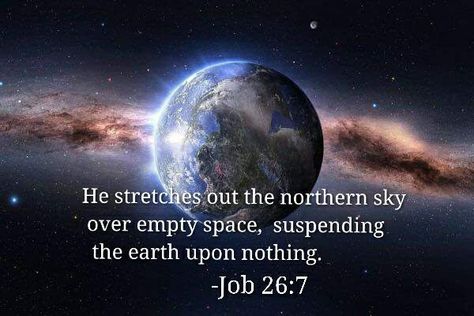
“The dead tremble—those who live beneath the waters. The underworld is naked in God’s presence. The place of destruction is uncovered. God stretches the northern sky over empty space and hangs the earth on nothing. He wraps the rain in his thick clouds, and the clouds don’t burst with the weight. He covers the face of the moon, shrouding it with his clouds. He created the horizon when he separated the waters; he set the boundary between day and night. The foundations of heaven tremble; they shudder at his rebuke. By his power the sea grew calm. By his skill he crushed the great sea monster. His Spirit made the heavens beautiful, and his power pierced the gliding serpent. These are just the beginning of all that he does, merely a whisper of his power. Who, then, can comprehend the thunder of his power?”
__________
May the peace of the Lord Christ go with you, wherever He may send you. May He guide you through the wilderness, protect you through the storm. May He bring you home rejoicing at the wonders He has shown you. May He bring you home rejoicing once again into our doors.
__________
+ In the name of the Father, and the Son, and the Holy Spirit. Amen!

 So to pacify the crowd, Pilate released Barabbas to them. He ordered Jesus flogged with a lead-tipped whip, then turned him over to the Roman soldiers to be crucified.
 At noon, darkness fell across the whole land until three o’clock. Then at three o’clock Jesus called out with a loud voice, “Eloi, Eloi, lema sabachthani?” which means “My God, my God, why have you abandoned me?”








 I looked at the earth, and it was empty and formless. I looked at the heavens, and there was no light. I looked at the mountains and hills, and they trembled and shook. I looked, and all the people were gone. All the birds of the sky had flown away. I looked, and the fertile fields had become a wilderness. The towns lay in ruins, crushed by the Lord’s fierce anger.