+ In the Name of the Father, and the Son, and the Holy Spirit. Amen.
Opening Prayer:
God of glory and compassion, at your touch the wilderness blossoms,
broken lives are made whole, and fearful hearts grow strong in faith.
Open our eyes to your presence and awaken our hearts to sing your praise.
To all who long for your Son’s return grant perseverance and patience,
that we may announce in word and deed the good news of the kingdom.
We ask this through him whose coming is certain, whose day draws near:
your Son, our Lord Jesus Christ, who lives and reigns with you in the unity of the Holy Spirit,
God for ever and ever. Amen
__________
“Isaiah 35: Streams In The Desert” – Terry Devine-King
John the Baptist, who was in prison, heard about all the things the Messiah was doing. So he sent his disciples to ask Jesus, “Are you the Messiah we’ve been expecting, or should we keep looking for someone else?”
Jesus told them, “Go back to John and tell him what you have heard and seen— the blind see, the lame walk, those with leprosy are cured, the deaf hear, the dead are raised to life, and the Good News is being preached to the poor.” And he added, “God blesses those who do not fall away because of me.”
As John’s disciples were leaving, Jesus began talking about him to the crowds. “What kind of man did you go into the wilderness to see? Was he a weak reed, swayed by every breath of wind? Or were you expecting to see a man dressed in expensive clothes? No, people with expensive clothes live in palaces. Were you looking for a prophet? Yes, and he is more than a prophet. John is the man to whom the Scriptures refer when they say,
‘Look, I am sending my messenger ahead of you, and he will prepare your way before you.’
“I tell you the truth, of all who have ever lived, none is greater than John the Baptist. Yet even the least person in the Kingdom of Heaven is greater than he is!
__________
“What Joy (Psalm 146)” – Sarah Emerson
__________
Intercession:
Mighty and Everlasting God: You have sent Your Son to save us.Prepare and hearts to receive Him. And reveal the presence of your Kingdom as it advances around us. We pray –
+ That the blind may see, and the deaf hear…
+ That the sick may be healed, and the dead raised to life….
+ That the tired may be strengthened, and the weak encouraged….
+ That the poor may receive the Good News of your loving-kindness….
+ That sorrow and sadness may be replaced with gladness and joy….
+ That all who trust in Your Name may be filled with everlasting joy….
Mighty and Everlasting God: You have sent Your Son to save us. Prepare our hearts to celebrate His humble birth, and welcome His glorious return. We ask this in His powerful name, the name of Jesus! Amen.
__________
“Gaudete” – Steeleye Span
Rejoice, rejoice! Christ is born
Of the Virgin Mary – Rejoice!
The time of grace has come—What we have wished for;
Songs of joy Let us give back faithfully.
God has become man, With nature marveling,
The world has been renewed By the reigning Christ.
The closed gate of Ezekiel Is passed through,
Whence the light is risen; Salvation has been found.
Therefore, let our assembly Now sing in brightness
Let it bless the Lord: Salvation to our King.
__________
Closing: (Isaiah 35:3-4)
Strengthen those who have tired hands, and encourage those who have weak knees.
Say to those with fearful hearts, “Be strong, and do not fear,
for your God is coming to destroy your enemies.
He is coming to save you.”
__________
+ In the Name of the Father, and the Son, and the Holy Spirit. Amen.
+ In the Name of the Father, and the Son, and the Holy Spirit. Amen.
Opening: (A Collect for Sabbath Rest – Saturday)
Almighty God, who after the creation of the world rested from all your works and set aside a day of rest for all your creatures: Grant that we, putting away all earthly anxieties, may be duly prepared to meet you in worship, and that our rest here upon earth may be a preparation for the eternal rest promised to your people in heaven; through Jesus Christ our Lord. Amen.
__________
Paul stayed in Corinth for some time after that, then said good-bye to the brothers and sisters and went to nearby Cenchrea. There he shaved his head according to Jewish custom, marking the end of a vow. Then he set sail for Syria, taking Priscilla and Aquila with him.
They stopped first at the port of Ephesus, where Paul left the others behind. While he was there, he went to the synagogue to reason with the Jews. They asked him to stay longer, but he declined. As he left, however, he said, “I will come back later, God willing.” Then he set sail from Ephesus. The next stop was at the port of Caesarea. From there he went up and visited the church at Jerusalem and then went back to Antioch.
After spending some time in Antioch, Paul went back through Galatia and Phrygia, visiting and strengthening all the believers.
Apollos Instructed at Ephesus
Meanwhile, a Jew named Apollos, an eloquent speaker who knew the Scriptures well, had arrived in Ephesus from Alexandria in Egypt. He had been taught the way of the Lord, and he taught others about Jesus with an enthusiastic spirit and with accuracy. However, he knew only about John’s baptism. When Priscilla and Aquila heard him preaching boldly in the synagogue, they took him aside and explained the way of God even more accurately.
Apollos had been thinking about going to Achaia, and the brothers and sisters in Ephesus encouraged him to go. They wrote to the believers in Achaia, asking them to welcome him. When he arrived there, he proved to be of great benefit to those who, by God’s grace, had believed. He refuted the Jews with powerful arguments in public debate. Using the Scriptures, he explained to them that Jesus was the Messiah.
Paul’s Third Missionary Journey
While Apollos was in Corinth, Paul traveled through the interior regions until he reached Ephesus, on the coast, where he found several believers. “Did you receive the Holy Spirit when you believed?” he asked them.
“No,” they replied, “we haven’t even heard that there is a Holy Spirit.”
“Then what baptism did you experience?” he asked.
And they replied, “The baptism of John.”
Paul said, “John’s baptism called for repentance from sin. But John himself told the people to believe in the one who would come later, meaning Jesus.”
As soon as they heard this, they were baptized in the name of the Lord Jesus. Then when Paul laid his hands on them, the Holy Spirit came on them, and they spoke in other tongues and prophesied. There were about twelve men in all.
Paul Ministers in Ephesus
Then Paul went to the synagogue and preached boldly for the next three months, arguing persuasively about the Kingdom of God. But some became stubborn, rejecting his message and publicly speaking against the Way. So Paul left the synagogue and took the believers with him. Then he held daily discussions at the lecture hall of Tyrannus. This went on for the next two years, so that people throughout the province of Asia—both Jews and Greeks—heard the word of the Lord.
God gave Paul the power to perform unusual miracles. When handkerchiefs or aprons that had merely touched his skin were placed on sick people, they were healed of their diseases, and evil spirits were expelled.
A group of Jews was traveling from town to town casting out evil spirits. They tried to use the name of the Lord Jesus in their incantation, saying, “I command you in the name of Jesus, whom Paul preaches, to come out!” Seven sons of Sceva, a leading priest, were doing this. But one time when they tried it, the evil spirit replied, “I know Jesus, and I know Paul, but who are you?” Then the man with the evil spirit leaped on them, overpowered them, and attacked them with such violence that they fled from the house, naked and battered.
The story of what happened spread quickly all through Ephesus, to Jews and Greeks alike. A solemn fear descended on the city, and the name of the Lord Jesus was greatly honored. Many who became believers confessed their sinful practices. A number of them who had been practicing sorcery brought their incantation books and burned them at a public bonfire. The value of the books was several million dollars. So the message about the Lord spread widely and had a powerful effect.
Afterward Paul felt compelled by the Spirit to go over to Macedonia and Achaia before going to Jerusalem. “And after that,” he said, “I must go on to Rome!” He sent his two assistants, Timothy and Erastus, ahead to Macedonia while he stayed awhile longer in the province of Asia.
The Riot in Ephesus
About that time, serious trouble developed in Ephesus concerning the Way. It began with Demetrius, a silversmith who had a large business manufacturing silver shrines of the Greek goddess Artemis. He kept many craftsmen busy. He called them together, along with others employed in similar trades, and addressed them as follows:
“Gentlemen, you know that our wealth comes from this business. But as you have seen and heard, this man Paul has persuaded many people that handmade gods aren’t really gods at all. And he’s done this not only here in Ephesus but throughout the entire province! Of course, I’m not just talking about the loss of public respect for our business. I’m also concerned that the temple of the great goddess Artemis will lose its influence and that Artemis—this magnificent goddess worshiped throughout the province of Asia and all around the world—will be robbed of her great prestige!”
At this their anger boiled, and they began shouting, “Great is Artemis of the Ephesians!” Soon the whole city was filled with confusion. Everyone rushed to the amphitheater, dragging along Gaius and Aristarchus, who were Paul’s traveling companions from Macedonia. Paul wanted to go in, too, but the believers wouldn’t let him. Some of the officials of the province, friends of Paul, also sent a message to him, begging him not to risk his life by entering the amphitheater.
Inside, the people were all shouting, some one thing and some another. Everything was in confusion. In fact, most of them didn’t even know why they were there. The Jews in the crowd pushed Alexander forward and told him to explain the situation. He motioned for silence and tried to speak. But when the crowd realized he was a Jew, they started shouting again and kept it up for about two hours: “Great is Artemis of the Ephesians! Great is Artemis of the Ephesians!”
At last the mayor was able to quiet them down enough to speak. “Citizens of Ephesus,” he said. “Everyone knows that Ephesus is the official guardian of the temple of the great Artemis, whose image fell down to us from heaven. Since this is an undeniable fact, you should stay calm and not do anything rash. You have brought these men here, but they have stolen nothing from the temple and have not spoken against our goddess.
“If Demetrius and the craftsmen have a case against them, the courts are in session and the officials can hear the case at once. Let them make formal charges. And if there are complaints about other matters, they can be settled in a legal assembly. I am afraid we are in danger of being charged with rioting by the Roman government, since there is no cause for all this commotion. And if Rome demands an explanation, we won’t know what to say.” Then he dismissed them, and they dispersed.
Paul Goes to Macedonia and Greece
When the uproar was over, Paul sent for the believers and encouraged them. Then he said good-bye and left for Macedonia. While there, he encouraged the believers in all the towns he passed through. Then he traveled down to Greece, where he stayed for three months. He was preparing to sail back to Syria when he discovered a plot by some Jews against his life, so he decided to return through Macedonia.
Several men were traveling with him. They were Sopater son of Pyrrhus from Berea; Aristarchus and Secundus from Thessalonica; Gaius from Derbe; Timothy; and Tychicus and Trophimus from the province of Asia. They went on ahead and waited for us at Troas.
This letter is from Paul, chosen by the will of God to be an apostle of Christ Jesus, and from our brother Sosthenes.
I am writing to God’s church in Corinth, to you who have been called by God to be his own holy people. He made you holy by means of Christ Jesus, just as he did for all people everywhere who call on the name of our Lord Jesus Christ, their Lord and ours.
May God our Father and the Lord Jesus Christ give you grace and peace.
Paul Gives Thanks to God
I always thank my God for you and for the gracious gifts he has given you, now that you belong to Christ Jesus. Through him, God has enriched your church in every way—with all of your eloquent words and all of your knowledge. This confirms that what I told you about Christ is true. Now you have every spiritual gift you need as you eagerly wait for the return of our Lord Jesus Christ. He will keep you strong to the end so that you will be free from all blame on the day when our Lord Jesus Christ returns. God will do this, for he is faithful to do what he says, and he has invited you into partnership with his Son, Jesus Christ our Lord.
Divisions in the Church
I appeal to you, dear brothers and sisters, by the authority of our Lord Jesus Christ, to live in harmony with each other. Let there be no divisions in the church. Rather, be of one mind, united in thought and purpose. For some members of Chloe’s household have told me about your quarrels, my dear brothers and sisters. Some of you are saying, “I am a follower of Paul.” Others are saying, “I follow Apollos,” or “I follow Peter,” or “I follow only Christ.”
Has Christ been divided into factions? Was I, Paul, crucified for you? Were any of you baptized in the name of Paul? Of course not! I thank God that I did not baptize any of you except Crispus and Gaius, for now no one can say they were baptized in my name. (Oh yes, I also baptized the household of Stephanas, but I don’t remember baptizing anyone else.) For Christ didn’t send me to baptize, but to preach the Good News—and not with clever speech, for fear that the cross of Christ would lose its power.
The Wisdom of God
The message of the cross is foolish to those who are headed for destruction! But we who are being saved know it is the very power of God. As the Scriptures say,
“I will destroy the wisdom of the wise and discard the intelligence of the intelligent.”
So where does this leave the philosophers, the scholars, and the world’s brilliant debaters? God has made the wisdom of this world look foolish. Since God in his wisdom saw to it that the world would never know him through human wisdom, he has used our foolish preaching to save those who believe. It is foolish to the Jews, who ask for signs from heaven. And it is foolish to the Greeks, who seek human wisdom. So when we preach that Christ was crucified, the Jews are offended and the Gentiles say it’s all nonsense.
But to those called by God to salvation, both Jews and Gentiles, Christ is the power of God and the wisdom of God. This foolish plan of God is wiser than the wisest of human plans, and God’s weakness is stronger than the greatest of human strength.
Remember, dear brothers and sisters, that few of you were wise in the world’s eyes or powerful or wealthy when God called you. Instead, God chose things the world considers foolish in order to shame those who think they are wise. And he chose things that are powerless to shame those who are powerful. God chose things despised by the world, things counted as nothing at all, and used them to bring to nothing what the world considers important. As a result, no one can ever boast in the presence of God.
God has united you with Christ Jesus. For our benefit God made him to be wisdom itself. Christ made us right with God; he made us pure and holy, and he freed us from sin. Therefore, as the Scriptures say, “If you want to boast, boast only about the Lord.”
__________
Morning Reflection:
“Christ crucified” – offensive and foolish
The message of the cross is foolish to those who are headed for destruction! But we who are being saved know it is the very power of God.
– 1 Corinthians 1:18 –
Today’s reading spans a lot of time and covers a lot of territory. But at its center is the message of the cross – offensive to some and foolish to others, but to those who believe the power and wisdom of God.
The resistance to the message of “Christ crucified” was both virulent and varied. In Ephesus Jews and Greeks alike rioted and attacked believers in their homes. In spite of this, many of them became believers and confessed their sinful practices. The Ephesian “Chamber of Commerce” got into the act when their livelihood was threatened, causing an uproar that required the civil authorities to quell. In Syria a plot to kill Paul was discovered. And everywhere Paul and his companions traveled their personal safety was in jeopardy.
But our two readings are especially relevant for believers today. In communities and countries where there is a significant Christian presence we are sometimes surprised at the virulence and violence of the resistance. But we shouldn’t be, our reading in 1 Corinthians clarifies what’s at stake – foolishness or nonsense to unbelievers vs the very power of God to those who are being saved.
Christ crucified is fundamentally divisive and disruptive – it challenges and confronts the secular wisdom of our times. And they won’t give up without a fight.
So where does this leave the philosophers, the scholars, and the world’s brilliant debaters? God has made the wisdom of this world look foolish.
– 1 Corinthians 1:20 –
This foolish plan of God is wiser than the wisest of human plans, and God’s weakness is stronger than the greatest of human strength.
– 1 Corinthians 1:25 –
Questions for consideration:
When you consider your family, friends, and neighbors, what do they think of the message of the cross – foolishness or powerful? Please explain.
When you consider peoples’ resistance to the message of the cross – what offends them? What do they have to lose by accepting Christ crucified? Please explain.
Compare the tenets of prevailing human wisdom with the tenets of God’s wisdom. What challenges do you face trusting in God’s wisdom? Please explain.
__________
Morning Prayer: –
Thank you heavenly Father for adopting us into your family and enriching our lives through faith in your Son Jesus Christ
Fill us with your Spirit as we eagerly await his return.
Strengthen us and free us to live holy, blameless lives.
It’s in Christ that we are made pure and holy. It’s in him that we are freed from sin and made right with you. And it’s through him that we ask you to empower and strengthen us. Amen.
__________
“The Power of the Cross” – Stuart Townend
__________
Closing:
May the peace of the Lord Christ go with you, wherever He may send you. May He guide you through the wilderness, and protect you through the storm. May He bring you home rejoicing at the wonders He has shown you. May He bring you home rejoicing once again into our doors.
+ In the name of the Father, and of the Son, and of the Holy Spirit. Amen
+ In the name of the Father, and of the Son, and of the Holy Spirit. Amen.
Opening – A Collect for the Renewal of Life (Monday)
O God, the King eternal, whose light divides the day from the night and turns the shadow of death into the morning: Drive far from us all wrong desires, incline our hearts to keep your law, and guide our feet into the way of peace; that, having done your will with cheerfulness during the day, we may, when night comes, rejoice to give you thanks; through Jesus Christ our Lord. Amen.
The following week almost the entire city turned out to hear them preach the word of the Lord. But when some of the Jews saw the crowds, they were jealous; so they slandered Paul and argued against whatever he said.
Then Paul and Barnabas spoke out boldly and declared, “It was necessary that we first preach the word of God to you Jews. But since you have rejected it and judged yourselves unworthy of eternal life, we will offer it to the Gentiles. For the Lord gave us this command when he said,
‘I have made you a light to the Gentiles, to bring salvation to the farthest corners of the earth.’”
When the Gentiles heard this, they were very glad and thanked the Lord for his message; and all who were chosen for eternal life became believers. So the Lord’s message spread throughout that region.
Then the Jews stirred up the influential religious women and the leaders of the city, and they incited a mob against Paul and Barnabas and ran them out of town. So they shook the dust from their feet as a sign of rejection and went to the town of Iconium. And the believers were filled with joy and with the Holy Spirit.
Paul and Barnabas in Iconium
The same thing happened in Iconium. Paul and Barnabas went to the Jewish synagogue and preached with such power that a great number of both Jews and Greeks became believers. Some of the Jews, however, spurned God’s message and poisoned the minds of the Gentiles against Paul and Barnabas. But the apostles stayed there a long time, preaching boldly about the grace of the Lord. And the Lord proved their message was true by giving them power to do miraculous signs and wonders. But the people of the town were divided in their opinion about them. Some sided with the Jews, and some with the apostles.
Then a mob of Gentiles and Jews, along with their leaders, decided to attack and stone them. When the apostles learned of it, they fled to the region of Lycaonia—to the towns of Lystra and Derbe and the surrounding area. And there they preached the Good News.
Paul and Barnabas in Lystra and Derbe
While they were at Lystra, Paul and Barnabas came upon a man with crippled feet. He had been that way from birth, so he had never walked. He was sitting and listening as Paul preached. Looking straight at him, Paul realized he had faith to be healed. So Paul called to him in a loud voice, “Stand up!” And the man jumped to his feet and started walking.
When the crowd saw what Paul had done, they shouted in their local dialect, “These men are gods in human form!” They decided that Barnabas was the Greek god Zeus and that Paul was Hermes, since he was the chief speaker. Now the temple of Zeus was located just outside the town. So the priest of the temple and the crowd brought bulls and wreaths of flowers to the town gates, and they prepared to offer sacrifices to the apostles.
But when the apostles Barnabas and Paul heard what was happening, they tore their clothing in dismay and ran out among the people, shouting, “Friends, why are you doing this? We are merely human beings—just like you! We have come to bring you the Good News that you should turn from these worthless things and turn to the living God, who made heaven and earth, the sea, and everything in them. In the past he permitted all the nations to go their own ways, but he never left them without evidence of himself and his goodness. For instance, he sends you rain and good crops and gives you food and joyful hearts.” But even with these words, Paul and Barnabas could scarcely restrain the people from sacrificing to them.
Then some Jews arrived from Antioch and Iconium and won the crowds to their side. They stoned Paul and dragged him out of town, thinking he was dead. But as the believers gathered around him, he got up and went back into the town. The next day he left with Barnabas for Derbe.
Paul and Barnabas Return to Antioch of Syria
After preaching the Good News in Derbe and making many disciples, Paul and Barnabas returned to Lystra, Iconium, and Antioch of Pisidia, where they strengthened the believers. They encouraged them to continue in the faith, reminding them that we must suffer many hardships to enter the Kingdom of God. Paul and Barnabas also appointed elders in every church. With prayer and fasting, they turned the elders over to the care of the Lord, in whom they had put their trust. Then they traveled back through Pisidia to Pamphylia. They preached the word in Perga, then went down to Attalia.
Finally, they returned by ship to Antioch of Syria, where their journey had begun. The believers there had entrusted them to the grace of God to do the work they had now completed. Upon arriving in Antioch, they called the church together and reported everything God had done through them and how he had opened the door of faith to the Gentiles, too. And they stayed there with the believers for a long time.
The Council at Jerusalem
While Paul and Barnabas were at Antioch of Syria, some men from Judea arrived and began to teach the believers: “Unless you are circumcised as required by the law of Moses, you cannot be saved.” Paul and Barnabas disagreed with them, arguing vehemently. Finally, the church decided to send Paul and Barnabas to Jerusalem, accompanied by some local believers, to talk to the apostles and elders about this question. The church sent the delegates to Jerusalem, and they stopped along the way in Phoenicia and Samaria to visit the believers. They told them—much to everyone’s joy—that the Gentiles, too, were being converted.
When they arrived in Jerusalem, Barnabas and Paul were welcomed by the whole church, including the apostles and elders. They reported everything God had done through them. But then some of the believers who belonged to the sect of the Pharisees stood up and insisted, “The Gentile converts must be circumcised and required to follow the law of Moses.”
So the apostles and elders met together to resolve this issue. At the meeting, after a long discussion, Peter stood and addressed them as follows: “Brothers, you all know that God chose me from among you some time ago to preach to the Gentiles so that they could hear the Good News and believe. God knows people’s hearts, and he confirmed that he accepts Gentiles by giving them the Holy Spirit, just as he did to us. He made no distinction between us and them, for he cleansed their hearts through faith. So why are you now challenging God by burdening the Gentile believers with a yoke that neither we nor our ancestors were able to bear? We believe that we are all saved the same way, by the undeserved grace of the Lord Jesus.”
Everyone listened quietly as Barnabas and Paul told about the miraculous signs and wonders God had done through them among the Gentiles.
When they had finished, James stood and said, “Brothers, listen to me. Peter has told you about the time God first visited the Gentiles to take from them a people for himself. And this conversion of Gentiles is exactly what the prophets predicted. As it is written:
‘Afterward I will return and restore the fallen house of David. I will rebuild its ruins and restore it, so that the rest of humanity might seek the Lord, including the Gentiles—all those I have called to be mine. The Lord has spoken—he who made these things known so long ago.’
“And so my judgment is that we should not make it difficult for the Gentiles who are turning to God. Instead, we should write and tell them to abstain from eating food offered to idols, from sexual immorality, from eating the meat of strangled animals, and from consuming blood. For these laws of Moses have been preached in Jewish synagogues in every city on every Sabbath for many generations.”
The Letter for Gentile Believers
Then the apostles and elders together with the whole church in Jerusalem chose delegates, and they sent them to Antioch of Syria with Paul and Barnabas to report on this decision. The men chosen were two of the church leaders—Judas (also called Barsabbas) and Silas. This is the letter they took with them:
“This letter is from the apostles and elders, your brothers in Jerusalem. It is written to the Gentile believers in Antioch, Syria, and Cilicia. Greetings!
“We understand that some men from here have troubled you and upset you with their teaching, but we did not send them! So we decided, having come to complete agreement, to send you official representatives, along with our beloved Barnabas and Paul, who have risked their lives for the name of our Lord Jesus Christ. We are sending Judas and Silas to confirm what we have decided concerning your question.
“For it seemed good to the Holy Spirit and to us to lay no greater burden on you than these few requirements: You must abstain from eating food offered to idols, from consuming blood or the meat of strangled animals, and from sexual immorality. If you do this, you will do well. Farewell.”
The messengers went at once to Antioch, where they called a general meeting of the believers and delivered the letter. And there was great joy throughout the church that day as they read this encouraging message.
Then Judas and Silas, both being prophets, spoke at length to the believers, encouraging and strengthening their faith. They stayed for a while, and then the believers sent them back to the church in Jerusalem with a blessing of peace. Paul and Barnabas stayed in Antioch. They and many others taught and preached the word of the Lord there.
__________
Morning Reflection:
“We are all saved the same way,
by the undeserved grace of the Lord Jesus.”
– Acts 15:11 –
The increasing number of Gentiles who were becoming Christians raised a problem within the church. What was the relationship of the church to Judaism? Some Christians, especially the more conservative Jewish believers, argued that Christianity was a party within Judaism, the party of true believers. They assumed that Gentile Christians, therefore, needed to become Jewish proselytes, which involved being circumcised and obeying the Mosaic Law. Other Christians, the more broad-minded Jewish believers and the Gentile converts, saw no need for these restrictions. They viewed the church not as a party within Judaism but as a distinct group separate from Judaism that incorporated both believing Jews and believing Gentiles. This difference of viewpoint led to the meeting Luke recorded in this section. He described it at length to explain the issues involved and to clarify their importance. Today’s reading is both structurally and theologically at the center of Acts.
Some key points to note:
+ The welcome reception of the Gentiles – “When the Gentiles heard this, they were very glad and thanked the Lord for his message; and all who were chosen for eternal life became believers.”
+The validation of the Gospel message– “And the Lord proved their message was true by giving them power to do miraculous signs and wonders.”
+ The divisive nature of the Gospel – But the people of the town were divided in their opinion about them. Some sided with the Jews, and some with the apostles.
+ The religious confusion within the Gentile world – They decided that Barnabas was the Greek god Zeus and that Paul was Hermes, since he was the chief speaker.
+ The violent reaction of unbelieving Jews and Gentiles – They stoned Paul and dragged him out of town, thinking he was dead. But as the believers gathered around him, he got up and went back into the town.
+ The centerpiece of the Gospel message – We believe we are all saved the same way, by the undeserved grace of the Lord Jesus.”
Questions for consideration:
How would you describe the community in which you live? Is it receptive or resistant to the Gospel? Please explain.
How has the Holy Spirit validated the Good News of the Gospel in your community? Please explain.
What do you view as the major obstacle to cross cultural evangelism in your community? Please explain.
What obstacles need to be overcome to unify believers from different traditions in your community? Please explain.
__________
Morning Prayer: For the Mission of the Church –
O God, our heavenly Father, you manifested your love by sending your only-begotten Son into the world, that all might live through him: Pour out your Spirit on your Church, that we may fulfill his command to preach the Gospel to all people. Send forth laborers into your harvest; defend them in all dangers and temptations; and hasten the time when the fullness of the Gentiles shall be gathered in, and faithful Israel shall be saved; through your Son Jesus Christ our Lord. Amen.
__________
“In Christ Alone” – Keith Lancaster & The Acappella Company
__________
Closing:
May the peace of the Lord Christ go with you, wherever He may send you. May He guide you through the wilderness, and protect you through the storm. May He bring you home rejoicing at the wonders He has shown you. May He bring you home rejoicing once again into our doors.
+ In the name of the Father, and of the Son, and of the Holy Spirit. Amen
+ In the Name of the Father, and the Son, and the Holy Spirit. Amen.
Opening Prayer:
Your kingdom is at hand, O God of justice and peace; you made John the Baptist its herald to announce the coming of your Christ, who baptizes with the Holy Spirit and with fire.
Give us a spirit of repentance to make us worthy of the kingdom. Let complacency yield to conviction, that in our day justice will flourish and conflict give way to the peace you bestow in Christ.
Grant this through him whose coming is certain, whose day draws near: your Son, our Lord Jesus Christ, who lives and reigns with you in the unity of the Holy Spirit, God for ever and ever. Amen.
__________
Come Thou Long-Expected Jesus” – Red Mountain Music
In those days John the Baptist came to the Judean wilderness and began preaching. His message was, “Repent of your sins and turn to God, for the Kingdom of Heaven is near.” The prophet Isaiah was speaking about John when he said,
“He is a voice shouting in the wilderness, ‘Prepare the way for the Lord’s coming! Clear the road for him!’”
John’s clothes were woven from coarse camel hair, and he wore a leather belt around his waist. For food he ate locusts and wild honey. People from Jerusalem and from all of Judea and all over the Jordan Valley went out to see and hear John. And when they confessed their sins, he baptized them in the Jordan River.
But when he saw many Pharisees and Sadducees coming to watch him baptize, he denounced them. “You brood of snakes!” he exclaimed. “Who warned you to flee the coming wrath? Prove by the way you live that you have repented of your sins and turned to God. Don’t just say to each other, ‘We’re safe, for we are descendants of Abraham.’ That means nothing, for I tell you, God can create children of Abraham from these very stones. Even now the ax of God’s judgment is poised, ready to sever the roots of the trees. Yes, every tree that does not produce good fruit will be chopped down and thrown into the fire.
“I baptize with water those who repent of their sins and turn to God. But someone is coming soon who is greater than I am—so much greater that I’m not worthy even to be his slave and carry his sandals. He will baptize you with the Holy Spirit and with fire. He is ready to separate the chaff from the wheat with his winnowing fork. Then he will clean up the threshing area, gathering the wheat into his barn but burning the chaff with never-ending fire.”
__________
Prepare The Way” – Simply Taizé
__________
Intercession:
Almighty God, to you all hearts are open, all desires known, and from you no secrets are hid: Cleanse the thoughts of our hearts by the inspiration of your Holy Spirit, that we may perfectly love you, and worthily magnify your holy Name; through Christ our Lord. Amen.
And now Lord, in your mercy, hear our prayers for the church and for the world as we prepare for the return of Christ Jesus in glory. We pray especially –
+ For the peace of the whole world, especially in the Middle East, that all may repent and turn to you….
+ For the well-being and unity of your people, throughout the world, that all may repent and turn to you….
+ For all those who proclaim the Gospel at home and abroad, that all may repent and turn to you….
+ For all who teach and disciple others at home and abroad, that all may repent and turn to you….
+ For our nation, for those in authority, and for all in public service, that all may repent and turn to you….
For our brothers and sisters in Christ who are persecuted for their faith, that all may repent and turn to you….
+ For all those who are in trouble, sorrow, need, sickness, or any other adversity, that all may repent and turn to you….
Heavenly Father, grant these our prayers for the sake of Jesus Christ, our only Mediator and Advocate, who lives and reigns with you in the unity of the Holy Spirit, one God, now and for ever. Amen.
I pray that God, the source of hope, will fill you completely with joy and peace because you trust in him. Then you will overflow with confident hope through the power of the Holy Spirit.
__________
+ In the Name of the Father, and the Son, and the Holy Spirit. Amen.
+ In the Name of the Father, and the Son, and the Holy Spirit. Amen.
Opening: (A Collect for Sabbath Rest – Saturday)
Almighty God, who after the creation of the world rested from all your works and set aside a day of rest for all your creatures: Grant that we, putting away all earthly anxieties, may be duly prepared to meet you in worship, and that our rest here upon earth may be a preparation for the eternal rest promised to your people in heaven; through Jesus Christ our Lord. Amen.
__________
About that time King Herod Agrippa began to persecute some believers in the church. He had the apostle James (John’s brother) killed with a sword. When Herod saw how much this pleased the Jewish people, he also arrested Peter. (This took place during the Passover celebration.) Then he imprisoned him, placing him under the guard of four squads of four soldiers each. Herod intended to bring Peter out for public trial after the Passover. But while Peter was in prison, the church prayed very earnestly for him.
Peter’s Miraculous Escape from Prison
The night before Peter was to be placed on trial, he was asleep, fastened with two chains between two soldiers. Others stood guard at the prison gate. Suddenly, there was a bright light in the cell, and an angel of the Lord stood before Peter. The angel struck him on the side to awaken him and said, “Quick! Get up!” And the chains fell off his wrists. Then the angel told him, “Get dressed and put on your sandals.” And he did. “Now put on your coat and follow me,” the angel ordered.
So Peter left the cell, following the angel. But all the time he thought it was a vision. He didn’t realize it was actually happening. They passed the first and second guard posts and came to the iron gate leading to the city, and this opened for them all by itself. So they passed through and started walking down the street, and then the angel suddenly left him.
Peter finally came to his senses. “It’s really true!” he said. “The Lord has sent his angel and saved me from Herod and from what the Jewish leaders had planned to do to me!”
When he realized this, he went to the home of Mary, the mother of John Mark, where many were gathered for prayer. He knocked at the door in the gate, and a servant girl named Rhoda came to open it. When she recognized Peter’s voice, she was so overjoyed that, instead of opening the door, she ran back inside and told everyone, “Peter is standing at the door!”
“You’re out of your mind!” they said. When she insisted, they decided, “It must be his angel.”
Meanwhile, Peter continued knocking. When they finally opened the door and saw him, they were amazed. He motioned for them to quiet down and told them how the Lord had led him out of prison. “Tell James and the other brothers what happened,” he said. And then he went to another place.
At dawn there was a great commotion among the soldiers about what had happened to Peter. Herod Agrippa ordered a thorough search for him. When he couldn’t be found, Herod interrogated the guards and sentenced them to death. Afterward Herod left Judea to stay in Caesarea for a while.
The Death of Herod Agrippa
Now Herod was very angry with the people of Tyre and Sidon. So they sent a delegation to make peace with him because their cities were dependent upon Herod’s country for food. The delegates won the support of Blastus, Herod’s personal assistant, and an appointment with Herod was granted. When the day arrived, Herod put on his royal robes, sat on his throne, and made a speech to them. The people gave him a great ovation, shouting, “It’s the voice of a god, not of a man!”
Instantly, an angel of the Lord struck Herod with a sickness, because he accepted the people’s worship instead of giving the glory to God. So he was consumed with worms and died.
Meanwhile, the word of God continued to spread, and there were many new believers.
When Barnabas and Saul had finished their mission to Jerusalem, they returned, taking John Mark with them.
Barnabas and Saul Are Commissioned
Among the prophets and teachers of the church at Antioch of Syria were Barnabas, Simeon (called “the black man”), Lucius (from Cyrene), Manaen (the childhood companion of King Herod Antipas), and Saul. One day as these men were worshiping the Lord and fasting, the Holy Spirit said, “Appoint Barnabas and Saul for the special work to which I have called them.” So after more fasting and prayer, the men laid their hands on them and sent them on their way.
Paul’s First Missionary Journey
So Barnabas and Saul were sent out by the Holy Spirit. They went down to the seaport of Seleucia and then sailed for the island of Cyprus. There, in the town of Salamis, they went to the Jewish synagogues and preached the word of God. John Mark went with them as their assistant.
Afterward they traveled from town to town across the entire island until finally they reached Paphos, where they met a Jewish sorcerer, a false prophet named Bar-Jesus. He had attached himself to the governor, Sergius Paulus, who was an intelligent man. The governor invited Barnabas and Saul to visit him, for he wanted to hear the word of God. But Elymas, the sorcerer (as his name means in Greek), interfered and urged the governor to pay no attention to what Barnabas and Saul said. He was trying to keep the governor from believing.
Saul, also known as Paul, was filled with the Holy Spirit, and he looked the sorcerer in the eye. Then he said, “You son of the devil, full of every sort of deceit and fraud, and enemy of all that is good! Will you never stop perverting the true ways of the Lord? Watch now, for the Lord has laid his hand of punishment upon you, and you will be struck blind. You will not see the sunlight for some time.” Instantly mist and darkness came over the man’s eyes, and he began groping around begging for someone to take his hand and lead him.
When the governor saw what had happened, he became a believer, for he was astonished at the teaching about the Lord.
Paul Preaches in Antioch of Pisidia
Paul and his companions then left Paphos by ship for Pamphylia, landing at the port town of Perga. There John Mark left them and returned to Jerusalem. But Paul and Barnabas traveled inland to Antioch of Pisidia.
On the Sabbath they went to the synagogue for the services. After the usual readings from the books of Moses and the prophets, those in charge of the service sent them this message: “Brothers, if you have any word of encouragement for the people, come and give it.” So Paul stood, lifted his hand to quiet them, and started speaking. “Men of Israel,” he said, “and you God-fearing Gentiles, listen to me.
“The God of this nation of Israel chose our ancestors and made them multiply and grow strong during their stay in Egypt. Then with a powerful arm he led them out of their slavery. He put up with them through forty years of wandering in the wilderness. Then he destroyed seven nations in Canaan and gave their land to Israel as an inheritance. All this took about 450 years.
“After that, God gave them judges to rule until the time of Samuel the prophet. Then the people begged for a king, and God gave them Saul son of Kish, a man of the tribe of Benjamin, who reigned for forty years. But God removed Saul and replaced him with David, a man about whom God said, ‘I have found David son of Jesse, a man after my own heart. He will do everything I want him to do.’
“And it is one of King David’s descendants, Jesus, who is God’s promised Savior of Israel! Before he came, John the Baptist preached that all the people of Israel needed to repent of their sins and turn to God and be baptized. As John was finishing his ministry he asked, ‘Do you think I am the Messiah? No, I am not! But he is coming soon—and I’m not even worthy to be his slave and untie the sandals on his feet.’
“Brothers—you sons of Abraham, and also you God-fearing Gentiles—this message of salvation has been sent to us! The people in Jerusalem and their leaders did not recognize Jesus as the one the prophets had spoken about. Instead, they condemned him, and in doing this they fulfilled the prophets’ words that are read every Sabbath. They found no legal reason to execute him, but they asked Pilate to have him killed anyway.
“When they had done all that the prophecies said about him, they took him down from the cross and placed him in a tomb. But God raised him from the dead! And over a period of many days he appeared to those who had gone with him from Galilee to Jerusalem. They are now his witnesses to the people of Israel.
“And now we are here to bring you this Good News. The promise was made to our ancestors, and God has now fulfilled it for us, their descendants, by raising Jesus. This is what the second psalm says about Jesus:
‘You are my Son. Today I have become your Father.’
For God had promised to raise him from the dead, not leaving him to rot in the grave. He said, ‘I will give you the sacred blessings I promised to David.’ Another psalm explains it more fully: ‘You will not allow your Holy One to rot in the grave.’ This is not a reference to David, for after David had done the will of God in his own generation, he died and was buried with his ancestors, and his body decayed. No, it was a reference to someone else—someone whom God raised and whose body did not decay.
“Brothers, listen! We are here to proclaim that through this man Jesus there is forgiveness for your sins. Everyone who believes in him is made right in God’s sight—something the law of Moses could never do. Be careful! Don’t let the prophets’ words apply to you. For they said,
‘Look, you mockers, be amazed and die! For I am doing something in your own day, something you wouldn’t believe even if someone told you about it.’”
As Paul and Barnabas left the synagogue that day, the people begged them to speak about these things again the next week. Many Jews and devout converts to Judaism followed Paul and Barnabas, and the two men urged them to continue to rely on the grace of God.
__________
Morning Reflection:
martyrdom and missions
The saints in Jerusalem not only suffered as a result of the famine, they also suffered because Jewish and Roman governmental opposition against them which intensified as time passed. However, in spite of James’ martyrdom and Peter’s imprisonment, God still supernaturally protected and blessed the church – especially as it advanced in Gentile territory because of Israel’s rejection of Jesus as her Messiah.
Brothers, listen! We are here to proclaim that through this man Jesus there is forgiveness for your sins. Everyone who believes in him is made right in God’s sight— something the law of Moses could never do.
– Acts 13:38-40 –
Are you prepared to give an explanation for the hope you have in Jesus Christ? What would you say to an unbeliever? Please explain.
Why is forgiveness of sins and being made right with God at the heart of the Gospel? How has it changed your life? Please explain.
__________
Morning Prayer: – martyrdom and missions
O gracious God, your servant and apostle James was first among the Twelve to suffer martyrdom for the Name of Jesus Christ: Pour out upon the leaders of your Church that spirit of self-denying service, by which they may have true authority among your people; through Jesus Christ our Lord, who lives and reigns with you and the Holy Spirit, one God, now and for ever. Amen.
Almighty and everlasting God, you called your servants Paul and Barnabas to preach the Gospel to the people of their known world: Raise up in this and every land evangelists and heralds of your kingdom, that your Church may proclaim the unsearchable riches of our Savior Jesus Christ; who lives and reigns with you and the Holy Spirit, one God, now and for ever. Amen.
__________
“We’ve Come This Far By Faith” – Praise And Harmony
__________
Closing:
May the peace of the Lord Christ go with you, wherever He may send you. May He guide you through the wilderness, and protect you through the storm. May He bring you home rejoicing at the wonders He has shown you. May He bring you home rejoicing once again into our doors.
+ In the name of the Father, and of the Son, and of the Holy Spirit. Amen


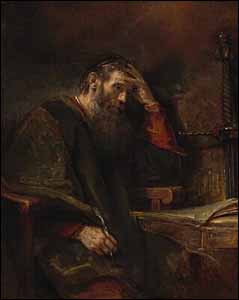 At this their anger boiled, and they began shouting, “Great is Artemis of the Ephesians!” Soon the whole city was filled with confusion. Everyone rushed to the amphitheater, dragging along Gaius and Aristarchus, who were Paul’s traveling companions from Macedonia. Paul wanted to go in, too, but the believers wouldn’t let him. Some of the officials of the province, friends of Paul, also sent a message to him, begging him not to risk his life by entering the amphitheater.
 The message of the cross is foolish to those who are headed for destruction! But we who are being saved know it is the very power of God. As the Scriptures say,
 Paul and Barnabas in Lystra and Derbe
 The Council at Jerusalem
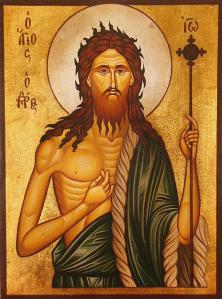 John’s clothes were woven from coarse camel hair, and he wore a leather belt around his waist. For food he ate locusts and wild honey. People from Jerusalem and from all of Judea and all over the Jordan Valley went out to see and hear John. And when they confessed their sins, he baptized them in the Jordan River.
 When he realized this, he went to the home of Mary, the mother of John Mark, where many were gathered for prayer. He knocked at the door in the gate, and a servant girl named Rhoda came to open it. When she recognized Peter’s voice, she was so overjoyed that, instead of opening the door, she ran back inside and told everyone, “Peter is standing at the door!”
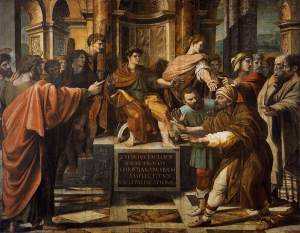 When the governor saw what had happened, he became a believer, for he was astonished at the teaching about the Lord.
 For God had promised to raise him from the dead, not leaving him to rot in the grave. He said, ‘I will give you the sacred blessings I promised to David.’ Another psalm explains it more fully: ‘You will not allow your Holy One to rot in the grave.’ This is not a reference to David, for after David had done the will of God in his own generation, he died and was buried with his ancestors, and his body decayed. No, it was a reference to someone else—someone whom God raised and whose body did not decay.
 The Peanut Gallery