Good Friday: 19 Apr 2019 – John 18-19 ~ “It is finished!”

Good Friday

+ In the name of the Father, and of the Son, and of the Holy Spirit. Amen

Opening Prayer:

Almighty God: Behold this your family with mercy and grace, for whom our Lord Jesus Christ was willing to be betrayed, and given into the hands of sinners, and to suffer death upon the cross. We ask this in Jesus’ name – who lives and reigns with you and the Holy Spirit, one God, for ever and ever. Amen.
__________

Reading from the New Testament – John 18-19 (NLT)

Jesus Is Betrayed and Arrested

After saying these things, Jesus crossed the Kidron Valley with his disciples and entered a grove of olive trees. Judas, the betrayer, knew this place, because Jesus had often gone there with his disciples. The leading priests and Pharisees had given Judas a contingent of Roman soldiers and Temple guards to accompany him. Now with blazing torches, lanterns, and weapons, they arrived at the olive grove.

Jesus fully realized all that was going to happen to him, so he stepped forward to meet them. “Who are you looking for?” he asked.

“Jesus the Nazarene,” they replied.

“I am he,” Jesus said. (Judas, who betrayed him, was standing with them.) As Jesus said “I am he,” they all drew back and fell to the ground! Once more he asked them, “Who are you looking for?”

And again they replied, “Jesus the Nazarene.”

“I told you that I am he,” Jesus said. “And since I am the one you want, let these others go.” He did this to fulfill his own statement: “I did not lose a single one of those you have given me.”

Then Simon Peter drew a sword and slashed off the right ear of Malchus, the high priest’s slave. But Jesus said to Peter, “Put your sword back into its sheath. Shall I not drink from the cup of suffering the Father has given me?”

Jesus at the High Priest’s House

So the soldiers, their commanding officer, and the Temple guards arrested Jesus and tied him up. First they took him to Annas, since he was the father-in-law of Caiaphas, the high priest at that time. Caiaphas was the one who had told the other Jewish leaders, “It’s better that one man should die for the people.”

Peter’s First Denial

Simon Peter followed Jesus, as did another of the disciples. That other disciple was acquainted with the high priest, so he was allowed to enter the high priest’s courtyard with Jesus. Peter had to stay outside the gate. Then the disciple who knew the high priest spoke to the woman watching at the gate, and she let Peter in. The woman asked Peter, “You’re not one of that man’s disciples, are you?”

“No,” he said, “I am not.”

Because it was cold, the household servants and the guards had made a charcoal fire. They stood around it, warming themselves, and Peter stood with them, warming himself.

The High Priest Questions Jesus
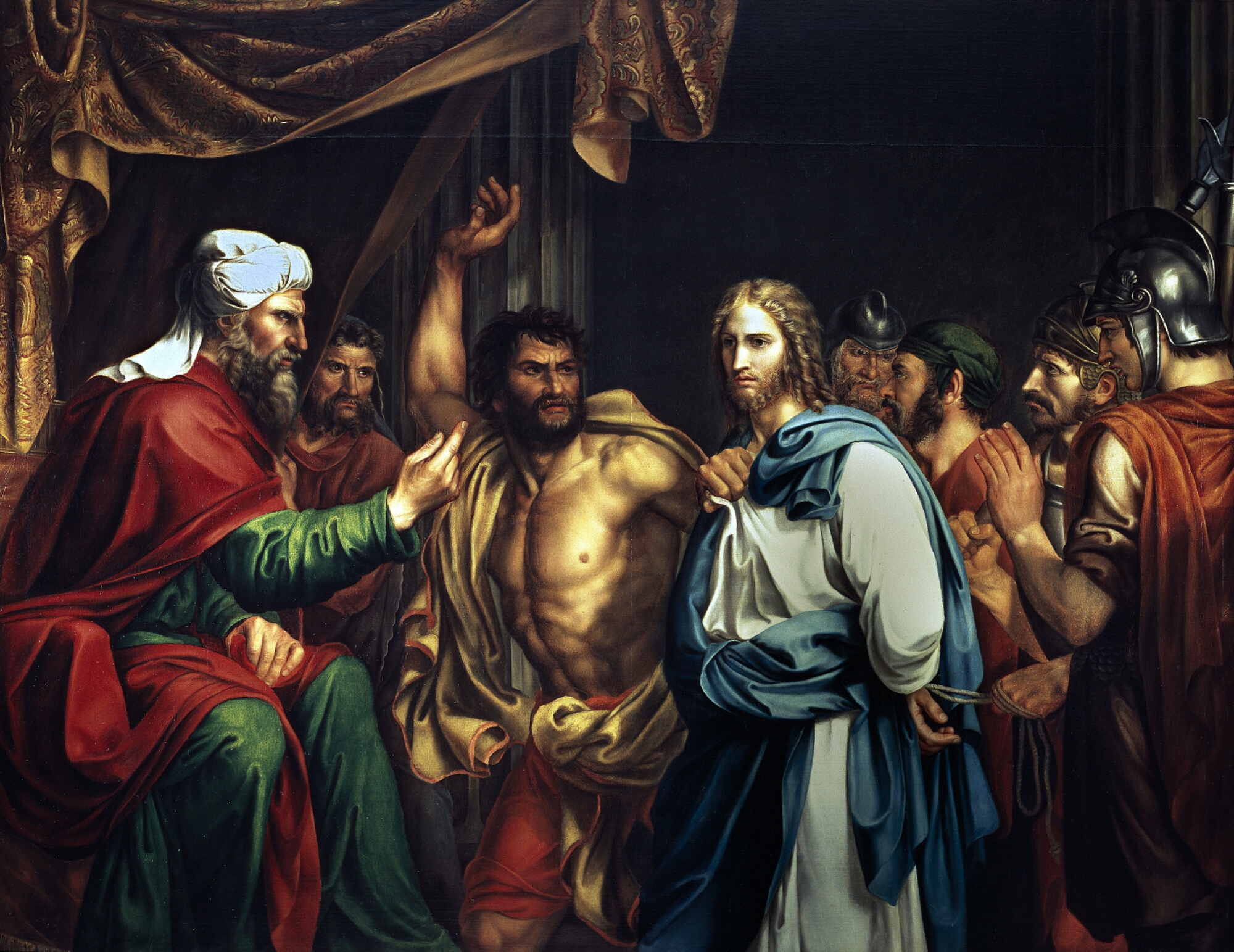
Inside, the high priest began asking Jesus about his followers and what he had been teaching them. Jesus replied, “Everyone knows what I teach. I have preached regularly in the synagogues and the Temple, where the people gather. I have not spoken in secret. Why are you asking me this question? Ask those who heard me. They know what I said.”

Then one of the Temple guards standing nearby slapped Jesus across the face. “Is that the way to answer the high priest?” he demanded.

Jesus replied, “If I said anything wrong, you must prove it. But if I’m speaking the truth, why are you beating me?”

Then Annas bound Jesus and sent him to Caiaphas, the high priest.

Peter’s Second and Third Denials

Meanwhile, as Simon Peter was standing by the fire warming himself, they asked him again, “You’re not one of his disciples, are you?”

He denied it, saying, “No, I am not.”

But one of the household slaves of the high priest, a relative of the man whose ear Peter had cut off, asked, “Didn’t I see you out there in the olive grove with Jesus?” Again Peter denied it. And immediately a rooster crowed.

Jesus’ Trial before Pilate

Jesus’ trial before Caiaphas ended in the early hours of the morning. Then he was taken to the headquarters of the Roman governor. His accusers didn’t go inside because it would defile them, and they wouldn’t be allowed to celebrate the Passover. So Pilate, the governor, went out to them and asked, “What is your charge against this man?”

“We wouldn’t have handed him over to you if he weren’t a criminal!” they retorted.

“Then take him away and judge him by your own law,” Pilate told them.

“Only the Romans are permitted to execute someone,” the Jewish leaders replied. (This fulfilled Jesus’ prediction about the way he would die.
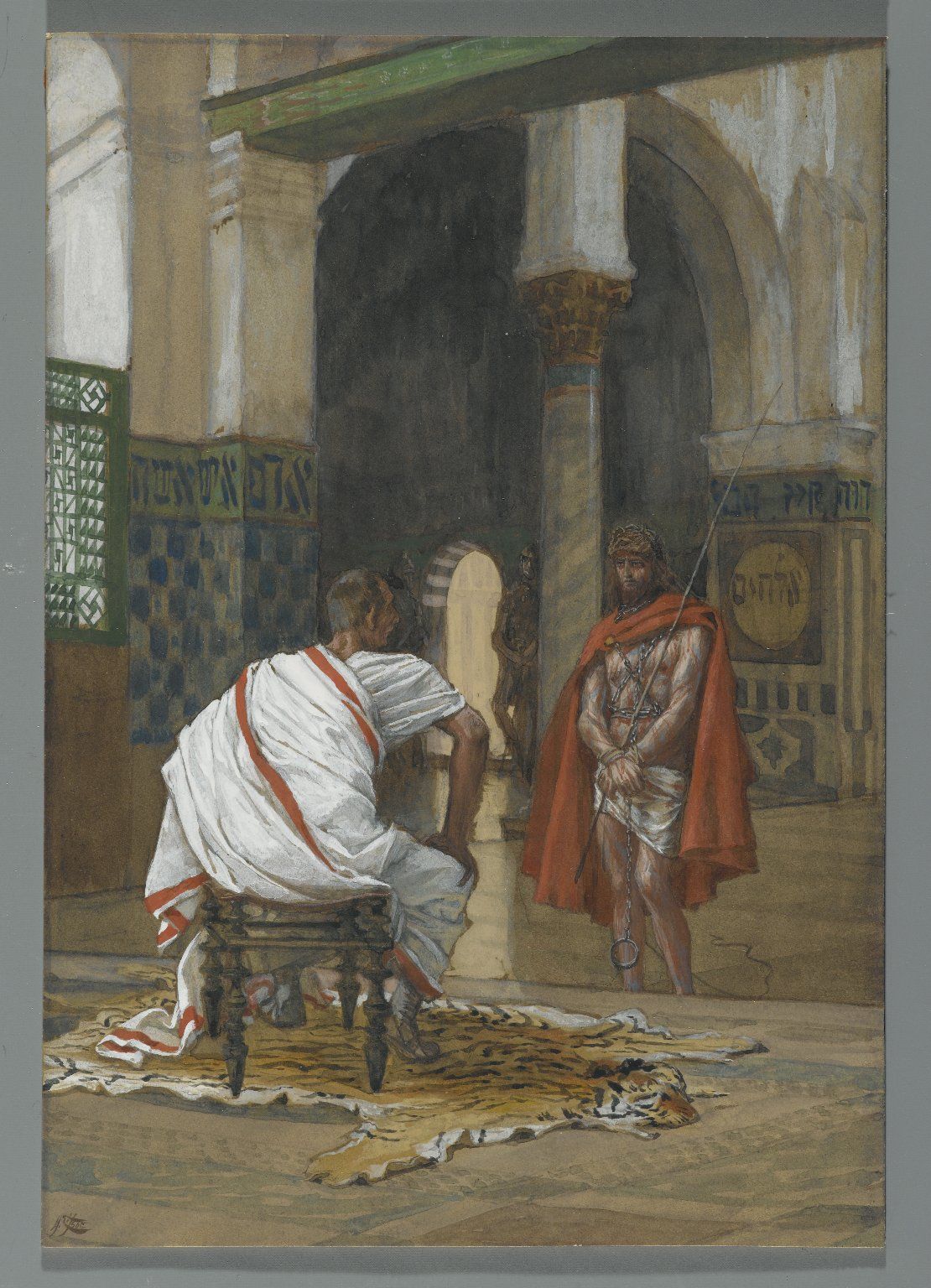
Then Pilate went back into his headquarters and called for Jesus to be brought to him. “Are you the king of the Jews?” he asked him.

Jesus replied, “Is this your own question, or did others tell you about me?”

“Am I a Jew?” Pilate retorted. “Your own people and their leading priests brought you to me for trial. Why? What have you done?”

Jesus answered, “My Kingdom is not an earthly kingdom. If it were, my followers would fight to keep me from being handed over to the Jewish leaders. But my Kingdom is not of this world.”

Pilate said, “So you are a king?”

Jesus responded, “You say I am a king. Actually, I was born and came into the world to testify to the truth. All who love the truth recognize that what I say is true.”

“What is truth?” Pilate asked. Then he went out again to the people and told them, “He is not guilty of any crime. But you have a custom of asking me to release one prisoner each year at Passover. Would you like me to release this ‘King of the Jews’?”

But they shouted back, “No! Not this man. We want Barabbas!” (Barabbas was a revolutionary.)
_________

“O Sacred Head Now Wounded” – Altar of Praise Chorale

__________

Jesus Sentenced to Death

Then Pilate had Jesus flogged with a lead-tipped whip. The soldiers wove a crown of thorns and put it on his head, and they put a purple robe on him. “Hail! King of the Jews!” they mocked, as they slapped him across the face.

Pilate went outside again and said to the people, “I am going to bring him out to you now, but understand clearly that I find him not guilty.” Then Jesus came out wearing the crown of thorns and the purple robe. And Pilate said, “Look, here is the man!”

When they saw him, the leading priests and Temple guards began shouting, “Crucify him! Crucify him!”

“Take him yourselves and crucify him,” Pilate said. “I find him not guilty.”

The Jewish leaders replied, “By our law he ought to die because he called himself the Son of God.”

When Pilate heard this, he was more frightened than ever. He took Jesus back into the headquarters again and asked him, “Where are you from?” But Jesus gave no answer. “Why don’t you talk to me?” Pilate demanded. “Don’t you realize that I have the power to release you or crucify you?”

Then Jesus said, “You would have no power over me at all unless it were given to you from above. So the one who handed me over to you has the greater sin.”

Then Pilate tried to release him, but the Jewish leaders shouted, “If you release this man, you are no ‘friend of Caesar.’ Anyone who declares himself a king is a rebel against Caesar.”

When they said this, Pilate brought Jesus out to them again. Then Pilate sat down on the judgment seat on the platform that is called the Stone Pavement (in Hebrew, Gabbatha). It was now about noon on the day of preparation for the Passover. And Pilate said to the people, “Look, here is your king!”

“Away with him,” they yelled. “Away with him! Crucify him!”

“What? Crucify your king?” Pilate asked.

“We have no king but Caesar,” the leading priests shouted back.

Then Pilate turned Jesus over to them to be crucified.

The Crucifixion
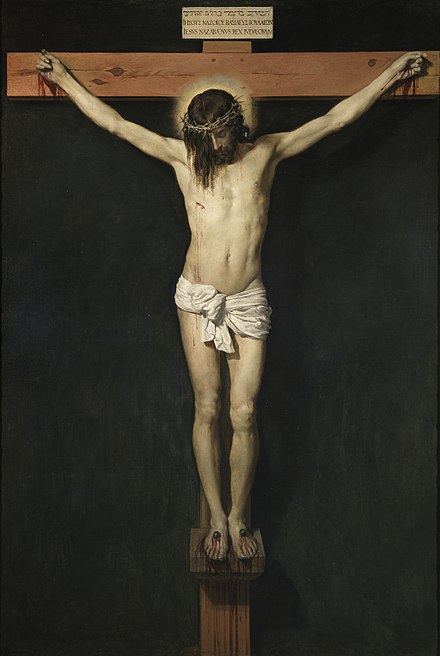
So they took Jesus away. Carrying the cross by himself, he went to the place called Place of the Skull (in Hebrew, Golgotha). There they nailed him to the cross. Two others were crucified with him, one on either side, with Jesus between them. And Pilate posted a sign on the cross that read, “Jesus of Nazareth, the King of the Jews.” The place where Jesus was crucified was near the city, and the sign was written in Hebrew, Latin, and Greek, so that many people could read it.

Then the leading priests objected and said to Pilate, “Change it from ‘The King of the Jews’ to ‘He said, I am King of the Jews.’”

Pilate replied, “No, what I have written, I have written.”

When the soldiers had crucified Jesus, they divided his clothes among the four of them. They also took his robe, but it was seamless, woven in one piece from top to bottom. So they said, “Rather than tearing it apart, let’s throw dice for it.” This fulfilled the Scripture that says, “They divided my garments among themselves and threw dice for my clothing.” So that is what they did.

Standing near the cross were Jesus’ mother, and his mother’s sister, Mary (the wife of Clopas), and Mary Magdalene. When Jesus saw his mother standing there beside the disciple he loved, he said to her, “Dear woman, here is your son.” And he said to this disciple, “Here is your mother.” And from then on this disciple took her into his home.
_________

“Beneath the Cross of Jesus” – Sharon Mennonite Bible Institute

_________

The Death of Jesus

Jesus knew that his mission was now finished, and to fulfill Scripture he said, “I am thirsty.” A jar of sour wine was sitting there, so they soaked a sponge in it, put it on a hyssop branch, and held it up to his lips. When Jesus had tasted it, he said, “It is finished!” Then he bowed his head and gave up his spirit.

It was the day of preparation, and the Jewish leaders didn’t want the bodies hanging there the next day, which was the Sabbath (and a very special Sabbath, because it was Passover week). So they asked Pilate to hasten their deaths by ordering that their legs be broken. Then their bodies could be taken down. So the soldiers came and broke the legs of the two men crucified with Jesus. But when they came to Jesus, they saw that he was already dead, so they didn’t break his legs. One of the soldiers, however, pierced his side with a spear, and immediately blood and water flowed out. (This report is from an eyewitness giving an accurate account. He speaks the truth so that you also may continue to believe.) These things happened in fulfillment of the Scriptures that say, “Not one of his bones will be broken,” and “They will look on the one they pierced.”

The Burial of Jesus

Afterward Joseph of Arimathea, who had been a secret disciple of Jesus (because he feared the Jewish leaders), asked Pilate for permission to take down Jesus’ body. When Pilate gave permission, Joseph came and took the body away. With him came Nicodemus, the man who had come to Jesus at night. He brought about seventy-five pounds of perfumed ointment made from myrrh and aloes. Following Jewish burial custom, they wrapped Jesus’ body with the spices in long sheets of linen cloth. The place of crucifixion was near a garden, where there was a new tomb, never used before. And so, because it was the day of preparation for the Jewish Passover and since the tomb was close at hand, they laid Jesus there.
__________

“Christ we do all adore Thee” – The York College Concert Choir

__________

+ In the name of the Father, and of the Son, and of the Holy Spirit. Amen
Maundy Thursday: 18 Apr 2019 – Exodus 12:1-8, 11-14; John 13:1-15 ~ an example to follow

Maundy Thursday

+ In the name of the Father, and of the Son, and of the Holy Spirit. Amen
Opening Sentence:

Heavenly Father, in you we live and move and have our being: We humbly ask you to guide and govern us by your Holy Spirit, that in all the cares and occupations of our life we may not forget you, but may remember that we are ever walking in your sight; through Jesus Christ our Lord. Amen.
__________

Reading from the Old Testament – Exodus 12:1-8, 11-14 (NLT)

While the Israelites were still in the land of Egypt, the Lord gave the following instructions to Moses and Aaron:

“From now on, this month will be the first month of the year for you. Announce to the whole community of Israel that on the tenth day of this month each family must choose a lamb or a young goat for a sacrifice, one animal for each household. If a family is too small to eat a whole animal, let them share with another family in the neighborhood. Divide the animal according to the size of each family and how much they can eat. The animal you select must be a one-year-old male, either a sheep or a goat, with no defects.

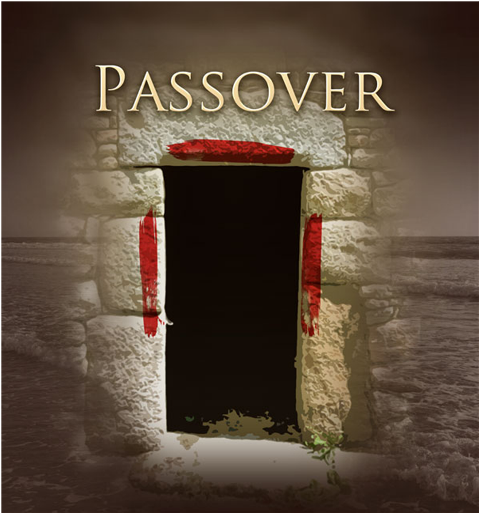
“Take special care of this chosen animal until the evening of the fourteenth day of this first month. Then the whole assembly of the community of Israel must slaughter their lamb or young goat at twilight. They are to take some of the blood and smear it on the sides and top of the doorframes of the houses where they eat the animal. That same night they must roast the meat over a fire and eat it along with bitter salad greens and bread made without yeast.
_____

“These are your instructions for eating this meal: Be fully dressed, wear your sandals, and carry your walking stick in your hand. Eat the meal with urgency, for this is the Lord’s Passover. On that night I will pass through the land of Egypt and strike down every firstborn son and firstborn male animal in the land of Egypt. I will execute judgment against all the gods of Egypt, for I am the Lord! But the blood on your doorposts will serve as a sign, marking the houses where you are staying. When I see the blood, I will pass over you. This plague of death will not touch you when I strike the land of Egypt.

“This is a day to remember. Each year, from generation to generation, you must celebrate it as a special festival to the Lord. This is a law for all time.
_________

Reading from the New Testament – John 13:1-15 (NLT)

Before the Passover celebration, Jesus knew that his hour had come to leave this world and return to his Father. He had loved his disciples during his ministry on earth, and now he loved them to the very end. It was time for supper, and the devil had already prompted Judas, son of Simon Iscariot, to betray Jesus. Jesus knew that the Father had given him authority over everything and that he had come from God and would return to God. So he got up from the table, took off his robe, wrapped a towel around his waist, and poured water into a basin. Then he began to wash the disciples’ feet, drying them with the towel he had around him.

When Jesus came to Simon Peter, Peter said to him, “Lord, are you going to wash my feet?”

Jesus replied, “You don’t understand now what I am doing, but someday you will.”

“No,” Peter protested, “you will never ever wash my feet!”

Jesus replied, “Unless I wash you, you won’t belong to me.”

Simon Peter exclaimed, “Then wash my hands and head as well, Lord, not just my feet!”

Jesus replied, “A person who has bathed all over does not need to wash, except for the feet, to be entirely clean. And you disciples are clean, but not all of you.” For Jesus knew who would betray him. That is what he meant when he said, “Not all of you are clean.”

After washing their feet, he put on his robe again and sat down and asked, “Do you understand what I was doing? You call me ‘Teacher’ and ‘Lord,’ and you are right, because that’s what I am. And since I, your Lord and Teacher, have washed your feet, you ought to wash each other’s feet. I have given you an example to follow. Do as I have done to you.
__________

“The Proof Of Your Love” – for KING & COUNTRY

__________

Closing Prayer:

Almighty God: On the night he was betrayed, your beloved Son set the example for sacrificial love, and instituted the Sacrament of his Body and Blood. Mercifully grant that we might receive this holy mystery with thanksgiving, and love others as we are loved, in remembrance of Jesus Christ our Lord, who lives and reigns with you and the Holy Spirit, one God, for ever and ever. Amen.

+ In the name of the Father, and of the Son, and of the Holy Spirit. Amen

Morning Reading: Mon, 16 Apr – Exodus 9-12 ~ “Let my people go!” (Part II – Passover)

Morning Reading

+ In the name of the Father, and the Son, and the Holy Spirit. Amen!

Opening – (Northumbria Community)

One thing I have asked of the Lord, this is what I seek: that I may dwell in the house of the Lord all the days of my life; to behold the beauty of the Lord and to seek Him in His temple.

Praise to You, Lord Jesus Christ, King of endless glory.

Reading: Exodus 9-12 (NLT)

A Plague against Livestock

Exodus 9 (NLT)

+ Signs and wonders – “Go back to Pharaoh,” the Lord commanded Moses. “Tell him, ‘This is what the Lord, the God of the Hebrews, says: Let my people go, so they can worship me. If you continue to hold them and refuse to let them go, the hand of the Lord will strike all your livestock—your horses, donkeys, camels, cattle, sheep, and goats—with a deadly plague. But the Lord will again make a distinction between the livestock of the Israelites and that of the Egyptians. Not a single one of Israel’s animals will die! The Lord has already set the time for the plague to begin. He has declared that he will strike the land tomorrow.’”

+ Pharaoh’s refusal – And the Lord did just as he had said. The next morning all the livestock of the Egyptians died, but the Israelites didn’t lose a single animal. Pharaoh sent his officials to investigate, and they discovered that the Israelites had not lost a single animal! But even so, Pharaoh’s heart remained stubborn, and he still refused to let the people go.

A Plague of Festering Boils

+ Signs and wonders – Then the Lord said to Moses and Aaron, “Take handfuls of soot from a brick kiln, and have Moses toss it into the air while Pharaoh watches. The ashes will spread like fine dust over the whole land of Egypt, causing festering boils to break out on people and animals throughout the land.”

+ Pharaoh’s refusal – So they took soot from a brick kiln and went and stood before Pharaoh. As Pharaoh watched, Moses threw the soot into the air, and boils broke out on people and animals alike. Even the magicians were unable to stand before Moses, because the boils had broken out on them and all the Egyptians. But the Lord hardened Pharaoh’s heart, and just as the Lord had predicted to Moses, Pharaoh refused to listen.

A Plague of Hail

+ Signs and wonders – Then the Lord said to Moses, “Get up early in the morning and stand before Pharaoh. Tell him, ‘This is what the Lord, the God of the Hebrews, says: Let my people go, so they can worship me. If you don’t, I will send more plagues on you and your officials and your people. Then you will know that there is no one like me in all the earth. By now I could have lifted my hand and struck you and your people with a plague to wipe you off the face of the earth. But I have spared you for a purpose—to show you my power and to spread my fame throughout the earth. But you still lord it over my people and refuse to let them go. So tomorrow at this time I will send a hailstorm more devastating than any in all the history of Egypt. Quick! Order your livestock and servants to come in from the fields to find shelter. Any person or animal left outside will die when the hail falls.’”

+ Fear throughout Egypt – Some of Pharaoh’s officials were afraid because of what the Lord had said. They quickly brought their servants and livestock in from the fields. But those who paid no attention to the word of the Lord left theirs out in the open.

Then the Lord said to Moses, “Lift your hand toward the sky so hail may fall on the people, the livestock, and all the plants throughout the land of Egypt.”

+ Goshen spared – So Moses lifted his staff toward the sky, and the Lord sent thunder and hail, and lightning flashed toward the earth. The Lord sent a tremendous hailstorm against all the land of Egypt. Never in all the history of Egypt had there been a storm like that, with such devastating hail and continuous lightning. It left all of Egypt in ruins. The hail struck down everything in the open field—people, animals, and plants alike. Even the trees were destroyed. The only place without hail was the region of Goshen, where the people of Israel lived.

+ Pharaoh’s remorse – Then Pharaoh quickly summoned Moses and Aaron. “This time I have sinned,” he confessed. “The Lord is the righteous one, and my people and I are wrong. Please beg the Lord to end this terrifying thunder and hail. We’ve had enough. I will let you go; you don’t need to stay any longer.”

“All right,” Moses replied. “As soon as I leave the city, I will lift my hands and pray to the Lord. Then the thunder and hail will stop, and you will know that the earth belongs to the Lord. But I know that you and your officials still do not fear the Lord God.”

(All the flax and barley were ruined by the hail, because the barley had formed heads and the flax was budding. But the wheat and the emmer wheat were spared, because they had not yet sprouted from the ground.)

+ Pharaoh’s refusal – So Moses left Pharaoh’s court and went out of the city. When he lifted his hands to the Lord, the thunder and hail stopped, and the downpour ceased. But when Pharaoh saw that the rain, hail, and thunder had stopped, he and his officials sinned again, and Pharaoh again became stubborn. Because his heart was hard, Pharaoh refused to let the people leave, just as the Lord had predicted through Moses.

A Plague of Locusts

Exodus 10 (NLT)

Then the Lord said to Moses, “Return to Pharaoh and make your demands again. I have made him and his officials stubborn so I can display my miraculous signs among them. I’ve also done it so you can tell your children and grandchildren about how I made a mockery of the Egyptians and about the signs I displayed among them—and so you will know that I am the Lord.”

+ Signs and wonders – So Moses and Aaron went to Pharaoh and said, “This is what the Lord, the God of the Hebrews, says: How long will you refuse to submit to me? Let my people go, so they can worship me. If you refuse, watch out! For tomorrow I will bring a swarm of locusts on your country. They will cover the land so that you won’t be able to see the ground. They will devour what little is left of your crops after the hailstorm, including all the trees growing in the fields. They will overrun your palaces and the homes of your officials and all the houses in Egypt. Never in the history of Egypt have your ancestors seen a plague like this one!” And with that, Moses turned and left Pharaoh.

+ Egyptians’ appeal – Pharaoh’s officials now came to Pharaoh and appealed to him. “How long will you let this man hold us hostage? Let the men go to worship the Lord their God! Don’t you realize that Egypt lies in ruins?”

So Moses and Aaron were brought back to Pharaoh. “All right,” he told them, “go and worship the Lord your God. But who exactly will be going with you?”

Moses replied, “We will all go—young and old, our sons and daughters, and our flocks and herds. We must all join together in celebrating a festival to the Lord.”

+ Pharaoh’s rejection – Pharaoh retorted, “The Lord will certainly need to be with you if I let you take your little ones! I can see through your evil plan. Never! Only the men may go and worship the Lord, since that is what you requested.” And Pharaoh threw them out of the palace.

Then the Lord said to Moses, “Raise your hand over the land of Egypt to bring on the locusts. Let them cover the land and devour every plant that survived the hailstorm.”

So Moses raised his staff over Egypt, and the Lord caused an east wind to blow over the land all that day and through the night. When morning arrived, the east wind had brought the locusts. And the locusts swarmed over the whole land of Egypt, settling in dense swarms from one end of the country to the other. It was the worst locust plague in Egyptian history, and there has never been another one like it. For the locusts covered the whole country and darkened the land. They devoured every plant in the fields and all the fruit on the trees that had survived the hailstorm. Not a single leaf was left on the trees and plants throughout the land of Egypt.

+ Pharaoh’s remorse – Pharaoh quickly summoned Moses and Aaron. “I have sinned against the Lord your God and against you,” he confessed. “Forgive my sin, just this once, and plead with the Lord your God to take away this death from me.”

+ Pharaoh’s refusal – So Moses left Pharaoh’s court and pleaded with the Lord. The Lord responded by shifting the wind, and the strong west wind blew the locusts into the Red Sea. Not a single locust remained in all the land of Egypt. But the Lord hardened Pharaoh’s heart again, so he refused to let the people go.

A Plague of Darkness

+ Signs and wonders – Then the Lord said to Moses, “Lift your hand toward heaven, and the land of Egypt will be covered with a darkness so thick you can feel it.” So Moses lifted his hand to the sky, and a deep darkness covered the entire land of Egypt for three days. During all that time the people could not see each other, and no one moved. But there was light as usual where the people of Israel lived.

Finally, Pharaoh called for Moses. “Go and worship the Lord,” he said. “But leave your flocks and herds here. You may even take your little ones with you.”

“No,” Moses said, “you must provide us with animals for sacrifices and burnt offerings to the Lord our God. All our livestock must go with us, too; not a hoof can be left behind. We must choose our sacrifices for the Lord our God from among these animals. And we won’t know how we are to worship the Lord until we get there.”

+ Pharaoh’s refusal – But the Lord hardened Pharaoh’s heart once more, and he would not let them go. “Get out of here!” Pharaoh shouted at Moses. “I’m warning you. Never come back to see me again! The day you see my face, you will die!”

“Very well,” Moses replied. “I will never see your face again.”

Death for Egypt’s Firstborn

Exodus 11 (NLT)

Then the Lord said to Moses, “I will strike Pharaoh and the land of Egypt with one more blow. After that, Pharaoh will let you leave this country. In fact, he will be so eager to get rid of you that he will force you all to leave. Tell all the Israelite men and women to ask their Egyptian neighbors for articles of silver and gold.” (Now the Lord had caused the Egyptians to look favorably on the people of Israel. And Moses was considered a very great man in the land of Egypt, respected by Pharaoh’s officials and the Egyptian people alike.)

+ Signs and wonders – Moses had announced to Pharaoh, “This is what the Lord says: At midnight tonight I will pass through the heart of Egypt. All the firstborn sons will die in every family in Egypt, from the oldest son of Pharaoh, who sits on his throne, to the oldest son of his lowliest servant girl who grinds the flour. Even the firstborn of all the livestock will die. Then a loud wail will rise throughout the land of Egypt, a wail like no one has heard before or will ever hear again. But among the Israelites it will be so peaceful that not even a dog will bark. Then you will know that the Lord makes a distinction between the Egyptians and the Israelites. All the officials of Egypt will run to me and fall to the ground before me. ‘Please leave!’ they will beg. ‘Hurry! And take all your followers with you.’ Only then will I go!” Then, burning with anger, Moses left Pharaoh.

+ Pharaoh’s refusal – Now the Lord had told Moses earlier, “Pharaoh will not listen to you, but then I will do even more mighty miracles in the land of Egypt.” Moses and Aaron performed these miracles in Pharaoh’s presence, but the Lord hardened Pharaoh’s heart, and he wouldn’t let the Israelites leave the country.

The First Passover

+ Select a sacrifice – While the Israelites were still in the land of Egypt, the Lord gave the following instructions to Moses and Aaron: “From now on, this month will be the first month of the year for you. Announce to the whole community of Israel that on the tenth day of this month each family must choose a lamb or a young goat for a sacrifice, one animal for each household. If a family is too small to eat a whole animal, let them share with another family in the neighborhood. Divide the animal according to the size of each family and how much they can eat. The animal you select must be a one-year-old male, either a sheep or a goat, with no defects.

+ Smear the blood – “Take special care of this chosen animal until the evening of the fourteenth day of this first month. Then the whole assembly of the community of Israel must slaughter their lamb or young goat at twilight. They are to take some of the blood and smear it on the sides and top of the doorframes of the houses where they eat the animal. That same night they must roast the meat over a fire and eat it along with bitter salad greens and bread made without yeast. Do not eat any of the meat raw or boiled in water. The whole animal—including the head, legs, and internal organs—must be roasted over a fire. Do not leave any of it until the next morning. Burn whatever is not eaten before morning.

+ The Lord’s Passover – “These are your instructions for eating this meal: Be fully dressed, wear your sandals, and carry your walking stick in your hand. Eat the meal with urgency, for this is the Lord’s Passover. On that night I will pass through the land of Egypt and strike down every firstborn son and firstborn male animal in the land of Egypt. I will execute judgment against all the gods of Egypt, for I am the Lord! But the blood on your doorposts will serve as a sign, marking the houses where you are staying. When I see the blood, I will pass over you. This plague of death will not touch you when I strike the land of Egypt.

+ Day of remembrance – “This is a day to remember. Each year, from generation to generation, you must celebrate it as a special festival to the Lord. This is a law for all time. For seven days the bread you eat must be made without yeast. On the first day of the festival, remove every trace of yeast from your homes. Anyone who eats bread made with yeast during the seven days of the festival will be cut off from the community of Israel. On the first day of the festival and again on the seventh day, all the people must observe an official day for holy assembly. No work of any kind may be done on these days except in the preparation of food.

+ Unleavened bread – “Celebrate this Festival of Unleavened Bread, for it will remind you that I brought your forces out of the land of Egypt on this very day. This festival will be a permanent law for you; celebrate this day from generation to generation. The bread you eat must be made without yeast from the evening of the fourteenth day of the first month until the evening of the twenty-first day of that month. During those seven days, there must be no trace of yeast in your homes. Anyone who eats anything made with yeast during this week will be cut off from the community of Israel. These regulations apply both to the foreigners living among you and to the native-born Israelites. During those days you must not eat anything made with yeast. Wherever you live, eat only bread made without yeast.”

Then Moses called all the elders of Israel together and said to them, “Go, pick out a lamb or young goat for each of your families, and slaughter the Passover animal. Drain the blood into a basin. Then take a bundle of hyssop branches and dip it into the blood. Brush the hyssop across the top and sides of the doorframes of your houses. And no one may go out through the door until morning. For the Lord will pass through the land to strike down the Egyptians. But when he sees the blood on the top and sides of the doorframe, the Lord will pass over your home. He will not permit his death angel to enter your house and strike you down.

+ Israelites obey – “Remember, these instructions are a permanent law that you and your descendants must observe forever. When you enter the land the Lord has promised to give you, you will continue to observe this ceremony. Then your children will ask, ‘What does this ceremony mean?’ And you will reply, ‘It is the Passover sacrifice to the Lord, for he passed over the houses of the Israelites in Egypt. And though he struck the Egyptians, he spared our families.’” When Moses had finished speaking, all the people bowed down to the ground and worshiped.

+ Egyptian firstborn sons die – So the people of Israel did just as the Lord had commanded through Moses and Aaron. And that night at midnight, the Lord struck down all the firstborn sons in the land of Egypt, from the firstborn son of Pharaoh, who sat on his throne, to the firstborn son of the prisoner in the dungeon. Even the firstborn of their livestock were killed. Pharaoh and all his officials and all the people of Egypt woke up during the night, and loud wailing was heard throughout the land of Egypt. There was not a single house where someone had not died.

Israel’s Exodus from Egypt

+ Pharaoh says “Go!” – Pharaoh sent for Moses and Aaron during the night. “Get out!” he ordered. “Leave my people—and take the rest of the Israelites with you! Go and worship the Lord as you have requested. Take your flocks and herds, as you said, and be gone. Go, but bless me as you leave.” All the Egyptians urged the people of Israel to get out of the land as quickly as possible, for they thought, “We will all die!”

+ Israelites leave with wealth – The Israelites took their bread dough before yeast was added. They wrapped their kneading boards in their cloaks and carried them on their shoulders. And the people of Israel did as Moses had instructed; they asked the Egyptians for clothing and articles of silver and gold. The Lord caused the Egyptians to look favorably on the Israelites, and they gave the Israelites whatever they asked for. So they stripped the Egyptians of their wealth!

+ Israelites leave without food – That night the people of Israel left Rameses and started for Succoth. There were about 600,000 men, plus all the women and children. A rabble of non-Israelites went with them, along with great flocks and herds of livestock. For bread they baked flat cakes from the dough without yeast they had brought from Egypt. It was made without yeast because the people were driven out of Egypt in such a hurry that they had no time to prepare the bread or other food.

+ A night to remember – The people of Israel had lived in Egypt for 430 years. In fact, it was on the last day of the 430th year that all the Lord’s forces left the land. On this night the Lord kept his promise to bring his people out of the land of Egypt. So this night belongs to him, and it must be commemorated every year by all the Israelites, from generation to generation.

Instructions for the Passover

+ Exclusive to Israel – Then the Lord said to Moses and Aaron, “These are the instructions for the festival of Passover. No outsiders are allowed to eat the Passover meal. But any slave who has been purchased may eat it if he has been circumcised. Temporary residents and hired servants may not eat it. Each Passover lamb must be eaten in one house. Do not carry any of its meat outside, and do not break any of its bones. The whole community of Israel must celebrate this Passover festival.

+ Circumcision required – “If there are foreigners living among you who want to celebrate the Lord’s Passover, let all their males be circumcised. Only then may they celebrate the Passover with you like any native-born Israelite. But no uncircumcised male may ever eat the Passover meal. This instruction applies to everyone, whether a native-born Israelite or a foreigner living among you.”

+ The exodus begins – So all the people of Israel followed all the Lord’s commands to Moses and Aaron. On that very day the Lord brought the people of Israel out of the land of Egypt like an army.
__________

“Mah Nishtanah – Passover” – The Maccabeats


__________

Blessing – (Northumbrian Community)

May the peace of the Lord Christ go with you, wherever He may send you. May He guide you through the wilderness, protect you through the storm. May He bring you home rejoicing at the wonders He has shown you. May He bring you home rejoicing once again into our doors.
__________

+ In the name of the Father, and the Son, and the Holy Spirit. Amen!

Daily Reading: 21 April – Moses and the Exodus: Passover and Exodus – Exodus 12:1-42 ~ “When I see the blood, I will pass over you.”

Thursday of Fourth Week of Easter

+ In the name of the Father, and the Son, and the Holy Spirit. Amen!

Blessed are You, Our God, Ruler of the world.

E100:4.d Moses and the Exodus:
Passover and Exodus – Exodus 12:1-42 (NLT)

The First Passover

Genesis 12  While the Israelites were still in the land of Egypt, the Lord gave the following instructions to Moses and Aaron: 2 “From now on, this month will be the first month of the year for you. 3 Announce to the whole community of Israel that on the tenth day of this month each family must choose a lamb or a young goat for a sacrifice, one animal for each household. 4 If a family is too small to eat a whole animal, let them share with another family in the neighborhood. Divide the animal according to the size of each family and how much they can eat. 5 The animal you select must be a one-year-old male, either a sheep or a goat, with no defects.

blood-on-the-doorpost

6 “Take special care of this chosen animal until the evening of the fourteenth day of this first month. Then the whole assembly of the community of Israel must slaughter their lamb or young goat at twilight. 7 They are to take some of the blood and smear it on the sides and top of the doorframes of the houses where they eat the animal. 8 That same night they must roast the meat over a fire and eat it along with bitter salad greens and bread made without yeast. 9 Do not eat any of the meat raw or boiled in water. The whole animal—including the head, legs, and internal organs—must be roasted over a fire. 10 Do not leave any of it until the next morning. Burn whatever is not eaten before morning.

11 “These are your instructions for eating this meal: Be fully dressed, wear your sandals, and carry your walking stick in your hand. Eat the meal with urgency, for this is the Lord’s Passover. 12 On that night I will pass through the land of Egypt and strike down every firstborn son and firstborn male animal in the land of Egypt. I will execute judgment against all the gods of Egypt, for I am the Lord! 13 But the blood on your doorposts will serve as a sign, marking the houses where you are staying. When I see the blood, I will pass over you. This plague of death will not touch you when I strike the land of Egypt.

14 “This is a day to remember. Each year, from generation to generation, you must celebrate it as a special festival to the Lord. This is a law for all time. 15 For seven days the bread you eat must be made without yeast. On the first day of the festival, remove every trace of yeast from your homes. Anyone who eats bread made with yeast during the seven days of the festival will be cut off from the community of Israel. 16 On the first day of the festival and again on the seventh day, all the people must observe an official day for holy assembly. No work of any kind may be done on these days except in the preparation of food.

17 “Celebrate this Festival of Unleavened Bread, for it will remind you that I brought your forces out of the land of Egypt on this very day. This festival will be a permanent law for you; celebrate this day from generation to generation. 18 The bread you eat must be made without yeast from the evening of the fourteenth day of the first month until the evening of the twenty-first day of that month. 19 During those seven days, there must be no trace of yeast in your homes. Anyone who eats anything made with yeast during this week will be cut off from the community of Israel. These regulations apply both to the foreigners living among you and to the native-born Israelites. 20 During those days you must not eat anything made with yeast. Wherever you live, eat only bread made without yeast.”

christ-our-passover

21 Then Moses called all the elders of Israel together and said to them, “Go, pick out a lamb or young goat for each of your families, and slaughter the Passover animal. 22 Drain the blood into a basin. Then take a bundle of hyssop branches and dip it into the blood. Brush the hyssop across the top and sides of the doorframes of your houses. And no one may go out through the door until morning. 23 For the Lord will pass through the land to strike down the Egyptians. But when he sees the blood on the top and sides of the doorframe, the Lord will pass over your home. He will not permit his death angel to enter your house and strike you down.

24 “Remember, these instructions are a permanent law that you and your descendants must observe forever. 25 When you enter the land the Lord has promised to give you, you will continue to observe this ceremony. 26 Then your children will ask, ‘What does this ceremony mean?’ 27 And you will reply, ‘It is the Passover sacrifice to the Lord, for he passed over the houses of the Israelites in Egypt. And though he struck the Egyptians, he spared our families.’” When Moses had finished speaking, all the people bowed down to the ground and worshiped.

28 So the people of Israel did just as the Lord had commanded through Moses and Aaron. 29 And that night at midnight, the Lord struck down all the firstborn sons in the land of Egypt, from the firstborn son of Pharaoh, who sat on his throne, to the firstborn son of the prisoner in the dungeon. Even the firstborn of their livestock were killed. 30 Pharaoh and all his officials and all the people of Egypt woke up during the night, and loud wailing was heard throughout the land of Egypt. There was not a single house where someone had not died.

Death of the Pharaoh Firstborn son Lawrence Alma-Tadema, 1872 Rijksmuseum Amsterdam
Death of the Pharaoh Firstborn son
Lawrence Alma-Tadema, 1872
Rijksmuseum Amsterdam

Israel’s Exodus from Egypt

31 Pharaoh sent for Moses and Aaron during the night. “Get out!” he ordered. “Leave my people—and take the rest of the Israelites with you! Go and worship the Lord as you have requested. 32 Take your flocks and herds, as you said, and be gone. Go, but bless me as you leave.” 33 All the Egyptians urged the people of Israel to get out of the land as quickly as possible, for they thought, “We will all die!”

34 The Israelites took their bread dough before yeast was added. They wrapped their kneading boards in their cloaks and carried them on their shoulders. 35 And the people of Israel did as Moses had instructed; they asked the Egyptians for clothing and articles of silver and gold. 36 The Lord caused the Egyptians to look favorably on the Israelites, and they gave the Israelites whatever they asked for. So they stripped the Egyptians of their wealth!

37 That night the people of Israel left Rameses and started for Succoth. There were about 600,000 men, plus all the women and children. 38 A rabble of non-Israelites went with them, along with great flocks and herds of livestock. 39 For bread they baked flat cakes from the dough without yeast they had brought from Egypt. It was made without yeast because the people were driven out of Egypt in such a hurry that they had no time to prepare the bread or other food.

40 The people of Israel had lived in Egypt for 430 years. 41 In fact, it was on the last day of the 430th year that all the Lord’s forces left the land. 42 On this night the Lord kept his promise to bring his people out of the land of Egypt. So this night belongs to him, and it must be commemorated every year by all the Israelites, from generation to generation.

“Sabbath Prayer (Fiddler On The Roof)”

Prayer (Excerpt from Passover Evening Blessings)

Blessed are You, Our God, Ruler of the world, You have chosen us from all peoples, exalting us and sanctifying us with your commandments.

In Your love, Our God, You have given us Sabbaths of rest, feasts of gladness and seasons of joy; this Shabbat day and this festival of unleavened bread, season of our freedom, in love, a holy commemoration, a reminder of the Exodus from Egypt.

God, You have chosen us from all peoples, consecrating us to your service, giving us the Sabbath, a sign of your love and favor and the Festivals, a time of gladness and joy.

Blessed are You, who sanctifies Shabbat, our people Israel, and the Festivals.

Closing Sentence

Christ, our Passover Lamb, has been sacrificed for us. Alleluia!

+ In the name of the Father, and the Son, and the Holy Spirit. Amen!