Morning Reading: Wed, 24 Jan – Job 7-9 ~ I need a mediator

Morning Reading

+ In the name of the Father, and the Son, and the Holy Spirit. Amen!

Opening – (Northumbria Community)

One thing I have asked of the Lord, this is what I seek: that I may dwell in the house of the Lord all the days of my life; to behold the beauty of the Lord and to seek Him in His temple.

Praise to You, Lord Jesus Christ, King of endless glory.

Full Reading: Job 7-9 (NLT) –

Job 7 (NLT) – “Is not all human life a struggle? Our lives are like that of a hired hand, like a worker who longs for the shade, like a servant waiting to be paid. I, too, have been assigned months of futility, long and weary nights of misery. Lying in bed, I think, ‘When will it be morning?’ But the night drags on, and I toss till dawn. My body is covered with maggots and scabs. My skin breaks open, oozing with pus.

Job Cries Out to God

+ Time flies by – “My days fly faster than a weaver’s shuttle. They end without hope. O God, remember that my life is but a breath, and I will never again feel happiness. You see me now, but not for long. You will look for me, but I will be gone. Just as a cloud dissipates and vanishes, those who die will not come back. They are gone forever from their home—never to be seen again.

+ I hate my life – “I cannot keep from speaking. I must express my anguish. My bitter soul must complain. Am I a sea monster or a dragon that you must place me under guard? I think, ‘My bed will comfort me, and sleep will ease my misery,’ but then you shatter me with dreams and terrify me with visions. I would rather be strangled—rather die than suffer like this. I hate my life and don’t want to go on living. Oh, leave me alone for my few remaining days.

+ Why me? – “What are people, that you should make so much of us, that you should think of us so often? For you examine us every morning and test us every moment. Why won’t you leave me alone, at least long enough for me to swallow! If I have sinned, what have I done to you, O watcher of all humanity? Why make me your target? Am I a burden to you? Why not just forgive my sin and take away my guilt? For soon I will lie down in the dust and die. When you look for me, I will be gone.”

Bildad’s Admonishment

Job 8 (NLT) – Then Bildad the Shuhite replied to Job:

+ Stop whining – “How long will you go on like this? You sound like a blustering wind. Does God twist justice? Does the Almighty twist what is right? Your children must have sinned against him, so their punishment was well deserved. But if you pray to God and seek the favor of the Almighty, and if you are pure and live with integrity, he will surely rise up and restore your happy home. And though you started with little, you will end with much.

+ You’re getting what you deserve – “Just ask the previous generation. Pay attention to the experience of our ancestors. For we were born but yesterday and know nothing. Our days on earth are as fleeting as a shadow. But those who came before us will teach you. They will teach you the wisdom of old.
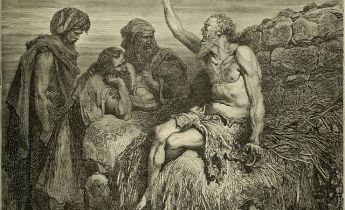
“Can papyrus reeds grow tall without a marsh? Can marsh grass flourish without water? While they are still flowering, not ready to be cut, they begin to wither more quickly than grass. The same happens to all who forget God. The hopes of the godless evaporate. Their confidence hangs by a thread. They are leaning on a spider’s web. They cling to their home for security, but it won’t last. They try to hold it tight, but it will not endure. The godless seem like a lush plant growing in the sunshine, its branches spreading across the garden. Its roots grow down through a pile of stones; it takes hold on a bed of rocks. But when it is uprooted, it’s as though it never existed! That’s the end of its life, and others spring up from the earth to replace it.

+ Repent and return to God – “But look, God will not reject a person of integrity, nor will he lend a hand to the wicked. He will once again fill your mouth with laughter and your lips with shouts of joy. Those who hate you will be clothed with shame, and the home of the wicked will be destroyed.”

Job’s Confession of Faith

Job 9 (NLT) – Then Job spoke again:

+ God is wise and mighty – “Yes, I know all this is true in principle. But how can a person be declared innocent in God’s sight? If someone wanted to take God to court, would it be possible to answer him even once in a thousand times? For God is so wise and so mighty. Who has ever challenged him successfully?

“Without warning, he moves the mountains, overturning them in his anger. He shakes the earth from its place, and its foundations tremble. If he commands it, the sun won’t rise and the stars won’t shine. He alone has spread out the heavens and marches on the waves of the sea. He made all the stars—the Bear and Orion, the Pleiades and the constellations of the southern sky. He does great things too marvelous to understand. He performs countless miracles.

“Yet when he comes near, I cannot see him. When he moves by, I do not see him go. If he snatches someone in death, who can stop him? Who dares to ask, ‘What are you doing?’ And God does not restrain his anger. Even the monsters of the sea are crushed beneath his feet.

+ God is strong and just – “So who am I, that I should try to answer God or even reason with him? Even if I were right, I would have no defense. I could only plead for mercy. And even if I summoned him and he responded, I’m not sure he would listen to me. For he attacks me with a storm and repeatedly wounds me without cause. He will not let me catch my breath, but fills me instead with bitter sorrows. If it’s a question of strength, he’s the strong one. If it’s a matter of justice, who dares to summon him to court? Though I am innocent, my own mouth would pronounce me guilty. Though I am blameless, it would prove me wicked.

+ I am innocent and defenseless – “I am innocent, but it makes no difference to me—I despise my life. Innocent or wicked, it is all the same to God. That’s why I say, ‘He destroys both the blameless and the wicked.’  When a plague sweeps through, he laughs at the death of the innocent. The whole earth is in the hands of the wicked, and God blinds the eyes of the judges. If he’s not the one who does it, who is?
+ I am under God’s judgement – “My life passes more swiftly than a runner. It flees away without a glimpse of happiness. It disappears like a swift papyrus boat, like an eagle swooping down on its prey. If I decided to forget my complaints, to put away my sad face and be cheerful, I would still dread all the pain, for I know you will not find me innocent, O God. Whatever happens, I will be found guilty. So what’s the use of trying? Even if I were to wash myself with soap and clean my hands with lye, you would plunge me into a muddy ditch, and my own filthy clothing would hate me.

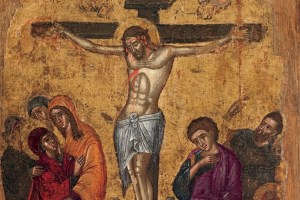
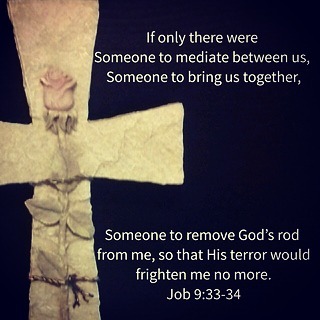
+ I need a mediator – “God is not a mortal like me, so I cannot argue with him or take him to trial. If only there were a mediator between us, someone who could bring us together. The mediator could make God stop beating me, and I would no longer live in terror of his punishment. Then I could speak to him without fear, but I cannot do that in my own strength.
__________

“I Lay it All “ – Prayers of the Saints Live


__________

Blessing – (Northumbrian Community)

May the peace of the Lord Christ go with you, wherever He may send you. May He guide you through the wilderness, protect you through the storm. May He bring you home rejoicing at the wonders He has shown you. May He bring you home rejoicing once again into our doors.
__________

+ In the name of the Father, and the Son, and the Holy Spirit. Amen!
Morning Reading: Tue, 23 Jan – Joshua 16-20 ~ inheritance: to be claimed and taken

Morning Reading

+ In the name of the Father, and the Son, and the Holy Spirit. Amen!

Opening – (Northumbria Community)

One thing I have asked of the Lord, this is what I seek: that I may dwell in the house of the Lord all the days of my life; to behold the beauty of the Lord and to seek Him in His temple.

Praise to You, Lord Jesus Christ, King of endless glory.

Please Read: Joshua 16-20 (NLT) – click here

Reading Excerpts

The Land Given to Ephraim and West Manasseh

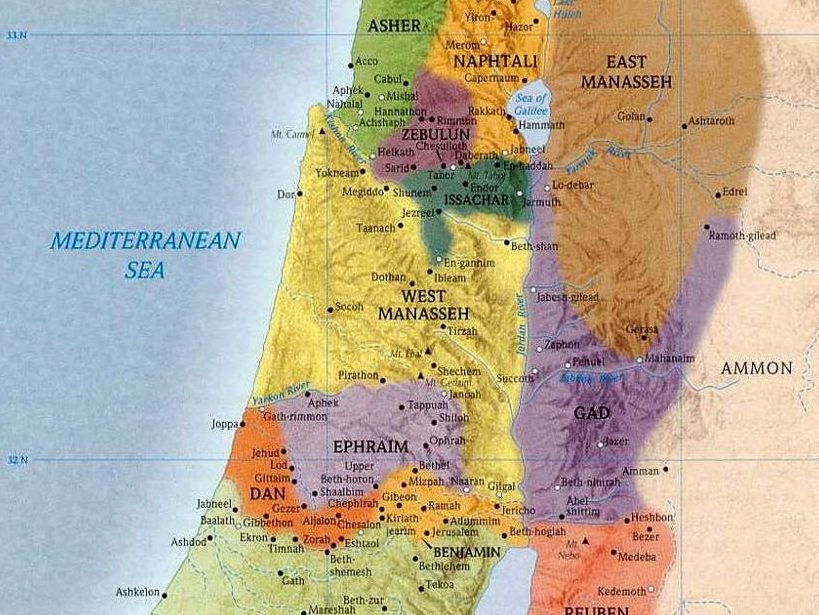
Joshua 16 & 17 (NLT) – The allotment for the descendants of Joseph extended from the Jordan River near Jericho, east of the springs of Jericho, through the wilderness and into the hill country of Bethel. From Bethel (that is, Luz) it ran over to Ataroth in the territory of the Arkites. Then it descended westward to the territory of the Japhletites as far as Lower Beth-horon, then to Gezer and over to the Mediterranean Sea.

This was the homeland allocated to the families of Joseph’s sons, Manasseh and Ephraim.

+ The Land Given to EphraimThe following territory was given to the clans of the tribe of Ephraim. The boundary of their homeland began at Ataroth-addar in the east… then on to the Mediterranean Sea. From Micmethath on the north, the boundary curved eastward… [and] turned southward… touched Jericho, and ended at the Jordan River. From Tappuah the boundary extended westward, following the Kanah Ravine to the Mediterranean Sea. This is the homeland allocated to the clans of the tribe of Ephraim.

In addition, some towns with their surrounding villages in the territory allocated to the half-tribe of Manasseh were set aside for the tribe of Ephraim. They did not drive the Canaanites out of Gezer, however, so the people of Gezer live as slaves among the people of Ephraim to this day.

+ The Land Given to West Manasseh – The next allotment of land was given to the half-tribe of Manasseh, the descendants of Joseph’s older son. Makir, the firstborn son of Manasseh, was the father of Gilead. Because his descendants were experienced soldiers, the regions of Gilead and Bashan on the east side of the Jordan had already been given to them. So the allotment on the west side of the Jordan was for the remaining families within the clans of the tribe of Manasseh: Abiezer, Helek, Asriel, Shechem, Hepher, and Shemida. These clans represent the male descendants of Manasseh son of Joseph….

Manasseh’s total allocation came to ten parcels of land, in addition to the land of Gilead and Bashan across the Jordan River, because the female descendants of Manasseh received a grant of land along with the male descendants. (The land of Gilead was given to the rest of the male descendants of Manasseh.)

… The following towns within the territory of Issachar and Asher, however, were given to Manasseh: Beth-shan, Ibleam, Dor (that is, Naphoth-dor), Endor, Taanach, and Megiddo, each with their surrounding settlements. But the descendants of Manasseh were unable to occupy these towns because the Canaanites were determined to stay in that region. Later, however, when the Israelites became strong enough, they forced the Canaanites to work as slaves. But they did not drive them out of the land.

The descendants of Joseph came to Joshua and asked, “Why have you given us only one portion of land as our homeland when the Lord has blessed us with so many people?”

Joshua replied, “If there are so many of you, and if the hill country of Ephraim is not large enough for you, clear out land for yourselves in the forest where the Perizzites and Rephaites live.”

The descendants of Joseph responded, “It’s true that the hill country is not large enough for us. But all the Canaanites in the lowlands have iron chariots, both those in Beth-shan and its surrounding settlements and those in the valley of Jezreel. They are too strong for us.”

Then Joshua said to the tribes of Ephraim and Manasseh, the descendants of Joseph, “Since you are so large and strong, you will be given more than one portion. The forests of the hill country will be yours as well. Clear as much of the land as you wish, and take possession of its farthest corners. And you will drive out the Canaanites from the valleys, too, even though they are strong and have iron chariots.”

The Allotments of the Remaining Land

Joshua 18 & 19 (NLT) – Now that the land was under Israelite control, the entire community of Israel gathered at Shiloh and set up the Tabernacle. But there remained seven tribes who had not yet been allotted their grants of land.

Then Joshua asked them, “How long are you going to wait before taking possession of the remaining land the Lord, the God of your ancestors, has given to you? Select three men from each tribe, and I will send them out to explore the land and map it out. They will then return to me with a written report of their proposed divisions of their new homeland. Let them divide the land into seven sections, excluding Judah’s territory in the south and Joseph’s territory in the north. And when you record the seven divisions of the land and bring them to me, I will cast sacred lots in the presence of the Lord our God to assign land to each tribe.

“The Levites, however, will not receive any allotment of land. Their role as priests of the Lord is their allotment. And the tribes of Gad, Reuben, and the half-tribe of Manasseh won’t receive any more land, for they have already received their grant of land, which Moses, the servant of the Lord, gave them on the east side of the Jordan River.”

As the men started on their way to map out the land, Joshua commanded them, “Go and explore the land and write a description of it. Then return to me, and I will assign the land to the tribes by casting sacred lots here in the presence of the Lord at Shiloh.” The men did as they were told and mapped the entire territory into seven sections, listing the towns in each section. They made a written record and then returned to Joshua in the camp at Shiloh. And there at Shiloh, Joshua cast sacred lots in the presence of the Lord to determine which tribe should have each section.

+ The Land Given to Benjamin – The first allotment of land went to the clans of the tribe of Benjamin. It lay between the territory assigned to the tribes of Judah and Joseph….

These were the towns given to the clans of the tribe of Benjamin. Jericho, Beth-hoglah, Emek-keziz, Beth-arabah, Zemaraim, Bethel, Avvim, Parah, Ophrah, Kephar-ammoni, Ophni, and Geba—twelve towns with their surrounding villages. Also Gibeon, Ramah, Beeroth, Mizpah, Kephirah, Mozah, Rekem, Irpeel, Taralah, Zela, Haeleph, the Jebusite town (that is, Jerusalem), Gibeah, and Kiriath-jearim—fourteen towns with their surrounding villages.

This was the homeland allocated to the clans of the tribe of Benjamin.

+ The Land Given to Simeon – The second allotment of land went to the clans of the tribe of Simeon. Their homeland was surrounded by Judah’s territory. Simeon’s homeland included Beersheba… — [in all,] thirteen towns with their surrounding villages. It also included Ain, Rimmon, Ether, and Ashan—four towns with their villages, including all the surrounding villages as far south as Baalath-beer (also known as Ramah of the Negev).

This was the homeland allocated to the clans of the tribe of Simeon. Their allocation of land came from part of what had been given to Judah because Judah’s territory was too large for them. So the tribe of Simeon received an allocation within the territory of Judah.

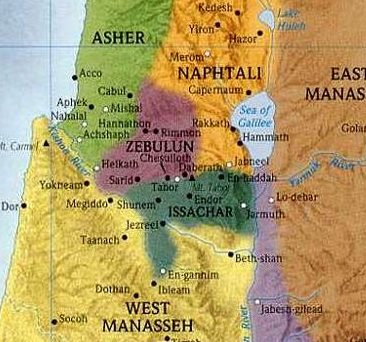
+ The Land Given to Zebulun – The third allotment of land went to the clans of the tribe of Zebulun…. The towns in these areas included Kattath, Nahalal, Shimron, Idalah, and Bethlehem—twelve towns with their surrounding villages.

The homeland allocated to the clans of the tribe of Zebulun included these towns and their surrounding villages.

+ The Land Given to Issachar – The fourth allotment of land went to the clans of the tribe of Issachar.

Its boundaries included the following towns: Jezreel…. The boundary also touched Tabor… and ending at the Jordan River—sixteen towns with their surrounding villages.

The homeland allocated to the clans of the tribe of Issachar included these towns and their surrounding villages.

+ The Land Given to Asher – The fifth allotment of land went to the clans of the tribe of Asher…. The boundary on the west touched Carmel… then it turned east… and ran as far as Zebulun in the valley of Iphtah-el…. It then continued north… as far as Greater Sidon. Then the boundary turned toward Ramah and the fortress of Tyre, where it turned toward Hosah and came to the Mediterranean Sea. The territory also included… —twenty-two towns with their surrounding villages.

The homeland allocated to the clans of the tribe of Asher included these towns and their surrounding villages.

+ The Land Given to Naphtali – The sixth allotment of land went to the clans of the tribe of Naphtali.

Its boundary ran from Heleph… ending at the Jordan River. The western boundary… touched the border of Zebulun in the south, the border of Asher on the west, and the Jordan River on the east. The fortified towns included in this territory were… Hazor… —nineteen towns with their surrounding villages.

The homeland allocated to the clans of the tribe of Naphtali included these towns and their surrounding villages.

+ The Land Given to Dan – The seventh allotment of land went to the clans of the tribe of Dan.

The land allocated as their homeland included the following towns: … Elon, Timnah, Ekron… and the territory across from Joppa.

But the tribe of Dan had trouble taking possession of their land, so they attacked the town of Laish. They captured it, slaughtered its people, and settled there. They renamed the town Dan after their ancestor.

The homeland allocated to the clans of the tribe of Dan included these towns and their surrounding villages.

+ The Land Given to Joshua – After all the land was divided among the tribes, the Israelites gave a piece of land to Joshua as his allocation. For the Lord had said he could have any town he wanted. He chose Timnath-serah in the hill country of Ephraim. He rebuilt the town and lived there.

These are the territories that Eleazar the priest, Joshua son of Nun, and the tribal leaders allocated as grants of land to the tribes of Israel by casting sacred lots in the presence of the Lord at the entrance of the Tabernacle at Shiloh. So the division of the land was completed.

The Cities of Refuge

Joshua 20 (NLT) – The Lord said to Joshua, “Now tell the Israelites to designate the cities of refuge, as I instructed Moses. Anyone who kills another person accidentally and unintentionally can run to one of these cities; they will be places of refuge from relatives seeking revenge for the person who was killed.

“Upon reaching one of these cities, the one who caused the death will appear before the elders at the city gate and present his case. They must allow him to enter the city and give him a place to live among them. If the relatives of the victim come to avenge the killing, the leaders must not release the slayer to them, for he killed the other person unintentionally and without previous hostility. But the slayer must stay in that city and be tried by the local assembly, which will render a judgment. And he must continue to live in that city until the death of the high priest who was in office at the time of the accident. After that, he is free to return to his own home in the town from which he fled.”

The following cities were designated as cities of refuge: Kedesh of Galilee, in the hill country of Naphtali; Shechem, in the hill country of Ephraim; and Kiriath-arba (that is, Hebron), in the hill country of Judah. On the east side of the Jordan River, across from Jericho, the following cities were designated: Bezer, in the wilderness plain of the tribe of Reuben; Ramoth in Gilead, in the territory of the tribe of Gad; and Golan in Bashan, in the land of the tribe of Manasseh. These cities were set apart for all the Israelites as well as the foreigners living among them. Anyone who accidentally killed another person could take refuge in one of these cities. In this way, they could escape being killed in revenge prior to standing trial before the local assembly.
__________

“He Is Our God” – Prayers of the Saints Live


__________

Blessing – (Northumbrian Community)

May the peace of the Lord Christ go with you, wherever He may send you. May He guide you through the wilderness, protect you through the storm. May He bring you home rejoicing at the wonders He has shown you. May He bring you home rejoicing once again into our doors.
__________

+ In the name of the Father, and the Son, and the Holy Spirit. Amen!

Morning Reading: Mon, 22 Jan – Genesis 12-15 ~ Abram believed the Lord.

Morning Reading

+ In the name of the Father, and the Son, and the Holy Spirit. Amen!

Opening – (Northumbria Community)

One thing I have asked of the Lord, this is what I seek: that I may dwell in the house of the Lord all the days of my life; to behold the beauty of the Lord and to seek Him in His temple.

Praise to You, Lord Jesus Christ, King of endless glory.

Full Reading: Genesis 12-15 (NLT) –

The Call of Abram

Genesis 12 (NLT)

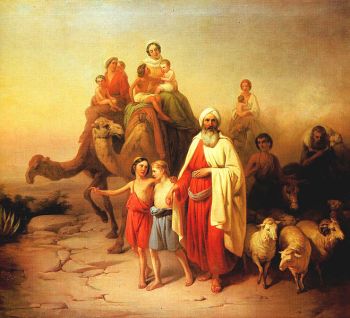
+ Blessed to be  blessing –  The Lord had said to Abram, “Leave your native country, your relatives, and your father’s family, and go to the land that I will show you. I will make you into a great nation. I will bless you and make you famous, and you will be a blessing to others. I will bless those who bless you and curse those who treat you with contempt. All the families on earth will be blessed through you.”

So Abram departed as the Lord had instructed, and Lot went with him. Abram was seventy-five years old when he left Haran. He took his wife, Sarai, his nephew Lot, and all his wealth—his livestock and all the people he had taken into his household at Haran—and headed for the land of Canaan. When they arrived in Canaan, Abram traveled through the land as far as Shechem. There he set up camp beside the oak of Moreh. At that time, the area was inhabited by Canaanites.

+ “I will give this land to your descendants” – Then the Lord appeared to Abram and said, “I will give this land to your descendants.” And Abram built an altar there and dedicated it to the Lord, who had appeared to him. After that, Abram traveled south and set up camp in the hill country, with Bethel to the west and Ai to the east. There he built another altar and dedicated it to the Lord, and he worshiped the Lord. Then Abram continued traveling south by stages toward the Negev.

Abram and Sarai in Egypt

At that time a severe famine struck the land of Canaan, forcing Abram to go down to Egypt, where he lived as a foreigner. As he was approaching the border of Egypt, Abram said to his wife, Sarai, “Look, you are a very beautiful woman. When the Egyptians see you, they will say, ‘This is his wife. Let’s kill him; then we can have her!’ So please tell them you are my sister. Then they will spare my life and treat me well because of their interest in you.”

+ Abram’s deception – And sure enough, when Abram arrived in Egypt, everyone noticed Sarai’s beauty. When the palace officials saw her, they sang her praises to Pharaoh, their king, and Sarai was taken into his palace. Then Pharaoh gave Abram many gifts because of her—sheep, goats, cattle, male and female donkeys, male and female servants, and camels.

+ Pharaoh’s punishment – But the Lord sent terrible plagues upon Pharaoh and his household because of Sarai, Abram’s wife. So Pharaoh summoned Abram and accused him sharply. “What have you done to me?” he demanded. “Why didn’t you tell me she was your wife? Why did you say, ‘She is my sister,’ and allow me to take her as my wife? Now then, here is your wife. Take her and get out of here!” Pharaoh ordered some of his men to escort them, and he sent Abram out of the country, along with his wife and all his possessions.

Abram and Lot Separate

Genesis 13 (NLT)

So Abram left Egypt and traveled north into the Negev, along with his wife and Lot and all that they owned. (Abram was very rich in livestock, silver, and gold.) From the Negev, they continued traveling by stages toward Bethel, and they pitched their tents between Bethel and Ai, where they had camped before. This was the same place where Abram had built the altar, and there he worshiped the Lord again.

+ Disputes over land – Lot, who was traveling with Abram, had also become very wealthy with flocks of sheep and goats, herds of cattle, and many tents. But the land could not support both Abram and Lot with all their flocks and herds living so close together. So disputes broke out between the herdsmen of Abram and Lot. (At that time Canaanites and Perizzites were also living in the land.)

Finally Abram said to Lot, “Let’s not allow this conflict to come between us or our herdsmen. After all, we are close relatives! The whole countryside is open to you. Take your choice of any section of the land you want, and we will separate. If you want the land to the left, then I’ll take the land on the right. If you prefer the land on the right, then I’ll go to the left.”

+ Lot chooses the Jordan Valley – Lot took a long look at the fertile plains of the Jordan Valley in the direction of Zoar. The whole area was well watered everywhere, like the garden of the Lord or the beautiful land of Egypt. (This was before the Lord destroyed Sodom and Gomorrah.) Lot chose for himself the whole Jordan Valley to the east of them. He went there with his flocks and servants and parted company with his uncle Abram. So Abram settled in the land of Canaan, and Lot moved his tents to a place near Sodom and settled among the cities of the plain. But the people of this area were extremely wicked and constantly sinned against the Lord.

+ Abram settles in Canaan – After Lot had gone, the Lord said to Abram, “Look as far as you can see in every direction—north and south, east and west. I am giving all this land, as far as you can see, to you and your descendants as a permanent possession. And I will give you so many descendants that, like the dust of the earth, they cannot be counted! Go and walk through the land in every direction, for I am giving it to you.”

So Abram moved his camp to Hebron and settled near the oak grove belonging to Mamre. There he built another altar to the Lord.

Abram Rescues Lot

Genesis 14 (NLT)

About this time war broke out in the region. King Amraphel of Babylonia, King Arioch of Ellasar, King Kedorlaomer of Elam, and King Tidal of Goiim fought against King Bera of Sodom, King Birsha of Gomorrah, King Shinab of Admah, King Shemeber of Zeboiim, and the king of Bela (also called Zoar).

This second group of kings joined forces in Siddim Valley (that is, the valley of the Dead Sea). For twelve years they had been subject to King Kedorlaomer, but in the thirteenth year they rebelled against him.

One year later Kedorlaomer and his allies arrived and defeated the Rephaites at Ashteroth-karnaim, the Zuzites at Ham, the Emites at Shaveh-kiriathaim, and the Horites at Mount Seir, as far as El-paran at the edge of the wilderness. Then they turned back and came to En-mishpat (now called Kadesh) and conquered all the territory of the Amalekites, and also the Amorites living in Hazazon-tamar.

Then the rebel kings of Sodom, Gomorrah, Admah, Zeboiim, and Bela (also called Zoar) prepared for battle in the valley of the Dead Sea. They fought against King Kedorlaomer of Elam, King Tidal of Goiim, King Amraphel of Babylonia, and King Arioch of Ellasar—four kings against five. As it happened, the valley of the Dead Sea was filled with tar pits. And as the army of the kings of Sodom and Gomorrah fled, some fell into the tar pits, while the rest escaped into the mountains. The victorious invaders then plundered Sodom and Gomorrah and headed for home, taking with them all the spoils of war and the food supplies. They also captured Lot—Abram’s nephew who lived in Sodom—and carried off everything he owned.

But one of Lot’s men escaped and reported everything to Abram the Hebrew, who was living near the oak grove belonging to Mamre the Amorite. Mamre and his relatives, Eshcol and Aner, were Abram’s allies.

When Abram heard that his nephew Lot had been captured, he mobilized the 318 trained men who had been born into his household. Then he pursued Kedorlaomer’s army until he caught up with them at Dan. There he divided his men and attacked during the night. Kedorlaomer’s army fled, but Abram chased them as far as Hobah, north of Damascus. Abram recovered all the goods that had been taken, and he brought back his nephew Lot with his possessions and all the women and other captives.

Melchizedek Blesses Abram

After Abram returned from his victory over Kedorlaomer and all his allies, the king of Sodom went out to meet him in the valley of Shaveh (that is, the King’s Valley).

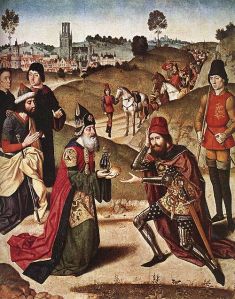
+The Blessing – And Melchizedek, the king of Salem and a priest of God Most High, brought Abram some bread and wine. Melchizedek blessed Abram with this blessing:

“Blessed be Abram by God Most High, Creator of heaven and earth. And blessed be God Most High, who has defeated your enemies for you.”

+ The Tithe – Then Abram gave Melchizedek a tenth of all the goods he had recovered.

The king of Sodom said to Abram, “Give back my people who were captured. But you may keep for yourself all the goods you have recovered.”

Abram replied to the king of Sodom, “I solemnly swear to the Lord, God Most High, Creator of heaven and earth, that I will not take so much as a single thread or sandal thong from what belongs to you. Otherwise you might say, ‘I am the one who made Abram rich.’ I will accept only what my young warriors have already eaten, and I request that you give a fair share of the goods to my allies—Aner, Eshcol, and Mamre.”

The Lord’s Covenant Promise to Abram

Genesis 15 (NLT) – Some time later, the Lord spoke to Abram in a vision and said to him, “Do not be afraid, Abram, for I will protect you, and your reward will be great.”

But Abram replied, “O Sovereign Lord, what good are all your blessings when I don’t even have a son? Since you’ve given me no children, Eliezer of Damascus, a servant in my household, will inherit all my wealth. You have given me no descendants of my own, so one of my servants will be my heir.”

+ Descendants as many as the stars – Then the Lord said to him, “No, your servant will not be your heir, for you will have a son of your own who will be your heir.” Then the Lord took Abram outside and said to him, “Look up into the sky and count the stars if you can. That’s how many descendants you will have!”

+ Abram believed the Lord – And Abram believed the Lord, and the Lord counted him as righteous because of his faith.

Then the Lord told him, “I am the Lord who brought you out of Ur of the Chaldeans to give you this land as your possession.”

But Abram replied, “O Sovereign Lord, how can I be sure that I will actually possess it?”

The Lord told him, “Bring me a three-year-old heifer, a three-year-old female goat, a three-year-old ram, a turtledove, and a young pigeon.” So Abram presented all these to him and killed them. Then he cut each animal down the middle and laid the halves side by side; he did not, however, cut the birds in half. Some vultures swooped down to eat the carcasses, but Abram chased them away.

+ Abram’s prophetic dream – As the sun was going down, Abram fell into a deep sleep, and a terrifying darkness came down over him. Then the Lord said to Abram, “You can be sure that your descendants will be strangers in a foreign land, where they will be oppressed as slaves for 400 years. But I will punish the nation that enslaves them, and in the end they will come away with great wealth. (As for you, you will die in peace and be buried at a ripe old age.) After four generations your descendants will return here to this land, for the sins of the Amorites do not yet warrant their destruction.”

After the sun went down and darkness fell, Abram saw a smoking firepot and a flaming torch pass between the halves of the carcasses. So the Lord made a covenant with Abram that day and said, “I have given this land to your descendants, all the way from the border of Egypt to the great Euphrates River— the land now occupied by the Kenites, Kenizzites, Kadmonites, Hittites, Perizzites, Rephaites, Amorites, Canaanites, Girgashites, and Jebusites.”
__________

“We’re Blessed To Be A Blessing” – Mike Wilhoit


__________

Blessing – (Northumbrian Community)

May the peace of the Lord Christ go with you, wherever He may send you. May He guide you through the wilderness, protect you through the storm. May He bring you home rejoicing at the wonders He has shown you. May He bring you home rejoicing once again into our doors.
__________

+ In the name of the Father, and the Son, and the Holy Spirit. Amen!

Morning Reading: Sat, 20 Jan – Romans 5-6 ~ peace with God

Morning Reading

+ In the name of the Father, and the Son, and the Holy Spirit. Amen!

Opening – (Northumbria Community)

One thing I have asked of the Lord, this is what I seek: that I may dwell in the house of the Lord all the days of my life; to behold the beauty of the Lord and to seek Him in His temple.

Praise to You, Lord Jesus Christ, King of endless glory.

Full Reading: Romans 5-6 (NLT)

Made Right with God by Faith

Romans 5 (NLT) – Therefore, since we have been made right in God’s sight by faith, we have peace with God because of what Jesus Christ our Lord has done for us. Because of our faith, Christ has brought us into this place of undeserved privilege where we now stand, and we confidently and joyfully look forward to sharing God’s glory.

+ Character Development

We can rejoice, too, when we run into problems and trials, for we know that they help us develop endurance. And endurance develops strength of character, and character strengthens our confident hope of salvation. And this hope will not lead to disappointment. For we know how dearly God loves us, because he has given us the Holy Spirit to fill our hearts with his love.

+ Perfect Timing

When we were utterly helpless, Christ came at just the right time and died for us sinners. Now, most people would not be willing to die for an upright person, though someone might perhaps be willing to die for a person who is especially good. But God showed his great love for us by sending Christ to die for us while we were still sinners. And since we have been made right in God’s sight by the blood of Christ, he will certainly save us from God’s condemnation. For since our friendship with God was restored by the death of his Son while we were still his enemies, we will certainly be saved through the life of his Son. So now we can rejoice in our wonderful new relationship with God because our Lord Jesus Christ has made us friends of God.

+ Adam’s Sin brought Death

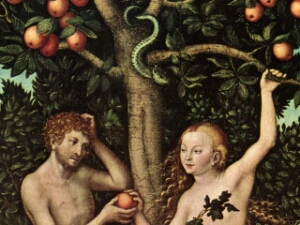
When Adam sinned, sin entered the world. Adam’s sin brought death, so death spread to everyone, for everyone sinned. Yes, people sinned even before the law was given. But it was not counted as sin because there was not yet any law to break. Still, everyone died—from the time of Adam to the time of Moses—even those who did not disobey an explicit commandment of God, as Adam did. Now Adam is a symbol, a representation of Christ, who was yet to come. But there is a great difference between Adam’s sin and God’s gracious gift. For the sin of this one man, Adam, brought death to many. But even greater is God’s wonderful grace and his gift of forgiveness to many through this other man, Jesus Christ. And the result of God’s gracious gift is very different from the result of that one man’s sin. For Adam’s sin led to condemnation, but God’s free gift leads to our being made right with God, even though we are guilty of many sins. For the sin of this one man, Adam, caused death to rule over many. But even greater is God’s wonderful grace and his gift of righteousness, for all who receive it will live in triumph over sin and death through this one man, Jesus Christ.

+ Christ’s Sacrifice brought Life

Yes, Adam’s one sin brings condemnation for everyone, but Christ’s one act of righteousness brings a right relationship with God and new life for everyone. Because one person disobeyed God, many became sinners. But because one other person obeyed God, many will be made righteous.

God’s law was given so that all people could see how sinful they were. But as people sinned more and more, God’s wonderful grace became more abundant. So just as sin ruled over all people and brought them to death, now God’s wonderful grace rules instead, giving us right standing with God and resulting in eternal life through Jesus Christ our Lord.

Sin has Lost its Power

Romans 6 (NLT) – Well then, should we keep on sinning so that God can show us more and more of his wonderful grace? Of course not! Since we have died to sin, how can we continue to live in it? Or have you forgotten that when we were joined with Christ Jesus in baptism, we joined him in his death? For we died and were buried with Christ by baptism. And just as Christ was raised from the dead by the glorious power of the Father, now we also may live new lives.

+ Raised to Life with Christ

Since we have been united with him in his death, we will also be raised to life as he was. We know that our old sinful selves were crucified with Christ so that sin might lose its power in our lives. We are no longer slaves to sin. For when we died with Christ we were set free from the power of sin. And since we died with Christ, we know we will also live with him. We are sure of this because Christ was raised from the dead, and he will never die again. Death no longer has any power over him. When he died, he died once to break the power of sin. But now that he lives, he lives for the glory of God. So you also should consider yourselves to be dead to the power of sin and alive to God through Christ Jesus.

Do not let sin control the way you live; do not give in to sinful desires. Do not let any part of your body become an instrument of evil to serve sin. Instead, give yourselves completely to God, for you were dead, but now you have new life. So use your whole body as an instrument to do what is right for the glory of God. Sin is no longer your master, for you no longer live under the requirements of the law. Instead, you live under the freedom of God’s grace.

+ Set Free by God’s Grace

Well then, since God’s grace has set us free from the law, does that mean we can go on sinning? Of course not! Don’t you realize that you become the slave of whatever you choose to obey? You can be a slave to sin, which leads to death, or you can choose to obey God, which leads to righteous living. Thank God! Once you were slaves of sin, but now you wholeheartedly obey this teaching we have given you. Now you are free from your slavery to sin, and you have become slaves to righteous living.

Because of the weakness of your human nature, I am using the illustration of slavery to help you understand all this. Previously, you let yourselves be slaves to impurity and lawlessness, which led ever deeper into sin. Now you must give yourselves to be slaves to righteous living so that you will become holy.

Eternal Life: God’s Free Gift

When you were slaves to sin, you were free from the obligation to do right. And what was the result? You are now ashamed of the things you used to do, things that end in eternal doom. But now you are free from the power of sin and have become slaves of God. Now you do those things that lead to holiness and result in eternal life. For the wages of sin is death, but the free gift of God is eternal life through Christ Jesus our Lord.
__________

“No Longer Slaves” – Bethel Music with Jonathan David & Melissa Helser


__________

Blessing – (Northumbrian Community)

May the peace of the Lord Christ go with you, wherever He may send you. May He guide you through the wilderness, protect you through the storm. May He bring you home rejoicing at the wonders He has shown you. May He bring you home rejoicing once again into our doors.
__________

+ In the name of the Father, and the Son, and the Holy Spirit. Amen!
Morning Reading: Fri, 19 Jan – Matthew 5-7 ~ How to live a blessed life.

Morning Reading

+ In the name of the Father, and the Son, and the Holy Spirit. Amen!

Opening – (Northumbria Community)

One thing I have asked of the Lord, this is what I seek: that I may dwell in the house of the Lord all the days of my life; to behold the beauty of the Lord and to seek Him in His temple.

Praise to You, Lord Jesus Christ, King of endless glory.

Reading in Full: Matthew 5-7 (NLT)

The Sermon on the Mount

Matthew 5 (NLT)One day as he saw the crowds gathering, Jesus went up on the mountainside and sat down. His disciples gathered around him, and he began to teach them.

The Beatitudes

  • “God blesses those who are poor and realize their need for him, for the Kingdom of Heaven is theirs.
  • “God blesses those who mourn, for they will be comforted.
  • “God blesses those who are humble, for they will inherit the whole earth.
  • “God blesses those who hunger and thirst for justice, for they will be satisfied.
  • “God blesses those who are merciful, for they will be shown mercy.
  • “God blesses those whose hearts are pure, for they will see God.
  • “God blesses those who work for peace, for they will be called the children of God.
  • “God blesses those who are persecuted for doing right, for the Kingdom of Heaven is theirs.
  • “God blesses you when people mock you and persecute you and lie about you and say all sorts of evil things against you because you are my followers. Be happy about it! Be very glad! For a great reward awaits you in heaven. And remember, the ancient prophets were persecuted in the same way.

Teaching about Salt and Light

You are the salt of the earth. But what good is salt if it has lost its flavor? Can you make it salty again? It will be thrown out and trampled underfoot as worthless.

You are the light of the world—like a city on a hilltop that cannot be hidden. No one lights a lamp and then puts it under a basket. Instead, a lamp is placed on a stand, where it gives light to everyone in the house. In the same way, let your good deeds shine out for all to see, so that everyone will praise your heavenly Father.

Teaching about the Law

“Don’t misunderstand why I have come. I did not come to abolish the law of Moses or the writings of the prophets. No, I came to accomplish their purpose. I tell you the truth, until heaven and earth disappear, not even the smallest detail of God’s law will disappear until its purpose is achieved. So if you ignore the least commandment and teach others to do the same, you will be called the least in the Kingdom of Heaven. But anyone who obeys God’s laws and teaches them will be called great in the Kingdom of Heaven.

“But I warn you—unless your righteousness is better than the righteousness of the teachers of religious law and the Pharisees, you will never enter the Kingdom of Heaven!

Teaching about Anger

“You have heard that our ancestors were told, ‘You must not murder. If you commit murder, you are subject to judgment.’ But I say, if you are even angry with someone, you are subject to judgment! If you call someone an idiot, you are in danger of being brought before the court. And if you curse someone, you are in danger of the fires of hell.

“So if you are presenting a sacrifice at the altar in the Temple and you suddenly remember that someone has something against you, leave your sacrifice there at the altar. Go and be reconciled to that person. Then come and offer your sacrifice to God.

“When you are on the way to court with your adversary, settle your differences quickly. Otherwise, your accuser may hand you over to the judge, who will hand you over to an officer, and you will be thrown into prison. And if that happens, you surely won’t be free again until you have paid the last penny.

Teaching about Adultery

“You have heard the commandment that says, ‘You must not commit adultery.’ But I say, anyone who even looks at a woman with lust has already committed adultery with her in his heart. So if your eye—even your good eye—causes you to lust, gouge it out and throw it away. It is better for you to lose one part of your body than for your whole body to be thrown into hell. And if your hand—even your stronger hand—causes you to sin, cut it off and throw it away. It is better for you to lose one part of your body than for your whole body to be thrown into hell.

Teaching about Divorce

“You have heard the law that says, ‘A man can divorce his wife by merely giving her a written notice of divorce.’ But I say that a man who divorces his wife, unless she has been unfaithful, causes her to commit adultery. And anyone who marries a divorced woman also commits adultery.

Teaching about Vows

“You have also heard that our ancestors were told, ‘You must not break your vows; you must carry out the vows you make to the Lord.’ But I say, do not make any vows! Do not say, ‘By heaven!’ because heaven is God’s throne. And do not say, ‘By the earth!’ because the earth is his footstool. And do not say, ‘By Jerusalem!’ for Jerusalem is the city of the great King. Do not even say, ‘By my head!’ for you can’t turn one hair white or black. Just say a simple, ‘Yes, I will,’ or ‘No, I won’t.’ Anything beyond this is from the evil one.

Teaching about Revenge

“You have heard the law that says the punishment must match the injury: ‘An eye for an eye, and a tooth for a tooth.’ But I say, do not resist an evil person! If someone slaps you on the right cheek, offer the other cheek also. If you are sued in court and your shirt is taken from you, give your coat, too. If a soldier demands that you carry his gear for a mile, carry it two miles. Give to those who ask, and don’t turn away from those who want to borrow.

Teaching about Love for Enemies

“You have heard the law that says, ‘Love your neighbor’ and hate your enemy. But I say, love your enemies! Pray for those who persecute you! In that way, you will be acting as true children of your Father in heaven. For he gives his sunlight to both the evil and the good, and he sends rain on the just and the unjust alike. If you love only those who love you, what reward is there for that? Even corrupt tax collectors do that much. If you are kind only to your friends, how are you different from anyone else? Even pagans do that. But you are to be perfect, even as your Father in heaven is perfect.

Teaching about Giving to the Needy

Matthew 6 (NLT) – “Watch out! Don’t do your good deeds publicly, to be admired by others, for you will lose the reward from your Father in heaven. When you give to someone in need, don’t do as the hypocrites do—blowing trumpets in the synagogues and streets to call attention to their acts of charity! I tell you the truth, they have received all the reward they will ever get. But when you give to someone in need, don’t let your left hand know what your right hand is doing. Give your gifts in private, and your Father, who sees everything, will reward you.

Teaching about Prayer and Fasting

“When you pray, don’t be like the hypocrites who love to pray publicly on street corners and in the synagogues where everyone can see them. I tell you the truth, that is all the reward they will ever get. But when you pray, go away by yourself, shut the door behind you, and pray to your Father in private. Then your Father, who sees everything, will reward you.

“When you pray, don’t babble on and on as the Gentiles do. They think their prayers are answered merely by repeating their words again and again. Don’t be like them, for your Father knows exactly what you need even before you ask him! Pray like this:

  • Our Father in heaven, may your name be kept holy.
  • May your Kingdom come soon.
  • May your will be done on earth, as it is in heaven.
  • Give us today the food we need, and forgive us our sins, as we have forgiven those who sin against us.
  • And don’t let us yield to temptation, but rescue us from the evil one.

“If you forgive those who sin against you, your heavenly Father will forgive you. But if you refuse to forgive others, your Father will not forgive your sins.

“And when you fast, don’t make it obvious, as the hypocrites do, for they try to look miserable and disheveled so people will admire them for their fasting. I tell you the truth, that is the only reward they will ever get. But when you fast, comb your hair and wash your face. Then no one will notice that you are fasting, except your Father, who knows what you do in private. And your Father, who sees everything, will reward you.

Teaching about Money and Possessions

“Don’t store up treasures here on earth, where moths eat them and rust destroys them, and where thieves break in and steal. Store your treasures in heaven, where moths and rust cannot destroy, and thieves do not break in and steal. Wherever your treasure is, there the desires of your heart will also be.

“Your eye is like a lamp that provides light for your body. When your eye is healthy, your whole body is filled with light. But when your eye is unhealthy, your whole body is filled with darkness. And if the light you think you have is actually darkness, how deep that darkness is!

No one can serve two masters. For you will hate one and love the other; you will be devoted to one and despise the other. You cannot serve God and be enslaved to money.

“That is why I tell you not to worry about everyday life—whether you have enough food and drink, or enough clothes to wear. Isn’t life more than food, and your body more than clothing? Look at the birds. They don’t plant or harvest or store food in barns, for your heavenly Father feeds them. And aren’t you far more valuable to him than they are? Can all your worries add a single moment to your life?

“And why worry about your clothing? Look at the lilies of the field and how they grow. They don’t work or make their clothing, yet Solomon in all his glory was not dressed as beautifully as they are. And if God cares so wonderfully for wildflowers that are here today and thrown into the fire tomorrow, he will certainly care for you. Why do you have so little faith?

“So don’t worry about these things, saying, ‘What will we eat? What will we drink? What will we wear?’ These things dominate the thoughts of unbelievers, but your heavenly Father already knows all your needs. Seek the Kingdom of God above all else, and live righteously, and he will give you everything you need.

“So don’t worry about tomorrow, for tomorrow will bring its own worries. Today’s trouble is enough for today.

Do Not Judge Others

Matthew 7 (NLT) – “Do not judge others, and you will not be judged. For you will be treated as you treat others. The standard you use in judging is the standard by which you will be judged.

“And why worry about a speck in your friend’s eye when you have a log in your own? How can you think of saying to your friend, ‘Let me help you get rid of that speck in your eye,’ when you can’t see past the log in your own eye? Hypocrite! First get rid of the log in your own eye; then you will see well enough to deal with the speck in your friend’s eye.

“Don’t waste what is holy on people who are unholy. Don’t throw your pearls to pigs! They will trample the pearls, then turn and attack you.

Effective Prayer

Keep on asking, and you will receive what you ask for. Keep on seeking, and you will find. Keep on knocking, and the door will be opened to you. For everyone who asks, receives. Everyone who seeks, finds. And to everyone who knocks, the door will be opened.

“You parents—if your children ask for a loaf of bread, do you give them a stone instead? Or if they ask for a fish, do you give them a snake? Of course not! So if you sinful people know how to give good gifts to your children, how much more will your heavenly Father give good gifts to those who ask him.

The Golden Rule

Do to others whatever you would like them to do to you. This is the essence of all that is taught in the law and the prophets.

The Narrow Gate

“You can enter God’s Kingdom only through the narrow gate. The highway to hell is broad, and its gate is wide for the many who choose that way. But the gateway to life is very narrow and the road is difficult, and only a few ever find it.

The Tree and Its Fruit

“Beware of false prophets who come disguised as harmless sheep but are really vicious wolves. You can identify them by their fruit, that is, by the way they act. Can you pick grapes from thornbushes, or figs from thistles? A good tree produces good fruit, and a bad tree produces bad fruit. A good tree can’t produce bad fruit, and a bad tree can’t produce good fruit. So every tree that does not produce good fruit is chopped down and thrown into the fire. Yes, just as you can identify a tree by its fruit, so you can identify people by their actions.

True Disciples

“Not everyone who calls out to me, ‘Lord! Lord!’ will enter the Kingdom of Heaven. Only those who actually do the will of my Father in heaven will enter. On judgment day many will say to me, ‘Lord! Lord! We prophesied in your name and cast out demons in your name and performed many miracles in your name.’ But I will reply, ‘I never knew you. Get away from me, you who break God’s laws.’

Building on a Solid Foundation

Anyone who listens to my teaching and follows it is wise, like a person who builds a house on solid rock. Though the rain comes in torrents and the floodwaters rise and the winds beat against that house, it won’t collapse because it is built on bedrock. But anyone who hears my teaching and doesn’t obey it is foolish, like a person who builds a house on sand. When the rains and floods come and the winds beat against that house, it will collapse with a mighty crash.”

When Jesus had finished saying these things, the crowds were amazed at his teaching, for he taught with real authority—quite unlike their teachers of religious law.
__________

“Christ The Rock” – Kim Walker Smith & Skyler Smith


__________

Blessing – (Northumbrian Community)

May the peace of the Lord Christ go with you, wherever He may send you. May He guide you through the wilderness, protect you through the storm. May He bring you home rejoicing at the wonders He has shown you. May He bring you home rejoicing once again into our doors.
__________

+ In the name of the Father, and the Son, and the Holy Spirit. Amen!