+ In the Name of the Father, and the Son, and the Holy Spirit. Amen.
Opening:
O God, you declare your almighty power
chiefly in showing mercy and pity:
Grant us the fullness of your grace,
that we, running to obtain your promises,
may become partakers of your heavenly treasure;
through Jesus Christ our Lord,
who lives and reigns with you and the Holy Spirit,
one God, for ever and ever. Amen.
So Christ has truly set us free. Now make sure that you stay free, and don’t get tied up again in slavery to the law.
(Galatians 5:1)
33:1 Then Jacob looked up and saw Esau coming with his 400 men. So he divided the children among Leah, Rachel, and his two servant wives. He put the servant wives and their children at the front, Leah and her children next, and Rachel and Joseph last. Then Jacob went on ahead. As he approached his brother, he bowed to the ground seven times before him. Then Esau ran to meet him and embraced him, threw his arms around his neck, and kissed him. And they both wept.
Then Esau looked at the women and children and asked, “Who are these people with you?”
“These are the children God has graciously given to me, your servant,” Jacob replied. Then the servant wives came forward with their children and bowed before him. Next came Leah with her children, and they bowed before him. Finally, Joseph and Rachel came forward and bowed before him.
“And what were all the flocks and herds I met as I came?” Esau asked.
Jacob replied, “They are a gift, my lord, to ensure your friendship.”
“My brother, I have plenty,” Esau answered. “Keep what you have for yourself.”
But Jacob insisted, “No, if I have found favor with you, please accept this gift from me. And what a relief to see your friendly smile. It is like seeing the face of God! Please take this gift I have brought you, for God has been very gracious to me. I have more than enough.” And because Jacob insisted, Esau finally accepted the gift.
“Well,” Esau said, “let’s be going. I will lead the way.”
But Jacob replied, “You can see, my lord, that some of the children are very young, and the flocks and herds have their young, too. If they are driven too hard, even for one day, all the animals could die. Please, my lord, go ahead of your servant. We will follow slowly, at a pace that is comfortable for the livestock and the children. I will meet you at Seir.”
“All right,” Esau said, “but at least let me assign some of my men to guide and protect you.”
Jacob responded, “That’s not necessary. It’s enough that you’ve received me warmly, my lord!”
So Esau turned around and started back to Seir that same day. Jacob, on the other hand, traveled on to Succoth. There he built himself a house and made shelters for his livestock. That is why the place was named Succoth (which means “shelters”).
4:21 Tell me, you who want to live under the law, do you know what the law actually says? The Scriptures say that Abraham had two sons, one from his slave wife and one from his freeborn wife. The son of the slave wife was born in a human attempt to bring about the fulfillment of God’s promise. But the son of the freeborn wife was born as God’s own fulfillment of his promise.
These two women serve as an illustration of God’s two covenants. The first woman, Hagar, represents Mount Sinai where people received the law that enslaved them. And now Jerusalem is just like Mount Sinai in Arabia, because she and her children live in slavery to the law. But the other woman, Sarah, represents the heavenly Jerusalem. She is the free woman, and she is our mother. As Isaiah said,
“Rejoice, O childless woman, you who have never given birth! Break into a joyful shout, you who have never been in labor! For the desolate woman now has more children than the woman who lives with her husband!”
And you, dear brothers and sisters, are children of the promise, just like Isaac. But you are now being persecuted by those who want you to keep the law, just as Ishmael, the child born by human effort, persecuted Isaac, the child born by the power of the Spirit.
But what do the Scriptures say about that? “Get rid of the slave and her son, for the son of the slave woman will not share the inheritance with the free woman’s son.” So, dear brothers and sisters, we are not children of the slave woman; we are children of the free woman.
Freedom in Christ
5:1 So Christ has truly set us free. Now make sure that you stay free, and don’t get tied up again in slavery to the law.
+ O God, by whom the meek are guided in judgment, and light rises up in darkness for the godly: Grant us, in all our doubts and uncertainties, the grace to ask what you would have us do, that the Spirit of wisdom may save us from all false choices; that in your light we may see light, and in your straight path we may not stumble; through Jesus Christ our Lord. Amen.
+ O God, the light of the minds that know you, the life of the souls that love you, and the strength of the wills that serve you: Help us so to know you that we may truly love you, and so to love you that we may fully serve you, whom to serve is perfect freedom; through Jesus Christ our Lord. Amen.
+ In the Name of the Father, and the Son, and the Holy Spirit. Amen.
Opening:
O God, the strength of all who put their trust in you:
Mercifully accept our prayers, and because,
through the weakness of our mortal nature,
we can do no good thing without you,
grant us the help of your grace,
that in keeping your commandments
we may please you both in will and deed;
through Jesus Christ our Lord,
who lives and reigns with you and the Holy Spirit,
one God, for ever and ever. Amen.
Among the Lord’s people, women are not independent of men, and men are not independent of women. For although the first woman came from man, every other man was born from a woman, and everything comes from God.
(1 Corinthians 11:11-12)
__________
Psalms: Psalm 38 – Do Not Forsake Me Karl Kohlhase
[A prayer for all who struggle with any kind of addiction…
there is help for those who ask for it. Never lose hope.]
__________
OT Reading: Genesis 33:1-17 (NLT)
Jacob and Esau Make Peace
33:1 Then Jacob looked up and saw Esau coming with his 400 men. So he divided the children among Leah, Rachel, and his two servant wives. He put the servant wives and their children at the front, Leah and her children next, and Rachel and Joseph last. Then Jacob went on ahead. As he approached his brother, he bowed to the ground seven times before him. Then Esau ran to meet him and embraced him, threw his arms around his neck, and kissed him. And they both wept.
Then Esau looked at the women and children and asked, “Who are these people with you?”
“These are the children God has graciously given to me, your servant,” Jacob replied. Then the servant wives came forward with their children and bowed before him. Next came Leah with her children, and they bowed before him. Finally, Joseph and Rachel came forward and bowed before him.
“And what were all the flocks and herds I met as I came?” Esau asked.
Jacob replied, “They are a gift, my lord, to ensure your friendship.”
“My brother, I have plenty,” Esau answered. “Keep what you have for yourself.”
But Jacob insisted, “No, if I have found favor with you, please accept this gift from me. And what a relief to see your friendly smile. It is like seeing the face of God! Please take this gift I have brought you, for God has been very gracious to me. I have more than enough.” And because Jacob insisted, Esau finally accepted the gift.
“Well,” Esau said, “let’s be going. I will lead the way.”
But Jacob replied, “You can see, my lord, that some of the children are very young, and the flocks and herds have their young, too. If they are driven too hard, even for one day, all the animals could die. Please, my lord, go ahead of your servant. We will follow slowly, at a pace that is comfortable for the livestock and the children. I will meet you at Seir.”
“All right,” Esau said, “but at least let me assign some of my men to guide and protect you.”
Jacob responded, “That’s not necessary. It’s enough that you’ve received me warmly, my lord!”
So Esau turned around and started back to Seir that same day. Jacob, on the other hand, traveled on to Succoth. There he built himself a house and made shelters for his livestock. That is why the place was named Succoth (which means “shelters”).
__________
Reconciled – Table Music
[On the 16th of December 2020, the day South Africa celebrates the day of reconciliation, Table Music came together to pray for reconciliation in the form of this song, but also in praying together from our hearts.]
__________
NT Reading: 1 Corinthians 11:2-16 (NLT)
Instructions for Public Worship
11:2 I am so glad that you always keep me in your thoughts, and that you are following the teachings I passed on to you. But there is one thing I want you to know: The head of every man is Christ, the head of woman is man, and the head of Christ is God. A man dishonors his head if he covers his head while praying or prophesying. But a woman dishonors her head if she prays or prophesies without a covering on her head, for this is the same as shaving her head. Yes, if she refuses to wear a head covering, she should cut off all her hair! But since it is shameful for a woman to have her hair cut or her head shaved, she should wear a covering.
A man should not wear anything on his head when worshiping, for man is made in God’s image and reflects God’s glory. And woman reflects man’s glory. For the first man didn’t come from woman, but the first woman came from man. And man was not made for woman, but woman was made for man. For this reason, and because the angels are watching, a woman should wear a covering on her head to show she is under authority.
But among the Lord’s people, women are not independent of men, and men are not independent of women. For although the first woman came from man, every other man was born from a woman, and everything comes from God.
Judge for yourselves. Is it right for a woman to pray to God in public without covering her head? Isn’t it obvious that it’s disgraceful for a man to have long hair? And isn’t long hair a woman’s pride and joy? For it has been given to her as a covering. But if anyone wants to argue about this, I simply say that we have no other custom than this, and neither do God’s other churches.
+ Almighty God, to you all hearts are open, all desires known, and from you no secrets are hid: Cleanse the thoughts of our hearts by the inspiration of your Holy Spirit, that we may perfectly love you, and worthily magnify your holy Name; through Christ our Lord. Amen.
+ O God the Holy Spirit, Sanctifier of the faithful: Sanctify our local assemblies by your abiding presence. Bless those who minister in holy things. Enlighten the minds of your people more and more with the light of the everlasting Gospel. Bring erring souls to the knowledge of our Savior Jesus Christ; and those who are walking in the way of life, keep steadfast to the end. Give patience to the sick and afflicted, and renew them in body and soul. Guard those who are strong and prosperous from forgetting you. Increase in us your many gifts of grace, and make us all fruitful in good works. This we ask, O blessed Spirit, whom with the Father and the Son we worship and glorify, one God, world without end. Amen.
One thing I have asked of the Lord, this is what I seek: that I may dwell in the house of the Lord all the days of my life; to behold the beauty of the Lord and to seek Him in His temple.
Praise to You, Lord Jesus Christ, King of endless glory.
Reading: Genesis 32-35 (NLT)
Genesis 32 (NLT)
As Jacob started on his way again, angels of God came to meet him. When Jacob saw them, he exclaimed, “This is God’s camp!” So he named the place Mahanaim.
Jacob Sends Gifts to Esau
Then Jacob sent messengers ahead to his brother, Esau, who was living in the region of Seir in the land of Edom. He told them, “Give this message to my master Esau: ‘Humble greetings from your servant Jacob. Until now I have been living with Uncle Laban, and now I own cattle, donkeys, flocks of sheep and goats, and many servants, both men and women. I have sent these messengers to inform my lord of my coming, hoping that you will be friendly to me.’”
+ Jacob was terrified – After delivering the message, the messengers returned to Jacob and reported, “We met your brother, Esau, and he is already on his way to meet you—with an army of 400 men!” Jacob was terrified at the news. He divided his household, along with the flocks and herds and camels, into two groups. He thought, “If Esau meets one group and attacks it, perhaps the other group can escape.”
+ Jacob appeals to God – Then Jacob prayed, “O God of my grandfather Abraham, and God of my father, Isaac—O Lord, you told me, ‘Return to your own land and to your relatives.’ And you promised me, ‘I will treat you kindly.’ I am not worthy of all the unfailing love and faithfulness you have shown to me, your servant. When I left home and crossed the Jordan River, I owned nothing except a walking stick. Now my household fills two large camps! O Lord, please rescue me from the hand of my brother, Esau. I am afraid that he is coming to attack me, along with my wives and children. But you promised me, ‘I will surely treat you kindly, and I will multiply your descendants until they become as numerous as the sands along the seashore—too many to count.’”
+ Jacob’s strategy of appeasement – Jacob stayed where he was for the night. Then he selected these gifts from his possessions to present to his brother, Esau: 200 female goats, 20 male goats, 200 ewes, 20 rams, 30 female camels with their young, 40 cows, 10 bulls, 20 female donkeys, and 10 male donkeys. He divided these animals into herds and assigned each to different servants. Then he told his servants, “Go ahead of me with the animals, but keep some distance between the herds.”
He gave these instructions to the men leading the first group: “When my brother, Esau, meets you, he will ask, ‘Whose servants are you? Where are you going? Who owns these animals?’ You must reply, ‘They belong to your servant Jacob, but they are a gift for his master Esau. Look, he is coming right behind us.’”
Jacob gave the same instructions to the second and third herdsmen and to all who followed behind the herds: “You must say the same thing to Esau when you meet him. And be sure to say, ‘Look, your servant Jacob is right behind us.’”
Jacob thought, “I will try to appease him by sending gifts ahead of me. When I see him in person, perhaps he will be friendly to me.” So the gifts were sent on ahead, while Jacob himself spent that night in the camp.
Jacob Wrestles with God
During the night Jacob got up and took his two wives, his two servant wives, and his eleven sons and crossed the Jabbok River with them. After taking them to the other side, he sent over all his possessions.
This left Jacob all alone in the camp, and a man came and wrestled with him until the dawn began to break. When the man saw that he would not win the match, he touched Jacob’s hip and wrenched it out of its socket. Then the man said, “Let me go, for the dawn is breaking!”
But Jacob said, “I will not let you go unless you bless me.”
“What is your name?” the man asked.
He replied, “Jacob.”
+ Jacob’s name change – “Your name will no longer be Jacob,” the man told him. “From now on you will be called Israel, because you have fought with God and with men and have won.”
“Please tell me your name,” Jacob said.
+ Jacob is blessed – “Why do you want to know my name?” the man replied. Then he blessed Jacob there.
Jacob named the place Peniel (which means “face of God”), for he said, “I have seen God face to face, yet my life has been spared.” The sun was rising as Jacob left Peniel, and he was limping because of the injury to his hip. (Even today the people of Israel don’t eat the tendon near the hip socket because of what happened that night when the man strained the tendon of Jacob’s hip.)
Jacob and Esau Make Peace
Genesis 33 (NLT)
+ Esau forgives Jacob – Then Jacob looked up and saw Esau coming with his 400 men. So he divided the children among Leah, Rachel, and his two servant wives. He put the servant wives and their children at the front, Leah and her children next, and Rachel and Joseph last. Then Jacob went on ahead. As he approached his brother, he bowed to the ground seven times before him. Then Esau ran to meet him and embraced him, threw his arms around his neck, and kissed him. And they both wept.
Then Esau looked at the women and children and asked, “Who are these people with you?”
“These are the children God has graciously given to me, your servant,” Jacob replied. Then the servant wives came forward with their children and bowed before him. Next came Leah with her children, and they bowed before him. Finally, Joseph and Rachel came forward and bowed before him.
“And what were all the flocks and herds I met as I came?” Esau asked.
Jacob replied, “They are a gift, my lord, to ensure your friendship.”
“My brother, I have plenty,” Esau answered. “Keep what you have for yourself.”
+ Esau accepts Jacob’s gift – But Jacob insisted, “No, if I have found favor with you, please accept this gift from me. And what a relief to see your friendly smile. It is like seeing the face of God! Please take this gift I have brought you, for God has been very gracious to me. I have more than enough.” And because Jacob insisted, Esau finally accepted the gift.
“Well,” Esau said, “let’s be going. I will lead the way.”
But Jacob replied, “You can see, my lord, that some of the children are very young, and the flocks and herds have their young, too. If they are driven too hard, even for one day, all the animals could die. Please, my lord, go ahead of your servant. We will follow slowly, at a pace that is comfortable for the livestock and the children. I will meet you at Seir.”
“All right,” Esau said, “but at least let me assign some of my men to guide and protect you.”
Jacob responded, “That’s not necessary. It’s enough that you’ve received me warmly, my lord!”
+ Esau returns home – So Esau turned around and started back to Seir that same day. Jacob, on the other hand, traveled on to Succoth. There he built himself a house and made shelters for his livestock. That is why the place was named Succoth (which means “shelters”).
Later, having traveled all the way from Paddan-aram, Jacob arrived safely at the town of Shechem, in the land of Canaan. There he set up camp outside the town. Jacob bought the plot of land where he camped from the family of Hamor, the father of Shechem, for 100 pieces of silver. And there he built an altar and named it El-Elohe-Israel.
Revenge against Shechem
Genesis 34 (NLT)
+ Dinah defiled – One day Dinah, the daughter of Jacob and Leah, went to visit some of the young women who lived in the area. But when the local prince, Shechem son of Hamor the Hivite, saw Dinah, he seized her and raped her. But then he fell in love with her, and he tried to win her affection with tender words. He said to his father, Hamor, “Get me this young girl. I want to marry her.”
+ Shock and fury – Soon Jacob heard that Shechem had defiled his daughter, Dinah. But since his sons were out in the fields herding his livestock, he said nothing until they returned. Hamor, Shechem’s father, came to discuss the matter with Jacob. Meanwhile, Jacob’s sons had come in from the field as soon as they heard what had happened. They were shocked and furious that their sister had been raped. Shechem had done a disgraceful thing against Jacob’s family, something that should never be done.
+ Appeasement attempt – Hamor tried to speak with Jacob and his sons. “My son Shechem is truly in love with your daughter,” he said. “Please let him marry her. In fact, let’s arrange other marriages, too. You give us your daughters for our sons, and we will give you our daughters for your sons. And you may live among us; the land is open to you! Settle here and trade with us. And feel free to buy property in the area.”
Then Shechem himself spoke to Dinah’s father and brothers. “Please be kind to me, and let me marry her,” he begged. “I will give you whatever you ask. No matter what dowry or gift you demand, I will gladly pay it—just give me the girl as my wife.”
+ Jacob’s sons plot revenge – But since Shechem had defiled their sister, Dinah, Jacob’s sons responded deceitfully to Shechem and his father, Hamor. They said to them, “We couldn’t possibly allow this, because you’re not circumcised. It would be a disgrace for our sister to marry a man like you! But here is a solution. If every man among you will be circumcised like we are, then we will give you our daughters, and we’ll take your daughters for ourselves. We will live among you and become one people. But if you don’t agree to be circumcised, we will take her and be on our way.”
Hamor and his son Shechem agreed to their proposal. Shechem wasted no time in acting on this request, for he wanted Jacob’s daughter desperately. Shechem was a highly respected member of his family, and he went with his father, Hamor, to present this proposal to the leaders at the town gate.
“These men are our friends,” they said. “Let’s invite them to live here among us and trade freely. Look, the land is large enough to hold them. We can take their daughters as wives and let them marry ours. But they will consider staying here and becoming one people with us only if all of our men are circumcised, just as they are. But if we do this, all their livestock and possessions will eventually be ours. Come, let’s agree to their terms and let them settle here among us.”
+ The trap is sprung – So all the men in the town council agreed with Hamor and Shechem, and every male in the town was circumcised. But three days later, when their wounds were still sore, two of Jacob’s sons, Simeon and Levi, who were Dinah’s full brothers, took their swords and entered the town without opposition. Then they slaughtered every male there, including Hamor and his son Shechem. They killed them with their swords, then took Dinah from Shechem’s house and returned to their camp.
+ The town is plundered – Meanwhile, the rest of Jacob’s sons arrived. Finding the men slaughtered, they plundered the town because their sister had been defiled there. They seized all the flocks and herds and donkeys—everything they could lay their hands on, both inside the town and outside in the fields. They looted all their wealth and plundered their houses. They also took all their little children and wives and led them away as captives.
+ Unintended consequences – Afterward Jacob said to Simeon and Levi, “You have ruined me! You’ve made me stink among all the people of this land—among all the Canaanites and Perizzites. We are so few that they will join forces and crush us. I will be ruined, and my entire household will be wiped out!”
“But why should we let him treat our sister like a prostitute?” they retorted angrily.
Jacob’s Return to Bethel
Genesis 35 (NLT)
Then God said to Jacob, “Get ready and move to Bethel and settle there. Build an altar there to the God who appeared to you when you fled from your brother, Esau.”
So Jacob told everyone in his household, “Get rid of all your pagan idols, purify yourselves, and put on clean clothing. We are now going to Bethel, where I will build an altar to the God who answered my prayers when I was in distress. He has been with me wherever I have gone.”
+ Pagan idols buried – So they gave Jacob all their pagan idols and earrings, and he buried them under the great tree near Shechem. As they set out, a terror from God spread over the people in all the towns of that area, so no one attacked Jacob’s family.
Eventually, Jacob and his household arrived at Luz (also called Bethel) in Canaan. Jacob built an altar there and named the place El-bethel (which means “God of Bethel”), because God had appeared to him there when he was fleeing from his brother, Esau.
Soon after this, Rebekah’s old nurse, Deborah, died. She was buried beneath the oak tree in the valley below Bethel. Ever since, the tree has been called Allon-bacuth (which means “oak of weeping”).
+ Jacob renamed Israel – Now that Jacob had returned from Paddan-aram, God appeared to him again at Bethel. God blessed him, saying, “Your name is Jacob, but you will not be called Jacob any longer. From now on your name will be Israel.” So God renamed him Israel.
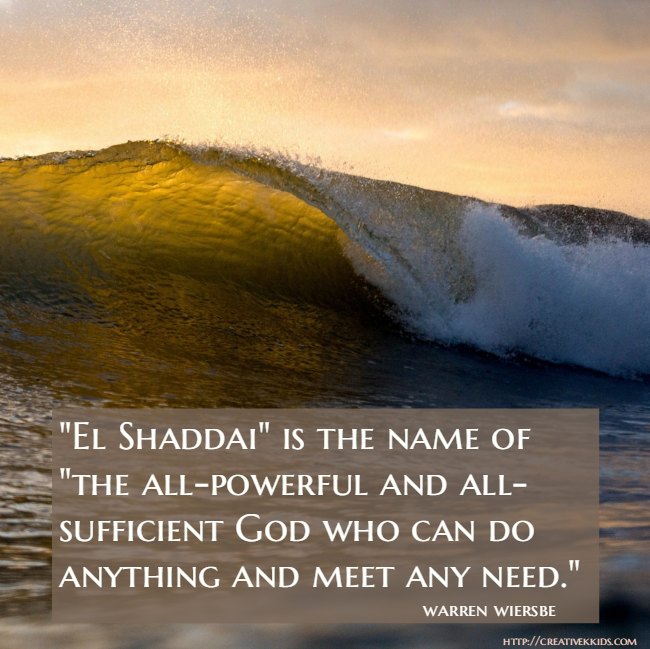
+ God reaffirms His promise – Then God said, “I am El-Shaddai—‘God Almighty.’ Be fruitful and multiply. You will become a great nation, even many nations. Kings will be among your descendants! And I will give you the land I once gave to Abraham and Isaac. Yes, I will give it to you and your descendants after you.” Then God went up from the place where he had spoken to Jacob.
Jacob set up a stone pillar to mark the place where God had spoken to him. Then he poured wine over it as an offering to God and anointed the pillar with olive oil. And Jacob named the place Bethel (which means “house of God”), because God had spoken to him there.
The Deaths of Rachel and Isaac
Leaving Bethel, Jacob and his clan moved on toward Ephrath. But Rachel went into labor while they were still some distance away. Her labor pains were intense. After a very hard delivery, the midwife finally exclaimed, “Don’t be afraid—you have another son!” Rachel was about to die, but with her last breath she named the baby Ben-oni (which means “son of my sorrow”). The baby’s father, however, called him Benjamin (which means “son of my right hand”). So Rachel died and was buried on the way to Ephrath (that is, Bethlehem). Jacob set up a stone monument over Rachel’s grave, and it can be seen there to this day.
+ Reuben’s sin – Then Jacob traveled on and camped beyond Migdal-eder. While he was living there, Reuben had intercourse with Bilhah, his father’s concubine, and Jacob soon heard about it.
+ Jacob’s sons – These are the names of the twelve sons of Jacob:
The sons of Leah were Reuben (Jacob’s oldest son), Simeon, Levi, Judah, Issachar, and Zebulun.
The sons of Rachel were Joseph and Benjamin.
The sons of Bilhah, Rachel’s servant, were Dan and Naphtali.
The sons of Zilpah, Leah’s servant, were Gad and Asher.
These are the names of the sons who were born to Jacob at Paddan-aram.
So Jacob returned to his father, Isaac, in Mamre, which is near Kiriath-arba (now called Hebron), where Abraham and Isaac had both lived as foreigners. Isaac lived for 180 years. Then he breathed his last and died at a ripe old age, joining his ancestors in death. And his sons, Esau and Jacob, buried him.
__________
May the peace of the Lord Christ go with you, wherever He may send you. May He guide you through the wilderness, protect you through the storm. May He bring you home rejoicing at the wonders He has shown you. May He bring you home rejoicing once again into our doors.
__________
+ In the name of the Father, and the Son, and the Holy Spirit. Amen!
+ In the name of the Father, and the Son, and the Holy Spirit. Amen!
“So if you are presenting a sacrifice at the altar in the Temple and you suddenly remember that someone has something against you, leave your sacrifice there at the altar. Go and be reconciled to that person. Then come and offer your sacrifice to God. (Matthew 5:23-24)
E100:2.e Abraham, Isaac, and Jacob: Jacob and Esau Reconcile – Genesis 32-33 (NLT)
Genesis 32As Jacob started on his way again, angels of God came to meet him. 2 When Jacob saw them, he exclaimed, “This is God’s camp!” So he named the place Mahanaim.
Jacob Sends Gifts to Esau
3 Then Jacob sent messengers ahead to his brother, Esau, who was living in the region of Seir in the land of Edom. 4 He told them, “Give this message to my master Esau: ‘Humble greetings from your servant Jacob. Until now I have been living with Uncle Laban, 5 and now I own cattle, donkeys, flocks of sheep and goats, and many servants, both men and women. I have sent these messengers to inform my lord of my coming, hoping that you will be friendly to me.’”
Jacob Sees Esau Coming to Meet Him James Tissot, circa 1896–1902 Jewish Museum, New York
6 After delivering the message, the messengers returned to Jacob and reported, “We met your brother, Esau, and he is already on his way to meet you—with an army of 400 men!” 7 Jacob was terrified at the news. He divided his household, along with the flocks and herds and camels, into two groups. 8 He thought, “If Esau meets one group and attacks it, perhaps the other group can escape.”
9 Then Jacob prayed, “O God of my grandfather Abraham, and God of my father, Isaac—O Lord, you told me, ‘Return to your own land and to your relatives.’ And you promised me, ‘I will treat you kindly.’ 10 I am not worthy of all the unfailing love and faithfulness you have shown to me, your servant. When I left home and crossed the Jordan River, I owned nothing except a walking stick. Now my household fills two large camps! 11 O Lord, please rescue me from the hand of my brother, Esau. I am afraid that he is coming to attack me, along with my wives and children. 12 But you promised me, ‘I will surely treat you kindly, and I will multiply your descendants until they become as numerous as the sands along the seashore—too many to count.’”
13 Jacob stayed where he was for the night. Then he selected these gifts from his possessions to present to his brother, Esau: 14 200 female goats, 20 male goats, 200 ewes, 20 rams, 15 30 female camels with their young, 40 cows, 10 bulls, 20 female donkeys, and 10 male donkeys. 16 He divided these animals into herds and assigned each to different servants. Then he told his servants, “Go ahead of me with the animals, but keep some distance between the herds.”
17 He gave these instructions to the men leading the first group: “When my brother, Esau, meets you, he will ask, ‘Whose servants are you? Where are you going? Who owns these animals?’ 18 You must reply, ‘They belong to your servant Jacob, but they are a gift for his master Esau. Look, he is coming right behind us.’”
19 Jacob gave the same instructions to the second and third herdsmen and to all who followed behind the herds: “You must say the same thing to Esau when you meet him. 20 And be sure to say, ‘Look, your servant Jacob is right behind us.’”
Jacob thought, “I will try to appease him by sending gifts ahead of me. When I see him in person, perhaps he will be friendly to me.” 21 So the gifts were sent on ahead, while Jacob himself spent that night in the camp.
Jacob Wrestles with God
Jacob Wrestling with the Angel Rembrandt, circa 1659 Gemäldegalerie, Berlin
22 During the night Jacob got up and took his two wives, his two servant wives, and his eleven sons and crossed the Jabbok River with them. 23 After taking them to the other side, he sent over all his possessions.
24 This left Jacob all alone in the camp, and a man came and wrestled with him until the dawn began to break. 25 When the man saw that he would not win the match, he touched Jacob’s hip and wrenched it out of its socket. 26 Then the man said, “Let me go, for the dawn is breaking!”
But Jacob said, “I will not let you go unless you bless me.”
27 “What is your name?” the man asked.
He replied, “Jacob.”
28 “Your name will no longer be Jacob,” the man told him. “From now on you will be called Israel, because you have fought with God and with men and have won.”
29 “Please tell me your name,” Jacob said.
“Why do you want to know my name?” the man replied. Then he blessed Jacob there.
30 Jacob named the place Peniel (which means “face of God”), for he said, “I have seen God face to face, yet my life has been spared.” 31 The sun was rising as Jacob left Peniel, and he was limping because of the injury to his hip. 32 (Even today the people of Israel don’t eat the tendon near the hip socket because of what happened that night when the man strained the tendon of Jacob’s hip.)
Jacob and Esau Make Peace
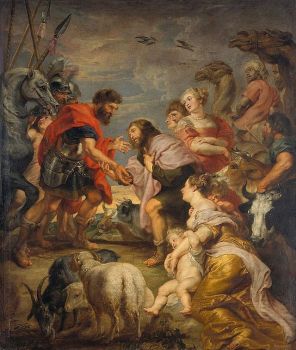
Genesis 33Then Jacob looked up and saw Esau coming with his 400 men. So he divided the children among Leah, Rachel, and his two servant wives. 2 He put the servant wives and their children at the front, Leah and her children next, and Rachel and Joseph last. 3 Then Jacob went on ahead. As he approached his brother, he bowed to the ground seven times before him. 4 Then Esau ran to meet him and embraced him, threw his arms around his neck, and kissed him. And they both wept.
The Reconciliation of Jacob and Esau Peter Paul Rubens, 1624 Scottish National Gallery, Edinburgh
5 Then Esau looked at the women and children and asked, “Who are these people with you?”
“These are the children God has graciously given to me, your servant,” Jacob replied. 6 Then the servant wives came forward with their children and bowed before him. 7 Next came Leah with her children, and they bowed before him. Finally, Joseph and Rachel came forward and bowed before him.
8 “And what were all the flocks and herds I met as I came?” Esau asked.
Jacob replied, “They are a gift, my lord, to ensure your friendship.”
9 “My brother, I have plenty,” Esau answered. “Keep what you have for yourself.”
10 But Jacob insisted, “No, if I have found favor with you, please accept this gift from me. And what a relief to see your friendly smile. It is like seeing the face of God! 11 Please take this gift I have brought you, for God has been very gracious to me. I have more than enough.” And because Jacob insisted, Esau finally accepted the gift.
12 “Well,” Esau said, “let’s be going. I will lead the way.”
13 But Jacob replied, “You can see, my lord, that some of the children are very young, and the flocks and herds have their young, too. If they are driven too hard, even for one day, all the animals could die. 14 Please, my lord, go ahead of your servant. We will follow slowly, at a pace that is comfortable for the livestock and the children. I will meet you at Seir.”
15 “All right,” Esau said, “but at least let me assign some of my men to guide and protect you.”
Jacob responded, “That’s not necessary. It’s enough that you’ve received me warmly, my lord!”
16 So Esau turned around and started back to Seir that same day. 17 Jacob, on the other hand, traveled on to Succoth. There he built himself a house and made shelters for his livestock. That is why the place was named Succoth (which means “shelters”).
18 Later, having traveled all the way from Paddan-aram, Jacob arrived safely at the town of Shechem, in the land of Canaan. There he set up camp outside the town. 19 Jacob bought the plot of land where he camped from the family of Hamor, the father of Shechem, for 100 pieces of silver. 20 And there he built an altar and named it El-Elohe-Israel.
“Forgiven” – Sanctus Real
Prayer
Merciful God – hear my prayer of confession. Purify my heart and cleanse me from all unrighteousness.
+ For having thought too little about who you are and my need for you: Forgive me, Lord.
+ For not having sought the kind of freedom you offer me: Forgive me, Lord.
+ For having so often lacked understanding for others: Forgive me, Lord.
+ For having been so full of myself and my own wants: Forgive me, Lord.
+ For failing to share my life with those who need it: Forgive me, Lord.
+ For retreating from my responsibilities and going my own way: Forgive me, Lord.
+ For having lived with so little confidence in the future which you will give me: Forgive me, Lord.
For the fearfulness of my love, for all my sins of selfishness and self-sufficiency, I ask your forgiveness, Lord. May I know this forgiveness which you offer me through my Lord and Savior Jesus Christ. And, may this new heart which you are creating in me be felt in my family and community. I ask this in Jesus’ name. Amen.
Closing Sentence
Finally, brothers, rejoice. Aim for restoration, comfort one another, agree with one another, live in peace; and the God of love and peace will be with you. (2 Corinthians 13:11)
+ In the name of the Father, and the Son, and the Holy Spirit. Amen!

 Freedom in Christ
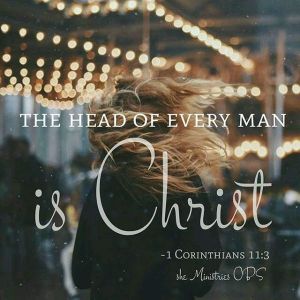 11:2 I am so glad that you always keep me in your thoughts, and that you are following the teachings I passed on to you. But there is one thing I want you to know: The head of every man is Christ, the head of woman is man, and the head of Christ is God. A man dishonors his head if he covers his head while praying or prophesying. But a woman dishonors her head if she prays or prophesies without a covering on her head, for this is the same as shaving her head. Yes, if she refuses to wear a head covering, she should cut off all her hair! But since it is shameful for a woman to have her hair cut or her head shaved, she should wear a covering.



 The Peanut Gallery