
Morning Prayer: 25 March – John 18-19 ~ Good Friday

Good Friday

+ In the name of the Father, and the Son, and the Holy Spirit. Amen!

Opening Sentence

“Jesus humbled himself in obedience to God and died a criminal’s death on a cross. Therefore, God elevated him to the place of highest honor and gave him the name above all other names….” (Philippians 2:8-9)

Morning Reading: John 18-19 (NLT)

Jesus Is Betrayed and Arrested

Chapter 18 After saying these things, Jesus crossed the Kidron Valley with his disciples and entered a grove of olive trees. 2 Judas, the betrayer, knew this place, because Jesus had often gone there with his disciples. 3 The leading priests and Pharisees had given Judas a contingent of Roman soldiers and Temple guards to accompany him. Now with blazing torches, lanterns, and weapons, they arrived at the olive grove.

4 Jesus fully realized all that was going to happen to him, so he stepped forward to meet them. “Who are you looking for?” he asked.

5 “Jesus the Nazarene,” they replied.

“I am he,” Jesus said. (Judas, who betrayed him, was standing with them.) 6 As Jesus said “I am he,” they all drew back and fell to the ground! 7 Once more he asked them, “Who are you looking for?”

And again they replied, “Jesus the Nazarene.”

8 “I told you that I am he,” Jesus said. “And since I am the one you want, let these others go.” 9 He did this to fulfill his own statement: “I did not lose a single one of those you have given me.”

10 Then Simon Peter drew a sword and slashed off the right ear of Malchus, the high priest’s slave. 11 But Jesus said to Peter, “Put your sword back into its sheath. Shall I not drink from the cup of suffering the Father has given me?”

Jesus at the High Priest’s House

12 So the soldiers, their commanding officer, and the Temple guards arrested Jesus and tied him up. 13 First they took him to Annas, since he was the father-in-law of Caiaphas, the high priest at that time. 14 Caiaphas was the one who had told the other Jewish leaders, “It’s better that one man should die for the people.”

Peter’s First Denial

15 Simon Peter followed Jesus, as did another of the disciples. That other disciple was acquainted with the high priest, so he was allowed to enter the high priest’s courtyard with Jesus. 16 Peter had to stay outside the gate. Then the disciple who knew the high priest spoke to the woman watching at the gate, and she let Peter in. 17 The woman asked Peter, “You’re not one of that man’s disciples, are you?”

“No,” he said, “I am not.”

18 Because it was cold, the household servants and the guards had made a charcoal fire. They stood around it, warming themselves, and Peter stood with them, warming himself.

The High Priest Questions Jesus

19 Inside, the high priest began asking Jesus about his followers and what he had been teaching them. 20 Jesus replied, “Everyone knows what I teach. I have preached regularly in the synagogues and the Temple, where the people gather. I have not spoken in secret. 21 Why are you asking me this question? Ask those who heard me. They know what I said.”

22 Then one of the Temple guards standing nearby slapped Jesus across the face. “Is that the way to answer the high priest?” he demanded.

23 Jesus replied, “If I said anything wrong, you must prove it. But if I’m speaking the truth, why are you beating me?”

24 Then Annas bound Jesus and sent him to Caiaphas, the high priest.

Peter’s Second and Third Denials

25 Meanwhile, as Simon Peter was standing by the fire warming himself, they asked him again, “You’re not one of his disciples, are you?”

He denied it, saying, “No, I am not.”

26 But one of the household slaves of the high priest, a relative of the man whose ear Peter had cut off, asked, “Didn’t I see you out there in the olive grove with Jesus?” 27 Again Peter denied it. And immediately a rooster crowed.

Jesus’ Trial before Pilate

28 Jesus’ trial before Caiaphas ended in the early hours of the morning. Then he was taken to the headquarters of the Roman governor. His accusers didn’t go inside because it would defile them, and they wouldn’t be allowed to celebrate the Passover. 29 So Pilate, the governor, went out to them and asked, “What is your charge against this man?”

30 “We wouldn’t have handed him over to you if he weren’t a criminal!” they retorted.

31 “Then take him away and judge him by your own law,” Pilate told them.

“Only the Romans are permitted to execute someone,” the Jewish leaders replied. 32 (This fulfilled Jesus’ prediction about the way he would die.)

33 Then Pilate went back into his headquarters and called for Jesus to be brought to him. “Are you the king of the Jews?” he asked him.

34 Jesus replied, “Is this your own question, or did others tell you about me?”

35 “Am I a Jew?” Pilate retorted. “Your own people and their leading priests brought you to me for trial. Why? What have you done?”

36 Jesus answered, “My Kingdom is not an earthly kingdom. If it were, my followers would fight to keep me from being handed over to the Jewish leaders. But my Kingdom is not of this world.”

37 Pilate said, “So you are a king?”

Jesus responded, “You say I am a king. Actually, I was born and came into the world to testify to the truth. All who love the truth recognize that what I say is true.”

38 “What is truth?” Pilate asked. Then he went out again to the people and told them, “He is not guilty of any crime. 39 But you have a custom of asking me to release one prisoner each year at Passover. Would you like me to release this ‘King of the Jews’?”

40 But they shouted back, “No! Not this man. We want Barabbas!” (Barabbas was a revolutionary.)

Jesus Sentenced to Death

Chapter 19 Then Pilate had Jesus flogged with a lead-tipped whip. 2 The soldiers wove a crown of thorns and put it on his head, and they put a purple robe on him. 3 “Hail! King of the Jews!” they mocked, as they slapped him across the face.

4 Pilate went outside again and said to the people, “I am going to bring him out to you now, but understand clearly that I find him not guilty.” 5 Then Jesus came out wearing the crown of thorns and the purple robe. And Pilate said, “Look, here is the man!”

6 When they saw him, the leading priests and Temple guards began shouting, “Crucify him! Crucify him!”

“Take him yourselves and crucify him,” Pilate said. “I find him not guilty.”

7 The Jewish leaders replied, “By our law he ought to die because he called himself the Son of God.”

8 When Pilate heard this, he was more frightened than ever. 9 He took Jesus back into the headquarters again and asked him, “Where are you from?” But Jesus gave no answer. 10 “Why don’t you talk to me?” Pilate demanded. “Don’t you realize that I have the power to release you or crucify you?”

11 Then Jesus said, “You would have no power over me at all unless it were given to you from above. So the one who handed me over to you has the greater sin.”

12 Then Pilate tried to release him, but the Jewish leaders shouted, “If you release this man, you are no ‘friend of Caesar.’ Anyone who declares himself a king is a rebel against Caesar.”

13 When they said this, Pilate brought Jesus out to them again. Then Pilate sat down on the judgment seat on the platform that is called the Stone Pavement (in Hebrew, Gabbatha). 14 It was now about noon on the day of preparation for the Passover. And Pilate said to the people, “Look, here is your king!”

15 “Away with him,” they yelled. “Away with him! Crucify him!”

“What? Crucify your king?” Pilate asked.

“We have no king but Caesar,” the leading priests shouted back.

16 Then Pilate turned Jesus over to them to be crucified.

20150614104344
National Museum, Warsaw

The Crucifixion

So they took Jesus away. 17 Carrying the cross by himself, he went to the place called Place of the Skull (in Hebrew, Golgotha). 18 There they nailed him to the cross. Two others were crucified with him, one on either side, with Jesus between them. 19 And Pilate posted a sign on the cross that read, “Jesus of Nazareth, the King of the Jews.” 20 The place where Jesus was crucified was near the city, and the sign was written in Hebrew, Latin, and Greek, so that many people could read it.

21 Then the leading priests objected and said to Pilate, “Change it from ‘The King of the Jews’ to ‘He said, I am King of the Jews.’”

22 Pilate replied, “No, what I have written, I have written.”

23 When the soldiers had crucified Jesus, they divided his clothes among the four of them. They also took his robe, but it was seamless, woven in one piece from top to bottom. 24 So they said, “Rather than tearing it apart, let’s throw dice for it.” This fulfilled the Scripture that says, “They divided my garments among themselves and threw dice for my clothing.” So that is what they did.

25 Standing near the cross were Jesus’ mother, and his mother’s sister, Mary (the wife of Clopas), and Mary Magdalene. 26 When Jesus saw his mother standing there beside the disciple he loved, he said to her, “Dear woman, here is your son.” 27 And he said to this disciple, “Here is your mother.” And from then on this disciple took her into his home.

The Death of Jesus

28 Jesus knew that his mission was now finished, and to fulfill Scripture he said, “I am thirsty.” 29 A jar of sour wine was sitting there, so they soaked a sponge in it, put it on a hyssop branch, and held it up to his lips. 30 When Jesus had tasted it, he said, “It is finished!” Then he bowed his head and gave up his spirit.

31 It was the day of preparation, and the Jewish leaders didn’t want the bodies hanging there the next day, which was the Sabbath (and a very special Sabbath, because it was Passover week). So they asked Pilate to hasten their deaths by ordering that their legs be broken. Then their bodies could be taken down. 32 So the soldiers came and broke the legs of the two men crucified with Jesus. 33 But when they came to Jesus, they saw that he was already dead, so they didn’t break his legs. 34 One of the soldiers, however, pierced his side with a spear, and immediately blood and water flowed out. 35 (This report is from an eyewitness giving an accurate account. He speaks the truth so that you also may continue to believe.) 36 These things happened in fulfillment of the Scriptures that say, “Not one of his bones will be broken,” 37 and “They will look on the one they pierced.”

The Burial of Jesus

38 Afterward Joseph of Arimathea, who had been a secret disciple of Jesus (because he feared the Jewish leaders), asked Pilate for permission to take down Jesus’ body. When Pilate gave permission, Joseph came and took the body away. 39 With him came Nicodemus, the man who had come to Jesus at night. He brought about seventy-five pounds of perfumed ointment made from myrrh and aloes. 40 Following Jewish burial custom, they wrapped Jesus’ body with the spices in long sheets of linen cloth. 41 The place of crucifixion was near a garden, where there was a new tomb, never used before. 42 And so, because it was the day of preparation for the Jewish Passover and since the tomb was close at hand, they laid Jesus there.

“Christ we do all adore Thee” – The York College Concert Choir

Closing Sentence

Jesus Christ showed his love for us and freed us from our sins with his life’s blood.

+ In the name of the Father, and the Son, and the Holy Spirit. Amen!
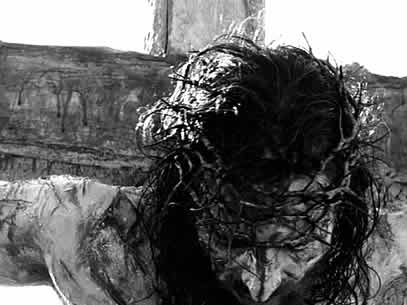
Good Friday: Philippians 2:8-9; John 18:1-19:42 ~ “It is finished!”

+ In the name of the Father, and the Son, and the Holy Spirit. Amen.

Philippians 2:8-9 (NLT)

Jesus humbled himself in obedience to God and died a criminal’s death on a cross. Therefore, God elevated him to the place of highest honor and gave him the name above all other names.

John 18:1—19:42 (NLT)

Jesus Is Betrayed and Arrested

After saying these things, Jesus crossed the Kidron Valley with his disciples and entered a grove of olive trees. Judas, the betrayer, knew this place, because Jesus had often gone there with his disciples. The leading priests and Pharisees had given Judas a contingent of Roman soldiers and Temple guards to accompany him. Now with blazing torches, lanterns, and weapons, they arrived at the olive grove.

Jesus fully realized all that was going to happen to him, so he stepped forward to meet them. “Who are you looking for?” he asked.

“Jesus the Nazarene,” they replied.

“I am he,” Jesus said. (Judas, who betrayed him, was standing with them.) As Jesus said “I am he,” they all drew back and fell to the ground! Once more he asked them, “Who are you looking for?”

And again they replied, “Jesus the Nazarene.”

“I told you that I am he,” Jesus said. “And since I am the one you want, let these others go.” He did this to fulfill his own statement: “I did not lose a single one of those you have given me.”

Then Simon Peter drew a sword and slashed off the right ear of Malchus, the high priest’s slave. But Jesus said to Peter, “Put your sword back into its sheath. Shall I not drink from the cup of suffering the Father has given me?”

Jesus at the High Priest’s House

So the soldiers, their commanding officer, and the Temple guards arrested Jesus and tied him up. First they took him to Annas, since he was the father-in-law of Caiaphas, the high priest at that time. Caiaphas was the one who had told the other Jewish leaders, “It’s better that one man should die for the people.”

Peter’s First Denial

Simon Peter followed Jesus, as did another of the disciples. That other disciple was acquainted with the high priest, so he was allowed to enter the high priest’s courtyard with Jesus. Peter had to stay outside the gate. Then the disciple who knew the high priest spoke to the woman watching at the gate, and she let Peter in. The woman asked Peter, “You’re not one of that man’s disciples, are you?”

“No,” he said, “I am not.”

Because it was cold, the household servants and the guards had made a charcoal fire. They stood around it, warming themselves, and Peter stood with them, warming himself.

The High Priest Questions Jesus

Inside, the high priest began asking Jesus about his followers and what he had been teaching them. Jesus replied, “Everyone knows what I teach. I have preached regularly in the synagogues and the Temple, where the people gather. I have not spoken in secret. Why are you asking me this question? Ask those who heard me. They know what I said.”

Then one of the Temple guards standing nearby slapped Jesus across the face. “Is that the way to answer the high priest?” he demanded.

Jesus replied, “If I said anything wrong, you must prove it. But if I’m speaking the truth, why are you beating me?”

Then Annas bound Jesus and sent him to Caiaphas, the high priest.

Peter’s Second and Third Denials

Meanwhile, as Simon Peter was standing by the fire warming himself, they asked him again, “You’re not one of his disciples, are you?”

He denied it, saying, “No, I am not.”

But one of the household slaves of the high priest, a relative of the man whose ear Peter had cut off, asked, “Didn’t I see you out there in the olive grove with Jesus?” Again Peter denied it. And immediately a rooster crowed.

Jesus’ Trial before Pilate

Jesus’ trial before Caiaphas ended in the early hours of the morning. Then he was taken to the headquarters of the Roman governor. His accusers didn’t go inside because it would defile them, and they wouldn’t be allowed to celebrate the Passover. So Pilate, the governor, went out to them and asked, “What is your charge against this man?”

“We wouldn’t have handed him over to you if he weren’t a criminal!” they retorted.

“Then take him away and judge him by your own law,” Pilate told them.

“Only the Romans are permitted to execute someone,” the Jewish leaders replied. (This fulfilled Jesus’ prediction about the way he would die.)

Then Pilate went back into his headquarters and called for Jesus to be brought to him. “Are you the king of the Jews?” he asked him.

Jesus replied, “Is this your own question, or did others tell you about me?”

“Am I a Jew?” Pilate retorted. “Your own people and their leading priests brought you to me for trial. Why? What have you done?”

Jesus answered, “My Kingdom is not an earthly kingdom. If it were, my followers would fight to keep me from being handed over to the Jewish leaders. But my Kingdom is not of this world.”

Pilate said, “So you are a king?”

Jesus responded, “You say I am a king. Actually, I was born and came into the world to testify to the truth. All who love the truth recognize that what I say is true.”

“What is truth?” Pilate asked. Then he went out again to the people and told them, “He is not guilty of any crime. But you have a custom of asking me to release one prisoner each year at Passover. Would you like me to release this ‘King of the Jews’?”

But they shouted back, “No! Not this man. We want Barabbas!” (Barabbas was a revolutionary.)

Jesus Sentenced to Death

Then Pilate had Jesus flogged with a lead-tipped whip. The soldiers wove a crown of thorns and put it on his head, and they put a purple robe on him. “Hail! King of the Jews!” they mocked, as they slapped him across the face.

Pilate went outside again and said to the people, “I am going to bring him out to you now, but understand clearly that I find him not guilty.” Then Jesus came out wearing the crown of thorns and the purple robe. And Pilate said, “Look, here is the man!”

When they saw him, the leading priests and Temple guards began shouting, “Crucify him! Crucify him!”

“Take him yourselves and crucify him,” Pilate said. “I find him not guilty.”

The Jewish leaders replied, “By our law he ought to die because he called himself the Son of God.”

When Pilate heard this, he was more frightened than ever. He took Jesus back into the headquarters again and asked him, “Where are you from?” But Jesus gave no answer. “Why don’t you talk to me?” Pilate demanded. “Don’t you realize that I have the power to release you or crucify you?”

Then Jesus said, “You would have no power over me at all unless it were given to you from above. So the one who handed me over to you has the greater sin.”

Then Pilate tried to release him, but the Jewish leaders shouted, “If you release this man, you are no ‘friend of Caesar.’ Anyone who declares himself a king is a rebel against Caesar.”

When they said this, Pilate brought Jesus out to them again. Then Pilate sat down on the judgment seat on the platform that is called the Stone Pavement (in Hebrew, Gabbatha). It was now about noon on the day of preparation for the Passover. And Pilate said to the people, “Look, here is your king!”

“Away with him,” they yelled. “Away with him! Crucify him!”

“What? Crucify your king?” Pilate asked.

“We have no king but Caesar,” the leading priests shouted back.

Then Pilate turned Jesus over to them to be crucified.

The Crucifixion

So they took Jesus away. Carrying the cross by himself, he went to the place called Place of the Skull (in Hebrew, Golgotha). There they nailed him to the cross. Two others were crucified with him, one on either side, with Jesus between them. And Pilate posted a sign on the cross that read, “Jesus of Nazareth, the King of the Jews.” The place where Jesus was crucified was near the city, and the sign was written in Hebrew, Latin, and Greek, so that many people could read it.

Then the leading priests objected and said to Pilate, “Change it from ‘The King of the Jews’ to ‘He said, I am King of the Jews.’”

Pilate replied, “No, what I have written, I have written.”

When the soldiers had crucified Jesus, they divided his clothes among the four of them. They also took his robe, but it was seamless, woven in one piece from top to bottom. So they said, “Rather than tearing it apart, let’s throw dice for it.” This fulfilled the Scripture that says, “They divided my garments among themselves and threw dice for my clothing.” So that is what they did.

Standing near the cross were Jesus’ mother, and his mother’s sister, Mary (the wife of Clopas), and Mary Magdalene. When Jesus saw his mother standing there beside the disciple he loved, he said to her, “Dear woman, here is your son.” And he said to this disciple, “Here is your mother.” And from then on this disciple took her into his home.

The Death of Jesus

jesus-cross

Jesus knew that his mission was now finished, and to fulfill Scripture he said, “I am thirsty.” A jar of sour wine was sitting there, so they soaked a sponge in it, put it on a hyssop branch, and held it up to his lips. When Jesus had tasted it, he said, “It is finished!” Then he bowed his head and released his spirit.

It was the day of preparation, and the Jewish leaders didn’t want the bodies hanging there the next day, which was the Sabbath (and a very special Sabbath, because it was the Passover). So they asked Pilate to hasten their deaths by ordering that their legs be broken. Then their bodies could be taken down. So the soldiers came and broke the legs of the two men crucified with Jesus. But when they came to Jesus, they saw that he was already dead, so they didn’t break his legs. One of the soldiers, however, pierced his side with a spear, and immediately blood and water flowed out. (This report is from an eyewitness giving an accurate account. He speaks the truth so that you also may continue to believe.) These things happened in fulfillment of the Scriptures that say, “Not one of his bones will be broken,” and “They will look on the one they pierced.”

The Burial of Jesus

Afterward Joseph of Arimathea, who had been a secret disciple of Jesus (because he feared the Jewish leaders), asked Pilate for permission to take down Jesus’ body. When Pilate gave permission, Joseph came and took the body away. With him came Nicodemus, the man who had come to Jesus at night. He brought about seventy-five pounds of perfumed ointment made from myrrh and aloes. Following Jewish burial custom, they wrapped Jesus’ body with the spices in long sheets of linen cloth. The place of crucifixion was near a garden, where there was a new tomb, never used before. And so, because it was the day of preparation for the Jewish Passover and since the tomb was close at hand, they laid Jesus there.
__________

“Jesus, remember me when you come into your Kingdom.” (Luke 23:42)
__________

+ In the name of the Father, and the Son, and the Holy Spirit. Amen.

Good Friday: John 19:38-42; Matthew 27:62-66 ~ Jesus is laid in the tomb

The Way of the Cross

+ In the name of the Father, and of the Son, and of the Holy Spirit. Amen

Opening sentence — St Paul of the Cross

The way of the Cross is the road which leads to Paradise; it is the sure way to holiness.

The Passion of Christ is the greatest and most stupendous work of Divine Love.

Station Fourteen – Jesus is laid in the tomb

John 19:38-42 ESV

After these things Joseph of Arimathea, who was a disciple of Jesus, but secretly for fear of the Jews, asked Pilate that he might take away the body of Jesus, and Pilate gave him permission. So he came and took away his body. Nicodemus also, who earlier had come to Jesus by night, came bringing a mixture of myrrh and aloes, about seventy-five pounds in weight. So they took the body of Jesus and bound it in linen cloths with the spices, as is the burial custom of the Jews. Now in the place where he was crucified there was a garden, and in the garden a new tomb in which no one had yet been laid. So because of the Jewish day of Preparation, since the tomb was close at hand, they laid Jesus there.

Station 14 - Jesus is laid in tomb
Station 14 – Jesus is laid in tomb

Matthew 27:62-66 ESV

The next day, that is, after the day of Preparation, the chief priests and the Pharisees gathered before Pilate and said, “Sir, we remember how that impostor said, while he was still alive, ‘After three days I will rise.’ Therefore order the tomb to be made secure until the third day, lest his disciples go and steal him away and tell the people, ‘He has risen from the dead,’ and the last fraud will be worse than the first.” Pilate said to them, “You have a guard of soldiers. Go, make it as secure as you can.” So they went and made the tomb secure by sealing the stone and setting a guard.

Reflections:

Laid in a borrowed tomb, awaiting the sign of Jonah – the only sign that would be given to His generation – that after three days and nights in the womb of the earth. the belly of the fish, the grave and hell, He would come forth to do His Father’s will – Jesus the humble Son of God, the exultant Son of Man, the eternal contradiction, the Blessed One.

The end is not yet. Weeping endures for a night, but joy comes in the morning. The Good News – “He is risen” – will burst upon the Son-rise.

Therefore with joy shall we draw water out of the wells of salvation.

Approaching Easter: The Way of the Cross

Devotion to the Passion of Jesus is the easiest way to be saved. The crucifix is a book wherein we learn every virtue, we learn the science of the saints, and therein we find all.

–Saint Paul of the Cross

Prayer

When all is dark, and Hope is buried, it is hard to trust His words that promised before the pain: He died that I might live.

In His death is my birth. He died that I might live.

In His life is my life. He died that I might live.

My Jesus! He died that I might live.
_____

Lord God, You willed that we should be baptized into the death of Your Son, Jesus our Savior. Grant us sincere repentance, so that passing with Him through death, we may be reborn into the joy of newness of life. We ask this through Him Who died, was buried and rose again for us, Jesus Christ our Lord, Amen.

+ In the name of the Father, and of the Son, and of the Holy Spirit. Amen
_____________________________________

Peanut Gallery: A brief word of explanation – the general format for Morning Prayer is adapted from the Northumbrian Community‘s Daily Office, as found in Celtic Daily Prayer (see online resources here.) The Scripture readings are primarily from the Gospel of John, with the intent to complete the reading by Easter. Other Scriptures which illuminate the Gospel of John will be included along the way.

Reflections from various saints will be included as their memorial days occur during the calendar year.

On Sundays, I’ll return to the USCCB readings (see online resources here) and various liturgical resources in order to reflect the Church’s worship and concerns throughout the world.

Photo illustrations and music videos, available online, are included as they illustrate or illuminate the readings. I will try to give credit and link to sources as best I can.

Good Friday: John 19:31-37 ~ Jesus is taken down from the cross

The Way of the Cross

+ In the name of the Father, and of the Son, and of the Holy Spirit. Amen

Opening sentence — St Paul of the Cross

The way of the Cross is the road which leads to Paradise; it is the sure way to holiness.

The Passion of Christ is the greatest and most stupendous work of Divine Love.

Station Thirteen – Jesus dies on the cross

Station 13 - Jesus is taken down from thew cross
Station 13 – Jesus is taken down from thew cross

John 19:31-37 ESV

Since it was the day of Preparation, and so that the bodies would not remain on the cross on the Sabbath (for that Sabbath was a high day), the Jews asked Pilate that their legs might be broken and that they might be taken away. So the soldiers came and broke the legs of the first, and of the other who had been crucified with him. But when they came to Jesus and saw that he was already dead, they did not break his legs. But one of the soldiers pierced his side with a spear, and at once there came out blood and water. He who saw it has borne witness — his testimony is true, and he knows that he is telling the truth — that you also may believe. For these things took place that the Scripture might be fulfilled: “Not one of his bones will be broken.” And again another Scripture says, “They will look on him whom they have pierced.”

Reflections:

Jesus could now feel the chill of death creeping through His tissues. And with a loud voice He cried: “It is finished.” His mission of atonement had been completed. Finally, He could allow His body to die. With one last surge of strength, He once again pressed His torn feet against the nail, straightened His legs, took a deeper breath, and uttered His seventh and last cry: “Father, into Thy hands I commend My spirit.” A while later, the soldier pierced a long spear into the side of the dead man, to His heart. The watery fluid and blood that flowed out show us He had literally died of a broken heart – not the usual crucifixion death od suffocation. The friends of Jesus were allowed to remove His holy body, and for a moment his mother held Him again upon her lap, cradled in her arms.

Let Him sleep now. It is finished.

Approaching Easter: The Way of the Cross

If we go to the crucifix, we find our Mother of Sorrows, for where the Son is, there also is the Mother.

Blessed Mother, what sorrow you experienced in receiving your dead Son into your arms! May the Passion of our Lord may be for us a fountain of sorrow, of pardon, of love and of life.

–Saint Paul of the Cross

Prayer

See from His head, His hands, His feet, sorrow and love flow mingled down! Did e’re such love and sorrow meet? or thorns compose so rich a crown? It was for me.

Forbid it, Lord, that I should boast save in the death of Christ my God. All the vain things that charm me most, I sacrifice them to His blood. It was for me.
_____

O Lord Jesus Christ, Son of the living God, Who at the sixth hour ascended the gibbet of the cross for the redemption of the world and shed Your precious blood for the remission of our sins, grant, we humbly beseech You, that after our death we may enter with joy the gates of Paradise. You, who lives and reigns forever and ever, Amen.

+ In the name of the Father, and of the Son, and of the Holy Spirit. Amen
_____________________________________

Peanut Gallery: A brief word of explanation – the general format for Morning Prayer is adapted from the Northumbrian Community‘s Daily Office, as found in Celtic Daily Prayer (see online resources here.) The Scripture readings are primarily from the Gospel of John, with the intent to complete the reading by Easter. Other Scriptures which illuminate the Gospel of John will be included along the way.

Reflections from various saints will be included as their memorial days occur during the calendar year.

On Sundays, I’ll return to the USCCB readings (see online resources here) and various liturgical resources in order to reflect the Church’s worship and concerns throughout the world.

Photo illustrations and music videos, available online, are included as they illustrate or illuminate the readings. I will try to give credit and link to sources as best I can.

Good Friday: Matthew 27:45-46; John 19:24-30 ~ Jesus dies on the cross

The Way of the Cross

+ In the name of the Father, and of the Son, and of the Holy Spirit. Amen

Opening sentence — St Paul of the Cross

The way of the Cross is the road which leads to Paradise; it is the sure way to holiness.

The Passion of Christ is the greatest and most stupendous work of Divine Love.

Station Twelve – Jesus dies on the cross

Station 12 - Jesus dies on the cross
Station 12 – Jesus dies on the cross

Matthew 27:45-46 ESV

Now from the sixth hour there was darkness over all the land until the ninth hour. And about the ninth hour Jesus cried out with a loud voice, saying, “Eli, Eli, lema sabachthani?” that is, “My God, my God, why have you forsaken me?”

John 19:24-30 ESV

So the soldiers did these things, but standing by the cross of Jesus were his mother and his mother’s sister, Mary the wife of Clopas, and Mary Magdalene. When Jesus saw his mother and the disciple whom he loved standing nearby, he said to his mother, “Woman, behold, your son!” Then he said to the disciple, “Behold, your mother!” And from that hour the disciple took her to his own home.

After this, Jesus, knowing that all was now finished, said to fulfill the Scripture), “I thirst.” A jar full of sour wine stood there, so they put a sponge full of the sour wine on a hyssop branch and held it to his mouth. When Jesus had received the sour wine, he said, “It is finished,” and he bowed his head and gave up his spirit.

Reflections:

As Jesus slowly sagged down with more weight on the nails in the wrists, excruciating, fiery pain shot along the fingers and up the arms to explode in the brain. As He pushed Himself upward to avoid this stretching torment, He placed His full weight on the nail through His feet. Again there was searing agony as the nail tore through the nerves. As the arms fatigued, great waves of cramps swept over the muscles, knotting them in deep, relentless, throbbing pain. Jesus fought to raise Himself, in order to get even one short breath. “Father, forgive them, for they know not what they do.”

To the thief dying at His side: “Today thou shalt be with Me in Paradise.”

To His mother and His closest friend: “Woman, behold thy son” – “Behold thy mother.”

In the words of the psalm foretelling the death of Messiah, He cried: “My God, why hast Thou forsaken Me?”

Approaching Easter: The Way of the Cross

Jesus died to give us life: all creatures are in sorrow: the sun is darkened, the earth trembles, the rocks split, the veil of the temple is rent; will only our heart remain harder than the rock? Let us be immersed in a sea of sorrow over the death of Jesus and let us say to Him: “Lord, we thank you for having died on the cross for our sins.”

–Saint Paul of the Cross

Prayer

Father God, You waited through the long hours of agony, when He was robbed even of the sense of Your love, Your presence, when the sin and disease and hatred and darkness overwhelmed Him so greatly. He was wounded for my transgressions.

Father, what love is this of His? What love is this of Yours that His dying love reflects? Your forgiveness for me, as we gaze upon His sacrificial death, is as truly and undeserved gift as the pardon He spoke to the dying thief. It is mine if I will only receive: He was wounded for my transgressions.
_____

Lord Jesus Christ, Son of the living God, Who by the will of the Father and the action of the Holy Spirit, Your death gave life to the world. Through the mysteries of Your Sacred Passion, deliver us from every fault and from every evil, and grant that we may ever be faithful to Your commandments and may never be separated from You Who lives and reigns forever and ever, Amen.

+ In the name of the Father, and of the Son, and of the Holy Spirit. Amen
_____________________________________

Peanut Gallery: A brief word of explanation – the general format for Morning Prayer is adapted from the Northumbrian Community‘s Daily Office, as found in Celtic Daily Prayer (see online resources here.) The Scripture readings are primarily from the Gospel of John, with the intent to complete the reading by Easter. Other Scriptures which illuminate the Gospel of John will be included along the way.

Reflections from various saints will be included as their memorial days occur during the calendar year.

On Sundays, I’ll return to the USCCB readings (see online resources here) and various liturgical resources in order to reflect the Church’s worship and concerns throughout the world.

Photo illustrations and music videos, available online, are included as they illustrate or illuminate the readings. I will try to give credit and link to sources as best I can.