
Peanut Gallery: Here is another excellent interview with a Muslim-background believer sharing her experiences as a woman…. from Dallas Theological Seminary.
Morning Reading: Acts 9.10-19 NLT – go and show
Reading: Acts 9:10-19 NLT
Now there was a believer in Damascus named Ananias. The Lord spoke to him in a vision, calling, “Ananias!”
“Yes, Lord!” he replied.
The Lord said, “Go over to Straight Street, to the house of Judas. When you get there, ask for a man from Tarsus named Saul. He is praying to me right now. I have shown him a vision of a man named Ananias coming in and laying hands on him so he can see again.”
“But Lord,” exclaimed Ananias, “I’ve heard many people talk about the terrible things this man has done to the believers in Jerusalem! And he is authorized by the leading priests to arrest everyone who calls upon your name.”

But the Lord said, “Go, for Saul is my chosen instrument to take my message to the Gentiles and to kings, as well as to the people of Israel. And I will show him how much he must suffer for my name’s sake.”
So Ananias went and found Saul. He laid his hands on him and said, “Brother Saul, the Lord Jesus, who appeared to you on the road, has sent me so that you might regain your sight and be filled with the Holy Spirit.”
Instantly something like scales fell from Saul’s eyes, and he regained his sight. Then he got up and was baptized.
Afterward he ate some food and regained his strength. Saul stayed with the believers in Damascus for a few days.
Prayer: Lord God – Give me the courage to go where you want me to go, and do what you want me to do. Holy Spirit – Give me a willing spirit and direct what I say and do. And may I advance your Kingdom purposes in all things. I ask it in Jesus’ name. Amen.
Spiritual Song: “Stand up, stand up, for Jesus” – George Duffield (1858)
_______________________________
Please pray for Christians in Tanzania – World Watch List #24
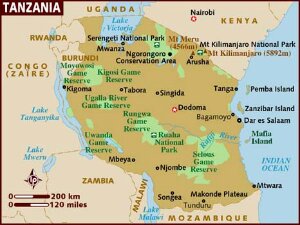
TANZANIA (Wikipedia) – World Watch List #24 (Open Doors UK)
Population: 47.7 million (29.5 million Christians)
Main Religion: Christianity/Islam
Government:</strong> democratic republic
Source of Persecution: Islamic extremism
A Christian majority country with a substantial Muslim population, there is a strong Islamist drive towards the Tanzanian ‘House of Islam’. On the mainland, Muslim-background believers face difficulties but not extreme persecution.
However, on the Zanzibar archipelago, Islamic militants bent on wiping out all Christians from the islands have burnt and looted churches and threatened Christians with death. The push for the spread of Islam is less violent but equally persistent on the mainland. If successful, it could threaten the presence of the church on the Zanzibar archipelago.
PLEASE PRAY:
+ For wisdom for those involved in the constitutional review process. Pray that pressure from Islamic extremists will be resisted and freedom of religion protected
+ For protection for church leaders on Zanzibar and Pemba islands
+ Give thanks for freedom to preach the gospel. Pray that Christians will have courage to share God’s love with Muslims.
PERSECUTION DYNAMICS:
The Zanzibar archipelago makes up only a very small part of Tanzania and has a president and a semi-autonomous political structure, separate from the mainland political system. Tanzania is a Christian majority country with a very substantial Muslim population. There is a strong Islamist drive towards the Tanzanian ‘House of Islam’.
The situation for Muslim-background believers is difficult but not extreme. The state hasn’t declared Islam as a prescriptive national religion and local governments seem to respect this rather well. However, Muslim-background believers have still been forced to flee their homes, and had their spouses forcefully married to another Muslim.
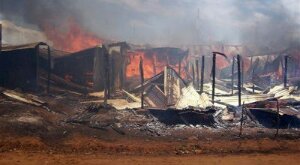
In Zanzibar there was serious violence, driven by ‘Vugu vugu la uamsho’ (‘Revival Movement for the Preservation of Islam’). It claimed to be wiping out all Christians from the Zanzibar archipelago, mainly Zanzibar Island. Churches were burnt, church property looted and Christians, especially church leaders, were threatened with death.

The Zanzibar archipelago is a very serious instigator of hostilities against Christians, not only on the islands but also on mainland Tanzania. They have strong Islamic militant groups that often persecute Christians heavily.
On mainland Tanzania the push for the further spread of Islam is less violent but equally persistent. Part of this push is through the constitutional review process, and strategic infiltration of main sectors of society. If the push for secession succeeds, the presence of the church on Zanzibar and Pemba Islands is likely to be reduced to (nearly) zero. The frantic moves of Islamists in mainland Tanzania will continue. For the church, this means difficult times are likely to be ahead.
RECENT DEVELOPMENTS
Tanzania was once celebrated as a role model for peace in Africa, but is no longer being considered ‘safe’ after an increase in inter-faith violence, with little evidence so far of perpetrators being brought to justice. A blast outside St Joseph’s Roman Catholic Church in Arusha, a town popular with tourists visiting the Serengeti national park and Mount Kilimanjaro, was just the most recent example.
The newly built church, in the Olasti district on the outskirts of Arusha, was celebrating its first ever mass at the time of the attack, which left three dead and more than 60 injured.
Tension has been building between the two most populous religious communities in Tanzania – Christians comprise 62 percent of the population, while 35 percent is Muslim (Pew, 2010).

In Zanzibar, which is 97 percent Muslim, arsonists burned the Evangelical Church of Siloam on February 19, two days after gunmen killed a Catholic priest, Father Evaristus Mushi, in the Motni area of the island.
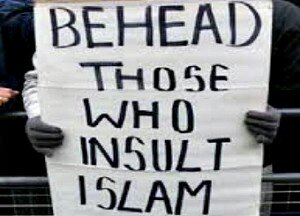
Earlier that month, an Assemblies of God minister, Pastor Mathayo Kachili, was hacked to death in the Geita region of Lake Victoria, when he intervened in an altercation between villagers over the slaughter of an animal, after the local government had granted Christians the right to practice as butchers.
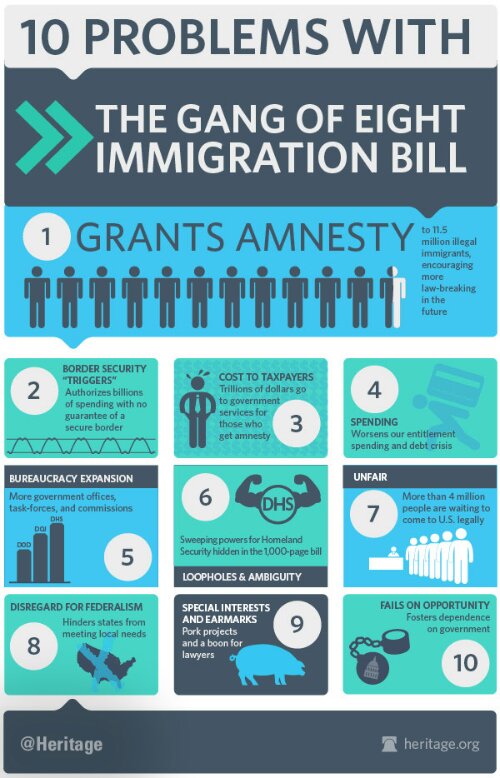
10 Problems with the Senate Amnesty Bill – Heritage
The Case Against Unauthorized Syria Intervention – Andrew C. McCarthy Re-Blog
Peanut Gallery: Should we intervene in Syria? I don’t think so… and neither does Andrew C. McCarthy. In the following article, McCarthy presents his case for staying out of Syria, along with extensive background links that are well worth the read.
Going to war is serious business that requires public debate and congressional authorization. Our current administration has neither and Senator Rand Paul wants to hold them accountable. Good for him and his bipartisan coalition.
To understand why should we stay out of Syria, you need to look no further than the debacle in Libya. Please take the time to read McCarthy ‘s article posted below. We are way beyond 30 second sound bites on this issue.
______________________________________
Paul and Lee Lead Bipartisan Effort Against Obama’s Unauthorized Syria Intervention
by Andrew C. McCarthy
pjmedia.com / June 22nd 2013
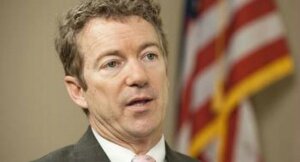
Thanks to Republican Senators Rand Paul (of Kentucky) and Mike Lee (of Utah), we might finally get on Syria what we were denied on Libya: a real debate among the American people’s representatives over congressional authorization of President Obama’s unilateral war-making in the Middle East.
The Washington Examiner reports that Senators Paul and Lee have joined with two counterparts, Democrats Chris Murphy (of Connecticut) and Tom Udall (of New Mexico), in offering legislation that would block direct or indirect aid for military or paramilitary operations in Syria. The bill, which is posted on Paul’s website, is called the “Protecting Americans from the Proliferation of Weapons to Terrorists Act of 2013.”
The proposal would not affect or prohibit humanitarian aid, but it forthrightly addresses the issue Syria intervention supporters willfully ignore: the factions President Obama is abetting – egged on by the GOP’s McCain wing and their fellow transnational progressives on the Democratic side of the aisle – are Islamic supremacists dominated by the Muslim Brotherhood and closely connected to violent jihadists, including al Qaeda-affiliated groups.
Not to be a broken record (see, e.g., here, here and here), but the Syrian civil war pits implacable enemies of the United States against each other. And as night follows day, they are using their barbaric jihadist tactics against each other. The situation is reminiscent of the central flaw in our Libyan misadventure – which led directly to the massacre of Americans in the “rebel” stronghold of Benghazi on September 11, 2012.
As John Rosenthal acutely observes in his short but essential book The Jihadist Plot: The Untold Story of Al-Qaeda and the Libyan Rebellion, while there are many problems with using the label “war on terror” to describe our ongoing hostilities, “at least the term had the advantage of making clear that the US and its allies abhorred the tactic in question.” Yet, in Libya, and now in Syria, we have turned a blind eye to the fact that terrorism is used by the jihadists our government has chosen to side with.
We try to obscure this fact by referring to the opposition forces as “rebels,” the better to avoid noticing that they consider themselvesmujahideen (jihad warriors), and by pretending we favor only the “secular” “moderates,” though it is laughable to suggest there are enough of them to topple the regimes in question without allying with the more numerous and formidable Islamic-supremacists factions.
This is a disgraceful state of affairs. For many years after their enactment in 1996, the material-support-to-terrorism laws, which prohibit and severely punish any abetting of terrorist organizations and their savage methods, were foundational to American counterterrorism. They have been a staple of anti-terrorism prosecutions and of the policy shift designed to prevent terrorist attacks from happening (by starving jihadist cells of resources) rather than content ourselves to prosecute only after suffering attacks.
At least as importantly, material support statutes also proclaimed our moral position: any organization that resorted to terrorism is the enemy of humanity, regardless of its cause and regardless of what humanitarian activities the organization purports to carry out.
Now, no matter how much government officials deny it, our government is endorsing what we went to war to defeat. Our government is materially supporting terrorists – the very conduct it prosecutes and imprisons American citizens for committing.
The intervention is also making a mockery of the international order that Obama purports to care so much about. There are international law restrictions against arming the jihadist-ridden Syrian opposition.
The Obama administration looked the other way while encouraging Islamic-supremacist governments in Qatar, Saudi Arabia, and Turkey to supply weapons. Now, entirely predictably, those weapons are in the hands of terrorists – exactly what the international law restrictions were designed to prevent. So we are both materially supporting jihadists and undermining the laws on which, according to progressives, global stability depends.
And don’t tell me about “red lines” and the Syrian regime’s use of chemical weapons. The sharia-supremacists our government is supporting include factions that have been seeking chemical weapons for decades – and unlike Assad, they want them in order to use them against the United States.
This is not to carry Assad’s water; he is incontestably a monster – unlike the Obama administration, which hailed him as a “reformer” and strengthened him by re-establishing diplomatic ties with Syria at a time when Assad was reeling, I have never been under any illusions to the contrary.
But our interventionist rah-rah squad is gradually giving us a Middle East in which weapons of mass destruction will be in the hands of Islamic-supremacist regimes heavily influenced by jihadists (did you see that Morsi’s Egypt just appointed a governor (since resigned) from the blind sheikh’s terrorist organization?).
Already, the US/NATO intervention in Libya has opened Qaddafi’s arsenal to the jihadists who are terrorizing North Africa. Would Assad give his WMD to Hezbollah? He might, but as both he and Hezbollah are supplied by Iran, it would be silly to imagine that Hezbollah does not already have access to WMD.
The point is that our intervention stands to land such weapons in the hands of Sunni jihadists. How is that better? How is it in America’s vital interests?
The fact is, we have no vital interests in the outcome of Syria’s civil war. Both sides are our enemies. Assad has neither attacked nor threatened to attack the United States. Consequently, waging war against the Syrian regime is wholly a matter of choice. That is a choice that, in our constitutional system, cries out for congressional authorization.
Without congressional authorization – without a demonstration that the American people’s representatives are satisfied that American interests call for waging an unprovoked war against the Assad regime – there should be no American intervention.
For what it’s worth, during the Libya intervention debate, I dilated on what I believe our law requires for the use of military force in the absence of an attack or threatened attack against our country:
Transnational progressives and national-security conservatives may hotly debate whether any endorsement from some international body (in particular, the U.N. Security Council) is necessary before the United States may legitimately take military action. But there should be no debating that absent a hostile invasion of our country, a forcible attack against our interests, or a clear threat against us so imminent that Americans may be harmed unless prompt action is taken, the United States should not launch combat operations without congressional approval.That is especially true in Libya. There is no realistic prospect of harm to the United States from Qaddafi’s regime.
Concededly, I do not believe there is sufficient justification to use U.S. military force — I don’t even think it’s a close case, and I think proponents are seriously discounting the net harm using force could cause. But I am talking now about propriety, not policy.
In his remarks Friday, committing to what he promised would be a limited military engagement (with no ground forces, basically just air power), [President Obama] never even hinted that he might seek Congress’s imprimatur. To the contrary, he asserted that the “use of force” was “authorized” by the “strong resolution” of the “U.N. Security Council,” which was acting “in response to a call for action by the Libyan people and the Arab League.”
Many of the Libyan people, to say nothing of the Arab League, do not mean the United States well. But even if they were strong allies, that would make no difference. Only the American people and their representatives in the United States Congress get to make the “call for action” that involves enmeshing our armed forces and our country in a war.
Continue reading “The Case Against Unauthorized Syria Intervention – Andrew C. McCarthy Re-Blog”

