9 Things You Should Know About Marriage in America (Reblog – The Gospel Coalition)

9 Things You Should Know About Marriage in America

This week Americans celebrate National Marriage Week, a collaborative campaign to strengthen individual marriages, reduce the divorce rate, and build a stronger marriage culture. Here are nine things you should know about marriage in America:

1. The median ages of people when they first marry (as of 2010) was 28.9 for men and 2010 for 26.9 women.
avg-age-marriage

2. The marriage rate in the U.S. is currently 31.01, the lowest it’s been in over a century, according to the National Center for Family and Marriage Center at Bowling Green State University. That equals roughly 31 marriages per 1,000 unmarried women. In 1920, the marriage rate reached its peak at 92.3. Since 1970, the marriage rate has declined by almost 60 percent. In real terms, the total number of marriages fell from 2.45 million in 1990 to 2.11 million in 2010.

3. Most people now live together before they marry for the first time. An even higher percentage of divorced persons who subsequently remarry live together first. And a growing number of persons, both young and old, are living together with no plans to marry eventually.

4. Unmarried cohabitation—the status of couples who are sexual partners, not married to each other, and sharing a household—is particularly common among the young. It is estimated that about a quarter of unmarried women age 25 to 39 are currently living with a partner and an additional quarter have lived with a partner at some time in the past. More than 60 percent of first marriages are now preceded by living together, compared to virtually none fifty years ago.

NUMBER OF COHABITING, UNMARRIED, ADULT COUPLES OF THE OPPOSITE SEX, BY YEAR, UNITED STATES
unmarried

5. The average age for childbearing is now younger than the average age for marriage. By age 25, 44 percent of women have had a baby, while only 38 percent have married. Today, only 23 percent of all unmarried births are to teenagers. Sixty percent are to women in their twenties. Today, the average woman bearing a child outside of marriage is a twenty-something white woman with a high school degree.

6. Marriage has shifted from being the cornerstone to the capstone of adult life. No longer the foundation on which young adults build their prospects for future prosperity and happiness, marriage now comes only after they have moved toward financial and psychological independence.

7. The national divorce rate is almost 50 percent of all marriages. But for many people, the actual chances of divorce are far below 50/50. The “close to 50 percent” divorce rate refers to the percentage of marriages entered into during a particular year that are projected to end in divorce or separation before one spouse dies. Such projections assume that the divorce and death rates occurring that year will continue indefinitely into the future—an assumption that is useful more as an indicator of the instability of marriages in the recent past than as a predictor of future events.

8. The presence of children in America has declined significantly since 1960, as measured by fertility rates and the percentage of households with children. Other indicators suggest that this decline has reduced the child-centeredness of our nation and contributed to the weakening of the institution of marriage. It is estimated that in the mid-1800s more than 75 percent of all households contained children under the age of 18. One hundred years later, in 1960, this number had dropped to slightly less than half of all households. In 2011, just five decades later, only 32 percent of households included children. This obviously means that adults are less likely to be living with children, that neighborhoods are less likely to contain children, and that children are less likely to be a consideration in daily life.

9. If a person has been to college, has an annual income over $50,000, is religious, comes from from an intact family, and marries after age 25 without having a baby first, their chances of divorce are very low. Here are some percentage-point decreases in the risk of divorce or separation during the first ten years of marriage, according to various personal and social factors: Annual income over $50,000 (vs. under $25,000) (-30); Having a baby seven months or more after marriage (vs. before marriage) (-24); Marrying over 25 years of age (vs. under 18) (-24); Family of origin intact (vs. divorced parents) (-14); Religious affiliation (vs. none) (-14); College (vs. high school dropout) (-25).
I am Second® – Scott Hamilton (Reblog)

Peanut Gallery: When you get tired of watching the Winter Olympics with all its hype, just remember… each athlete has a story to tell. And some of these stories are amazing.

For more inspirational stories like this, visit “Power to Change: I am Second.”

9 (More) Things You Should Know About Roe v. Wade ~ Reblog

THE GOSPEL COALITION

Joe Carter
TGC Blog | January 22, 2014

image

Today is the forty-first anniversary of the landmark abortion decision, Roe v. Wade, in which the Supreme Court eliminated the abortion laws of all 50 states, and in the companion case of Doe v. Bolton — which was released on the same day — which eliminated state health and safety regulations of abortion. Last year I noted nine things everyone should know about Roe. Here are nine more:

1. The case was filed by Norma McCorvey, known in court documents as Jane ROE against Henry WADE, the district attorney of Dallas County from 1951 to 1987, who enforced a Texas law that prohibited abortion, except to save a woman’s life.

2. In 1969, McCorvey was 22 years old, divorced, homeless, and pregnant for the third time (she had placed her first two children for adoption). An adoption agency connected her with two young lawyers fresh out of law school who were eager to challenge the Texas statutes on abortion. McCorvey only met with her lawyers twice-once for beer and pizza, the other time to sign an affidavit (which she didn’t read). In order to speed things up McCorvey lied and told them she had been raped. She never appeared in court, and she found out about the infamous ruling from the newspapers. The baby she was seeking to abort was born and placed for adoption.

3. When McCorvey met her lawyers she didn’t know the meaning of “abortion.” Her lawyers told her that abortion just dealt with a piece of tissue, and that it was like passing a period rather than the termination of a distinct, living, and whole human organism. Abortion was a taboo topic in 1970, and Norma had dropped out of school at the age of 14. She knew that John Wayne movies talked about “aborting the mission,” so she thought it meant to “go back”—as in, going back to not being pregnant. She honestly believed “abortion” meant a child was prevented from coming into existence.

4. In the late-1990s, McCorvey was working at a Dallas abortion clinic when the anti-abortion group Operation Rescue moved its offices next door. She says Rev. Phillip Benham, Operation Rescue’s national director, started “sharing the Gospel of Jesus Christ” with her. She later became a Christian and committed pro-life advocate.

5. Together, Roe and Doe effectively forbid states from prohibiting abortion even in the final stages of pregnancy. The Court said (in the 1992 Casey decision) that “[w]e reject the trimester framework, which we do not consider to be part of the essential holding of Roe.”

6. The Court’s majority relied heavily on popular, but unproved and later disproved, 1970s-era evidence that there was an urgent need for population control in the United States. As legal scholar Clark Forsythe explains, “Fear of ‘the population crisis’ was a huge influence. [The Court] drank that in without any trial or evidence or expert opinion in the lower courts. There was no evidence. There was no record. They absorbed that through the media.”

7. Without any record evidence, the court in 1973 also adopted the medical myth that “abortion was safer than childbirth.” That influential myth, says Forsythe, has been told to millions of women considering abortion ever since. “It was wrong in 1973, and it’s wrong today. The myth is based on the mechanical comparison of the published U.S. maternal (childbirth) mortality rate and the published U.S. abortion mortality rate. These two rates are like apples and oranges; what goes into their numerators and denominators is completely different.”

8. Many pro-life advocates mistakenly believe that state laws to define human life as beginning at conception (or fertilization) would pose as challenge to Roe. But as Forsythe notes, “no state can – by statute or constitutional amendment – change the meaning of the 14th Amendment to the federal constitution.” Additionally, he explains, “not one justice on the current Supreme Court supports the proposition that the unborn are protected as “persons” within the meaning of the 14th Amendment. Not one. All have rejected it, explicitly or implicitly.”

9. Many Americans believe the myth that “overturning” Roe would make abortion immediately illegal everywhere. However, most states have repealed their pre-Roe prohibitions. Fifteen other states have state judicial versions of Roe that would prevent any prohibitions. The reality is that if Roe were overturned today, abortion would be legal tomorrow, up to viability, in at least 42 states and probably all 50.


19 Beautiful Reminders Why Americans March for Life Today – Reblog

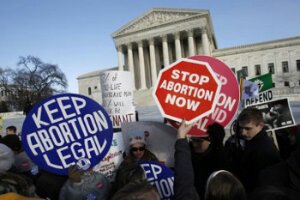
Today, tens of thousands of people from around the country will gather in Washington to brave the cold for a cause they believe in. Some are marching for the first time, and others have been traveling to the nation’s capital since the Roe v. Wade decision in 1973. For the 41st year, they’ll meet again for the same reason — the sanctity of life.

We’re also celebrating life today, and we hope you will, too. Here are 19 moving reminders of the beauty of new life:

>>> Learn more: “How to Speak Up for Life,” produced by Heritage in collaboration with Alliance Defending Freedom, Americans United for Life, Concerned Women for America, Focus on the Family, March for Life Education and Defense Fund, and the Susan B. Anthony List Education Fund

Religious Freedom: Peter Stuyvesant vs. the Quakers (Reblog)

How a revolt in Dutch New York planted the seeds for religious freedom.

“[T]he power of this world can neither attack us, neither excuse us, for if God justifye who can condemn and if God condemn there is none can justifye.”

By Lucia A. Silecchia

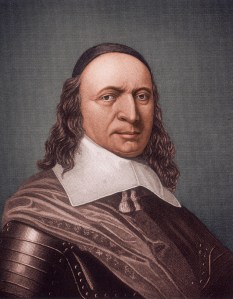
Portrait of Peter Stuyvesant in 1660.  Getty Images
Portrait of Peter Stuyvesant in 1660.
Getty Images

In January more than 350 years ago, two men of Vlissingen—now Flushing, N.Y., near Manhattan—sat in jail for defending the rights of Quakers to publicly practice their faith. This early act of courage in support of religious freedom is one of America’s most important, yet least known, declarations of private and public rights of conscience.

In a colony then called New Netherlands, the governor, Peter Stuyvesant, supported the Dutch Reformed Church with law and money. Other faiths were tolerated, but very grudgingly. As long as those faiths were practiced in private, their adherents often went undisturbed, despite Stuyvesant’s animosity. This mirrored Holland’s own uneasy sectarian détente.

This relationship collapsed when Quakers landed in Vlissingen. Their enthusiastic, public faith was incompatible with clandestine worship and quickly attracted attention. Outraged, Stuyvesant decreed harsh penalties for anyone who dared host a Quaker.

In response, on Dec. 27, 1657, a group of more than two dozen “Vlissingen-ites” signed a petition called the “Remonstrance of the Inhabitants of the Town of Flushing,” known today as the Flushing Remonstrance. This brave band declared their defiance of the edict concerning the Quakers because “we cannot in conscience lay violent hands upon them, but give them free egresse and regresse unto our Town, and houses, as God shall persuade our consciences.”

The Vlissingen-ites duly referenced their legal rights under Dutch law. Far more eloquently, they appealed to nonnegotiable obligations of conscience. They knew that their rebellion violated earthly authority, but they declared “the power of this world can neither attack us, neither excuse us, for if God justifye who can condemn and if God condemn there is none can justifye.” They relied on “the law written in his heart designed for the good of all,” maintaining that, contrary to the edict of their governor, they “are bounde by the law of God and man to doe good unto all men and evil to noe man.”

Not surprisingly, swift, harsh consequences came quickly. Stuyvesant responded by arresting four of the most prominent signatories, including the writer of the Flushing Remonstrance, town clerk Edward Hart, and the sheriff of Flushing, Tobias Feake. Others quickly recanted, but Hart and Feake refused and remained jailed for more than a month. Both were eventually released, but only after their point had been made. Seven years later, in 1664, Stuyvesant was forced to surrender New Netherlands to England. Ironically, the carefully negotiated Articles of Capitulation provided that the Dutch who remained in the now newly British colony of New York “shall enjoy the liberty of their consciences in Divine Worship and church discipline.”

Today, some scholars say the Flushing Remonstrance was a direct ancestor of the free-exercise clause in the Bill of Rights; others say its influence was far more limited because its pedigree was Dutch, not English. Nevertheless, as questions of conscience swirl anew, it is worth recalling three lessons from the signers of the Remonstrance.

First, they recognized that allowing private freedom of worship but not its public expression is, at best, false freedom. Free exercise means little if it may not be publicly expressed. Today, it is worth asking whether we embrace religious freedom with an all-too-narrow reading. Those in Vlissingen did not fight for the narrow freedom to worship, important as that was. They knew this would be empty if it did not also encompass the freedom to live by the dictates of faith, both in private and in public.

Second, it is worth noting that no signer of the Flushing Remonstrance was himself Quaker. Some likely disagreed with Quaker beliefs; some might have been skeptical about this new religion, and all had much to lose. Yet the signers fully understood that if a directive burdened those of one faith, then all should fear similar intrusion. Today, it is worth asking whether we too easily abandon those making claims of conscience when the particular rights they assert or claims they make lack majority support.

Third, the Remonstrance reflects the unique place of religion and conscience in the panoply of rights. In 1657, it was often argued that benefits would flow from restricting the open expression of multiple faiths because this restriction would foster harmony, strengthening a fledgling community needing cohesion. Vlissingen’s people didn’t see it this way. Today, it is worth asking whether we are too willing to surrender priceless freedoms in exchange for perceived advantages and benefits whose value pales in comparison with conscience rights surrendered.

Ordinary people signed the Flushing Remonstrance—not leaving to those of rank and prominence the task of protecting basic freedoms. The town clerk and sheriff, Hart and Feake, were unlikely heroes in the cause of religious freedom. Most information about other signers is forgotten in history’s fog. Some could not even sign their own names. Yet they didn’t shrink from confronting a governor who exceeded the limits of “the law written in his heart.”

In the centuries since 1657, America has wrestled with protecting religious practice and private conscience, sometimes more messily than perfectly. In each era, we have been prodded on by those like Hart, Feake and their companions who remain “bounde by the law of God” when it is in conflict with man-made laws. Today, we can easily take religious freedom and rights of conscience for granted. The people of old Vlissingen didn’t have that luxury.
__________

Ms. Silecchia is a law professor at the Catholic University of America in Washington, D.C., and a native of Flushing, N.Y.