One thing I have asked of the Lord, this is what I seek: that I may dwell in the house of the Lord all the days of my life; to behold the beauty of the Lord and to seek Him in His temple.
Praise to You, Lord Jesus Christ, King of endless glory.
Reading: 2 Corinthians 6-8 (NLT)
2 Corinthians 6 (NLT)
As God’s partners, we beg you not to accept this marvelous gift of God’s kindness and then ignore it. For God says,
“At just the right time, I heard you. On the day of salvation, I helped you.”
Indeed, the “right time” is now. Today is the day of salvation.
Paul’s Hardships
+ Living faultlessly – We live in such a way that no one will stumble because of us, and no one will find fault with our ministry. In everything we do, we show that we are true ministers of God.
We patiently endure troubles and hardships and calamities of every kind.
We have been beaten, been put in prison, faced angry mobs, worked to exhaustion, endured sleepless nights, and gone without food.
We prove ourselves by our purity, our understanding, our patience, our kindness, by the Holy Spirit within us, and by our sincere love.
We faithfully preach the truth. God’s power is working in us.
We use the weapons of righteousness in the right hand for attack and the left hand for defense.
We serve God whether people honor us or despise us, whether they slander us or praise us.
We are honest, but they call us impostors.
We are ignored, even though we are well known.
We live close to death, but we are still alive.
We have been beaten, but we have not been killed.
Our hearts ache, but we always have joy.
We are poor, but we give spiritual riches to others.
We own nothing, and yet we have everything.
+ Living transparently – Oh, dear Corinthian friends! We have spoken honestly with you, and our hearts are open to you. There is no lack of love on our part, but you have withheld your love from us. I am asking you to respond as if you were my own children. Open your hearts to us!
The Temple of the Living God
+ Live separately – Don’t team up with those who are unbelievers. How can righteousness be a partner with wickedness? How can light live with darkness? What harmony can there be between Christ and the devil? How can a believer be a partner with an unbeliever? And what union can there be between God’s temple and idols? For we are the temple of the living God. As God said:
“I will live in them and walk among them. I will be their God, and they will be my people. Therefore, come out from among unbelievers, and separate yourselves from them, says the Lord. Don’t touch their filthy things, and I will welcome you. And I will be your Father, and you will be my sons and daughters, says the Lord Almighty.”
2 Corinthians 7 (NLT)
+ Live cleanly – Because we have these promises, dear friends, let us cleanse ourselves from everything that can defile our body or spirit. And let us work toward complete holiness because we fear God.
+ Live openly – Please open your hearts to us. We have not done wrong to anyone, nor led anyone astray, nor taken advantage of anyone. I’m not saying this to condemn you. I said before that you are in our hearts, and we live or die together with you. I have the highest confidence in you, and I take great pride in you. You have greatly encouraged me and made me happy despite all our troubles.
Paul’s Joy at the Church’s Repentance
+ Titus brought joy – When we arrived in Macedonia, there was no rest for us. We faced conflict from every direction, with battles on the outside and fear on the inside. But God, who encourages those who are discouraged, encouraged us by the arrival of Titus. His presence was a joy, but so was the news he brought of the encouragement he received from you. When he told us how much you long to see me, and how sorry you are for what happened, and how loyal you are to me, I was filled with joy!
+ Sorrow brought repentance – I am not sorry that I sent that severe letter to you, though I was sorry at first, for I know it was painful to you for a little while. Now I am glad I sent it, not because it hurt you, but because the pain caused you to repent and change your ways. It was the kind of sorrow God wants his people to have, so you were not harmed by us in any way. For the kind of sorrow God wants us to experience leads us away from sin and results in salvation. There’s no regret for that kind of sorrow. But worldly sorrow, which lacks repentance, results in spiritual death.
+ Sorrow brought earnestness – Just see what this godly sorrow produced in you! Such earnestness, such concern to clear yourselves, such indignation, such alarm, such longing to see me, such zeal, and such a readiness to punish wrong. You showed that you have done everything necessary to make things right. My purpose, then, was not to write about who did the wrong or who was wronged. I wrote to you so that in the sight of God you could see for yourselves how loyal you are to us. We have been greatly encouraged by this.
+ Titus reaffirmed my confidence – In addition to our own encouragement, we were especially delighted to see how happy Titus was about the way all of you welcomed him and set his mind at ease. I had told him how proud I was of you—and you didn’t disappoint me. I have always told you the truth, and now my boasting to Titus has also proved true! Now he cares for you more than ever when he remembers the way all of you obeyed him and welcomed him with such fear and deep respect. I am very happy now because I have complete confidence in you.
A Call to Generous Giving
2 Corinthians 8 (NLT)
+ Overflowing in generosity – Now I want you to know, dear brothers and sisters, what God in his kindness has done through the churches in Macedonia. They are being tested by many troubles, and they are very poor. But they are also filled with abundant joy, which has overflowed in rich generosity.
+ Freely giving and more – For I can testify that they gave not only what they could afford, but far more. And they did it of their own free will. They begged us again and again for the privilege of sharing in the gift for the believers in Jerusalem. They even did more than we had hoped, for their first action was to give themselves to the Lord and to us, just as God wanted them to do.
+ Excel in your giving – So we have urged Titus, who encouraged your giving in the first place, to return to you and encourage you to finish this ministry of giving. Since you excel in so many ways—in your faith, your gifted speakers, your knowledge, your enthusiasm, and your love from us—I want you to excel also in this gracious act of giving.
I am not commanding you to do this. But I am testing how genuine your love is by comparing it with the eagerness of the other churches.
+ Christ is our example – You know the generous grace of our Lord Jesus Christ. Though he was rich, yet for your sakes he became poor, so that by his poverty he could make you rich.
+ Give proportionately – Here is my advice: It would be good for you to finish what you started a year ago. Last year you were the first who wanted to give, and you were the first to begin doing it. Now you should finish what you started. Let the eagerness you showed in the beginning be matched now by your giving. Give in proportion to what you have. Whatever you give is acceptable if you give it eagerly. And give according to what you have, not what you don’t have. Of course, I don’t mean your giving should make life easy for others and hard for yourselves. I only mean that there should be some equality. Right now you have plenty and can help those who are in need. Later, they will have plenty and can share with you when you need it. In this way, things will be equal. As the Scriptures say,
“Those who gathered a lot had nothing left over, and those who gathered only a little had enough.”
Titus and His Companions
+ Titus will be returning – But thank God! He has given Titus the same enthusiasm for you that I have. Titus welcomed our request that he visit you again. In fact, he himself was very eager to go and see you. We are also sending another brother with Titus. All the churches praise him as a preacher of the Good News. He was appointed by the churches to accompany us as we take the offering to Jerusalem—a service that glorifies the Lord and shows our eagerness to help.
+ Traveling with others – We are traveling together to guard against any criticism for the way we are handling this generous gift. We are careful to be honorable before the Lord, but we also want everyone else to see that we are honorable.
+ Show them your love – We are also sending with them another of our brothers who has proven himself many times and has shown on many occasions how eager he is. He is now even more enthusiastic because of his great confidence in you. If anyone asks about Titus, say that he is my partner who works with me to help you. And the brothers with him have been sent by the churches, and they bring honor to Christ. So show them your love, and prove to all the churches that our boasting about you is justified.
__________
May the peace of the Lord Christ go with you, wherever He may send you. May He guide you through the wilderness, protect you through the storm. May He bring you home rejoicing at the wonders He has shown you. May He bring you home rejoicing once again into our doors.
__________
+ In the name of the Father, and the Son, and the Holy Spirit. Amen!
One thing I have asked of the Lord, this is what I seek: that I may dwell in the house of the Lord all the days of my life; to behold the beauty of the Lord and to seek Him in His temple.
Praise to You, Lord Jesus Christ, King of endless glory.
Reading: Luke 1-2 (NLT)
Introduction
Luke 1 (NLT)
Many people have set out to write accounts about the events that have been fulfilled among us. They used the eyewitness reports circulating among us from the early disciples. Having carefully investigated everything from the beginning, I also have decided to write an accurate account for you, most honorable Theophilus, so you can be certain of the truth of everything you were taught.
The Birth of John the Baptist Foretold
When Herod was king of Judea, there was a Jewish priest named Zechariah. He was a member of the priestly order of Abijah, and his wife, Elizabeth, was also from the priestly line of Aaron. Zechariah and Elizabeth were righteous in God’s eyes, careful to obey all of the Lord’s commandments and regulations. They had no children because Elizabeth was unable to conceive, and they were both very old.
One day Zechariah was serving God in the Temple, for his order was on duty that week. As was the custom of the priests, he was chosen by lot to enter the sanctuary of the Lord and burn incense. While the incense was being burned, a great crowd stood outside, praying.
While Zechariah was in the sanctuary, an angel of the Lord appeared to him, standing to the right of the incense altar. Zechariah was shaken and overwhelmed with fear when he saw him. But the angel said, “Don’t be afraid, Zechariah! God has heard your prayer. Your wife, Elizabeth, will give you a son, and you are to name him John. You will have great joy and gladness, and many will rejoice at his birth, for he will be great in the eyes of the Lord. He must never touch wine or other alcoholic drinks. He will be filled with the Holy Spirit, even before his birth. And he will turn many Israelites to the Lord their God. He will be a man with the spirit and power of Elijah. He will prepare the people for the coming of the Lord. He will turn the hearts of the fathers to their children, and he will cause those who are rebellious to accept the wisdom of the godly.”
Zechariah said to the angel, “How can I be sure this will happen? I’m an old man now, and my wife is also well along in years.”
Then the angel said, “I am Gabriel! I stand in the very presence of God. It was he who sent me to bring you this good news! But now, since you didn’t believe what I said, you will be silent and unable to speak until the child is born. For my words will certainly be fulfilled at the proper time.”
Meanwhile, the people were waiting for Zechariah to come out of the sanctuary, wondering why he was taking so long. When he finally did come out, he couldn’t speak to them. Then they realized from his gestures and his silence that he must have seen a vision in the sanctuary.
When Zechariah’s week of service in the Temple was over, he returned home. Soon afterward his wife, Elizabeth, became pregnant and went into seclusion for five months. “How kind the Lord is!” she exclaimed. “He has taken away my disgrace of having no children.”
The Birth of Jesus Foretold
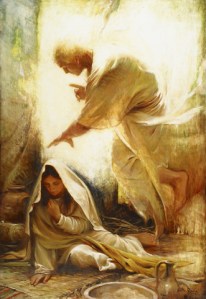
In the sixth month of Elizabeth’s pregnancy, God sent the angel Gabriel to Nazareth, a village in Galilee, to a virgin named Mary. She was engaged to be married to a man named Joseph, a descendant of King David. Gabriel appeared to her and said, “Greetings, favored woman! The Lord is with you!”
Confused and disturbed, Mary tried to think what the angel could mean. “Don’t be afraid, Mary,” the angel told her, “for you have found favor with God! You will conceive and give birth to a son, and you will name him Jesus. He will be very great and will be called the Son of the Most High. The Lord God will give him the throne of his ancestor David. And he will reign over Israel forever; his Kingdom will never end!”
Mary asked the angel, “But how can this happen? I am a virgin.”
The angel replied, “The Holy Spirit will come upon you, and the power of the Most High will overshadow you. So the baby to be born will be holy, and he will be called the Son of God. What’s more, your relative Elizabeth has become pregnant in her old age! People used to say she was barren, but she has conceived a son and is now in her sixth month. For the word of God will never fail.”
Mary responded, “I am the Lord’s servant. May everything you have said about me come true.” And then the angel left her.
Mary Visits Elizabeth
A few days later Mary hurried to the hill country of Judea, to the town where Zechariah lived. She entered the house and greeted Elizabeth. At the sound of Mary’s greeting, Elizabeth’s child leaped within her, and Elizabeth was filled with the Holy Spirit.
Elizabeth gave a glad cry and exclaimed to Mary, “God has blessed you above all women, and your child is blessed. Why am I so honored, that the mother of my Lord should visit me? When I heard your greeting, the baby in my womb jumped for joy. You are blessed because you believed that the Lord would do what he said.”
The Magnificat: Mary’s Song of Praise
Mary responded,
“Oh, how my soul praises the Lord. How my spirit rejoices in God my Savior! For he took notice of his lowly servant girl, and from now on all generations will call me blessed. For the Mighty One is holy, and he has done great things for me.
He shows mercy from generation to generation to all who fear him.
His mighty arm has done tremendous things!
He has scattered the proud and haughty ones.
He has brought down princes from their thrones and exalted the humble.
He has filled the hungry with good things and sent the rich away with empty hands.
He has helped his servant Israel and remembered to be merciful.
For he made this promise to our ancestors, to Abraham and his children forever.”
Mary stayed with Elizabeth about three months and then went back to her own home.
__________
Magnificat – Zoe Group
__________
The Birth of John the Baptist
When it was time for Elizabeth’s baby to be born, she gave birth to a son. And when her neighbors and relatives heard that the Lord had been very merciful to her, everyone rejoiced with her.
When the baby was eight days old, they all came for the circumcision ceremony. They wanted to name him Zechariah, after his father. But Elizabeth said, “No! His name is John!”
“What?” they exclaimed. “There is no one in all your family by that name.” So they used gestures to ask the baby’s father what he wanted to name him. He motioned for a writing tablet, and to everyone’s surprise he wrote, “His name is John.” Instantly Zechariah could speak again, and he began praising God.
Awe fell upon the whole neighborhood, and the news of what had happened spread throughout the Judean hills. Everyone who heard about it reflected on these events and asked, “What will this child turn out to be?” For the hand of the Lord was surely upon him in a special way.
Zechariah’s Prophecy
Then his father, Zechariah, was filled with the Holy Spirit and gave this prophecy:
“Praise the Lord, the God of Israel, because he has visited and redeemed his people. He has sent us a mighty Savior from the royal line of his servant David, just as he promised through his holy prophets long ago. Now we will be saved from our enemies and from all who hate us. He has been merciful to our ancestors by remembering his sacred covenant—the covenant he swore with an oath to our ancestor Abraham. We have been rescued from our enemies so we can serve God without fear, in holiness and righteousness for as long as we live.
“And you, my little son, will be called the prophet of the Most High, because you will prepare the way for the Lord. You will tell his people how to find salvation through forgiveness of their sins. Because of God’s tender mercy, the morning light from heaven is about to break upon us, to give light to those who sit in darkness and in the shadow of death, and to guide us to the path of peace.”
John grew up and became strong in spirit. And he lived in the wilderness until he began his public ministry to Israel.
The Birth of Jesus
Luke 2 (NLT)
At that time the Roman emperor, Augustus, decreed that a census should be taken throughout the Roman Empire. (This was the first census taken when Quirinius was governor of Syria.) All returned to their own ancestral towns to register for this census. And because Joseph was a descendant of King David, he had to go to Bethlehem in Judea, David’s ancient home. He traveled there from the village of Nazareth in Galilee. He took with him Mary, to whom he was engaged, who was now expecting a child.
And while they were there, the time came for her baby to be born. She gave birth to her firstborn son. She wrapped him snugly in strips of cloth and laid him in a manger, because there was no lodging available for them.
The Shepherds and Angels
That night there were shepherds staying in the fields nearby, guarding their flocks of sheep. Suddenly, an angel of the Lord appeared among them, and the radiance of the Lord’s glory surrounded them. They were terrified, but the angel reassured them. “Don’t be afraid!” he said. “I bring you good news that will bring great joy to all people. The Savior—yes, the Messiah, the Lord—has been born today in Bethlehem, the city of David! And you will recognize him by this sign: You will find a baby wrapped snugly in strips of cloth, lying in a manger.”
Suddenly, the angel was joined by a vast host of others—the armies of heaven—praising God and saying,
“Glory to God in highest heaven, and peace on earth to those with whom God is pleased.”
When the angels had returned to heaven, the shepherds said to each other, “Let’s go to Bethlehem! Let’s see this thing that has happened, which the Lord has told us about.”
They hurried to the village and found Mary and Joseph. And there was the baby, lying in the manger. After seeing him, the shepherds told everyone what had happened and what the angel had said to them about this child. All who heard the shepherds’ story were astonished, but Mary kept all these things in her heart and thought about them often. The shepherds went back to their flocks, glorifying and praising God for all they had heard and seen. It was just as the angel had told them.
Jesus Is Presented in the Temple
Eight days later, when the baby was circumcised, he was named Jesus, the name given him by the angel even before he was conceived.
Then it was time for their purification offering, as required by the law of Moses after the birth of a child; so his parents took him to Jerusalem to present him to the Lord. The law of the Lord says, “If a woman’s first child is a boy, he must be dedicated to the Lord.” So they offered the sacrifice required in the law of the Lord—“either a pair of turtledoves or two young pigeons.”
The Prophecy of Simeon
At that time there was a man in Jerusalem named Simeon. He was righteous and devout and was eagerly waiting for the Messiah to come and rescue Israel. The Holy Spirit was upon him and had revealed to him that he would not die until he had seen the Lord’s Messiah. That day the Spirit led him to the Temple. So when Mary and Joseph came to present the baby Jesus to the Lord as the law required, Simeon was there. He took the child in his arms and praised God, saying,
“Sovereign Lord, now let your servant die in peace, as you have promised. I have seen your salvation, which you have prepared for all people. He is a light to reveal God to the nations, and he is the glory of your people Israel!”
Jesus’ parents were amazed at what was being said about him. Then Simeon blessed them, and he said to Mary, the baby’s mother,
“This child is destined to cause many in Israel to fall, and many others to rise. He has been sent as a sign from God, but many will oppose him. As a result, the deepest thoughts of many hearts will be revealed. And a sword will pierce your very soul.”
The Prophecy of Anna
Anna, a prophet, was also there in the Temple. She was the daughter of Phanuel from the tribe of Asher, and she was very old. Her husband died when they had been married only seven years. Then she lived as a widow to the age of eighty-four. She never left the Temple but stayed there day and night, worshiping God with fasting and prayer. She came along just as Simeon was talking with Mary and Joseph, and she began praising God. She talked about the child to everyone who had been waiting expectantly for God to rescue Jerusalem.
When Jesus’ parents had fulfilled all the requirements of the law of the Lord, they returned home to Nazareth in Galilee. There the child grew up healthy and strong. He was filled with wisdom, and God’s favor was on him.
Jesus Speaks with the Teachers
Every year Jesus’ parents went to Jerusalem for the Passover festival. When Jesus was twelve years old, they attended the festival as usual. After the celebration was over, they started home to Nazareth, but Jesus stayed behind in Jerusalem. His parents didn’t miss him at first, because they assumed he was among the other travelers. But when he didn’t show up that evening, they started looking for him among their relatives and friends.
When they couldn’t find him, they went back to Jerusalem to search for him there. Three days later they finally discovered him in the Temple, sitting among the religious teachers, listening to them and asking questions. All who heard him were amazed at his understanding and his answers.
His parents didn’t know what to think. “Son,” his mother said to him, “why have you done this to us? Your father and I have been frantic, searching for you everywhere.”
“But why did you need to search?” he asked. “Didn’t you know that I must be in my Father’s house?” But they didn’t understand what he meant.
Then he returned to Nazareth with them and was obedient to them. And his mother stored all these things in her heart.
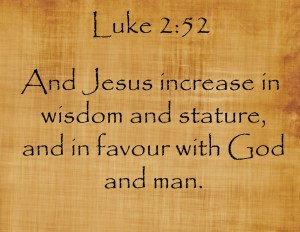
Jesus grew in wisdom and in stature and in favor with God and all the people.
__________
May the peace of the Lord Christ go with you, wherever He may send you. May He guide you through the wilderness, protect you through the storm. May He bring you home rejoicing at the wonders He has shown you. May He bring you home rejoicing once again into our doors.
__________
+ In the name of the Father, and the Son, and the Holy Spirit. Amen!
One thing I have asked of the Lord, this is what I seek: that I may dwell in the house of the Lord all the days of my life; to behold the beauty of the Lord and to seek Him in His temple.
Praise to You, Lord Jesus Christ, King of endless glory.
Reading: Jeremiah 37-41 (NLT)
Zedekiah Calls for Jeremiah
Jeremiah 37 (NLT)
Zedekiah son of Josiah succeeded Jehoiachin son of Jehoiakim as the king of Judah. He was appointed by King Nebuchadnezzar of Babylon. But neither King Zedekiah nor his attendants nor the people who were left in the land listened to what the Lord said through Jeremiah.
Nevertheless, King Zedekiah sent Jehucal son of Shelemiah, and Zephaniah the priest, son of Maaseiah, to ask Jeremiah, “Please pray to the Lord our God for us.” Jeremiah had not yet been imprisoned, so he could come and go among the people as he pleased.
+ Temporary withdrawal – At this time the army of Pharaoh Hophra of Egypt appeared at the southern border of Judah. When the Babylonian army heard about it, they withdrew from their siege of Jerusalem.
Then the Lord gave this message to Jeremiah: “This is what the Lord, the God of Israel, says: The king of Judah sent you to ask me what is going to happen. Tell him, ‘Pharaoh’s army is about to return to Egypt, though he came here to help you. Then the Babylonians will come back and capture this city and burn it to the ground.’
+ They will return – “This is what the Lord says: Do not fool yourselves into thinking that the Babylonians are gone for good. They aren’t! Even if you were to destroy the entire Babylonian army, leaving only a handful of wounded survivors, they would still stagger from their tents and burn this city to the ground!”
Jeremiah Is Imprisoned
+ False charge – When the Babylonian army left Jerusalem because of Pharaoh’s approaching army, Jeremiah started to leave the city on his way to the territory of Benjamin, to claim his share of the property among his relatives there. But as he was walking through the Benjamin Gate, a sentry arrested him and said, “You are defecting to the Babylonians!” The sentry making the arrest was Irijah son of Shelemiah, grandson of Hananiah.
+ Dungeon imprisonment – “That’s not true!” Jeremiah protested. “I had no intention of doing any such thing.” But Irijah wouldn’t listen, and he took Jeremiah before the officials. They were furious with Jeremiah and had him flogged and imprisoned in the house of Jonathan the secretary. Jonathan’s house had been converted into a prison. Jeremiah was put into a dungeon cell, where he remained for many days.
+ Secret counsel – Later King Zedekiah secretly requested that Jeremiah come to the palace, where the king asked him, “Do you have any messages from the Lord?”
“Yes, I do!” said Jeremiah. “You will be defeated by the king of Babylon.”
Then Jeremiah asked the king, “What crime have I committed? What have I done against you, your attendants, or the people that I should be imprisoned like this? Where are your prophets now who told you the king of Babylon would not attack you or this land? Listen, my lord the king, I beg you. Don’t send me back to the dungeon in the house of Jonathan the secretary, for I will die there.”
+ Palace imprisonment – So King Zedekiah commanded that Jeremiah not be returned to the dungeon. Instead, he was imprisoned in the courtyard of the guard in the royal palace. The king also commanded that Jeremiah be given a loaf of fresh bread every day as long as there was any left in the city. So Jeremiah was put in the palace prison.
Jeremiah in a Cistern
Jeremiah 38 (NLT)
+ Surrender and live – Now Shephatiah son of Mattan, Gedaliah son of Pashhur, Jehucal son of Shelemiah, and Pashhur son of Malkijah heard what Jeremiah had been telling the people. He had been saying, “This is what the Lord says: ‘Everyone who stays in Jerusalem will die from war, famine, or disease, but those who surrender to the Babylonians will live. Their reward will be life. They will live!’ The Lord also says: ‘The city of Jerusalem will certainly be handed over to the army of the king of Babylon, who will capture it.’”
+ Undermining morale – So these officials went to the king and said, “Sir, this man must die! That kind of talk will undermine the morale of the few fighting men we have left, as well as that of all the people. This man is a traitor!”
King Zedekiah agreed. “All right,” he said. “Do as you like. I can’t stop you.”
+ Down and out – So the officials took Jeremiah from his cell and lowered him by ropes into an empty cistern in the prison yard. It belonged to Malkijah, a member of the royal family. There was no water in the cistern, but there was a thick layer of mud at the bottom, and Jeremiah sank down into it.
+ Jeremiah’s advocate – But Ebed-melech the Ethiopian, an important court official, heard that Jeremiah was in the cistern. At that time the king was holding court at the Benjamin Gate, so Ebed-melech rushed from the palace to speak with him. “My lord the king,” he said, “these men have done a very evil thing in putting Jeremiah the prophet into the cistern. He will soon die of hunger, for almost all the bread in the city is gone.”
So the king told Ebed-melech, “Take thirty of my men with you, and pull Jeremiah out of the cistern before he dies.”
+ Jeremiah’s rescue – So Ebed-melech took the men with him and went to a room in the palace beneath the treasury, where he found some old rags and discarded clothing. He carried these to the cistern and lowered them to Jeremiah on a rope. Ebed-melech called down to Jeremiah, “Put these rags under your armpits to protect you from the ropes.” Then when Jeremiah was ready, they pulled him out. So Jeremiah was returned to the courtyard of the guard—the palace prison—where he remained.
Zedekiah Questions Jeremiah
+ I want the truth – One day King Zedekiah sent for Jeremiah and had him brought to the third entrance of the Lord’s Temple. “I want to ask you something,” the king said. “And don’t try to hide the truth.”
+ No you don’t – Jeremiah said, “If I tell you the truth, you will kill me. And if I give you advice, you won’t listen to me anyway.”
So King Zedekiah secretly promised him, “As surely as the Lord our Creator lives, I will not kill you or hand you over to the men who want you dead.”
+ Surrender and live – Then Jeremiah said to Zedekiah, “This is what the Lord God of Heaven’s Armies, the God of Israel, says: ‘If you surrender to the Babylonian officers, you and your family will live, and the city will not be burned down. 18 But if you refuse to surrender, you will not escape! This city will be handed over to the Babylonians, and they will burn it to the ground.’”
+ King’s fear – “But I am afraid to surrender,” the king said, “for the Babylonians may hand me over to the Judeans who have defected to them. And who knows what they will do to me!”
+ Obey God and live – Jeremiah replied, “You won’t be handed over to them if you choose to obey the Lord. Your life will be spared, and all will go well for you. But if you refuse to surrender, this is what the Lord has revealed to me: All the women left in your palace will be brought out and given to the officers of the Babylonian army. Then the women will taunt you, saying,
‘What fine friends you have! They have betrayed and misled you. When your feet sank in the mud, they left you to your fate!’
All your wives and children will be led out to the Babylonians, and you will not escape. You will be seized by the king of Babylon, and this city will be burned down.”
+ King’s secret – Then Zedekiah said to Jeremiah, “Don’t tell anyone you told me this, or you will die! My officials may hear that I spoke to you, and they may say, ‘Tell us what you and the king were talking about. If you don’t tell us, we will kill you.’ If this happens, just tell them you begged me not to send you back to Jonathan’s dungeon, for fear you would die there.”
+ Official interrogation – Sure enough, it wasn’t long before the king’s officials came to Jeremiah and asked him why the king had called for him. But Jeremiah followed the king’s instructions, and they left without finding out the truth. No one had overheard the conversation between Jeremiah and the king. And Jeremiah remained a prisoner in the courtyard of the guard until the day Jerusalem was captured.
The Fall of Jerusalem
Jeremiah 39 (NLT)
In January of the ninth year of King Zedekiah’s reign, King Nebuchadnezzar of Babylon came with his entire army to besiege Jerusalem. Two and a half years later, on July 18 in the eleventh year of Zedekiah’s reign, a section of the city wall was broken down. All the officers of the Babylonian army came in and sat in triumph at the Middle Gate: Nergal-sharezer of Samgar, and Nebo-sarsekim, a chief officer, and Nergal-sharezer, the king’s adviser, and all the other officers of the king of Babylon.
+ Zedekiah escapes – When King Zedekiah of Judah and all the soldiers saw that the Babylonians had broken into the city, they fled. They waited for nightfall and then slipped through the gate between the two walls behind the king’s garden and headed toward the Jordan Valley.
+ Zedekiah found and tortured – But the Babylonian troops chased them and overtook Zedekiah on the plains of Jericho. They captured him and took him to King Nebuchadnezzar of Babylon, who was at Riblah in the land of Hamath. There the king of Babylon pronounced judgment upon Zedekiah. The king of Babylon made Zedekiah watch as he slaughtered his sons at Riblah. The king of Babylon also slaughtered all the nobles of Judah. Then he gouged out Zedekiah’s eyes and bound him in bronze chains to lead him away to Babylon.
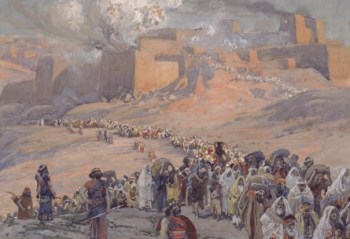
+ Remaining people exiled – Meanwhile, the Babylonians burned Jerusalem, including the royal palace and the houses of the people, and they tore down the walls of the city. Then Nebuzaradan, the captain of the guard, took as exiles to Babylon the rest of the people who remained in the city, those who had defected to him, and everyone else who remained. But Nebuzaradan allowed some of the poorest people to stay behind in the land of Judah, and he assigned them to care for the vineyards and fields.
Jeremiah Remains in Judah
King Nebuchadnezzar had told Nebuzaradan, the captain of the guard, to find Jeremiah. “See that he isn’t hurt,” he said. “Look after him well, and give him anything he wants.” So Nebuzaradan, the captain of the guard; Nebushazban, a chief officer; Nergal-sharezer, the king’s adviser; and the other officers of Babylon’s king sent messengers to bring Jeremiah out of the prison. They put him under the care of Gedaliah son of Ahikam and grandson of Shaphan, who took him back to his home. So Jeremiah stayed in Judah among his own people.
+ Ebed-melech rewarded – The Lord had given the following message to Jeremiah while he was still in prison: “Say to Ebed-melech the Ethiopian, ‘This is what the Lord of Heaven’s Armies, the God of Israel, says: I will do to this city everything I have threatened. I will send disaster, not prosperity. You will see its destruction, but I will rescue you from those you fear so much. Because you trusted me, I will give you your life as a reward. I will rescue you and keep you safe. I, the Lord, have spoken!’”
Jeremiah 40 (NLT)
The Lord gave a message to Jeremiah after Nebuzaradan, the captain of the guard, had released him at Ramah. He had found Jeremiah bound in chains among all the other captives of Jerusalem and Judah who were being sent to exile in Babylon.
+ Jeremiah released – The captain of the guard called for Jeremiah and said, “The Lord your God has brought this disaster on this land, just as he said he would. For these people have sinned against the Lord and disobeyed him. That is why it happened. But I am going to take off your chains and let you go. If you want to come with me to Babylon, you are welcome. I will see that you are well cared for. But if you don’t want to come, you may stay here. The whole land is before you—go wherever you like. If you decide to stay, then return to Gedaliah son of Ahikam and grandson of Shaphan. He has been appointed governor of Judah by the king of Babylon. Stay there with the people he rules. But it’s up to you; go wherever you like.”
Then Nebuzaradan, the captain of the guard, gave Jeremiah some food and money and let him go. So Jeremiah returned to Gedaliah son of Ahikam at Mizpah, and he lived in Judah with the few who were still left in the land.
Gedaliah Governs in Judah
The leaders of the Judean military groups in the countryside heard that the king of Babylon had appointed Gedaliah son of Ahikam as governor over the poor people who were left behind in Judah—the men, women, and children who hadn’t been exiled to Babylon. So they went to see Gedaliah at Mizpah. These included: Ishmael son of Nethaniah, Johanan and Jonathan sons of Kareah, Seraiah son of Tanhumeth, the sons of Ephai the Netophathite, Jezaniah son of the Maacathite, and all their men.
+ Gedaliah’s promise – Gedaliah vowed to them that the Babylonians meant them no harm. “Don’t be afraid to serve them. Live in the land and serve the king of Babylon, and all will go well for you,” he promised. “As for me, I will stay at Mizpah to represent you before the Babylonians who come to meet with us. Settle in the towns you have taken, and live off the land. Harvest the grapes and summer fruits and olives, and store them away.”
+ Judeans return – When the Judeans in Moab, Ammon, Edom, and the other nearby countries heard that the king of Babylon had left a few people in Judah and that Gedaliah was the governor, they began to return to Judah from the places to which they had fled. They stopped at Mizpah to meet with Gedaliah and then went into the Judean countryside to gather a great harvest of grapes and other crops.
A Plot against Gedaliah
Soon after this, Johanan son of Kareah and the other military leaders came to Gedaliah at Mizpah. They said to him, “Did you know that Baalis, king of Ammon, has sent Ishmael son of Nethaniah to assassinate you?” But Gedaliah refused to believe them.
+ Gedaliah’s gullibility – Later Johanan had a private conference with Gedaliah and volunteered to kill Ishmael secretly. “Why should we let him come and murder you?” Johanan asked. “What will happen then to the Judeans who have returned? Why should the few of us who are still left be scattered and lost?”
But Gedaliah said to Johanan, “I forbid you to do any such thing, for you are lying about Ishmael.”
The Murder of Gedaliah
Jeremiah 41 (NLT)
+ Ishmael’s treachery – But in midautumn of that year, Ishmael son of Nethaniah and grandson of Elishama, who was a member of the royal family and had been one of the king’s high officials, went to Mizpah with ten men to meet Gedaliah. While they were eating together, Ishmael and his ten men suddenly jumped up, drew their swords, and killed Gedaliah, whom the king of Babylon had appointed governor. Ishmael also killed all the Judeans and the Babylonian soldiers who were with Gedaliah at Mizpah.
The next day, before anyone had heard about Gedaliah’s murder, eighty men arrived from Shechem, Shiloh, and Samaria to worship at the Temple of the Lord. They had shaved off their beards, torn their clothes, and cut themselves, and had brought along grain offerings and frankincense. Ishmael left Mizpah to meet them, weeping as he went. When he reached them, he said, “Oh, come and see what has happened to Gedaliah!”
+ More treachery – But as soon as they were all inside the town, Ishmael and his men killed all but ten of them and threw their bodies into a cistern. The other ten had talked Ishmael into letting them go by promising to bring him their stores of wheat, barley, olive oil, and honey that they had hidden away. The cistern where Ishmael dumped the bodies of the men he murdered was the large one dug by King Asa when he fortified Mizpah to protect himself against King Baasha of Israel. Ishmael son of Nethaniah filled it with corpses.
Then Ishmael made captives of the king’s daughters and the other people who had been left under Gedaliah’s care in Mizpah by Nebuzaradan, the captain of the guard. Taking them with him, he started back toward the land of Ammon.
+ Captives rescued – But when Johanan son of Kareah and the other military leaders heard about Ishmael’s crimes, they took all their men and set out to stop him. They caught up with him at the large pool near Gibeon. The people Ishmael had captured shouted for joy when they saw Johanan and the other military leaders. And all the captives from Mizpah escaped and began to help Johanan. Meanwhile, Ishmael and eight of his men escaped from Johanan into the land of Ammon.
Then Johanan son of Kareah and the other military leaders took all the people they had rescued in Gibeon—the soldiers, women, children, and court officials whom Ishmael had captured after he killed Gedaliah. They took them all to the village of Geruth-kimham near Bethlehem, where they prepared to leave for Egypt. They were afraid of what the Babylonians would do when they heard that Ishmael had killed Gedaliah, the governor appointed by the Babylonian king.
__________
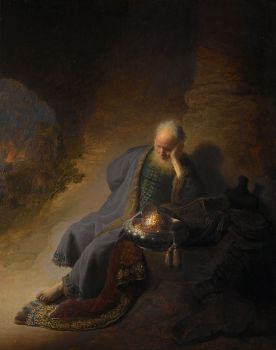
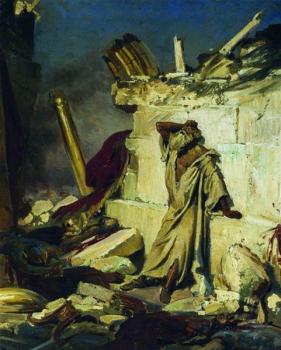
“Jeremiah Lamenting the Destruction of Jerusalem” – Adventist Media
May the peace of the Lord Christ go with you, wherever He may send you. May He guide you through the wilderness, protect you through the storm. May He bring you home rejoicing at the wonders He has shown you. May He bring you home rejoicing once again into our doors.
__________
+ In the name of the Father, and the Son, and the Holy Spirit. Amen!
One thing I have asked of the Lord, this is what I seek: that I may dwell in the house of the Lord all the days of my life; to behold the beauty of the Lord and to seek Him in His temple.
Praise to You, Lord Jesus Christ, King of endless glory.
Reading: Job 39-40 (NLT)
The Lord’s Challenge Continues
Job 39 (NLT)
“Do you know when the wild goats give birth? Have you watched as deer are born in the wild? Do you know how many months they carry their young? Are you aware of the time of their delivery? They crouch down to give birth to their young and deliver their offspring. Their young grow up in the open fields, then leave home and never return.
“Who gives the wild donkey its freedom? Who untied its ropes? I have placed it in the wilderness; its home is the wasteland. It hates the noise of the city and has no driver to shout at it. The mountains are its pastureland, where it searches for every blade of grass.
“Will the wild ox consent to being tamed? Will it spend the night in your stall? Can you hitch a wild ox to a plow? Will it plow a field for you? Given its strength, can you trust it? Can you leave and trust the ox to do your work? Can you rely on it to bring home your grain and deliver it to your threshing floor?
“The ostrich flaps her wings grandly, but they are no match for the feathers of the stork. She lays her eggs on top of the earth, letting them be warmed in the dust. She doesn’t worry that a foot might crush them or a wild animal might destroy them. She is harsh toward her young, as if they were not her own. She doesn’t care if they die. For God has deprived her of wisdom. He has given her no understanding. But whenever she jumps up to run, she passes the swiftest horse with its rider.
“Have you given the horse its strength or clothed its neck with a flowing mane? Did you give it the ability to leap like a locust? Its majestic snorting is terrifying! It paws the earth and rejoices in its strength when it charges out to battle. It laughs at fear and is unafraid. It does not run from the sword. The arrows rattle against it, and the spear and javelin flash. It paws the ground fiercely and rushes forward into battle when the ram’s horn blows. It snorts at the sound of the horn. It senses the battle in the distance. It quivers at the captain’s commands and the noise of battle.
“Is it your wisdom that makes the hawk soar and spread its wings toward the south? Is it at your command that the eagle rises to the heights to make its nest? It lives on the cliffs, making its home on a distant, rocky crag. From there it hunts its prey, keeping watch with piercing eyes. Its young gulp down blood. Where there’s a carcass, there you’ll find it.”
Job 40 (NLT)
Then the Lord said to Job,
“Do you still want to argue with the Almighty? You are God’s critic, but do you have the answers?”
Job Responds to the Lord
Then Job replied to the Lord,
“I am nothing—how could I ever find the answers? I will cover my mouth with my hand. I have said too much already. I have nothing more to say.”
The Lord Challenges Job Again
Then the Lord answered Job from the whirlwind:
“Brace yourself like a man, because I have some questions for you, and you must answer them.
“Will you discredit my justice and condemn me just to prove you are right? Are you as strong as God? Can you thunder with a voice like his? All right, put on your glory and splendor, your honor and majesty. Give vent to your anger. Let it overflow against the proud. Humiliate the proud with a glance; walk on the wicked where they stand. Bury them in the dust. Imprison them in the world of the dead. Then even I would praise you, for your own strength would save you.
“Take a look at Behemoth, which I made, just as I made you. It eats grass like an ox. See its powerful loins and the muscles of its belly. Its tail is as strong as a cedar. The sinews of its thighs are knit tightly together. Its bones are tubes of bronze. Its limbs are bars of iron. It is a prime example of God’s handiwork, and only its Creator can threaten it. The mountains offer it their best food, where all the wild animals play. It lies under the lotus plants, hidden by the reeds in the marsh. The lotus plants give it shade among the willows beside the stream. It is not disturbed by the raging river, not concerned when the swelling Jordan rushes around it. No one can catch it off guard or put a ring in its nose and lead it away.
__________
May the peace of the Lord Christ go with you, wherever He may send you. May He guide you through the wilderness, protect you through the storm. May He bring you home rejoicing at the wonders He has shown you. May He bring you home rejoicing once again into our doors.
__________
+ In the name of the Father, and the Son, and the Holy Spirit. Amen!
One thing I have asked of the Lord, this is what I seek: that I may dwell in the house of the Lord all the days of my life; to behold the beauty of the Lord and to seek Him in His temple.
Praise to You, Lord Jesus Christ, King of endless glory.
Reading: 2 Samuel 10-14 (NLT)
David Defeats the Ammonites
2 Samuel 10 (NLT)
Some time after this, King Nahash of the Ammonites died, and his son Hanun became king. David said, “I am going to show loyalty to Hanun just as his father, Nahash, was always loyal to me.” So David sent ambassadors to express sympathy to Hanun about his father’s death.
But when David’s ambassadors arrived in the land of Ammon, the Ammonite commanders said to Hanun, their master, “Do you really think these men are coming here to honor your father? No! David has sent them to spy out the city so they can come in and conquer it!” So Hanun seized David’s ambassadors and shaved off half of each man’s beard, cut off their robes at the buttocks, and sent them back to David in shame.
When David heard what had happened, he sent messengers to tell the men, “Stay at Jericho until your beards grow out, and then come back.” For they felt deep shame because of their appearance.
When the people of Ammon realized how seriously they had angered David, they sent and hired 20,000 Aramean foot soldiers from the lands of Beth-rehob and Zobah, 1,000 from the king of Maacah, and 12,000 from the land of Tob. When David heard about this, he sent Joab and all his warriors to fight them. The Ammonite troops came out and drew up their battle lines at the entrance of the city gate, while the Arameans from Zobah and Rehob and the men from Tob and Maacah positioned themselves to fight in the open fields.
When Joab saw that he would have to fight on both the front and the rear, he chose some of Israel’s elite troops and placed them under his personal command to fight the Arameans in the fields. He left the rest of the army under the command of his brother Abishai, who was to attack the Ammonites. “If the Arameans are too strong for me, then come over and help me,” Joab told his brother. “And if the Ammonites are too strong for you, I will come and help you. Be courageous! Let us fight bravely for our people and the cities of our God. May the Lord’s will be done.”
When Joab and his troops attacked, the Arameans began to run away. And when the Ammonites saw the Arameans running, they ran from Abishai and retreated into the city. After the battle was over, Joab returned to Jerusalem.
The Arameans now realized that they were no match for Israel. So when they regrouped, they were joined by additional Aramean troops summoned by Hadadezer from the other side of the Euphrates River. These troops arrived at Helam under the command of Shobach, the commander of Hadadezer’s forces.
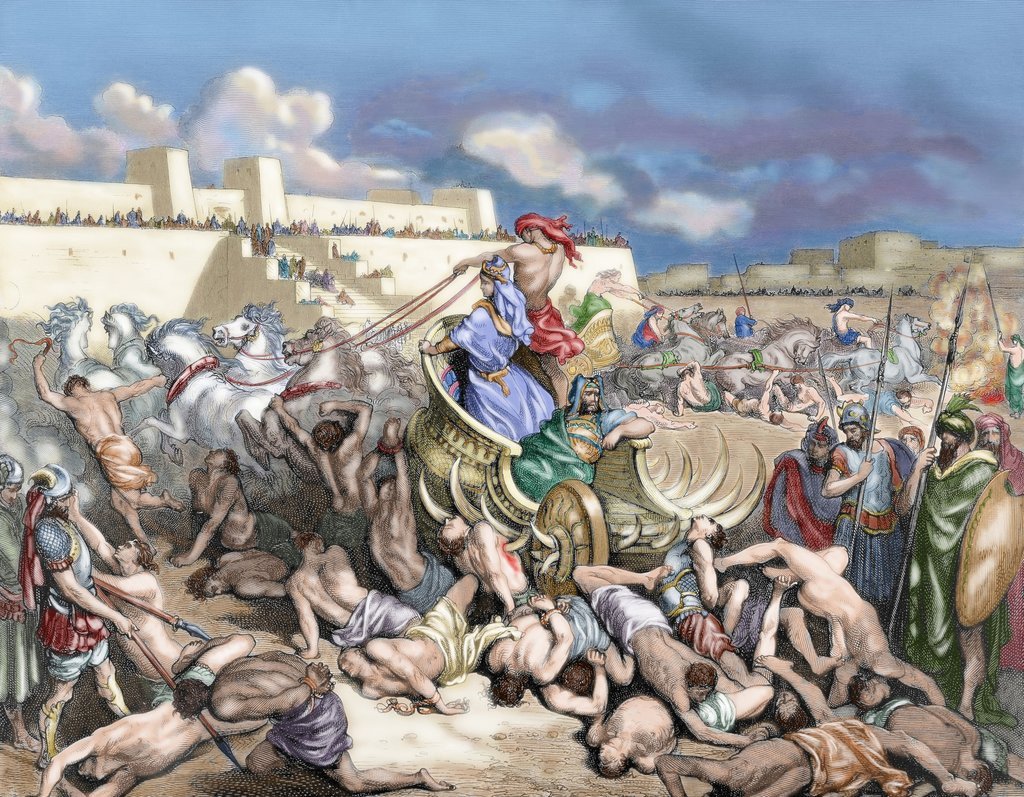
When David heard what was happening, he mobilized all Israel, crossed the Jordan River, and led the army to Helam. The Arameans positioned themselves in battle formation and fought against David. But again the Arameans fled from the Israelites. This time David’s forces killed 700 charioteers and 40,000 foot soldiers, including Shobach, the commander of their army. When all the kings allied with Hadadezer saw that they had been defeated by Israel, they surrendered to Israel and became their subjects. After that, the Arameans were afraid to help the Ammonites.
David and Bathsheba
2 Samuel 11 (NLT)
In the spring of the year, when kings normally go out to war, David sent Joab and the Israelite army to fight the Ammonites. They destroyed the Ammonite army and laid siege to the city of Rabbah. However, David stayed behind in Jerusalem.
Late one afternoon, after his midday rest, David got out of bed and was walking on the roof of the palace. As he looked out over the city, he noticed a woman of unusual beauty taking a bath. He sent someone to find out who she was, and he was told, “She is Bathsheba, the daughter of Eliam and the wife of Uriah the Hittite.” Then David sent messengers to get her; and when she came to the palace, he slept with her. She had just completed the purification rites after having her menstrual period. Then she returned home. Later, when Bathsheba discovered that she was pregnant, she sent David a message, saying, “I’m pregnant.”
Then David sent word to Joab: “Send me Uriah the Hittite.” So Joab sent him to David. When Uriah arrived, David asked him how Joab and the army were getting along and how the war was progressing. Then he told Uriah, “Go on home and relax.” David even sent a gift to Uriah after he had left the palace. But Uriah didn’t go home. He slept that night at the palace entrance with the king’s palace guard.
When David heard that Uriah had not gone home, he summoned him and asked, “What’s the matter? Why didn’t you go home last night after being away for so long?”
Uriah replied, “The Ark and the armies of Israel and Judah are living in tents, and Joab and my master’s men are camping in the open fields. How could I go home to wine and dine and sleep with my wife? I swear that I would never do such a thing.”
“Well, stay here today,” David told him, “and tomorrow you may return to the army.” So Uriah stayed in Jerusalem that day and the next. Then David invited him to dinner and got him drunk. But even then he couldn’t get Uriah to go home to his wife. Again he slept at the palace entrance with the king’s palace guard.
David Arranges for Uriah’s Death
So the next morning David wrote a letter to Joab and gave it to Uriah to deliver. The letter instructed Joab, “Station Uriah on the front lines where the battle is fiercest. Then pull back so that he will be killed.” So Joab assigned Uriah to a spot close to the city wall where he knew the enemy’s strongest men were fighting. And when the enemy soldiers came out of the city to fight, Uriah the Hittite was killed along with several other Israelite soldiers.
Then Joab sent a battle report to David. He told his messenger, “Report all the news of the battle to the king. But he might get angry and ask, ‘Why did the troops go so close to the city? Didn’t they know there would be shooting from the walls? Wasn’t Abimelech son of Gideon killed at Thebez by a woman who threw a millstone down on him from the wall? Why would you get so close to the wall?’ Then tell him, ‘Uriah the Hittite was killed, too.’”
So the messenger went to Jerusalem and gave a complete report to David. “The enemy came out against us in the open fields,” he said. “And as we chased them back to the city gate, the archers on the wall shot arrows at us. Some of the king’s men were killed, including Uriah the Hittite.”
“Well, tell Joab not to be discouraged,” David said. “The sword devours this one today and that one tomorrow! Fight harder next time, and conquer the city!”
When Uriah’s wife heard that her husband was dead, she mourned for him. When the period of mourning was over, David sent for her and brought her to the palace, and she became one of his wives. Then she gave birth to a son. But the Lord was displeased with what David had done.
Nathan Rebukes David
2 Samuel 12 (NLT)
So the Lord sent Nathan the prophet to tell David this story: “There were two men in a certain town. One was rich, and one was poor. The rich man owned a great many sheep and cattle. The poor man owned nothing but one little lamb he had bought. He raised that little lamb, and it grew up with his children. It ate from the man’s own plate and drank from his cup. He cuddled it in his arms like a baby daughter. One day a guest arrived at the home of the rich man. But instead of killing an animal from his own flock or herd, he took the poor man’s lamb and killed it and prepared it for his guest.”
David was furious. “As surely as the Lord lives,” he vowed, “any man who would do such a thing deserves to die! He must repay four lambs to the poor man for the one he stole and for having no pity.”
Then Nathan said to David, “You are that man! The Lord, the God of Israel, says: I anointed you king of Israel and saved you from the power of Saul. I gave you your master’s house and his wives and the kingdoms of Israel and Judah. And if that had not been enough, I would have given you much, much more. Why, then, have you despised the word of the Lord and done this horrible deed? For you have murdered Uriah the Hittite with the sword of the Ammonites and stolen his wife. From this time on, your family will live by the sword because you have despised me by taking Uriah’s wife to be your own.
“This is what the Lord says: Because of what you have done, I will cause your own household to rebel against you. I will give your wives to another man before your very eyes, and he will go to bed with them in public view. You did it secretly, but I will make this happen to you openly in the sight of all Israel.”
David Confesses His Guilt
Then David confessed to Nathan, “I have sinned against the Lord.”
Nathan replied, “Yes, but the Lord has forgiven you, and you won’t die for this sin. Nevertheless, because you have shown utter contempt for the word of the Lord by doing this, your child will die.”
After Nathan returned to his home, the Lord sent a deadly illness to the child of David and Uriah’s wife. David begged God to spare the child. He went without food and lay all night on the bare ground. The elders of his household pleaded with him to get up and eat with them, but he refused.
Then on the seventh day the child died. David’s advisers were afraid to tell him. “He wouldn’t listen to reason while the child was ill,” they said. “What drastic thing will he do when we tell him the child is dead?”
When David saw them whispering, he realized what had happened. “Is the child dead?” he asked.
“Yes,” they replied, “he is dead.”
Then David got up from the ground, washed himself, put on lotions, and changed his clothes. He went to the Tabernacle and worshiped the Lord. After that, he returned to the palace and was served food and ate.
His advisers were amazed. “We don’t understand you,” they told him. “While the child was still living, you wept and refused to eat. But now that the child is dead, you have stopped your mourning and are eating again.”
David replied, “I fasted and wept while the child was alive, for I said, ‘Perhaps the Lord will be gracious to me and let the child live.’ But why should I fast when he is dead? Can I bring him back again? I will go to him one day, but he cannot return to me.”
Then David comforted Bathsheba, his wife, and slept with her. She became pregnant and gave birth to a son, and David named him Solomon. The Lord loved the child and sent word through Nathan the prophet that they should name him Jedidiah (which means “beloved of the Lord”), as the Lord had commanded.
David Captures Rabbah
Meanwhile, Joab was fighting against Rabbah, the capital of Ammon, and he captured the royal fortifications. Joab sent messengers to tell David, “I have fought against Rabbah and captured its water supply. Now bring the rest of the army and capture the city. Otherwise, I will capture it and get credit for the victory.”
So David gathered the rest of the army and went to Rabbah, and he fought against it and captured it. David removed the crown from the king’s head, and it was placed on his own head. The crown was made of gold and set with gems, and it weighed seventy-five pounds. David took a vast amount of plunder from the city. He also made slaves of the people of Rabbah and forced them to labor with saws, iron picks, and iron axes, and to work in the brick kilns. That is how he dealt with the people of all the Ammonite towns. Then David and all the army returned to Jerusalem.
The Rape of Tamar
2 Samuel 13 (NLT)
Now David’s son Absalom had a beautiful sister named Tamar. And Amnon, her half brother, fell desperately in love with her. Amnon became so obsessed with Tamar that he became ill. She was a virgin, and Amnon thought he could never have her.
But Amnon had a very crafty friend—his cousin Jonadab. He was the son of David’s brother Shimea. One day Jonadab said to Amnon, “What’s the trouble? Why should the son of a king look so dejected morning after morning?”
So Amnon told him, “I am in love with Tamar, my brother Absalom’s sister.”
“Well,” Jonadab said, “I’ll tell you what to do. Go back to bed and pretend you are ill. When your father comes to see you, ask him to let Tamar come and prepare some food for you. Tell him you’ll feel better if she prepares it as you watch and feeds you with her own hands.”
So Amnon lay down and pretended to be sick. And when the king came to see him, Amnon asked him, “Please let my sister Tamar come and cook my favorite dish as I watch. Then I can eat it from her own hands.” So David agreed and sent Tamar to Amnon’s house to prepare some food for him.
When Tamar arrived at Amnon’s house, she went to the place where he was lying down so he could watch her mix some dough. Then she baked his favorite dish for him. But when she set the serving tray before him, he refused to eat. “Everyone get out of here,” Amnon told his servants. So they all left.
Then he said to Tamar, “Now bring the food into my bedroom and feed it to me here.” So Tamar took his favorite dish to him. But as she was feeding him, he grabbed her and demanded, “Come to bed with me, my darling sister.”
“No, my brother!” she cried. “Don’t be foolish! Don’t do this to me! Such wicked things aren’t done in Israel. Where could I go in my shame? And you would be called one of the greatest fools in Israel. Please, just speak to the king about it, and he will let you marry me.”
But Amnon wouldn’t listen to her, and since he was stronger than she was, he raped her. Then suddenly Amnon’s love turned to hate, and he hated her even more than he had loved her. “Get out of here!” he snarled at her.
“No, no!” Tamar cried. “Sending me away now is worse than what you’ve already done to me.”
But Amnon wouldn’t listen to her. He shouted for his servant and demanded, “Throw this woman out, and lock the door behind her!”
So the servant put her out and locked the door behind her. She was wearing a long, beautiful robe, as was the custom in those days for the king’s virgin daughters. But now Tamar tore her robe and put ashes on her head. And then, with her face in her hands, she went away crying.
Her brother Absalom saw her and asked, “Is it true that Amnon has been with you? Well, my sister, keep quiet for now, since he’s your brother. Don’t you worry about it.” So Tamar lived as a desolate woman in her brother Absalom’s house.
When King David heard what had happened, he was very angry. And though Absalom never spoke to Amnon about this, he hated Amnon deeply because of what he had done to his sister.
Absalom’s Revenge on Amnon
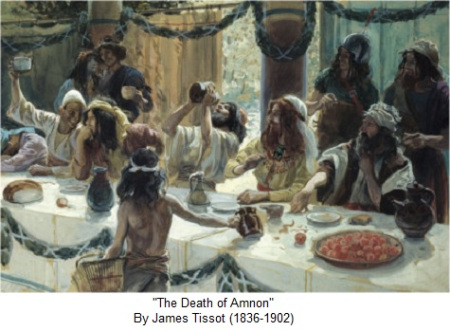
Two years later, when Absalom’s sheep were being sheared at Baal-hazor near Ephraim, Absalom invited all the king’s sons to come to a feast. He went to the king and said, “My sheep-shearers are now at work. Would the king and his servants please come to celebrate the occasion with me?”
The king replied, “No, my son. If we all came, we would be too much of a burden on you.” Absalom pressed him, but the king would not come, though he gave Absalom his blessing.
“Well, then,” Absalom said, “if you can’t come, how about sending my brother Amnon with us?”
“Why Amnon?” the king asked. But Absalom kept on pressing the king until he finally agreed to let all his sons attend, including Amnon. So Absalom prepared a feast fit for a king.
Absalom told his men, “Wait until Amnon gets drunk; then at my signal, kill him! Don’t be afraid. I’m the one who has given the command. Take courage and do it!” So at Absalom’s signal they murdered Amnon. Then the other sons of the king jumped on their mules and fled.
As they were on the way back to Jerusalem, this report reached David: “Absalom has killed all the king’s sons; not one is left alive!” The king got up, tore his robe, and threw himself on the ground. His advisers also tore their clothes in horror and sorrow.
But just then Jonadab, the son of David’s brother Shimea, arrived and said, “No, don’t believe that all the king’s sons have been killed! It was only Amnon! Absalom has been plotting this ever since Amnon raped his sister Tamar. No, my lord the king, your sons aren’t all dead! It was only Amnon.” Meanwhile Absalom escaped.
Then the watchman on the Jerusalem wall saw a great crowd coming down the hill on the road from the west. He ran to tell the king, “I see a crowd of people coming from the Horonaim road along the side of the hill.”
“Look!” Jonadab told the king. “There they are now! The king’s sons are coming, just as I said.”
They soon arrived, weeping and sobbing, and the king and all his servants wept bitterly with them. And David mourned many days for his son Amnon.
Absalom fled to his grandfather, Talmai son of Ammihud, the king of Geshur. He stayed there in Geshur for three years. And King David, now reconciled to Amnon’s death, longed to be reunited with his son Absalom.
Joab Arranges for Absalom’s Return
2 Samuel 14 (NLT)
Joab realized how much the king longed to see Absalom. So he sent for a woman from Tekoa who had a reputation for great wisdom. He said to her, “Pretend you are in mourning; wear mourning clothes and don’t put on lotions. Act like a woman who has been mourning for the dead for a long time. Then go to the king and tell him the story I am about to tell you.” Then Joab told her what to say.
When the woman from Tekoa approached the king, she bowed with her face to the ground in deep respect and cried out, “O king! Help me!”
“What’s the trouble?” the king asked.
“Alas, I am a widow!” she replied. “My husband is dead. My two sons had a fight out in the field. And since no one was there to stop it, one of them was killed. Now the rest of the family is demanding, ‘Let us have your son. We will execute him for murdering his brother. He doesn’t deserve to inherit his family’s property.’ They want to extinguish the only coal I have left, and my husband’s name and family will disappear from the face of the earth.”
“Leave it to me,” the king told her. “Go home, and I’ll see to it that no one touches him.”
“Oh, thank you, my lord the king,” the woman from Tekoa replied. “If you are criticized for helping me, let the blame fall on me and on my father’s house, and let the king and his throne be innocent.”
“If anyone objects,” the king said, “bring him to me. I can assure you he will never harm you again!”
Then she said, “Please swear to me by the Lord your God that you won’t let anyone take vengeance against my son. I want no more bloodshed.”
“As surely as the Lord lives,” he replied, “not a hair on your son’s head will be disturbed!”
“Please allow me to ask one more thing of my lord the king,” she said.
“Go ahead and speak,” he responded.
She replied, “Why don’t you do as much for the people of God as you have promised to do for me? You have convicted yourself in making this decision, because you have refused to bring home your own banished son. All of us must die eventually. Our lives are like water spilled out on the ground, which cannot be gathered up again. But God does not just sweep life away; instead, he devises ways to bring us back when we have been separated from him.
“I have come to plead with my lord the king because people have threatened me. I said to myself, ‘Perhaps the king will listen to me and rescue us from those who would cut us off from the inheritance God has given us. Yes, my lord the king will give us peace of mind again.’ I know that you are like an angel of God in discerning good from evil. May the Lord your God be with you.”
“I must know one thing,” the king replied, “and tell me the truth.”
“Yes, my lord the king,” she responded.
“Did Joab put you up to this?”
And the woman replied, “My lord the king, how can I deny it? Nobody can hide anything from you. Yes, Joab sent me and told me what to say. He did it to place the matter before you in a different light. But you are as wise as an angel of God, and you understand everything that happens among us!”
So the king sent for Joab and told him, “All right, go and bring back the young man Absalom.”
Joab bowed with his face to the ground in deep respect and said, “At last I know that I have gained your approval, my lord the king, for you have granted me this request!”
Then Joab went to Geshur and brought Absalom back to Jerusalem. But the king gave this order: “Absalom may go to his own house, but he must never come into my presence.” So Absalom did not see the king.
Absalom Reconciled to David
Now Absalom was praised as the most handsome man in all Israel. He was flawless from head to foot. He cut his hair only once a year, and then only because it was so heavy. When he weighed it out, it came to five pounds! He had three sons and one daughter. His daughter’s name was Tamar, and she was very beautiful.
Absalom lived in Jerusalem for two years, but he never got to see the king. Then Absalom sent for Joab to ask him to intercede for him, but Joab refused to come. Absalom sent for him a second time, but again Joab refused to come. So Absalom said to his servants, “Go and set fire to Joab’s barley field, the field next to mine.” So they set his field on fire, as Absalom had commanded.
Then Joab came to Absalom at his house and demanded, “Why did your servants set my field on fire?”
And Absalom replied, “Because I wanted you to ask the king why he brought me back from Geshur if he didn’t intend to see me. I might as well have stayed there. Let me see the king; if he finds me guilty of anything, then let him kill me.”
So Joab told the king what Absalom had said. Then at last David summoned Absalom, who came and bowed low before the king, and the king kissed him.
__________
May the peace of the Lord Christ go with you, wherever He may send you. May He guide you through the wilderness, protect you through the storm. May He bring you home rejoicing at the wonders He has shown you. May He bring you home rejoicing once again into our doors.
__________
+ In the name of the Father, and the Son, and the Holy Spirit. Amen!


 + Give proportionately – Here is my advice: It would be good for you to finish what you started a year ago. Last year you were the first who wanted to give, and you were the first to begin doing it. Now you should finish what you started. Let the eagerness you showed in the beginning be matched now by your giving. Give in proportion to what you have. Whatever you give is acceptable if you give it eagerly. And give according to what you have, not what you don’t have. Of course, I don’t mean your giving should make life easy for others and hard for yourselves. I only mean that there should be some equality. Right now you have plenty and can help those who are in need. Later, they will have plenty and can share with you when you need it. In this way, things will be equal. As the Scriptures say,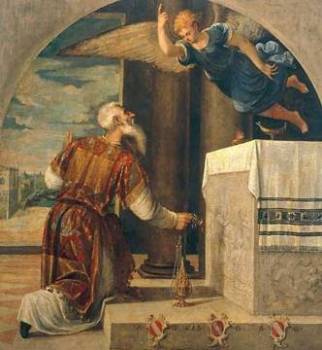
 Confused and disturbed, Mary tried to think what the angel could mean. “Don’t be afraid, Mary,” the angel told her, “for you have found favor with God! You will conceive and give birth to a son, and you will name him Jesus. He will be very great and will be called the Son of the Most High. The Lord God will give him the throne of his ancestor David. And he will reign over Israel forever; his Kingdom will never end!”











 The Peanut Gallery