
Morning Prayer: 27 June – Psalm 118:25-29; Isaiah 5:20-21; Luke 18:9-14 ~ on sin and humility

Morning Prayer

+ In the name of the Father, and of the Son, and of the Holy Spirit. Amen

Opening sentences

One thing I have asked of the Lord, this is what I seek: that I may dwell in the house of the Lord all the days of my life; to behold the beauty of the Lord and to seek Him in His temple.

Praise to You, Lord Jesus Christ, King of endless glory.

Morning readings in June

DESERT FATHERS – The sayings of The Desert Fathers (c. 300 AD) speak for themselves. (For further reading: The Wisdom of the Desert by Thomas Merton.)

Psalm 118:25-29 NLT

Please, Lord, please save us. Please, Lord, please give us success. Bless the one who comes in the name of the Lord. We bless you from the house of the Lord. The Lord is God, shining upon us. Take the sacrifice and bind it with cords on the altar. You are my God, and I will praise you! You are my God, and I will exalt you!

Give thanks to the Lord, for he is good! His faithful love endures forever.

pharisee-and-tax-collector

Isaiah 5:20-21 NLT

What sorrow for those who say that evil is good and good is evil, that dark is light and light is dark, that bitter is sweet and sweet is bitter. What sorrow for those who are wise in their own eyes and think themselves so clever.

Luke 18:9-14 NLT

Then Jesus told this story to some who had great confidence in their own righteousness and scorned everyone else: “Two men went to the Temple to pray. One was a Pharisee, and the other was a despised tax collector. The Pharisee stood by himself and prayed this prayer: ‘I thank you, God, that I am not a sinner like everyone else. For I don’t cheat, I don’t sin, and I don’t commit adultery. I’m certainly not like that tax collector! I fast twice a week, and I give you a tenth of my income.’

“But the tax collector stood at a distance and dared not even lift his eyes to heaven as he prayed. Instead, he beat his chest in sorrow, saying, ‘O God, be merciful to me, for I am a sinner.’ I tell you, this sinner, not the Pharisee, returned home justified before God. For those who exalt themselves will be humbled, and those who humble themselves will be exalted.”

Reflections

Once two brothers were sitting with Abbot Poemen, and one praised the other brother saying: ‘He is a good brother, he hates evil.’

The old man asked: ‘What do you mean he hates evil?’

And the brother did not know what to reply. So he said: ‘Tell me, father, what is it to hate evil?’

The father said: ‘That man hates evil who hates his own sins, and looks upon every brother as a saint, and loves him as a saint.’

Aidan ReadingsAidan of Lindisfarne
__________


__________

Canticle:

Christ, as a light… illumine and guide me. Christ, as a shield… overshadow me. Christ under me; Christ over me; Christ beside me on my left and my right. This day be within and without me, lowly and meek, yet all-powerful. Be in the heart of each to whom I speak; in the mouth of each who speaks unto me. This day be within and without me, lowly and meek, yet all-powerful. Christ as a light; Christ as a shield; Christ beside me on my left and my right.

Blessing

May the peace of the Lord Christ go with you, wherever He may send you. May He guide you through the wilderness, protect you through the storm. May He bring you home rejoicing at the wonders He has shown you. May He bring you home rejoicing once again into our doors.

+ In the name of the Father, and of the Son, and of the Holy Spirit. Amen

_____________________________________

Peanut Gallery: The general format for Morning Prayer is adapted from the Northumbrian Community‘s Daily Office, as found in Celtic Daily Prayer (see online resources here.) Having completed reading through the Gospel of John, our Scripture readings and reflections will be taken from the Aidan Daily Readings (Celtic Daily Prayer). We will continue with the Aidan readings through June. On Sundays, I’ll return to the USCCB readings (see online resources here) and various liturgical resources in order to reflect the Church’s worship and concerns throughout the world. Photo illustrations and music videos, available online, are included as they illustrate or illuminate the readings. I will try to give credit and link to sources as best I can.

Morning Prayer, 1 Apr – John 16:5-15 ~ Spirit of truth

Morning Prayer

+ In the name of the Father, and of the Son, and of the Holy Spirit. Amen

Opening sentences – Invocation of the Holy Spirit

Most powerful Holy Spirit, come down upon us and subdue us.

From heaven, where the ordinary is made glorious, and glory seems but ordinary, bathe us with the brilliance of Your light like dew.

Morning reading

John 16:5-15 ESV:

image

“I did not say these things to you from the beginning, because I was with you. But now I am going to him who sent me, and none of you asks me, ‘Where are you going?’ But because I have said these things to you, sorrow has filled your heart.

“Nevertheless, I tell you the truth: it is to your advantage that I go away, for if I do not go away, the Helper will not come to you. But if I go, I will send him to you. And when he comes, he will convict the world concerning sin and righteousness and judgment: concerning sin, because they do not believe in me; concerning righteousness, because I go to the Father, and you will see me no longer; concerning judgment, because the ruler of this world is judged.

“I still have many things to say to you, but you cannot bear them now. When the Spirit of truth comes, he will guide you into all the truth, for he will not speak on his own authority, but whatever he hears he will speak, and he will declare to you the things that are to come. He will glorify me, for he will take what is mine and declare it to you. All that the Father has is mine; therefore I said that he will take what is mine and declare it to you.”

Reflections:

When the Paraclete does come he will continue the work of revelation begun in Jesus, both his judgment of the world and the revelation of God to the disciples.

judgement of the world

+ Sin: the world is wrong about sin because it does not believe in Jesus. The opponents had condemned Jesus as a sinner, which is both explicitly stated and implicit in all their accusations. But they are really the ones who are guilty before God, because the work of God is to believe in the one whom he sent and rejecting Jesus is the most basic sin.

+ Righteousness: the world is wrong about righteousness because Jesus is going to the Father. The word righteousness probably includes its sense of “justice.” His opponents did not judge with right judgment, and this is seen especially in their condemnation of Jesus for his claim to be God’s Son. Jesus’ return to the Father will expose their justice as unjust.

+ Judgement: the world is wrong about judgment because the prince of this world now stands condemned. The opponents had condemned Jesus, but the Paraclete will reveal that it was the evil one who was judged and condemned at Jesus’ glorification. This judgment in turn condemns the world itself, since they have the devil for a father.

“Sin is rejecting Jesus; justice is what God has done for Jesus; judgment is what Jesus has accomplished already by his death” (Michaels).

new witness

The Paraclete exposes these realities to the disciples and to the world itself through the disciples. This witness will be through oral and written proclamation, of which this Gospel is itself a supreme example. But the primary witness will be in the quality of life that the Paraclete produces within the community as the new birth brings them into union with God.

+ Sin: faith in Jesus brings a new freedom from sin, though not sinlessness apart from the cleansing of Jesus’ blood.

+ Righteousness: they are able to live the pattern of righteousness and justice that was present in Jesus because they have his Spirit, which he sent to them after his return to the Father. The world may not see Jesus, but the disciples continue to be close to him.

+ Victory: the defeat of the evil one by Jesus is now evident in the lives of his disciples, who also overcome the evil one.

+ Love and Unity: More generally speaking, it is primarily the community’s life together that witnesses to Jesus and, by the same token, exposes and condemns the world, in particular by their love and unity. Such love and unity reveal that they are sharing in God’s own life, and, consequently, their rejection and persecution show that the opponents are acting against God. The very judgment that Jesus brought into the world continues through his disciples and elicits the same hatred.

all the truth

When the revelation is complete (namely the crucifixion and resurrection and ascension of Jesus) and when they do receive the Paraclete, he will guide them into all the truth that is in Jesus, which means all the truth of the Father. The Spirit will focus on the Son, who is focusing on the Father. Jesus’ staggering claim to have complete knowledge of God is the foundation for the Christian claim that Jesus is the unique and only way to the Father. But how are we mere mortals to appropriate such knowledge of God? Jesus provides the way by sending the Spirit of God. The “all” of Jesus’ revelation is matched by the “all” of the Paraclete’s instruction, an instruction that is not merely cerebral, but that involves a sharing of the very life of God.

Jesus’ promise is not of new revelation but of insight into the one revelation found in him. Any such new teaching must, however, be true to the revelation received in Jesus. The flower will continue to unfold, but it must be the same flower — the genetic code must be the same. The Scriptures, including the apostolic witness of the New Testament, has been the touchstone for this continuity throughout the life of the church. Indeed, the present passage speaks primarily of that apostolic witness, since Jesus is promising this work of the Paraclete to those who have been with him from the beginning, whom the Paraclete can remind of what Jesus has done and said.

The IVP New Testament Commentary Series

__________

__________

Canticle:

Christ, as a light… illumine and guide me. Christ, as a shield… overshadow me. Christ under me; Christ over me; Christ beside me on my left and my right.

This day be within and without me, lowly and meek, yet all-powerful. Be in the heart of each to whom I speak; in the mouth of each who speaks unto me. This day be within and without me, lowly and meek, yet all-powerful.

Christ as a light; Christ as a shield; Christ beside me on my left and my right.

Blessing

May the peace of the Lord Christ go with you, wherever He may send you. May He guide you through the wilderness, protect you through the storm. May He bring you home rejoicing at the wonders He has shown you. May He bring you home rejoicing once again into our doors.

+ In the name of the Father, and of the Son, and of the Holy Spirit. Amen

_____________________________________

Peanut Gallery: A brief word of explanation – the general format for Morning Prayer is adapted from the Northumbrian Community‘s Daily Office, as found in Celtic Daily Prayer (see online resources here.) The Scripture readings are primarily from the Gospel of John, with the intent to complete the reading by Easter. Other Scriptures which illuminate the Gospel of John will be included along the way.

Reflections from various saints will be included as their memorial days occur during the calendar year.

On Sundays, I’ll return to the USCCB readings (see online resources here) and various liturgical resources in order to reflect the Church’s worship and concerns throughout the world.

Photo illustrations and music videos, available online, are included as they illustrate or illuminate the readings. I will try to give credit and link to sources as best I can.
The Loving Intolerance of God – Reblog Gospel Coalition

thegospelcoalition.org / View Original / Melissa Kruger / October 11th, 2013

Tolerance. The modern, cultural elite praise this virtue in every school setting, media outlet, and job training workshop. There seems to be no truer way to love another person than to fully accept everything about them. Christians have often joined the tidal wave of this mainstream value and often long to be known for their acceptance of others’ opinions and lifestyles. On the surface it seems to be a positive virtue, one that exemplifies the life of the Christian.

tolerance

But have you ever considered that tolerance is never encouraged in the Bible? The fruit of the Spirit includes love and kindness, but missing from the list is tolerance. In fact, Christians aren’t called to tolerance, because we serve an intolerant God.

Just consider a few stories from the Old Testament:

The Garden: God didn’t tolerate Adam and Eve’s sin. He didn’t accept their lifestyle choice to eat from the tree of the knowledge of good and evil. He banished them from Eden and left an angel with flaming swords to guard the entrance so they couldn’t return.

Noah and the Flood: While the sanitized version of this story is pleasantly detailed in children’s storybooks, we cannot forget this story is about immense judgment. Picture a tsunami of destruction instead of a nursery filled with smiling stuffed animals. The flood involved terror, suffering, and death. It was a catastrophic event that only one family survived.

Uzzah: One of the most uncomfortable accounts of divine intolerance is found in 2 Samuel 6. This story recounts Uzzah’s attempt to steady the ark of the LORD after an oxen stumbled on the journey back to Israel. When he reached out and touched the ark (an expressly forbidden action), God didn’t say, “Well, his heart was in the right place. I know he was just trying to help.” Uzzah’s instinctive response was met with God’s intense anger, and Uzzah was immediately struck down.

We could go on and on throughout the Old Testament, considering Achan, Korah, Aaron’s sons, the Canaanites, and the inhabitants of Sodom and Gomorrah, just to name a few. All perished by the very hand of God. He did not tolerate their sin; he punished it.

Greater Judgment

Lest we somehow think Jesus represents a different God than the one of the Old Testament, though, consider his teaching to the disciples in Matthew 10:14-15:

And if anyone will not receive you or listen to your words, shake off the dust from your feet when you leave that house or town. Truly, I say to you, it will be more bearable on the Day of Judgment for the land of Sodom and Gomorrah than for that town.

Jesus claims a greater judgment than Sodom and Gomorrah for those who reject the message of the gospel. He warned many would believe they knew him, only to learn they have been rejected with these words: “Depart from me, all you workers of evil!” (Matt. 7:21-23; Luke 13:22-27) Rather than find welcome into God’s kingdom, they would find themselves in a place of weeping and gnashing of teeth.

Both the Old and New Testaments display a God who doesn’t tolerate sin. Yet there is one story in Scripture that demonstrates most clearly the intolerance of God.

It is the story of the cross.

Take a fresh look at the terrifying and uncomfortable reality of the cross. Here is an innocent man—whipped, beaten, nailed to a tree, bearing the sins of the world. For you. For me. Is this the picture of a tolerant God who ignores evil? No, this is a gruesome picture of divine wrath and judgment. The story makes no sense if God is a tolerant God.

The cross demonstrates God’s character in all its complexity. It shows his love, kindness, and mercy united with his justice, holiness, and wrath. It perfectly demonstrates a God who surpasses understanding. The Lord is giving us a glimpse into the immensity of his love for us. The love of God is not a tolerant love. It is much better. It is a redemptive love.

Tolerance Is Unloving

Sin must be paid for. To tolerate evil is to deny justice. God unleashes his full wrath on evil because he’s good. If good tolerated evil, it would cease to be good. Refusal to tolerate sin, then, is an essential part of loving others well. It might be tolerant for a mother to let her children play in a busy street or run with scissors, but it’s not loving in the least.

We also should hate sin because it’s harmful, even if we don’t always understand the harm that may be caused. As a child is unaware that a car may quickly appear, we must understand that we’re unaware of all the dangers of sin. God, our loving Creator who understands our frame more fully than we do, bids us to flee from evil and find abundant life in him alone. Life outside the revealed will of God doesn’t ultimately fulfill; it leads to misery and emptiness.

As his people, then, how should we live? Romans 12 provides helpful insight:

Let love be genuine. Abhor what is evil; hold fast to what is good. Love one another with brotherly affection. . . . Repay no one evil for evil, but give thought to do what is honorable in the sight of all. If possible, so far as it depends on you, live peaceably with all. Beloved, never avenge yourselves, but leave it to the wrath of God, for it is written, “Vengeance is mine, I will repay, says the Lord.” To the contrary, “If your enemy is hungry, feed him; if he is thirsty, give him something to drink; for by so doing you will heap burning coals on his head.” Do not be overcome by evil, but overcome evil with good.

God calls us to abhor evil, while at the same time warning us against being agents of his wrath. We should hate the act of stealing while showing mercy and compassion to one who steals. Loving people well doesn’t mean we must embrace the choices they make. It means we openly welcome and embrace all who come into our lives with a heart of understanding and the message and hope of the gospel. We love people well when we call them out of sin into relationship with King Jesus. It may not be the world’s definition of tolerance, but it’s the truest way to love.

Advent Inspiration: “When Peace Like a River” – YouTube

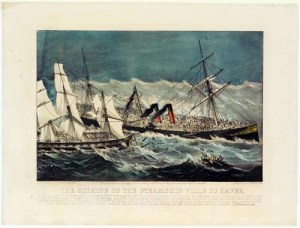
Ville du Havre steamship“When Peace Like a River”
Horatio Gates Spafford (1873)

When peace like a river attendeth my way,
when sorrows like sea billows roll;
whatever my lot, thou hast taught me to say,
“It is well, it is well with my soul.”

It is well with my soul;
it is well, it is well with my soul.

Though Satan should buffet, though trials should come,
let this blest assurance control:
that Christ has regarded my helpless estate,
and has shed his own blood for my soul.

It is well with my soul;
it is well, it is well with my soul

My sin oh, the bliss of this glorious thought!
my sin, not in part, but the whole,
is nailed to the cross, and I bear it no more;
praise the Lord, praise the Lord, O my soul!

It is well with my soul;
it is well, it is well with my soul

O Lord, haste the day when my faith shall be sight,
the clouds be rolled back as a scroll;
the trump shall resound and the Lord shall descend;
even so, it is well with my soul.

It is well with my soul;
it is well, it is well with my soul