
Morning Prayer: 11 August – Romans 7:14-25 ~ help me, Jesus

Reading through Romans

+ In the name of the Father, and of the Son, and of the Holy Spirit. Amen.

Opening sentence

Praise to You, Lord Jesus Christ, King of endless glory. You have the words of eternal life, and we have believed and have come to know that You are the Holy One of God.
__________

A reading from Romans: Romans 7:14-25 (NLT)

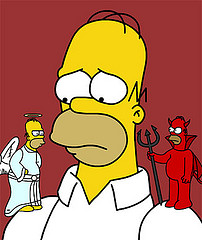
So the trouble is not with the law, for it is spiritual and good. The trouble is with me, for I am all too human, a slave to sin. I don’t really understand myself, for I want to do what is right, but I don’t do it. Instead, I do what I hate. But if I know that what I am doing is wrong, this shows that I agree that the law is good. So I am not the one doing wrong; it is sin living in me that does it.

And I know that nothing good lives in me, that is, in my sinful nature. I want to do what is right, but I can’t. I want to do what is good, but I don’t. I don’t want to do what is wrong, but I do it anyway. But if I do what I don’t want to do, I am not really the one doing wrong; it is sin living in me that does it.
ambivalent-homer-simpson

I have discovered this principle of life — that when I want to do what is right, I inevitably do what is wrong. I love God’s law with all my heart. But there is another power within me that is at war with my mind. This power makes me a slave to the sin that is still within me. Oh, what a miserable person I am! Who will free me from this life that is dominated by sin and death? Thank God! The answer is in Jesus Christ our Lord. So you see how it is: In my mind I really want to obey God’s law, but because of my sinful nature I am a slave to sin.
__________

Reflection: Romans 7:14-25 (John Stott, The Message of Romans: God’s Good News for the World)

God’s law and Christian discipleship (7:1–25)

Legalists fear the law and are in bondage to it. Antinomians hate the law and repudiate it. Law-abiding free people love the law and fulfill it.

(vs 14– 25)   The weakness of the law: an inner conflict

The law is good, but it is also weak. In itself it is holy, but it is impotent to make us holy…. Christians are caught in the tension between the ‘already’ of the kingdom’s inauguration and the ‘not yet’ of its consummation, and that this tension can be painful….

The three salient features of the person portrayed in Romans 7: 14 –25 are that he or she loves the law (and therefore is regenerate), is still a slave of sin (and therefore is not a liberated Christian) and knows nothing of the Holy Spirit (and therefore is not a New Testament believer).
_____

Application of Romans 7-8: Some church-goers today might be termed ‘Old Testament Christians’. The contradiction implied in this expression indicates what an anomaly they are. They show signs of new birth in their love for the church and the Bible, yet their religion is law, not gospel; flesh, not Spirit; the ‘oldness’ of slavery to rules and regulations, not the ‘newness’ of freedom through Jesus Christ. They are like Lazarus when he first emerged from the tomb, alive but still bound hand and foot. They need to add to their life liberty.
_____

We need to keep a watch on ourselves, lest we should ever slip back from the new order into the old, from a person to a system, from freedom to slavery, from the indwelling Spirit to an external code, from Christ to the law. God’s purpose is not that we should be Old Testament Christians, regenerate indeed, but living in slavery to the law and in bondage to indwelling sin. It is rather that we should be New Testament Christians who, having died and risen with Christ, are living in the freedom of the indwelling Spirit.
__________


__________

Canticle

Christ, as a light illumine and guide me. Christ, as a shield overshadow me. Christ under me; Christ over me; Christ beside me on my left and my right. This day be within and without me, lowly and meek, yet all-powerful. Be in the heart of each to whom I speak; in the mouth of each who speaks unto me. This day be within and without me, lowly and meek, yet all-powerful. Christ as a light; Christ as a shield; Christ beside me on my left and my right.

Blessing

May the peace of the Lord Christ go with you, wherever He may send you. May He guide you through the wilderness, protect you through the storm. May He bring you home rejoicing at the wonders He has shown you. May He bring you home rejoicing once again into our doors.

+ In the name of the Father, and of the Son, and of the Holy Spirit. Amen

Morning Prayer: 10 August – Romans 7:7-13 ~ sin uses good for evil

Reading through Romans

+ In the name of the Father, and of the Son, and of the Holy Spirit. Amen.

Opening sentence

Praise to You, Lord Jesus Christ, King of endless glory. You have the words of eternal life, and we have believed and have come to know that You are the Holy One of God.
__________

A reading from Romans: Romans 7:7-13 (NLT)

image

Well then, am I suggesting that the law of God is sinful? Of course not! In fact, it was the law that showed me my sin. I would never have known that coveting is wrong if the law had not said, “You must not covet.” But sin used this command to arouse all kinds of covetous desires within me! If there were no law, sin would not have that power. At one time I lived without understanding the law. But when I learned the command not to covet, for instance, the power of sin came to life, and I died. So I discovered that the law’s commands, which were supposed to bring life, brought spiritual death instead. But still, the law itself is holy, and its commands are holy and right and good.

But how can that be? Did the law, which is good, cause my death? Of course not! Sin used what was good to bring about my condemnation to death. So we can see how terrible sin really is. It uses God’s good commands for its own evil purposes.
__________

Reflection: Romans 7:7-13 (John Stott, The Message of Romans: God’s Good News for the World)

God’s law and Christian discipleship (7:1– 25)

Legalists fear the law and are in bondage to it. Antinomians hate the law and repudiate it. Law-abiding free people love the law and fulfill it.

(vs 7-13) A defense of the law: a past experience

The three devastating effects of the law in relation to sin: it exposes, provokes and condemns sin…. But the law is not in itself sinful, nor is it responsible for sin. Instead, it is sin itself, our sinful nature, which uses the law to cause us to sin and so to die. The law is exonerated; sin is to blame….

Indeed the extreme sinfulness of sin is seen precisely in the way it exploits a good thing (the law) for an evil purpose (death).

Take a criminal today. A man is caught red-handed breaking the law. He is arrested, brought to trial, found guilty, and sentenced to prison. He cannot blame the law for his imprisonment. True, it is the law which convicted and sentenced him. But he has no-one to blame but himself and his own criminal behavior. In a similar way Paul exonerates the law….

The law cannot save us because we cannot keep it, and we cannot keep it because of indwelling sin.
__________


__________

Canticle

Christ, as a light illumine and guide me. Christ, as a shield overshadow me. Christ under me; Christ over me; Christ beside me on my left and my right. This day be within and without me, lowly and meek, yet all-powerful. Be in the heart of each to whom I speak; in the mouth of each who speaks unto me. This day be within and without me, lowly and meek, yet all-powerful. Christ as a light; Christ as a shield; Christ beside me on my left and my right.

Blessing

May the peace of the Lord Christ go with you, wherever He may send you. May He guide you through the wilderness, protect you through the storm. May He bring you home rejoicing at the wonders He has shown you. May He bring you home rejoicing once again into our doors.

+ In the name of the Father, and of the Son, and of the Holy Spirit. Amen

Morning Prayer: 08 August – Romans 7:1-6 ~ released to serve God

Reading through Romans

+ In the name of the Father, and of the Son, and of the Holy Spirit. Amen.

Opening sentence

Praise to You, Lord Jesus Christ, King of endless glory. You have the words of eternal life, and we have believed and have come to know that You are the Holy One of God.
__________

A reading from Romans: Romans 7:1-6 (NLT)

WomanArmsSky

Now, dear brothers and sisters — you who are familiar with the law — don’t you know that the law applies only while a person is living? For example, when a woman marries, the law binds her to her husband as long as he is alive. But if he dies, the laws of marriage no longer apply to her. So while her husband is alive, she would be committing adultery if she married another man. But if her husband dies, she is free from that law and does not commit adultery when she remarries.

So, my dear brothers and sisters, this is the point: You died to the power of the law when you died with Christ. And now you are united with the one who was raised from the dead. As a result, we can produce a harvest of good deeds for God. When we were controlled by our old nature, sinful desires were at work within us, and the law aroused these evil desires that produced a harvest of sinful deeds, resulting in death. But now we have been released from the law, for we died to it and are no longer captive to its power. Now we can serve God, not in the old way of obeying the letter of the law, but in the new way of living in the Spirit.
__________

Reflection: Romans 7:1-6 (John Stott, The Message of Romans: God’s Good News for the World)

God’s law and Christian discipleship (7: 1– 25)

What is the place of the law in Christian discipleship, now that Christ has come and inaugurated the new era? In summary: three possible attitudes, the first two of which Paul rejects, and the third of which he commends. We might call them ‘legalism’,‘antinomianism’ and ‘law-fulfilling freedom’.

  • Legalists are ‘under the law’ and in bondage to it. They imagine that their relationship to God depends on their obedience to the law, and they are seeking to be both justified and sanctified by it. But they are crushed by the law’s inability to save them.
  • Antinomians (or libertines) go to the opposite extreme. Blaming the law for their problems, they reject it altogether, and claim to be rid of all obligation to its demands. They have turned liberty into license.
  • Law-fulfilling free people preserve the balance. They rejoice both in their freedom from the law for justification and sanctification, and in their freedom to fulfill it. They delight in the law as the revelation of God’s will (7: 22), but recognize that the power to fulfill it is not in the law but in the Spirit.

Thus legalists fear the law and are in bondage to it. Antinomians hate the law and repudiate it. Law-abiding free people love the law and fulfill it. Directly or indirectly Paul alludes to these three types in Romans 7.

(vs 1-6) Release from the law: a marriage metaphor

a. The legal principle (1)

Paul lays down the principle which he assumes his readers know: the law has authority over a man only as long as he lives (1)…. Death brings release from all contractual obligations involving the dead person…. So law is for life; death annuls it. Paul states this as a legal axiom, universally accepted and unchallengeable.

b. The domestic illustration (2–3)

As an example of this general principle Paul chooses marriage, and in applying it extends it…. By law a married woman is bound to her husband as long as he is alive (or ‘until death parts them’), but if her husband dies, she is released from her marriage vows. The contrast is clear: the law binds her, but his death frees her…. Only death can secure freedom from the marriage law and therefore the right to remarry.

c. The theological application (4)

As death terminates a marriage contract and permits remarriage, so we also died to the law through the body of Christ, so that we might remarry or belong to another (4a)…. Death has secured our release from the law and our remarriage to Christ…. The purpose of our dying with Christ to the law is that we may now belong to Christ… and that we might bear fruit to God (4c)… i.e. holy living.

d. The fundamental antithesis (5–6)

In our old life we were dominated by that terrible quartet — flesh, law, sin and death (5). But in our new life, having been released from the law, we are slaves of God through the power of the Spirit (6). The contrasts are striking. We were ‘in the flesh’, but are now ‘in the Spirit’. We were aroused by the law, but are now released from it. We bore fruit for death (5), but now bear fruit for God (4). And what has caused this release from the old life and this introduction to the new? Answer: it is that radical double event called death and resurrection.

The Christian life is serving the risen Christ in the power of the Spirit.

__________


__________

Canticle

Christ, as a light illumine and guide me. Christ, as a shield overshadow me. Christ under me; Christ over me; Christ beside me on my left and my right. This day be within and without me, lowly and meek, yet all-powerful. Be in the heart of each to whom I speak; in the mouth of each who speaks unto me. This day be within and without me, lowly and meek, yet all-powerful. Christ as a light; Christ as a shield; Christ beside me on my left and my right.

Blessing

May the peace of the Lord Christ go with you, wherever He may send you. May He guide you through the wilderness, protect you through the storm. May He bring you home rejoicing at the wonders He has shown you. May He bring you home rejoicing once again into our doors.

+ In the name of the Father, and of the Son, and of the Holy Spirit. Amen
Morning Prayer: 07 August – Romans 6:20-23 ~ the bondage that offers life

Reading through Romans

+ In the name of the Father, and of the Son, and of the Holy Spirit. Amen.

Opening sentence

Praise to You, Lord Jesus Christ, King of endless glory. You have the words of eternal life, and we have believed and have come to know that You are the Holy One of God.
__________

A reading from Romans: Romans 6:20-23 (NLT)

Rom 6.23

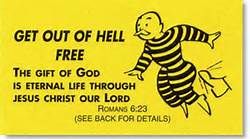
When you were slaves to sin, you were free from the obligation to do right. And what was the result? You are now ashamed of the things you used to do, things that end in eternal doom. But now you are free from the power of sin and have become slaves of God. Now you do those things that lead to holiness and result in eternal life. For the wages of sin is death, but the free gift of God is eternal life through Christ Jesus our Lord.
__________

Reflection: Romans 6:20-23 (John Stott, The Message of Romans: God’s Good News for the World)

United to Christ and enslaved to God (6:1–23)

God’s grace not only forgives sins, but also delivers us from sinning. For grace does more than justify: it also sanctifies. It unites us to Christ (1– 14), and it initiates us into a new slavery to righteousness (15–23).

b. Enslaved to God, or understanding our conversion (15–23)

Since through baptism we were united to Christ, and in consequence are dead to sin and alive to God, how can we possibly live in sin? Since through conversion we offered ourselves to God to be his slaves, and in consequence are committed to obedience, how can we possibly claim freedom to sin?

(vs 20-22) The paradox: slavery is freedom and freedom is slavery

Each slavery is also a kind of freedom, although the one is authentic and the other spurious. Similarly, each freedom is a kind of slavery, although the one is degrading and the other ennobling…. The way to assess the rival claims of these two slaveries or freedoms is by evaluating their benefit, literally their ‘fruit’.

  • The negative benefits of slavery to sin and freedom from righteousness are remorse in the present (a sense of guilt over the things you are now ashamed of), and in the end death (21)… meaning the eternal death of separation from God in hell.
  • The positive benefits of freedom from sin and slavery to God are holiness in the present and in the end eternal life (22b)… meaning fellowship with God in heaven.

Thus there is a freedom which spells death, and a bondage which spells life.

(vs 23) The terms of service on which the two slave-owners operate

Sin pays wages (you get what you deserve), but God gives a free gift (you are given what you do not deserve). If, then, we are determined to get what we deserve, it can only be death; by contrast, eternal life is God’s gift, wholly free and utterly undeserved.

The only ground on which this gift is bestowed is the atoning death of Christ, and the only condition of receiving it is that we are in Christ Jesus our Lord, that is, personally united to him by faith. Here, then, are two lives which are totally opposed to each other.

  • Jesus portrayed them as the broad road which leads to destruction and the narrow road which leads to life.
  • Paul calls them two slaveries. By birth we are in Adam, the slaves of sin; by grace and faith we are in Christ, the slaves of God.

Bondage to sin yields no return except shame and ongoing moral deterioration, culminating in the death we deserve. Bondage to God, however, yields the precious fruit of progressive holiness, culminating in the free gift of life.
__________


__________

Canticle

Christ, as a light illumine and guide me. Christ, as a shield overshadow me. Christ under me; Christ over me; Christ beside me on my left and my right. This day be within and without me, lowly and meek, yet all-powerful. Be in the heart of each to whom I speak; in the mouth of each who speaks unto me. This day be within and without me, lowly and meek, yet all-powerful. Christ as a light; Christ as a shield; Christ beside me on my left and my right.

Blessing

May the peace of the Lord Christ go with you, wherever He may send you. May He guide you through the wilderness, protect you through the storm. May He bring you home rejoicing at the wonders He has shown you. May He bring you home rejoicing once again into our doors.

+ In the name of the Father, and of the Son, and of the Holy Spirit. Amen
Morning Prayer: 06 August – Romans 6:17-19 ~ the slavery exchange

Reading through Romans

+ In the name of the Father, and of the Son, and of the Holy Spirit. Amen.

Opening sentence

Praise to You, Lord Jesus Christ, King of endless glory. You have the words of eternal life, and we have believed and have come to know that You are the Holy One of God.
__________

A reading from Romans: Romans 6:17-19 (NLT)

dead to sin

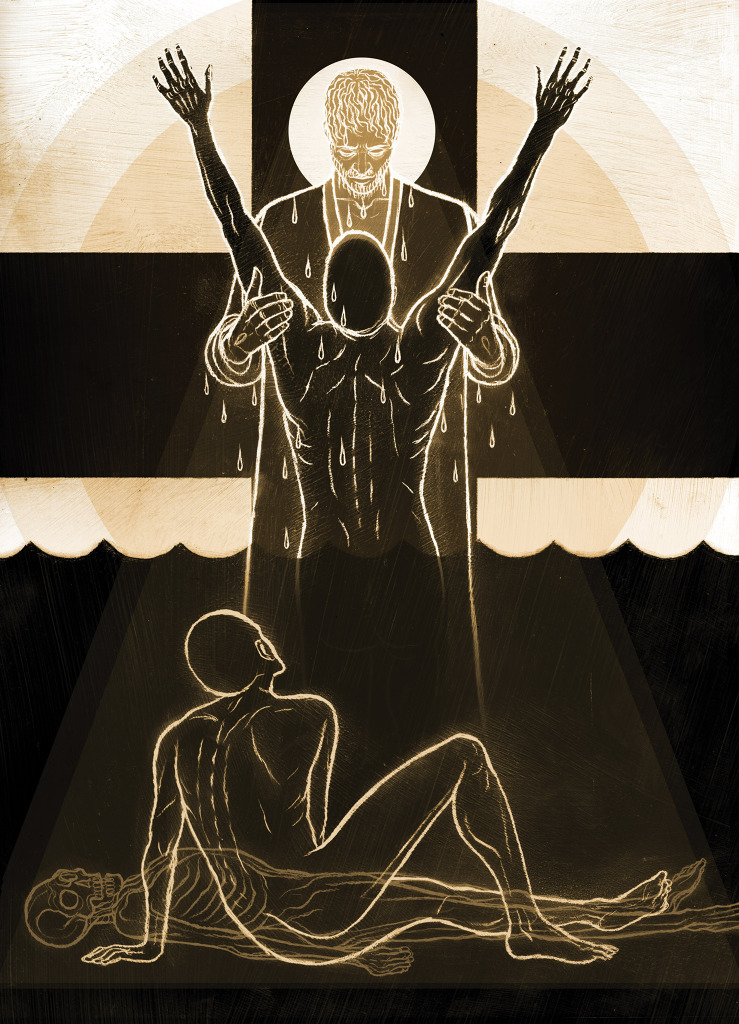
Thank God! Once you were slaves of sin, but now you wholeheartedly obey this teaching we have given you. Now you are free from your slavery to sin, and you have become slaves to righteous living.

Because of the weakness of your human nature, I am using the illustration of slavery to help you understand all this. Previously, you let yourselves be slaves to impurity and lawlessness, which led ever deeper into sin. Now you must give yourselves to be slaves to righteous living so that you will become holy.

__________

Reflection: Romans 6:17-19 (John Stott, The Message of Romans: God’s Good News for the World)

United to Christ and enslaved to God (6:1–23)

God’s grace not only forgives sins, but also delivers us from sinning. For grace does more than justify: it also sanctifies. It unites us to Christ (1– 14), and it initiates us into a new slavery to righteousness (15– 23).

b. Enslaved to God, or understanding our conversion (15–23)

Since through baptism we were united to Christ, and in consequence are dead to sin and alive to God, how can we possibly live in sin? Since through conversion we offered ourselves to God to be his slaves, and in consequence are committed to obedience, how can we possibly claim freedom to sin?

(vs 17-18) The application: conversion involves an exchange of slaveries

Conversion involves an exchange of slaveries.

First, you used to be slaves to sin (17a)…. All human beings are slaves, and there are only two slaveries, to sin and to God. Conversion is a transfer from the one to the other.

Secondly, you wholeheartedly obeyed the form of teaching to which you were entrusted (17b)…. Paul… sees conversion not only as trusting in Christ but as believing and acknowledging the truth.

‘One expects the doctrine to be handed over to the hearers,’ writes C. K. Barrett, ‘not the hearers to the doctrine. But Christians are not (like the Rabbis) masters of a tradition; they are themselves created by the word of God, and remain in subjection to it.’

Thirdly, [you] have been set free from sin (18a), emancipated from its slavery. Not that [you] have become perfect, for [you] are still capable of sinning (e.g. 12–13), but rather that [you] have been decisively rescued out of the lordship of sin into the lordship of God, out of the dominion of darkness into the kingdom of Christ.

Fourthly, [you] have become slaves to righteousness (18b). So decisive is this transfer by the grace and power of God from the slavery of sin to the slavery of righteousness that Paul cannot restrain himself from thanksgiving.

(vs 18) The analogy: both slaveries develop

Slavery is not an altogether accurate or appropriate metaphor of the Christian life. It indicates well the exclusivity of our allegiance to the Lord Christ, but neither the easy fit of his yoke, nor the gentleness of the hand that lays it on us, nor indeed the liberating nature of his service.

Nevertheless, Paul continues to compare and contrast the two slaveries. But this time he draws an analogy between them (Just as  …so now) in the way they both develop.

Neither slavery is static. Both are dynamic, the one steadily deteriorating, the other steadily progressing…. Thus despite the antithesis between them, an analogy is also drawn between the grim process of moral deterioration and the glorious process of moral transformation.
__________


__________

Canticle

Christ, as a light illumine and guide me. Christ, as a shield overshadow me. Christ under me; Christ over me; Christ beside me on my left and my right. This day be within and without me, lowly and meek, yet all-powerful. Be in the heart of each to whom I speak; in the mouth of each who speaks unto me. This day be within and without me, lowly and meek, yet all-powerful. Christ as a light; Christ as a shield; Christ beside me on my left and my right.

Blessing

May the peace of the Lord Christ go with you, wherever He may send you. May He guide you through the wilderness, protect you through the storm. May He bring you home rejoicing at the wonders He has shown you. May He bring you home rejoicing once again into our doors.

+ In the name of the Father, and of the Son, and of the Holy Spirit. Amen