One thing I have asked of the Lord, this is what I seek: that I may dwell in the house of the Lord all the days of my life; to behold the beauty of the Lord and to seek Him in His temple.
Praise to You, Lord Jesus Christ, King of endless glory.
Reading: 2 Corinthians 9-10 (NLT)
The Collection for Christians in Jerusalem
2 Corinthians 9 (NLT)
+ The ministry of giving – I really don’t need to write to you about this ministry of giving for the believers in Jerusalem. For I know how eager you are to help, and I have been boasting to the churches in Macedonia that you in Greece were ready to send an offering a year ago. In fact, it was your enthusiasm that stirred up many of the Macedonian believers to begin giving.
+ Give willingly – But I am sending these brothers to be sure you really are ready, as I have been telling them, and that your money is all collected. I don’t want to be wrong in my boasting about you. We would be embarrassed—not to mention your own embarrassment—if some Macedonian believers came with me and found that you weren’t ready after all I had told them! So I thought I should send these brothers ahead of me to make sure the gift you promised is ready. But I want it to be a willing gift, not one given grudgingly.
+ Give cheerfully – Remember this—a farmer who plants only a few seeds will get a small crop. But the one who plants generously will get a generous crop. You must each decide in your heart how much to give. And don’t give reluctantly or in response to pressure. “For God loves a person who gives cheerfully.” And God will generously provide all you need. Then you will always have everything you need and plenty left over to share with others. As the Scriptures say,
“They share freely and give generously to the poor. Their good deeds will be remembered forever.”
+ Give generously – For God is the one who provides seed for the farmer and then bread to eat. In the same way, he will provide and increase your resources and then produce a great harvest of generosity in you.
+ Give thankfully – Yes, you will be enriched in every way so that you can always be generous. And when we take your gifts to those who need them, they will thank God. So two good things will result from this ministry of giving—the needs of the believers in Jerusalem will be met, and they will joyfully express their thanks to God.
+ Give gracefully – As a result of your ministry, they will give glory to God. For your generosity to them and to all believers will prove that you are obedient to the Good News of Christ. And they will pray for you with deep affection because of the overflowing grace God has given to you. Thank God for this gift too wonderful for words!
Paul Defends His Authority
2 Corinthians 10 (NLT)
Now I, Paul, appeal to you with the gentleness and kindness of Christ—though I realize you think I am timid in person and bold only when I write from far away. Well, I am begging you now so that when I come I won’t have to be bold with those who think we act from human motives.
+ We use God’s weapons – We are human, but we don’t wage war as humans do. We use God’s mighty weapons, not worldly weapons, to knock down the strongholds of human reasoning and to destroy false arguments. We destroy every proud obstacle that keeps people from knowing God. We capture their rebellious thoughts and teach them to obey Christ. And after you have become fully obedient, we will punish everyone who remains disobedient.
+ We use God’s authority – Look at the obvious facts. Those who say they belong to Christ must recognize that we belong to Christ as much as they do. I may seem to be boasting too much about the authority given to us by the Lord. But our authority builds you up; it doesn’t tear you down. So I will not be ashamed of using my authority.
I’m not trying to frighten you by my letters. For some say, “Paul’s letters are demanding and forceful, but in person he is weak, and his speeches are worthless!” Those people should realize that our actions when we arrive in person will be as forceful as what we say in our letters from far away.
Oh, don’t worry; we wouldn’t dare say that we are as wonderful as these other men who tell you how important they are! But they are only comparing themselves with each other, using themselves as the standard of measurement. How ignorant!
+ We work within God’s boundaries – We will not boast about things done outside our area of authority. We will boast only about what has happened within the boundaries of the work God has given us, which includes our working with you. We are not reaching beyond these boundaries when we claim authority over you, as if we had never visited you. For we were the first to travel all the way to Corinth with the Good News of Christ.
+ We boast only in God – Nor do we boast and claim credit for the work someone else has done. Instead, we hope that your faith will grow so that the boundaries of our work among you will be extended. Then we will be able to go and preach the Good News in other places far beyond you, where no one else is working. Then there will be no question of our boasting about work done in someone else’s territory. As the Scriptures say, “If you want to boast, boast only about the Lord.”
+ We seek God’s commendation – When people commend themselves, it doesn’t count for much. The important thing is for the Lord to commend them.
__________
May the peace of the Lord Christ go with you, wherever He may send you. May He guide you through the wilderness, protect you through the storm. May He bring you home rejoicing at the wonders He has shown you. May He bring you home rejoicing once again into our doors.
__________
+ In the name of the Father, and the Son, and the Holy Spirit. Amen!
One thing I have asked of the Lord, this is what I seek: that I may dwell in the house of the Lord all the days of my life; to behold the beauty of the Lord and to seek Him in His temple.
Praise to You, Lord Jesus Christ, King of endless glory.
Reading: Luke 3-4 (NLT)
John the Baptist Prepares the Way
Luke 3 (NLT)
It was now the fifteenth year of the reign of Tiberius, the Roman emperor. Pontius Pilate was governor over Judea; Herod Antipas was ruler over Galilee; his brother Philip was ruler over Iturea and Traconitis; Lysanias was ruler over Abilene. Annas and Caiaphas were the high priests. At this time a message from God came to John son of Zechariah, who was living in the wilderness. Then John went from place to place on both sides of the Jordan River, preaching that people should be baptized to show that they had repented of their sins and turned to God to be forgiven. Isaiah had spoken of John when he said,
“He is a voice shouting in the wilderness, ‘Prepare the way for the Lord’s coming! Clear the road for him! The valleys will be filled, and the mountains and hills made level. The curves will be straightened, and the rough places made smooth. And then all people will see the salvation sent from God.’”
When the crowds came to John for baptism, he said, “You brood of snakes! Who warned you to flee the coming wrath? Prove by the way you live that you have repented of your sins and turned to God. Don’t just say to each other, ‘We’re safe, for we are descendants of Abraham.’ That means nothing, for I tell you, God can create children of Abraham from these very stones. Even now the ax of God’s judgment is poised, ready to sever the roots of the trees. Yes, every tree that does not produce good fruit will be chopped down and thrown into the fire.”
The crowds asked, “What should we do?”
John replied, “If you have two shirts, give one to the poor. If you have food, share it with those who are hungry.”
Even corrupt tax collectors came to be baptized and asked, “Teacher, what should we do?”
He replied, “Collect no more taxes than the government requires.”
“What should we do?” asked some soldiers.
John replied, “Don’t extort money or make false accusations. And be content with your pay.”
Everyone was expecting the Messiah to come soon, and they were eager to know whether John might be the Messiah. John answered their questions by saying, “I baptize you with water; but someone is coming soon who is greater than I am—so much greater that I’m not even worthy to be his slave and untie the straps of his sandals. He will baptize you with the Holy Spirit and with fire. He is ready to separate the chaff from the wheat with his winnowing fork. Then he will clean up the threshing area, gathering the wheat into his barn but burning the chaff with never-ending fire.” John used many such warnings as he announced the Good News to the people.
John also publicly criticized Herod Antipas, the ruler of Galilee, for marrying Herodias, his brother’s wife, and for many other wrongs he had done. So Herod put John in prison, adding this sin to his many others.
The Baptism of Jesus
One day when the crowds were being baptized, Jesus himself was baptized. As he was praying, the heavens opened, and the Holy Spirit, in bodily form, descended on him like a dove. And a voice from heaven said, “You are my dearly loved Son, and you bring me great joy.”
The Ancestors of Jesus
Jesus was about thirty years old when he began his public ministry.
Jesus was known as the son of Joseph. Joseph was the son of Heli.
Heli was the son of Matthat. Matthat was the son of Levi. Levi was the son of Melki. Melki was the son of Jannai. Jannai was the son of Joseph. Joseph was the son of Mattathias. Mattathias was the son of Amos. Amos was the son of Nahum. Nahum was the son of Esli. Esli was the son of Naggai.
Naggai was the son of Maath. Maath was the son of Mattathias. Mattathias was the son of Semein. Semein was the son of Josech. Josech was the son of Joda. Joda was the son of Joanan. Joanan was the son of Rhesa. Rhesa was the son of Zerubbabel. Zerubbabel was the son of Shealtiel.
Shealtiel was the son of Neri. Neri was the son of Melki. Melki was the son of Addi. Addi was the son of Cosam. Cosam was the son of Elmadam. Elmadam was the son of Er. Er was the son of Joshua. Joshua was the son of Eliezer. Eliezer was the son of Jorim. Jorim was the son of Matthat. Matthat was the son of Levi.
Levi was the son of Simeon. Simeon was the son of Judah. Judah was the son of Joseph. Joseph was the son of Jonam. Jonam was the son of Eliakim. Eliakim was the son of Melea. Melea was the son of Menna. Menna was the son of Mattatha. Mattatha was the son of Nathan. Nathan was the son of David.
David was the son of Jesse. Jesse was the son of Obed. Obed was the son of Boaz. Boaz was the son of Salmon. Salmon was the son of Nahshon. Nahshon was the son of Amminadab. Amminadab was the son of Admin. Admin was the son of Arni. Arni was the son of Hezron. Hezron was the son of Perez. Perez was the son of Judah.
Judah was the son of Jacob. Jacob was the son of Isaac. Isaac was the son of Abraham. Abraham was the son of Terah. Terah was the son of Nahor.
Nahor was the son of Serug. Serug was the son of Reu. Reu was the son of Peleg. Peleg was the son of Eber. Eber was the son of Shelah. Shelah was the son of Cainan. Cainan was the son of Arphaxad. Arphaxad was the son of Shem. Shem was the son of Noah. Noah was the son of Lamech.
Lamech was the son of Methuselah. Methuselah was the son of Enoch. Enoch was the son of Jared. Jared was the son of Mahalalel. Mahalalel was the son of Kenan. Kenan was the son of Enosh. Enosh was the son of Seth. Seth was the son of Adam. Adam was the son of God.
The Temptation of Jesus
Luke 4 (NLT)
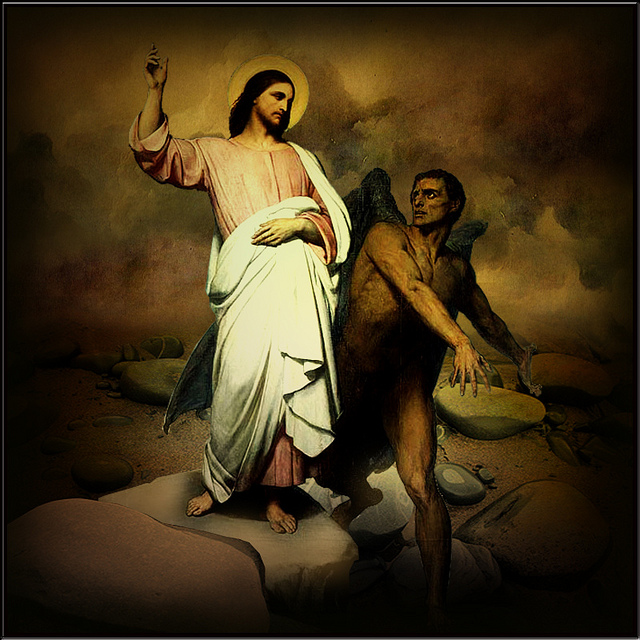
Then Jesus, full of the Holy Spirit, returned from the Jordan River. He was led by the Spirit in the wilderness, where he was tempted by the devil for forty days. Jesus ate nothing all that time and became very hungry.
Then the devil said to him, “If you are the Son of God, tell this stone to become a loaf of bread.”
But Jesus told him,
“No! The Scriptures say, ‘People do not live by bread alone.’”
Then the devil took him up and revealed to him all the kingdoms of the world in a moment of time. “I will give you the glory of these kingdoms and authority over them,” the devil said, “because they are mine to give to anyone I please. I will give it all to you if you will worship me.”
Jesus replied,
“The Scriptures say, ‘You must worship the Lord your God and serve only him.’”
Then the devil took him to Jerusalem, to the highest point of the Temple, and said, “If you are the Son of God, jump off! For the Scriptures say, ‘He will order his angels to protect and guard you. And they will hold you up with their hands so you won’t even hurt your foot on a stone.’”
Jesus responded,
“The Scriptures also say, ‘You must not test the Lord your God.’”
When the devil had finished tempting Jesus, he left him until the next opportunity came.
Jesus Rejected at Nazareth
Then Jesus returned to Galilee, filled with the Holy Spirit’s power. Reports about him spread quickly through the whole region. He taught regularly in their synagogues and was praised by everyone.
When he came to the village of Nazareth, his boyhood home, he went as usual to the synagogue on the Sabbath and stood up to read the Scriptures. The scroll of Isaiah the prophet was handed to him. He unrolled the scroll and found the place where this was written:
“The Spirit of the Lord is upon me, for he has anointed me to bring Good News to the poor. He has sent me to proclaim that captives will be released, that the blind will see, that the oppressed will be set free and that the time of the Lord’s favor has come.”
He rolled up the scroll, handed it back to the attendant, and sat down. All eyes in the synagogue looked at him intently. Then he began to speak to them. “The Scripture you’ve just heard has been fulfilled this very day!”
Everyone spoke well of him and was amazed by the gracious words that came from his lips. “How can this be?” they asked. “Isn’t this Joseph’s son?”
Then he said, “You will undoubtedly quote me this proverb: ‘Physician, heal yourself’—meaning, ‘Do miracles here in your hometown like those you did in Capernaum.’ But I tell you the truth, no prophet is accepted in his own hometown.
“Certainly there were many needy widows in Israel in Elijah’s time, when the heavens were closed for three and a half years, and a severe famine devastated the land. Yet Elijah was not sent to any of them. He was sent instead to a foreigner—a widow of Zarephath in the land of Sidon. And many in Israel had leprosy in the time of the prophet Elisha, but the only one healed was Naaman, a Syrian.”
When they heard this, the people in the synagogue were furious. Jumping up, they mobbed him and forced him to the edge of the hill on which the town was built. They intended to push him over the cliff, but he passed right through the crowd and went on his way.
Jesus Casts Out a Demon
Then Jesus went to Capernaum, a town in Galilee, and taught there in the synagogue every Sabbath day. There, too, the people were amazed at his teaching, for he spoke with authority.
Once when he was in the synagogue, a man possessed by a demon—an evil spirit—cried out, shouting, “Go away! Why are you interfering with us, Jesus of Nazareth? Have you come to destroy us? I know who you are—the Holy One of God!”
But Jesus reprimanded him. “Be quiet! Come out of the man,” he ordered. At that, the demon threw the man to the floor as the crowd watched; then it came out of him without hurting him further.
Amazed, the people exclaimed, “What authority and power this man’s words possess! Even evil spirits obey him, and they flee at his command!” The news about Jesus spread through every village in the entire region.
Jesus Heals Many People
After leaving the synagogue that day, Jesus went to Simon’s home, where he found Simon’s mother-in-law very sick with a high fever. “Please heal her,” everyone begged. Standing at her bedside, he rebuked the fever, and it left her. And she got up at once and prepared a meal for them.
As the sun went down that evening, people throughout the village brought sick family members to Jesus. No matter what their diseases were, the touch of his hand healed every one. Many were possessed by demons; and the demons came out at his command, shouting, “You are the Son of God!” But because they knew he was the Messiah, he rebuked them and refused to let them speak.
Jesus Continues to Preach
Early the next morning Jesus went out to an isolated place. The crowds searched everywhere for him, and when they finally found him, they begged him not to leave them. But he replied, “I must preach the Good News of the Kingdom of God in other towns, too, because that is why I was sent.” So he continued to travel around, preaching in synagogues throughout Judea.
__________
“The Spirit Of The Lord” – John Michael Talbot
The Spirit of the Lord is upon men, because the Lord has anointed me.
He has sent me to bring glad tidings to the poor, and to heal the brokenhearted, to proclaim liberty to the captive, and to set the prisoner free, to announce a year of favor of the Lord, to comfort all who mourn.
The Spirit of God | Is upon me | The Spirit of God | Has anointed me | The Spirit of God | Now does send me | To the poor, to heal the brokenhearted.
May the peace of the Lord Christ go with you, wherever He may send you. May He guide you through the wilderness, protect you through the storm. May He bring you home rejoicing at the wonders He has shown you. May He bring you home rejoicing once again into our doors.
__________
+ In the name of the Father, and the Son, and the Holy Spirit. Amen!
One thing I have asked of the Lord, this is what I seek: that I may dwell in the house of the Lord all the days of my life; to behold the beauty of the Lord and to seek Him in His temple.
Praise to You, Lord Jesus Christ, King of endless glory.
Reading: Jeremiah 42-46 (NLT)
Warning to Stay in Judah
Jeremiah 42 (NLT)
+ Show us what to do – Then all the military leaders, including Johanan son of Kareah and Jezaniah son of Hoshaiah, and all the people, from the least to the greatest, approached Jeremiah the prophet. They said, “Please pray to the Lord your God for us. As you can see, we are only a tiny remnant compared to what we were before. Pray that the Lord your God will show us what to do and where to go.”
“All right,” Jeremiah replied. “I will pray to the Lord your God, as you have asked, and I will tell you everything he says. I will hide nothing from you.”
+ We promise to obey – Then they said to Jeremiah, “May the Lord your God be a faithful witness against us if we refuse to obey whatever he tells us to do! Whether we like it or not, we will obey the Lord our God to whom we are sending you with our plea. For if we obey him, everything will turn out well for us.”
Ten days later the Lord gave his reply to Jeremiah. So he called for Johanan son of Kareah and the other military leaders, and for all the people, from the least to the greatest. He said to them, “You sent me to the Lord, the God of Israel, with your request, and this is his reply:
+ Stay where you are – ‘Stay here in this land. If you do, I will build you up and not tear you down; I will plant you and not uproot you. For I am sorry about all the punishment I have had to bring upon you. Do not fear the king of Babylon anymore,’ says the Lord. ‘For I am with you and will save you and rescue you from his power. I will be merciful to you by making him kind, so he will let you stay here in your land.’
+ No escape in Egypt – “But if you refuse to obey the Lord your God, and if you say, ‘We will not stay here; instead, we will go to Egypt where we will be free from war, the call to arms, and hunger,’ then hear the Lord’s message to the remnant of Judah. This is what the Lord of Heaven’s Armies, the God of Israel, says: ‘If you are determined to go to Egypt and live there, the very war and famine you fear will catch up to you, and you will die there. That is the fate awaiting every one of you who insists on going to live in Egypt. Yes, you will die from war, famine, and disease. None of you will escape the disaster I will bring upon you there.’
+ No return from Egypt – “This is what the Lord of Heaven’s Armies, the God of Israel, says: ‘Just as my anger and fury have been poured out on the people of Jerusalem, so they will be poured out on you when you enter Egypt. You will be an object of damnation, horror, cursing, and mockery. And you will never see your homeland again.’
+ You have been warned – “Listen, you remnant of Judah. The Lord has told you: ‘Do not go to Egypt!’ Don’t forget this warning I have given you today. For you were not being honest when you sent me to pray to the Lord your God for you. You said, ‘Just tell us what the Lord our God says, and we will do it!’ And today I have told you exactly what he said, but you will not obey the Lord your God any better now than you have in the past. So you can be sure that you will die from war, famine, and disease in Egypt, where you insist on going.”
Jeremiah Taken to Egypt
Jeremiah 43 (NLT)
+ Disbelief – When Jeremiah had finished giving this message from the Lord their God to all the people, Azariah son of Hoshaiah and Johanan son of Kareah and all the other proud men said to Jeremiah, “You lie! The Lord our God hasn’t forbidden us to go to Egypt! Baruch son of Neriah has convinced you to say this, because he wants us to stay here and be killed by the Babylonians or be carried off into exile.”
+ Disobedience – So Johanan and the other military leaders and all the people refused to obey the Lord’s command to stay in Judah. Johanan and the other leaders took with them all the people who had returned from the nearby countries to which they had fled. In the crowd were men, women, and children, the king’s daughters, and all those whom Nebuzaradan, the captain of the guard, had left with Gedaliah. The prophet Jeremiah and Baruch were also included. The people refused to obey the voice of the Lord and went to Egypt, going as far as the city of Tahpanhes.
Then at Tahpanhes, the Lord gave another message to Jeremiah. He said,
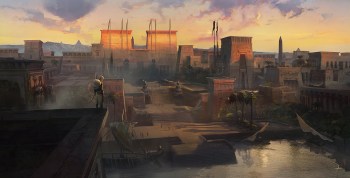
+ Destruction – “While the people of Judah are watching, take some large rocks and bury them under the pavement stones at the entrance of Pharaoh’s palace here in Tahpanhes. Then say to the people of Judah, ‘This is what the Lord of Heaven’s Armies, the God of Israel, says: I will certainly bring my servant Nebuchadnezzar, king of Babylon, here to Egypt. I will set his throne over these stones that I have hidden. He will spread his royal canopy over them. And when he comes, he will destroy the land of Egypt. He will bring death to those destined for death, captivity to those destined for captivity, and war to those destined for war. He will set fire to the temples of Egypt’s gods; he will burn the temples and carry the idols away as plunder. He will pick clean the land of Egypt as a shepherd picks fleas from his cloak. And he himself will leave unharmed. He will break down the sacred pillars standing in the temple of the sun in Egypt, and he will burn down the temples of Egypt’s gods.’”
Judgment for Idolatry
Jeremiah 44 (NLT)
This is the message Jeremiah received concerning the Judeans living in northern Egypt in the cities of Migdol, Tahpanhes, and Memphis, and in southern Egypt as well:
+ Judgement on Judah – “This is what the Lord of Heaven’s Armies, the God of Israel, says: You saw the calamity I brought on Jerusalem and all the towns of Judah. They now lie deserted and in ruins. They provoked my anger with all their wickedness. They burned incense and worshiped other gods—gods that neither they nor you nor any of your ancestors had ever even known.
+ Rejection of prophets – “Again and again I sent my servants, the prophets, to plead with them, ‘Don’t do these horrible things that I hate so much.’ But my people would not listen or turn back from their wicked ways. They kept on burning incense to these gods. And so my fury boiled over and fell like fire on the towns of Judah and into the streets of Jerusalem, and they are still a desolate ruin today.
+ Repeat of irreverence – “And now the Lord God of Heaven’s Armies, the God of Israel, asks you: Why are you destroying yourselves? For not one of you will survive—not a man, woman, or child among you who has come here from Judah, not even the babies in your arms. Why provoke my anger by burning incense to the idols you have made here in Egypt? You will only destroy yourselves and make yourselves an object of cursing and mockery for all the nations of the earth. Have you forgotten the sins of your ancestors, the sins of the kings and queens of Judah, and the sins you and your wives committed in Judah and Jerusalem? To this very hour you have shown no remorse or reverence. No one has chosen to follow my word and the decrees I gave to you and your ancestors before you.
+ Judgement on refugees – “Therefore, this is what the Lord of Heaven’s Armies, the God of Israel, says: I am determined to destroy every one of you! I will take this remnant of Judah—those who were determined to come here and live in Egypt—and I will consume them. They will fall here in Egypt, killed by war and famine. All will die, from the least to the greatest. They will be an object of damnation, horror, cursing, and mockery. I will punish them in Egypt just as I punished them in Jerusalem, by war, famine, and disease. Of that remnant who fled to Egypt, hoping someday to return to Judah, there will be no survivors. Even though they long to return home, only a handful will do so.”
+ Women unrepentant – Then all the women present and all the men who knew that their wives had burned incense to idols—a great crowd of all the Judeans living in northern Egypt and southern Egypt—answered Jeremiah, “We will not listen to your messages from the Lord! We will do whatever we want. We will burn incense and pour out liquid offerings to the Queen of Heaven just as much as we like—just as we, and our ancestors, and our kings and officials have always done in the towns of Judah and in the streets of Jerusalem. For in those days we had plenty to eat, and we were well off and had no troubles! But ever since we quit burning incense to the Queen of Heaven and stopped worshiping her with liquid offerings, we have been in great trouble and have been dying from war and famine.”
+ Husbands complicit – “Besides,” the women added, “do you suppose that we were burning incense and pouring out liquid offerings to the Queen of Heaven, and making cakes marked with her image, without our husbands knowing it and helping us? Of course not!”
+ Idolatry caused destruction – Then Jeremiah said to all of them, men and women alike, who had given him that answer, “Do you think the Lord did not know that you and your ancestors, your kings and officials, and all the people were burning incense to idols in the towns of Judah and in the streets of Jerusalem? It was because the Lord could no longer bear all the disgusting things you were doing that he made your land an object of cursing—a desolate ruin without inhabitants—as it is today. All these terrible things happened to you because you have burned incense to idols and sinned against the Lord. You have refused to obey him and have not followed his instructions, his decrees, and his laws.”
Then Jeremiah said to them all, including the women, “Listen to this message from the Lord, all you citizens of Judah who live in Egypt. This is what the Lord of Heaven’s Armies, the God of Israel, says:
+ Trust your idol – ‘You and your wives have said, “We will keep our promises to burn incense and pour out liquid offerings to the Queen of Heaven,” and you have proved by your actions that you meant it. So go ahead and carry out your promises and vows to her!’
+ Test my words – “But listen to this message from the Lord, all you Judeans now living in Egypt: ‘I have sworn by my great name,’ says the Lord, ‘that my name will no longer be spoken by any of the Judeans in the land of Egypt. None of you may invoke my name or use this oath: “As surely as the Sovereign Lord lives.” For I will watch over you to bring you disaster and not good. Everyone from Judah who is now living in Egypt will suffer war and famine until all of you are dead. Only a small number will escape death and return to Judah from Egypt. Then all those who came to Egypt will find out whose words are true—mine or theirs!
+ Pharaoh will fall – “‘And this is the proof I give you,’ says the Lord, ‘that all I have threatened will happen to you and that I will punish you here.’ This is what the Lord says: ‘I will turn Pharaoh Hophra, king of Egypt, over to his enemies who want to kill him, just as I turned King Zedekiah of Judah over to King Nebuchadnezzar of Babylon.’”
A Message for Baruch
Jeremiah 45 (NLT)
The prophet Jeremiah gave a message to Baruch son of Neriah in the fourth year of the reign of Jehoiakim son of Josiah, after Baruch had written down everything Jeremiah had dictated to him. He said,
“This is what the Lord, the God of Israel, says to you, Baruch: You have said, ‘I am overwhelmed with trouble! Haven’t I had enough pain already? And now the Lord has added more! I am worn out from sighing and can find no rest.’
“Baruch, this is what the Lord says: ‘I will destroy this nation that I built. I will uproot what I planted. Are you seeking great things for yourself? Don’t do it! I will bring great disaster upon all these people; but I will give you your life as a reward wherever you go. I, the Lord, have spoken!’”
Messages for the Nations
Jeremiah 46 (NLT)
The following messages were given to Jeremiah the prophet from the Lord concerning foreign nations.
Messages about Egypt
This message concerning Egypt was given in the fourth year of the reign of Jehoiakim son of Josiah, the king of Judah, on the occasion of the battle of Carchemish when Pharaoh Neco, king of Egypt, and his army were defeated beside the Euphrates River by King Nebuchadnezzar of Babylon.
+ Egypt defeated – “Prepare your shields, and advance into battle! Harness the horses, and mount the stallions. Take your positions. Put on your helmets. Sharpen your spears, and prepare your armor. But what do I see? The Egyptian army flees in terror. The bravest of its fighting men run without a backward glance. They are terrorized at every turn,” says the Lord.
“The swiftest runners cannot flee; the mightiest warriors cannot escape. By the Euphrates River to the north, they stumble and fall.
+ Allies defeated – “Who is this, rising like the Nile at floodtime, overflowing all the land? It is the Egyptian army, overflowing all the land, boasting that it will cover the earth like a flood, destroying cities and their people. Charge, you horses and chariots; attack, you mighty warriors of Egypt! Come, all you allies from Ethiopia, Libya, and Lydia who are skilled with the shield and bow! For this is the day of the Lord, the Lord of Heaven’s Armies, a day of vengeance on his enemies. The sword will devour until it is satisfied, yes, until it is drunk with your blood! The Lord, the Lord of Heaven’s Armies, will receive a sacrifice today in the north country beside the Euphrates River.
+ Egypt shamed – “Go up to Gilead to get medicine, O virgin daughter of Egypt! But your many treatments will bring you no healing. The nations have heard of your shame. The earth is filled with your cries of despair. Your mightiest warriors will run into each other and fall down together.”
Then the Lord gave the prophet Jeremiah this message about King Nebuchadnezzar’s plans to attack Egypt.
+ Egypt routed – “Shout it out in Egypt! Publish it in the cities of Migdol, Memphis, and Tahpanhes! Mobilize for battle, for the sword will devour everyone around you. Why have your warriors fallen? They cannot stand, for the Lord has knocked them down. They stumble and fall over each other and say among themselves, ‘Come, let’s go back to our people, to the land of our birth. Let’s get away from the sword of the enemy!’ There they will say, ‘Pharaoh, the king of Egypt, is a loudmouth who missed his opportunity!’
+ Egypt humiliated – “As surely as I live,” says the King, whose name is the Lord of Heaven’s Armies, “one is coming against Egypt who is as tall as Mount Tabor, or as Mount Carmel by the sea! Pack up! Get ready to leave for exile, you citizens of Egypt! The city of Memphis will be destroyed, without a single inhabitant. Egypt is as sleek as a beautiful heifer, but a horsefly from the north is on its way! Egypt’s mercenaries have become like fattened calves. They, too, will turn and run, for it is a day of great disaster for Egypt, a time of great punishment. Egypt flees, silent as a serpent gliding away. The invading army marches in; they come against her with axes like woodsmen. They will cut down her people like trees,” says the Lord, “for they are more numerous than locusts. Egypt will be humiliated; she will be handed over to people from the north.”
The Lord of Heaven’s Armies, the God of Israel, says:
+ Egypt punished – “I will punish Amon, the god of Thebes, and all the other gods of Egypt. I will punish its rulers and Pharaoh, too, and all who trust in him. I will hand them over to those who want them killed—to King Nebuchadnezzar of Babylon and his army. But afterward the land will recover from the ravages of war. I, the Lord, have spoken!
+ Israel disciplined but not destroyed – “But do not be afraid, Jacob, my servant; do not be dismayed, Israel. For I will bring you home again from distant lands, and your children will return from their exile. Israel will return to a life of peace and quiet, and no one will terrorize them. Do not be afraid, Jacob, my servant, for I am with you,” says the Lord. “I will completely destroy the nations to which I have exiled you, but I will not completely destroy you. I will discipline you, but with justice; I cannot let you go unpunished.”
__________
“Israel’s 70th – Do You See The Miracle?” – The Mizrachi World Movement
May the peace of the Lord Christ go with you, wherever He may send you. May He guide you through the wilderness, protect you through the storm. May He bring you home rejoicing at the wonders He has shown you. May He bring you home rejoicing once again into our doors.
__________
+ In the name of the Father, and the Son, and the Holy Spirit. Amen!
One thing I have asked of the Lord, this is what I seek: that I may dwell in the house of the Lord all the days of my life; to behold the beauty of the Lord and to seek Him in His temple.
Praise to You, Lord Jesus Christ, King of endless glory.
Reading: Job 41-42 (NLT)
The Lord’s Challenge Continues
Job 41 (NLT)
“Can you catch Leviathan with a hook or put a noose around its jaw? Can you tie it with a rope through the nose or pierce its jaw with a spike? Will it beg you for mercy or implore you for pity? Will it agree to work for you, to be your slave for life? Can you make it a pet like a bird, or give it to your little girls to play with? Will merchants try to buy it to sell it in their shops? Will its hide be hurt by spears or its head by a harpoon? If you lay a hand on it, you will certainly remember the battle that follows. You won’t try that again! No, it is useless to try to capture it. The hunter who attempts it will be knocked down. And since no one dares to disturb it, who then can stand up to me? Who has given me anything that I need to pay back? Everything under heaven is mine.
“I want to emphasize Leviathan’s limbs and its enormous strength and graceful form. Who can strip off its hide, and who can penetrate its double layer of armor? Who could pry open its jaws? For its teeth are terrible! The scales on its back are like rows of shields tightly sealed together. They are so close together that no air can get between them. Each scale sticks tight to the next. They interlock and cannot be penetrated.
“When it sneezes, it flashes light! Its eyes are like the red of dawn. Lightning leaps from its mouth; flames of fire flash out. Smoke streams from its nostrils like steam from a pot heated over burning rushes. Its breath would kindle coals, for flames shoot from its mouth.
“The tremendous strength in Leviathan’s neck strikes terror wherever it goes. Its flesh is hard and firm and cannot be penetrated. Its heart is hard as rock, hard as a millstone. When it rises, the mighty are afraid, gripped by terror. No sword can stop it, no spear, dart, or javelin. Iron is nothing but straw to that creature, and bronze is like rotten wood. Arrows cannot make it flee. Stones shot from a sling are like bits of grass. Clubs are like a blade of grass, and it laughs at the swish of javelins. Its belly is covered with scales as sharp as glass. It plows up the ground as it drags through the mud.
“Leviathan makes the water boil with its commotion. It stirs the depths like a pot of ointment. The water glistens in its wake, making the sea look white. Nothing on earth is its equal, no other creature so fearless. Of all the creatures, it is the proudest. It is the king of beasts.”
Job Responds to the Lord
Job 42 (NLT)
Then Job replied to the Lord:
“I know that you can do anything, and no one can stop you. You asked, ‘Who is this that questions my wisdom with such ignorance?’ It is I—and I was talking about things I knew nothing about, things far too wonderful for me. You said, ‘Listen and I will speak! I have some questions for you, and you must answer them.’ I had only heard about you before, but now I have seen you with my own eyes. I take back everything I said, and I sit in dust and ashes to show my repentance.”
Conclusion: The Lord Blesses Job
After the Lord had finished speaking to Job, he said to Eliphaz the Temanite: “I am angry with you and your two friends, for you have not spoken accurately about me, as my servant Job has. So take seven bulls and seven rams and go to my servant Job and offer a burnt offering for yourselves. My servant Job will pray for you, and I will accept his prayer on your behalf. I will not treat you as you deserve, for you have not spoken accurately about me, as my servant Job has.” So Eliphaz the Temanite, Bildad the Shuhite, and Zophar the Naamathite did as the Lord commanded them, and the Lord accepted Job’s prayer.
When Job prayed for his friends, the Lord restored his fortunes. In fact, the Lord gave him twice as much as before! Then all his brothers, sisters, and former friends came and feasted with him in his home. And they consoled him and comforted him because of all the trials the Lord had brought against him. And each of them brought him a gift of money and a gold ring.
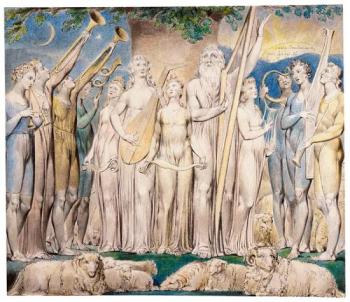
So the Lord blessed Job in the second half of his life even more than in the beginning. For now he had 14,000 sheep, 6,000 camels, 1,000 teams of oxen, and 1,000 female donkeys. He also gave Job seven more sons and three more daughters. He named his first daughter Jemimah, the second Keziah, and the third Keren-happuch. In all the land no women were as lovely as the daughters of Job. And their father put them into his will along with their brothers.
Job lived 140 years after that, living to see four generations of his children and grandchildren. Then he died, an old man who had lived a long, full life.
__________
May the peace of the Lord Christ go with you, wherever He may send you. May He guide you through the wilderness, protect you through the storm. May He bring you home rejoicing at the wonders He has shown you. May He bring you home rejoicing once again into our doors.
__________
+ In the name of the Father, and the Son, and the Holy Spirit. Amen!
One thing I have asked of the Lord, this is what I seek: that I may dwell in the house of the Lord all the days of my life; to behold the beauty of the Lord and to seek Him in His temple.
Praise to You, Lord Jesus Christ, King of endless glory.
Reading: 2 Samuel 15-19 (NLT)
Absalom’s Rebellion
2 Samuel 15 (NLT)
+ Subversion – After this, Absalom bought a chariot and horses, and he hired fifty bodyguards to run ahead of him. He got up early every morning and went out to the gate of the city. When people brought a case to the king for judgment, Absalom would ask where in Israel they were from, and they would tell him their tribe. Then Absalom would say, “You’ve really got a strong case here! It’s too bad the king doesn’t have anyone to hear it. I wish I were the judge. Then everyone could bring their cases to me for judgment, and I would give them justice!”
When people tried to bow before him, Absalom wouldn’t let them. Instead, he took them by the hand and kissed them. Absalom did this with everyone who came to the king for judgment, and so he stole the hearts of all the people of Israel.
+ Deception – After four years, Absalom said to the king, “Let me go to Hebron to offer a sacrifice to the Lord and fulfill a vow I made to him. For while your servant was at Geshur in Aram, I promised to sacrifice to the Lord in Hebron if he would bring me back to Jerusalem.”
“All right,” the king told him. “Go and fulfill your vow.”
+ Rebellion – So Absalom went to Hebron. But while he was there, he sent secret messengers to all the tribes of Israel to stir up a rebellion against the king. “As soon as you hear the ram’s horn,” his message read, “you are to say, ‘Absalom has been crowned king in Hebron.’” He took 200 men from Jerusalem with him as guests, but they knew nothing of his intentions. While Absalom was offering the sacrifices, he sent for Ahithophel, one of David’s counselors who lived in Giloh. Soon many others also joined Absalom, and the conspiracy gained momentum.
David Escapes from Jerusalem
+ Conspiracy – A messenger soon arrived in Jerusalem to tell David, “All Israel has joined Absalom in a conspiracy against you!”
“Then we must flee at once, or it will be too late!” David urged his men. “Hurry! If we get out of the city before Absalom arrives, both we and the city of Jerusalem will be spared from disaster.”
“We are with you,” his advisers replied. “Do what you think is best.”
+ Evacuation – So the king and all his household set out at once. He left no one behind except ten of his concubines to look after the palace. The king and all his people set out on foot, pausing at the last house to let all the king’s men move past to lead the way. There were 600 men from Gath who had come with David, along with the king’s bodyguard.
Then the king turned and said to Ittai, a leader of the men from Gath, “Why are you coming with us? Go on back to King Absalom, for you are a guest in Israel, a foreigner in exile. You arrived only recently, and should I force you today to wander with us? I don’t even know where we will go. Go on back and take your kinsmen with you, and may the Lord show you his unfailing love and faithfulness.”
+ Loyalty – But Ittai said to the king, “I vow by the Lord and by your own life that I will go wherever my lord the king goes, no matter what happens—whether it means life or death.”
David replied, “All right, come with us.” So Ittai and all his men and their families went along.
+ Grief – Everyone cried loudly as the king and his followers passed by. They crossed the Kidron Valley and then went out toward the wilderness.
+ Worship – Zadok and all the Levites also came along, carrying the Ark of the Covenant of God. They set down the Ark of God, and Abiathar offered sacrifices until everyone had passed out of the city.
+ Resignation – Then the king instructed Zadok to take the Ark of God back into the city. “If the Lord sees fit,” David said, “he will bring me back to see the Ark and the Tabernacle again. But if he is through with me, then let him do what seems best to him.”
+ Report – The king also told Zadok the priest, “Look, here is my plan. You and Abiathar should return quietly to the city with your son Ahimaaz and Abiathar’s son Jonathan. I will stop at the shallows of the Jordan River and wait there for a report from you.” So Zadok and Abiathar took the Ark of God back to the city and stayed there.
+ Mourning – David walked up the road to the Mount of Olives, weeping as he went. His head was covered and his feet were bare as a sign of mourning. And the people who were with him covered their heads and wept as they climbed the hill. When someone told David that his adviser Ahithophel was now backing Absalom, David prayed, “O Lord, let Ahithophel give Absalom foolish advice!”
+ Espionage – When David reached the summit of the Mount of Olives where people worshiped God, Hushai the Arkite was waiting there for him. Hushai had torn his clothing and put dirt on his head as a sign of mourning. But David told him, “If you go with me, you will only be a burden. Return to Jerusalem and tell Absalom, ‘I will now be your adviser, O king, just as I was your father’s adviser in the past.’ Then you can frustrate and counter Ahithophel’s advice. Zadok and Abiathar, the priests, will be there. Tell them about the plans being made in the king’s palace, and they will send their sons Ahimaaz and Jonathan to tell me what is going on.”
So David’s friend Hushai returned to Jerusalem, getting there just as Absalom arrived.
David and Ziba
2 Samuel 16 (NLT)
When David had gone a little beyond the summit of the Mount of Olives, Ziba, the servant of Mephibosheth, was waiting there for him. He had two donkeys loaded with 200 loaves of bread, 100 clusters of raisins, 100 bunches of summer fruit, and a wineskin full of wine.
“What are these for?” the king asked Ziba.
Ziba replied, “The donkeys are for the king’s people to ride on, and the bread and summer fruit are for the young men to eat. The wine is for those who become exhausted in the wilderness.”
+ Ingratitude – “And where is Mephibosheth, Saul’s grandson?” the king asked him.
“He stayed in Jerusalem,” Ziba replied. “He said, ‘Today I will get back the kingdom of my grandfather Saul.’”
“In that case,” the king told Ziba, “I give you everything Mephibosheth owns.”
“I bow before you,” Ziba replied. “May I always be pleasing to you, my lord the king.”
Shimei Curses David
As King David came to Bahurim, a man came out of the village cursing them. It was Shimei son of Gera, from the same clan as Saul’s family. He threw stones at the king and the king’s officers and all the mighty warriors who surrounded him. “Get out of here, you murderer, you scoundrel!” he shouted at David. “The Lord is paying you back for all the bloodshed in Saul’s clan. You stole his throne, and now the Lord has given it to your son Absalom. At last you will taste some of your own medicine, for you are a murderer!”
“Why should this dead dog curse my lord the king?” Abishai son of Zeruiah demanded. “Let me go over and cut off his head!”
“No!” the king said. “Who asked your opinion, you sons of Zeruiah! If the Lord has told him to curse me, who are you to stop him?”
Then David said to Abishai and to all his servants, “My own son is trying to kill me. Doesn’t this relative of Saul have even more reason to do so? Leave him alone and let him curse, for the Lord has told him to do it. And perhaps the Lord will see that I am being wronged and will bless me because of these curses today.” So David and his men continued down the road, and Shimei kept pace with them on a nearby hillside, cursing and throwing stones and dirt at David.
The king and all who were with him grew weary along the way, so they rested when they reached the Jordan River.
Ahithophel Advises Absalom
Meanwhile, Absalom and all the army of Israel arrived at Jerusalem, accompanied by Ahithophel. When David’s friend Hushai the Arkite arrived, he went immediately to see Absalom. “Long live the king!” he exclaimed. “Long live the king!”
“Is this the way you treat your friend David?” Absalom asked him. “Why aren’t you with him?”
“I’m here because I belong to the man who is chosen by the Lord and by all the men of Israel,” Hushai replied. “And anyway, why shouldn’t I serve you? Just as I was your father’s adviser, now I will be your adviser!”
Then Absalom turned to Ahithophel and asked him, “What should I do next?”
+ Irreconcilable – Ahithophel told him, “Go and sleep with your father’s concubines, for he has left them here to look after the palace. Then all Israel will know that you have insulted your father beyond hope of reconciliation, and they will throw their support to you.” So they set up a tent on the palace roof where everyone could see it, and Absalom went in and had sex with his father’s concubines.
Absalom followed Ahithophel’s advice, just as David had done. For every word Ahithophel spoke seemed as wise as though it had come directly from the mouth of God.
2 Samuel 17 (NLT)
+ Plot – Now Ahithophel urged Absalom, “Let me choose 12,000 men to start out after David tonight. I will catch up with him while he is weary and discouraged. He and his troops will panic, and everyone will run away. Then I will kill only the king, and I will bring all the people back to you as a bride returns to her husband. After all, it is only one man’s life that you seek. Then you will be at peace with all the people.” This plan seemed good to Absalom and to all the elders of Israel.
Hushai Counters Ahithophel’s Advice
But then Absalom said, “Bring in Hushai the Arkite. Let’s see what he thinks about this.” When Hushai arrived, Absalom told him what Ahithophel had said. Then he asked, “What is your opinion? Should we follow Ahithophel’s advice? If not, what do you suggest?”
+ Reprieve – “Well,” Hushai replied to Absalom, “this time Ahithophel has made a mistake. You know your father and his men; they are mighty warriors. Right now they are as enraged as a mother bear who has been robbed of her cubs. And remember that your father is an experienced man of war. He won’t be spending the night among the troops. He has probably already hidden in some pit or cave. And when he comes out and attacks and a few of your men fall, there will be panic among your troops, and the word will spread that Absalom’s men are being slaughtered. Then even the bravest soldiers, though they have the heart of a lion, will be paralyzed with fear. For all Israel knows what a mighty warrior your father is and how courageous his men are.
“I recommend that you mobilize the entire army of Israel, bringing them from as far away as Dan in the north and Beersheba in the south. That way you will have an army as numerous as the sand on the seashore. And I advise that you personally lead the troops. When we find David, we’ll fall on him like dew that falls on the ground. Then neither he nor any of his men will be left alive. And if David were to escape into some town, you will have all Israel there at your command. Then we can take ropes and drag the walls of the town into the nearest valley until every stone is torn down.”
+ Reproof – Then Absalom and all the men of Israel said, “Hushai’s advice is better than Ahithophel’s.” For the Lord had determined to defeat the counsel of Ahithophel, which really was the better plan, so that he could bring disaster on Absalom!
Hushai Warns David to Escape
Hushai told Zadok and Abiathar, the priests, what Ahithophel had said to Absalom and the elders of Israel and what he himself had advised instead. “Quick!” he told them. “Find David and urge him not to stay at the shallows of the Jordan River tonight. He must go across at once into the wilderness beyond. Otherwise he will die and his entire army with him.”
+ Report – Jonathan and Ahimaaz had been staying at En-rogel so as not to be seen entering and leaving the city. Arrangements had been made for a servant girl to bring them the message they were to take to King David. But a boy spotted them at En-rogel, and he told Absalom about it. So they quickly escaped to Bahurim, where a man hid them down inside a well in his courtyard. The man’s wife put a cloth over the top of the well and scattered grain on it to dry in the sun; so no one suspected they were there.
When Absalom’s men arrived, they asked her, “Have you seen Ahimaaz and Jonathan?”
The woman replied, “They were here, but they crossed over the brook.” Absalom’s men looked for them without success and returned to Jerusalem.
+ Retreat – Then the two men crawled out of the well and hurried on to King David. “Quick!” they told him, “cross the Jordan tonight!” And they told him how Ahithophel had advised that he be captured and killed. So David and all the people with him went across the Jordan River during the night, and they were all on the other bank before dawn.
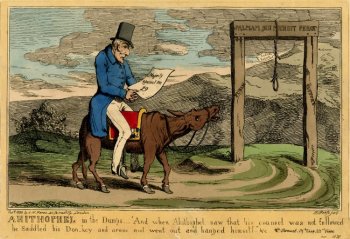
+ Rejection – When Ahithophel realized that his advice had not been followed, he saddled his donkey, went to his hometown, set his affairs in order, and hanged himself. He died there and was buried in the family tomb.
+ Absalom mobilizes – David soon arrived at Mahanaim. By now, Absalom had mobilized the entire army of Israel and was leading his troops across the Jordan River. Absalom had appointed Amasa as commander of his army, replacing Joab, who had been commander under David. (Amasa was Joab’s cousin. His father was Jether, an Ishmaelite. His mother, Abigail daughter of Nahash, was the sister of Joab’s mother, Zeruiah.) Absalom and the Israelite army set up camp in the land of Gilead.
+ David regroups – When David arrived at Mahanaim, he was warmly greeted by Shobi son of Nahash, who came from Rabbah of the Ammonites, and by Makir son of Ammiel from Lo-debar, and by Barzillai of Gilead from Rogelim. They brought sleeping mats, cooking pots, serving bowls, wheat and barley, flour and roasted grain, beans, lentils, honey, butter, sheep, goats, and cheese for David and those who were with him. For they said, “You must all be very hungry and tired and thirsty after your long march through the wilderness.”
Absalom’s Defeat and Death
2 Samuel 18 (NLT)
David now mustered the men who were with him and appointed generals and captains to lead them. He sent the troops out in three groups, placing one group under Joab, one under Joab’s brother Abishai son of Zeruiah, and one under Ittai, the man from Gath. The king told his troops, “I am going out with you.”
But his men objected strongly. “You must not go,” they urged. “If we have to turn and run—and even if half of us die—it will make no difference to Absalom’s troops; they will be looking only for you. You are worth 10,000 of us, and it is better that you stay here in the town and send help if we need it.”
“If you think that’s the best plan, I’ll do it,” the king answered. So he stood alongside the gate of the town as all the troops marched out in groups of hundreds and of thousands.
And the king gave this command to Joab, Abishai, and Ittai: “For my sake, deal gently with young Absalom.” And all the troops heard the king give this order to his commanders.
So the battle began in the forest of Ephraim, and the Israelite troops were beaten back by David’s men. There was a great slaughter that day, and 20,000 men laid down their lives. The battle raged all across the countryside, and more men died because of the forest than were killed by the sword.
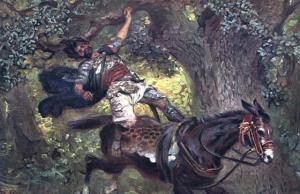
During the battle, Absalom happened to come upon some of David’s men. He tried to escape on his mule, but as he rode beneath the thick branches of a great tree, his hair got caught in the tree. His mule kept going and left him dangling in the air. One of David’s men saw what had happened and told Joab, “I saw Absalom dangling from a great tree.”
“What?” Joab demanded. “You saw him there and didn’t kill him? I would have rewarded you with ten pieces of silver and a hero’s belt!”
“I would not kill the king’s son for even a thousand pieces of silver,” the man replied to Joab. “We all heard the king say to you and Abishai and Ittai, ‘For my sake, please spare young Absalom.’ And if I had betrayed the king by killing his son—and the king would certainly find out who did it—you yourself would be the first to abandon me.”
“Enough of this nonsense,” Joab said. Then he took three daggers and plunged them into Absalom’s heart as he dangled, still alive, in the great tree. Ten of Joab’s young armor bearers then surrounded Absalom and killed him.
Then Joab blew the ram’s horn, and his men returned from chasing the army of Israel. They threw Absalom’s body into a deep pit in the forest and piled a great heap of stones over it. And all Israel fled to their homes.
During his lifetime, Absalom had built a monument to himself in the King’s Valley, for he said, “I have no son to carry on my name.” He named the monument after himself, and it is known as Absalom’s Monument to this day.
David Mourns Absalom’s Death
Then Zadok’s son Ahimaaz said, “Let me run to the king with the good news that the Lord has rescued him from his enemies.”
“No,” Joab told him, “it wouldn’t be good news to the king that his son is dead. You can be my messenger another time, but not today.”
Then Joab said to a man from Ethiopia, “Go tell the king what you have seen.” The man bowed and ran off.
But Ahimaaz continued to plead with Joab, “Whatever happens, please let me go, too.”
“Why should you go, my son?” Joab replied. “There will be no reward for your news.”
“Yes, but let me go anyway,” he begged.
Joab finally said, “All right, go ahead.” So Ahimaaz took the less demanding route by way of the plain and ran to Mahanaim ahead of the Ethiopian.
While David was sitting between the inner and outer gates of the town, the watchman climbed to the roof of the gateway by the wall. As he looked, he saw a lone man running toward them. He shouted the news down to David, and the king replied, “If he is alone, he has news.”
As the messenger came closer, the watchman saw another man running toward them. He shouted down, “Here comes another one!”
The king replied, “He also will have news.”
“The first man runs like Ahimaaz son of Zadok,” the watchman said.
“He is a good man and comes with good news,” the king replied.
Then Ahimaaz cried out to the king, “Everything is all right!” He bowed before the king with his face to the ground and said, “Praise to the Lord your God, who has handed over the rebels who dared to stand against my lord the king.”
“What about young Absalom?” the king demanded. “Is he all right?”
Ahimaaz replied, “When Joab told me to come, there was a lot of commotion. But I didn’t know what was happening.”
“Wait here,” the king told him. So Ahimaaz stepped aside.
Then the man from Ethiopia arrived and said, “I have good news for my lord the king. Today the Lord has rescued you from all those who rebelled against you.”
“What about young Absalom?” the king demanded. “Is he all right?”
And the Ethiopian replied, “May all of your enemies, my lord the king, both now and in the future, share the fate of that young man!”
The king was overcome with emotion. He went up to the room over the gateway and burst into tears. And as he went, he cried, “O my son Absalom! My son, my son Absalom! If only I had died instead of you! O Absalom, my son, my son.”
Joab Rebukes the King
2 Samuel 19 (NLT)
Word soon reached Joab that the king was weeping and mourning for Absalom. As all the people heard of the king’s deep grief for his son, the joy of that day’s victory was turned into deep sadness. They crept back into the town that day as though they were ashamed and had deserted in battle. The king covered his face with his hands and kept on crying, “O my son Absalom! O Absalom, my son, my son!”
Then Joab went to the king’s room and said to him, “We saved your life today and the lives of your sons, your daughters, and your wives and concubines. Yet you act like this, making us feel ashamed of ourselves. You seem to love those who hate you and hate those who love you. You have made it clear today that your commanders and troops mean nothing to you. It seems that if Absalom had lived and all of us had died, you would be pleased. Now go out there and congratulate your troops, for I swear by the Lord that if you don’t go out, not a single one of them will remain here tonight. Then you will be worse off than ever before.”
So the king went out and took his seat at the town gate, and as the news spread throughout the town that he was there, everyone went to him.
Meanwhile, the Israelites who had supported Absalom fled to their homes. And throughout all the tribes of Israel there was much discussion and argument going on. The people were saying, “The king rescued us from our enemies and saved us from the Philistines, but Absalom chased him out of the country. Now Absalom, whom we anointed to rule over us, is dead. Why not ask David to come back and be our king again?”
Then King David sent Zadok and Abiathar, the priests, to say to the elders of Judah, “Why are you the last ones to welcome back the king into his palace? For I have heard that all Israel is ready. You are my relatives, my own tribe, my own flesh and blood! So why are you the last ones to welcome back the king?” And David told them to tell Amasa, “Since you are my own flesh and blood, like Joab, may God strike me and even kill me if I do not appoint you as commander of my army in his place.”
Then Amasa convinced all the men of Judah, and they responded unanimously. They sent word to the king, “Return to us, and bring back all who are with you.”
David’s Return to Jerusalem
So the king started back to Jerusalem. And when he arrived at the Jordan River, the people of Judah came to Gilgal to meet him and escort him across the river. Shimei son of Gera, the man from Bahurim in Benjamin, hurried across with the men of Judah to welcome King David. A thousand other men from the tribe of Benjamin were with him, including Ziba, the chief servant of the house of Saul, and Ziba’s fifteen sons and twenty servants. They rushed down to the Jordan to meet the king. They crossed the shallows of the Jordan to bring the king’s household across the river, helping him in every way they could.
David’s Mercy to Shimei
As the king was about to cross the river, Shimei fell down before him. “My lord the king, please forgive me,” he pleaded. “Forget the terrible thing your servant did when you left Jerusalem. May the king put it out of his mind. I know how much I sinned. That is why I have come here today, the very first person in all Israel to greet my lord the king.”
Then Abishai son of Zeruiah said, “Shimei should die, for he cursed the Lord’s anointed king!”
“Who asked your opinion, you sons of Zeruiah!” David exclaimed. “Why have you become my adversary today? This is not a day for execution, for today I am once again the king of Israel!” Then, turning to Shimei, David vowed, “Your life will be spared.”
David’s Kindness to Mephibosheth
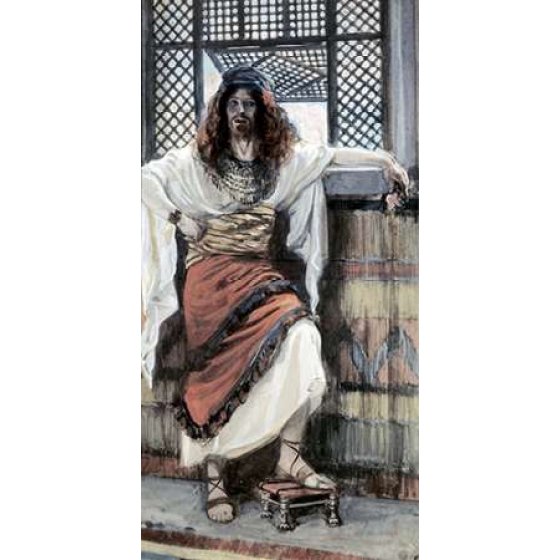
Now Mephibosheth, Saul’s grandson, came down from Jerusalem to meet the king. He had not cared for his feet, trimmed his beard, or washed his clothes since the day the king left Jerusalem. “Why didn’t you come with me, Mephibosheth?” the king asked him.
Mephibosheth replied, “My lord the king, my servant Ziba deceived me. I told him, ‘Saddle my donkey so I can go with the king.’ For as you know I am crippled. Ziba has slandered me by saying that I refused to come. But I know that my lord the king is like an angel of God, so do what you think is best. All my relatives and I could expect only death from you, my lord, but instead you have honored me by allowing me to eat at your own table! What more can I ask?”
“You’ve said enough,” David replied. “I’ve decided that you and Ziba will divide your land equally between you.”
“Give him all of it,” Mephibosheth said. “I am content just to have you safely back again, my lord the king!”
David’s Kindness to Barzillai
Barzillai of Gilead had come down from Rogelim to escort the king across the Jordan. He was very old—eighty years of age—and very wealthy. He was the one who had provided food for the king during his stay in Mahanaim. “Come across with me and live in Jerusalem,” the king said to Barzillai. “I will take care of you there.”
“No,” he replied, “I am far too old to go with the king to Jerusalem. I am eighty years old today, and I can no longer enjoy anything. Food and wine are no longer tasty, and I cannot hear the singers as they sing. I would only be a burden to my lord the king. Just to go across the Jordan River with the king is all the honor I need! Then let me return again to die in my own town, where my father and mother are buried. But here is your servant, my son Kimham. Let him go with my lord the king and receive whatever you want to give him.”
“Good,” the king agreed. “Kimham will go with me, and I will help him in any way you would like. And I will do for you anything you want.” So all the people crossed the Jordan with the king. After David had blessed Barzillai and kissed him, Barzillai returned to his own home.
The king then crossed over to Gilgal, taking Kimham with him. All the troops of Judah and half the troops of Israel escorted the king on his way.
An Argument over the King
But all the men of Israel complained to the king, “The men of Judah stole the king and didn’t give us the honor of helping take you, your household, and all your men across the Jordan.”
The men of Judah replied, “The king is one of our own kinsmen. Why should this make you angry? We haven’t eaten any of the king’s food or received any special favors!”
“But there are ten tribes in Israel,” the others replied. “So we have ten times as much right to the king as you do. What right do you have to treat us with such contempt? Weren’t we the first to speak of bringing him back to be our king again?” The argument continued back and forth, and the men of Judah spoke even more harshly than the men of Israel.
__________
“When David Heard That Absolom Was Slain” – Thomas Tomkins
May the peace of the Lord Christ go with you, wherever He may send you. May He guide you through the wilderness, protect you through the storm. May He bring you home rejoicing at the wonders He has shown you. May He bring you home rejoicing once again into our doors.
__________
+ In the name of the Father, and the Son, and the Holy Spirit. Amen!


 For we were the first to travel all the way to Corinth with the Good News of Christ.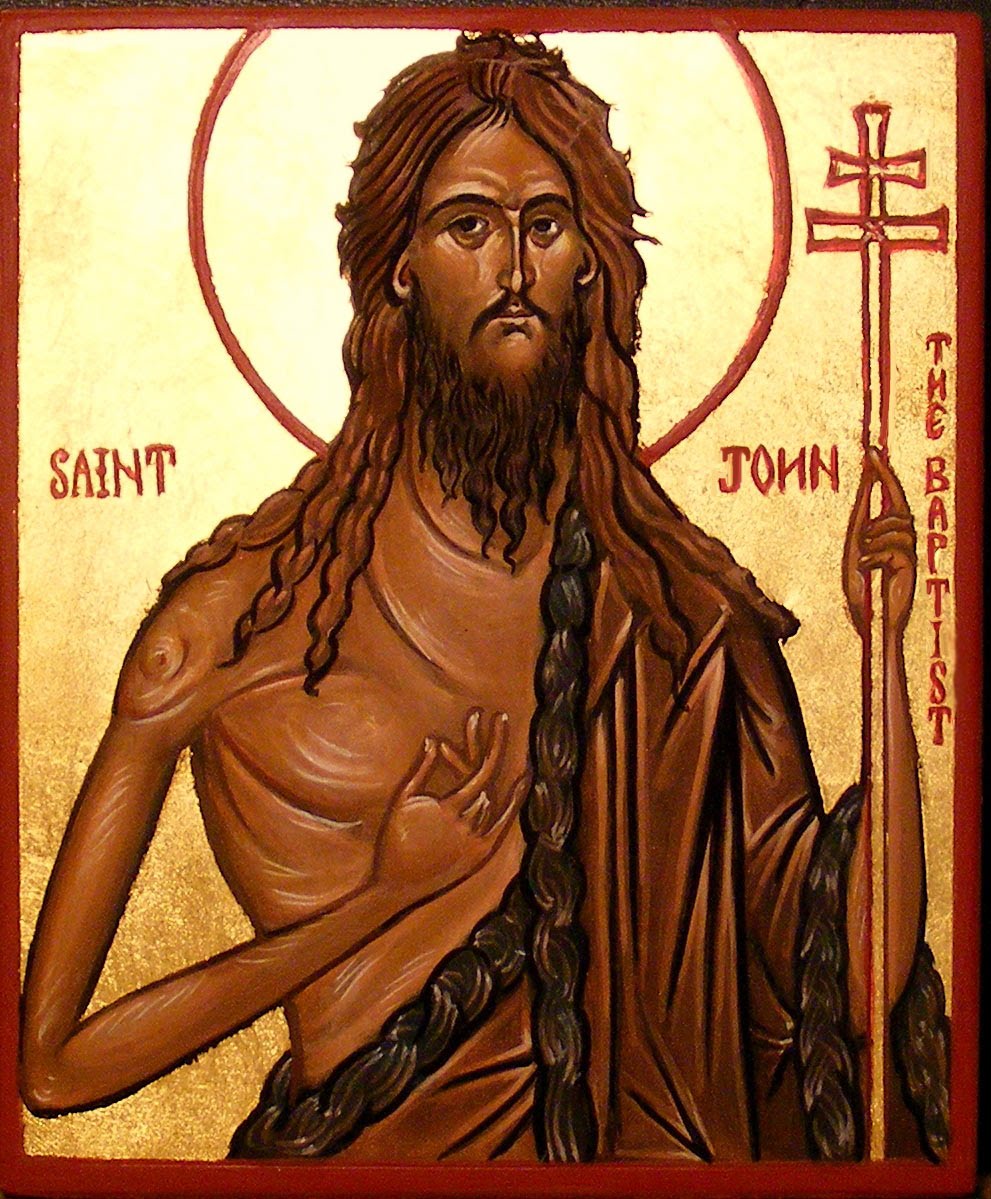












 The Peanut Gallery