One thing I have asked of the Lord, this is what I seek: that I may dwell in the house of the Lord all the days of my life; to behold the beauty of the Lord and to seek Him in His temple.
Praise to You, Lord Jesus Christ, King of endless glory.
Reading: Proverbs 4 (NLT)
A Father’s Wise Advice
Proverbs 4 (NLT) – My children, listen when your father corrects you. Pay attention and learn good judgment, for I am giving you good guidance. Don’t turn away from my instructions. For I, too, was once my father’s son, tenderly loved as my mother’s only child.
My father taught me,
“Take my words to heart. Follow my commands, and you will live. Get wisdom; develop good judgment. Don’t forget my words or turn away from them. Don’t turn your back on wisdom, for she will protect you. Love her, and she will guard you. Getting wisdom is the wisest thing you can do! And whatever else you do, develop good judgment. If you prize wisdom, she will make you great. Embrace her, and she will honor you. She will place a lovely wreath on your head; she will present you with a beautiful crown.”
My child, listen to me and do as I say, and you will have a long, good life. I will teach you wisdom’s ways and lead you in straight paths. When you walk, you won’t be held back; when you run, you won’t stumble. Take hold of my instructions; don’t let them go. Guard them, for they are the key to life.
Don’t do as the wicked do, and don’t follow the path of evildoers. Don’t even think about it; don’t go that way. Turn away and keep moving. For evil people can’t sleep until they’ve done their evil deed for the day. They can’t rest until they’ve caused someone to stumble. They eat the food of wickedness and drink the wine of violence!
The way of the righteous is like the first gleam of dawn, which shines ever brighter until the full light of day. But the way of the wicked is like total darkness. They have no idea what they are stumbling over.
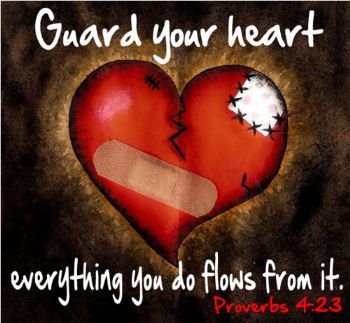
My child, pay attention to what I say. Listen carefully to my words. Don’t lose sight of them. Let them penetrate deep into your heart, for they bring life to those who find them, and healing to their whole body. Guard your heart above all else, for it determines the course of your life.
Avoid all perverse talk; stay away from corrupt speech.
Look straight ahead, and fix your eyes on what lies before you. Mark out a straight path for your feet; stay on the safe path. Don’t get sidetracked; keep your feet from following evil.
__________
May the peace of the Lord Christ go with you, wherever He may send you. May He guide you through the wilderness, protect you through the storm. May He bring you home rejoicing at the wonders He has shown you. May He bring you home rejoicing once again into our doors.
__________
+ In the name of the Father, and the Son, and the Holy Spirit. Amen!
One thing I have asked of the Lord, this is what I seek: that I may dwell in the house of the Lord all the days of my life; to behold the beauty of the Lord and to seek Him in His temple.
Praise to You, Lord Jesus Christ, King of endless glory.
Reading: 1 Kings 5-9 (NLT)
Preparations for Building the Temple
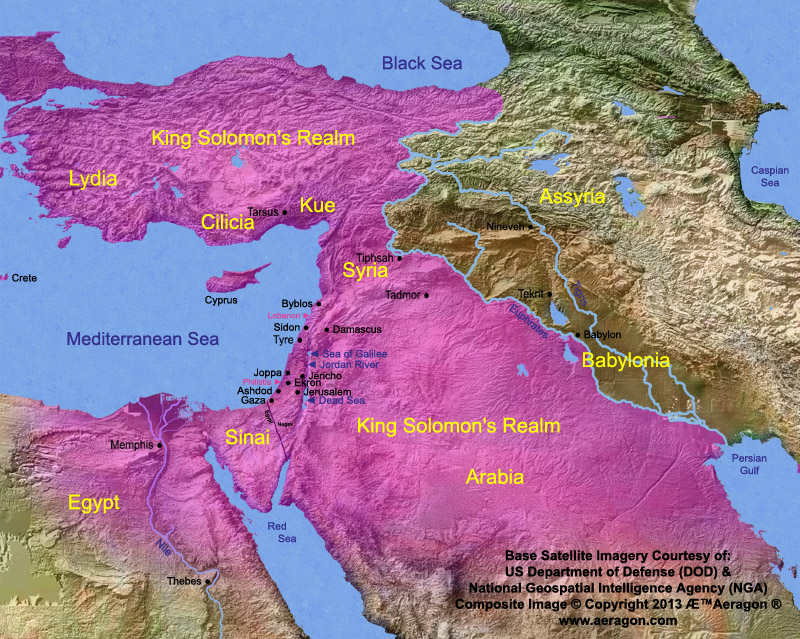
1 Kings 5 (NLT) – King Hiram of Tyre had always been a loyal friend of David. When Hiram learned that David’s son Solomon was the new king of Israel, he sent ambassadors to congratulate him.
Then Solomon sent this message back to Hiram:
“You know that my father, David, was not able to build a Temple to honor the name of the Lord his God because of the many wars waged against him by surrounding nations. He could not build until the Lord gave him victory over all his enemies. But now the Lord my God has given me peace on every side; I have no enemies, and all is well. So I am planning to build a Temple to honor the name of the Lord my God, just as he had instructed my father, David. For the Lord told him, ‘Your son, whom I will place on your throne, will build the Temple to honor my name.’
“Therefore, please command that cedars from Lebanon be cut for me. Let my men work alongside yours, and I will pay your men whatever wages you ask. As you know, there is no one among us who can cut timber like you Sidonians!”
When Hiram received Solomon’s message, he was very pleased and said, “Praise the Lord today for giving David a wise son to be king of the great nation of Israel.” Then he sent this reply to Solomon:
“I have received your message, and I will supply all the cedar and cypress timber you need. My servants will bring the logs from the Lebanon mountains to the Mediterranean Sea and make them into rafts and float them along the coast to whatever place you choose. Then we will break the rafts apart so you can carry the logs away. You can pay me by supplying me with food for my household.”
So Hiram supplied as much cedar and cypress timber as Solomon desired. In return, Solomon sent him an annual payment of 100,000 bushels of wheat for his household and 110,000 gallons of pure olive oil. So the Lord gave wisdom to Solomon, just as he had promised. And Hiram and Solomon made a formal alliance of peace.
Then King Solomon conscripted a labor force of 30,000 men from all Israel. He sent them to Lebanon in shifts, 10,000 every month, so that each man would be one month in Lebanon and two months at home. Adoniram was in charge of this labor force. Solomon also had 70,000 common laborers, 80,000 quarry workers in the hill country, and 3,600 foremen to supervise the work. At the king’s command, they quarried large blocks of high-quality stone and shaped them to make the foundation of the Temple. Men from the city of Gebal helped Solomon’s and Hiram’s builders prepare the timber and stone for the Temple.
Solomon Builds the Temple
1 Kings 6 (NLT) – It was in midspring, in the month of Ziv, during the fourth year of Solomon’s reign, that he began to construct the Temple of the Lord. This was 480 years after the people of Israel were rescued from their slavery in the land of Egypt.
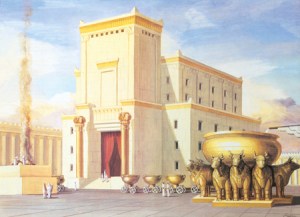
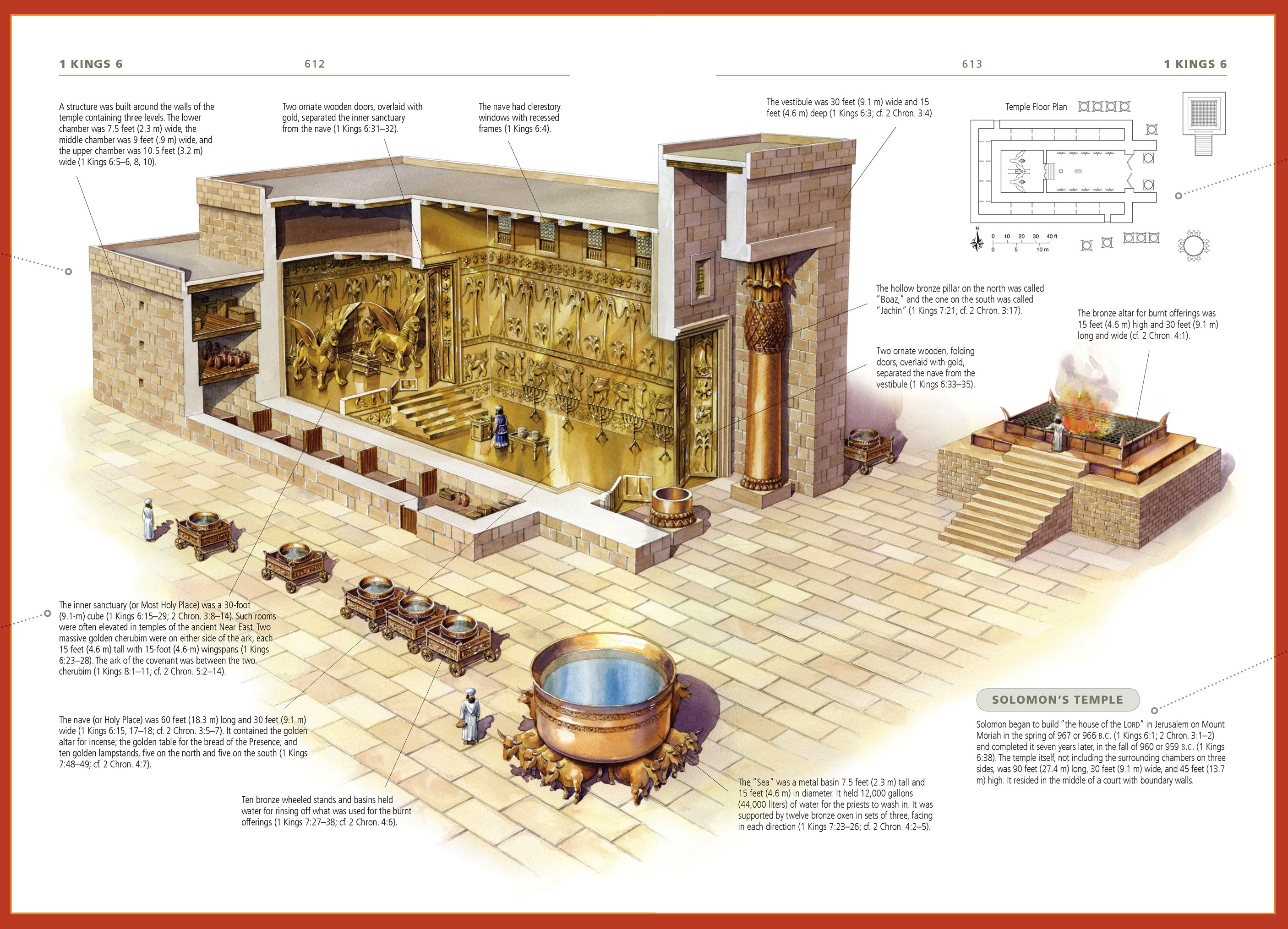
The Temple that King Solomon built for the Lord was 90 feet long, 30 feet wide, and 45 feet high. The entry room at the front of the Temple was 30 feet wide, running across the entire width of the Temple. It projected outward 15 feet from the front of the Temple. Solomon also made narrow recessed windows throughout the Temple.
He built a complex of rooms against the outer walls of the Temple, all the way around the sides and rear of the building. The complex was three stories high, the bottom floor being 7 1⁄2 feet wide, the second floor 9 feet wide, and the top floor 10 1⁄2 feet wide. The rooms were connected to the walls of the Temple by beams resting on ledges built out from the wall. So the beams were not inserted into the walls themselves.
The stones used in the construction of the Temple were finished at the quarry, so there was no sound of hammer, ax, or any other iron tool at the building site.
The entrance to the bottom floor was on the south side of the Temple. There were winding stairs going up to the second floor, and another flight of stairs between the second and third floors. After completing the Temple structure, Solomon put in a ceiling made of cedar beams and planks. As already stated, he built a complex of rooms along the sides of the building, attached to the Temple walls by cedar timbers. Each story of the complex was 7 1⁄2 feet high.
Then the Lord gave this message to Solomon: “Concerning this Temple you are building, if you keep all my decrees and regulations and obey all my commands, I will fulfill through you the promise I made to your father, David. I will live among the Israelites and will never abandon my people Israel.”
The Temple’s Interior
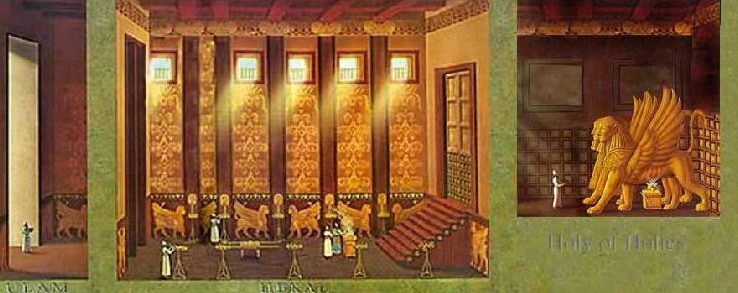
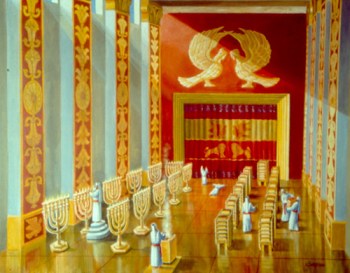
So Solomon finished building the Temple. The entire inside, from floor to ceiling, was paneled with wood. He paneled the walls and ceilings with cedar, and he used planks of cypress for the floors. He partitioned off an inner sanctuary—the Most Holy Place—at the far end of the Temple. It was 30 feet deep and was paneled with cedar from floor to ceiling. The main room of the Temple, outside the Most Holy Place, was 60 feet long. Cedar paneling completely covered the stone walls throughout the Temple, and the paneling was decorated with carvings of gourds and open flowers.
He prepared the inner sanctuary at the far end of the Temple, where the Ark of the Lord’s Covenant would be placed. This inner sanctuary was 30 feet long, 30 feet wide, and 30 feet high. He overlaid the inside with solid gold. He also overlaid the altar made of cedar. Then Solomon overlaid the rest of the Temple’s interior with solid gold, and he made gold chains to protect the entrance to the Most Holy Place. So he finished overlaying the entire Temple with gold, including the altar that belonged to the Most Holy Place.
He made two cherubim of wild olive wood, each 15 feet tall, and placed them in the inner sanctuary. The wingspan of each of the cherubim was 15 feet, each wing being 7 1⁄2 feet long. The two cherubim were identical in shape and size; 26 each was 15 feet tall. He placed them side by side in the inner sanctuary of the Temple. Their outspread wings reached from wall to wall, while their inner wings touched at the center of the room. He overlaid the two cherubim with gold.
He decorated all the walls of the inner sanctuary and the main room with carvings of cherubim, palm trees, and open flowers. He overlaid the floor in both rooms with gold.
For the entrance to the inner sanctuary, he made double doors of wild olive wood with five-sided doorposts. These double doors were decorated with carvings of cherubim, palm trees, and open flowers. The doors, including the decorations of cherubim and palm trees, were overlaid with gold.
Then he made four-sided doorposts of wild olive wood for the entrance to the Temple. There were two folding doors of cypress wood, and each door was hinged to fold back upon itself. These doors were decorated with carvings of cherubim, palm trees, and open flowers—all overlaid evenly with gold.
The walls of the inner courtyard were built so that there was one layer of cedar beams between every three layers of finished stone.
The foundation of the Lord’s Temple was laid in midspring, in the month of Ziv, during the fourth year of Solomon’s reign. The entire building was completed in every detail by midautumn, in the month of Bul, during the eleventh year of his reign. So it took seven years to build the Temple.
Solomon Builds His Palace
1 Kings 7 (NLT) – Solomon also built a palace for himself, and it took him thirteen years to complete the construction.
One of Solomon’s buildings was called the Palace of the Forest of Lebanon. It was 150 feet long, 75 feet wide, and 45 feet high. There were four rows of cedar pillars, and great cedar beams rested on the pillars. The hall had a cedar roof. Above the beams on the pillars were forty-five side rooms, arranged in three tiers of fifteen each. On each end of the long hall were three rows of windows facing each other. All the doorways and doorposts had rectangular frames and were arranged in sets of three, facing each other.
Solomon also built the Hall of Pillars, which was 75 feet long and 45 feet wide. There was a porch in front, along with a canopy supported by pillars.
Solomon also built the throne room, known as the Hall of Justice, where he sat to hear legal matters. It was paneled with cedar from floor to ceiling. Solomon’s living quarters surrounded a courtyard behind this hall, and they were constructed the same way. He also built similar living quarters for Pharaoh’s daughter, whom he had married.
From foundation to eaves, all these buildings were built from huge blocks of high-quality stone, cut with saws and trimmed to exact measure on all sides. Some of the huge foundation stones were 15 feet long, and some were 12 feet long. The blocks of high-quality stone used in the walls were also cut to measure, and cedar beams were also used. The walls of the great courtyard were built so that there was one layer of cedar beams between every three layers of finished stone, just like the walls of the inner courtyard of the Lord’s Temple with its entry room.
Furnishings for the Temple
King Solomon then asked for a man named Huram to come from Tyre. He was half Israelite, since his mother was a widow from the tribe of Naphtali, and his father had been a craftsman in bronze from Tyre. Huram was extremely skillful and talented in any work in bronze, and he came to do all the metal work for King Solomon.
Huram cast two bronze pillars, each 27 feet tall and 18 feet in circumference. For the tops of the pillars he cast bronze capitals, each 7 1⁄2 feet tall. Each capital was decorated with seven sets of latticework and interwoven chains. He also encircled the latticework with two rows of pomegranates to decorate the capitals over the pillars. The capitals on the columns inside the entry room were shaped like water lilies, and they were six feet tall. The capitals on the two pillars had 200 pomegranates in two rows around them, beside the rounded surface next to the latticework. Huram set the pillars at the entrance of the Temple, one toward the south and one toward the north. He named the one on the south Jakin, and the one on the north Boaz. The capitals on the pillars were shaped like water lilies. And so the work on the pillars was finished.
Then Huram cast a great round basin, 15 feet across from rim to rim, called the Sea. It was 7 1⁄2 feet deep and about 45 feet in circumference. It was encircled just below its rim by two rows of decorative gourds. There were about six gourds per foot all the way around, and they were cast as part of the basin.
The Sea was placed on a base of twelve bronze oxen, all facing outward. Three faced north, three faced west, three faced south, and three faced east, and the Sea rested on them. The walls of the Sea were about three inches thick, and its rim flared out like a cup and resembled a water lily blossom. It could hold about 11,000 gallons of water.
Huram also made ten bronze water carts, each 6 feet long, 6 feet wide, and 4 1⁄2 feet tall. They were constructed with side panels braced with crossbars. Both the panels and the crossbars were decorated with carved lions, oxen, and cherubim. Above and below the lions and oxen were wreath decorations. Each of these carts had four bronze wheels and bronze axles. There were supporting posts for the bronze basins at the corners of the carts; these supports were decorated on each side with carvings of wreaths. The top of each cart had a rounded frame for the basin. It projected 1 1⁄2 feet above the cart’s top like a round pedestal, and its opening was 2 1⁄4 feet across; it was decorated on the outside with carvings of wreaths. The panels of the carts were square, not round. Under the panels were four wheels that were connected to axles that had been cast as one unit with the cart. The wheels were 2 1⁄4 feet in diameter and were similar to chariot wheels. The axles, spokes, rims, and hubs were all cast from molten bronze.
There were handles at each of the four corners of the carts, and these, too, were cast as one unit with the cart. Around the top of each cart was a rim nine inches wide. The corner supports and side panels were cast as one unit with the cart. Carvings of cherubim, lions, and palm trees decorated the panels and corner supports wherever there was room, and there were wreaths all around. All ten water carts were the same size and were made alike, for each was cast from the same mold.
Huram also made ten smaller bronze basins, one for each cart. Each basin was six feet across and could hold 220 gallons of water. He set five water carts on the south side of the Temple and five on the north side. The great bronze basin called the Sea was placed near the southeast corner of the Temple. He also made the necessary washbasins, shovels, and bowls.
So at last Huram completed everything King Solomon had assigned him to make for the Temple of the Lord:
the two pillars;
the two bowl-shaped capitals on top of the pillars;
the two networks of interwoven chains that decorated the capitals;
the 400 pomegranates that hung from the chains on the capitals (two rows of pomegranates for each of the chain networks that decorated the capitals on top of the pillars);
the ten water carts holding the ten basins;
the Sea and the twelve oxen under it;
the ash buckets, the shovels, and the bowls.
Huram made all these things of burnished bronze for the Temple of the Lord, just as King Solomon had directed. The king had them cast in clay molds in the Jordan Valley between Succoth and Zarethan. Solomon did not weigh all these things because there were so many; the weight of the bronze could not be measured.
Solomon also made all the furnishings of the Temple of the Lord:
the gold altar;
the gold table for the Bread of the Presence;
the lampstands of solid gold, five on the south and five on the north, in front of the Most Holy Place;
the flower decorations, lamps, and tongs—all of gold;
the small bowls, lamp snuffers, bowls, ladles, and incense burners—all of solid gold;
the doors for the entrances to the Most Holy Place and the main room of the Temple, with their fronts overlaid with gold.
So King Solomon finished all his work on the Temple of the Lord. Then he brought all the gifts his father, David, had dedicated—the silver, the gold, and the various articles—and he stored them in the treasuries of the Lord’s Temple.
The Ark Brought to the Temple
1 Kings 8 (NLT) – Solomon then summoned to Jerusalem the elders of Israel and all the heads of the tribes—the leaders of the ancestral families of the Israelites. They were to bring the Ark of the Lord’s Covenant to the Temple from its location in the City of David, also known as Zion. So all the men of Israel assembled before King Solomon at the annual Festival of Shelters, which is held in early autumn in the month of Ethanim.
When all the elders of Israel arrived, the priests picked up the Ark. The priests and Levites brought up the Ark of the Lord along with the special tent and all the sacred items that had been in it. There, before the Ark, King Solomon and the entire community of Israel sacrificed so many sheep, goats, and cattle that no one could keep count!
Then the priests carried the Ark of the Lord’s Covenant into the inner sanctuary of the Temple—the Most Holy Place—and placed it beneath the wings of the cherubim. The cherubim spread their wings over the Ark, forming a canopy over the Ark and its carrying poles. These poles were so long that their ends could be seen from the Holy Place, which is in front of the Most Holy Place, but not from the outside. They are still there to this day. Nothing was in the Ark except the two stone tablets that Moses had placed in it at Mount Sinai, where the Lord made a covenant with the people of Israel when they left the land of Egypt.
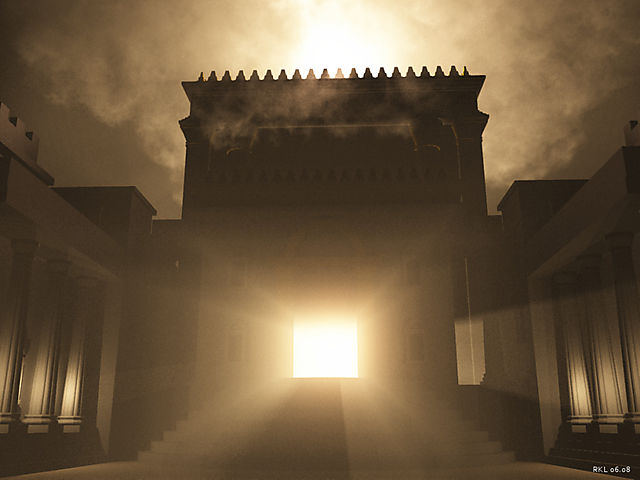
When the priests came out of the Holy Place, a thick cloud filled the Temple of the Lord. The priests could not continue their service because of the cloud, for the glorious presence of the Lord filled the Temple of the Lord.
Solomon Praises the Lord
Then Solomon prayed, “O Lord, you have said that you would live in a thick cloud of darkness. Now I have built a glorious Temple for you, a place where you can live forever!”
Then the king turned around to the entire community of Israel standing before him and gave this blessing: “Praise the Lord, the God of Israel, who has kept the promise he made to my father, David. For he told my father, ‘From the day I brought my people Israel out of Egypt, I have never chosen a city among any of the tribes of Israel as the place where a Temple should be built to honor my name. But I have chosen David to be king over my people Israel.’”
Then Solomon said, “My father, David, wanted to build this Temple to honor the name of the Lord, the God of Israel. But the Lord told him, ‘You wanted to build the Temple to honor my name. Your intention is good, but you are not the one to do it. One of your own sons will build the Temple to honor me.’
“And now the Lord has fulfilled the promise he made, for I have become king in my father’s place, and now I sit on the throne of Israel, just as the Lord promised. I have built this Temple to honor the name of the Lord, the God of Israel. And I have prepared a place there for the Ark, which contains the covenant that the Lord made with our ancestors when he brought them out of Egypt.”
Solomon’s Prayer of Dedication
Then Solomon stood before the altar of the Lord in front of the entire community of Israel. He lifted his hands toward heaven, and he prayed,
“O Lord, God of Israel, there is no God like you in all of heaven above or on the earth below. You keep your covenant and show unfailing love to all who walk before you in wholehearted devotion. You have kept your promise to your servant David, my father. You made that promise with your own mouth, and with your own hands you have fulfilled it today.
“And now, O Lord, God of Israel, carry out the additional promise you made to your servant David, my father. For you said to him, ‘If your descendants guard their behavior and faithfully follow me as you have done, one of them will always sit on the throne of Israel.’ Now, O God of Israel, fulfill this promise to your servant David, my father.
“But will God really live on earth? Why, even the highest heavens cannot contain you. How much less this Temple I have built! Nevertheless, listen to my prayer and my plea, O Lord my God. Hear the cry and the prayer that your servant is making to you today. May you watch over this Temple night and day, this place where you have said, ‘My name will be there.’ May you always hear the prayers I make toward this place. May you hear the humble and earnest requests from me and your people Israel when we pray toward this place. Yes, hear us from heaven where you live, and when you hear, forgive.
“If someone wrongs another person and is required to take an oath of innocence in front of your altar in this Temple, then hear from heaven and judge between your servants—the accuser and the accused. Punish the guilty as they deserve. Acquit the innocent because of their innocence.
“If your people Israel are defeated by their enemies because they have sinned against you, and if they turn to you and acknowledge your name and pray to you here in this Temple, then hear from heaven and forgive the sin of your people Israel and return them to this land you gave their ancestors.
“If the skies are shut up and there is no rain because your people have sinned against you, and if they pray toward this Temple and acknowledge your name and turn from their sins because you have punished them, then hear from heaven and forgive the sins of your servants, your people Israel. Teach them to follow the right path, and send rain on your land that you have given to your people as their special possession.
“If there is a famine in the land or a plague or crop disease or attacks of locusts or caterpillars, or if your people’s enemies are in the land besieging their towns—whatever disaster or disease there is—and if your people Israel pray about their troubles, raising their hands toward this Temple, then hear from heaven where you live, and forgive. Give your people what their actions deserve, for you alone know each human heart. Then they will fear you as long as they live in the land you gave to our ancestors.
“In the future, foreigners who do not belong to your people Israel will hear of you. They will come from distant lands because of your name, for they will hear of your great name and your strong hand and your powerful arm. And when they pray toward this Temple, then hear from heaven where you live, and grant what they ask of you. In this way, all the people of the earth will come to know and fear you, just as your own people Israel do. They, too, will know that this Temple I have built honors your name.
“If your people go out where you send them to fight their enemies, and if they pray to the Lord by turning toward this city you have chosen and toward this Temple I have built to honor your name, then hear their prayers from heaven and uphold their cause.
“If they sin against you—and who has never sinned?—you might become angry with them and let their enemies conquer them and take them captive to their land far away or near. But in that land of exile, they might turn to you in repentance and pray, ‘We have sinned, done evil, and acted wickedly.’ If they turn to you with their whole heart and soul in the land of their enemies and pray toward the land you gave to their ancestors—toward this city you have chosen, and toward this Temple I have built to honor your name—then hear their prayers and their petition from heaven where you live, and uphold their cause. Forgive your people who have sinned against you. Forgive all the offenses they have committed against you. Make their captors merciful to them, for they are your people—your special possession—whom you brought out of the iron-smelting furnace of Egypt.
“May your eyes be open to my requests and to the requests of your people Israel. May you hear and answer them whenever they cry out to you. For when you brought our ancestors out of Egypt, O Sovereign Lord, you told your servant Moses that you had set Israel apart from all the nations of the earth to be your own special possession.”
The Dedication of the Temple
When Solomon finished making these prayers and petitions to the Lord, he stood up in front of the altar of the Lord, where he had been kneeling with his hands raised toward heaven. He stood and in a loud voice blessed the entire congregation of Israel:
“Praise the Lord who has given rest to his people Israel, just as he promised. Not one word has failed of all the wonderful promises he gave through his servant Moses. May the Lord our God be with us as he was with our ancestors; may he never leave us or abandon us. May he give us the desire to do his will in everything and to obey all the commands, decrees, and regulations that he gave our ancestors. And may these words that I have prayed in the presence of the Lord be before him constantly, day and night, so that the Lord our God may give justice to me and to his people Israel, according to each day’s needs. Then people all over the earth will know that the Lord alone is God and there is no other. And may you be completely faithful to the Lord our God. May you always obey his decrees and commands, just as you are doing today.”
Then the king and all Israel with him offered sacrifices to the Lord. Solomon offered to the Lord a peace offering of 22,000 cattle and 120,000 sheep and goats. And so the king and all the people of Israel dedicated the Temple of the Lord.
That same day the king consecrated the central area of the courtyard in front of the Lord’s Temple. He offered burnt offerings, grain offerings, and the fat of peace offerings there, because the bronze altar in the Lord’s presence was too small to hold all the burnt offerings, grain offerings, and the fat of the peace offerings.
Then Solomon and all Israel celebrated the Festival of Shelters in the presence of the Lord our God. A large congregation had gathered from as far away as Lebo-hamath in the north and the Brook of Egypt in the south. The celebration went on for fourteen days in all—seven days for the dedication of the altar and seven days for the Festival of Shelters. After the festival was over,[aw] Solomon sent the people home. They blessed the king and went to their homes joyful and glad because the Lord had been good to his servant David and to his people Israel.
The Lord’s Response to Solomon
1 Kings 9 (NLT) – So Solomon finished building the Temple of the Lord, as well as the royal palace. He completed everything he had planned to do. Then the Lord appeared to Solomon a second time, as he had done before at Gibeon. The Lord said to him,
“I have heard your prayer and your petition. I have set this Temple apart to be holy—this place you have built where my name will be honored forever. I will always watch over it, for it is dear to my heart.
“As for you, if you will follow me with integrity and godliness, as David your father did, obeying all my commands, decrees, and regulations, then I will establish the throne of your dynasty over Israel forever. For I made this promise to your father, David: ‘One of your descendants will always sit on the throne of Israel.’
“But if you or your descendants abandon me and disobey the commands and decrees I have given you, and if you serve and worship other gods, then I will uproot Israel from this land that I have given them. I will reject this Temple that I have made holy to honor my name. I will make Israel an object of mockery and ridicule among the nations. And though this Temple is impressive now, all who pass by will be appalled and will gasp in horror. They will ask, ‘Why did the Lord do such terrible things to this land and to this Temple?’
“And the answer will be, ‘Because his people abandoned the Lord their God, who brought their ancestors out of Egypt, and they worshiped other gods instead and bowed down to them. That is why the Lord has brought all these disasters on them.’”
Solomon’s Agreement with Hiram
It took Solomon twenty years to build the Lord’s Temple and his own royal palace. At the end of that time, he gave twenty towns in the land of Galilee to King Hiram of Tyre. (Hiram had previously provided all the cedar and cypress timber and gold that Solomon had requested.) But when Hiram came from Tyre to see the towns Solomon had given him, he was not at all pleased with them. “What kind of towns are these, my brother?” he asked. So Hiram called that area Cabul (which means “worthless”), as it is still known today. Nevertheless, Hiram paid Solomon 9,000 pounds of gold.
Solomon’s Many Achievements
This is the account of the forced labor that King Solomon conscripted to build the Lord’s Temple, the royal palace, the supporting terraces, the wall of Jerusalem, and the cities of Hazor, Megiddo, and Gezer. (Pharaoh, the king of Egypt, had attacked and captured Gezer, killing the Canaanite population and burning it down. He gave the city to his daughter as a wedding gift when she married Solomon. So Solomon rebuilt the city of Gezer.) He also built up the towns of Lower Beth-horon, Baalath, and Tamar in the wilderness within his land. He built towns as supply centers and constructed towns where his chariots and horses could be stationed. He built everything he desired in Jerusalem and Lebanon and throughout his entire realm.
There were still some people living in the land who were not Israelites, including Amorites, Hittites, Perizzites, Hivites, and Jebusites. These were descendants of the nations whom the people of Israel had not completely destroyed. So Solomon conscripted them as slaves, and they serve as forced laborers to this day. But Solomon did not conscript any of the Israelites for forced labor. Instead, he assigned them to serve as fighting men, government officials, officers and captains in his army, commanders of his chariots, and charioteers. Solomon appointed 550 of them to supervise the people working on his various projects.
Solomon moved his wife, Pharaoh’s daughter, from the City of David to the new palace he had built for her. Then he constructed the supporting terraces.
Three times each year Solomon presented burnt offerings and peace offerings on the altar he had built for the Lord. He also burned incense to the Lord. And so he finished the work of building the Temple.
King Solomon also built a fleet of ships at Ezion-geber, a port near Elath in the land of Edom, along the shore of the Red Sea. Hiram sent experienced crews of sailors to sail the ships with Solomon’s men. They sailed to Ophir and brought back to Solomon some sixteen tons of gold.
__________
May the peace of the Lord Christ go with you, wherever He may send you. May He guide you through the wilderness, protect you through the storm. May He bring you home rejoicing at the wonders He has shown you. May He bring you home rejoicing once again into our doors.
__________
+ In the name of the Father, and the Son, and the Holy Spirit. Amen!
One thing I have asked of the Lord, this is what I seek: that I may dwell in the house of the Lord all the days of my life; to behold the beauty of the Lord and to seek Him in His temple.
Praise to You, Lord Jesus Christ, King of endless glory.
Reading: Exodus 37-40 (NLT)
Building the Ark of the Covenant
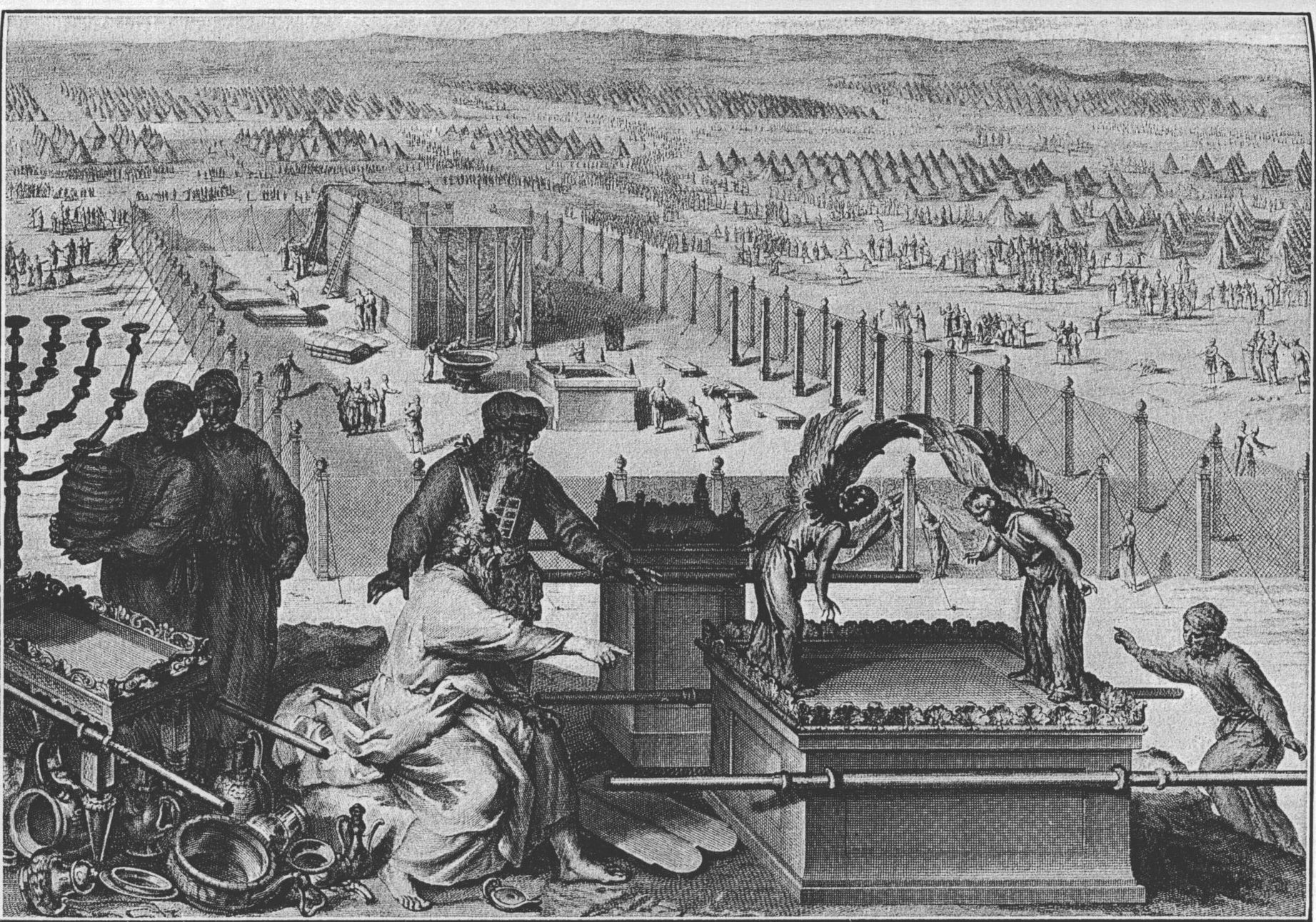
Exodus 37 (NLT) – Next Bezalel made the Ark of acacia wood—a sacred chest 45 inches long, 27 inches wide, and 27 inches high. He overlaid it inside and outside with pure gold, and he ran a molding of gold all around it. He cast four gold rings and attached them to its four feet, two rings on each side. Then he made poles from acacia wood and overlaid them with gold. He inserted the poles into the rings at the sides of the Ark to carry it.
Then he made the Ark’s cover—the place of atonement—from pure gold. It was 45 inches long and 27 inches wide. He made two cherubim from hammered gold and placed them on the two ends of the atonement cover. He molded the cherubim on each end of the atonement cover, making it all of one piece of gold. The cherubim faced each other and looked down on the atonement cover. With their wings spread above it, they protected it.
Building the Table
Then Bezalel made the table of acacia wood, 36 inches long, 18 inches wide, and 27 inches high. He overlaid it with pure gold and ran a gold molding around the edge. He decorated it with a 3-inch border all around, and he ran a gold molding along the border. Then he cast four gold rings for the table and attached them at the four corners next to the four legs. The rings were attached near the border to hold the poles that were used to carry the table. He made these poles from acacia wood and overlaid them with gold. Then he made special containers of pure gold for the table—bowls, ladles, jars, and pitchers—to be used in pouring out liquid offerings.
Building the Lampstand
Then Bezalel made the lampstand of pure, hammered gold. He made the entire lampstand and its decorations of one piece—the base, center stem, lamp cups, buds, and petals. The lampstand had six branches going out from the center stem, three on each side. Each of the six branches had three lamp cups shaped like almond blossoms, complete with buds and petals. The center stem of the lampstand was crafted with four lamp cups shaped like almond blossoms, complete with buds and petals. There was an almond bud beneath each pair of branches where the six branches extended from the center stem, all made of one piece. The almond buds and branches were all of one piece with the center stem, and they were hammered from pure gold.
He also made seven lamps for the lampstand, lamp snuffers, and trays, all of pure gold. The entire lampstand, along with its accessories, was made from 75 pounds of pure gold.
Building the Incense Altar
Then Bezalel made the incense altar of acacia wood. It was 18 inches square and 36 inches high, with horns at the corners carved from the same piece of wood as the altar itself. He overlaid the top, sides, and horns of the altar with pure gold, and he ran a gold molding around the entire altar. He made two gold rings and attached them on opposite sides of the altar below the gold molding to hold the carrying poles. He made the poles of acacia wood and overlaid them with gold.
Then he made the sacred anointing oil and the fragrant incense, using the techniques of a skilled incense maker.
Building the Altar of Burnt Offering
Exodus 38 (NLT) – Next Bezalel used acacia wood to construct the square altar of burnt offering. It was 7 1⁄2 feet wide, 7 1⁄2 feet long, and 4 1⁄2 feet high. He made horns for each of its four corners so that the horns and altar were all one piece. He overlaid the altar with bronze. Then he made all the altar utensils of bronze—the ash buckets, shovels, basins, meat forks, and firepans. Next he made a bronze grating and installed it halfway down the side of the altar, under the ledge. He cast four rings and attached them to the corners of the bronze grating to hold the carrying poles. He made the poles from acacia wood and overlaid them with bronze. He inserted the poles through the rings on the sides of the altar. The altar was hollow and was made from planks.
Building the Washbasin
Bezalel made the bronze washbasin and its bronze stand from bronze mirrors donated by the women who served at the entrance of the Tabernacle.
Building the Courtyard
Then Bezalel made the courtyard, which was enclosed with curtains made of finely woven linen. On the south side the curtains were 150 feet long. They were held up by twenty posts set securely in twenty bronze bases. He hung the curtains with silver hooks and rings. He made a similar set of curtains for the north side—150 feet of curtains held up by twenty posts set securely in bronze bases. He hung the curtains with silver hooks and rings. The curtains on the west end of the courtyard were 75 feet long, hung with silver hooks and rings and supported by ten posts set into ten bases. The east end, the front, was also 75 feet long.
The courtyard entrance was on the east end, flanked by two curtains. The curtain on the right side was 22 1⁄2 feet long and was supported by three posts set into three bases. The curtain on the left side was also 22 1⁄2 feet long and was supported by three posts set into three bases. All the curtains used in the courtyard were made of finely woven linen. Each post had a bronze base, and all the hooks and rings were silver. The tops of the posts of the courtyard were overlaid with silver, and the rings to hold up the curtains were made of silver.
He made the curtain for the entrance to the courtyard of finely woven linen, and he decorated it with beautiful embroidery in blue, purple, and scarlet thread. It was 30 feet long, and its height was 7 1⁄2 feet, just like the curtains of the courtyard walls. It was supported by four posts, each set securely in its own bronze base. The tops of the posts were overlaid with silver, and the hooks and rings were also made of silver.
All the tent pegs used in the Tabernacle and courtyard were made of bronze.
Inventory of Materials
This is an inventory of the materials used in building the Tabernacle of the Covenant. The Levites compiled the figures, as Moses directed, and Ithamar son of Aaron the priest served as recorder. Bezalel son of Uri, grandson of Hur, of the tribe of Judah, made everything just as the Lord had commanded Moses. He was assisted by Oholiab son of Ahisamach, of the tribe of Dan, a craftsman expert at engraving, designing, and embroidering with blue, purple, and scarlet thread on fine linen cloth.
The people brought special offerings of gold totaling 2,193 pounds, as measured by the weight of the sanctuary shekel. This gold was used throughout the Tabernacle.
The whole community of Israel gave 7,545 pounds of silver, as measured by the weight of the sanctuary shekel. This silver came from the tax collected from each man registered in the census. (The tax is one beka, which is half a shekel, based on the sanctuary shekel.) The tax was collected from 603,550 men who had reached their twentieth birthday. The hundred bases for the frames of the sanctuary walls and for the posts supporting the inner curtain required 7,500 pounds of silver, about 75 pounds for each base. The remaining 45 pounds of silver was used to make the hooks and rings and to overlay the tops of the posts.
The people also brought as special offerings 5,310 pounds of bronze, which was used for casting the bases for the posts at the entrance to the Tabernacle, and for the bronze altar with its bronze grating and all the altar utensils. Bronze was also used to make the bases for the posts that supported the curtains around the courtyard, the bases for the curtain at the entrance of the courtyard, and all the tent pegs for the Tabernacle and the courtyard.
Clothing for the Priests
Exodus 39 (NLT) – The craftsmen made beautiful sacred garments of blue, purple, and scarlet cloth—clothing for Aaron to wear while ministering in the Holy Place, just as the Lord had commanded Moses.
Making the Ephod
Bezalel made the ephod of finely woven linen and embroidered it with gold and with blue, purple, and scarlet thread. He made gold thread by hammering out thin sheets of gold and cutting it into fine strands. With great skill and care, he worked it into the fine linen with the blue, purple, and scarlet thread.
The ephod consisted of two pieces, front and back, joined at the shoulders with two shoulder-pieces. The decorative sash was made of the same materials: finely woven linen embroidered with gold and with blue, purple, and scarlet thread, just as the Lord had commanded Moses. They mounted the two onyx stones in settings of gold filigree. The stones were engraved with the names of the tribes of Israel, just as a seal is engraved. He fastened these stones on the shoulder-pieces of the ephod as a reminder that the priest represents the people of Israel. All this was done just as the Lord had commanded Moses.
Making the Chestpiece
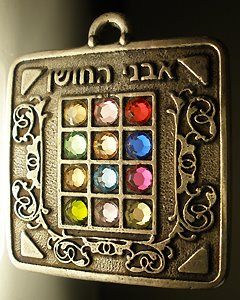
Bezalel made the chestpiece with great skill and care. He made it to match the ephod, using finely woven linen embroidered with gold and with blue, purple, and scarlet thread. He made the chestpiece of a single piece of cloth folded to form a pouch nine inches square. They mounted four rows of gemstones on it. The first row contained a red carnelian, a pale-green peridot, and an emerald. The second row contained a turquoise, a blue lapis lazuli, and a white moonstone. The third row contained an orange jacinth, an agate, and a purple amethyst. The fourth row contained a blue-green beryl, an onyx, and a green jasper. All these stones were set in gold filigree. Each stone represented one of the twelve sons of Israel, and the name of that tribe was engraved on it like a seal.
To attach the chestpiece to the ephod, they made braided cords of pure gold thread. They also made two settings of gold filigree and two gold rings and attached them to the top corners of the chestpiece. They tied the two gold cords to the rings on the chestpiece. They tied the other ends of the cords to the gold settings on the shoulder-pieces of the ephod. Then they made two more gold rings and attached them to the inside edges of the chestpiece next to the ephod. Then they made two more gold rings and attached them to the front of the ephod, below the shoulder-pieces, just above the knot where the decorative sash was fastened to the ephod. They attached the bottom rings of the chestpiece to the rings on the ephod with blue cords. In this way, the chestpiece was held securely to the ephod above the decorative sash. All this was done just as the Lord had commanded Moses.
Additional Clothing for the Priests
Bezalel made the robe that is worn with the ephod from a single piece of blue woven cloth, with an opening for Aaron’s head in the middle of it. The opening was reinforced with a woven collar so it would not tear. They made pomegranates of blue, purple, and scarlet yarn, and attached them to the hem of the robe. They also made bells of pure gold and placed them between the pomegranates along the hem of the robe, with bells and pomegranates alternating all around the hem. This robe was to be worn whenever the priest ministered before the Lord, just as the Lord had commanded Moses.
They made tunics for Aaron and his sons from fine linen cloth. The turban and the special head coverings were made of fine linen, and the undergarments were also made of finely woven linen. The sashes were made of finely woven linen and embroidered with blue, purple, and scarlet thread, just as the Lord had commanded Moses.
Finally, they made the sacred medallion—the badge of holiness—of pure gold. They engraved it like a seal with these words: Holy to the lord. They attached the medallion with a blue cord to Aaron’s turban, just as the Lord had commanded Moses.
Moses Inspects the Work
And so at last the Tabernacle was finished. The Israelites had done everything just as the Lord had commanded Moses. And they brought the entire Tabernacle to Moses:
the sacred tent with all its furnishings, clasps, frames, crossbars, posts, and bases;
the tent coverings of tanned ram skins and fine goatskin leather;
the inner curtain to shield the Ark;
the Ark of the Covenant[ and its carrying poles;
the Ark’s cover—the place of atonement;
the table and all its utensils;
the Bread of the Presence;
the pure gold lampstand with its symmetrical lamp cups, all its accessories, and the olive oil for lighting;
the gold altar;
the anointing oil and fragrant incense;
the curtain for the entrance of the sacred tent;
the bronze altar;
the bronze grating and its carrying poles and utensils;
the washbasin with its stand;
the curtains for the walls of the courtyard;
the posts and their bases;
the curtain for the entrance to the courtyard;
the ropes and tent pegs;
all the furnishings to be used in worship at the Tabernacle;
the beautifully stitched garments for the priests to wear while ministering in the Holy Place—the sacred garments for Aaron the priest, and the garments for his sons to wear as they minister as priests.
So the people of Israel followed all of the Lord’s instructions to Moses. Then Moses inspected all their work. When he found it had been done just as the Lord had commanded him, he blessed them.
The Tabernacle Completed
Exodus 40 (NLT) – Then the Lord said to Moses, “Set up the Tabernacle on the first day of the new year. Place the Ark of the Covenant[ inside, and install the inner curtain to enclose the Ark within the Most Holy Place. Then bring in the table, and arrange the utensils on it. And bring in the lampstand, and set up the lamps.
“Place the gold incense altar in front of the Ark of the Covenant. Then hang the curtain at the entrance of the Tabernacle. Place the altar of burnt offering in front of the Tabernacle entrance. Set the washbasin between the Tabernacle and the altar, and fill it with water. Then set up the courtyard around the outside of the tent, and hang the curtain for the courtyard entrance.
“Take the anointing oil and anoint the Tabernacle and all its furnishings to consecrate them and make them holy. Anoint the altar of burnt offering and its utensils to consecrate them. Then the altar will become absolutely holy. Next anoint the washbasin and its stand to consecrate them.
“Present Aaron and his sons at the entrance of the Tabernacle, and wash them with water. Dress Aaron with the sacred garments and anoint him, consecrating him to serve me as a priest. Then present his sons and dress them in their tunics. Anoint them as you did their father, so they may also serve me as priests. With their anointing, Aaron’s descendants are set apart for the priesthood forever, from generation to generation.”
Moses proceeded to do everything just as the Lord had commanded him. So the Tabernacle was set up on the first day of the first month of the second year. Moses erected the Tabernacle by setting down its bases, inserting the frames, attaching the crossbars, and setting up the posts. Then he spread the coverings over the Tabernacle framework and put on the protective layers, just as the Lord had commanded him.
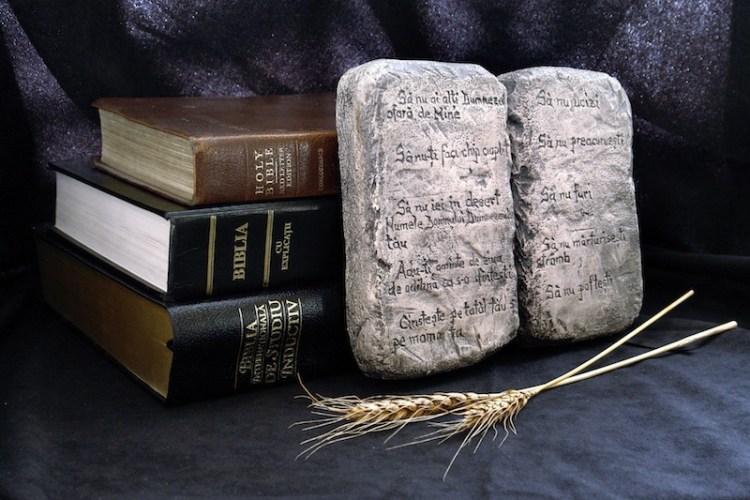
He took the stone tablets inscribed with the terms of the covenant and placed them inside the Ark. Then he attached the carrying poles to the Ark, and he set the Ark’s cover—the place of atonement—on top of it. Then he brought the Ark of the Covenant into the Tabernacle and hung the inner curtain to shield it from view, just as the Lord had commanded him.
Next Moses placed the table in the Tabernacle, along the north side of the Holy Place, just outside the inner curtain. And he arranged the Bread of the Presence on the table before the Lord, just as the Lord had commanded him.
He set the lampstand in the Tabernacle across from the table on the south side of the Holy Place. Then he lit the lamps in the Lord’s presence, just as the Lord had commanded him. He also placed the gold incense altar in the Tabernacle, in the Holy Place in front of the inner curtain. On it he burned the fragrant incense, just as the Lord had commanded him.
He hung the curtain at the entrance of the Tabernacle, and he placed the altar of burnt offering near the Tabernacle entrance. On it he offered a burnt offering and a grain offering, just as the Lord had commanded him.
Next Moses placed the washbasin between the Tabernacle and the altar. He filled it with water so the priests could wash themselves. Moses and Aaron and Aaron’s sons used water from it to wash their hands and feet. Whenever they approached the altar and entered the Tabernacle, they washed themselves, just as the Lord had commanded Moses.
Then he hung the curtains forming the courtyard around the Tabernacle and the altar. And he set up the curtain at the entrance of the courtyard. So at last Moses finished the work.
The Lord’s Glory Fills the Tabernacle
Then the cloud covered the Tabernacle, and the glory of the Lord filled the Tabernacle. Moses could no longer enter the Tabernacle because the cloud had settled down over it, and the glory of the Lord filled the Tabernacle.
Now whenever the cloud lifted from the Tabernacle, the people of Israel would set out on their journey, following it. But if the cloud did not rise, they remained where they were until it lifted. The cloud of the Lord hovered over the Tabernacle during the day, and at night fire glowed inside the cloud so the whole family of Israel could see it. This continued throughout all their journeys.
__________
May the peace of the Lord Christ go with you, wherever He may send you. May He guide you through the wilderness, protect you through the storm. May He bring you home rejoicing at the wonders He has shown you. May He bring you home rejoicing once again into our doors.
__________
+ In the name of the Father, and the Son, and the Holy Spirit. Amen!
One thing I have asked of the Lord, this is what I seek: that I may dwell in the house of the Lord all the days of my life; to behold the beauty of the Lord and to seek Him in His temple.
Praise to You, Lord Jesus Christ, King of endless glory.
Reading: Galatians 1-3 (NLT)
Greetings from Paul
Galatians 1 (NLT) – This letter is from Paul, an apostle. I was not appointed by any group of people or any human authority, but by Jesus Christ himself and by God the Father, who raised Jesus from the dead.
All the brothers and sisters[a] here join me in sending this letter to the churches of Galatia.
May God the Father and our Lord Jesus Christ give you grace and peace. Jesus gave his life for our sins, just as God our Father planned, in order to rescue us from this evil world in which we live. All glory to God forever and ever! Amen.
There Is Only One Good News
I am shocked that you are turning away so soon from God, who called you to himself through the loving mercy of Christ. You are following a different way that pretends to be the Good News but is not the Good News at all. You are being fooled by those who deliberately twist the truth concerning Christ.
Let God’s curse fall on anyone, including us or even an angel from heaven, who preaches a different kind of Good News than the one we preached to you. I say again what we have said before: If anyone preaches any other Good News than the one you welcomed, let that person be cursed.
Obviously, I’m not trying to win the approval of people, but of God. If pleasing people were my goal, I would not be Christ’s servant.
Paul’s Message Comes from Christ
Dear brothers and sisters, I want you to understand that the gospel message I preach is not based on mere human reasoning. I received my message from no human source, and no one taught me. Instead, I received it by direct revelation from Jesus Christ.
You know what I was like when I followed the Jewish religion—how I violently persecuted God’s church. I did my best to destroy it. I was far ahead of my fellow Jews in my zeal for the traditions of my ancestors.
But even before I was born, God chose me and called me by his marvelous grace. Then it pleased him to reveal his Son to me so that I would proclaim the Good News about Jesus to the Gentiles.
When this happened, I did not rush out to consult with any human being. Nor did I go up to Jerusalem to consult with those who were apostles before I was. Instead, I went away into Arabia, and later I returned to the city of Damascus.
Then three years later I went to Jerusalem to get to know Peter, and I stayed with him for fifteen days. The only other apostle I met at that time was James, the Lord’s brother. I declare before God that what I am writing to you is not a lie.
After that visit I went north into the provinces of Syria and Cilicia. And still the churches in Christ that are in Judea didn’t know me personally. All they knew was that people were saying, “The one who used to persecute us is now preaching the very faith he tried to destroy!” And they praised God because of me.
The Apostles Accept Paul
Galatians 2 (NLT) – Then fourteen years later I went back to Jerusalem again, this time with Barnabas; and Titus came along, too. I went there because God revealed to me that I should go. While I was there I met privately with those considered to be leaders of the church and shared with them the message I had been preaching to the Gentiles. I wanted to make sure that we were in agreement, for fear that all my efforts had been wasted and I was running the race for nothing. And they supported me and did not even demand that my companion Titus be circumcised, though he was a Gentile.
Even that question came up only because of some so-called believers there—false ones, really—who were secretly brought in. They sneaked in to spy on us and take away the freedom we have in Christ Jesus. They wanted to enslave us and force us to follow their Jewish regulations. But we refused to give in to them for a single moment. We wanted to preserve the truth of the gospel message for you.
And the leaders of the church had nothing to add to what I was preaching. (By the way, their reputation as great leaders made no difference to me, for God has no favorites.) Instead, they saw that God had given me the responsibility of preaching the gospel to the Gentiles, just as he had given Peter the responsibility of preaching to the Jews. For the same God who worked through Peter as the apostle to the Jews also worked through me as the apostle to the Gentiles.
In fact, James, Peter, and John, who were known as pillars of the church, recognized the gift God had given me, and they accepted Barnabas and me as their co-workers. They encouraged us to keep preaching to the Gentiles, while they continued their work with the Jews. Their only suggestion was that we keep on helping the poor, which I have always been eager to do.
Paul Confronts Peter
But when Peter came to Antioch, I had to oppose him to his face, for what he did was very wrong. When he first arrived, he ate with the Gentile believers, who were not circumcised. But afterward, when some friends of James came, Peter wouldn’t eat with the Gentiles anymore. He was afraid of criticism from these people who insisted on the necessity of circumcision. As a result, other Jewish believers followed Peter’s hypocrisy, and even Barnabas was led astray by their hypocrisy.
When I saw that they were not following the truth of the gospel message, I said to Peter in front of all the others, “Since you, a Jew by birth, have discarded the Jewish laws and are living like a Gentile, why are you now trying to make these Gentiles follow the Jewish traditions?
“You and I are Jews by birth, not ‘sinners’ like the Gentiles. Yet we know that a person is made right with God by faith in Jesus Christ, not by obeying the law. And we have believed in Christ Jesus, so that we might be made right with God because of our faith in Christ, not because we have obeyed the law. For no one will ever be made right with God by obeying the law.”
But suppose we seek to be made right with God through faith in Christ and then we are found guilty because we have abandoned the law. Would that mean Christ has led us into sin? Absolutely not! Rather, I am a sinner if I rebuild the old system of law I already tore down. For when I tried to keep the law, it condemned me. So I died to the law—I stopped trying to meet all its requirements—so that I might live for God. My old self has been crucified with Christ. It is no longer I who live, but Christ lives in me. So I live in this earthly body by trusting in the Son of God, who loved me and gave himself for me. I do not treat the grace of God as meaningless. For if keeping the law could make us right with God, then there was no need for Christ to die.
The Law and Faith in Christ
Galatians 3 (NLT) – Oh, foolish Galatians! Who has cast an evil spell on you? For the meaning of Jesus Christ’s death was made as clear to you as if you had seen a picture of his death on the cross. Let me ask you this one question: Did you receive the Holy Spirit by obeying the law of Moses? Of course not! You received the Spirit because you believed the message you heard about Christ. How foolish can you be? After starting your new lives in the Spirit, why are you now trying to become perfect by your own human effort? Have you experienced so much for nothing? Surely it was not in vain, was it?
I ask you again, does God give you the Holy Spirit and work miracles among you because you obey the law? Of course not! It is because you believe the message you heard about Christ.
In the same way, “Abraham believed God, and God counted him as righteous because of his faith.” The real children of Abraham, then, are those who put their faith in God.
What’s more, the Scriptures looked forward to this time when God would make the Gentiles right in his sight because of their faith. God proclaimed this good news to Abraham long ago when he said, “All nations will be blessed through you.” So all who put their faith in Christ share the same blessing Abraham received because of his faith.
But those who depend on the law to make them right with God are under his curse, for the Scriptures say, “Cursed is everyone who does not observe and obey all the commands that are written in God’s Book of the Law.” So it is clear that no one can be made right with God by trying to keep the law. For the Scriptures say, “It is through faith that a righteous person has life.” This way of faith is very different from the way of law, which says, “It is through obeying the law that a person has life.”
But Christ has rescued us from the curse pronounced by the law. When he was hung on the cross, he took upon himself the curse for our wrongdoing. For it is written in the Scriptures, “Cursed is everyone who is hung on a tree.” Through Christ Jesus, God has blessed the Gentiles with the same blessing he promised to Abraham, so that we who are believers might receive the promised Holy Spirit through faith.
The Law and God’s Promise
Dear brothers and sisters, here’s an example from everyday life. Just as no one can set aside or amend an irrevocable agreement, so it is in this case. God gave the promises to Abraham and his child. And notice that the Scripture doesn’t say “to his children,” as if it meant many descendants. Rather, it says “to his child”—and that, of course, means Christ. This is what I am trying to say: The agreement God made with Abraham could not be canceled 430 years later when God gave the law to Moses. God would be breaking his promise. For if the inheritance could be received by keeping the law, then it would not be the result of accepting God’s promise. But God graciously gave it to Abraham as a promise.
Why, then, was the law given? It was given alongside the promise to show people their sins. But the law was designed to last only until the coming of the child who was promised. God gave his law through angels to Moses, who was the mediator between God and the people. Now a mediator is helpful if more than one party must reach an agreement. But God, who is one, did not use a mediator when he gave his promise to Abraham.
Is there a conflict, then, between God’s law and God’s promises? Absolutely not! If the law could give us new life, we could be made right with God by obeying it. But the Scriptures declare that we are all prisoners of sin, so we receive God’s promise of freedom only by believing in Jesus Christ.
God’s Children through Faith
Before the way of faith in Christ was available to us, we were placed under guard by the law. We were kept in protective custody, so to speak, until the way of faith was revealed.
Let me put it another way. The law was our guardian until Christ came; it protected us until we could be made right with God through faith. And now that the way of faith has come, we no longer need the law as our guardian.
For you are all children of God through faith in Christ Jesus. And all who have been united with Christ in baptism have put on Christ, like putting on new clothes. There is no longer Jew or Gentile, slave or free, male and female. For you are all one in Christ Jesus. And now that you belong to Christ, you are the true children of Abraham. You are his heirs, and God’s promise to Abraham belongs to you.
__________
May the peace of the Lord Christ go with you, wherever He may send you. May He guide you through the wilderness, protect you through the storm. May He bring you home rejoicing at the wonders He has shown you. May He bring you home rejoicing once again into our doors.
__________
+ In the name of the Father, and the Son, and the Holy Spirit. Amen!
One thing I have asked of the Lord, this is what I seek: that I may dwell in the house of the Lord all the days of my life; to behold the beauty of the Lord and to seek Him in His temple.
Praise to You, Lord Jesus Christ, King of endless glory.
Reading: Luke 7-8 (NLT)
The Faith of a Roman Officer
Luke 7 (NLT)
When Jesus had finished saying all this to the people, he returned to Capernaum. At that time the highly valued slave of a Roman officer was sick and near death. When the officer heard about Jesus, he sent some respected Jewish elders to ask him to come and heal his slave. So they earnestly begged Jesus to help the man. “If anyone deserves your help, he does,” they said, “for he loves the Jewish people and even built a synagogue for us.”
So Jesus went with them. But just before they arrived at the house, the officer sent some friends to say, “Lord, don’t trouble yourself by coming to my home, for I am not worthy of such an honor. I am not even worthy to come and meet you. Just say the word from where you are, and my servant will be healed. I know this because I am under the authority of my superior officers, and I have authority over my soldiers. I only need to say, ‘Go,’ and they go, or ‘Come,’ and they come. And if I say to my slaves, ‘Do this,’ they do it.”
When Jesus heard this, he was amazed. Turning to the crowd that was following him, he said, “I tell you, I haven’t seen faith like this in all Israel!” And when the officer’s friends returned to his house, they found the slave completely healed.
Jesus Raises a Widow’s Son
Soon afterward Jesus went with his disciples to the village of Nain, and a large crowd followed him. A funeral procession was coming out as he approached the village gate. The young man who had died was a widow’s only son, and a large crowd from the village was with her. When the Lord saw her, his heart overflowed with compassion. “Don’t cry!” he said. Then he walked over to the coffin and touched it, and the bearers stopped. “Young man,” he said, “I tell you, get up.” Then the dead boy sat up and began to talk! And Jesus gave him back to his mother.
Great fear swept the crowd, and they praised God, saying, “A mighty prophet has risen among us,” and “God has visited his people today.” And the news about Jesus spread throughout Judea and the surrounding countryside.
Jesus and John the Baptist
The disciples of John the Baptist told John about everything Jesus was doing. So John called for two of his disciples, and he sent them to the Lord to ask him, “Are you the Messiah we’ve been expecting, or should we keep looking for someone else?”
John’s two disciples found Jesus and said to him, “John the Baptist sent us to ask, ‘Are you the Messiah we’ve been expecting, or should we keep looking for someone else?’”
At that very time, Jesus cured many people of their diseases, illnesses, and evil spirits, and he restored sight to many who were blind. Then he told John’s disciples, “Go back to John and tell him what you have seen and heard—the blind see, the lame walk, those with leprosy are cured, the deaf hear, the dead are raised to life, and the Good News is being preached to the poor.” And he added, “God blesses those who do not fall away because of me.”
After John’s disciples left, Jesus began talking about him to the crowds. “What kind of man did you go into the wilderness to see? Was he a weak reed, swayed by every breath of wind? Or were you expecting to see a man dressed in expensive clothes? No, people who wear beautiful clothes and live in luxury are found in palaces. Were you looking for a prophet? Yes, and he is more than a prophet. John is the man to whom the Scriptures refer when they say,
‘Look, I am sending my messenger ahead of you, and he will prepare your way before you.’
I tell you, of all who have ever lived, none is greater than John. Yet even the least person in the Kingdom of God is greater than he is!”
When they heard this, all the people—even the tax collectors—agreed that God’s way was right, for they had been baptized by John. But the Pharisees and experts in religious law rejected God’s plan for them, for they had refused John’s baptism.
“To what can I compare the people of this generation?” Jesus asked. “How can I describe them? They are like children playing a game in the public square. They complain to their friends,
‘We played wedding songs, and you didn’t dance, so we played funeral songs, and you didn’t weep.’
For John the Baptist didn’t spend his time eating bread or drinking wine, and you say, ‘He’s possessed by a demon.’ The Son of Man, on the other hand, feasts and drinks, and you say, ‘He’s a glutton and a drunkard, and a friend of tax collectors and other sinners!’ But wisdom is shown to be right by the lives of those who follow it.”
Jesus Anointed by a Sinful Woman
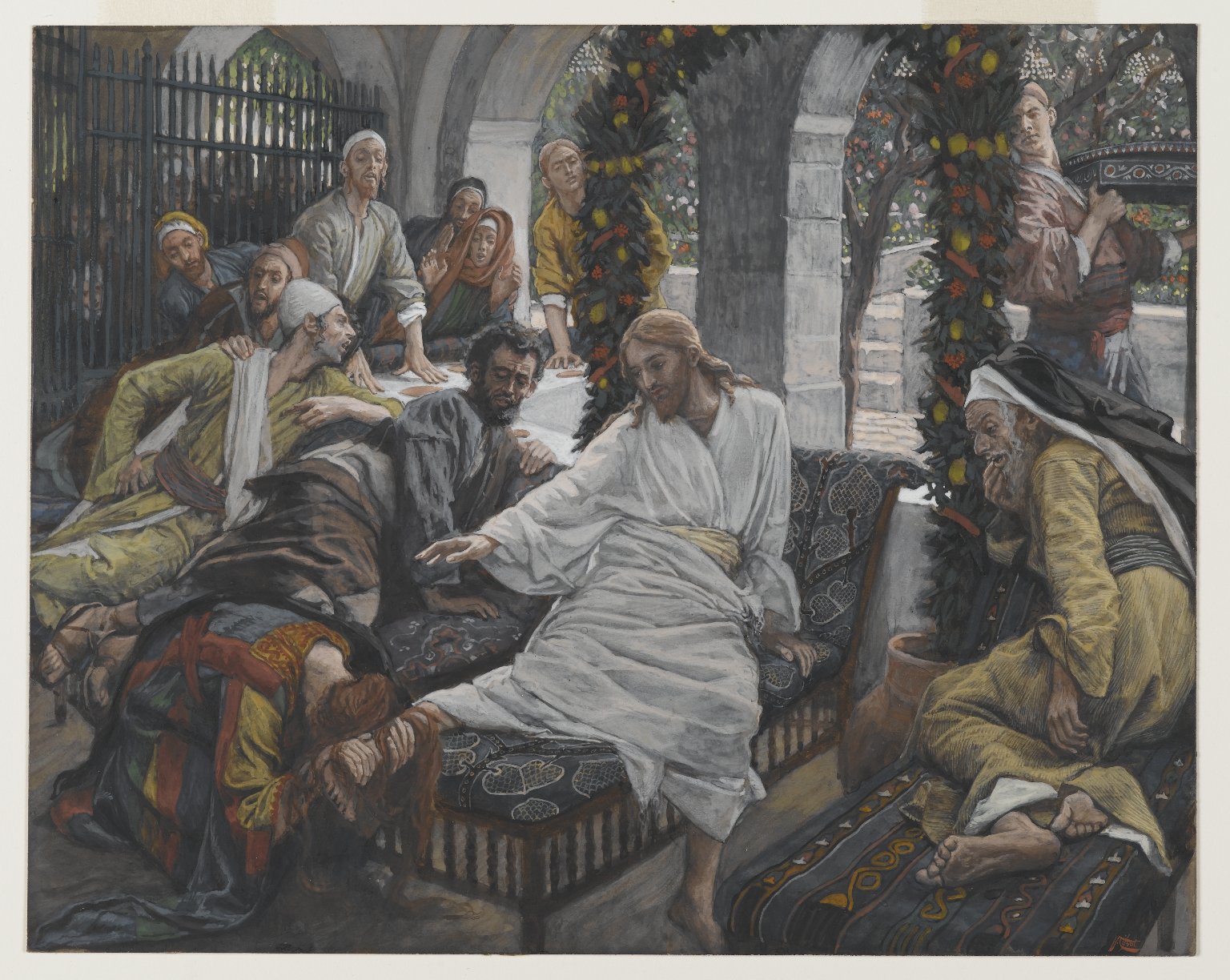
One of the Pharisees asked Jesus to have dinner with him, so Jesus went to his home and sat down to eat. When a certain immoral woman from that city heard he was eating there, she brought a beautiful alabaster jar filled with expensive perfume. Then she knelt behind him at his feet, weeping. Her tears fell on his feet, and she wiped them off with her hair. Then she kept kissing his feet and putting perfume on them.
When the Pharisee who had invited him saw this, he said to himself, “If this man were a prophet, he would know what kind of woman is touching him. She’s a sinner!”
Then Jesus answered his thoughts. “Simon,” he said to the Pharisee, “I have something to say to you.”
“Go ahead, Teacher,” Simon replied.
Then Jesus told him this story: “A man loaned money to two people—500 pieces of silver to one and 50 pieces to the other. But neither of them could repay him, so he kindly forgave them both, canceling their debts. Who do you suppose loved him more after that?”
Simon answered, “I suppose the one for whom he canceled the larger debt.”
“That’s right,” Jesus said. Then he turned to the woman and said to Simon, “Look at this woman kneeling here. When I entered your home, you didn’t offer me water to wash the dust from my feet, but she has washed them with her tears and wiped them with her hair. You didn’t greet me with a kiss, but from the time I first came in, she has not stopped kissing my feet. You neglected the courtesy of olive oil to anoint my head, but she has anointed my feet with rare perfume.
“I tell you, her sins—and they are many—have been forgiven, so she has shown me much love. But a person who is forgiven little shows only little love.” Then Jesus said to the woman, “Your sins are forgiven.”
The men at the table said among themselves, “Who is this man, that he goes around forgiving sins?”
And Jesus said to the woman, “Your faith has saved you; go in peace.”
Women Who Followed Jesus
Luke 8 (NLT)
Soon afterward Jesus began a tour of the nearby towns and villages, preaching and announcing the Good News about the Kingdom of God. He took his twelve disciples with him, along with some women who had been cured of evil spirits and diseases. Among them were Mary Magdalene, from whom he had cast out seven demons; Joanna, the wife of Chuza, Herod’s business manager; Susanna; and many others who were contributing from their own resources to support Jesus and his disciples.
Parable of the Farmer Scattering Seed
One day Jesus told a story in the form of a parable to a large crowd that had gathered from many towns to hear him: “A farmer went out to plant his seed. As he scattered it across his field, some seed fell on a footpath, where it was stepped on, and the birds ate it. Other seed fell among rocks. It began to grow, but the plant soon wilted and died for lack of moisture. Other seed fell among thorns that grew up with it and choked out the tender plants. Still other seed fell on fertile soil. This seed grew and produced a crop that was a hundred times as much as had been planted!” When he had said this, he called out, “Anyone with ears to hear should listen and understand.”
His disciples asked him what this parable meant. He replied, “You are permitted to understand the secrets of the Kingdom of God. But I use parables to teach the others so that the Scriptures might be fulfilled:
‘When they look, they won’t really see. When they hear, they won’t understand.’
“This is the meaning of the parable: The seed is God’s word. The seeds that fell on the footpath represent those who hear the message, only to have the devil come and take it away from their hearts and prevent them from believing and being saved. The seeds on the rocky soil represent those who hear the message and receive it with joy. But since they don’t have deep roots, they believe for a while, then they fall away when they face temptation. The seeds that fell among the thorns represent those who hear the message, but all too quickly the message is crowded out by the cares and riches and pleasures of this life. And so they never grow into maturity. And the seeds that fell on the good soil represent honest, good-hearted people who hear God’s word, cling to it, and patiently produce a huge harvest.
Parable of the Lamp
“No one lights a lamp and then covers it with a bowl or hides it under a bed. A lamp is placed on a stand, where its light can be seen by all who enter the house. For all that is secret will eventually be brought into the open, and everything that is concealed will be brought to light and made known to all.
“So pay attention to how you hear. To those who listen to my teaching, more understanding will be given. But for those who are not listening, even what they think they understand will be taken away from them.”
The True Family of Jesus
Then Jesus’ mother and brothers came to see him, but they couldn’t get to him because of the crowd. Someone told Jesus, “Your mother and your brothers are standing outside, and they want to see you.”
Jesus replied, “My mother and my brothers are all those who hear God’s word and obey it.”
Jesus Calms the Storm
One day Jesus said to his disciples, “Let’s cross to the other side of the lake.” So they got into a boat and started out. As they sailed across, Jesus settled down for a nap. But soon a fierce storm came down on the lake. The boat was filling with water, and they were in real danger.
The disciples went and woke him up, shouting, “Master, Master, we’re going to drown!”
When Jesus woke up, he rebuked the wind and the raging waves. Suddenly the storm stopped and all was calm. Then he asked them, “Where is your faith?”
The disciples were terrified and amazed. “Who is this man?” they asked each other. “When he gives a command, even the wind and waves obey him!”
Jesus Heals a Demon-Possessed Man
So they arrived in the region of the Gerasenes, across the lake from Galilee. As Jesus was climbing out of the boat, a man who was possessed by demons came out to meet him. For a long time he had been homeless and naked, living in the tombs outside the town.
As soon as he saw Jesus, he shrieked and fell down in front of him. Then he screamed, “Why are you interfering with me, Jesus, Son of the Most High God? Please, I beg you, don’t torture me!” For Jesus had already commanded the evil spirit to come out of him. This spirit had often taken control of the man. Even when he was placed under guard and put in chains and shackles, he simply broke them and rushed out into the wilderness, completely under the demon’s power.
Jesus demanded, “What is your name?”
“Legion,” he replied, for he was filled with many demons. The demons kept begging Jesus not to send them into the bottomless pit.
There happened to be a large herd of pigs feeding on the hillside nearby, and the demons begged him to let them enter into the pigs.
So Jesus gave them permission. Then the demons came out of the man and entered the pigs, and the entire herd plunged down the steep hillside into the lake and drowned.
When the herdsmen saw it, they fled to the nearby town and the surrounding countryside, spreading the news as they ran. People rushed out to see what had happened. A crowd soon gathered around Jesus, and they saw the man who had been freed from the demons. He was sitting at Jesus’ feet, fully clothed and perfectly sane, and they were all afraid. Then those who had seen what happened told the others how the demon-possessed man had been healed. And all the people in the region of the Gerasenes begged Jesus to go away and leave them alone, for a great wave of fear swept over them.
So Jesus returned to the boat and left, crossing back to the other side of the lake. The man who had been freed from the demons begged to go with him. But Jesus sent him home, saying, “No, go back to your family, and tell them everything God has done for you.” So he went all through the town proclaiming the great things Jesus had done for him.
Jesus Heals in Response to Faith
On the other side of the lake the crowds welcomed Jesus, because they had been waiting for him. Then a man named Jairus, a leader of the local synagogue, came and fell at Jesus’ feet, pleading with him to come home with him. His only daughter, who was about twelve years old, was dying.
As Jesus went with him, he was surrounded by the crowds. A woman in the crowd had suffered for twelve years with constant bleeding, and she could find no cure. Coming up behind Jesus, she touched the fringe of his robe. Immediately, the bleeding stopped.
“Who touched me?” Jesus asked.
Everyone denied it, and Peter said, “Master, this whole crowd is pressing up against you.”
But Jesus said, “Someone deliberately touched me, for I felt healing power go out from me.” When the woman realized that she could not stay hidden, she began to tremble and fell to her knees in front of him. The whole crowd heard her explain why she had touched him and that she had been immediately healed. “Daughter,” he said to her, “your faith has made you well. Go in peace.”
While he was still speaking to her, a messenger arrived from the home of Jairus, the leader of the synagogue. He told him, “Your daughter is dead. There’s no use troubling the Teacher now.”
But when Jesus heard what had happened, he said to Jairus, “Don’t be afraid. Just have faith, and she will be healed.”
When they arrived at the house, Jesus wouldn’t let anyone go in with him except Peter, John, James, and the little girl’s father and mother. The house was filled with people weeping and wailing, but he said, “Stop the weeping! She isn’t dead; she’s only asleep.”
But the crowd laughed at him because they all knew she had died. Then Jesus took her by the hand and said in a loud voice, “My child, get up!” And at that moment her life returned, and she immediately stood up! Then Jesus told them to give her something to eat. Her parents were overwhelmed, but Jesus insisted that they not tell anyone what had happened.
__________
“When You Walk Into the Room” – Bryan & Katie Torwalt – Jesus Culture Music
May the peace of the Lord Christ go with you, wherever He may send you. May He guide you through the wilderness, protect you through the storm. May He bring you home rejoicing at the wonders He has shown you. May He bring you home rejoicing once again into our doors.
__________
+ In the name of the Father, and the Son, and the Holy Spirit. Amen!

 The way of the righteous is like the first gleam of dawn, which shines ever brighter until the full light of day. But the way of the wicked is like total darkness. They have no idea what they are stumbling over.








 But suppose we seek to be made right with God through faith in Christ and then we are found guilty because we have abandoned the law. Would that mean Christ has led us into sin? Absolutely not! Rather, I am a sinner if I rebuild the old system of law I already tore down. For when I tried to keep the law, it condemned me. So I died to the law—I stopped trying to meet all its requirements—so that I might live for God. My old self has been crucified with Christ. It is no longer I who live, but Christ lives in me. So I live in this earthly body by trusting in the Son of God, who loved me and gave himself for me. I do not treat the grace of God as meaningless. For if keeping the law could make us right with God, then there was no need for Christ to die.

.jpg)



 The Peanut Gallery