Morning Reading: Tue, 27 Feb – Judges 17-21 ~ a sordid chapter in the history of Israel

Morning Reading

+ In the name of the Father, and the Son, and the Holy Spirit. Amen!

Opening – (Northumbria Community)

One thing I have asked of the Lord, this is what I seek: that I may dwell in the house of the Lord all the days of my life; to behold the beauty of the Lord and to seek Him in His temple.

Praise to You, Lord Jesus Christ, King of endless glory.

Reading: Judges 17-21 (NLT)

Micah’s Idols

Judges 17 (NLT)

There was a man named Micah, who lived in the hill country of Ephraim. One day he said to his mother, “I heard you place a curse on the person who stole 1,100 pieces of silver from you. Well, I have the money. I was the one who took it.”

“The Lord bless you for admitting it,” his mother replied. He returned the money to her, and she said, “I now dedicate these silver coins to the Lord. In honor of my son, I will have an image carved and an idol cast.”

So when he returned the money to his mother, she took 200 silver coins and gave them to a silversmith, who made them into an image and an idol. And these were placed in Micah’s house. Micah set up a shrine for the idol, and he made a sacred ephod and some household idols. Then he installed one of his sons as his personal priest.

In those days Israel had no king; all the people did whatever seemed right in their own eyes.

One day a young Levite, who had been living in Bethlehem in Judah, arrived in that area. He had left Bethlehem in search of another place to live, and as he traveled, he came to the hill country of Ephraim. He happened to stop at Micah’s house as he was traveling through. “Where are you from?” Micah asked him.

He replied, “I am a Levite from Bethlehem in Judah, and I am looking for a place to live.”

“Stay here with me,” Micah said, “and you can be a father and priest to me. I will give you ten pieces of silver a year, plus a change of clothes and your food.” The Levite agreed to this, and the young man became like one of Micah’s sons.

So Micah installed the Levite as his personal priest, and he lived in Micah’s house. “I know the Lord will bless me now,” Micah said, “because I have a Levite serving as my priest.”

Idolatry in the Tribe of Dan

Now in those days Israel had no king. And the tribe of Dan was trying to find a place where they could settle, for they had not yet moved into the land assigned to them when the land was divided among the tribes of Israel. So the men of Dan chose from their clans five capable warriors from the towns of Zorah and Eshtaol to scout out a land for them to settle in.
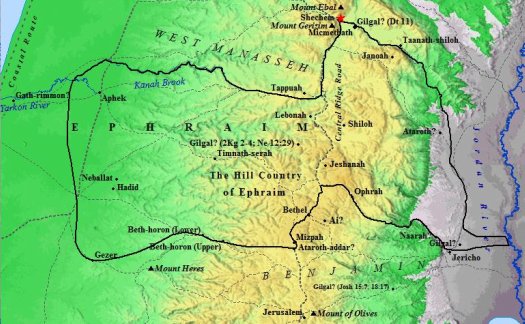
When these warriors arrived in the hill country of Ephraim, they came to Micah’s house and spent the night there. While at Micah’s house, they recognized the young Levite’s accent, so they went over and asked him, “Who brought you here, and what are you doing in this place? Why are you here?” He told them about his agreement with Micah and that he had been hired as Micah’s personal priest.

Then they said, “Ask God whether or not our journey will be successful.”

“Go in peace,” the priest replied. “For the Lord is watching over your journey.”

So the five men went on to the town of Laish, where they noticed the people living carefree lives, like the Sidonians; they were peaceful and secure. The people were also wealthy because their land was very fertile. And they lived a great distance from Sidon and had no allies nearby.

When the men returned to Zorah and Eshtaol, their relatives asked them, “What did you find?”

The men replied, “Come on, let’s attack them! We have seen the land, and it is very good. What are you waiting for? Don’t hesitate to go and take possession of it. When you get there, you will find the people living carefree lives. God has given us a spacious and fertile land, lacking in nothing!”

So 600 men from the tribe of Dan, armed with weapons of war, set out from Zorah and Eshtaol. They camped at a place west of Kiriath-jearim in Judah, which is called Mahaneh-dan to this day. Then they went on from there into the hill country of Ephraim and came to the house of Micah.

The five men who had scouted out the land around Laish explained to the others, “These buildings contain a sacred ephod, as well as some household idols, a carved image, and a cast idol. What do you think you should do?” Then the five men turned off the road and went over to Micah’s house, where the young Levite lived, and greeted him kindly. As the 600 armed warriors from the tribe of Dan stood at the entrance of the gate, the five scouts entered the shrine and removed the carved image, the sacred ephod, the household idols, and the cast idol. Meanwhile, the priest was standing at the gate with the 600 armed warriors.
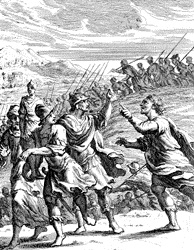
When the priest saw the men carrying all the sacred objects out of Micah’s shrine, he said, “What are you doing?”

“Be quiet and come with us,” they said. “Be a father and priest to all of us. Isn’t it better to be a priest for an entire tribe and clan of Israel than for the household of just one man?”

The young priest was quite happy to go with them, so he took along the sacred ephod, the household idols, and the carved image. They turned and started on their way again, placing their children, livestock, and possessions in front of them.

When the people from the tribe of Dan were quite a distance from Micah’s house, the people who lived near Micah came chasing after them. They were shouting as they caught up with them. The men of Dan turned around and said to Micah, “What’s the matter? Why have you called these men together and chased after us like this?”

“What do you mean, ‘What’s the matter?’” Micah replied. “You’ve taken away all the gods I have made, and my priest, and I have nothing left!”

The men of Dan said, “Watch what you say! There are some short-tempered men around here who might get angry and kill you and your family.” So the men of Dan continued on their way. When Micah saw that there were too many of them for him to attack, he turned around and went home.

Then, with Micah’s idols and his priest, the men of Dan came to the town of Laish, whose people were peaceful and secure. They attacked with swords and burned the town to the ground. There was no one to rescue the people, for they lived a great distance from Sidon and had no allies nearby. This happened in the valley near Beth-rehob.

Then the people of the tribe of Dan rebuilt the town and lived there. They renamed the town Dan after their ancestor, Israel’s son, but it had originally been called Laish.

Then they set up the carved image, and they appointed Jonathan son of Gershom, son of Moses, as their priest. This family continued as priests for the tribe of Dan until the Exile. So Micah’s carved image was worshiped by the tribe of Dan as long as the Tabernacle of God remained at Shiloh.

The Levite and His Concubine

Judges 19 (NLT)

Now in those days Israel had no king. There was a man from the tribe of Levi living in a remote area of the hill country of Ephraim. One day he brought home a woman from Bethlehem in Judah to be his concubine. But she became angry with him and returned to her father’s home in Bethlehem.

After about four months, her husband set out for Bethlehem to speak personally to her and persuade her to come back. He took with him a servant and a pair of donkeys. When he arrived at her father’s house, her father saw him and welcomed him. Her father urged him to stay awhile, so he stayed three days, eating, drinking, and sleeping there.

On the fourth day the man was up early, ready to leave, but the woman’s father said to his son-in-law, “Have something to eat before you go.” So the two men sat down together and had something to eat and drink. Then the woman’s father said, “Please stay another night and enjoy yourself.” The man got up to leave, but his father-in-law kept urging him to stay, so he finally gave in and stayed the night.

On the morning of the fifth day he was up early again, ready to leave, and again the woman’s father said, “Have something to eat; then you can leave later this afternoon.” So they had another day of feasting. Later, as the man and his concubine and servant were preparing to leave, his father-in-law said, “Look, it’s almost evening. Stay the night and enjoy yourself. Tomorrow you can get up early and be on your way.”

But this time the man was determined to leave. So he took his two saddled donkeys and his concubine and headed in the direction of Jebus (that is, Jerusalem). It was late in the day when they neared Jebus, and the man’s servant said to him, “Let’s stop at this Jebusite town and spend the night there.”

“No,” his master said, “we can’t stay in this foreign town where there are no Israelites. Instead, we will go on to Gibeah. Come on, let’s try to get as far as Gibeah or Ramah, and we’ll spend the night in one of those towns.” So they went on. The sun was setting as they came to Gibeah, a town in the land of Benjamin, so they stopped there to spend the night. They rested in the town square, but no one took them in for the night.

That evening an old man came home from his work in the fields. He was from the hill country of Ephraim, but he was living in Gibeah, where the people were from the tribe of Benjamin. When he saw the travelers sitting in the town square, he asked them where they were from and where they were going.

“We have been in Bethlehem in Judah,” the man replied. “We are on our way to a remote area in the hill country of Ephraim, which is my home. I traveled to Bethlehem, and now I’m returning home. But no one has taken us in for the night, even though we have everything we need. We have straw and feed for our donkeys and plenty of bread and wine for ourselves.”

“You are welcome to stay with me,” the old man said. “I will give you anything you might need. But whatever you do, don’t spend the night in the square.” So he took them home with him and fed the donkeys. After they washed their feet, they ate and drank together.

While they were enjoying themselves, a crowd of troublemakers from the town surrounded the house. They began beating at the door and shouting to the old man, “Bring out the man who is staying with you so we can have sex with him.”

The old man stepped outside to talk to them. “No, my brothers, don’t do such an evil thing. For this man is a guest in my house, and such a thing would be shameful. Here, take my virgin daughter and this man’s concubine. I will bring them out to you, and you can abuse them and do whatever you like. But don’t do such a shameful thing to this man.”

But they wouldn’t listen to him. So the Levite took hold of his concubine and pushed her out the door. The men of the town abused her all night, taking turns raping her until morning. Finally, at dawn they let her go. At daybreak the woman returned to the house where her husband was staying. She collapsed at the door of the house and lay there until it was light.

When her husband opened the door to leave, there lay his concubine with her hands on the threshold. He said, “Get up! Let’s go!” But there was no answer. So he put her body on his donkey and took her home.

When he got home, he took a knife and cut his concubine’s body into twelve pieces. Then he sent one piece to each tribe throughout all the territory of Israel.

Everyone who saw it said, “Such a horrible crime has not been committed in all the time since Israel left Egypt. Think about it! What are we going to do? Who’s going to speak up?”

Israel’s War with Benjamin

Judges 20 (NLT)

Then all the Israelites were united as one man, from Dan in the north to Beersheba in the south, including those from across the Jordan in the land of Gilead. The entire community assembled in the presence of the Lord at Mizpah. The leaders of all the people and all the tribes of Israel—400,000 warriors armed with swords—took their positions in the assembly of the people of God. (Word soon reached the land of Benjamin that the other tribes had gone up to Mizpah.) The Israelites then asked how this terrible crime had happened.

The Levite, the husband of the woman who had been murdered, said, “My concubine and I came to spend the night in Gibeah, a town that belongs to the people of Benjamin. That night some of the leading citizens of Gibeah surrounded the house, planning to kill me, and they raped my concubine until she was dead. So I cut her body into twelve pieces and sent the pieces throughout the territory assigned to Israel, for these men have committed a terrible and shameful crime. Now then, all of you—the entire community of Israel—must decide here and now what should be done about this!”

And all the people rose to their feet in unison and declared, “None of us will return home! No, not even one of us! Instead, this is what we will do to Gibeah; we will draw lots to decide who will attack it. One-tenth of the men from each tribe will be chosen to supply the warriors with food, and the rest of us will take revenge on Gibeah of Benjamin for this shameful thing they have done in Israel.” So all the Israelites were completely united, and they gathered together to attack the town.

The Israelites sent messengers to the tribe of Benjamin, saying, “What a terrible thing has been done among you! Give up those evil men, those troublemakers from Gibeah, so we can execute them and purge Israel of this evil.”

But the people of Benjamin would not listen. Instead, they came from their towns and gathered at Gibeah to fight the Israelites. In all, 26,000 of their warriors armed with swords arrived in Gibeah to join the 700 elite troops who lived there. Among Benjamin’s elite troops, 700 were left-handed, and each of them could sling a rock and hit a target within a hairsbreadth without missing. Israel had 400,000 experienced soldiers armed with swords, not counting Benjamin’s warriors.

Before the battle the Israelites went to Bethel and asked God, “Which tribe should go first to attack the people of Benjamin?”

The Lord answered, “Judah is to go first.”

So the Israelites left early the next morning and camped near Gibeah. Then they advanced toward Gibeah to attack the men of Benjamin. But Benjamin’s warriors, who were defending the town, came out and killed 22,000 Israelites on the battlefield that day.

But the Israelites encouraged each other and took their positions again at the same place they had fought the previous day. For they had gone up to Bethel and wept in the presence of the Lord until evening. They had asked the Lord, “Should we fight against our relatives from Benjamin again?”

And the Lord had said, “Go out and fight against them.”

So the next day they went out again to fight against the men of Benjamin, but the men of Benjamin killed another 18,000 Israelites, all of whom were experienced with the sword.

Then all the Israelites went up to Bethel and wept in the presence of the Lord and fasted until evening. They also brought burnt offerings and peace offerings to the Lord. The Israelites went up seeking direction from the Lord. (In those days the Ark of the Covenant of God was in Bethel, and Phinehas son of Eleazar and grandson of Aaron was the priest.) The Israelites asked the Lord, “Should we fight against our relatives from Benjamin again, or should we stop?”

The Lord said, “Go! Tomorrow I will hand them over to you.”

So the Israelites set an ambush all around Gibeah. They went out on the third day and took their positions at the same place as before. When the men of Benjamin came out to attack, they were drawn away from the town. And as they had done before, they began to kill the Israelites. About thirty Israelites died in the open fields and along the roads, one leading to Bethel and the other leading back to Gibeah.

Then the warriors of Benjamin shouted, “We’re defeating them as we did before!” But the Israelites had planned in advance to run away so that the men of Benjamin would chase them along the roads and be drawn away from the town.
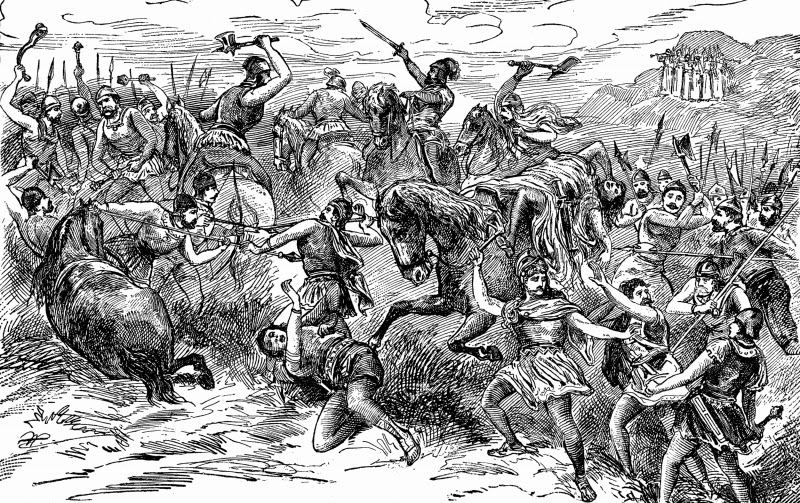
When the main group of Israelite warriors reached Baal-tamar, they turned and took up their positions. Meanwhile, the Israelites hiding in ambush to the west of Gibeah jumped up to fight. There were 10,000 elite Israelite troops who advanced against Gibeah. The fighting was so heavy that Benjamin didn’t realize the impending disaster. So the Lord helped Israel defeat Benjamin, and that day the Israelites killed 25,100 of Benjamin’s warriors, all of whom were experienced swordsmen. Then the men of Benjamin saw that they were beaten.

The Israelites had retreated from Benjamin’s warriors in order to give those hiding in ambush more room to maneuver against Gibeah. Then those who were hiding rushed in from all sides and killed everyone in the town. They had arranged to send up a large cloud of smoke from the town as a signal. When the Israelites saw the smoke, they turned and attacked Benjamin’s warriors.

By that time Benjamin’s warriors had killed about thirty Israelites, and they shouted, “We’re defeating them as we did in the first battle!” But when the warriors of Benjamin looked behind them and saw the smoke rising into the sky from every part of the town, the men of Israel turned and attacked. At this point the men of Benjamin became terrified, because they realized disaster was close at hand. So they turned around and fled before the Israelites toward the wilderness. But they couldn’t escape the battle, and the people who came out of the nearby towns were also killed. The Israelites surrounded the men of Benjamin and chased them relentlessly, finally overtaking them east of Gibeah. That day 18,000 of Benjamin’s strongest warriors died in battle. The survivors fled into the wilderness toward the rock of Rimmon, but Israel killed 5,000 of them along the road. They continued the chase until they had killed another 2,000 near Gidom.

So that day the tribe of Benjamin lost 25,000 strong warriors armed with swords, leaving only 600 men who escaped to the rock of Rimmon, where they lived for four months. And the Israelites returned and slaughtered every living thing in all the towns—the people, the livestock, and everything they found. They also burned down all the towns they came to.

Israel Provides Wives for Benjamin

Judges 21 (NLT)

The Israelites had vowed at Mizpah, “We will never give our daughters in marriage to a man from the tribe of Benjamin.” Now the people went to Bethel and sat in the presence of God until evening, weeping loudly and bitterly. “O Lord, God of Israel,” they cried out, “why has this happened in Israel? Now one of our tribes is missing from Israel!”

Early the next morning the people built an altar and presented their burnt offerings and peace offerings on it. Then they said, “Who among the tribes of Israel did not join us at Mizpah when we held our assembly in the presence of the Lord?” At that time they had taken a solemn oath in the Lord’s presence, vowing that anyone who refused to come would be put to death.

The Israelites felt sorry for their brother Benjamin and said, “Today one of the tribes of Israel has been cut off. How can we find wives for the few who remain, since we have sworn by the Lord not to give them our daughters in marriage?”
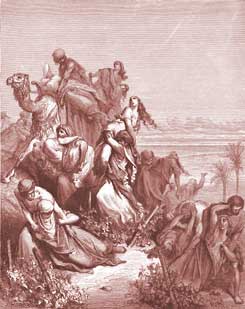
So they asked, “Who among the tribes of Israel did not join us at Mizpah when we assembled in the presence of the Lord?” And they discovered that no one from Jabesh-gilead had attended the assembly. For after they counted all the people, no one from Jabesh-gilead was present.

So the assembly sent 12,000 of their best warriors to Jabesh-gilead with orders to kill everyone there, including women and children. “This is what you are to do,” they said. “Completely destroy all the males and every woman who is not a virgin.” Among the residents of Jabesh-gilead they found 400 young virgins who had never slept with a man, and they brought them to the camp at Shiloh in the land of Canaan.

The Israelite assembly sent a peace delegation to the remaining people of Benjamin who were living at the rock of Rimmon. Then the men of Benjamin returned to their homes, and the 400 women of Jabesh-gilead who had been spared were given to them as wives. But there were not enough women for all of them.

The people felt sorry for Benjamin because the Lord had made this gap among the tribes of Israel. So the elders of the assembly asked, “How can we find wives for the few who remain, since the women of the tribe of Benjamin are dead? There must be heirs for the survivors so that an entire tribe of Israel is not wiped out. But we cannot give them our own daughters in marriage because we have sworn with a solemn oath that anyone who does this will fall under God’s curse.”

Then they thought of the annual festival of the Lord held in Shiloh, south of Lebonah and north of Bethel, along the east side of the road that goes from Bethel to Shechem. They told the men of Benjamin who still needed wives, “Go and hide in the vineyards. When you see the young women of Shiloh come out for their dances, rush out from the vineyards, and each of you can take one of them home to the land of Benjamin to be your wife! And when their fathers and brothers come to us in protest, we will tell them, ‘Please be sympathetic. Let them have your daughters, for we didn’t find wives for all of them when we destroyed Jabesh-gilead. And you are not guilty of breaking the vow since you did not actually give your daughters to them in marriage.’”
So the men of Benjamin did as they were told. Each man caught one of the women as she danced in the celebration and carried her off to be his wife. They returned to their own land, and they rebuilt their towns and lived in them.

Then the people of Israel departed by tribes and families, and they returned to their own homes.

In those days Israel had no king; all the people did whatever seemed right in their own eyes.

__________

“Safe” – Alisa Turner


__________

Blessing – (Northumbrian Community)

May the peace of the Lord Christ go with you, wherever He may send you. May He guide you through the wilderness, protect you through the storm. May He bring you home rejoicing at the wonders He has shown you. May He bring you home rejoicing once again into our doors.
__________

+ In the name of the Father, and the Son, and the Holy Spirit. Amen!

Morning Reading: Mon, 26 Feb – Genesis 32-35 ~ Jacob’s return to the promised land

Morning Reading

+ In the name of the Father, and the Son, and the Holy Spirit. Amen!

Opening – (Northumbria Community)

One thing I have asked of the Lord, this is what I seek: that I may dwell in the house of the Lord all the days of my life; to behold the beauty of the Lord and to seek Him in His temple.

Praise to You, Lord Jesus Christ, King of endless glory.

Reading: Genesis 32-35 (NLT)

Genesis 32 (NLT)

As Jacob started on his way again, angels of God came to meet him. When Jacob saw them, he exclaimed, “This is God’s camp!” So he named the place Mahanaim.

Jacob Sends Gifts to Esau

Then Jacob sent messengers ahead to his brother, Esau, who was living in the region of Seir in the land of Edom. He told them, “Give this message to my master Esau: ‘Humble greetings from your servant Jacob. Until now I have been living with Uncle Laban, and now I own cattle, donkeys, flocks of sheep and goats, and many servants, both men and women. I have sent these messengers to inform my lord of my coming, hoping that you will be friendly to me.’”

+ Jacob was terrified – After delivering the message, the messengers returned to Jacob and reported, “We met your brother, Esau, and he is already on his way to meet you—with an army of 400 men!” Jacob was terrified at the news. He divided his household, along with the flocks and herds and camels, into two groups. He thought, “If Esau meets one group and attacks it, perhaps the other group can escape.”

+ Jacob appeals to God – Then Jacob prayed, “O God of my grandfather Abraham, and God of my father, Isaac—O Lord, you told me, ‘Return to your own land and to your relatives.’ And you promised me, ‘I will treat you kindly.’ I am not worthy of all the unfailing love and faithfulness you have shown to me, your servant. When I left home and crossed the Jordan River, I owned nothing except a walking stick. Now my household fills two large camps! O Lord, please rescue me from the hand of my brother, Esau. I am afraid that he is coming to attack me, along with my wives and children. But you promised me, ‘I will surely treat you kindly, and I will multiply your descendants until they become as numerous as the sands along the seashore—too many to count.’”

+ Jacob’s strategy of appeasement – Jacob stayed where he was for the night. Then he selected these gifts from his possessions to present to his brother, Esau: 200 female goats, 20 male goats, 200 ewes, 20 rams, 30 female camels with their young, 40 cows, 10 bulls, 20 female donkeys, and 10 male donkeys. He divided these animals into herds and assigned each to different servants. Then he told his servants, “Go ahead of me with the animals, but keep some distance between the herds.”

He gave these instructions to the men leading the first group: “When my brother, Esau, meets you, he will ask, ‘Whose servants are you? Where are you going? Who owns these animals?’ You must reply, ‘They belong to your servant Jacob, but they are a gift for his master Esau. Look, he is coming right behind us.’”

Jacob gave the same instructions to the second and third herdsmen and to all who followed behind the herds: “You must say the same thing to Esau when you meet him. And be sure to say, ‘Look, your servant Jacob is right behind us.’”

Jacob thought, “I will try to appease him by sending gifts ahead of me. When I see him in person, perhaps he will be friendly to me.” So the gifts were sent on ahead, while Jacob himself spent that night in the camp.

Jacob Wrestles with God

During the night Jacob got up and took his two wives, his two servant wives, and his eleven sons and crossed the Jabbok River with them. After taking them to the other side, he sent over all his possessions.

This left Jacob all alone in the camp, and a man came and wrestled with him until the dawn began to break. When the man saw that he would not win the match, he touched Jacob’s hip and wrenched it out of its socket. Then the man said, “Let me go, for the dawn is breaking!”

But Jacob said, “I will not let you go unless you bless me.”

“What is your name?” the man asked.

He replied, “Jacob.”

+ Jacob’s name change – “Your name will no longer be Jacob,” the man told him. “From now on you will be called Israel, because you have fought with God and with men and have won.”

“Please tell me your name,” Jacob said.

+ Jacob is blessed – “Why do you want to know my name?” the man replied. Then he blessed Jacob there.

Jacob named the place Peniel (which means “face of God”), for he said, “I have seen God face to face, yet my life has been spared.” The sun was rising as Jacob left Peniel, and he was limping because of the injury to his hip. (Even today the people of Israel don’t eat the tendon near the hip socket because of what happened that night when the man strained the tendon of Jacob’s hip.)

Jacob and Esau Make Peace

Genesis 33 (NLT)

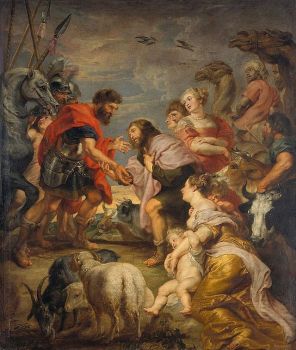
+ Esau forgives Jacob – Then Jacob looked up and saw Esau coming with his 400 men. So he divided the children among Leah, Rachel, and his two servant wives. He put the servant wives and their children at the front, Leah and her children next, and Rachel and Joseph last. Then Jacob went on ahead. As he approached his brother, he bowed to the ground seven times before him. Then Esau ran to meet him and embraced him, threw his arms around his neck, and kissed him. And they both wept.

Then Esau looked at the women and children and asked, “Who are these people with you?”

“These are the children God has graciously given to me, your servant,” Jacob replied. Then the servant wives came forward with their children and bowed before him. Next came Leah with her children, and they bowed before him. Finally, Joseph and Rachel came forward and bowed before him.

“And what were all the flocks and herds I met as I came?” Esau asked.

Jacob replied, “They are a gift, my lord, to ensure your friendship.”

“My brother, I have plenty,” Esau answered. “Keep what you have for yourself.”

+ Esau accepts Jacob’s gift – But Jacob insisted, “No, if I have found favor with you, please accept this gift from me. And what a relief to see your friendly smile. It is like seeing the face of God! Please take this gift I have brought you, for God has been very gracious to me. I have more than enough.” And because Jacob insisted, Esau finally accepted the gift.

“Well,” Esau said, “let’s be going. I will lead the way.”

But Jacob replied, “You can see, my lord, that some of the children are very young, and the flocks and herds have their young, too. If they are driven too hard, even for one day, all the animals could die. Please, my lord, go ahead of your servant. We will follow slowly, at a pace that is comfortable for the livestock and the children. I will meet you at Seir.”

“All right,” Esau said, “but at least let me assign some of my men to guide and protect you.”

Jacob responded, “That’s not necessary. It’s enough that you’ve received me warmly, my lord!”

+ Esau returns home – So Esau turned around and started back to Seir that same day. Jacob, on the other hand, traveled on to Succoth. There he built himself a house and made shelters for his livestock. That is why the place was named Succoth (which means “shelters”).

Later, having traveled all the way from Paddan-aram, Jacob arrived safely at the town of Shechem, in the land of Canaan. There he set up camp outside the town. Jacob bought the plot of land where he camped from the family of Hamor, the father of Shechem, for 100 pieces of silver. And there he built an altar and named it El-Elohe-Israel.

Revenge against Shechem

Genesis 34 (NLT)

+ Dinah defiled – One day Dinah, the daughter of Jacob and Leah, went to visit some of the young women who lived in the area. But when the local prince, Shechem son of Hamor the Hivite, saw Dinah, he seized her and raped her. But then he fell in love with her, and he tried to win her affection with tender words. He said to his father, Hamor, “Get me this young girl. I want to marry her.”

+ Shock and fury – Soon Jacob heard that Shechem had defiled his daughter, Dinah. But since his sons were out in the fields herding his livestock, he said nothing until they returned. Hamor, Shechem’s father, came to discuss the matter with Jacob. Meanwhile, Jacob’s sons had come in from the field as soon as they heard what had happened. They were shocked and furious that their sister had been raped. Shechem had done a disgraceful thing against Jacob’s family, something that should never be done.

+ Appeasement attempt – Hamor tried to speak with Jacob and his sons. “My son Shechem is truly in love with your daughter,” he said. “Please let him marry her. In fact, let’s arrange other marriages, too. You give us your daughters for our sons, and we will give you our daughters for your sons. And you may live among us; the land is open to you! Settle here and trade with us. And feel free to buy property in the area.”

Then Shechem himself spoke to Dinah’s father and brothers. “Please be kind to me, and let me marry her,” he begged. “I will give you whatever you ask. No matter what dowry or gift you demand, I will gladly pay it—just give me the girl as my wife.”

+ Jacob’s sons plot revenge – But since Shechem had defiled their sister, Dinah, Jacob’s sons responded deceitfully to Shechem and his father, Hamor. They said to them, “We couldn’t possibly allow this, because you’re not circumcised. It would be a disgrace for our sister to marry a man like you! But here is a solution. If every man among you will be circumcised like we are, then we will give you our daughters, and we’ll take your daughters for ourselves. We will live among you and become one people. But if you don’t agree to be circumcised, we will take her and be on our way.”

Hamor and his son Shechem agreed to their proposal. Shechem wasted no time in acting on this request, for he wanted Jacob’s daughter desperately. Shechem was a highly respected member of his family, and he went with his father, Hamor, to present this proposal to the leaders at the town gate.

“These men are our friends,” they said. “Let’s invite them to live here among us and trade freely. Look, the land is large enough to hold them. We can take their daughters as wives and let them marry ours. But they will consider staying here and becoming one people with us only if all of our men are circumcised, just as they are. But if we do this, all their livestock and possessions will eventually be ours. Come, let’s agree to their terms and let them settle here among us.”

+ The trap is sprung –  So all the men in the town council agreed with Hamor and Shechem, and every male in the town was circumcised. But three days later, when their wounds were still sore, two of Jacob’s sons, Simeon and Levi, who were Dinah’s full brothers, took their swords and entered the town without opposition. Then they slaughtered every male there, including Hamor and his son Shechem. They killed them with their swords, then took Dinah from Shechem’s house and returned to their camp.

+ The town is plundered – Meanwhile, the rest of Jacob’s sons arrived. Finding the men slaughtered, they plundered the town because their sister had been defiled there. They seized all the flocks and herds and donkeys—everything they could lay their hands on, both inside the town and outside in the fields. They looted all their wealth and plundered their houses. They also took all their little children and wives and led them away as captives.

+ Unintended consequences – Afterward Jacob said to Simeon and Levi, “You have ruined me! You’ve made me stink among all the people of this land—among all the Canaanites and Perizzites. We are so few that they will join forces and crush us. I will be ruined, and my entire household will be wiped out!”

“But why should we let him treat our sister like a prostitute?” they retorted angrily.

Jacob’s Return to Bethel

Genesis 35 (NLT)

Then God said to Jacob, “Get ready and move to Bethel and settle there. Build an altar there to the God who appeared to you when you fled from your brother, Esau.”

So Jacob told everyone in his household, “Get rid of all your pagan idols, purify yourselves, and put on clean clothing. We are now going to Bethel, where I will build an altar to the God who answered my prayers when I was in distress. He has been with me wherever I have gone.”

+ Pagan idols buried – So they gave Jacob all their pagan idols and earrings, and he buried them under the great tree near Shechem. As they set out, a terror from God spread over the people in all the towns of that area, so no one attacked Jacob’s family.

Eventually, Jacob and his household arrived at Luz (also called Bethel) in Canaan. Jacob built an altar there and named the place El-bethel (which means “God of Bethel”), because God had appeared to him there when he was fleeing from his brother, Esau.

Soon after this, Rebekah’s old nurse, Deborah, died. She was buried beneath the oak tree in the valley below Bethel. Ever since, the tree has been called Allon-bacuth (which means “oak of weeping”).

+ Jacob renamed Israel – Now that Jacob had returned from Paddan-aram, God appeared to him again at Bethel. God blessed him, saying, “Your name is Jacob, but you will not be called Jacob any longer. From now on your name will be Israel.” So God renamed him Israel.

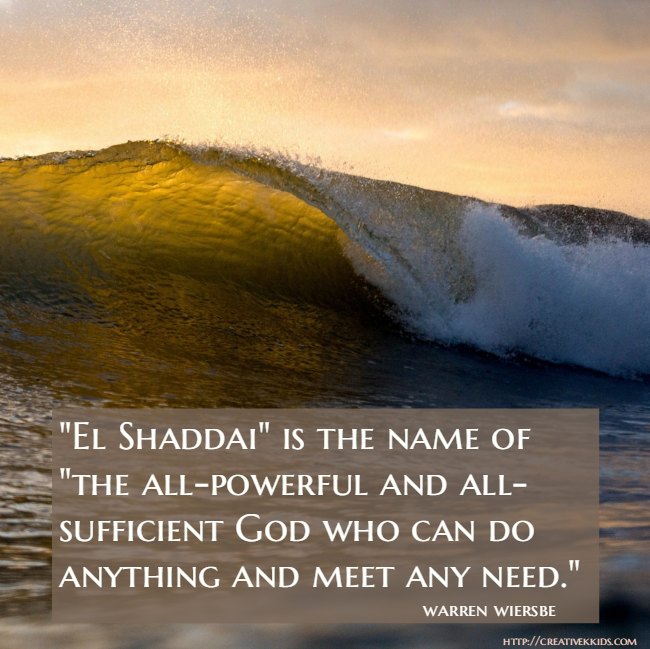
+ God reaffirms His promise – Then God said, “I am El-Shaddai—‘God Almighty.’ Be fruitful and multiply. You will become a great nation, even many nations. Kings will be among your descendants! And I will give you the land I once gave to Abraham and Isaac. Yes, I will give it to you and your descendants after you.” Then God went up from the place where he had spoken to Jacob.

Jacob set up a stone pillar to mark the place where God had spoken to him. Then he poured wine over it as an offering to God and anointed the pillar with olive oil. And Jacob named the place Bethel (which means “house of God”), because God had spoken to him there.

The Deaths of Rachel and Isaac

Leaving Bethel, Jacob and his clan moved on toward Ephrath. But Rachel went into labor while they were still some distance away. Her labor pains were intense. After a very hard delivery, the midwife finally exclaimed, “Don’t be afraid—you have another son!” Rachel was about to die, but with her last breath she named the baby Ben-oni (which means “son of my sorrow”). The baby’s father, however, called him Benjamin (which means “son of my right hand”). So Rachel died and was buried on the way to Ephrath (that is, Bethlehem). Jacob set up a stone monument over Rachel’s grave, and it can be seen there to this day.

+ Reuben’s sin – Then Jacob traveled on and camped beyond Migdal-eder. While he was living there, Reuben had intercourse with Bilhah, his father’s concubine, and Jacob soon heard about it.

+ Jacob’s sons – These are the names of the twelve sons of Jacob:

  • The sons of Leah were Reuben (Jacob’s oldest son), Simeon, Levi, Judah, Issachar, and Zebulun.
  • The sons of Rachel were Joseph and Benjamin.
  • The sons of Bilhah, Rachel’s servant, were Dan and Naphtali.
  •  The sons of Zilpah, Leah’s servant, were Gad and Asher.

These are the names of the sons who were born to Jacob at Paddan-aram.

So Jacob returned to his father, Isaac, in Mamre, which is near Kiriath-arba (now called Hebron), where Abraham and Isaac had both lived as foreigners. Isaac lived for 180 years. Then he breathed his last and died at a ripe old age, joining his ancestors in death. And his sons, Esau and Jacob, buried him.
__________

“Kyrie Eleison” – Vineyard Worship


__________

Blessing – (Northumbrian Community)

May the peace of the Lord Christ go with you, wherever He may send you. May He guide you through the wilderness, protect you through the storm. May He bring you home rejoicing at the wonders He has shown you. May He bring you home rejoicing once again into our doors.
__________

+ In the name of the Father, and the Son, and the Holy Spirit. Amen!

Morning Reading: Sat, 24 Feb – Romans 15-16 ~ Paul’s travel preparations and itinerary

Morning Reading

+ In the name of the Father, and the Son, and the Holy Spirit. Amen!

Opening – (Northumbria Community)

One thing I have asked of the Lord, this is what I seek: that I may dwell in the house of the Lord all the days of my life; to behold the beauty of the Lord and to seek Him in His temple.

Praise to You, Lord Jesus Christ, King of endless glory.

Reading: Romans 15-16 (NLT)

Live for Others

Romans 15 (NLT)

+ Do what’s right – We who are strong must be considerate of those who are sensitive about things like this. We must not just please ourselves. We should help others do what is right and build them up in the Lord. For even Christ didn’t live to please himself. As the Scriptures say, “The insults of those who insult you, O God, have fallen on me.” Such things were written in the Scriptures long ago to teach us. And the Scriptures give us hope and encouragement as we wait patiently for God’s promises to be fulfilled.

+ Live in harmony – May God, who gives this patience and encouragement, help you live in complete harmony with each other, as is fitting for followers of Christ Jesus. Then all of you can join together with one voice, giving praise and glory to God, the Father of our Lord Jesus Christ.

+ Accept each other – Therefore, accept each other just as Christ has accepted you so that God will be given glory. Remember that Christ came as a servant to the Jews to show that God is true to the promises he made to their ancestors. He also came so that the Gentiles might give glory to God for his mercies to them.

That is what the psalmist meant when he wrote: “For this, I will praise you among the Gentiles; I will sing praises to your name.”

And in another place it is written, “Rejoice with his people, you Gentiles.”

And yet again, “Praise the Lord, all you Gentiles. Praise him, all you people of the earth.”

And in another place Isaiah said, “The heir to David’s throne will come, and he will rule over the Gentiles. They will place their hope on him.”

+ Be filled with joy and peace – I pray that God, the source of hope, will fill you completely with joy and peace because you trust in him. Then you will overflow with confident hope through the power of the Holy Spirit.

Paul’s Reason for Writing

+ I bring you the Good News – I am fully convinced, my dear brothers and sisters, that you are full of goodness. You know these things so well you can teach each other all about them. Even so, I have been bold enough to write about some of these points, knowing that all you need is this reminder. For by God’s grace, I am a special messenger from Christ Jesus to you Gentiles. I bring you the Good News so that I might present you as an acceptable offering to God, made holy by the Holy Spirit. So I have reason to be enthusiastic about all Christ Jesus has done through me in my service to God.

+ Confirmed by signs and wonders – Yet I dare not boast about anything except what Christ has done through me, bringing the Gentiles to God by my message and by the way I worked among them. They were convinced by the power of miraculous signs and wonders and by the power of God’s Spirit. In this way, I have fully presented the Good News of Christ from Jerusalem all the way to Illyricum.

+ Following God’s itinerary – My ambition has always been to preach the Good News where the name of Christ has never been heard, rather than where a church has already been started by someone else. I have been following the plan spoken of in the Scriptures, where it says,

“Those who have never been told about him will see, and those who have never heard of him will understand.”

In fact, my visit to you has been delayed so long because I have been preaching in these places.

Paul’s Travel Plans

But now I have finished my work in these regions, and after all these long years of waiting, I am eager to visit you. I am planning to go to Spain, and when I do, I will stop off in Rome. And after I have enjoyed your fellowship for a little while, you can provide for my journey.

+ First to Jerusalem with a financial gift – But before I come, I must go to Jerusalem to take a gift to the believers there. For you see, the believers in Macedonia and Achaia have eagerly taken up an offering for the poor among the believers in Jerusalem. They were glad to do this because they feel they owe a real debt to them. Since the Gentiles received the spiritual blessings of the Good News from the believers in Jerusalem, they feel the least they can do in return is to help them financially. As soon as I have delivered this money and completed this good deed of theirs, I will come to see you on my way to Spain. And I am sure that when I come, Christ will richly bless our time together.

+ Pray for me – Dear brothers and sisters, I urge you in the name of our Lord Jesus Christ to join in my struggle by praying to God for me. Do this because of your love for me, given to you by the Holy Spirit. Pray that I will be rescued from those in Judea who refuse to obey God. Pray also that the believers there will be willing to accept the donation I am taking to Jerusalem. Then, by the will of God, I will be able to come to you with a joyful heart, and we will be an encouragement to each other.

And now may God, who gives us his peace, be with you all. Amen.

Paul Greets His Friends

Romans 16 (NLT)

+ Phoebe – I commend to you our sister Phoebe, who is a deacon in the church in Cenchrea. Welcome her in the Lord as one who is worthy of honor among God’s people. Help her in whatever she needs, for she has been helpful to many, and especially to me.

+ Priscilla and Aquila – Give my greetings to Priscilla and Aquila, my co-workers in the ministry of Christ Jesus. In fact, they once risked their lives for me. I am thankful to them, and so are all the Gentile churches. Also give my greetings to the church that meets in their home.

+ Other believers and friends – Greet my dear friend Epenetus. He was the first person from the province of Asia to become a follower of Christ. Give my greetings to Mary, who has worked so hard for your benefit. Greet Andronicus and Junia, my fellow Jews, who were in prison with me. They are highly respected among the apostles and became followers of Christ before I did. Greet Ampliatus, my dear friend in the Lord. Greet Urbanus, our co-worker in Christ, and my dear friend Stachys.

Greet Apelles, a good man whom Christ approves. And give my greetings to the believers from the household of Aristobulus. Greet Herodion, my fellow Jew. Greet the Lord’s people from the household of Narcissus. Give my greetings to Tryphena and Tryphosa, the Lord’s workers, and to dear Persis, who has worked so hard for the Lord. Greet Rufus, whom the Lord picked out to be his very own; and also his dear mother, who has been a mother to me.

Give my greetings to Asyncritus, Phlegon, Hermes, Patrobas, Hermas, and the brothers and sisters who meet with them. Give my greetings to Philologus, Julia, Nereus and his sister, and to Olympas and all the believers who meet with them. Greet each other with a sacred kiss. All the churches of Christ send you their greetings.

Paul’s Final Instructions

+ Watch out for troublemakers –  And now I make one more appeal, my dear brothers and sisters. Watch out for people who cause divisions and upset people’s faith by teaching things contrary to what you have been taught. Stay away from them. Such people are not serving Christ our Lord; they are serving their own personal interests. By smooth talk and glowing words they deceive innocent people.

+ Remain obedient and innocent – But everyone knows that you are obedient to the Lord. This makes me very happy. I want you to be wise in doing right and to stay innocent of any wrong. The God of peace will soon crush Satan under your feet. May the grace of our Lord Jesus be with you.

Timothy, my fellow worker, sends you his greetings, as do Lucius, Jason, and Sosipater, my fellow Jews.

I, Tertius, the one writing this letter for Paul, send my greetings, too, as one of the Lord’s followers.

Gaius says hello to you. He is my host and also serves as host to the whole church. Erastus, the city treasurer, sends you his greetings, and so does our brother Quartus.

+ All glory to God – Now all glory to God, who is able to make you strong, just as my Good News says. This message about Jesus Christ has revealed his plan for you Gentiles, a plan kept secret from the beginning of time. But now as the prophets foretold and as the eternal God has commanded, this message is made known to all Gentiles everywhere, so that they too might believe and obey him. All glory to the only wise God, through Jesus Christ, forever. Amen.
__________

“To Him Who Sits On The Throne” – Praise And Harmony


__________

Blessing – (Northumbrian Community)

May the peace of the Lord Christ go with you, wherever He may send you. May He guide you through the wilderness, protect you through the storm. May He bring you home rejoicing at the wonders He has shown you. May He bring you home rejoicing once again into our doors.
__________

+ In the name of the Father, and the Son, and the Holy Spirit. Amen!
Morning Reading: Fri, 23 Feb – Matthew 20-22 ~ In Sum: “Love God, love your neighbor.”

Morning Reading

+ In the name of the Father, and the Son, and the Holy Spirit. Amen!

Opening – (Northumbria Community)

One thing I have asked of the Lord, this is what I seek: that I may dwell in the house of the Lord all the days of my life; to behold the beauty of the Lord and to seek Him in His temple.

Praise to You, Lord Jesus Christ, King of endless glory.

Reading: Matthew 20-22 (NLT)

Matthew 20 (NLT)

Kingdom Story of the Vineyard Workers

+ A day’s wage for a day’s work – “For the Kingdom of Heaven is like the landowner who went out early one morning to hire workers for his vineyard. He agreed to pay the normal daily wage and sent them out to work.

“At nine o’clock in the morning he was passing through the marketplace and saw some people standing around doing nothing. So he hired them, telling them he would pay them whatever was right at the end of the day. So they went to work in the vineyard. At noon and again at three o’clock he did the same thing.

“At five o’clock that afternoon he was in town again and saw some more people standing around. He asked them, ‘Why haven’t you been working today?’

“They replied, ‘Because no one hired us.’

“The landowner told them, ‘Then go out and join the others in my vineyard.’

+ A day’s wage for an hour’s work – “That evening he told the foreman to call the workers in and pay them, beginning with the last workers first. When those hired at five o’clock were paid, each received a full day’s wage. When those hired first came to get their pay, they assumed they would receive more. But they, too, were paid a day’s wage. When they received their pay, they protested to the owner, ‘Those people worked only one hour, and yet you’ve paid them just as much as you paid us who worked all day in the scorching heat.’

+ The last will be first – “He answered one of them, ‘Friend, I haven’t been unfair! Didn’t you agree to work all day for the usual wage? Take your money and go. I wanted to pay this last worker the same as you. Is it against the law for me to do what I want with my money? Should you be jealous because I am kind to others?’

“So those who are last now will be first then, and those who are first will be last.”

Jesus Again Predicts His Death

As Jesus was going up to Jerusalem, he took the twelve disciples aside privately and told them what was going to happen to him. “Listen,” he said, “we’re going up to Jerusalem, where the Son of Man will be betrayed to the leading priests and the teachers of religious law. They will sentence him to die. Then they will hand him over to the Romans to be mocked, flogged with a whip, and crucified. But on the third day he will be raised from the dead.”

Jesus Teaches about Serving Others

Then the mother of James and John, the sons of Zebedee, came to Jesus with her sons. She knelt respectfully to ask a favor. “What is your request?” he asked.

She replied, “In your Kingdom, please let my two sons sit in places of honor next to you, one on your right and the other on your left.”

+ The bitter cup of suffering – But Jesus answered by saying to them, “You don’t know what you are asking! Are you able to drink from the bitter cup of suffering I am about to drink?”

“Oh yes,” they replied, “we are able!”

+ My Father will determine the seating plan – Jesus told them, “You will indeed drink from my bitter cup. But I have no right to say who will sit on my right or my left. My Father has prepared those places for the ones he has chosen.”

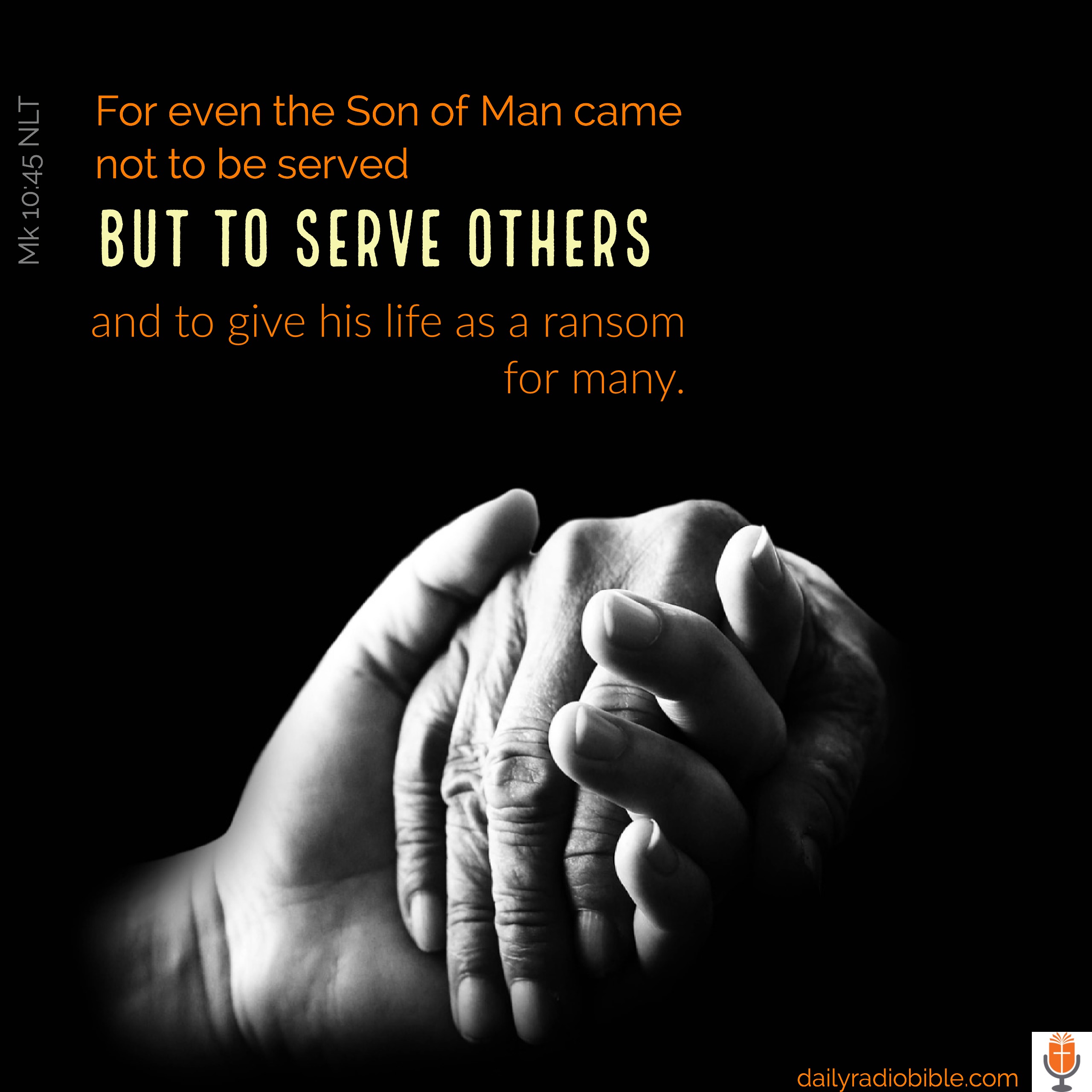
+ A leader must serve first – When the ten other disciples heard what James and John had asked, they were indignant. But Jesus called them together and said, “You know that the rulers in this world lord it over their people, and officials flaunt their authority over those under them. But among you it will be different. Whoever wants to be a leader among you must be your servant, and whoever wants to be first among you must become your slave. For even the Son of Man came not to be served but to serve others and to give his life as a ransom for many.”

Jesus Heals Two Blind Men

As Jesus and the disciples left the town of Jericho, a large crowd followed behind. Two blind men were sitting beside the road. When they heard that Jesus was coming that way, they began shouting, “Lord, Son of David, have mercy on us!”

“Be quiet!” the crowd yelled at them.

But they only shouted louder, “Lord, Son of David, have mercy on us!”

When Jesus heard them, he stopped and called, “What do you want me to do for you?”

“Lord,” they said, “we want to see!” Jesus felt sorry for them and touched their eyes. Instantly they could see! Then they followed him.

Jesus’ Triumphant Entry into Jerusalem

Matthew 21 (NLT)

As Jesus and the disciples approached Jerusalem, they came to the town of Bethphage on the Mount of Olives. Jesus sent two of them on ahead. “Go into the village over there,” he said. “As soon as you enter it, you will see a donkey tied there, with its colt beside it. Untie them and bring them to me. If anyone asks what you are doing, just say, ‘The Lord needs them,’ and he will immediately let you take them.”

This took place to fulfill the prophecy that said,

“Tell the people of Jerusalem, ‘Look, your King is coming to you. He is humble, riding on a donkey—riding on a donkey’s colt.’”

+ Jesus enters – The two disciples did as Jesus commanded. They brought the donkey and the colt to him and threw their garments over the colt, and he sat on it.

Most of the crowd spread their garments on the road ahead of him, and others cut branches from the trees and spread them on the road. Jesus was in the center of the procession, and the people all around him were shouting,

“Praise God for the Son of David! Blessings on the one who comes in the name of the Lord! Praise God in highest heaven!”

The entire city of Jerusalem was in an uproar as he entered. “Who is this?” they asked.

And the crowds replied, “It’s Jesus, the prophet from Nazareth in Galilee.”

Jesus Clears the Temple

+ Jesus cleanses – Jesus entered the Temple and began to drive out all the people buying and selling animals for sacrifice. He knocked over the tables of the money changers and the chairs of those selling doves. He said to them, “The Scriptures declare, ‘My Temple will be called a house of prayer,’ but you have turned it into a den of thieves!”

+ Jesus heals – The blind and the lame came to him in the Temple, and he healed them. 15 The leading priests and the teachers of religious law saw these wonderful miracles and heard even the children in the Temple shouting, “Praise God for the Son of David.”

But the leaders were indignant. They asked Jesus, “Do you hear what these children are saying?”

+ Jesus leaves – “Yes,” Jesus replied. “Haven’t you ever read the Scriptures? For they say, ‘You have taught children and infants to give you praise.’” Then he returned to Bethany, where he stayed overnight.

Jesus Curses the Fig Tree

In the morning, as Jesus was returning to Jerusalem, he was hungry, and he noticed a fig tree beside the road. He went over to see if there were any figs, but there were only leaves. Then he said to it, “May you never bear fruit again!” And immediately the fig tree withered up.

The disciples were amazed when they saw this and asked, “How did the fig tree wither so quickly?”

Then Jesus told them, “I tell you the truth, if you have faith and don’t doubt, you can do things like this and much more. You can even say to this mountain, ‘May you be lifted up and thrown into the sea,’ and it will happen. You can pray for anything, and if you have faith, you will receive it.”

Jesus’ Authority Challenged

+ Jesus teaching – When Jesus returned to the Temple and began teaching, the leading priests and elders came up to him. They demanded, “By what authority are you doing all these things? Who gave you the right?”

“I’ll tell you by what authority I do these things if you answer one question,” Jesus replied. “Did John’s authority to baptize come from heaven, or was it merely human?”

+ Jesus confounding – They talked it over among themselves. “If we say it was from heaven, he will ask us why we didn’t believe John. But if we say it was merely human, we’ll be mobbed because the people believe John was a prophet.” So they finally replied, “We don’t know.”

And Jesus responded, “Then I won’t tell you by what authority I do these things.

Kingdom Story of the Two Sons

“But what do you think about this? A man with two sons told the older boy, ‘Son, go out and work in the vineyard today.’ The son answered, ‘No, I won’t go,’ but later he changed his mind and went anyway. Then the father told the other son, ‘You go,’ and he said, ‘Yes, sir, I will.’ But he didn’t go.

“Which of the two obeyed his father?”

They replied, “The first.”

Then Jesus explained his meaning: “I tell you the truth, corrupt tax collectors and prostitutes will get into the Kingdom of God before you do. For John the Baptist came and showed you the right way to live, but you didn’t believe him, while tax collectors and prostitutes did. And even when you saw this happening, you refused to believe him and repent of your sins.

Kingdom Story of the Evil Farmers

“Now listen to another story. A certain landowner planted a vineyard, built a wall around it, dug a pit for pressing out the grape juice, and built a lookout tower. Then he leased the vineyard to tenant farmers and moved to another country. At the time of the grape harvest, he sent his servants to collect his share of the crop. But the farmers grabbed his servants, beat one, killed one, and stoned another. So the landowner sent a larger group of his servants to collect for him, but the results were the same.

“Finally, the owner sent his son, thinking, ‘Surely they will respect my son.’

“But when the tenant farmers saw his son coming, they said to one another, ‘Here comes the heir to this estate. Come on, let’s kill him and get the estate for ourselves!’ So they grabbed him, dragged him out of the vineyard, and murdered him.

“When the owner of the vineyard returns,” Jesus asked, “what do you think he will do to those farmers?”

The religious leaders replied, “He will put the wicked men to a horrible death and lease the vineyard to others who will give him his share of the crop after each harvest.”

Then Jesus asked them, “Didn’t you ever read this in the Scriptures?

‘The stone that the builders rejected has now become the cornerstone. This is the Lord’s doing, and it is wonderful to see.’

I tell you, the Kingdom of God will be taken away from you and given to a nation that will produce the proper fruit. Anyone who stumbles over that stone will be broken to pieces, and it will crush anyone it falls on.”

When the leading priests and Pharisees heard this parable, they realized he was telling the story against them—they were the wicked farmers. They wanted to arrest him, but they were afraid of the crowds, who considered Jesus to be a prophet.

Kingdom Story of the Great Feast

Matthew 22 (NLT)

Jesus also told them other parables. He said, “The Kingdom of Heaven can be illustrated by the story of a king who prepared a great wedding feast for his son. When the banquet was ready, he sent his servants to notify those who were invited. But they all refused to come!

“So he sent other servants to tell them, ‘The feast has been prepared. The bulls and fattened cattle have been killed, and everything is ready. Come to the banquet!’ But the guests he had invited ignored them and went their own way, one to his farm, another to his business. Others seized his messengers and insulted them and killed them.

“The king was furious, and he sent out his army to destroy the murderers and burn their town. And he said to his servants, ‘The wedding feast is ready, and the guests I invited aren’t worthy of the honor. Now go out to the street corners and invite everyone you see.’ So the servants brought in everyone they could find, good and bad alike, and the banquet hall was filled with guests.

“But when the king came in to meet the guests, he noticed a man who wasn’t wearing the proper clothes for a wedding. ‘Friend,’ he asked, ‘how is it that you are here without wedding clothes?’ But the man had no reply. Then the king said to his aides, ‘Bind his hands and feet and throw him into the outer darkness, where there will be weeping and gnashing of teeth.’

“For many are called, but few are chosen.”

Jesus Teaches on Taxes

Then the Pharisees met together to plot how to trap Jesus into saying something for which he could be arrested. They sent some of their disciples, along with the supporters of Herod, to meet with him. “Teacher,” they said, “we know how honest you are. You teach the way of God truthfully. You are impartial and don’t play favorites. Now tell us what you think about this: Is it right to pay taxes to Caesar or not?”

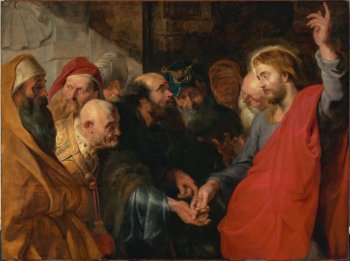
But Jesus knew their evil motives. “You hypocrites!” he said. “Why are you trying to trap me? Here, show me the coin used for the tax.” When they handed him a Roman coin, he asked, “Whose picture and title are stamped on it?”

“Caesar’s,” they replied.

“Well, then,” he said, “give to Caesar what belongs to Caesar, and give to God what belongs to God.”

His reply amazed them, and they went away.

Jesus Teaches about Resurrection

That same day Jesus was approached by some Sadducees—religious leaders who say there is no resurrection from the dead. They posed this question: “Teacher, Moses said, ‘If a man dies without children, his brother should marry the widow and have a child who will carry on the brother’s name.’ Well, suppose there were seven brothers. The oldest one married and then died without children, so his brother married the widow. But the second brother also died, and the third brother married her. This continued with all seven of them. Last of all, the woman also died. So tell us, whose wife will she be in the resurrection? For all seven were married to her.”

Jesus replied, “Your mistake is that you don’t know the Scriptures, and you don’t know the power of God. For when the dead rise, they will neither marry nor be given in marriage. In this respect they will be like the angels in heaven.

“But now, as to whether there will be a resurrection of the dead—haven’t you ever read about this in the Scriptures? Long after Abraham, Isaac, and Jacob had died, God said, ‘I am the God of Abraham, the God of Isaac, and the God of Jacob.” So he is the God of the living, not the dead.”

When the crowds heard him, they were astounded at his teaching.

Jesus Summarizes the Law

But when the Pharisees heard that he had silenced the Sadducees with his reply, they met together to question him again. One of them, an expert in religious law, tried to trap him with this question: “Teacher, which is the most important commandment in the law of Moses?”

Jesus replied, “‘You must love the Lord your God with all your heart, all your soul, and all your mind.’ This is the first and greatest commandment. A second is equally important: ‘Love your neighbor as yourself.’ The entire law and all the demands of the prophets are based on these two commandments.”

Jesus Teaches about the Messiah

Then, surrounded by the Pharisees, Jesus asked them a question: “What do you think about the Messiah? Whose son is he?”

They replied, “He is the son of David.”

Jesus responded, “Then why does David, speaking under the inspiration of the Spirit, call the Messiah ‘my Lord’? For David said,

‘The Lord said to my Lord, Sit in the place of honor at my right hand until I humble your enemies beneath your feet.’

Since David called the Messiah ‘my Lord,’ how can the Messiah be his son?”

No one could answer him. And after that, no one dared to ask him any more questions.
__________

“Come To The Table” – Sidewalk Prophets


__________

Blessing – (Northumbrian Community)

May the peace of the Lord Christ go with you, wherever He may send you. May He guide you through the wilderness, protect you through the storm. May He bring you home rejoicing at the wonders He has shown you. May He bring you home rejoicing once again into our doors.
__________

+ In the name of the Father, and the Son, and the Holy Spirit. Amen!

Morning Reading: Thu, 22 Feb – Isaiah 45-50 ~ I, the Lord, am your Savior and your Redeemer, the Mighty One of Israel.

Morning Reading

+ In the name of the Father, and the Son, and the Holy Spirit. Amen!
Opening – (Northumbria Community)

One thing I have asked of the Lord, this is what I seek: that I may dwell in the house of the Lord all the days of my life; to behold the beauty of the Lord and to seek Him in His temple.

Praise to You, Lord Jesus Christ, King of endless glory.

Reading: Isaiah 45-50 (NLT)

Cyrus, the Lord’s Chosen One

Isaiah 45 (NLT)

This is what the Lord says to Cyrus, his anointed one, whose right hand he will empower. Before him, mighty kings will be paralyzed with fear. Their fortress gates will be opened, never to shut again. This is what the Lord says:

+ I am the Lord, the God of Israel – “I will go before you, Cyrus, and level the mountains. I will smash down gates of bronze and cut through bars of iron. And I will give you treasures hidden in the darkness—secret riches. I will do this so you may know that I am the Lord, the God of Israel, the one who calls you by name.

I am the Lord, and there is no other – “And why have I called you for this work? Why did I call you by name when you did not know me? It is for the sake of Jacob my servant, Israel my chosen one. I am the Lord; there is no other God. I have equipped you for battle, though you don’t even know me, so all the world from east to west will know there is no other God. I am the Lord, and there is no other. I create the light and make the darkness. I send good times and bad times. I, the Lord, am the one who does these things.

“Open up, O heavens, and pour out your righteousness. Let the earth open wide so salvation and righteousness can sprout up together. I, the Lord, created them.

“What sorrow awaits those who argue with their Creator. Does a clay pot argue with its maker? Does the clay dispute with the one who shapes it, saying, ‘Stop, you’re doing it wrong!’ Does the pot exclaim, ‘How clumsy can you be?’ How terrible it would be if a newborn baby said to its father, ‘Why was I born?’ or if it said to its mother, ‘Why did you make me this way?’”

+ I will fulfill my purpose through Cyrus – This is what the Lord says—the Holy One of Israel and your Creator: “Do you question what I do for my children? Do you give me orders about the work of my hands? I am the one who made the earth and created people to live on it. With my hands I stretched out the heavens. All the stars are at my command. I will raise up Cyrus to fulfill my righteous purpose, and I will guide his actions. He will restore my city and free my captive people—without seeking a reward! I, the Lord of Heaven’s Armies, have spoken!”

Future Conversion of Gentiles

This is what the Lord says:

“You will rule the Egyptians, the Ethiopians, and the Sabeans. They will come to you with all their merchandise, and it will all be yours. They will follow you as prisoners in chains. They will fall to their knees in front of you and say, ‘God is with you, and he is the only God. There is no other.’”

+ I will save the people of Israel – Truly, O God of Israel, our Savior, you work in mysterious ways. All craftsmen who make idols will be humiliated. They will all be disgraced together. But the Lord will save the people of Israel with eternal salvation. Throughout everlasting ages, they will never again be humiliated and disgraced. For the Lord is God, and he created the heavens and earth and put everything in place. He made the world to be lived in, not to be a place of empty chaos.

+ I speak only what’s true and right – “I am the Lord,” he says, “and there is no other. I publicly proclaim bold promises. I do not whisper obscurities in some dark corner. I would not have told the people of Israel to seek me if I could not be found. I, the Lord, speak only what is true and declare only what is right.

+ I am God; there is no other – “Gather together and come, you fugitives from surrounding nations. What fools they are who carry around their wooden idols and pray to gods that cannot save! Consult together, argue your case. Get together and decide what to say. Who made these things known so long ago? What idol ever told you they would happen? Was it not I, the Lord? For there is no other God but me, a righteous God and Savior. There is none but me. Let all the world look to me for salvation! For I am God; there is no other. I have sworn by my own name; I have spoken the truth, and I will never go back on my word: Every knee will bend to me, and every tongue will declare allegiance to me.”

The people will declare, “The Lord is the source of all my righteousness and strength.” And all who were angry with him will come to him and be ashamed. In the Lord all the generations of Israel will be justified, and in him they will boast.

Babylon’s False Gods

Isaiah 46 (NLT)

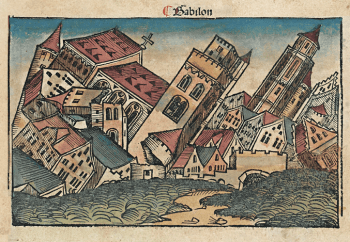
Bel and Nebo, the gods of Babylon, bow as they are lowered to the ground. They are being hauled away on ox carts. The poor beasts stagger under the weight. Both the idols and their owners are bowed down. The gods cannot protect the people, and the people cannot protect the gods. They go off into captivity together.

+ I will carry you and save you – “Listen to me, descendants of Jacob, all you who remain in Israel. I have cared for you since you were born. Yes, I carried you before you were born. I will be your God throughout your lifetime—until your hair is white with age. I made you, and I will care for you. I will carry you along and save you.

+ I have no equal – “To whom will you compare me? Who is my equal? Some people pour out their silver and gold and hire a craftsman to make a god from it. Then they bow down and worship it! They carry it around on their shoulders, and when they set it down, it stays there. It can’t even move! And when someone prays to it, there is no answer. It can’t rescue anyone from trouble.

+ I alone am God – “Do not forget this! Keep it in mind! Remember this, you guilty ones. Remember the things I have done in the past. For I alone am God! I am God, and there is none like me. Only I can tell you the future before it even happens. Everything I plan will come to pass, for I do whatever I wish. I will call a swift bird of prey from the east—a leader from a distant land to come and do my bidding. I have said what I would do, and I will do it.

+ I am ready to show my glory – “Listen to me, you stubborn people who are so far from doing right. For I am ready to set things right, not in the distant future, but right now! I am ready to save Jerusalem and show my glory to Israel.

Prediction of Babylon’s Fall

Isaiah 47 (NLT)

+ I will take vengeance – “Come down, virgin daughter of Babylon, and sit in the dust. For your days of sitting on a throne have ended. O daughter of Babylonia, never again will you be the lovely princess, tender and delicate. Take heavy millstones and grind flour. Remove your veil, and strip off your robe. Expose yourself to public view. You will be naked and burdened with shame. I will take vengeance against you without pity.”

Our Redeemer, whose name is the Lord of Heaven’s Armies, is the Holy One of Israel.

+ You showed no mercy – “O beautiful Babylon, sit now in darkness and silence. Never again will you be known as the queen of kingdoms. For I was angry with my chosen people and punished them by letting them fall into your hands. But you, Babylon, showed them no mercy. You oppressed even the elderly. You said, ‘I will reign forever as queen of the world!’ You did not reflect on your actions or think about their consequences.

“Listen to this, you pleasure-loving kingdom, living at ease and feeling secure. You say, ‘I am the only one, and there is no other. I will never be a widow or lose my children.’ Well, both these things will come upon you in a moment: widowhood and the loss of your children. Yes, these calamities will come upon you, despite all your witchcraft and magic.

+ You are unprepared for catastrophe – “You felt secure in your wickedness. ‘No one sees me,’ you said. But your ‘wisdom’ and ‘knowledge’ have led you astray, and you said, ‘I am the only one, and there is no other.’ So disaster will overtake you, and you won’t be able to charm it away. Calamity will fall upon you, and you won’t be able to buy your way out. A catastrophe will strike you suddenly, one for which you are not prepared.

+ Your seers can’t save you – “Now use your magical charms! Use the spells you have worked at all these years! Maybe they will do you some good. Maybe they can make someone afraid of you. All the advice you receive has made you tired. Where are all your astrologers, those stargazers who make predictions each month? Let them stand up and save you from what the future holds. But they are like straw burning in a fire; they cannot save themselves from the flame. You will get no help from them at all; their hearth is no place to sit for warmth. And all your friends, those with whom you’ve done business since childhood, will go their own ways, turning a deaf ear to your cries.

God’s Stubborn People

Isaiah 48 (NLT)

+ I told you so – “Listen to me, O family of Jacob, you who are called by the name of Israel and born into the family of Judah. Listen, you who take oaths in the name of the Lord and call on the God of Israel. You don’t keep your promises, even though you call yourself the holy city and talk about depending on the God of Israel, whose name is the Lord of Heaven’s Armies. Long ago I told you what was going to happen. Then suddenly I took action, and all my predictions came true. For I know how stubborn and obstinate you are. Your necks are as unbending as iron. Your heads are as hard as bronze. 5 That is why I told you what would happen; I told you beforehand what I was going to do. Then you could never say, ‘My idols did it. My wooden image and metal god commanded it to happen!’ You have heard my predictions and seen them fulfilled, but you refuse to admit it. Now I will tell you new things, secrets you have not yet heard. They are brand new, not things from the past. So you cannot say, ‘We knew that all the time!’

+ I have refined you through suffering – “Yes, I will tell you of things that are entirely new, things you never heard of before. For I know so well what traitors you are. You have been rebels from birth. Yet for my own sake and for the honor of my name, I will hold back my anger and not wipe you out. I have refined you, but not as silver is refined. Rather, I have refined you in the furnace of suffering. I will rescue you for my sake—yes, for my own sake! I will not let my reputation be tarnished, and I will not share my glory with idols!

Freedom from Babylon

“Listen to me, O family of Jacob, Israel my chosen one! I alone am God, the First and the Last. It was my hand that laid the foundations of the earth, my right hand that spread out the heavens above. When I call out the stars, they all appear in order.”

+ Cyrus will free you from Babylon – Have any of your idols ever told you this? Come, all of you, and listen: The Lord has chosen Cyrus as his ally. He will use him to put an end to the empire of Babylon and to destroy the Babylonian armies.

“I have said it: I am calling Cyrus! I will send him on this errand and will help him succeed. Come closer, and listen to this. From the beginning I have told you plainly what would happen.”

And now the Sovereign Lord and his Spirit have sent me with this message. This is what the Lord says—your Redeemer, the Holy One of Israel:

+ Oh, that you had listened – “I am the Lord your God, who teaches you what is good for you and leads you along the paths you should follow. Oh, that you had listened to my commands! Then you would have had peace flowing like a gentle river and righteousness rolling over you like waves in the sea. Your descendants would have been like the sands along the seashore—too many to count! There would have been no need for your destruction, or for cutting off your family name.”

+ God has redeemed us – Yet even now, be free from your captivity! Leave Babylon and the Babylonians. Sing out this message! Shout it to the ends of the earth! The Lord has redeemed his servants, the people of Israel. They were not thirsty when he led them through the desert. He divided the rock, and water gushed out for them to drink. “But there is no peace for the wicked,” says the Lord.

The Lord’s Servant Commissioned

Isaiah 49 (NLT)

Listen to me, all you in distant lands! Pay attention, you who are far away! The Lord called me before my birth; from within the womb he called me by name. He made my words of judgment as sharp as a sword. He has hidden me in the shadow of his hand. I am like a sharp arrow in his quiver.

He said to me, “You are my servant, Israel, and you will bring me glory.”

I replied, “But my work seems so useless! I have spent my strength for nothing and to no purpose. Yet I leave it all in the Lord’s hand; I will trust God for my reward.”

+ A light to the Gentiles – And now the Lord speaks—the one who formed me in my mother’s womb to be his servant, who commissioned me to bring Israel back to him. The Lord has honored me, and my God has given me strength. He says, “You will do more than restore the people of Israel to me. I will make you a light to the Gentiles, and you will bring my salvation to the ends of the earth.”

The Lord, the Redeemer and Holy One of Israel, says to the one who is despised and rejected by the nations, to the one who is the servant of rulers: “Kings will stand at attention when you pass by. Princes will also bow low because of the Lord, the faithful one, the Holy One of Israel, who has chosen you.”

Promises of Israel’s Restoration

This is what the Lord says:

+ The Lord in his mercy will lead them – “At just the right time, I will respond to you. On the day of salvation I will help you. I will protect you and give you to the people as my covenant with them. Through you I will reestablish the land of Israel and assign it to its own people again. I will say to the prisoners, ‘Come out in freedom,’ and to those in darkness, ‘Come into the light.’ They will be my sheep, grazing in green pastures and on hills that were previously bare. They will neither hunger nor thirst. The searing sun will not reach them anymore. For the Lord in his mercy will lead them; he will lead them beside cool waters. And I will make my mountains into level paths for them. The highways will be raised above the valleys. See, my people will return from far away, from lands to the north and west, and from as far south as Egypt.”

Sing for joy, O heavens! Rejoice, O earth! Burst into song, O mountains! For the Lord has comforted his people and will have compassion on them in their suffering.

+ The Lord has not forgotten you – Yet Jerusalem says, “The Lord has deserted us; the Lord has forgotten us.”

“Never! Can a mother forget her nursing child? Can she feel no love for the child she has borne? But even if that were possible, I would not forget you! See, I have written your name on the palms of my hands. Always in my mind is a picture of Jerusalem’s walls in ruins. Soon your descendants will come back, and all who are trying to destroy you will go away. Look around you and see, for all your children will come back to you. As surely as I live,” says the Lord, “they will be like jewels or bridal ornaments for you to display.

+ The Lord will bring back your children – “Even the most desolate parts of your abandoned land will soon be crowded with your people. Your enemies who enslaved you will be far away. The generations born in exile will return and say, ‘We need more room! It’s crowded here!’ Then you will think to yourself, ‘Who has given me all these descendants? For most of my children were killed, and the rest were carried away into exile. I was left here all alone. Where did all these people come from? Who bore these children? Who raised them for me?’”

This is what the Sovereign Lord says:

“See, I will give a signal to the godless nations. They will carry your little sons back to you in their arms; they will bring your daughters on their shoulders. Kings and queens will serve you and care for all your needs. They will bow to the earth before you and lick the dust from your feet. Then you will know that I am the Lord. Those who trust in me will never be put to shame.”

+ The Lord will fight for you – Who can snatch the plunder of war from the hands of a warrior? Who can demand that a tyrant let his captives go? But the Lord says, “The captives of warriors will be released, and the plunder of tyrants will be retrieved. For I will fight those who fight you, and I will save your children. I will feed your enemies with their own flesh. They will be drunk with rivers of their own blood. All the world will know that I, the Lord, am your Savior and your Redeemer, the Mighty One of Israel.”

Isaiah 50 (NLT)

This is what the Lord says:

+ You were sold because of your sins – “Was your mother sent away because I divorced her? Did I sell you as slaves to my creditors? No, you were sold because of your sins. And your mother, too, was taken because of your sins. Why was no one there when I came? Why didn’t anyone answer when I called? Is it because I have no power to rescue? No, that is not the reason! For I can speak to the sea and make it dry up! I can turn rivers into deserts covered with dying fish. I dress the skies in darkness, covering them with clothes of mourning.”

The Lord’s Obedient Servant

The Sovereign Lord has given me his words of wisdom, so that I know how to comfort the weary. Morning by morning he wakens me and opens my understanding to his will. The Sovereign Lord has spoken to me, and I have listened. I have not rebelled or turned away. I offered my back to those who beat me and my cheeks to those who pulled out my beard. I did not hide my face from mockery and spitting.

+ I have set my face like a stone – Because the Sovereign Lord helps me, I will not be disgraced. Therefore, I have set my face like a stone, determined to do his will. And I know that I will not be put to shame. He who gives me justice is near. Who will dare to bring charges against me now? Where are my accusers? Let them appear! See, the Sovereign Lord is on my side! Who will declare me guilty? All my enemies will be destroyed like old clothes that have been eaten by moths!

+ Trust in the Lord – Who among you fears the Lord and obeys his servant? If you are walking in darkness, without a ray of light, trust in the Lord and rely on your God. But watch out, you who live in your own light and warm yourselves by your own fires. This is the reward you will receive from me: You will soon fall down in great torment.
__________

“Just As I Am” – Michael Neale (Intro By Billy Graham)


__________

Blessing – (Northumbrian Community)

May the peace of the Lord Christ go with you, wherever He may send you. May He guide you through the wilderness, protect you through the storm. May He bring you home rejoicing at the wonders He has shown you. May He bring you home rejoicing once again into our doors.
__________

+ In the name of the Father, and the Son, and the Holy Spirit. Amen!