
One thing I have asked of the Lord, this is what I seek: that I may dwell in the house of the Lord all the days of my life; to behold the beauty of the Lord and to seek Him in His temple.
Praise to You, Lord Jesus Christ, King of endless glory.
Reading: Job 25-26 (NLT)
Bildad: No One Is Innocent
Job 25 (NLT)
Then Bildad the Shuhite replied:
“God is powerful and dreadful. He enforces peace in the heavens. Who is able to count his heavenly army? Doesn’t his light shine on all the earth? How can a mortal be innocent before God? Can anyone born of a woman be pure? God is more glorious than the moon; he shines brighter than the stars. In comparison, people are maggots; we mortals are mere worms.”
Job: You Don’t Speak for God
Job 26 (NLT)
Then Job spoke again:
“How you have helped the powerless! How you have saved the weak! How you have enlightened my stupidity! What wise advice you have offered! Where have you gotten all these wise sayings? Whose spirit speaks through you?
“The dead tremble—those who live beneath the waters. The underworld is naked in God’s presence. The place of destruction is uncovered. God stretches the northern sky over empty space and hangs the earth on nothing. He wraps the rain in his thick clouds, and the clouds don’t burst with the weight. He covers the face of the moon, shrouding it with his clouds. He created the horizon when he separated the waters; he set the boundary between day and night. The foundations of heaven tremble; they shudder at his rebuke. By his power the sea grew calm. By his skill he crushed the great sea monster. His Spirit made the heavens beautiful, and his power pierced the gliding serpent. These are just the beginning of all that he does, merely a whisper of his power. Who, then, can comprehend the thunder of his power?”
__________
May the peace of the Lord Christ go with you, wherever He may send you. May He guide you through the wilderness, protect you through the storm. May He bring you home rejoicing at the wonders He has shown you. May He bring you home rejoicing once again into our doors.
__________
+ In the name of the Father, and the Son, and the Holy Spirit. Amen!
One thing I have asked of the Lord, this is what I seek: that I may dwell in the house of the Lord all the days of my life; to behold the beauty of the Lord and to seek Him in His temple.
Praise to You, Lord Jesus Christ, King of endless glory.
Reading: 1 Samuel 6-10 (NLT)
The Philistines Return the Ark
1 Samuel 6 (NLT)
The Ark of the Lord remained in Philistine territory seven months in all. Then the Philistines called in their priests and diviners and asked them, “What should we do about the Ark of the Lord? Tell us h ow to return it to its own country.”
+ The guilt offering – “Send the Ark of the God of Israel back with a gift,” they were told. “Send a guilt offering so the plague will stop. Then, if you are healed, you will know it was his hand that caused the plague.”
“What sort of guilt offering should we send?” they asked.
And they were told, “Since the plague has struck both you and your five rulers, make five gold tumors and five gold rats, just like those that have ravaged your land. Make these things to show honor to the God of Israel. Perhaps then he will stop afflicting you, your gods, and your land. Don’t be stubborn and rebellious as Pharaoh and the Egyptians were. By the time God was finished with them, they were eager to let Israel go.
+ The cow-driven cart – “Now build a new cart, and find two cows that have just given birth to calves. Make sure the cows have never been yoked to a cart. Hitch the cows to the cart, but shut their calves away from them in a pen. Put the Ark of the Lord on the cart, and beside it place a chest containing the gold rats and gold tumors you are sending as a guilt offering. Then let the cows go wherever they want. If they cross the border of our land and go to Beth-shemesh, we will know it was the Lord who brought this great disaster upon us. If they don’t, we will know it was not his hand that caused the plague. It came simply by chance.”
+ Heading for home – So these instructions were carried out. Two cows were hitched to the cart, and their newborn calves were shut up in a pen. Then the Ark of the Lord and the chest containing the gold rats and gold tumors were placed on the cart. And sure enough, without veering off in other directions, the cows went straight along the road toward Beth-shemesh, lowing as they went. The Philistine rulers followed them as far as the border of Beth-shemesh.
+ Sacrifice and celebration – The people of Beth-shemesh were harvesting wheat in the valley, and when they saw the Ark, they were overjoyed! The cart came into the field of a man named Joshua and stopped beside a large rock. So the people broke up the wood of the cart for a fire and killed the cows and sacrificed them to the Lord as a burnt offering. Several men of the tribe of Levi lifted the Ark of the Lord and the chest containing the gold rats and gold tumors from the cart and placed them on the large rock. Many sacrifices and burnt offerings were offered to the Lord that day by the people of Beth-shemesh. The five Philistine rulers watched all this and then returned to Ekron that same day.
The five gold tumors sent by the Philistines as a guilt offering to the Lord were gifts from the rulers of Ashdod, Gaza, Ashkelon, Gath, and Ekron. The five gold rats represented the five Philistine towns and their surrounding villages, which were controlled by the five rulers. The large rock at Beth-shemesh, where they set the Ark of the Lord, still stands in the field of Joshua as a witness to what happened there.
The Ark Moved to Kiriath-Jearim
+ Lethal curiosity – But the Lord killed seventy men from Beth-shemesh because they looked into the Ark of the Lord. And the people mourned greatly because of what the Lord had done. “Who is able to stand in the presence of the Lord, this holy God?” they cried out. “Where can we send the Ark from here?”
So they sent messengers to the people at Kiriath-jearim and told them, “The Philistines have returned the Ark of the Lord. Come here and get it!”
1 Samuel 7 (NLT)
+ Twenty years of mourning – So the men of Kiriath-jearim came to get the Ark of the Lord. They took it to the hillside home of Abinadab and ordained Eleazar, his son, to be in charge of it. The Ark remained in Kiriath-jearim for a long time—twenty years in all. During that time all Israel mourned because it seemed the Lord had abandoned them.
Samuel Leads Israel to Victory
+ Repent and return – Then Samuel said to all the people of Israel, “If you want to return to the Lord with all your hearts, get rid of your foreign gods and your images of Ashtoreth. Turn your hearts to the Lord and obey him alone; then he will rescue you from the Philistines.” So the Israelites got rid of their images of Baal and Ashtoreth and worshiped only the Lord.
+ Prayer and fasting – Then Samuel told them, “Gather all of Israel to Mizpah, and I will pray to the Lord for you.” So they gathered at Mizpah and, in a great ceremony, drew water from a well and poured it out before the Lord. They also went without food all day and confessed that they had sinned against the Lord. (It was at Mizpah that Samuel became Israel’s judge.)
+ Philistines mobilize – When the Philistine rulers heard that Israel had gathered at Mizpah, they mobilized their army and advanced. The Israelites were badly frightened when they learned that the Philistines were approaching. “Don’t stop pleading with the Lord our God to save us from the Philistines!” they begged Samuel. So Samuel took a young lamb and offered it to the Lord as a whole burnt offering. He pleaded with the Lord to help Israel, and the Lord answered him.
+ God intervenes – Just as Samuel was sacrificing the burnt offering, the Philistines arrived to attack Israel. But the Lord spoke with a mighty voice of thunder from heaven that day, and the Philistines were thrown into such confusion that the Israelites defeated them. The men of Israel chased them from Mizpah to a place below Beth-car, slaughtering them all along the way.
+ Ebenezer – Samuel then took a large stone and placed it between the towns of Mizpah and Jeshanah. He named it Ebenezer (which means “the stone of help”), for he said, “Up to this point the Lord has helped us!”
+ Philistines subdued – So the Philistines were subdued and didn’t invade Israel again for some time. And throughout Samuel’s lifetime, the Lord’s powerful hand was raised against the Philistines. The Israelite villages near Ekron and Gath that the Philistines had captured were restored to Israel, along with the rest of the territory that the Philistines had taken. And there was peace between Israel and the Amorites in those days.
+ The end of an era – Samuel continued as Israel’s judge for the rest of his life. Each year he traveled around, setting up his court first at Bethel, then at Gilgal, and then at Mizpah. He judged the people of Israel at each of these places. Then he would return to his home at Ramah, and he would hear cases there, too. And Samuel built an altar to the Lord at Ramah.
Israel Requests a King
1 Samuel 8 (NLT)
+ Samuel’s wicked sons – As Samuel grew old, he appointed his sons to be judges over Israel. Joel and Abijah, his oldest sons, held court in Beersheba. But they were not like their father, for they were greedy for money. They accepted bribes and perverted justice.
+ Give us a king – Finally, all the elders of Israel met at Ramah to discuss the matter with Samuel. “Look,” they told him, “you are now old, and your sons are not like you. Give us a king to judge us like all the other nations have.”
+ Rejecting God – Samuel was displeased with their request and went to the Lord for guidance. “Do everything they say to you,” the Lord replied, “for they are rejecting me, not you. They don’t want me to be their king any longer. Ever since I brought them from Egypt they have continually abandoned me and followed other gods. And now they are giving you the same treatment. Do as they ask, but solemnly warn them about the way a king will reign over them.”
Samuel Warns against a Kingdom
So Samuel passed on the Lord’s warning to the people who were asking him for a king. “This is how a king will reign over you,” Samuel said.
“The king will draft your sons and assign them to his chariots and his charioteers, making them run before his chariots.
Some will be generals and captains in his army, some will be forced to plow in his fields and harvest his crops, and some will make his weapons and chariot equipment.
The king will take your daughters from you and force them to cook and bake and make perfumes for him.
He will take away the best of your fields and vineyards and olive groves and give them to his own officials.
He will take a tenth of your grain and your grape harvest and distribute it among his officers and attendants.
He will take your male and female slaves and demand the finest of your cattle and donkeys for his own use.
He will demand a tenth of your flocks, and you will be his slaves.
When that day comes, you will beg for relief from this king you are demanding, but then the Lord will not help you.”
+ We want to be like everyone else – But the people refused to listen to Samuel’s warning. “Even so, we still want a king,” they said. “We want to be like the nations around us. Our king will judge us and lead us into battle.”
+ Give them what they want – So Samuel repeated to the Lord what the people had said, and the Lord replied, “Do as they say, and give them a king.” Then Samuel agreed and sent the people home.
Saul Meets Samuel
1 Samuel 9 (NLT)
There was a wealthy, influential man named Kish from the tribe of Benjamin. He was the son of Abiel, son of Zeror, son of Becorath, son of Aphiah, of the tribe of Benjamin. His son Saul was the most handsome man in Israel—head and shoulders taller than anyone else in the land.
+ Lost donkeys – One day Kish’s donkeys strayed away, and he told Saul, “Take a servant with you, and go look for the donkeys.” So Saul took one of the servants and traveled through the hill country of Ephraim, the land of Shalishah, the Shaalim area, and the entire land of Benjamin, but they couldn’t find the donkeys anywhere.
Finally, they entered the region of Zuph, and Saul said to his servant, “Let’s go home. By now my father will be more worried about us than about the donkeys!”
+ Ask for help – But the servant said, “I’ve just thought of something! There is a man of God who lives here in this town. He is held in high honor by all the people because everything he says comes true. Let’s go find him. Perhaps he can tell us which way to go.”
“But we don’t have anything to offer him,” Saul replied. “Even our food is gone, and we don’t have a thing to give him.”
+ It’s worth a try – “Well,” the servant said, “I have one small silver piece. We can at least offer it to the man of God and see what happens!” (In those days if people wanted a message from God, they would say, “Let’s go and ask the seer,” for prophets used to be called seers.)
“All right,” Saul agreed, “let’s try it!” So they started into the town where the man of God lived.
As they were climbing the hill to the town, they met some young women coming out to draw water. So Saul and his servant asked, “Is the seer here today?”
“Yes,” they replied. “Stay right on this road. He is at the town gates. He has just arrived to take part in a public sacrifice up at the place of worship. Hurry and catch him before he goes up there to eat. The guests won’t begin eating until he arrives to bless the food.”
So they entered the town, and as they passed through the gates, Samuel was coming out toward them to go up to the place of worship.
+ Prophecy fulfilled – Now the Lord had told Samuel the previous day, “About this time tomorrow I will send you a man from the land of Benjamin. Anoint him to be the leader of my people, Israel. He will rescue them from the Philistines, for I have looked down on my people in mercy and have heard their cry.”
When Samuel saw Saul, the Lord said, “That’s the man I told you about! He will rule my people.”
Just then Saul approached Samuel at the gateway and asked, “Can you please tell me where the seer’s house is?”
+ Prophecy revealed – “I am the seer!” Samuel replied. “Go up to the place of worship ahead of me. We will eat there together, and in the morning I’ll tell you what you want to know and send you on your way. And don’t worry about those donkeys that were lost three days ago, for they have been found. And I am here to tell you that you and your family are the focus of all Israel’s hopes.”
Saul replied, “But I’m only from the tribe of Benjamin, the smallest tribe in Israel, and my family is the least important of all the families of that tribe! Why are you talking like this to me?”
+ Guest of honor – Then Samuel brought Saul and his servant into the hall and placed them at the head of the table, honoring them above the thirty special guests. Samuel then instructed the cook to bring Saul the finest cut of meat, the piece that had been set aside for the guest of honor. So the cook brought in the meat and placed it before Saul. “Go ahead and eat it,” Samuel said. “I was saving it for you even before I invited these others!” So Saul ate with Samuel that day.
When they came down from the place of worship and returned to town, Samuel took Saul up to the roof of the house and prepared a bed for him there. At daybreak the next morning, Samuel called to Saul, “Get up! It’s time you were on your way.” So Saul got ready, and he and Samuel left the house together. When they reached the edge of town, Samuel told Saul to send his servant on ahead. After the servant was gone, Samuel said, “Stay here, for I have received a special message for you from God.”
Samuel Anoints Saul as King
1 Samuel 10 (NLT)
+ Anointing – Then Samuel took a flask of olive oil and poured it over Saul’s head. He kissed Saul and said, “I am doing this because the Lord has appointed you to be the ruler over Israel, his special possession. When you leave me today, you will see two men beside Rachel’s tomb at Zelzah, on the border of Benjamin. They will tell you that the donkeys have been found and that your father has stopped worrying about them and is now worried about you. He is asking, ‘Have you seen my son?’
+ Signs – “When you get to the oak of Tabor, you will see three men coming toward you who are on their way to worship God at Bethel. One will be bringing three young goats, another will have three loaves of bread, and the third will be carrying a wineskin full of wine. They will greet you and offer you two of the loaves, which you are to accept.
+ Spirit-filled – “When you arrive at Gibeah of God, where the garrison of the Philistines is located, you will meet a band of prophets coming down from the place of worship. They will be playing a harp, a tambourine, a flute, and a lyre, and they will be prophesying. At that time the Spirit of the Lord will come powerfully upon you, and you will prophesy with them. You will be changed into a different person. After these signs take place, do what must be done, for God is with you. Then go down to Gilgal ahead of me. I will join you there to sacrifice burnt offerings and peace offerings. You must wait for seven days until I arrive and give you further instructions.”
Samuel’s Signs Are Fulfilled
+ A new heart – As Saul turned and started to leave, God gave him a new heart, and all Samuel’s signs were fulfilled that day. When Saul and his servant arrived at Gibeah, they saw a group of prophets coming toward them. Then the Spirit of God came powerfully upon Saul, and he, too, began to prophesy. When those who knew Saul heard about it, they exclaimed, “What? Is even Saul a prophet? How did the son of Kish become a prophet?”
+ A new prophet – And one of those standing there said, “Can anyone become a prophet, no matter who his father is?” So that is the origin of the saying “Is even Saul a prophet?”
When Saul had finished prophesying, he went up to the place of worship. “Where have you been?” Saul’s uncle asked him and his servant.
+ A new secret – “We were looking for the donkeys,” Saul replied, “but we couldn’t find them. So we went to Samuel to ask him where they were.”
“Oh? And what did he say?” his uncle asked.
“He told us that the donkeys had already been found,” Saul replied. But Saul didn’t tell his uncle what Samuel said about the kingdom.
Saul Is Acclaimed King
Later Samuel called all the people of Israel to meet before the Lord at Mizpah. And he said, “This is what the Lord, the God of Israel, has declared: I brought you from Egypt and rescued you from the Egyptians and from all of the nations that were oppressing you. But though I have rescued you from your misery and distress, you have rejected your God today and have said, ‘No, we want a king instead!’ Now, therefore, present yourselves before the Lord by tribes and clans.”
+ Chosen by lot – So Samuel brought all the tribes of Israel before the Lord, and the tribe of Benjamin was chosen by lot. Then he brought each family of the tribe of Benjamin before the Lord, and the family of the Matrites was chosen. And finally Saul son of Kish was chosen from among them. But when they looked for him, he had disappeared! So they asked the Lord, “Where is he?”
And the Lord replied, “He is hiding among the baggage.” So they found him and brought him out, and he stood head and shoulders above anyone else.
+ Chosen by God – Then Samuel said to all the people, “This is the man the Lord has chosen as your king. No one in all Israel is like him!”
And all the people shouted, “Long live the king!”
+ Job description – Then Samuel told the people what the rights and duties of a king were. He wrote them down on a scroll and placed it before the Lord. Then Samuel sent the people home again.
+ Mixed reception – When Saul returned to his home at Gibeah, a group of men whose hearts God had touched went with him. But there were some scoundrels who complained, “How can this man save us?” And they scorned him and refused to bring him gifts. But Saul ignored them.
[Nahash, king of the Ammonites, had been grievously oppressing the people of Gad and Reuben who lived east of the Jordan River. He gouged out the right eye of each of the Israelites living there, and he didn’t allow anyone to come and rescue them. In fact, of all the Israelites east of the Jordan, there wasn’t a single one whose right eye Nahash had not gouged out. But there were 7,000 men who had escaped from the Ammonites, and they had settled in Jabesh-gilead.]
__________
May the peace of the Lord Christ go with you, wherever He may send you. May He guide you through the wilderness, protect you through the storm. May He bring you home rejoicing at the wonders He has shown you. May He bring you home rejoicing once again into our doors.
__________
+ In the name of the Father, and the Son, and the Holy Spirit. Amen!

One thing I have asked of the Lord, this is what I seek: that I may dwell in the house of the Lord all the days of my life; to behold the beauty of the Lord and to seek Him in His temple.
Praise to You, Lord Jesus Christ, King of endless glory.
Reading: Genesis 44-47 (NLT)
Joseph’s Silver Cup
Genesis 44 (NLT)
+ Entrapment – When his brothers were ready to leave, Joseph gave these instructions to his palace manager: “Fill each of their sacks with as much grain as they can carry, and put each man’s money back into his sack. Then put my personal silver cup at the top of the youngest brother’s sack, along with the money for his grain.” So the manager did as Joseph instructed him.
The brothers were up at dawn and were sent on their journey with their loaded donkeys. But when they had gone only a short distance and were barely out of the city, Joseph said to his palace manager, “Chase after them and stop them. When you catch up with them, ask them, ‘Why have you repaid my kindness with such evil? Why have you stolen my master’s silver cup, which he uses to predict the future? What a wicked thing you have done!’”
+ Search – When the palace manager caught up with the men, he spoke to them as he had been instructed.
“What are you talking about?” the brothers responded. “We are your servants and would never do such a thing! Didn’t we return the money we found in our sacks? We brought it back all the way from the land of Canaan. Why would we steal silver or gold from your master’s house? If you find his cup with any one of us, let that man die. And all the rest of us, my lord, will be your slaves.”
“That’s fair,” the man replied. “But only the one who stole the cup will be my slave. The rest of you may go free.”
+ Arrest – They all quickly took their sacks from the backs of their donkeys and opened them. The palace manager searched the brothers’ sacks, from the oldest to the youngest. And the cup was found in Benjamin’s sack! When the brothers saw this, they tore their clothing in despair. Then they loaded their donkeys again and returned to the city.
+ Arraignment – Joseph was still in his palace when Judah and his brothers arrived, and they fell to the ground before him. “What have you done?” Joseph demanded. “Don’t you know that a man like me can predict the future?”
Judah answered, “Oh, my lord, what can we say to you? How can we explain this? How can we prove our innocence? God is punishing us for our sins. My lord, we have all returned to be your slaves—all of us, not just our brother who had your cup in his sack.”
+ Charge – “No,” Joseph said. “I would never do such a thing! Only the man who stole the cup will be my slave. The rest of you may go back to your father in peace.”
Judah Speaks for His Brothers
Then Judah stepped forward and said, “Please, my lord, let your servant say just one word to you. Please, do not be angry with me, even though you are as powerful as Pharaoh himself.
+ Inquest – “My lord, previously you asked us, your servants, ‘Do you have a father or a brother?’ And we responded, ‘Yes, my lord, we have a father who is an old man, and his youngest son is a child of his old age. His full brother is dead, and he alone is left of his mother’s children, and his father loves him very much.’
“And you said to us, ‘Bring him here so I can see him with my own eyes.’ But we said to you, ‘My lord, the boy cannot leave his father, for his father would die.’ But you told us, ‘Unless your youngest brother comes with you, you will never see my face again.’
+ Return – “So we returned to your servant, our father, and told him what you had said. Later, when he said, ‘Go back again and buy us more food,’ we replied, ‘We can’t go unless you let our youngest brother go with us. We’ll never get to see the man’s face unless our youngest brother is with us.’
+ Grief – “Then my father said to us, ‘As you know, my wife had two sons, and one of them went away and never returned. Doubtless he was torn to pieces by some wild animal. I have never seen him since. Now if you take his brother away from me, and any harm comes to him, you will send this grieving, white-haired man to his grave.’
+ Shock – “And now, my lord, I cannot go back to my father without the boy. Our father’s life is bound up in the boy’s life. If he sees that the boy is not with us, our father will die. We, your servants, will indeed be responsible for sending that grieving, white-haired man to his grave. My lord, I guaranteed to my father that I would take care of the boy. I told him, ‘If I don’t bring him back to you, I will bear the blame forever.’
+ Take me – “So please, my lord, let me stay here as a slave instead of the boy, and let the boy return with his brothers. For how can I return to my father if the boy is not with me? I couldn’t bear to see the anguish this would cause my father!”
Joseph Reveals His Identity
Genesis 45 (NLT)
Joseph could stand it no longer. There were many people in the room, and he said to his attendants, “Out, all of you!” So he was alone with his brothers when he told them who he was. Then he broke down and wept. He wept so loudly the Egyptians could hear him, and word of it quickly carried to Pharaoh’s palace.
+ Reveal – “I am Joseph!” he said to his brothers. “Is my father still alive?” But his brothers were speechless! They were stunned to realize that Joseph was standing there in front of them. “Please, come closer,” he said to them. So they came closer. And he said again, “I am Joseph, your brother, whom you sold into slavery in Egypt. But don’t be upset, and don’t be angry with yourselves for selling me to this place. It was God who sent me here ahead of you to preserve your lives. This famine that has ravaged the land for two years will last five more years, and there will be neither plowing nor harvesting. God has sent me ahead of you to keep you and your families alive and to preserve many survivors. So it was God who sent me here, not you! And he is the one who made me an adviser to Pharaoh—the manager of his entire palace and the governor of all Egypt.
+ Return – “Now hurry back to my father and tell him, ‘This is what your son Joseph says: God has made me master over all the land of Egypt. So come down to me immediately! You can live in the region of Goshen, where you can be near me with all your children and grandchildren, your flocks and herds, and everything you own. I will take care of you there, for there are still five years of famine ahead of us. Otherwise you, your household, and all your animals will starve.’”
+ Rejoice – Then Joseph added, “Look! You can see for yourselves, and so can my brother Benjamin, that I really am Joseph! Go tell my father of my honored position here in Egypt. Describe for him everything you have seen, and then bring my father here quickly.” Weeping with joy, he embraced Benjamin, and Benjamin did the same. Then Joseph kissed each of his brothers and wept over them, and after that they began talking freely with him.
Pharaoh Invites Jacob to Egypt
The news soon reached Pharaoh’s palace: “Joseph’s brothers have arrived!” Pharaoh and his officials were all delighted to hear this.
+ Pharaoh’s land grant – Pharaoh said to Joseph, “Tell your brothers, ‘This is what you must do: Load your pack animals, and hurry back to the land of Canaan. Then get your father and all of your families, and return here to me. I will give you the very best land in Egypt, and you will eat from the best that the land produces.’”
Then Pharaoh said to Joseph, “Tell your brothers, ‘Take wagons from the land of Egypt to carry your little children and your wives, and bring your father here. Don’t worry about your personal belongings, for the best of all the land of Egypt is yours.’”
+ Treasure caravan – So the sons of Jacob did as they were told. Joseph provided them with wagons, as Pharaoh had commanded, and he gave them supplies for the journey. And he gave each of them new clothes—but to Benjamin he gave five changes of clothes and 300 pieces of silver. He also sent his father ten male donkeys loaded with the finest products of Egypt, and ten female donkeys loaded with grain and bread and other supplies he would need on his journey.
So Joseph sent his brothers off, and as they left, he called after them, “Don’t quarrel about all this along the way!” And they left Egypt and returned to their father, Jacob, in the land of Canaan.
+ Jacob’s joy – “Joseph is still alive!” they told him. “And he is governor of all the land of Egypt!” Jacob was stunned at the news—he couldn’t believe it. But when they repeated to Jacob everything Joseph had told them, and when he saw the wagons Joseph had sent to carry him, their father’s spirits revived.
Then Jacob exclaimed, “It must be true! My son Joseph is alive! I must go and see him before I die.”
Jacob’s Journey to Egypt
Genesis 46 (NLT)
So Jacob set out for Egypt with all his possessions. And when he came to Beersheba, he offered sacrifices to the God of his father, Isaac. During the night God spoke to him in a vision. “Jacob! Jacob!” he called.
“Here I am,” Jacob replied.
+ God’s blessing – “I am God, the God of your father,” the voice said. “Do not be afraid to go down to Egypt, for there I will make your family into a great nation. I will go with you down to Egypt, and I will bring you back again. You will die in Egypt, but Joseph will be with you to close your eyes.”
So Jacob left Beersheba, and his sons took him to Egypt. They carried him and their little ones and their wives in the wagons Pharaoh had provided for them. They also took all their livestock and all the personal belongings they had acquired in the land of Canaan. Jacob and his entire family went to Egypt — sons and grandsons, daughters and granddaughters — all his descendants.
+ Census – These are the names of the descendants of Israel—the sons of Jacob—who went to Egypt:
Reuben was Jacob’s oldest son. The sons of Reuben were Hanoch, Pallu, Hezron, and Carmi.
The sons of Simeon were Jemuel, Jamin, Ohad, Jakin, Zohar, and Shaul. (Shaul’s mother was a Canaanite woman.)
The sons of Levi were Gershon, Kohath, and Merari.
The sons of Judah were Er, Onan, Shelah, Perez, and Zerah (though Er and Onan had died in the land of Canaan).
The sons of Perez were Hezron and Hamul.
The sons of Issachar were Tola, Puah, Jashub, and Shimron.
The sons of Zebulun were Sered, Elon, and Jahleel.
These were the sons of Leah and Jacob who were born in Paddan-aram, in addition to their daughter, Dinah. The number of Jacob’s descendants (male and female) through Leah was thirty-three.
The sons of Gad were Zephon,[k] Haggi, Shuni, Ezbon, Eri, Arodi, and Areli.
The sons of Asher were Imnah, Ishvah, Ishvi, and Beriah. Their sister was Serah. Beriah’s sons were Heber and Malkiel.
These were the sons of Zilpah, the servant given to Leah by her father, Laban. The number of Jacob’s descendants through Zilpah was sixteen.
The sons of Jacob’s wife Rachel were Joseph and Benjamin.
Joseph’s sons, born in the land of Egypt, were Manasseh and Ephraim. Their mother was Asenath, daughter of Potiphera, the priest of On.
Benjamin’s sons were Bela, Beker, Ashbel, Gera, Naaman, Ehi, Rosh, Muppim, Huppim, and Ard.
These were the sons of Rachel and Jacob. The number of Jacob’s descendants through Rachel was fourteen.
The son of Dan was Hushim.
The sons of Naphtali were Jahzeel, Guni, Jezer, and Shillem.
These were the sons of Bilhah, the servant given to Rachel by her father, Laban. The number of Jacob’s descendants through Bilhah was seven.
+ Jacob’s seed of seventy – The total number of Jacob’s direct descendants who went with him to Egypt, not counting his sons’ wives, was sixty-six. In addition, Joseph had two sons who were born in Egypt. So altogether, there were seventy members of Jacob’s family in the land of Egypt.
Jacob’s Family Arrives in Goshen
+ Joseph’s greeting – As they neared their destination, Jacob sent Judah ahead to meet Joseph and get directions to the region of Goshen. And when they finally arrived there, Joseph prepared his chariot and traveled to Goshen to meet his father, Jacob. When Joseph arrived, he embraced his father and wept, holding him for a long time. Finally, Jacob said to Joseph, “Now I am ready to die, since I have seen your face again and know you are still alive.”
+ Joseph’s counsel – And Joseph said to his brothers and to his father’s entire family, “I will go to Pharaoh and tell him, ‘My brothers and my father’s entire family have come to me from the land of Canaan. These men are shepherds, and they raise livestock. They have brought with them their flocks and herds and everything they own.’”
+ Joseph’s wisdom – Then he said, “When Pharaoh calls for you and asks you about your occupation, you must tell him, ‘We, your servants, have raised livestock all our lives, as our ancestors have always done.’ When you tell him this, he will let you live here in the region of Goshen, for the Egyptians despise shepherds.”
Jacob Blesses Pharaoh
Genesis 47 (NLT)
Then Joseph went to see Pharaoh and told him, “My father and my brothers have arrived from the land of Canaan. They have come with all their flocks and herds and possessions, and they are now in the region of Goshen.”
Joseph took five of his brothers with him and presented them to Pharaoh. And Pharaoh asked the brothers, “What is your occupation?”
+ We are shepherds – They replied, “We, your servants, are shepherds, just like our ancestors. We have come to live here in Egypt for a while, for there is no pasture for our flocks in Canaan. The famine is very severe there. So please, we request permission to live in the region of Goshen.”
+ Pharaoh’s blessing – Then Pharaoh said to Joseph, “Now that your father and brothers have joined you here, choose any place in the entire land of Egypt for them to live. Give them the best land of Egypt. Let them live in the region of Goshen. And if any of them have special skills, put them in charge of my livestock, too.”
+ Jacob’s blessing – Then Joseph brought in his father, Jacob, and presented him to Pharaoh. And Jacob blessed Pharaoh.
“How old are you?” Pharaoh asked him.
Jacob replied, “I have traveled this earth for 130 hard years. But my life has been short compared to the lives of my ancestors.” Then Jacob blessed Pharaoh again before leaving his court.
+ Jacob resettled – So Joseph assigned the best land of Egypt — the region of Rameses — to his father and his brothers, and he settled them there, just as Pharaoh had commanded. And Joseph provided food for his father and his brothers in amounts appropriate to the number of their dependents, including the smallest children.
Joseph’s Investment Banking
Meanwhile, the famine became so severe that all the food was used up, and people were starving throughout the lands of Egypt and Canaan. By selling grain to the people, Joseph eventually collected all the money in Egypt and Canaan, and he put the money in Pharaoh’s treasury. When the people of Egypt and Canaan ran out of money, all the Egyptians came to Joseph. “Our money is gone!” they cried. “But please give us food, or we will die before your very eyes!”
+ Food for livestock – Joseph replied, “Since your money is gone, bring me your livestock. I will give you food in exchange for your livestock.” So they brought their livestock to Joseph in exchange for food. In exchange for their horses, flocks of sheep and goats, herds of cattle, and donkeys, Joseph provided them with food for another year.
But that year ended, and the next year they came again and said, “We cannot hide the truth from you, my lord. Our money is gone, and all our livestock and cattle are yours. We have nothing left to give but our bodies and our land. Why should we die before your very eyes? Buy us and our land in exchange for food; we offer our land and ourselves as slaves for Pharaoh. Just give us grain so we may live and not die, and so the land does not become empty and desolate.”
+ Food for land – So Joseph bought all the land of Egypt for Pharaoh. All the Egyptians sold him their fields because the famine was so severe, and soon all the land belonged to Pharaoh. As for the people, he made them all slaves, from one end of Egypt to the other. The only land he did not buy was the land belonging to the priests. They received an allotment of food directly from Pharaoh, so they didn’t need to sell their land.
+ Seed for food – Then Joseph said to the people, “Look, today I have bought you and your land for Pharaoh. I will provide you with seed so you can plant the fields. Then when you harvest it, one-fifth of your crop will belong to Pharaoh. You may keep the remaining four-fifths as seed for your fields and as food for you, your households, and your little ones.”
+ Return on investment – “You have saved our lives!” they exclaimed. “May it please you, my lord, to let us be Pharaoh’s servants.” Joseph then issued a decree still in effect in the land of Egypt, that Pharaoh should receive one-fifth of all the crops grown on his land. Only the land belonging to the priests was not given to Pharaoh.
+ Jacob prospers – Meanwhile, the people of Israel settled in the region of Goshen in Egypt. There they acquired property, and they were fruitful, and their population grew rapidly. Jacob lived for seventeen years after his arrival in Egypt, so he lived 147 years in all.
+ Jacob’s last request – As the time of his death drew near, Jacob called for his son Joseph and said to him, “Please do me this favor. Put your hand under my thigh and swear that you will treat me with unfailing love by honoring this last request: Do not bury me in Egypt. When I die, please take my body out of Egypt and bury me with my ancestors.”
So Joseph promised, “I will do as you ask.”
“Swear that you will do it,” Jacob insisted. So Joseph gave his oath, and Jacob bowed humbly at the head of his bed.
__________
May the peace of the Lord Christ go with you, wherever He may send you. May He guide you through the wilderness, protect you through the storm. May He bring you home rejoicing at the wonders He has shown you. May He bring you home rejoicing once again into our doors.
__________
+ In the name of the Father, and the Son, and the Holy Spirit. Amen!
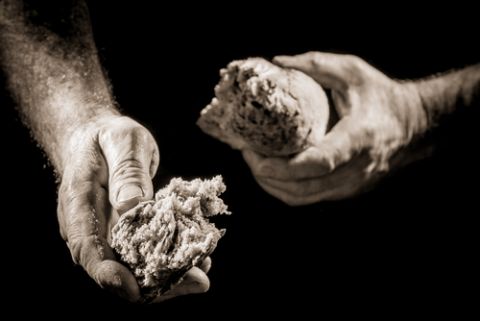
Opening Prayer
In our hearts, O God, You have written a covenant of grace, sealed by the obedience of Jesus Your Son. Raise us up with Christ, the grain fallen to earth that yields a harvest of everlasting life. Enable us to glorify Your name by following faithfully where He has led. We ask this through Christ, our deliverance and hope, who lives and reigns with You in the unity of the Holy Spirit, holy and mighty God for ever and ever. Amen.
__________
“Be Thou My Vision” – Robin Mark
__________
Gospel Reading: John 12:20-33 (NLT)
Some Greeks who had come to Jerusalem for the Passover celebration paid a visit to Philip, who was from Bethsaida in Galilee. They said, “Sir, we want to meet Jesus.” Philip told Andrew about it, and they went together to ask Jesus.
Jesus replied, “Now the time has come for the Son of Man to enter into his glory. I tell you the truth, unless a kernel of wheat is planted in the soil and dies, it remains alone. But its death will produce many new kernels—a plentiful harvest of new lives. Those who love their life in this world will lose it. Those who care nothing for their life in this world will keep it for eternity. Anyone who wants to serve me must follow me, because my servants must be where I am. And the Father will honor anyone who serves me.
“Now my soul is deeply troubled. Should I pray, ‘Father, save me from this hour’? But this is the very reason I came! Father, bring glory to your name.”
Then a voice spoke from heaven, saying, “I have already brought glory to my name, and I will do so again.” When the crowd heard the voice, some thought it was thunder, while others declared an angel had spoken to him.
Then Jesus told them, “The voice was for your benefit, not mine. The time for judging this world has come, when Satan, the ruler of this world, will be cast out. And when I am lifted up from the earth, I will draw everyone to myself.” He said this to indicate how he was going to die.
__________
Prayers of Intercession:
God of mercy and compassion: give us the obedient heart of Jesus, and calm our troubled souls as we pray –
+ For all who are preparing for baptism, that they might become followers Jesus….
+ For all who are followers of Jesus, that we may grow in obedience….
+ For all persecuted followers of Jesus, that they may bring glory to His name….
+ For the Jewish people, that a remnant may continue in faithfulness to the Scriptures….
+ For the hungry and destitute around us, that their bodies and souls may be nourished….
+ For the sick and lonely around us, that they may be healed and comforted….
+ For those who have died in Christ, that they may be raised with Him to glory….
God of mercy and compassion: give us the obedient heart of Jesus and hear our prayers, we ask in His name. Amen.
__________
“Matisyahu’s One Day” – Yeshiva University Maccabeats
__________
Blessing – Jude 24-25
“Now to him who is able to keep you from stumbling and to present you blameless before the presence of his glory with great joy, to the only God, our Savior, through Jesus Christ our Lord, be glory, majesty, dominion, and authority, before all time and now and forever. Amen.”
__________
+ In the name of the Father, and the Son, and the Holy Spirit. Amen!

One thing I have asked of the Lord, this is what I seek: that I may dwell in the house of the Lord all the days of my life; to behold the beauty of the Lord and to seek Him in His temple.
Praise to You, Lord Jesus Christ, King of endless glory.
Reading: 1 Corinthians 5-6 (NLT)
Shame: Spiritual Pride
1 Corinthians 5 (NLT)
+ You should be ashamed of yourselves – I can hardly believe the report about the sexual immorality going on among you—something that even pagans don’t do. I am told that a man in your church is living in sin with his stepmother. You are so proud of yourselves, but you should be mourning in sorrow and shame. And you should remove this man from your fellowship.
+ Exercise church discipline – Even though I am not with you in person, I am with you in the Spirit. And as though I were there, I have already passed judgment on this man in the name of the Lord Jesus. You must call a meeting of the church. I will be present with you in spirit, and so will the power of our Lord Jesus. Then you must throw this man out and hand him over to Satan so that his sinful nature will be destroyed and he himself will be saved on the day the Lord returns.
+ Be filled with sincerity and truth – Your boasting about this is terrible. Don’t you realize that this sin is like a little yeast that spreads through the whole batch of dough? Get rid of the old “yeast” by removing this wicked person from among you. Then you will be like a fresh batch of dough made without yeast, which is what you really are. Christ, our Passover Lamb, has been sacrificed for us. So let us celebrate the festival, not with the old bread of wickedness and evil, but with the new bread of sincerity and truth.
+ Shun those involved with sexual sin – When I wrote to you before, I told you not to associate with people who indulge in sexual sin. But I wasn’t talking about unbelievers who indulge in sexual sin, or are greedy, or cheat people, or worship idols. You would have to leave this world to avoid people like that. I meant that you are not to associate with anyone who claims to be a believer yet indulges in sexual sin, or is greedy, or worships idols, or is abusive, or is a drunkard, or cheats people. Don’t even eat with such people.
+ Your responsibility to judge insiders – It isn’t my responsibility to judge outsiders, but it certainly is your responsibility to judge those inside the church who are sinning. God will judge those on the outside; but as the Scriptures say, “You must remove the evil person from among you.”
Shame: Lawsuits among Christians
1 Corinthians 6 (NLT)
+ Resolve your own disputes – When one of you has a dispute with another believer, how dare you file a lawsuit and ask a secular court to decide the matter instead of taking it to other believers Don’t you realize that someday we believers will judge the world? And since you are going to judge the world, can’t you decide even these little things among yourselves? Don’t you realize that we will judge angels? So you should surely be able to resolve ordinary disputes in this life. If you have legal disputes about such matters, why go to outside judges who are not respected by the church? I am saying this to shame you. Isn’t there anyone in all the church who is wise enough to decide these issues? But instead, one believer sues another—right in front of unbelievers!
+ Lawsuits are a defeat – Even to have such lawsuits with one another is a defeat for you. Why not just accept the injustice and leave it at that? Why not let yourselves be cheated? Instead, you yourselves are the ones who do wrong and cheat even your fellow believers.
+ Behave like holy people – Don’t you realize that those who do wrong will not inherit the Kingdom of God? Don’t fool yourselves. Those who indulge in sexual sin, or who worship idols, or commit adultery, or are male prostitutes, or practice homosexuality, or are thieves, or greedy people, or drunkards, or are abusive, or cheat people—none of these will inherit the Kingdom of God. Some of you were once like that. But you were cleansed; you were made holy; you were made right with God by calling on the name of the Lord Jesus Christ and by the Spirit of our God.
Shame: Sexual Sin
+ Your bodies were made for God – You say, “I am allowed to do anything”—but not everything is good for you. And even though “I am allowed to do anything,” I must not become a slave to anything. You say, “Food was made for the stomach, and the stomach for food.” (This is true, though someday God will do away with both of them.) But you can’t say that our bodies were made for sexual immorality. They were made for the Lord, and the Lord cares about our bodies. And God will raise us from the dead by his power, just as he raised our Lord from the dead.
+ Your bodies are parts of Christ – Don’t you realize that your bodies are actually parts of Christ? Should a man take his body, which is part of Christ, and join it to a prostitute? Never! And don’t you realize that if a man joins himself to a prostitute, he becomes one body with her? For the Scriptures say, “The two are united into one.” But the person who is joined to the Lord is one spirit with him.
+ Honor God with your bodies – Run from sexual sin! No other sin so clearly affects the body as this one does. For sexual immorality is a sin against your own body. Don’t you realize that your body is the temple of the Holy Spirit, who lives in you and was given to you by God? You do not belong to yourself, for God bought you with a high price. So you must honor God with your body.
__________
May the peace of the Lord Christ go with you, wherever He may send you. May He guide you through the wilderness, protect you through the storm. May He bring you home rejoicing at the wonders He has shown you. May He bring you home rejoicing once again into our doors.
__________
+ In the name of the Father, and the Son, and the Holy Spirit. Amen!