Morning Reading: Mon, 04 Jun – Exodus 37-40 ~ the glory of the Lord filled the Tabernacle

Morning Reading

+ In the name of the Father, and the Son, and the Holy Spirit. Amen!

Opening – (Northumbria Community)

One thing I have asked of the Lord, this is what I seek: that I may dwell in the house of the Lord all the days of my life; to behold the beauty of the Lord and to seek Him in His temple.

Praise to You, Lord Jesus Christ, King of endless glory.

Reading: Exodus 37-40 (NLT)

Building the Ark of the Covenant

Exodus 37 (NLT) – Next Bezalel made the Ark of acacia wood—a sacred chest 45 inches long, 27 inches wide, and 27 inches high. He overlaid it inside and outside with pure gold, and he ran a molding of gold all around it. He cast four gold rings and attached them to its four feet, two rings on each side. Then he made poles from acacia wood and overlaid them with gold. He inserted the poles into the rings at the sides of the Ark to carry it.

Then he made the Ark’s cover—the place of atonement—from pure gold. It was 45 inches long and 27 inches wide. He made two cherubim from hammered gold and placed them on the two ends of the atonement cover. He molded the cherubim on each end of the atonement cover, making it all of one piece of gold. The cherubim faced each other and looked down on the atonement cover. With their wings spread above it, they protected it.

Building the Table

Then Bezalel made the table of acacia wood, 36 inches long, 18 inches wide, and 27 inches high. He overlaid it with pure gold and ran a gold molding around the edge. He decorated it with a 3-inch border all around, and he ran a gold molding along the border. Then he cast four gold rings for the table and attached them at the four corners next to the four legs. The rings were attached near the border to hold the poles that were used to carry the table. He made these poles from acacia wood and overlaid them with gold. Then he made special containers of pure gold for the table—bowls, ladles, jars, and pitchers—to be used in pouring out liquid offerings.

Building the Lampstand

Then Bezalel made the lampstand of pure, hammered gold. He made the entire lampstand and its decorations of one piece—the base, center stem, lamp cups, buds, and petals. The lampstand had six branches going out from the center stem, three on each side. Each of the six branches had three lamp cups shaped like almond blossoms, complete with buds and petals. The center stem of the lampstand was crafted with four lamp cups shaped like almond blossoms, complete with buds and petals. There was an almond bud beneath each pair of branches where the six branches extended from the center stem, all made of one piece. The almond buds and branches were all of one piece with the center stem, and they were hammered from pure gold.

He also made seven lamps for the lampstand, lamp snuffers, and trays, all of pure gold. The entire lampstand, along with its accessories, was made from 75 pounds of pure gold.

Building the Incense Altar

Then Bezalel made the incense altar of acacia wood. It was 18 inches square and 36 inches high, with horns at the corners carved from the same piece of wood as the altar itself. He overlaid the top, sides, and horns of the altar with pure gold, and he ran a gold molding around the entire altar. He made two gold rings and attached them on opposite sides of the altar below the gold molding to hold the carrying poles. He made the poles of acacia wood and overlaid them with gold.

Then he made the sacred anointing oil and the fragrant incense, using the techniques of a skilled incense maker.

Building the Altar of Burnt Offering

Exodus 38 (NLT) – Next Bezalel used acacia wood to construct the square altar of burnt offering. It was 7 1⁄2 feet wide, 7 1⁄2 feet long, and 4 1⁄2 feet high. He made horns for each of its four corners so that the horns and altar were all one piece. He overlaid the altar with bronze. Then he made all the altar utensils of bronze—the ash buckets, shovels, basins, meat forks, and firepans. Next he made a bronze grating and installed it halfway down the side of the altar, under the ledge. He cast four rings and attached them to the corners of the bronze grating to hold the carrying poles. He made the poles from acacia wood and overlaid them with bronze. He inserted the poles through the rings on the sides of the altar. The altar was hollow and was made from planks.

Building the Washbasin

Bezalel made the bronze washbasin and its bronze stand from bronze mirrors donated by the women who served at the entrance of the Tabernacle.

Building the Courtyard

Then Bezalel made the courtyard, which was enclosed with curtains made of finely woven linen. On the south side the curtains were 150 feet long. They were held up by twenty posts set securely in twenty bronze bases. He hung the curtains with silver hooks and rings. He made a similar set of curtains for the north side—150 feet of curtains held up by twenty posts set securely in bronze bases. He hung the curtains with silver hooks and rings. The curtains on the west end of the courtyard were 75 feet long, hung with silver hooks and rings and supported by ten posts set into ten bases. The east end, the front, was also 75 feet long.

The courtyard entrance was on the east end, flanked by two curtains. The curtain on the right side was 22 1⁄2 feet long and was supported by three posts set into three bases. The curtain on the left side was also 22 1⁄2 feet long and was supported by three posts set into three bases. All the curtains used in the courtyard were made of finely woven linen. Each post had a bronze base, and all the hooks and rings were silver. The tops of the posts of the courtyard were overlaid with silver, and the rings to hold up the curtains were made of silver.

He made the curtain for the entrance to the courtyard of finely woven linen, and he decorated it with beautiful embroidery in blue, purple, and scarlet thread. It was 30 feet long, and its height was 7 1⁄2 feet, just like the curtains of the courtyard walls. It was supported by four posts, each set securely in its own bronze base. The tops of the posts were overlaid with silver, and the hooks and rings were also made of silver.

All the tent pegs used in the Tabernacle and courtyard were made of bronze.

Inventory of Materials

This is an inventory of the materials used in building the Tabernacle of the Covenant. The Levites compiled the figures, as Moses directed, and Ithamar son of Aaron the priest served as recorder. Bezalel son of Uri, grandson of Hur, of the tribe of Judah, made everything just as the Lord had commanded Moses. He was assisted by Oholiab son of Ahisamach, of the tribe of Dan, a craftsman expert at engraving, designing, and embroidering with blue, purple, and scarlet thread on fine linen cloth.
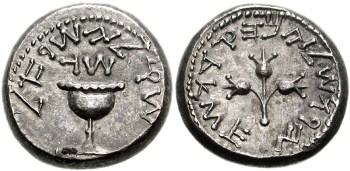
The people brought special offerings of gold totaling 2,193 pounds, as measured by the weight of the sanctuary shekel. This gold was used throughout the Tabernacle.

The whole community of Israel gave 7,545 pounds of silver, as measured by the weight of the sanctuary shekel. This silver came from the tax collected from each man registered in the census. (The tax is one beka, which is half a shekel, based on the sanctuary shekel.) The tax was collected from 603,550 men who had reached their twentieth birthday. The hundred bases for the frames of the sanctuary walls and for the posts supporting the inner curtain required 7,500 pounds of silver, about 75 pounds for each base. The remaining 45 pounds of silver was used to make the hooks and rings and to overlay the tops of the posts.

The people also brought as special offerings 5,310 pounds of bronze, which was used for casting the bases for the posts at the entrance to the Tabernacle, and for the bronze altar with its bronze grating and all the altar utensils. Bronze was also used to make the bases for the posts that supported the curtains around the courtyard, the bases for the curtain at the entrance of the courtyard, and all the tent pegs for the Tabernacle and the courtyard.

Clothing for the Priests

Exodus 39 (NLT) – The craftsmen made beautiful sacred garments of blue, purple, and scarlet cloth—clothing for Aaron to wear while ministering in the Holy Place, just as the Lord had commanded Moses.

Making the Ephod

Bezalel made the ephod of finely woven linen and embroidered it with gold and with blue, purple, and scarlet thread. He made gold thread by hammering out thin sheets of gold and cutting it into fine strands. With great skill and care, he worked it into the fine linen with the blue, purple, and scarlet thread.

The ephod consisted of two pieces, front and back, joined at the shoulders with two shoulder-pieces. The decorative sash was made of the same materials: finely woven linen embroidered with gold and with blue, purple, and scarlet thread, just as the Lord had commanded Moses. They mounted the two onyx stones in settings of gold filigree. The stones were engraved with the names of the tribes of Israel, just as a seal is engraved. He fastened these stones on the shoulder-pieces of the ephod as a reminder that the priest represents the people of Israel. All this was done just as the Lord had commanded Moses.

Making the Chestpiece

Bezalel made the chestpiece with great skill and care. He made it to match the ephod, using finely woven linen embroidered with gold and with blue, purple, and scarlet thread. He made the chestpiece of a single piece of cloth folded to form a pouch nine inches square. They mounted four rows of gemstones on it. The first row contained a red carnelian, a pale-green peridot, and an emerald. The second row contained a turquoise, a blue lapis lazuli, and a white moonstone. The third row contained an orange jacinth, an agate, and a purple amethyst. The fourth row contained a blue-green beryl, an onyx, and a green jasper. All these stones were set in gold filigree. Each stone represented one of the twelve sons of Israel, and the name of that tribe was engraved on it like a seal.

To attach the chestpiece to the ephod, they made braided cords of pure gold thread. They also made two settings of gold filigree and two gold rings and attached them to the top corners of the chestpiece. They tied the two gold cords to the rings on the chestpiece. They tied the other ends of the cords to the gold settings on the shoulder-pieces of the ephod. Then they made two more gold rings and attached them to the inside edges of the chestpiece next to the ephod. Then they made two more gold rings and attached them to the front of the ephod, below the shoulder-pieces, just above the knot where the decorative sash was fastened to the ephod. They attached the bottom rings of the chestpiece to the rings on the ephod with blue cords. In this way, the chestpiece was held securely to the ephod above the decorative sash. All this was done just as the Lord had commanded Moses.

Additional Clothing for the Priests

Bezalel made the robe that is worn with the ephod from a single piece of blue woven cloth, with an opening for Aaron’s head in the middle of it. The opening was reinforced with a woven collar so it would not tear. They made pomegranates of blue, purple, and scarlet yarn, and attached them to the hem of the robe. They also made bells of pure gold and placed them between the pomegranates along the hem of the robe, with bells and pomegranates alternating all around the hem. This robe was to be worn whenever the priest ministered before the Lord, just as the Lord had commanded Moses.

They made tunics for Aaron and his sons from fine linen cloth. The turban and the special head coverings were made of fine linen, and the undergarments were also made of finely woven linen. The sashes were made of finely woven linen and embroidered with blue, purple, and scarlet thread, just as the Lord had commanded Moses.

Finally, they made the sacred medallion—the badge of holiness—of pure gold. They engraved it like a seal with these words: Holy to the lord. They attached the medallion with a blue cord to Aaron’s turban, just as the Lord had commanded Moses.

Moses Inspects the Work

And so at last the Tabernacle was finished. The Israelites had done everything just as the Lord had commanded Moses. And they brought the entire Tabernacle to Moses:

  • the sacred tent with all its furnishings, clasps, frames, crossbars, posts, and bases;
  • the tent coverings of tanned ram skins and fine goatskin leather;
  • the inner curtain to shield the Ark;
  • the Ark of the Covenant[ and its carrying poles;
  • the Ark’s cover—the place of atonement;
  • the table and all its utensils;
  • the Bread of the Presence;
  • the pure gold lampstand with its symmetrical lamp cups, all its accessories, and the olive oil for lighting;
  • the gold altar;
  • the anointing oil and fragrant incense;
  • the curtain for the entrance of the sacred tent;
  • the bronze altar;
  • the bronze grating and its carrying poles and utensils;
  • the washbasin with its stand;
  • the curtains for the walls of the courtyard;
  • the posts and their bases;
  • the curtain for the entrance to the courtyard;
  • the ropes and tent pegs;
  • all the furnishings to be used in worship at the Tabernacle;
  • the beautifully stitched garments for the priests to wear while ministering in the Holy Place—the sacred garments for Aaron the priest, and the garments for his sons to wear as they minister as priests.

So the people of Israel followed all of the Lord’s instructions to Moses. Then Moses inspected all their work. When he found it had been done just as the Lord had commanded him, he blessed them.

The Tabernacle Completed

Exodus 40 (NLT) – Then the Lord said to Moses, “Set up the Tabernacle on the first day of the new year. Place the Ark of the Covenant[ inside, and install the inner curtain to enclose the Ark within the Most Holy Place. Then bring in the table, and arrange the utensils on it. And bring in the lampstand, and set up the lamps.

“Place the gold incense altar in front of the Ark of the Covenant. Then hang the curtain at the entrance of the Tabernacle. Place the altar of burnt offering in front of the Tabernacle entrance. Set the washbasin between the Tabernacle and the altar, and fill it with water. Then set up the courtyard around the outside of the tent, and hang the curtain for the courtyard entrance.

“Take the anointing oil and anoint the Tabernacle and all its furnishings to consecrate them and make them holy. Anoint the altar of burnt offering and its utensils to consecrate them. Then the altar will become absolutely holy. Next anoint the washbasin and its stand to consecrate them.

“Present Aaron and his sons at the entrance of the Tabernacle, and wash them with water. Dress Aaron with the sacred garments and anoint him, consecrating him to serve me as a priest. Then present his sons and dress them in their tunics. Anoint them as you did their father, so they may also serve me as priests. With their anointing, Aaron’s descendants are set apart for the priesthood forever, from generation to generation.”
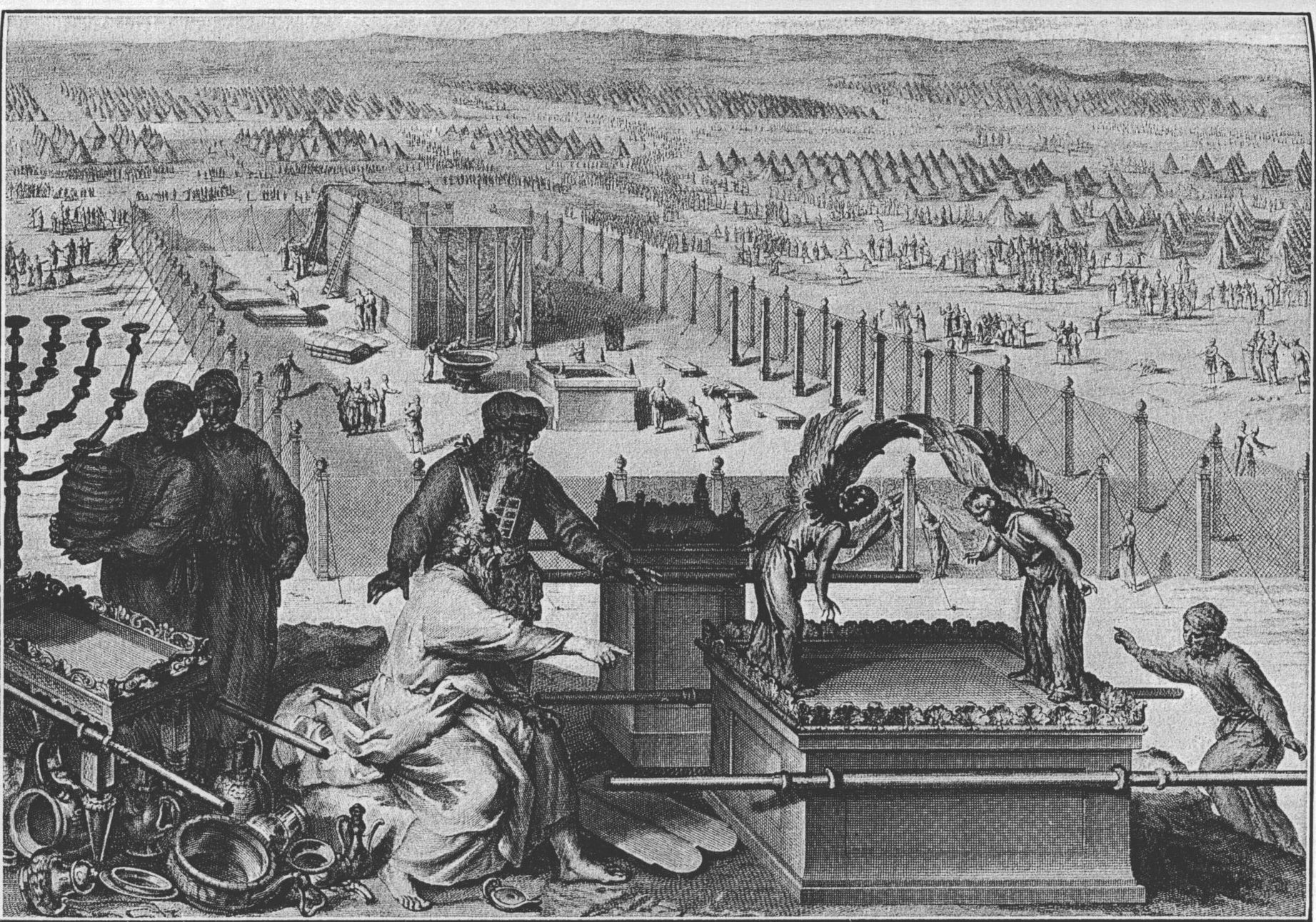
Moses proceeded to do everything just as the Lord had commanded him. So the Tabernacle was set up on the first day of the first month of the second year. Moses erected the Tabernacle by setting down its bases, inserting the frames, attaching the crossbars, and setting up the posts. Then he spread the coverings over the Tabernacle framework and put on the protective layers, just as the Lord had commanded him.

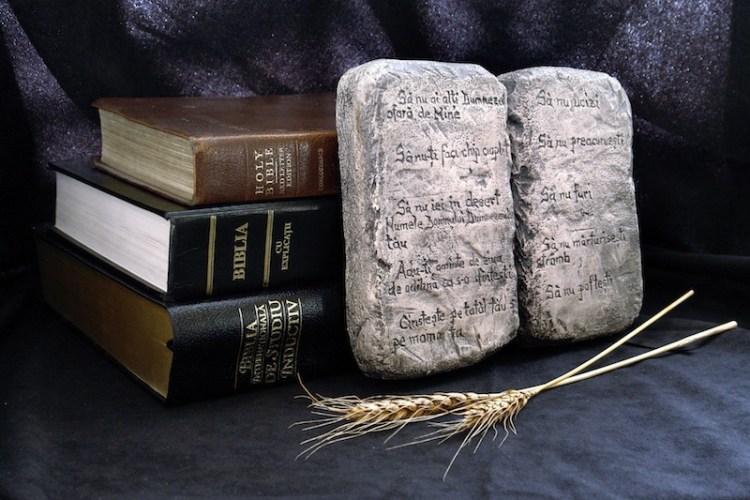
He took the stone tablets inscribed with the terms of the covenant and placed them inside the Ark. Then he attached the carrying poles to the Ark, and he set the Ark’s cover—the place of atonement—on top of it. Then he brought the Ark of the Covenant into the Tabernacle and hung the inner curtain to shield it from view, just as the Lord had commanded him.

Next Moses placed the table in the Tabernacle, along the north side of the Holy Place, just outside the inner curtain. And he arranged the Bread of the Presence on the table before the Lord, just as the Lord had commanded him.

He set the lampstand in the Tabernacle across from the table on the south side of the Holy Place. Then he lit the lamps in the Lord’s presence, just as the Lord had commanded him. He also placed the gold incense altar in the Tabernacle, in the Holy Place in front of the inner curtain. On it he burned the fragrant incense, just as the Lord had commanded him.

He hung the curtain at the entrance of the Tabernacle, and he placed the altar of burnt offering near the Tabernacle entrance. On it he offered a burnt offering and a grain offering, just as the Lord had commanded him.

Next Moses placed the washbasin between the Tabernacle and the altar. He filled it with water so the priests could wash themselves. Moses and Aaron and Aaron’s sons used water from it to wash their hands and feet. Whenever they approached the altar and entered the Tabernacle, they washed themselves, just as the Lord had commanded Moses.

Then he hung the curtains forming the courtyard around the Tabernacle and the altar. And he set up the curtain at the entrance of the courtyard. So at last Moses finished the work.

The Lord’s Glory Fills the Tabernacle

Then the cloud covered the Tabernacle, and the glory of the Lord filled the Tabernacle. Moses could no longer enter the Tabernacle because the cloud had settled down over it, and the glory of the Lord filled the Tabernacle.

Now whenever the cloud lifted from the Tabernacle, the people of Israel would set out on their journey, following it. But if the cloud did not rise, they remained where they were until it lifted. The cloud of the Lord hovered over the Tabernacle during the day, and at night fire glowed inside the cloud so the whole family of Israel could see it. This continued throughout all their journeys.
__________

“Let Your Glory Fall” – Vineyard


__________

Blessing – (Northumbrian Community)

May the peace of the Lord Christ go with you, wherever He may send you. May He guide you through the wilderness, protect you through the storm. May He bring you home rejoicing at the wonders He has shown you. May He bring you home rejoicing once again into our doors.
__________

+ In the name of the Father, and the Son, and the Holy Spirit. Amen!

Second Sunday after Pentecost – 03 Jun – Mark 2:23-28 ~ a Sabbath day of rest

Second Sunday after Pentecost

+ In the name of the Father, and the Son, and the Holy Spirit. Amen!

Opening Prayer

Gracious God, Maker of Heaven and Earth – May this Sabbath day be about you. Quiet my heart, give rest to my soul, and refocus my spirit—for true renewal comes only from you. Holy Spirit please help me to be intentional with my time and worship, and encourage me to find rest in you alone. In Jesus’ name, Amen.
__________

“Gadol Adonai” – Sarah Liberman (Lev Tahor • A Pure Heart)


__________

Deuteronomy 5:12-14 (NLT)

“Observe the Sabbath day by keeping it holy, as the Lord your God has commanded you. You have six days each week for your ordinary work, but the seventh day is a Sabbath day of rest dedicated to the Lord your God….”
__________

Gospel Reading: Mark 2:23-28 (NLT)

One Sabbath day as Jesus was walking through some grainfields, his disciples began breaking off heads of grain to eat. But the Pharisees said to Jesus, “Look, why are they breaking the law by harvesting grain on the Sabbath?”

Jesus said to them, “Haven’t you ever read in the Scriptures what David did when he and his companions were hungry? He went into the house of God (during the days when Abiathar was high priest) and broke the law by eating the sacred loaves of bread that only the priests are allowed to eat. He also gave some to his companions.”

Then Jesus said to them, “The Sabbath was made to meet the needs of people, and not people to meet the requirements of the Sabbath. So the Son of Man is Lord, even over the Sabbath!”
__________

Prayers of Intercession:

Heavenly Father – Grant us rest for our souls; and display your loving-kindness to all whose needs we bring before you. Lord, hear our prayers –

+ That your presence may dwell within all who put their faith and trust in your Son, Jesus Christ….
+ That our faith and trust in your Son, Jesus Christ, might continue to grow stronger….
+ That all believers may be refreshed and renewed through the Bread of Life and the Cup of Salvation….
+ That all believers may be guided along the path of Life by your Word and Spirit in every decision made….
+ That all believers who suffer because of their faith may be delivered from evil and sustained by your grace….
+ That all who are destitute because of war and violence may receive comfort and rest for their souls….
+ That all who are burdened by responsibility and worry may receive relief and rest for their souls…
+ That all who have gone before us in faith may be raised to eternal life and rest forever in your presence….

Heavenly Father: you sent your Son to share our burdens and our hopes, to be our life and strength: hear our prayers and grant us the rest for our souls that we so desperately need – we ask through Jesus Christ, who lives and reigns with you and the Holy Spirit, one God, forever and ever. Amen.
__________

“The Lord Bless You And Keep You”


__________

Blessing

May the Lord bless and protect you;
May he show you mercy and loving-kindness.
May the Lord be good to you and give you peace;
Through his Son, Jesus Christ

__________

+ In the name of the Father, and the Son, and the Holy Spirit. Amen!

Morning Reading: Sat, 02 Jun – Galatians 1-3 ~ children of God through faith

Morning Reading

+ In the name of the Father, and the Son, and the Holy Spirit. Amen!

Opening – (Northumbria Community)

One thing I have asked of the Lord, this is what I seek: that I may dwell in the house of the Lord all the days of my life; to behold the beauty of the Lord and to seek Him in His temple.

Praise to You, Lord Jesus Christ, King of endless glory.

Reading: Galatians 1-3 (NLT)

Greetings from Paul

Galatians 1 (NLT) – This letter is from Paul, an apostle. I was not appointed by any group of people or any human authority, but by Jesus Christ himself and by God the Father, who raised Jesus from the dead.

All the brothers and sisters[a] here join me in sending this letter to the churches of Galatia.

May God the Father and our Lord Jesus Christ give you grace and peace. Jesus gave his life for our sins, just as God our Father planned, in order to rescue us from this evil world in which we live. All glory to God forever and ever! Amen.

There Is Only One Good News

I am shocked that you are turning away so soon from God, who called you to himself through the loving mercy of Christ. You are following a different way that pretends to be the Good News but is not the Good News at all. You are being fooled by those who deliberately twist the truth concerning Christ.

Let God’s curse fall on anyone, including us or even an angel from heaven, who preaches a different kind of Good News than the one we preached to you. I say again what we have said before: If anyone preaches any other Good News than the one you welcomed, let that person be cursed.

Obviously, I’m not trying to win the approval of people, but of God. If pleasing people were my goal, I would not be Christ’s servant.

Paul’s Message Comes from Christ

Dear brothers and sisters, I want you to understand that the gospel message I preach is not based on mere human reasoning. I received my message from no human source, and no one taught me. Instead, I received it by direct revelation from Jesus Christ.

You know what I was like when I followed the Jewish religion—how I violently persecuted God’s church. I did my best to destroy it. I was far ahead of my fellow Jews in my zeal for the traditions of my ancestors.

But even before I was born, God chose me and called me by his marvelous grace. Then it pleased him to reveal his Son to me so that I would proclaim the Good News about Jesus to the Gentiles.

When this happened, I did not rush out to consult with any human being. Nor did I go up to Jerusalem to consult with those who were apostles before I was. Instead, I went away into Arabia, and later I returned to the city of Damascus.

Then three years later I went to Jerusalem to get to know Peter, and I stayed with him for fifteen days. The only other apostle I met at that time was James, the Lord’s brother. I declare before God that what I am writing to you is not a lie.

After that visit I went north into the provinces of Syria and Cilicia. And still the churches in Christ that are in Judea didn’t know me personally. All they knew was that people were saying, “The one who used to persecute us is now preaching the very faith he tried to destroy!” And they praised God because of me.

The Apostles Accept Paul

Galatians 2 (NLT) – Then fourteen years later I went back to Jerusalem again, this time with Barnabas; and Titus came along, too. I went there because God revealed to me that I should go. While I was there I met privately with those considered to be leaders of the church and shared with them the message I had been preaching to the Gentiles. I wanted to make sure that we were in agreement, for fear that all my efforts had been wasted and I was running the race for nothing. And they supported me and did not even demand that my companion Titus be circumcised, though he was a Gentile.

Even that question came up only because of some so-called believers there—false ones, really—who were secretly brought in. They sneaked in to spy on us and take away the freedom we have in Christ Jesus. They wanted to enslave us and force us to follow their Jewish regulations. But we refused to give in to them for a single moment. We wanted to preserve the truth of the gospel message for you.

And the leaders of the church had nothing to add to what I was preaching. (By the way, their reputation as great leaders made no difference to me, for God has no favorites.) Instead, they saw that God had given me the responsibility of preaching the gospel to the Gentiles, just as he had given Peter the responsibility of preaching to the Jews. For the same God who worked through Peter as the apostle to the Jews also worked through me as the apostle to the Gentiles.

In fact, James, Peter, and John, who were known as pillars of the church, recognized the gift God had given me, and they accepted Barnabas and me as their co-workers. They encouraged us to keep preaching to the Gentiles, while they continued their work with the Jews. Their only suggestion was that we keep on helping the poor, which I have always been eager to do.

Paul Confronts Peter

But when Peter came to Antioch, I had to oppose him to his face, for what he did was very wrong. When he first arrived, he ate with the Gentile believers, who were not circumcised. But afterward, when some friends of James came, Peter wouldn’t eat with the Gentiles anymore. He was afraid of criticism from these people who insisted on the necessity of circumcision. As a result, other Jewish believers followed Peter’s hypocrisy, and even Barnabas was led astray by their hypocrisy.

When I saw that they were not following the truth of the gospel message, I said to Peter in front of all the others, “Since you, a Jew by birth, have discarded the Jewish laws and are living like a Gentile, why are you now trying to make these Gentiles follow the Jewish traditions?

“You and I are Jews by birth, not ‘sinners’ like the Gentiles. Yet we know that a person is made right with God by faith in Jesus Christ, not by obeying the law. And we have believed in Christ Jesus, so that we might be made right with God because of our faith in Christ, not because we have obeyed the law. For no one will ever be made right with God by obeying the law.”

But suppose we seek to be made right with God through faith in Christ and then we are found guilty because we have abandoned the law. Would that mean Christ has led us into sin? Absolutely not! Rather, I am a sinner if I rebuild the old system of law I already tore down. For when I tried to keep the law, it condemned me. So I died to the law—I stopped trying to meet all its requirements—so that I might live for God. My old self has been crucified with Christ. It is no longer I who live, but Christ lives in me. So I live in this earthly body by trusting in the Son of God, who loved me and gave himself for me. I do not treat the grace of God as meaningless. For if keeping the law could make us right with God, then there was no need for Christ to die.

The Law and Faith in Christ

Galatians 3 (NLT) – Oh, foolish Galatians! Who has cast an evil spell on you? For the meaning of Jesus Christ’s death was made as clear to you as if you had seen a picture of his death on the cross. Let me ask you this one question: Did you receive the Holy Spirit by obeying the law of Moses? Of course not! You received the Spirit because you believed the message you heard about Christ. How foolish can you be? After starting your new lives in the Spirit, why are you now trying to become perfect by your own human effort? Have you experienced so much for nothing? Surely it was not in vain, was it?

I ask you again, does God give you the Holy Spirit and work miracles among you because you obey the law? Of course not! It is because you believe the message you heard about Christ.

In the same way, “Abraham believed God, and God counted him as righteous because of his faith.” The real children of Abraham, then, are those who put their faith in God.

What’s more, the Scriptures looked forward to this time when God would make the Gentiles right in his sight because of their faith. God proclaimed this good news to Abraham long ago when he said, “All nations will be blessed through you.” So all who put their faith in Christ share the same blessing Abraham received because of his faith.

But those who depend on the law to make them right with God are under his curse, for the Scriptures say, “Cursed is everyone who does not observe and obey all the commands that are written in God’s Book of the Law.” So it is clear that no one can be made right with God by trying to keep the law. For the Scriptures say, “It is through faith that a righteous person has life.” This way of faith is very different from the way of law, which says, “It is through obeying the law that a person has life.”

But Christ has rescued us from the curse pronounced by the law. When he was hung on the cross, he took upon himself the curse for our wrongdoing. For it is written in the Scriptures, “Cursed is everyone who is hung on a tree.” Through Christ Jesus, God has blessed the Gentiles with the same blessing he promised to Abraham, so that we who are believers might receive the promised Holy Spirit through faith.

The Law and God’s Promise

Dear brothers and sisters, here’s an example from everyday life. Just as no one can set aside or amend an irrevocable agreement, so it is in this case. God gave the promises to Abraham and his child. And notice that the Scripture doesn’t say “to his children,” as if it meant many descendants. Rather, it says “to his child”—and that, of course, means Christ. This is what I am trying to say: The agreement God made with Abraham could not be canceled 430 years later when God gave the law to Moses. God would be breaking his promise. For if the inheritance could be received by keeping the law, then it would not be the result of accepting God’s promise. But God graciously gave it to Abraham as a promise.

Why, then, was the law given? It was given alongside the promise to show people their sins. But the law was designed to last only until the coming of the child who was promised. God gave his law through angels to Moses, who was the mediator between God and the people. Now a mediator is helpful if more than one party must reach an agreement. But God, who is one, did not use a mediator when he gave his promise to Abraham.

Is there a conflict, then, between God’s law and God’s promises? Absolutely not! If the law could give us new life, we could be made right with God by obeying it. But the Scriptures declare that we are all prisoners of sin, so we receive God’s promise of freedom only by believing in Jesus Christ.

God’s Children through Faith

Before the way of faith in Christ was available to us, we were placed under guard by the law. We were kept in protective custody, so to speak, until the way of faith was revealed.

Let me put it another way. The law was our guardian until Christ came; it protected us until we could be made right with God through faith. And now that the way of faith has come, we no longer need the law as our guardian.

For you are all children of God through faith in Christ Jesus. And all who have been united with Christ in baptism have put on Christ, like putting on new clothes. There is no longer Jew or Gentile, slave or free, male and female. For you are all one in Christ Jesus. And now that you belong to Christ, you are the true children of Abraham. You are his heirs, and God’s promise to Abraham belongs to you.
__________

“No Longer Slaves” – Bethel Music


__________

Blessing – (Northumbrian Community)

May the peace of the Lord Christ go with you, wherever He may send you. May He guide you through the wilderness, protect you through the storm. May He bring you home rejoicing at the wonders He has shown you. May He bring you home rejoicing once again into our doors.
__________

+ In the name of the Father, and the Son, and the Holy Spirit. Amen!

Morning Reading: Fri, 01 Jun – Luke 7-8 ~ report what you have seen and heard

Morning Reading

+ In the name of the Father, and the Son, and the Holy Spirit. Amen!

Opening – (Northumbria Community)

One thing I have asked of the Lord, this is what I seek: that I may dwell in the house of the Lord all the days of my life; to behold the beauty of the Lord and to seek Him in His temple.

Praise to You, Lord Jesus Christ, King of endless glory.

Reading: Luke 7-8 (NLT)

The Faith of a Roman Officer

Luke 7 (NLT)

When Jesus had finished saying all this to the people, he returned to Capernaum. At that time the highly valued slave of a Roman officer was sick and near death. When the officer heard about Jesus, he sent some respected Jewish elders to ask him to come and heal his slave. So they earnestly begged Jesus to help the man. “If anyone deserves your help, he does,” they said, “for he loves the Jewish people and even built a synagogue for us.”

So Jesus went with them. But just before they arrived at the house, the officer sent some friends to say, “Lord, don’t trouble yourself by coming to my home, for I am not worthy of such an honor. I am not even worthy to come and meet you. Just say the word from where you are, and my servant will be healed. I know this because I am under the authority of my superior officers, and I have authority over my soldiers. I only need to say, ‘Go,’ and they go, or ‘Come,’ and they come. And if I say to my slaves, ‘Do this,’ they do it.”

When Jesus heard this, he was amazed. Turning to the crowd that was following him, he said, “I tell you, I haven’t seen faith like this in all Israel!” And when the officer’s friends returned to his house, they found the slave completely healed.

Jesus Raises a Widow’s Son

Soon afterward Jesus went with his disciples to the village of Nain, and a large crowd followed him. A funeral procession was coming out as he approached the village gate. The young man who had died was a widow’s only son, and a large crowd from the village was with her. When the Lord saw her, his heart overflowed with compassion. “Don’t cry!” he said. Then he walked over to the coffin and touched it, and the bearers stopped. “Young man,” he said, “I tell you, get up.” Then the dead boy sat up and began to talk! And Jesus gave him back to his mother.

Great fear swept the crowd, and they praised God, saying, “A mighty prophet has risen among us,” and “God has visited his people today.” And the news about Jesus spread throughout Judea and the surrounding countryside.

Jesus and John the Baptist

The disciples of John the Baptist told John about everything Jesus was doing. So John called for two of his disciples, and he sent them to the Lord to ask him, “Are you the Messiah we’ve been expecting, or should we keep looking for someone else?”

John’s two disciples found Jesus and said to him, “John the Baptist sent us to ask, ‘Are you the Messiah we’ve been expecting, or should we keep looking for someone else?’”

At that very time, Jesus cured many people of their diseases, illnesses, and evil spirits, and he restored sight to many who were blind. Then he told John’s disciples, “Go back to John and tell him what you have seen and heard—the blind see, the lame walk, those with leprosy are cured, the deaf hear, the dead are raised to life, and the Good News is being preached to the poor.” And he added, “God blesses those who do not fall away because of me.”

After John’s disciples left, Jesus began talking about him to the crowds. “What kind of man did you go into the wilderness to see? Was he a weak reed, swayed by every breath of wind? Or were you expecting to see a man dressed in expensive clothes? No, people who wear beautiful clothes and live in luxury are found in palaces. Were you looking for a prophet? Yes, and he is more than a prophet. John is the man to whom the Scriptures refer when they say,

‘Look, I am sending my messenger ahead of you, and he will prepare your way before you.’

I tell you, of all who have ever lived, none is greater than John. Yet even the least person in the Kingdom of God is greater than he is!”

When they heard this, all the people—even the tax collectors—agreed that God’s way was right, for they had been baptized by John. But the Pharisees and experts in religious law rejected God’s plan for them, for they had refused John’s baptism.

“To what can I compare the people of this generation?” Jesus asked. “How can I describe them? They are like children playing a game in the public square. They complain to their friends,

‘We played wedding songs, and you didn’t dance, so we played funeral songs, and you didn’t weep.’

For John the Baptist didn’t spend his time eating bread or drinking wine, and you say, ‘He’s possessed by a demon.’ The Son of Man, on the other hand, feasts and drinks, and you say, ‘He’s a glutton and a drunkard, and a friend of tax collectors and other sinners!’ But wisdom is shown to be right by the lives of those who follow it.”

Jesus Anointed by a Sinful Woman

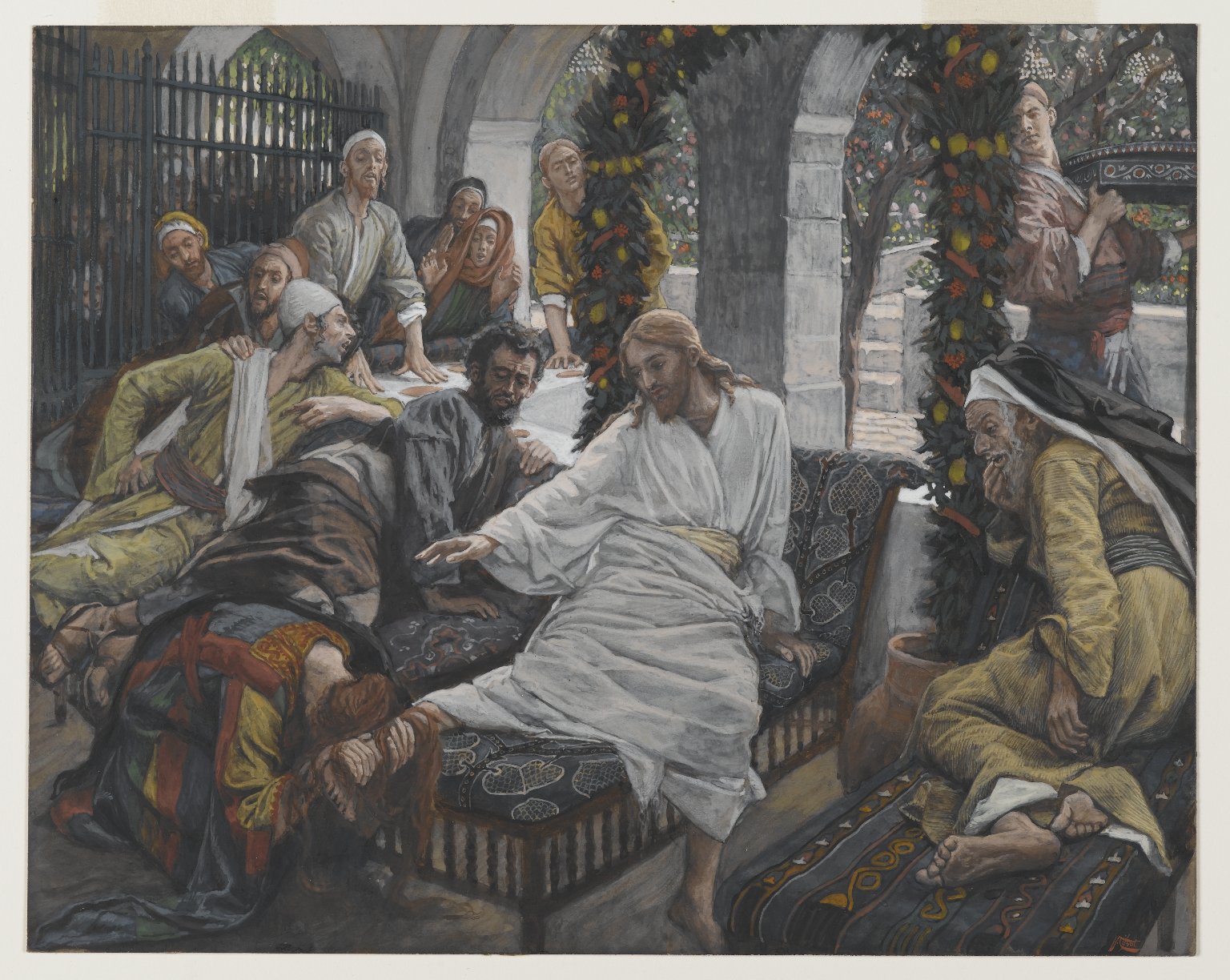
One of the Pharisees asked Jesus to have dinner with him, so Jesus went to his home and sat down to eat. When a certain immoral woman from that city heard he was eating there, she brought a beautiful alabaster jar filled with expensive perfume. Then she knelt behind him at his feet, weeping. Her tears fell on his feet, and she wiped them off with her hair. Then she kept kissing his feet and putting perfume on them.

When the Pharisee who had invited him saw this, he said to himself, “If this man were a prophet, he would know what kind of woman is touching him. She’s a sinner!”

Then Jesus answered his thoughts. “Simon,” he said to the Pharisee, “I have something to say to you.”

“Go ahead, Teacher,” Simon replied.

Then Jesus told him this story: “A man loaned money to two people—500 pieces of silver to one and 50 pieces to the other. But neither of them could repay him, so he kindly forgave them both, canceling their debts. Who do you suppose loved him more after that?”

Simon answered, “I suppose the one for whom he canceled the larger debt.”

“That’s right,” Jesus said. Then he turned to the woman and said to Simon, “Look at this woman kneeling here. When I entered your home, you didn’t offer me water to wash the dust from my feet, but she has washed them with her tears and wiped them with her hair. You didn’t greet me with a kiss, but from the time I first came in, she has not stopped kissing my feet. You neglected the courtesy of olive oil to anoint my head, but she has anointed my feet with rare perfume.

“I tell you, her sins—and they are many—have been forgiven, so she has shown me much love. But a person who is forgiven little shows only little love.” Then Jesus said to the woman, “Your sins are forgiven.”

The men at the table said among themselves, “Who is this man, that he goes around forgiving sins?”

And Jesus said to the woman, “Your faith has saved you; go in peace.”

Women Who Followed Jesus

Luke 8 (NLT)

Soon afterward Jesus began a tour of the nearby towns and villages, preaching and announcing the Good News about the Kingdom of God. He took his twelve disciples with him, along with some women who had been cured of evil spirits and diseases. Among them were Mary Magdalene, from whom he had cast out seven demons; Joanna, the wife of Chuza, Herod’s business manager; Susanna; and many others who were contributing from their own resources to support Jesus and his disciples.

Parable of the Farmer Scattering Seed

One day Jesus told a story in the form of a parable to a large crowd that had gathered from many towns to hear him: “A farmer went out to plant his seed. As he scattered it across his field, some seed fell on a footpath, where it was stepped on, and the birds ate it. Other seed fell among rocks. It began to grow, but the plant soon wilted and died for lack of moisture. Other seed fell among thorns that grew up with it and choked out the tender plants. Still other seed fell on fertile soil. This seed grew and produced a crop that was a hundred times as much as had been planted!” When he had said this, he called out, “Anyone with ears to hear should listen and understand.”

His disciples asked him what this parable meant. He replied, “You are permitted to understand the secrets of the Kingdom of God. But I use parables to teach the others so that the Scriptures might be fulfilled:

‘When they look, they won’t really see. When they hear, they won’t understand.’

“This is the meaning of the parable: The seed is God’s word. The seeds that fell on the footpath represent those who hear the message, only to have the devil come and take it away from their hearts and prevent them from believing and being saved. The seeds on the rocky soil represent those who hear the message and receive it with joy. But since they don’t have deep roots, they believe for a while, then they fall away when they face temptation. The seeds that fell among the thorns represent those who hear the message, but all too quickly the message is crowded out by the cares and riches and pleasures of this life. And so they never grow into maturity. And the seeds that fell on the good soil represent honest, good-hearted people who hear God’s word, cling to it, and patiently produce a huge harvest.

Parable of the Lamp

“No one lights a lamp and then covers it with a bowl or hides it under a bed. A lamp is placed on a stand, where its light can be seen by all who enter the house. For all that is secret will eventually be brought into the open, and everything that is concealed will be brought to light and made known to all.

“So pay attention to how you hear. To those who listen to my teaching, more understanding will be given. But for those who are not listening, even what they think they understand will be taken away from them.”

The True Family of Jesus

Then Jesus’ mother and brothers came to see him, but they couldn’t get to him because of the crowd. Someone told Jesus, “Your mother and your brothers are standing outside, and they want to see you.”

Jesus replied, “My mother and my brothers are all those who hear God’s word and obey it.”

Jesus Calms the Storm

One day Jesus said to his disciples, “Let’s cross to the other side of the lake.” So they got into a boat and started out. As they sailed across, Jesus settled down for a nap. But soon a fierce storm came down on the lake. The boat was filling with water, and they were in real danger.

The disciples went and woke him up, shouting, “Master, Master, we’re going to drown!”

When Jesus woke up, he rebuked the wind and the raging waves. Suddenly the storm stopped and all was calm. Then he asked them, “Where is your faith?”

The disciples were terrified and amazed. “Who is this man?” they asked each other. “When he gives a command, even the wind and waves obey him!”

Jesus Heals a Demon-Possessed Man

So they arrived in the region of the Gerasenes, across the lake from Galilee. As Jesus was climbing out of the boat, a man who was possessed by demons came out to meet him. For a long time he had been homeless and naked, living in the tombs outside the town.

As soon as he saw Jesus, he shrieked and fell down in front of him. Then he screamed, “Why are you interfering with me, Jesus, Son of the Most High God? Please, I beg you, don’t torture me!” For Jesus had already commanded the evil spirit to come out of him. This spirit had often taken control of the man. Even when he was placed under guard and put in chains and shackles, he simply broke them and rushed out into the wilderness, completely under the demon’s power.

Jesus demanded, “What is your name?”

“Legion,” he replied, for he was filled with many demons. The demons kept begging Jesus not to send them into the bottomless pit.

There happened to be a large herd of pigs feeding on the hillside nearby, and the demons begged him to let them enter into the pigs.

So Jesus gave them permission. Then the demons came out of the man and entered the pigs, and the entire herd plunged down the steep hillside into the lake and drowned.

When the herdsmen saw it, they fled to the nearby town and the surrounding countryside, spreading the news as they ran. People rushed out to see what had happened. A crowd soon gathered around Jesus, and they saw the man who had been freed from the demons. He was sitting at Jesus’ feet, fully clothed and perfectly sane, and they were all afraid. Then those who had seen what happened told the others how the demon-possessed man had been healed. And all the people in the region of the Gerasenes begged Jesus to go away and leave them alone, for a great wave of fear swept over them.

So Jesus returned to the boat and left, crossing back to the other side of the lake. The man who had been freed from the demons begged to go with him. But Jesus sent him home, saying, “No, go back to your family, and tell them everything God has done for you.” So he went all through the town proclaiming the great things Jesus had done for him.

Jesus Heals in Response to Faith

On the other side of the lake the crowds welcomed Jesus, because they had been waiting for him. Then a man named Jairus, a leader of the local synagogue, came and fell at Jesus’ feet, pleading with him to come home with him. His only daughter, who was about twelve years old, was dying.

As Jesus went with him, he was surrounded by the crowds. A woman in the crowd had suffered for twelve years with constant bleeding, and she could find no cure. Coming up behind Jesus, she touched the fringe of his robe. Immediately, the bleeding stopped.

“Who touched me?” Jesus asked.

Everyone denied it, and Peter said, “Master, this whole crowd is pressing up against you.”

But Jesus said, “Someone deliberately touched me, for I felt healing power go out from me.” When the woman realized that she could not stay hidden, she began to tremble and fell to her knees in front of him. The whole crowd heard her explain why she had touched him and that she had been immediately healed. “Daughter,” he said to her, “your faith has made you well. Go in peace.”

While he was still speaking to her, a messenger arrived from the home of Jairus, the leader of the synagogue. He told him, “Your daughter is dead. There’s no use troubling the Teacher now.”

But when Jesus heard what had happened, he said to Jairus, “Don’t be afraid. Just have faith, and she will be healed.”

When they arrived at the house, Jesus wouldn’t let anyone go in with him except Peter, John, James, and the little girl’s father and mother. The house was filled with people weeping and wailing, but he said, “Stop the weeping! She isn’t dead; she’s only asleep.”

But the crowd laughed at him because they all knew she had died. Then Jesus took her by the hand and said in a loud voice, “My child, get up!” And at that moment her life returned, and she immediately stood up! Then Jesus told them to give her something to eat. Her parents were overwhelmed, but Jesus insisted that they not tell anyone what had happened.
__________

“When You Walk Into the Room” – Bryan & Katie Torwalt – Jesus Culture Music


__________

Blessing – (Northumbrian Community)

May the peace of the Lord Christ go with you, wherever He may send you. May He guide you through the wilderness, protect you through the storm. May He bring you home rejoicing at the wonders He has shown you. May He bring you home rejoicing once again into our doors.
__________

+ In the name of the Father, and the Son, and the Holy Spirit. Amen!
Morning Reading: Thu, 31 May – Lamentations 1-5 ~ I say to myself, “The Lord is my inheritance; therefore, I will hope in him!”

Morning Reading

+ In the name of the Father, and the Son, and the Holy Spirit. Amen!

Opening – (Northumbria Community)

One thing I have asked of the Lord, this is what I seek: that I may dwell in the house of the Lord all the days of my life; to behold the beauty of the Lord and to seek Him in His temple.

Praise to You, Lord Jesus Christ, King of endless glory.

Reading: Lamentations 1-5 (NLT)

Sorrow in Jerusalem

Lamentations 1 (NLT)

Jerusalem, once so full of people, is now deserted. She who was once great among the nations now sits alone like a widow. Once the queen of all the earth, she is now a slave. She sobs through the night; tears stream down her cheeks. Among all her lovers, there is no one left to comfort her. All her friends have betrayed her and become her enemies.

Judah has been led away into captivity, oppressed with cruel slavery. She lives among foreign nations and has no place of rest. Her enemies have chased her down, and she has nowhere to turn.

The roads to Jerusalem are in mourning, for crowds no longer come to celebrate the festivals. The city gates are silent, her priests groan, her young women are crying—how bitter is her fate! Her oppressors have become her masters, and her enemies prosper, for the Lord has punished Jerusalem for her many sins. Her children have been captured and taken away to distant lands. All the majesty of beautiful Jerusalem has been stripped away. Her princes are like starving deer searching for pasture. They are too weak to run from the pursuing enemy.

In the midst of her sadness and wandering, Jerusalem remembers her ancient splendor. But now she has fallen to her enemy, and there is no one to help her. Her enemy struck her down and laughed as she fell.

Jerusalem has sinned greatly, so she has been tossed away like a filthy rag. All who once honored her now despise her, for they have seen her stripped naked and humiliated. All she can do is groan and hide her face. She defiled herself with immorality and gave no thought to her future. Now she lies in the gutter with no one to lift her out.

  • “Lord, see my misery,” she cries. “The enemy has triumphed.”

The enemy has plundered her completely, taking every precious thing she owns. She has seen foreigners violate her sacred Temple, the place the Lord had forbidden them to enter.

Her people groan as they search for bread. They have sold their treasures for food to stay alive.

  • “O Lord, look,” she mourns, “and see how I am despised.
  • “Does it mean nothing to you, all you who pass by? Look around and see if there is any suffering like mine, which the Lord brought on me when he erupted in fierce anger.
  • “He has sent fire from heaven that burns in my bones. He has placed a trap in my path and turned me back. He has left me devastated, racked with sickness all day long.
  • “He wove my sins into ropes to hitch me to a yoke of captivity. The Lord sapped my strength and turned me over to my enemies; I am helpless in their hands.
  • “The Lord has treated my mighty men with contempt. At his command a great army has come to crush my young warriors. The Lord has trampled his beloved city like grapes are trampled in a winepress.
  • “For all these things I weep; tears flow down my cheeks. No one is here to comfort me; any who might encourage me are far away. My children have no future, for the enemy has conquered us.”

Jerusalem reaches out for help, but no one comforts her. Regarding his people Israel, the Lord has said,

“Let their neighbors be their enemies! Let them be thrown away like a filthy rag!”

  • “The Lord is right,” Jerusalem says, “for I rebelled against him. Listen, people everywhere; look upon my anguish and despair, for my sons and daughters have been taken captive to distant lands.
  • “I begged my allies for help, but they betrayed me. My priests and leaders starved to death in the city, even as they searched for food to save their lives.
  • “Lord, see my anguish! My heart is broken and my soul despairs, for I have rebelled against you. In the streets the sword kills, and at home there is only death.
  • “Others heard my groans, but no one turned to comfort me. When my enemies heard about my troubles, they were happy to see what you had done. Oh, bring the day you promised, when they will suffer as I have suffered.
  • “Look at all their evil deeds, Lord. Punish them, as you have punished me for all my sins. My groans are many, and I am sick at heart.”

God’s Anger at Sin

Lamentations 2 (NLT)

The Lord in his anger has cast a dark shadow over beautiful Jerusalem. The fairest of Israel’s cities lies in the dust, thrown down from the heights of heaven. In his day of great anger, the Lord has shown no mercy even to his Temple.  Without mercy the Lord has destroyed every home in Israel. In his anger he has broken down the fortress walls of beautiful Jerusalem. He has brought them to the ground, dishonoring the kingdom and its rulers.

All the strength of Israel vanishes beneath his fierce anger. The Lord has withdrawn his protection as the enemy attacks.

  • He consumes the whole land of Israel like a raging fire.
  • He bends his bow against his people, as though he were their enemy.
  • His strength is used against them to kill their finest youth.
  • His fury is poured out like fire on beautiful Jerusalem.

Yes, the Lord has vanquished Israel like an enemy.

  • He has destroyed her palaces and demolished her fortresses.
  • He has brought unending sorrow and tears upon beautiful Jerusalem.
  • He has broken down his Temple as though it were merely a garden shelter.

The Lord has blotted out all memory of the holy festivals and Sabbath days. Kings and priests fall together before his fierce anger. The Lord has rejected his own altar; he despises his own sanctuary. He has given Jerusalem’s palaces to her enemies. They shout in the Lord’s Temple as though it were a day of celebration.

The Lord was determined to destroy the walls of beautiful Jerusalem. He made careful plans for their destruction, then did what he had planned. Therefore, the ramparts and walls have fallen down before him. Jerusalem’s gates have sunk into the ground. He has smashed their locks and bars.

  • Her kings and princes have been exiled to distant lands; her law has ceased to exist.
  • Her prophets receive no more visions from the Lord.
  • The leaders of beautiful Jerusalem sit on the ground in silence.
  • They are clothed in burlap and throw dust on their heads.
  • The young women of Jerusalem hang their heads in shame.

I have cried until the tears no longer come; my heart is broken. My spirit is poured out in agony as I see the desperate plight of my people. Little children and tiny babies are fainting and dying in the streets. They cry out to their mothers, “We need food and drink!” Their lives ebb away in the streets like the life of a warrior wounded in battle. They gasp for life as they collapse in their mothers’ arms.

What can I say about you? Who has ever seen such sorrow? O daughter of Jerusalem, to what can I compare your anguish? O virgin daughter of Zion, how can I comfort you? For your wound is as deep as the sea. Who can heal you? Your prophets have said so many foolish things, false to the core. They did not save you from exile by pointing out your sins. Instead, they painted false pictures, filling you with false hope.

All who pass by jeer at you. They scoff and insult beautiful Jerusalem, saying, “Is this the city called ‘Most Beautiful in All the World’ and ‘Joy of All the Earth’?” All your enemies mock you. They scoff and snarl and say, “We have destroyed her at last! We have long waited for this day, and it is finally here!”

But it is the Lord who did just as he planned.

  • He has fulfilled the promises of disaster he made long ago.
  • He has destroyed Jerusalem without mercy.
  • He has caused her enemies to gloat over her and has given them power over her.

Cry aloud before the Lord, O walls of beautiful Jerusalem! Let your tears flow like a river day and night. Give yourselves no rest; give your eyes no relief. Rise during the night and cry out. Pour out your hearts like water to the Lord. Lift up your hands to him in prayer, pleading for your children, for in every street they are faint with hunger.

  • “O Lord, think about this! Should you treat your own people this way? Should mothers eat their own children, those they once bounced on their knees? Should priests and prophets be killed within the Lord’s Temple?
  • “See them lying in the streets—young and old, boys and girls, killed by the swords of the enemy. You have killed them in your anger, slaughtering them without mercy.
  • “You have invited terrors from all around, as though you were calling them to a day of feasting. In the day of the Lord’s anger, no one has escaped or survived. The enemy has killed all the children whom I carried and raised.”

Hope in the Lord’s Faithfulness

Lamentations 3 (NLT)

I am the one who has seen the afflictions that come from the rod of the Lord’s anger.

  • He has led me into darkness, shutting out all light.
  • He has turned his hand against me again and again, all day long.
  • He has made my skin and flesh grow old.
  • He has broken my bones.
  • He has besieged and surrounded me with anguish and distress.
  • He has buried me in a dark place, like those long dead.
  • He has walled me in, and I cannot escape. He has bound me in heavy chains.

And though I cry and shout, he has shut out my prayers.

  • He has blocked my way with a high stone wall; he has made my road crooked.
  • He has hidden like a bear or a lion, waiting to attack me.
  • He has dragged me off the path and torn me in pieces, leaving me helpless and devastated.
  • He has drawn his bow and made me the target for his arrows.
  • He shot his arrows deep into my heart.

My own people laugh at me. All day long they sing their mocking songs.

  • He has filled me with bitterness and given me a bitter cup of sorrow to drink.
  • He has made me chew on gravel. He has rolled me in the dust.

Peace has been stripped away, and I have forgotten what prosperity is. I cry out, “My splendor is gone! Everything I had hoped for from the Lord is lost!” The thought of my suffering and homelessness is bitter beyond words. I will never forget this awful time, as I grieve over my loss. Yet I still dare to hope when I remember this:

  • The faithful love of the Lord never ends! His mercies never cease. Great is his faithfulness; his mercies begin afresh each morning.
  • I say to myself, “The Lord is my inheritance; therefore, I will hope in him!”
  • The Lord is good to those who depend on him, to those who search for him.

So it is good to wait quietly for salvation from the Lord. And it is good for people to submit at an early age to the yoke of his discipline:

  • Let them sit alone in silence beneath the Lord’s demands.
  • Let them lie face down in the dust, for there may be hope at last.
  • Let them turn the other cheek to those who strike them and accept the insults of their enemies.

For no one is abandoned by the Lord forever. Though he brings grief, he also shows compassion because of the greatness of his unfailing love. For he does not enjoy hurting people or causing them sorrow. If people crush underfoot all the prisoners of the land, if they deprive others of their rights in defiance of the Most High, if they twist justice in the courts—doesn’t the Lord see all these things?

Who can command things to happen without the Lord’s permission? Does not the Most High send both calamity and good? Then why should we, mere humans, complain when we are punished for our sins?

Instead, let us test and examine our ways. Let us turn back to the Lord. Let us lift our hearts and hands to God in heaven and say,

  • “We have sinned and rebelled, and you have not forgiven us.
  • “You have engulfed us with your anger, chased us down, and slaughtered us without mercy. You have hidden yourself in a cloud so our prayers cannot reach you. You have discarded us as refuse and garbage among the nations.
  • “All our enemies have spoken out against us. We are filled with fear, for we are trapped, devastated, and ruined.”

Tears stream from my eyes because of the destruction of my people! My tears flow endlessly; they will not stop until the Lord looks down from heaven and sees. My heart is breaking over the fate of all the women of Jerusalem.

My enemies, whom I have never harmed, hunted me down like a bird. They threw me into a pit and dropped stones on me. The water rose over my head, and I cried out, “This is the end!” But I called on your name, Lord, from deep within the pit. You heard me when I cried, “Listen to my pleading! Hear my cry for help!” Yes, you came when I called; you told me,

“Do not fear.”

Lord, you have come to my defense; you have redeemed my life. You have seen the wrong they have done to me,  Lord. Be my judge, and prove me right. You have seen the vengeful plots my enemies have laid against me.

Lord, you have heard the vile names they call me. You know all about the plans they have made. My enemies whisper and mutter as they plot against me all day long. Look at them! Whether they sit or stand, I am the object of their mocking songs.

  • Pay them back, Lord, for all the evil they have done.
  • Give them hard and stubborn hearts, and then let your curse fall on them!
  • Chase them down in your anger, destroying them beneath the Lord’s heavens.

God’s Anger Satisfied

Lamentations 4 (NLT)

How the gold has lost its luster! Even the finest gold has become dull. The sacred gemstones lie scattered in the streets! See how the precious children of Jerusalem, worth their weight in fine gold, are now treated like pots of clay made by a common potter.

Even the jackals feed their young, but not my people Israel.

  • They ignore their children’s cries, like ostriches in the desert.
  • The parched tongues of their little ones stick to the roofs of their mouths in thirst.
  • The children cry for bread, but no one has any to give them.
  • The people who once ate the richest foods now beg in the streets for anything they can get.
  • Those who once wore the finest clothes now search the garbage dumps for food.

The guilt of my people is greater than that of Sodom, where utter disaster struck in a moment and no hand offered help. Our princes once glowed with health—brighter than snow, whiter than milk. Their faces were as ruddy as rubies, their appearance like fine jewels. But now their faces are blacker than soot. No one recognizes them in the streets. Their skin sticks to their bones; it is as dry and hard as wood. Those killed by the sword are better off than those who die of hunger. Starving, they waste away for lack of food from the fields. Tenderhearted women have cooked their own children. They have eaten them to survive the siege.

But now the anger of the Lord is satisfied. His fierce anger has been poured out. He started a fire in Jerusalem that burned the city to its foundations. Not a king in all the earth—no one in all the world—would have believed that an enemy could march through the gates of Jerusalem.

Yet it happened because of the sins of her prophets and the sins of her priests, who defiled the city by shedding innocent blood. They wandered blindly through the streets, so defiled by blood that no one dared touch them. “Get away!” the people shouted at them. “You’re defiled! Don’t touch us!” So they fled to distant lands and wandered among foreign nations, but none would let them stay. The Lord himself has scattered them, and he no longer helps them. People show no respect for the priests and no longer honor the leaders.

We looked in vain for our allies to come and save us, but we were looking to nations that could not help us. We couldn’t go into the streets without danger to our lives. Our end was near; our days were numbered. We were doomed!

Our enemies were swifter than eagles in flight. If we fled to the mountains, they found us. If we hid in the wilderness, they were waiting for us there.

Our king—the Lord’s anointed, the very life of our nation—was caught in their snares. We had thought that his shadow would protect us against any nation on earth!

Are you rejoicing in the land of Uz, O people of Edom? But you, too, must drink from the cup of the Lord’s anger. You, too, will be stripped naked in your drunkenness.

O beautiful Jerusalem, your punishment will end; you will soon return from exile. But Edom, your punishment is just beginning; soon your many sins will be exposed.

Prayer for Restoration

Lamentations 5 (NLT)

Lord, remember what has happened to us. See how we have been disgraced!  Our inheritance has been turned over to strangers, our homes to foreigners.

  • We are orphaned and fatherless. Our mothers are widowed.
  • We have to pay for water to drink, and even firewood is expensive.
  • Those who pursue us are at our heels; we are exhausted but are given no rest.
  • We submitted to Egypt and Assyria to get enough food to survive.
  • Our ancestors sinned, but they have died—and we are suffering the punishment they deserved!
  • Slaves have now become our masters; there is no one left to rescue us.
  • We hunt for food at the risk of our lives, for violence rules the countryside.
  • The famine has blackened our skin as though baked in an oven.
  • Our enemies rape the women in Jerusalem and the young girls in all the towns of Judah.
  • Our princes are being hanged by their thumbs, and our elders are treated with contempt.
  • Young men are led away to work at millstones, and boys stagger under heavy loads of wood.
  • The elders no longer sit in the city gates; the young men no longer dance and sing.

Joy has left our hearts; our dancing has turned to mourning. The garlands have fallen from our heads. Weep for us because we have sinned. Our hearts are sick and weary, and our eyes grow dim with tears. For Jerusalem is empty and desolate, a place haunted by jackals.

But Lord, you remain the same forever! Your throne continues from generation to generation.

  • Why do you continue to forget us?
  • Why have you abandoned us for so long?

Restore us, O Lord, and bring us back to you again! Give us back the joys we once had!

  • Or have you utterly rejected us?
  • Are you angry with us still?

__________

“Lamentatione Jeremiae Prophetae” (Gregorian Chant) – Coro de Monjes del Monasterio de Silos


__________

Blessing – (Northumbrian Community)

May the peace of the Lord Christ go with you, wherever He may send you. May He guide you through the wilderness, protect you through the storm. May He bring you home rejoicing at the wonders He has shown you. May He bring you home rejoicing once again into our doors.
__________

+ In the name of the Father, and the Son, and the Holy Spirit. Amen!