
Morning Reading
+ In the name of the Father, and the Son, and the Holy Spirit. Amen!
Opening – (Northumbria Community)
One thing I have asked of the Lord, this is what I seek: that I may dwell in the house of the Lord all the days of my life; to behold the beauty of the Lord and to seek Him in His temple.
Praise to You, Lord Jesus Christ, King of endless glory.
Reading: Exodus 37-40 (NLT)
Building the Ark of the Covenant
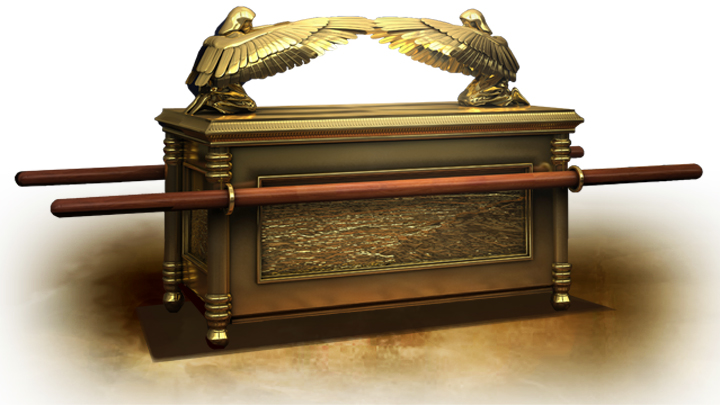
Exodus 37 (NLT) – Next Bezalel made the Ark of acacia wood—a sacred chest 45 inches long, 27 inches wide, and 27 inches high. He overlaid it inside and outside with pure gold, and he ran a molding of gold all around it. He cast four gold rings and attached them to its four feet, two rings on each side. Then he made poles from acacia wood and overlaid them with gold. He inserted the poles into the rings at the sides of the Ark to carry it.
Then he made the Ark’s cover—the place of atonement—from pure gold. It was 45 inches long and 27 inches wide. He made two cherubim from hammered gold and placed them on the two ends of the atonement cover. He molded the cherubim on each end of the atonement cover, making it all of one piece of gold. The cherubim faced each other and looked down on the atonement cover. With their wings spread above it, they protected it.
Building the Table
Then Bezalel made the table of acacia wood, 36 inches long, 18 inches wide, and 27 inches high. He overlaid it with pure gold and ran a gold molding around the edge. He decorated it with a 3-inch border all around, and he ran a gold molding along the border. Then he cast four gold rings for the table and attached them at the four corners next to the four legs. The rings were attached near the border to hold the poles that were used to carry the table. He made these poles from acacia wood and overlaid them with gold. Then he made special containers of pure gold for the table—bowls, ladles, jars, and pitchers—to be used in pouring out liquid offerings.
Building the Lampstand
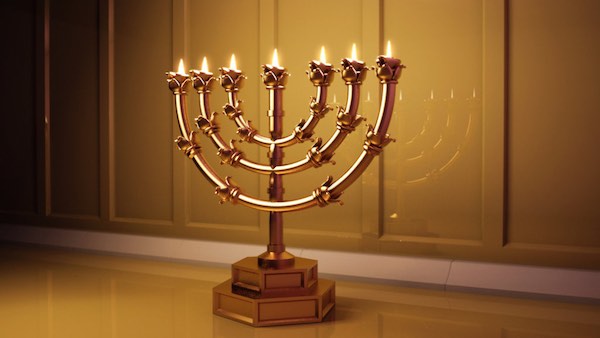
Then Bezalel made the lampstand of pure, hammered gold. He made the entire lampstand and its decorations of one piece—the base, center stem, lamp cups, buds, and petals. The lampstand had six branches going out from the center stem, three on each side. Each of the six branches had three lamp cups shaped like almond blossoms, complete with buds and petals. The center stem of the lampstand was crafted with four lamp cups shaped like almond blossoms, complete with buds and petals. There was an almond bud beneath each pair of branches where the six branches extended from the center stem, all made of one piece. The almond buds and branches were all of one piece with the center stem, and they were hammered from pure gold.
He also made seven lamps for the lampstand, lamp snuffers, and trays, all of pure gold. The entire lampstand, along with its accessories, was made from 75 pounds of pure gold.
Building the Incense Altar
Then Bezalel made the incense altar of acacia wood. It was 18 inches square and 36 inches high, with horns at the corners carved from the same piece of wood as the altar itself. He overlaid the top, sides, and horns of the altar with pure gold, and he ran a gold molding around the entire altar. He made two gold rings and attached them on opposite sides of the altar below the gold molding to hold the carrying poles. He made the poles of acacia wood and overlaid them with gold.
Then he made the sacred anointing oil and the fragrant incense, using the techniques of a skilled incense maker.
Building the Altar of Burnt Offering
Exodus 38 (NLT) – Next Bezalel used acacia wood to construct the square altar of burnt offering. It was 7 1⁄2 feet wide, 7 1⁄2 feet long, and 4 1⁄2 feet high. He made horns for each of its four corners so that the horns and altar were all one piece. He overlaid the altar with bronze. Then he made all the altar utensils of bronze—the ash buckets, shovels, basins, meat forks, and firepans. Next he made a bronze grating and installed it halfway down the side of the altar, under the ledge. He cast four rings and attached them to the corners of the bronze grating to hold the carrying poles. He made the poles from acacia wood and overlaid them with bronze. He inserted the poles through the rings on the sides of the altar. The altar was hollow and was made from planks.
Building the Washbasin
Bezalel made the bronze washbasin and its bronze stand from bronze mirrors donated by the women who served at the entrance of the Tabernacle.
Building the Courtyard
Then Bezalel made the courtyard, which was enclosed with curtains made of finely woven linen. On the south side the curtains were 150 feet long. They were held up by twenty posts set securely in twenty bronze bases. He hung the curtains with silver hooks and rings. He made a similar set of curtains for the north side—150 feet of curtains held up by twenty posts set securely in bronze bases. He hung the curtains with silver hooks and rings. The curtains on the west end of the courtyard were 75 feet long, hung with silver hooks and rings and supported by ten posts set into ten bases. The east end, the front, was also 75 feet long.
The courtyard entrance was on the east end, flanked by two curtains. The curtain on the right side was 22 1⁄2 feet long and was supported by three posts set into three bases. The curtain on the left side was also 22 1⁄2 feet long and was supported by three posts set into three bases. All the curtains used in the courtyard were made of finely woven linen. Each post had a bronze base, and all the hooks and rings were silver. The tops of the posts of the courtyard were overlaid with silver, and the rings to hold up the curtains were made of silver.
He made the curtain for the entrance to the courtyard of finely woven linen, and he decorated it with beautiful embroidery in blue, purple, and scarlet thread. It was 30 feet long, and its height was 7 1⁄2 feet, just like the curtains of the courtyard walls. It was supported by four posts, each set securely in its own bronze base. The tops of the posts were overlaid with silver, and the hooks and rings were also made of silver.
All the tent pegs used in the Tabernacle and courtyard were made of bronze.
Inventory of Materials
This is an inventory of the materials used in building the Tabernacle of the Covenant. The Levites compiled the figures, as Moses directed, and Ithamar son of Aaron the priest served as recorder. Bezalel son of Uri, grandson of Hur, of the tribe of Judah, made everything just as the Lord had commanded Moses. He was assisted by Oholiab son of Ahisamach, of the tribe of Dan, a craftsman expert at engraving, designing, and embroidering with blue, purple, and scarlet thread on fine linen cloth.
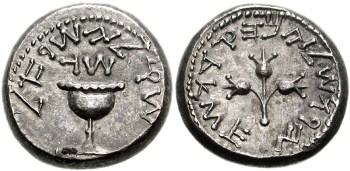 The people brought special offerings of gold totaling 2,193 pounds, as measured by the weight of the sanctuary shekel. This gold was used throughout the Tabernacle.
The whole community of Israel gave 7,545 pounds of silver, as measured by the weight of the sanctuary shekel. This silver came from the tax collected from each man registered in the census. (The tax is one beka, which is half a shekel, based on the sanctuary shekel.) The tax was collected from 603,550 men who had reached their twentieth birthday. The hundred bases for the frames of the sanctuary walls and for the posts supporting the inner curtain required 7,500 pounds of silver, about 75 pounds for each base. The remaining 45 pounds of silver was used to make the hooks and rings and to overlay the tops of the posts.
The people also brought as special offerings 5,310 pounds of bronze, which was used for casting the bases for the posts at the entrance to the Tabernacle, and for the bronze altar with its bronze grating and all the altar utensils. Bronze was also used to make the bases for the posts that supported the curtains around the courtyard, the bases for the curtain at the entrance of the courtyard, and all the tent pegs for the Tabernacle and the courtyard.
Clothing for the Priests
Exodus 39 (NLT) – The craftsmen made beautiful sacred garments of blue, purple, and scarlet cloth—clothing for Aaron to wear while ministering in the Holy Place, just as the Lord had commanded Moses.
Making the Ephod
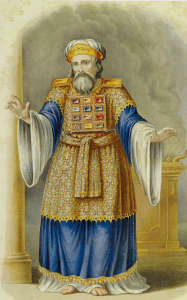
Bezalel made the ephod of finely woven linen and embroidered it with gold and with blue, purple, and scarlet thread. He made gold thread by hammering out thin sheets of gold and cutting it into fine strands. With great skill and care, he worked it into the fine linen with the blue, purple, and scarlet thread.
The ephod consisted of two pieces, front and back, joined at the shoulders with two shoulder-pieces. The decorative sash was made of the same materials: finely woven linen embroidered with gold and with blue, purple, and scarlet thread, just as the Lord had commanded Moses. They mounted the two onyx stones in settings of gold filigree. The stones were engraved with the names of the tribes of Israel, just as a seal is engraved. He fastened these stones on the shoulder-pieces of the ephod as a reminder that the priest represents the people of Israel. All this was done just as the Lord had commanded Moses.
Making the Chestpiece
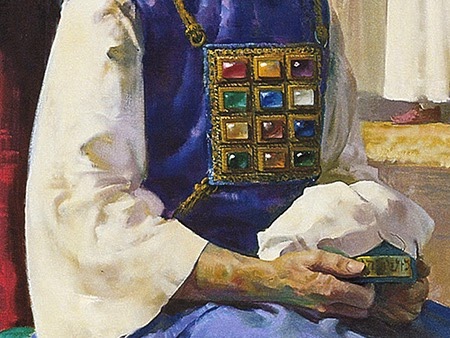
Bezalel made the chestpiece with great skill and care. He made it to match the ephod, using finely woven linen embroidered with gold and with blue, purple, and scarlet thread. He made the chestpiece of a single piece of cloth folded to form a pouch nine inches square. They mounted four rows of gemstones on it. The first row contained a red carnelian, a pale-green peridot, and an emerald. The second row contained a turquoise, a blue lapis lazuli, and a white moonstone. The third row contained an orange jacinth, an agate, and a purple amethyst. The fourth row contained a blue-green beryl, an onyx, and a green jasper. All these stones were set in gold filigree. 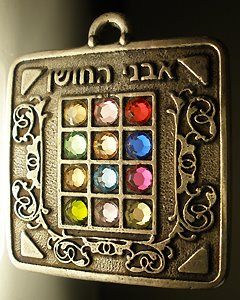 Each stone represented one of the twelve sons of Israel, and the name of that tribe was engraved on it like a seal.
To attach the chestpiece to the ephod, they made braided cords of pure gold thread. They also made two settings of gold filigree and two gold rings and attached them to the top corners of the chestpiece. They tied the two gold cords to the rings on the chestpiece. They tied the other ends of the cords to the gold settings on the shoulder-pieces of the ephod. Then they made two more gold rings and attached them to the inside edges of the chestpiece next to the ephod. Then they made two more gold rings and attached them to the front of the ephod, below the shoulder-pieces, just above the knot where the decorative sash was fastened to the ephod. They attached the bottom rings of the chestpiece to the rings on the ephod with blue cords. In this way, the chestpiece was held securely to the ephod above the decorative sash. All this was done just as the Lord had commanded Moses.
Additional Clothing for the Priests
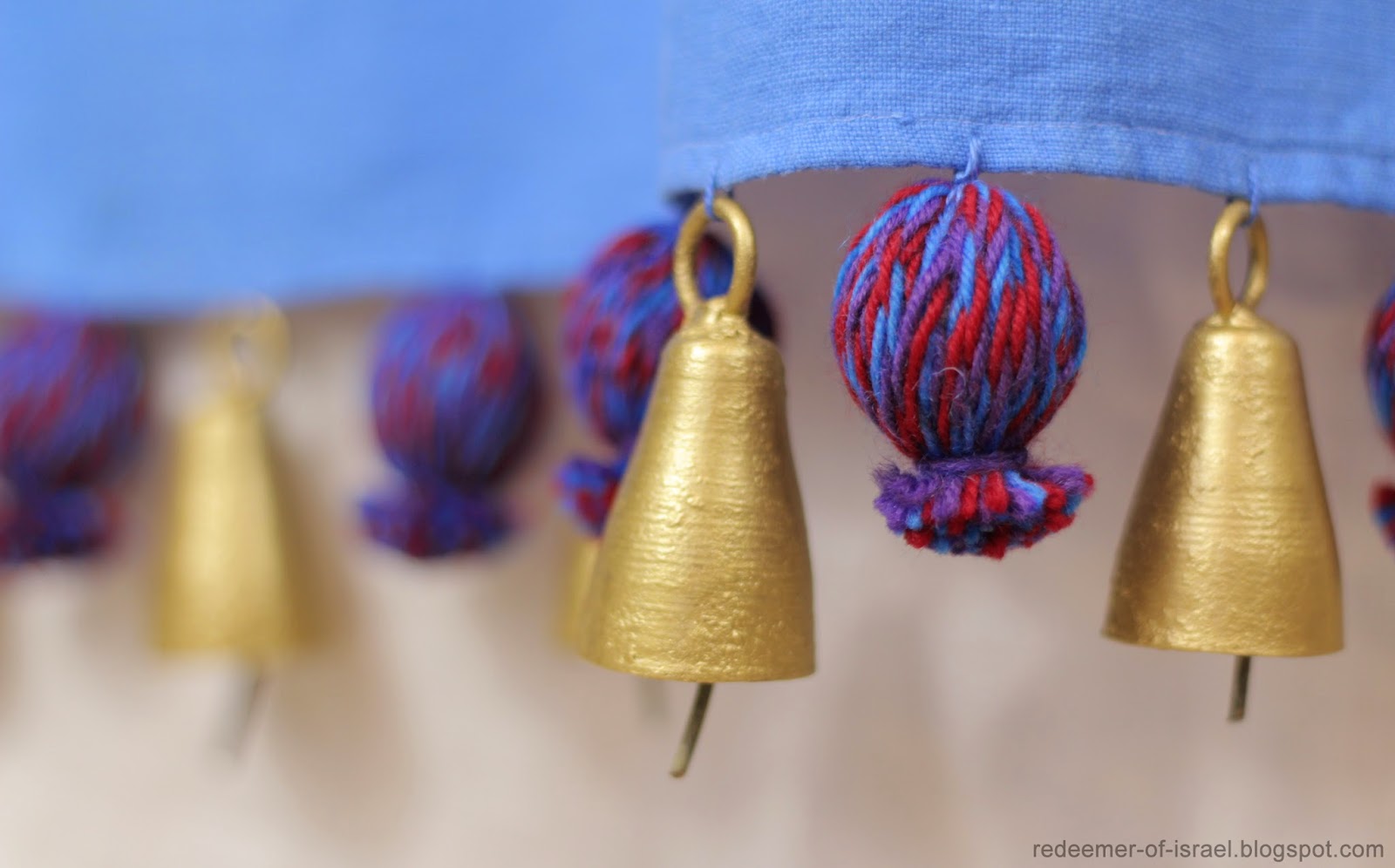
Bezalel made the robe that is worn with the ephod from a single piece of blue woven cloth, with an opening for Aaron’s head in the middle of it. The opening was reinforced with a woven collar so it would not tear. They made pomegranates of blue, purple, and scarlet yarn, and attached them to the hem of the robe. They also made bells of pure gold and placed them between the pomegranates along the hem of the robe, with bells and pomegranates alternating all around the hem. This robe was to be worn whenever the priest ministered before the Lord, just as the Lord had commanded Moses.
They made tunics for Aaron and his sons from fine linen cloth. The turban and the special head coverings were made of fine linen, and the undergarments were also made of finely woven linen. The sashes were made of finely woven linen and embroidered with blue, purple, and scarlet thread, just as the Lord had commanded Moses.
Finally, they made the sacred medallion—the badge of holiness—of pure gold. They engraved it like a seal with these words: Holy to the lord. They attached the medallion with a blue cord to Aaron’s turban, just as the Lord had commanded Moses.
Moses Inspects the Work
And so at last the Tabernacle was finished. The Israelites had done everything just as the Lord had commanded Moses. And they brought the entire Tabernacle to Moses:
- the sacred tent with all its furnishings, clasps, frames, crossbars, posts, and bases;
- the tent coverings of tanned ram skins and fine goatskin leather;
- the inner curtain to shield the Ark;
- the Ark of the Covenant[ and its carrying poles;
- the Ark’s cover—the place of atonement;
- the table and all its utensils;
- the Bread of the Presence;
- the pure gold lampstand with its symmetrical lamp cups, all its accessories, and the olive oil for lighting;
- the gold altar;
- the anointing oil and fragrant incense;
- the curtain for the entrance of the sacred tent;
- the bronze altar;
- the bronze grating and its carrying poles and utensils;
- the washbasin with its stand;
- the curtains for the walls of the courtyard;
- the posts and their bases;
- the curtain for the entrance to the courtyard;
- the ropes and tent pegs;
- all the furnishings to be used in worship at the Tabernacle;
- the beautifully stitched garments for the priests to wear while ministering in the Holy Place—the sacred garments for Aaron the priest, and the garments for his sons to wear as they minister as priests.
So the people of Israel followed all of the Lord’s instructions to Moses. Then Moses inspected all their work. When he found it had been done just as the Lord had commanded him, he blessed them.
The Tabernacle Completed
Exodus 40 (NLT) – Then the Lord said to Moses, “Set up the Tabernacle on the first day of the new year. Place the Ark of the Covenant[ inside, and install the inner curtain to enclose the Ark within the Most Holy Place. Then bring in the table, and arrange the utensils on it. And bring in the lampstand, and set up the lamps.
“Place the gold incense altar in front of the Ark of the Covenant. Then hang the curtain at the entrance of the Tabernacle. Place the altar of burnt offering in front of the Tabernacle entrance. Set the washbasin between the Tabernacle and the altar, and fill it with water. Then set up the courtyard around the outside of the tent, and hang the curtain for the courtyard entrance.
“Take the anointing oil and anoint the Tabernacle and all its furnishings to consecrate them and make them holy. Anoint the altar of burnt offering and its utensils to consecrate them. Then the altar will become absolutely holy. Next anoint the washbasin and its stand to consecrate them.
“Present Aaron and his sons at the entrance of the Tabernacle, and wash them with water. Dress Aaron with the sacred garments and anoint him, consecrating him to serve me as a priest. Then present his sons and dress them in their tunics. Anoint them as you did their father, so they may also serve me as priests. With their anointing, Aaron’s descendants are set apart for the priesthood forever, from generation to generation.”
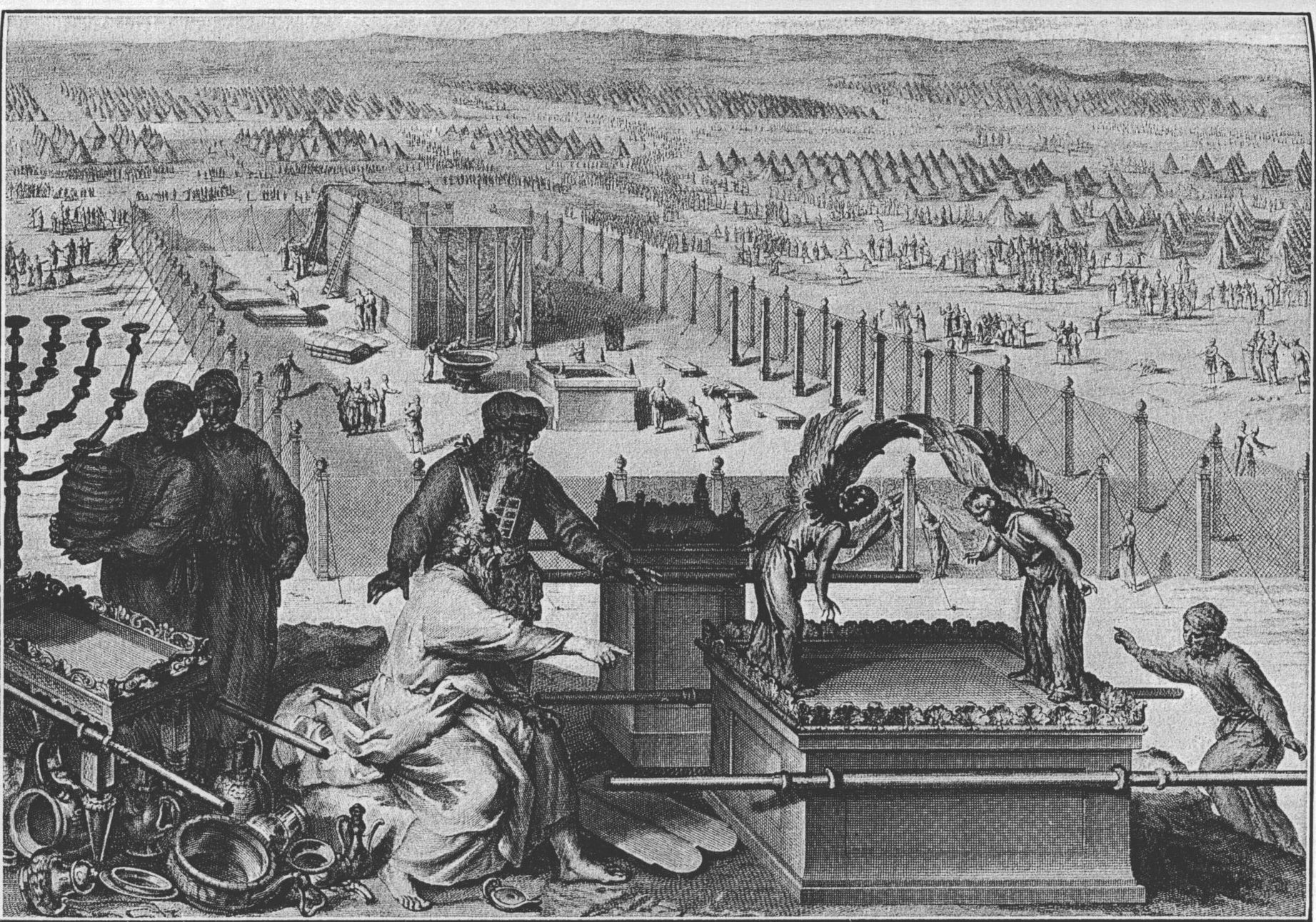 Moses proceeded to do everything just as the Lord had commanded him. So the Tabernacle was set up on the first day of the first month of the second year. Moses erected the Tabernacle by setting down its bases, inserting the frames, attaching the crossbars, and setting up the posts. Then he spread the coverings over the Tabernacle framework and put on the protective layers, just as the Lord had commanded him.
He took the stone tablets inscribed with the terms of the covenant and placed them inside the Ark. Then he attached the carrying poles to the Ark, and he set the Ark’s cover—the place of atonement—on top of it. Then he brought the Ark of the Covenant into the Tabernacle and hung the inner curtain to shield it from view, just as the Lord had commanded him.
Next Moses placed the table in the Tabernacle, along the north side of the Holy Place, just outside the inner curtain. And he arranged the Bread of the Presence on the table before the Lord, just as the Lord had commanded him.
He set the lampstand in the Tabernacle across from the table on the south side of the Holy Place. Then he lit the lamps in the Lord’s presence, just as the Lord had commanded him. He also placed the gold incense altar in the Tabernacle, in the Holy Place in front of the inner curtain. On it he burned the fragrant incense, just as the Lord had commanded him.
He hung the curtain at the entrance of the Tabernacle, and he placed the altar of burnt offering near the Tabernacle entrance. On it he offered a burnt offering and a grain offering, just as the Lord had commanded him.
Next Moses placed the washbasin between the Tabernacle and the altar. He filled it with water so the priests could wash themselves. Moses and Aaron and Aaron’s sons used water from it to wash their hands and feet. Whenever they approached the altar and entered the Tabernacle, they washed themselves, just as the Lord had commanded Moses.
Then he hung the curtains forming the courtyard around the Tabernacle and the altar. And he set up the curtain at the entrance of the courtyard. So at last Moses finished the work.
The Lord’s Glory Fills the Tabernacle
 Then the cloud covered the Tabernacle, and the glory of the Lord filled the Tabernacle. Moses could no longer enter the Tabernacle because the cloud had settled down over it, and the glory of the Lord filled the Tabernacle.
Now whenever the cloud lifted from the Tabernacle, the people of Israel would set out on their journey, following it. But if the cloud did not rise, they remained where they were until it lifted. The cloud of the Lord hovered over the Tabernacle during the day, and at night fire glowed inside the cloud so the whole family of Israel could see it. This continued throughout all their journeys.
__________
“Let Your Glory Fall” – Vineyard
__________
Blessing – (Northumbrian Community)
May the peace of the Lord Christ go with you, wherever He may send you. May He guide you through the wilderness, protect you through the storm. May He bring you home rejoicing at the wonders He has shown you. May He bring you home rejoicing once again into our doors.
__________
+ In the name of the Father, and the Son, and the Holy Spirit. Amen!



 The Peanut Gallery