
Morning Prayer: 21 July – Romans 4:23-25 ~ on learning from Abraham’s faith

Reading through Romans

+ In the name of the Father, and of the Son, and of the Holy Spirit. Amen.

Opening sentence

Praise to You, Lord Jesus Christ, King of endless glory. You have the words of eternal life, and we have believed and have come to know that You are the Holy One of God.
__________

A reading from Romans: Romans 4:23-25 (NLT)
image

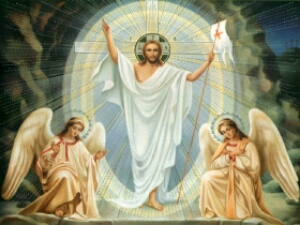
And when God counted him as righteous, it wasn’t just for Abraham’s benefit. It was recorded for our benefit, too, assuring us that God will also count us as righteous if we believe in him, the one who raised Jesus our Lord from the dead. He was handed over to die because of our sins, and he was raised to life to make us right with God.
__________

Reflection: Romans 4:23-25 (John Stott, The Message of Romans: God’s Good News for the World)

The whole Abraham story, like the rest of Scripture, was written for our instruction (15: 4). So the same God, who credited faith to Abraham as righteousness, will credit righteousness to us also if we believe in him who raised Jesus our Lord from the dead (24).

Abraham was not unique in his experience of being justified by faith. For this is God’s way of salvation for everybody. But the God we are to trust in is not only the God of Abraham, Isaac and Jacob; he is also the God and Father of our Lord Jesus Christ, who was delivered over to death for our sins and was raised to life for our justification (25). ‘This verse’, writes Hodge, ‘is a comprehensive statement of the gospel.’
_____

We today are much more fortunate than Abraham, and have little or no excuse for unbelief. For we live on this side of the resurrection. Moreover, we have a complete Bible in which both the creation of the universe and the resurrection of Jesus are recorded. It is therefore more reasonable for us to believe than it was for Abraham.

Of course we have to make sure that the promises we are seeking to inherit are neither wrenched out of their biblical context nor the product of our own subjective fancy, but truly apply to us. Then we can lay hold of them, even against all human hope, yet in hope (18), that is, in the confidence of God’s faithfulness and power.

Only so shall we prove to be genuine children of our great spiritual forefather Abraham.

In hope, against all human hope,
Self-desperate, I believe …
Faith, mighty faith, the promise sees,
And looks to that alone;
Laughs at impossibilities
And cries: It shall be done!

__________


__________

Canticle

Christ, as a light illumine and guide me. Christ, as a shield overshadow me. Christ under me; Christ over me; Christ beside me on my left and my right. This day be within and without me, lowly and meek, yet all-powerful. Be in the heart of each to whom I speak; in the mouth of each who speaks unto me. This day be within and without me, lowly and meek, yet all-powerful. Christ as a light; Christ as a shield; Christ beside me on my left and my right.

Blessing

May the peace of the Lord Christ go with you, wherever He may send you. May He guide you through the wilderness, protect you through the storm. May He bring you home rejoicing at the wonders He has shown you. May He bring you home rejoicing once again into our doors.

+ In the name of the Father, and of the Son, and of the Holy Spirit. Amen

Morning Prayer: 20 July – Romans 4:17b-22 ~ on the reasonableness of faith

Reading through Romans

+ In the name of the Father, and of the Son, and of the Holy Spirit. Amen.

Opening sentence

Praise to You, Lord Jesus Christ, King of endless glory. You have the words of eternal life, and we have believed and have come to know that You are the Holy One of God.
__________

A reading from Romans: Romans 4:17b-22 (NLT)

image

This happened because Abraham believed in the God who brings the dead back to life and who creates new things out of nothing. Even when there was no reason for hope, Abraham kept hoping — believing that he would become the father of many nations. For God had said to him, “That’s how many descendants you will have!” And Abraham’s faith did not weaken, even though, at about 100 years of age, he figured his body was as good as dead—and so was Sarah’s womb.

Abraham never wavered in believing God’s promise. In fact, his faith grew stronger, and in this he brought glory to God. He was fully convinced that God is able to do whatever he promises. And because of Abraham’s faith, God counted him as righteous.
__________

Reflection: Romans 4:17b-22 (John Stott, The Message of Romans: God’s Good News for the World)

The description of faith as ‘reasonable’ comes as a surprise to many people, since they have always supposed that faith and reason were alternative means of grasping reality, and mutually incompatible….

Although, to be sure, faith goes beyond reason, it always has a firmly rational basis. In particular , faith is believing or trusting a person, and its reasonableness depends on the reliability of the person being trusted.

It is always reasonable to trust the trustworthy. And there is nobody more trustworthy than God, as Abraham knew, and as we are privileged to know more confidently than Abraham because we live after the death and resurrection of Jesus through which God has fully disclosed himself and his dependability.

In particular, before we are in a position to believe God’s promises, we need to be sure both of his power (that he is able to keep them) and of his faithfulness (that he can be relied on to do so). It is these two attributes of God which were the foundations of Abraham’s faith, and on which Paul reflects in this passage.

The power of God: it is out of nothing that he created the universe, and out of death that he raised Jesus. The creation and the resurrection were and remain the two major manifestations of the power of God.

The faithfulness of God: Abraham glorified God by letting God be God, and by trusting him to be true to himself as the God of creation and resurrection. It is this concept of ‘letting God be God’ which forms a natural transition from his power to his faithfulness.

There is a fundamental correspondence between our faith and God’s faithfulness, so much so that Jesus’ command, ‘Have faith in God,’ has sometimes been roughly but justly paraphrased, ‘Reckon on the faithfulness of God.’ Behind all promises lies the character of the person who makes them.
__________

__________

Canticle

Christ, as a light illumine and guide me. Christ, as a shield overshadow me. Christ under me; Christ over me; Christ beside me on my left and my right. This day be within and without me, lowly and meek, yet all-powerful. Be in the heart of each to whom I speak; in the mouth of each who speaks unto me. This day be within and without me, lowly and meek, yet all-powerful. Christ as a light; Christ as a shield; Christ beside me on my left and my right.

Blessing

May the peace of the Lord Christ go with you, wherever He may send you. May He guide you through the wilderness, protect you through the storm. May He bring you home rejoicing at the wonders He has shown you. May He bring you home rejoicing once again into our doors.

+ In the name of the Father, and of the Son, and of the Holy Spirit. Amen

Morning Prayer: 18 July – Romans 4:13-17a ~ on receiving the promise by faith

Reading through Romans

+ In the name of the Father, and of the Son, and of the Holy Spirit. Amen.

Opening sentence

Praise to You, Lord Jesus Christ, King of endless glory. You have the words of eternal life, and we have believed and have come to know that You are the Holy One of God.
__________

A reading from Romans: Romans 4:13-17a (NLT)

Souls in the Bosom of Abraham (Souvigny Bible about 1100 AD)

Clearly, God’s promise to give the whole earth to Abraham and his descendants was based not on his obedience to God’s law, but on a right relationship with God that comes by faith. If God’s promise is only for those who obey the law, then faith is not necessary and the promise is pointless. For the law always brings punishment on those who try to obey it. (The only way to avoid breaking the law is to have no law to break!)

So the promise is received by faith. It is given as a free gift. And we are all certain to receive it, whether or not we live according to the law of Moses, if we have faith like Abraham’s. For Abraham is the father of all who believe. That is what the Scriptures mean when God told him, “I have made you the father of many nations.”
__________

Reflection: Romans 4:13-17a (John Stott, The Message of Romans: God’s Good News for the World)

The promise in mind must still be Genesis 15:5, that Abraham’s posterity would be as numerous as the stars. It was a promise without any conditions or requirements attached to it. God’s word came to Abraham as gratuitous promise, not as law. He simply believed God and was justified.
_____

Why does Paul assert so strongly that [the promise] is received and inherited by faith, not law? He gives three reasons.

The first is an argument from history. Namely, that ‘the covenant previously established by God’ could not possibly be annulled by the law which was given 430 years later….

Secondly, there is the argument from language…. Law-language (‘you shall’) demands our obedience, but promise-language (‘I will’) demands our faith. What God said to Abraham was not ‘Obey this law and I will bless you’, but ‘I will bless you; believe my promise’….

Thirdly, Paul now develops an argument from theology…. The reason justification is by grace through faith… is so that the promise … may be guaranteed to all Abraham’s offspring — not only to those who are of the law (meaning Jews who trace their physical descent from Abraham) but also to those who are of the faith of Abraham, that is, all believers, whether Jews or Gentiles, who belong to the spiritual lineage of faith….

All believers belong to Abraham’s seed and so inherit Abraham’s promise. The fatherhood of Abraham is a theme which runs right through this chapter.
__________


__________

Canticle

Christ, as a light illumine and guide me. Christ, as a shield overshadow me. Christ under me; Christ over me; Christ beside me on my left and my right. This day be within and without me, lowly and meek, yet all-powerful. Be in the heart of each to whom I speak; in the mouth of each who speaks unto me. This day be within and without me, lowly and meek, yet all-powerful. Christ as a light; Christ as a shield; Christ beside me on my left and my right.

Blessing

May the peace of the Lord Christ go with you, wherever He may send you. May He guide you through the wilderness, protect you through the storm. May He bring you home rejoicing at the wonders He has shown you. May He bring you home rejoicing once again into our doors.

+ In the name of the Father, and of the Son, and of the Holy Spirit. Amen
Morning Prayer: 17 July – Romans 4:9-12 ~ on faith first

Reading through Romans

+ In the name of the Father, and of the Son, and of the Holy Spirit. Amen.

Opening sentence Praise to You, Lord Jesus Christ, King of endless glory. You have the words of eternal life, and we have believed and have come to know that You are the Holy One of God.
__________

A reading from Romans: Romans 4:9-12 (NLT)

Ge15

Now, is this blessing only for the Jews, or is it also for uncircumcised Gentiles? Well, we have been saying that Abraham was counted as righteous by God because of his faith. But how did this happen? Was he counted as righteous only after he was circumcised, or was it before he was circumcised? Clearly, God accepted Abraham before he was circumcised!

Circumcision was a sign that Abraham already had faith and that God had already accepted him and declared him to be righteous — even before he was circumcised. So Abraham is the spiritual father of those who have faith but have not been circumcised. They are counted as righteous because of their faith. And Abraham is also the spiritual father of those who have been circumcised, but only if they have the same kind of faith Abraham had before he was circumcised.
__________

Reflection: Romans 4:9-12   (John Stott, The Message of Romans: God’s Good News for the World)

Did Abraham’s justification come before or after his circumcision?

Paul’s answer to his own question is brief and blunt: It was not after, but before! In fact it happened long before. For his justification is recorded in Genesis 15 and his circumcision in Genesis 17, and at least fourteen years (even twenty-nine years according to the Rabbis) separated the two events.

Although they were separated, they were not unrelated, however. Abraham’s circumcision, though not the ground of his justification, was its sign and seal. For Abraham received the sign of circumcision, a seal of the righteousness that he had by faith while he was still uncircumcised.
_____

Implication: the order of events for adult converts is plain. First, we are justified by faith, and then we are baptized as a sign or seal of our justification. But we must get the order right, and we must also clearly distinguish between the sign (baptism) and the thing signified (justification).
_____

There was a double purpose in the fact that Abraham was justified by faith, and circumcised only later. First that Abraham might be (as he is) the father of all who believe, and so have been justified, but have not been circumcised, i.e. Abraham is the father of Gentile believers…. The second purpose was that Abraham might also be (as he is) the father of the circumcised who in addition to their circumcision also walk in the footsteps of the faith that our father Abraham had before he was circumcised.

Thus Abraham is the father of all believers, irrespective of whether they are circumcised or uncircumcised…. For where circumcision divides, faith unites.
__________

__________

Canticle

Christ, as a light illumine and guide me. Christ, as a shield overshadow me. Christ under me; Christ over me; Christ beside me on my left and my right. This day be within and without me, lowly and meek, yet all-powerful. Be in the heart of each to whom I speak; in the mouth of each who speaks unto me. This day be within and without me, lowly and meek, yet all-powerful. Christ as a light; Christ as a shield; Christ beside me on my left and my right.

Blessing

May the peace of the Lord Christ go with you, wherever He may send you. May He guide you through the wilderness, protect you through the storm. May He bring you home rejoicing at the wonders He has shown you. May He bring you home rejoicing once again into our doors.

+ In the name of the Father, and of the Son, and of the Holy Spirit. Amen

Morning Prayer: 16 July – Romans 4:1-8 ~ on Abraham’s faith

Reading through Romans

+ In the name of the Father, and of the Son, and of the Holy Spirit. Amen.

Opening sentence Praise to You, Lord Jesus Christ, King of endless glory. You have the words of eternal life, and we have believed and have come to know that You are the Holy One of God.
__________

A reading from Romans: Romans 4:1-8 (NLT)

abraham090807_01
Abraham’s Journey from Ur to Canaan József Molnár ( 1821-1899) Hungarian National Gallery, Budapest

Abraham was, humanly speaking, the founder of our Jewish nation. What did he discover about being made right with God? If his good deeds had made him acceptable to God, he would have had something to boast about. But that was not God’s way. For the Scriptures tell us, “Abraham believed God, and God counted him as righteous because of his faith.”

When people work, their wages are not a gift, but something they have earned. But people are counted as righteous, not because of their work, but because of their faith in God who forgives sinners. David also spoke of this when he described the happiness of those who are declared righteous without working for it:

“Oh, what joy for those whose disobedience is forgiven, whose sins are put out of sight. Yes, what joy for those whose record the Lord has cleared of sin.”

__________

Reflection: Romans 4 (John Stott, The Message of Romans: God’s Good News for the World)

In Romans 4… Paul further clarifies the meaning of justification by faith. He uses what Scripture says about Abraham and David to elaborate the significance of both words, ‘justification’ in terms of the reckoning of righteousness to the unrighteous and ‘faith’ in terms of trusting the God of creation and resurrection.
_____

Abraham and David show that justification by faith is God’s one and only way of salvation, first in the Old Testament as well as in the New… for Jews as well as for Gentiles.
_____

The crediting of faith as righteousness is a free gift, not an earned wage, and that it happens not to those who work but to those who trust, and indeed who trust the God who, far from justifying people because they are godly, actually justifies them when they are ungodly.

This emphasis on faith (Abraham believed God) plainly shows, then, that God’s ‘crediting faith as righteousness’ is ‘not a rewarding of merit but a free and unmerited decision of divine grace’. Faith is not an alternative to righteousness, but the means by which we are declared righteous.
__________

__________

Canticle

Christ, as a light illumine and guide me. Christ, as a shield overshadow me. Christ under me; Christ over me; Christ beside me on my left and my right. This day be within and without me, lowly and meek, yet all-powerful. Be in the heart of each to whom I speak; in the mouth of each who speaks unto me. This day be within and without me, lowly and meek, yet all-powerful. Christ as a light; Christ as a shield; Christ beside me on my left and my right.

Blessing

May the peace of the Lord Christ go with you, wherever He may send you. May He guide you through the wilderness, protect you through the storm. May He bring you home rejoicing at the wonders He has shown you. May He bring you home rejoicing once again into our doors.

+ In the name of the Father, and of the Son, and of the Holy Spirit. Amen