
Morning Prayer: 25 August – Romans 9:1-5 ~ anguish for Israel

Reading through Romans

+ In the name of the Father, and of the Son, and of the Holy Spirit. Amen.

Opening sentence

Praise to You, Lord Jesus Christ, King of endless glory. You have the words of eternal life, and we have believed and have come to know that You are the Holy One of God.
__________

A reading from Romans: Romans 9:1-5 (NLT)
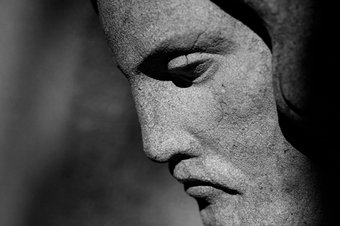
sadness-grief-jesus-christ

With Christ as my witness, I speak with utter truthfulness. My conscience and the Holy Spirit confirm it. My heart is filled with bitter sorrow and unending grief for my people, my Jewish brothers and sisters. I would be willing to be forever cursed — cut off from Christ! — if that would save them. They are the people of Israel, chosen to be God’s adopted children. God revealed his glory to them. He made covenants with them and gave them his law. He gave them the privilege of worshiping him and receiving his wonderful promises. Abraham, Isaac, and Jacob are their ancestors, and Christ himself was an Israelite as far as his human nature is concerned. And he is God, the one who rules over everything and is worthy of eternal praise! Amen.
__________

Reflection: Romans 9:1-5 (John Stott, The Message of Romans: God’s Good News for the World)

The plan of God for Jews and Gentiles: (Romans 9–11)

The dominant theme [of these three chapters] is Jewish unbelief, together with the problems which it raised…. Each chapter handles a different aspect of God’s relation to Israel, past, present and future:

  1. Israel’s fall (9: 1– 33): God’s purpose of election
  2. Israel’s fault (10: 1– 21): God’s dismay over her disobedience
  3. Israel’s future (11: 1– 32): God’s long-term design
  4. Doxology (11: 33– 36): God’s wisdom and generosity

Israel’s fall: God’s purpose of election (9: 1– 33)

Summary: Romans 9:1-5 – Paul begins by confessing that Jewish unbelief causes him not only anguish of heart (1– 3), but also perplexity of mind as he asks himself how the people of Israel with their eight unique privileges could have rejected their own Messiah (4– 5). How can their apostasy be explained?

Luther comments: ‘It seems incredible that a man would desire to be damned, in order that the damned might be saved.’

The privileges of Israel:

  • theirs is the adoption as sons
  • theirs is the divine glory, namely the visible splendour of God
  • theirs are the covenants… with Abraham along with its multiple renewals
  • theirs is the receiving of the law, the unique revelation of God’s will
  • theirs is the temple worship
  • theirs are the promises relating to the coming of the Messiah as God’s prophet, priest and king
  • theirs are the patriarchs, not only Abraham, Isaac and Jacob, but also the progenitors of the twelve tribes
  • from them is traced the human ancestry of Christ

Calvin justly comments: ‘If he honored the whole human race when he connected himself with it by sharing our nature, much more did he honor the Jews, with whom he desired to have a close bond of affinity.’

One would think that Israel, favored with these eight blessings, prepared and educated for centuries for the arrival of her Messiah, would recognize and welcome him when he came. How then can one reconcile Israel’s privileges with her prejudices?
__________


__________

Canticle

Christ, as a light illumine and guide me. Christ, as a shield overshadow me. Christ under me; Christ over me; Christ beside me on my left and my right. This day be within and without me, lowly and meek, yet all-powerful. Be in the heart of each to whom I speak; in the mouth of each who speaks unto me. This day be within and without me, lowly and meek, yet all-powerful. Christ as a light; Christ as a shield; Christ beside me on my left and my right.

Blessing

May the peace of the Lord Christ go with you, wherever He may send you. May He guide you through the wilderness, protect you through the storm. May He bring you home rejoicing at the wonders He has shown you. May He bring you home rejoicing once again into our doors.

+ In the name of the Father, and of the Son, and of the Holy Spirit. Amen
Morning Prayer: 24 August – Romans 8:35-39 ~ God’s love: 5 unanswerable questions (Q 5)

Reading through Romans

+ In the name of the Father, and of the Son, and of the Holy Spirit. Amen.

Opening sentence

Praise to You, Lord Jesus Christ, King of endless glory. You have the words of eternal life, and we have believed and have come to know that You are the Holy One of God.
__________

A reading from Romans: Romans 8:35-39 (NLT)

Can anything ever separate us from Christ’s love? Does it mean he no longer loves us if we have trouble or calamity, or are persecuted, or hungry, or destitute, or in danger, or threatened with death? (As the Scriptures say, “For your sake we are killed every day; we are being slaughtered like sheep.”) No, despite all these things, overwhelming victory is ours through Christ, who loved us.

And I am convinced that nothing can ever separate us from God’s love. Neither death nor life, neither angels nor demons, neither our fears for today nor our worries about tomorrow — not even the powers of hell can separate us from God’s love. No power in the sky above or in the earth below—indeed, nothing in all creation will ever be able to separate us from the love of God that is revealed in Christ Jesus our Lord.
__________

Reflection: Romans 8:35-39 (John Stott, The Message of Romoans: God’s Good News for the World)

God’s Spirit in God’s children (8:1–39)

The Christian life is essentially life in the Spirit, that is to say, a life which is animated, sustained, directed and enriched by the Holy Spirit. Without the Holy Spirit true Christian discipleship would be inconceivable, indeed impossible.

(vs 28–39) The steadfastness of God’s love

The eternal security of God’s people, on account of the eternal unchangeability of God’s purpose, …is itself due to the eternal steadfastness of God’s love.

(vs 31–39) Five unanswerable questions

Question 5: Who shall separate us from the love of Christ? (35a).

Paul brings forward a sample list of adversities and adversaries that might be thought of as coming between us and Christ’s love. He mentions seven possibilities (35b). He begins with trouble, hardship and persecution, which together seem to denote the pressures and distresses caused by an ungodly and hostile world. He goes on to famine or nakedness, the lack of adequate food and clothing…. Paul concludes his list with danger or sword, meaning perhaps the risk of death on the one hand and the experience of it on the other…. A willingness for martyrdom is certainly the final test of Christian faith and faithfulness.

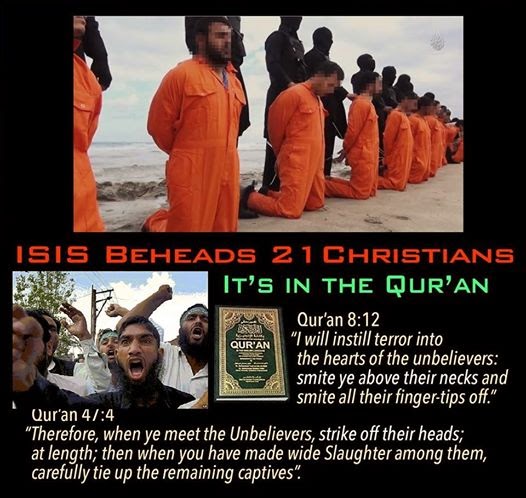
ISIS Video shows 21 Egyptian Christians Beheaded by IS

Those of us who have never had to suffer physically for Christ should perhaps read verses 35–39 alongside verses 35–39 of Hebrews 11, which list unnamed people of faith who were tortured, jeered at, flogged, chained, stoned, and even sawn in half. Faced with such heroism, there is no place for glibness or complacency. Nevertheless, can pain, misery and loss separate Christ’s people from his love? No! On the contrary, far from alienating us from him, in all these things (even while we are enduring them) Paul dares to claim that we are more than conquerors. For we not only bear them with fortitude but triumph over them, and so ‘are winning a most glorious victory’ through him who loved us (37).

Everything in creation is under the control of God the Creator and of Jesus Christ the Lord. That is why nothing will be able to separate us from the love of God that is in Christ Jesus our Lord (39b).

Paul’s five questions are not arbitrary. They are all about the kind of God we believe in. Together they affirm that absolutely nothing can frustrate God’s purpose (since he is for us), or quench his generosity (since he has not spared his Son), or accuse or condemn his elect (since he has justified them through Christ), or sunder us from his love (since he has revealed it in Christ).
__________


__________

Canticle

Christ, as a light illumine and guide me. Christ, as a shield overshadow me. Christ under me; Christ over me; Christ beside me on my left and my right. This day be within and without me, lowly and meek, yet all-powerful. Be in the heart of each to whom I speak; in the mouth of each who speaks unto me. This day be within and without me, lowly and meek, yet all-powerful. Christ as a light; Christ as a shield; Christ beside me on my left and my right.

Blessing

May the peace of the Lord Christ go with you, wherever He may send you. May He guide you through the wilderness, protect you through the storm. May He bring you home rejoicing at the wonders He has shown you. May He bring you home rejoicing once again into our doors.

+ In the name of the Father, and of the Son, and of the Holy Spirit. Amen
Morning Prayer: 22 August – Romans 8:33-34 ~ God’s love: 5 unanswerable questions (Q 3 & 4)

Reading through Romans

+ In the name of the Father, and of the Son, and of the Holy Spirit. Amen.

Opening sentence

Praise to You, Lord Jesus Christ, King of endless glory. You have the words of eternal life, and we have believed and have come to know that You are the Holy One of God.
__________

A reading from Romans: Romans 8:33-34 (NLT)

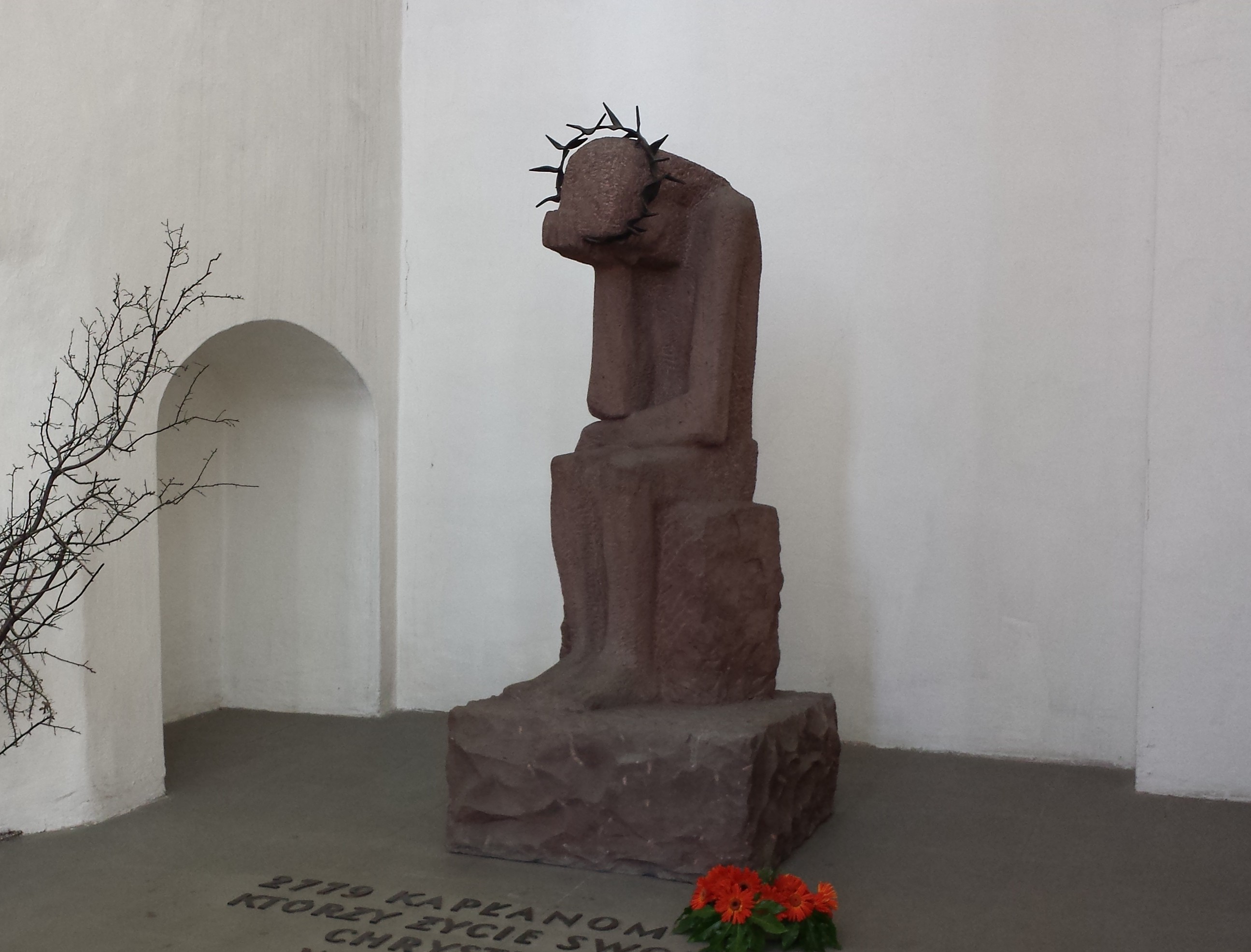
20150607_131922

Who dares accuse us whom God has chosen for his own? No one — for God himself has given us right standing with himself. Who then will condemn us? No one — for Christ Jesus died for us and was raised to life for us, and he is sitting in the place of honor at God’s right hand, pleading for us.
__________

Reflection: Romans 8:33-34 (John Stott, The Message of Romoans: God’s Good News for the World)

God’s Spirit in God’s children (8:1–39)

The Christian life is essentially life in the Spirit, that is to say, a life which is animated, sustained, directed and enriched by the Holy Spirit. Without the Holy Spirit true Christian discipleship would be inconceivable, indeed impossible.

(vs 28–39) The steadfastness of God’s love

The eternal security of God’s people, on account of the eternal unchangeability of God’s purpose, …is itself due to the eternal steadfastness of God’s love.

(vs 31–39) Five unanswerable questions

Question 3: Who will bring any charge against those whom God has chosen? It is God who justifies (33).

No prosecution can succeed, since God our judge has already justified us; and we can never be condemned, since Jesus Christ our advocate has died for our sins, was raised from the dead, is seated at God’s right hand, and is interceding for us…. God has chosen us (we are ‘God’s elect’, RSV) and God has justified us. Therefore all accusations fall to the ground. They glance off us like arrows off a shield.

Question 4: Who is he that condemns? Christ Jesus, who died — more than that, who was raised to life — is at the right hand of God and is also interceding for us (34).

Christ rescues us from condemnation, in particular by his death, resurrection, exaltation and intercession.

  1. Christ has died: Christ died for the very sins for which otherwise we would deservedly be condemned…. and so He has redeemed us from the curse or condemnation of the law ‘by becoming a curse for us’.
  2. Christ is risen: Christ was raised to life… by the Father, who thus demonstrated his acceptance of the sacrifice of his Son as the only satisfactory basis for our justification.
  3. Christ will come again: The crucified and resurrected Christ is at the right hand of God, resting from his finished work, occupying the place of supreme honor, exercising his authority to save, and waiting for his final triumph.
  4. Christ prays for us: Christ is also interceding for us, for he is our heavenly advocate and high priest. His very presence at the Father’s right hand is evidence of his completed work of atonement, and his intercession means that he ‘continues  …to secure for his people the benefits of his death’.

With this Christ as our Savior (who died, was raised, has been exalted and is interceding), we know that ‘there is now no condemnation’ for those who are united to him. We can therefore confidently challenge the universe, with all its inhabitants human and demonic: Who is he that condemns? There will never be any answer.
__________


__________

Canticle

Christ, as a light illumine and guide me. Christ, as a shield overshadow me. Christ under me; Christ over me; Christ beside me on my left and my right. This day be within and without me, lowly and meek, yet all-powerful. Be in the heart of each to whom I speak; in the mouth of each who speaks unto me. This day be within and without me, lowly and meek, yet all-powerful. Christ as a light; Christ as a shield; Christ beside me on my left and my right.

Blessing

May the peace of the Lord Christ go with you, wherever He may send you. May He guide you through the wilderness, protect you through the storm. May He bring you home rejoicing at the wonders He has shown you. May He bring you home rejoicing once again into our doors.

+ In the name of the Father, and of the Son, and of the Holy Spirit. Amen
Morning Prayer: 21 August – Romans 8:31-32 ~ God’s love: 5 unanswerable questions (Q 1 & 2)

Reading through Romans

+ In the name of the Father, and of the Son, and of the Holy Spirit. Amen.

Opening sentence

Praise to You, Lord Jesus Christ, King of endless glory. You have the words of eternal life, and we have believed and have come to know that You are the Holy One of God.
__________

A reading from Romans: Romans 8:31-32 (NLT)

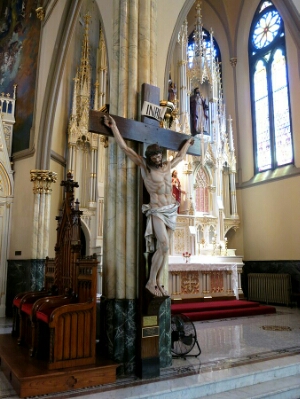
image

What shall we say about such wonderful things as these? If God is for us, who can ever be against us? Since he did not spare even his own Son but gave him up for us all, won’t he also give us everything else?
__________

Reflection: Romans 8:31-32 (John Stott, The Message of Romoans: God’s Good News for the World)

God’s Spirit in God’s children (8:1–39)

The Christian life is essentially life in the Spirit, that is to say, a life which is animated, sustained, directed and enriched by the Holy Spirit. Without the Holy Spirit true Christian discipleship would be inconceivable, indeed impossible.

(vs 28–39) The steadfastness of God’s love

Our Christian hope is solidly grounded on the unwavering love of God…. The eternal security of God’s people, on account of the eternal unchangeability of God’s purpose, …is itself due to the eternal steadfastness of God’s love.

(vs 31–39) Five unanswerable questions

Paul introduces the last nine verses of this chapter with… ‘what is there left to say?’(JBP), or ‘what can we add?’(JB).

The apostle’s answer to his own question is to ask five more questions, to which there is no answer…. For no-one and nothing can harm the people whom God has foreknown, predestined, called, justified and glorified.

Question 1: If God is for us, who can be against us? ( 31b ).

Paul is not saying that the claim ‘God is for us’ can be made by everybody…. On the contrary, the situation Paul envisages is one in which ‘God is for us’, since he has foreknown, predestined, called, justified and glorified us. This being so, who can be against us? To that question there is no answer. All the powers of hell may set themselves together against us. But they can never prevail, since God is on our side.

Question 2: He who did not spare his own Son, but gave him up for us all—how will he not also, along with him, graciously give us all things? ( 32 ).

The way Paul phrases his question… points us to the cross…. God has already given us his Son…. Paul argues…that since God has already given us the supreme and costliest gift of his own Son, ‘how can he fail to lavish every other gift upon us?’(REB). In giving his Son he gave everything. The cross is the guarantee of the continuing, unfailing generosity of God.
__________


__________

Canticle

Christ, as a light illumine and guide me. Christ, as a shield overshadow me. Christ under me; Christ over me; Christ beside me on my left and my right. This day be within and without me, lowly and meek, yet all-powerful. Be in the heart of each to whom I speak; in the mouth of each who speaks unto me. This day be within and without me, lowly and meek, yet all-powerful. Christ as a light; Christ as a shield; Christ beside me on my left and my right.

Blessing

May the peace of the Lord Christ go with you, wherever He may send you. May He guide you through the wilderness, protect you through the storm. May He bring you home rejoicing at the wonders He has shown you. May He bring you home rejoicing once again into our doors.

+ In the name of the Father, and of the Son, and of the Holy Spirit. Amen

Morning Prayer: 20 August – Romans 8:29-30 ~ God’s love: 5 undeniable affirmations

Reading through Romans

+ In the name of the Father, and of the Son, and of the Holy Spirit. Amen.

Opening sentence

Praise to You, Lord Jesus Christ, King of endless glory. You have the words of eternal life, and we have believed and have come to know that You are the Holy One of God.
__________

A reading from Romans: Romans 8:29-30 (NLT)

golden-chain-Romans-8-28-30

For God knew his people in advance, and he chose them to become like his Son, so that his Son would be the firstborn among many brothers and sisters. And having chosen them, he called them to come to him. And having called them, he gave them right standing with himself. And having given them right standing, he gave them his glory.
__________

Reflection: Romans 8:29-30 (John Stott, The Message of Romans: God’s Good News for the World)

God’s Spirit in God’s children (8:1–39)

The Christian life is essentially life in the Spirit, that is to say, a life which is animated, sustained, directed and enriched by the Holy Spirit. Without the Holy Spirit true Christian discipleship would be inconceivable, indeed impossible.

(vs 28–39) The steadfastness of God’s love

Our Christian hope is solidly grounded on the unwavering love of God…. The eternal security of God’s people, on account of the eternal unchangeability of God’s purpose, …is itself due to the eternal steadfastness of God’s love.

(vs 29– 30) Five undeniable affirmations

In these two verses Paul elaborates what he meant in verse 28 by God’s ‘purpose’, according to which he has called us and is working everything together for our good. He traces God’s good and saving purpose through five stages from its beginning in his mind to its consummation in the coming glory. These stages he names foreknowledge, predestination, calling, justification and glorification.

1. God foreknew.

The Hebrew verb ‘to know’ expresses much more than mere intellectual cognition; it denotes a personal relationship of care and affection… The meaning of ‘foreknowledge’ in the New Testament is similar.

John Murray writes: ‘ “Know” …is used in a sense practically synonymous with “love”…“Whom he foreknew” …is therefore virtually equivalent to “whom he foreloved”. Foreknowledge is ‘sovereign, distinguishing love’.

The only source of divine election and predestination is divine love.

2. God predestined.

A decision is involved in the process of becoming a Christian, but it is God’s decision before it can be ours. This is not to deny that we ‘decided for Christ’, and freely, but to affirm that we did so only because he had first ‘decided for us’.

C. J. Vaughan sums the issue up in these words: Everyone who is eventually saved can only ascribe his salvation, from the first step to the last, to God’s favor and act. Human merit must be excluded: and this can only be by tracing back the work far beyond the obedience which evidences, or even the faith which appropriates, salvation; even to an act of spontaneous favor on the part of that God who foresees and foreordains from eternity all his works.

Neither Scripture nor experience allows us to weaken this teaching.

3. God called.

The call of God is the historical application of his eternal predestination. His call comes to people through the gospel, and it is when the gospel is preached to them with power, and they respond to it with the obedience of faith, that we know God has chosen them. So evangelism (the preaching of the gospel), far from being rendered superfluous by God’s predestination, is indispensable, because it is the very means God has ordained by which his call comes to his people and awakens their faith.

4. God justified.

God’s effective call enables those who hear it to believe, and those who believe are justified by faith…. Justification is more than forgiveness or acquittal or even acceptance; it is a declaration that we sinners are now righteous in God’s sight, because of his conferment upon us of a righteous status, which is indeed the righteousness of Christ himself.

He became sin with our sin, so that we might become righteous with his righteousness.

5. God glorified.

Our destiny is to be given new bodies in a new world, both of which will be transfigured with the glory of God…. The process of sanctification is implied… both in the allusion to our being conformed to the image of Christ and as the necessary preliminary to our glorification. For ‘sanctification is glory begun; glory is sanctification consummated’.
_____

Here then is the apostle’s series of five undeniable affirmations. God is pictured as moving irresistibly from stage to stage; from an eternal foreknowledge and predestination, through a historical call and justification, to a final glorification of his people in a future eternity. It resembles a chain of five links, each of which is unbreakable.
__________


__________

Canticle

Christ, as a light illumine and guide me. Christ, as a shield overshadow me. Christ under me; Christ over me; Christ beside me on my left and my right. This day be within and without me, lowly and meek, yet all-powerful. Be in the heart of each to whom I speak; in the mouth of each who speaks unto me. This day be within and without me, lowly and meek, yet all-powerful. Christ as a light; Christ as a shield; Christ beside me on my left and my right.

Blessing

May the peace of the Lord Christ go with you, wherever He may send you. May He guide you through the wilderness, protect you through the storm. May He bring you home rejoicing at the wonders He has shown you. May He bring you home rejoicing once again into our doors.

+ In the name of the Father, and of the Son, and of the Holy Spirit. Amen