
Morning Prayer: 31 August – Romans 10:1-4 ~ a misdirected zeal

Reading through Romans

+ In the name of the Father, and of the Son, and of the Holy Spirit. Amen.

Opening sentence

Praise to You, Lord Jesus Christ, King of endless glory. You have the words of eternal life, and we have believed and have come to know that You are the Holy One of God.
__________

A reading from Romans: Romans 10:1-4 (NLT)

sincerely-wrong-is-still-wrong

Dear brothers and sisters, the longing of my heart and my prayer to God is for the people of Israel to be saved. I know what enthusiasm they have for God, but it is misdirected zeal. For they don’t understand God’s way of making people right with himself. Refusing to accept God’s way, they cling to their own way of getting right with God by trying to keep the law. For Christ has already accomplished the purpose for which the law was given. As a result, all who believe in him are made right with God.
__________

Reflection: Romans 10:1-4  (John Stott, The Message of Romans: God’s Good News for the World)

The plan of God for Jews and Gentiles: (Romans 9–11)

The dominant theme [of these three chapters] is Jewish unbelief, together with the problems which it raised…. Each chapter handles a different aspect of God’s relation to Israel, past, present and future:

  1. Israel’s fall (9: 1– 33): God’s purpose of election
  2. Israel’s fault (10: 1– 21): God’s dismay over her disobedience
  3. Israel’s future (11: 1– 32): God’s long-term design
  4. Doxology (11: 33– 36): God’s wisdom and generosity

Israel’s fault: God’s dismay over her disobedience (10:1–21)

(10:1-4) Israel’s ignorance of the righteousness of God

Paul has no doubt of [Israel’s] religious sincerity…. Yet Scripture says that ‘it is not good to have zeal without knowledge’. Sincerity is not enough, for we may be sincerely mistaken. The proper word for zeal without knowledge, commitment without reflection, or enthusiasm without understanding, is fanaticism.
_____

The tragic consequence of the Jews’ ignorance was that, recognizing their need of righteousness if they were ever to stand in God’s righteous presence, they sought to establish their own, and they did not submit to God’s righteousness.
_____

The fundamental error of those who are seeking to establish their own righteousness is that they have not understood… that Christ has abrogated the law…. The reason Christ has terminated the law is so that there may be righteousness for everyone who believes. In respect of salvation, Christ and the law are incompatible alternatives….

‘Once we grasp the decisive nature of Christ’s saving work’, writes Dr Leon Morris, ‘we see the irrelevance of all legalism.’

__________

Jesus, Lover of my soul


__________

Canticle

Christ, as a light illumine and guide me. Christ, as a shield overshadow me. Christ under me; Christ over me; Christ beside me on my left and my right. This day be within and without me, lowly and meek, yet all-powerful. Be in the heart of each to whom I speak; in the mouth of each who speaks unto me. This day be within and without me, lowly and meek, yet all-powerful. Christ as a light; Christ as a shield; Christ beside me on my left and my right.

Blessing

May the peace of the Lord Christ go with you, wherever He may send you. May He guide you through the wilderness, protect you through the storm. May He bring you home rejoicing at the wonders He has shown you. May He bring you home rejoicing once again into our doors.

+ In the name of the Father, and of the Son, and of the Holy Spirit. Amen
Morning Prayer: 29 August – Romans 9:30-33 ~ the stumbling stone

Reading through Romans

+ In the name of the Father, and of the Son, and of the Holy Spirit. Amen.

Opening sentence

Praise to You, Lord Jesus Christ, King of endless glory. You have the words of eternal life, and we have believed and have come to know that You are the Holy One of God.
__________

A reading from Romans: Romans 9:30-33 (NLT)

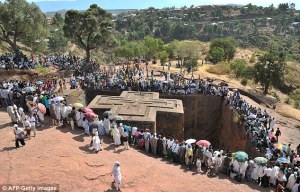
Out of stone: Bete Giyorgis, one of the 11 rock-hewn churches of Lalibela, Ehtiopia during the celebration of the Epiphany - the baptism of Jesus in the Jordan River.
Out of stone: Bete Giyorgis, one of the 11 rock-hewn churches of Lalibela, Ehtiopia during the celebration of the Epiphany – the baptism of Jesus in the Jordan River.

What does all this mean? Even though the Gentiles were not trying to follow God’s standards, they were made right with God. And it was by faith that this took place. But the people of Israel, who tried so hard to get right with God by keeping the law, never succeeded. Why not? Because they were trying to get right with God by keeping the law instead of by trusting in him. They stumbled over the great rock in their path. God warned them of this in the Scriptures when he said,

“I am placing a stone in Jerusalem that makes people stumble, a rock that makes them fall. But anyone who trusts in him will never be disgraced.”
__________

Reflection: Romans 9:30-33 (John Stott, The Message of Romans: God’s Good News for the World)

The plan of God for Jews and Gentiles: (Romans 9–11)

The dominant theme [of these three chapters] is Jewish unbelief, together with the problems which it raised…. Each chapter handles a different aspect of God’s relation to Israel, past, present and future:

  1. Israel’s fall (9: 1– 33): God’s purpose of election
  2. Israel’s fault (10: 1– 21): God’s dismay over her disobedience
  3. Israel’s future (11: 1– 32): God’s long-term design
  4. Doxology (11: 33– 36): God’s wisdom and generosity

Israel’s fall: God’s purpose of election (9:1–33)

Question 4: What then shall we say in conclusion? (30–33).

Faced with the unbelief of the majority of Israel and the minority status of believing Israel, how have these things come about?

The situation [Paul] describes is completely topsy-turvy….  The Jews who pursued righteousness never reached it; the Gentiles who did not pursue it laid hold of it….   Israel is proud, pursuing righteousness in the wrong way, by works instead of faith, and so has stumbled over the stumbling-block of the cross (30–33)….  They stumbled over… Christ crucified.

Why do people stumble over the cross? Because it undermines our self-righteousness…. The fact that Christ died for our sins is proof positive that we cannot save ourselves. But to make this humiliating confession is an intolerable offense to our pride. So instead of humbling ourselves, we ‘stumble over the stumbling-stone’.

The primary affirmation [here] is that God himself has laid down a solid rock or stone… Jesus Christ….  Everybody has to decide how to relate to this rock which God has laid down. There are only two possibilities. One is to put our trust in him, to take him as the foundation of our lives and build on him. The other is to bark our shins against him, and so to stumble and fall.

Thus this chapter about Israel’s unbelief begins with God’s purpose of election (6–29) and concludes by attributing Israel’s fall to her own pride (30–33).
__________

Awake O Israel – Zeal of God – I Lay in Zion


__________

Canticle

Christ, as a light illumine and guide me. Christ, as a shield overshadow me. Christ under me; Christ over me; Christ beside me on my left and my right. This day be within and without me, lowly and meek, yet all-powerful. Be in the heart of each to whom I speak; in the mouth of each who speaks unto me. This day be within and without me, lowly and meek, yet all-powerful. Christ as a light; Christ as a shield; Christ beside me on my left and my right.

Blessing

May the peace of the Lord Christ go with you, wherever He may send you. May He guide you through the wilderness, protect you through the storm. May He bring you home rejoicing at the wonders He has shown you. May He bring you home rejoicing once again into our doors.

+ In the name of the Father, and of the Son, and of the Holy Spirit. Amen

Morning Prayer: 28 August – Romans 9:19-29 ~ I Am Who I Am

Reading through Romans

+ In the name of the Father, and of the Son, and of the Holy Spirit. Amen.

Opening sentence

Praise to You, Lord Jesus Christ, King of endless glory. You have the words of eternal life, and we have believed and have come to know that You are the Holy One of God.
__________

A reading from Romans: Romans 9:19-29 (NLT)

Well then, you might say, “Why does God blame people for not responding? Haven’t they simply done what he makes them do?”

arguing-with-god

No, don’t say that. Who are you, a mere human being, to argue with God? Should the thing that was created say to the one who created it, “Why have you made me like this?” When a potter makes jars out of clay, doesn’t he have a right to use the same lump of clay to make one jar for decoration and another to throw garbage into? In the same way, even though God has the right to show his anger and his power, he is very patient with those on whom his anger falls, who are destined for destruction. He does this to make the riches of his glory shine even brighter on those to whom he shows mercy, who were prepared in advance for glory. And we are among those whom he selected, both from the Jews and from the Gentiles.

Concerning the Gentiles, God says in the prophecy of Hosea, “Those who were not my people, I will now call my people. And I will love those whom I did not love before.”

And, “Then, at the place where they were told, ‘You are not my people,’ there they will be called ‘children of the living God.’”

And concerning Israel, Isaiah the prophet cried out, “Though the people of Israel are as numerous as the sand of the seashore, only a remnant will be saved. For the Lord will carry out his sentence upon the earth quickly and with finality.”

And Isaiah said the same thing in another place: “If the Lord of Heaven’s Armies had not spared a few of our children, we would have been wiped out like Sodom, destroyed like Gomorrah.”
__________

Reflection: Romans 9:19-29 (John Stott, The Message of Romans: God’s Good News for the World)

The plan of God for Jews and Gentiles: (Romans 9–11)

The dominant theme [of these three chapters] is Jewish unbelief, together with the problems which it raised…. Each chapter handles a different aspect of God’s relation to Israel, past, present and future:

  1. Israel’s fall (9: 1– 33): God’s purpose of election
  2. Israel’s fault (10: 1– 21): God’s dismay over her disobedience
  3. Israel’s future (11: 1– 32): God’s long-term design
  4. Doxology (11: 33– 36): God’s wisdom and generosity

Israel’s fall: God’s purpose of election (9:1–33)

Question 3: Why does God still blame us? (19–29).

Is it fair of God to hold us accountable to him, when he makes the decisions? To this question Paul makes three responses, all of which concern who God is. Most of our problems arise and seem insoluble because our image of God is distorted.

First, God has the right of a potter over his clay (20–21).

Paul is not censuring someone who asks sincerely perplexed questions, but rather someone who ‘quarrels’ with God, who talks back (20) or answers back (RSV). Such a person manifests a reprehensible spirit of rebellion against God, a refusal to let God be God and acknowledge his or her true status as creature and sinner.

Paul’s emphasis in this paragraph is that as the potter has the right to shape his clay into vessels for different purposes, so God has the right to deal with fallen humanity according to both his wrath and his mercy, as he has argued in verses 10–18.

‘In the sovereignty here asserted,’ writes Hodge, ‘it is God as moral governor, and not God as creator, who is brought to view.’

It is nowhere suggested that God has the right to ‘create sinful beings in order to punish them’, but rather that he has the right to ‘deal with sinful beings according to his good pleasure’, either to pardon or to punish them.

Secondly, God reveals himself as he is (22– 23).

God’s freedom to show mercy to some and to harden others is fully compatible with his justice…. We must allow God to be God, not only in renouncing every presumptuous desire to challenge him (20– 21), but also in assuming that his actions are without exception in harmony with his nature. For God is always self-consistent and never self-contradictory.

It is because [God] is who he is that he does what he does. And although this does not solve the ultimate mystery why he prepares some people in advance for glory and allows others to prepare themselves for destruction, yet both are revelations of God, of his patience and wrath in judgment and above all of his glory and mercy in salvation.

Thirdly, God foretold these things in Scripture (24– 29).

By bringing the Hosea and Isaiah texts together, Paul provides Old Testament warrant for his vision. On the one hand, God has called us, he writes, not only from the Jews but also from the Gentiles (24). So there is a fundamental Jewish-Gentile solidarity in God’s new society. On the other hand, Paul is conscious of the serious imbalance between the size of the Gentile participation and the size of the Jewish participation in the redeemed community.

As Hosea prophesied, multitudes of Gentiles, formerly disenfranchised, have now been welcomed as the people of God. As Isaiah prophesied, however, the Jewish membership was only a remnant of the nation, so small in fact as to constitute not the inclusion of Israel but its exclusion, not its acceptance but its ‘rejection’ (11: 15).

Jesus himself had foretold this situation, when he said: ‘I say to you that many will come from the east and the west, and will take their places at the feast with Abraham, Isaac and Jacob in the kingdom of heaven. But the subjects of the kingdom will be thrown outside.…’
__________

The Great I Am


__________

Canticle

Christ, as a light illumine and guide me. Christ, as a shield overshadow me. Christ under me; Christ over me; Christ beside me on my left and my right. This day be within and without me, lowly and meek, yet all-powerful. Be in the heart of each to whom I speak; in the mouth of each who speaks unto me. This day be within and without me, lowly and meek, yet all-powerful. Christ as a light; Christ as a shield; Christ beside me on my left and my right.

Blessing

May the peace of the Lord Christ go with you, wherever He may send you. May He guide you through the wilderness, protect you through the storm. May He bring you home rejoicing at the wonders He has shown you. May He bring you home rejoicing once again into our doors.

+ In the name of the Father, and of the Son, and of the Holy Spirit. Amen
Morning Prayer: 27 August – Romans 9:14-18 ~ God’s justice and mercy

Reading through Romans

+ In the name of the Father, and of the Son, and of the Holy Spirit. Amen.

Opening sentence

Praise to You, Lord Jesus Christ, King of endless glory. You have the words of eternal life, and we have believed and have come to know that You are the Holy One of God.
__________

A reading from Romans: Romans 9:14-18 (NLT)

forgive

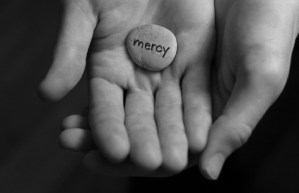
Are we saying, then, that God was unfair? Of course not! For God said to Moses, “I will show mercy to anyone I choose, and I will show compassion to anyone I choose.”

So it is God who decides to show mercy. We can neither choose it nor work for it.

For the Scriptures say that God told Pharaoh, “I have appointed you for the very purpose of displaying my power in you and to spread my fame throughout the earth.” So you see, God chooses to show mercy to some, and he chooses to harden the hearts of others so they refuse to listen.
__________

Reflection: Romans 9:14-18 (John Stott, The Message of Romans: God’s Good News for the World)

The plan of God for Jews and Gentiles: (Romans 9–11)

The dominant theme [of these three chapters] is Jewish unbelief, together with the problems which it raised…. Each chapter handles a different aspect of God’s relation to Israel, past, present and future:

  1. Israel’s fall (9: 1– 33): God’s purpose of election
  2. Israel’s fault (10: 1– 21): God’s dismay over her disobedience
  3. Israel’s future (11: 1– 32): God’s long-term design
  4. Doxology (11: 33– 36): God’s wisdom and generosity

Israel’s fall: God’s purpose of election (9:1–33)

Question 2: Is God unjust? (14–1-18).

To choose some for salvation and pass by others looks like a breach of elementary justice. Is it?

Paul’s way of defending God’s justice is to proclaim his mercy. It sounds like a complete non sequitur. But it is not. It simply indicates that the question itself is misconceived, because the basis on which God deals savingly with sinners is not justice but mercy. For salvation does not  …depend on man’s desire or effort, that is, on anything we want or strive for, but on God’s mercy.

Dr Leon Morris rightly comments: ‘Neither here nor anywhere else is God said to harden anyone who had not first hardened himself.’

God’s hardening of [Pharaoh] was a judicial act, abandoning him to his own stubbornness, much as God’s wrath against the ungodly is expressed by ‘giving them over’ to their own depravity (1: 24, 26, 28)….

God is not unjust. The fact is… that all human beings are sinful and guilty in God’s sight, so that nobody deserves to be saved. If therefore God hardens some, he is not being unjust, for that is what their sin deserves. If, on the other hand, he has compassion on some, he is not being unjust, for he is dealing with them in mercy. The wonder is not that some are saved and others not, but that anybody is saved at all. For we deserve nothing at God’s hand but judgment. If we receive what we deserve (which is judgment), or if we receive what we do not deserve (which is mercy), in neither case is God unjust.

If therefore anybody is lost, the blame is theirs, but if anybody is saved, the credit is God’s. This antinomy contains a mystery which our present knowledge cannot solve; but it is consistent with Scripture, history and experience.
__________

Have Mercy on Me

I am a sinner; You’re blameless, Lord / My sins against You can’t be ignored / They will be punished, I know they must / Your law demands it, for You are just

If You would count / Everything that I’ve done wrong / Who could stand? / But there’s forgiveness with You, God

Have mercy on me, have mercy on me / A broken and a contrite heart / You won’t turn away / Have mercy on me, have mercy on me / Because of Your steadfast love

Father of mercy, You gave Your Son / To make atonement for wrongs I have done / What You required, Jesus fulfilled / I don’t deserve it — I never will
__________

Canticle

Christ, as a light illumine and guide me. Christ, as a shield overshadow me. Christ under me; Christ over me; Christ beside me on my left and my right. This day be within and without me, lowly and meek, yet all-powerful. Be in the heart of each to whom I speak; in the mouth of each who speaks unto me. This day be within and without me, lowly and meek, yet all-powerful. Christ as a light; Christ as a shield; Christ beside me on my left and my right.

Blessing

May the peace of the Lord Christ go with you, wherever He may send you. May He guide you through the wilderness, protect you through the storm. May He bring you home rejoicing at the wonders He has shown you. May He bring you home rejoicing once again into our doors.

+ In the name of the Father, and of the Son, and of the Holy Spirit. Amen
Morning Prayer: 26 August – Romans 9:6-13 ~ the Israel within Israel

Reading through Romans

+ In the name of the Father, and of the Son, and of the Holy Spirit. Amen.

Opening sentence

Praise to You, Lord Jesus Christ, King of endless glory. You have the words of eternal life, and we have believed and have come to know that You are the Holy One of God.
__________

A reading from Romans: Romans 9:6-13 (NLT)

Well then, has God failed to fulfill his promise to Israel? No, for not all who are born into the nation of Israel are truly members of God’s people! Being descendants of Abraham doesn’t make them truly Abraham’s children. For the Scriptures say, “Isaac is the son through whom your descendants will be counted,” though Abraham had other children, too. This means that Abraham’s physical descendants are not necessarily children of God. Only the children of the promise are considered to be Abraham’s children. For God had promised, “I will return about this time next year, and Sarah will have a son.”

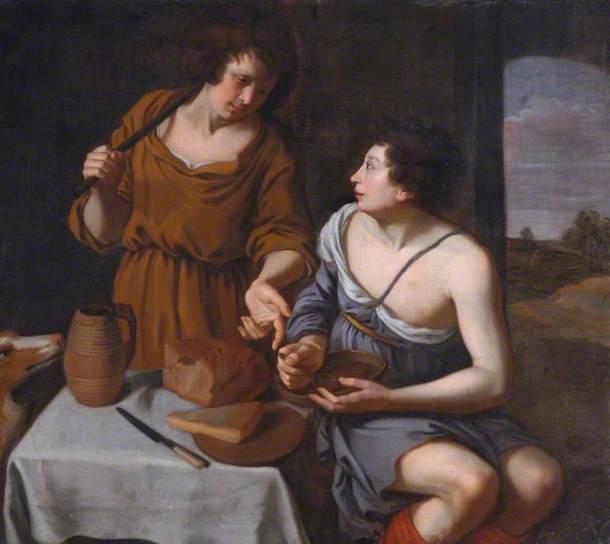
“Esau Selling His Birthright to Jacob”
by Dutch School (c.1620)
Collection: Durham University , UK

This son was our ancestor Isaac. When he married Rebekah, she gave birth to twins. But before they were born, before they had done anything good or bad, she received a message from God. (This message shows that God chooses people according to his own purposes; he calls people, but not according to their good or bad works.) She was told, “Your older son will serve your younger son.” In the words of the Scriptures, “I loved Jacob, but I rejected Esau.”
__________

Reflection: Romans 9:6-13 (John Stott, The Message of Romans: God’s Good News for the World)

The plan of God for Jews and Gentiles: (Romans 9–11)

The dominant theme [of these three chapters] is Jewish unbelief, together with the problems which it raised…. Each chapter handles a different aspect of God’s relation to Israel, past, present and future:

  1. Israel’s fall (9: 1– 33): God’s purpose of election
  2. Israel’s fault (10: 1– 21): God’s dismay over her disobedience
  3. Israel’s future (11: 1– 32): God’s long-term design
  4. Doxology (11: 33– 36): God’s wisdom and generosity

Israel’s fall: God’s purpose of election (9:1–33)

Question 1: Has God’s promise failed? (6– 13).

Israel had failed, or literally ‘fallen’. For God had promised to bless them, but they had forfeited his blessing through unbelief. Israel’s failure was her own failure, however; it was not due to the failure of God’s word. For not all who are descended from Israel are Israel (6b).

There have always been two Israels, those physically descended from Israel (Jacob) on the one hand, and his spiritual progeny on the other; and God’s promise was addressed to the latter, who had received it. The apostle has already made this distinction earlier in his letter between those who were Jews outwardly, whose circumcision was in the body, and those who were Jews inwardly, who had received a circumcision of the heart by the Spirit.
_____

Esau forfeited his birthright because of his own worldliness and lost his rightful blessing because of his brother’s deceit, so that human responsibility was interwoven with divine sovereignty in their story. We should also recall that the rejected brothers, Ishmael and Esau, were both circumcised, and therefore in some sense they too were members of God’s covenant, and were both promised lesser blessings. Nevertheless, both stories illustrate the same key truth of ‘God’s purpose according to election’. So God’s promise did not fail; but it was fulfilled only in the Israel within Israel.
__________


__________

Canticle

Christ, as a light illumine and guide me. Christ, as a shield overshadow me. Christ under me; Christ over me; Christ beside me on my left and my right. This day be within and without me, lowly and meek, yet all-powerful. Be in the heart of each to whom I speak; in the mouth of each who speaks unto me. This day be within and without me, lowly and meek, yet all-powerful. Christ as a light; Christ as a shield; Christ beside me on my left and my right.

Blessing

May the peace of the Lord Christ go with you, wherever He may send you. May He guide you through the wilderness, protect you through the storm. May He bring you home rejoicing at the wonders He has shown you. May He bring you home rejoicing once again into our doors.

+ In the name of the Father, and of the Son, and of the Holy Spirit. Amen