
Morning Prayer: 24 September – Romans 15:14-22 ~ a grace-filled reminder

Reading through Romans

+ In the name of the Father, and of the Son, and of the Holy Spirit. Amen.

Opening sentence

Praise to You, Lord Jesus Christ, King of endless glory. You have the words of eternal life, and we have believed and have come to know that You are the Holy One of God.
__________

A reading from Romans: Romans 15:14-22 (NLT)
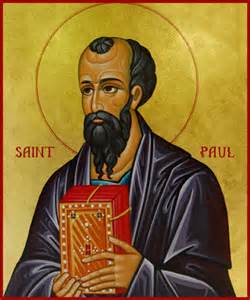
St Paul icon

I am fully convinced, my dear brothers and sisters, that you are full of goodness. You know these things so well you can teach each other all about them. Even so, I have been bold enough to write about some of these points, knowing that all you need is this reminder. For by God’s grace, I am a special messenger from Christ Jesus to you Gentiles. I bring you the Good News so that I might present you as an acceptable offering to God, made holy by the Holy Spirit. So I have reason to be enthusiastic about all Christ Jesus has done through me in my service to God. Yet I dare not boast about anything except what Christ has done through me, bringing the Gentiles to God by my message and by the way I worked among them. They were convinced by the power of miraculous signs and wonders and by the power of God’s Spirit. In this way, I have fully presented the Good News of Christ from Jerusalem all the way to Illyricum.

My ambition has always been to preach the Good News where the name of Christ has never been heard, rather than where a church has already been started by someone else. I have been following the plan spoken of in the Scriptures, where it says, “Those who have never been told about him will see, and those who have never heard of him will understand.”

In fact, my visit to you has been delayed so long because I have been preaching in these places.
__________

Reflection: Romans 15:14-22 (John Stott, The Message of Romans: God’s Good News for the World)

Conclusion: The providence of God in the ministry of Paul (Romans 15:14–16:27)

Paul takes the Roman church into his confidence about the salient characteristics of his ministry… giving us insight into the outworking of God’s providence in his life and work.

His apostolic service (Romans 15:14–22)

Paul begins by… assuring them that he knows and appreciates their qualities — their kindness, extensive Christian knowledge and proven ability to teach and admonish one another. Paul has written to them 1. to remind them of the original message of the Gospel, calling them back to it; and 2. of his special vocation, by God’s grace alone, to be the apostle to the Gentiles, as follows:

1. Paul’s ministry was a priestly ministry (16–17)

Although Paul’s priestly ministry as apostle to the Gentiles was unique, the principle he enunciates has a vital contemporary application. All evangelists are priests, because they offer their converts to God. Indeed, it is this truth more than any other which effectively unites the church’s two major roles of worship and witness. It is when we worship God, glorying in his holy name, that we are driven out to proclaim his name to the world. And when through our witness people are brought to Christ, we then offer them to God. Further, they themselves join in his worship, until they too go out to witness. Thus worship leads to witness, and witness to worship. It is a perpetual cycle.
image

2. Paul’s ministry was a powerful ministry (18–19a)

Paul alludes to at least five features of his ministry: 1. Its objective is to lead the Gentiles to obey God; 2. He is Christ’s agent or instrument, Christ working ‘through’ him and Christ receiving the glory; 3. What Christ has accomplished has been by what Paul have said and done… words explain works, but works dramatize words; 4. Christ’s ministry through Paul was by the power of signs and miracles; and 5. Paul’s ministry was also through the power of the Spirit… including both physical miracles… and the power of the Word of God… in the minds, hearts, consciences and wills of the hearers. Every conversion is a power encounter, in which the Spirit through the gospel rescues and regenerates sinners.

3. Paul’s ministry was a pioneer ministry (19b–22)

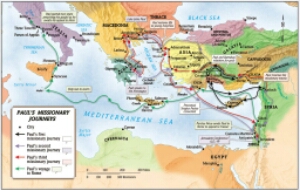
Paul succinctly and modestly summarizes ten years of strenuous apostolic labor, including his three heroic missionary journeys…. Paul’s own calling and gift as apostle to the Gentiles were to pioneer the evangelization of the Gentile world, and then leave to others, especially to local, residential presbyters, the pastoral care of the churches…. On the one hand, because he was concentrating on pioneer evangelism elsewhere, he was not free to come to the Roman church. On the other hand, because the Roman church had not been founded by him, he did not feel at liberty to come and stay. Soon, however, as he is about to explain, he will visit them, since he will only be ‘passing through’ on his way to the unevangelized field of Spain.
__________

“I Will Go”

__________

Canticle

Christ, as a light illumine and guide me. Christ, as a shield overshadow me. Christ under me; Christ over me; Christ beside me on my left and my right. This day be within and without me, lowly and meek, yet all-powerful. Be in the heart of each to whom I speak; in the mouth of each who speaks unto me. This day be within and without me, lowly and meek, yet all-powerful. Christ as a light; Christ as a shield; Christ beside me on my left and my right.

Blessing

May the peace of the Lord Christ go with you, wherever He may send you. May He guide you through the wilderness, protect you through the storm. May He bring you home rejoicing at the wonders He has shown you. May He bring you home rejoicing once again into our doors.

+ In the name of the Father, and of the Son, and of the Holy Spirit. Amen
Morning Prayer: 22 September – Romans 14:13b-23 ~ the Kingdom trumps food

Reading through Romans

+ In the name of the Father, and of the Son, and of the Holy Spirit. Amen.

Opening sentence

Praise to You, Lord Jesus Christ, King of endless glory. You have the words of eternal life, and we have believed and have come to know that You are the Holy One of God.
__________

A reading from Romans: Romans 14:13-23 (NLT)

So let’s stop condemning each other. Decide instead to live in such a way that you will not cause another believer to stumble and fall.

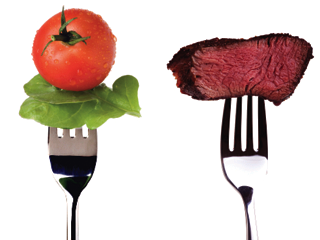
veg vs meat

I know and am convinced on the authority of the Lord Jesus that no food, in and of itself, is wrong to eat. But if someone believes it is wrong, then for that person it is wrong. And if another believer is distressed by what you eat, you are not acting in love if you eat it. Don’t let your eating ruin someone for whom Christ died. Then you will not be criticized for doing something you believe is good. For the Kingdom of God is not a matter of what we eat or drink, but of living a life of goodness and peace and joy in the Holy Spirit. If you serve Christ with this attitude, you will please God, and others will approve of you, too. So then, let us aim for harmony in the church and try to build each other up.

Don’t tear apart the work of God over what you eat. Remember, all foods are acceptable, but it is wrong to eat something if it makes another person stumble. It is better not to eat meat or drink wine or do anything else if it might cause another believer to stumble. You may believe there’s nothing wrong with what you are doing, but keep it between yourself and God. Blessed are those who don’t feel guilty for doing something they have decided is right. But if you have doubts about whether or not you should eat something, you are sinning if you go ahead and do it. For you are not following your convictions. If you do anything you believe is not right, you are sinning.
__________

Reflection: Romans 14:13b-23 (John Stott, The Message of Romans: God’s Good News for the World)

The will of God for changed relationships: (Romans 12:1–15:13)

All believers, irrespective of their ethnic origin, are brothers and sisters in the one international family of God, and so all have precisely the same vocation to be the holy, committed, humble, loving and conscientious people of God.

(Romans 14:1-15:13) Our relationship to the weak: welcoming, and not despising, judging or offending them

If we are trying to picture a weaker brother or sister, we must not envisage a vulnerable Christian easily overcome by temptation, but a sensitive Christian full of indecision and scruples. What the weak lack is not strength of self-control but liberty of conscience.

2. The negative consequences (Romans 14:2–15:13)

(b) Do not offend or destroy the weaker person (14:13b-23)

Two additional theological foundations:

(i) Welcome him because he is your brother for whom Christ died (14–16)

If your brother is distressed (feels grief and even pain) because of what you eat, not only because he sees you doing something of which he disapproves, but because he is induced to follow your example against his conscience, you are no longer acting in love, no longer walking the path of love. For love never disregards weak consciences. Love limits its own liberty out of respect for them.

Paul’s warning is that the strong who mislead the weak to go against their consciences will seriously damage their Christian discipleship. He urges the strong against causing such injury to the weak. Do not allow what you consider good (i.e. the liberty you have found in Christ) to be spoken of as evil, because you flaunt it to the detriment of the weak.

(ii) Welcome him because the kingdom of God is more important than food (17–21)

The kingdom of God is not a matter of eating and drinking, but of righteousness, peace and joy in the Holy Spirit…. Our responsibility is to seek to build up the fellowship, not to tear it down. And in particular we must not tear it down for the sake of food.

So it would be evil for the strong to use their liberty to harm the weak. Alternatively, it would be good for the strong (Paul drives the argument to its logical conclusion) to eat no meat and drink no wine, that is, to become vegetarians and total abstainers, and to go to any other extreme of renunciation, if that were necessary to serve the welfare of the weak.

Paul concludes (22–23) by drawing a distinction between belief and action, that is, between private conviction and public behavior.

There is no need either to parade your [private] views or to impose them on other people. As for public behavior, there are two options: 1. The strong Christian is blessed because his conscience approves of his eating everything, so that he can follow his conscience without any guilt feelings. 2. The weak Christian who is plagued with misgivings because his conscience gives him vacillating signals, is condemned if he eats, because his eating is not from faith; and everything that does not come from faith… is sin.
__________

“Let Your Kingdom Come” – Sovereign Grace


__________

Canticle

Christ, as a light illumine and guide me. Christ, as a shield overshadow me. Christ under me; Christ over me; Christ beside me on my left and my right. This day be within and without me, lowly and meek, yet all-powerful. Be in the heart of each to whom I speak; in the mouth of each who speaks unto me. This day be within and without me, lowly and meek, yet all-powerful. Christ as a light; Christ as a shield; Christ beside me on my left and my right.

Blessing

May the peace of the Lord Christ go with you, wherever He may send you. May He guide you through the wilderness, protect you through the storm. May He bring you home rejoicing at the wonders He has shown you. May He bring you home rejoicing once again into our doors.

+ In the name of the Father, and of the Son, and of the Holy Spirit. Amen

Morning Prayer: 21 September – Romans 14:2–13a ~ stop criticizing each other

Reading through Romans

+ In the name of the Father, and of the Son, and of the Holy Spirit. Amen.

Opening sentence

Praise to You, Lord Jesus Christ, King of endless glory. You have the words of eternal life, and we have believed and have come to know that You are the Holy One of God.
__________

A reading from Romans: Romans 14:2–13a (NLT)

girl-covered-eye

For instance, one person believes it’s all right to eat anything. But another believer with a sensitive conscience will eat only vegetables. Those who feel free to eat anything must not look down on those who don’t. And those who don’t eat certain foods must not condemn those who do, for God has accepted them. Who are you to condemn someone else’s servants? Their own master will judge whether they stand or fall. And with the Lord’s help, they will stand and receive his approval.

In the same way, some think one day is more holy than another day, while others think every day is alike. You should each be fully convinced that whichever day you choose is acceptable. Those who worship the Lord on a special day do it to honor him. Those who eat any kind of food do so to honor the Lord, since they give thanks to God before eating. And those who refuse to eat certain foods also want to please the Lord and give thanks to God. For we don’t live for ourselves or die for ourselves. If we live, it’s to honor the Lord. And if we die, it’s to honor the Lord. So whether we live or die, we belong to the Lord. Christ died and rose again for this very purpose — to be Lord both of the living and of the dead.

So why do you condemn another believer? Why do you look down on another believer? Remember, we will all stand before the judgment seat of God. For the Scriptures say, “‘As surely as I live,’ says the Lord, ‘every knee will bend to me, and every tongue will declare allegiance to God.’”

Yes, each of us will give a personal account to God. So let’s stop condemning each other.
__________

Reflection: Romans 14:2–13a (John Stott, The Message of Romans: God’s Good News for the World)

The will of God for changed relationships: (Romans 12:1–15:13)

All believers, irrespective of their ethnic origin, are brothers and sisters in the one international family of God, and so all have precisely the same vocation to be the holy, committed, humble, loving and conscientious people of God.

(Romans 14:1-15:13) Our relationship to the weak: welcoming, and not despising, judging or offending them

If we are trying to picture a weaker brother or sister, we must not envisage a vulnerable Christian easily overcome by temptation, but a sensitive Christian full of indecision and scruples. What the weak lack is not strength of self-control but liberty of conscience.

2. The negative consequences (Romans 14:2–15:13)

(a) Do not despise or condemn the weak person (14:2–13a)

Four underlying theological principles:

(i) Welcome him because God has welcomed him (2–3)

The best way to determine what our attitude to other people should be is to determine what God’s attitude to them is. This principle is better even than the golden rule. It is safe to treat others as we would like them to treat us, but it is safer still to treat them as God does.

(ii) Welcome him because Christ died and rose to be the Lord (4–9)

Jesus is Lord of heaven and earth

[Paul] lifts the very mundane question of our mutual relationships in the Christian community to the high theological level of the death, resurrection and consequent universal lordship of Jesus. Because he is our Lord, we must live for him. Because he is also the Lord of our fellow Christians, we must respect their relationship to him and mind our own business. For he died and rose to be Lord.

(iii) Welcome him because he is your brother (10a)

We are related to one another in the strongest possible way, by family ties. Whether we are thinking of the weak, with all their tedious doubts and fears, or of the strong, with all their brash assurances and freedoms, they are our brothers and sisters. When we remember this, our attitude to them becomes at once less critical and impatient, more generous and tender.

(iv) Welcome him because we will all stand before God’s judgment seat (10b–13a)

Because God is the Judge and we are among the judged, let us stop passing judgment on one another, for then we shall avoid the extreme folly of trying to usurp God’s prerogative and anticipate judgment day.
__________

“Revelation Song” – Kari Jobe


__________

Canticle

Christ, as a light illumine and guide me. Christ, as a shield overshadow me. Christ under me; Christ over me; Christ beside me on my left and my right. This day be within and without me, lowly and meek, yet all-powerful. Be in the heart of each to whom I speak; in the mouth of each who speaks unto me. This day be within and without me, lowly and meek, yet all-powerful. Christ as a light; Christ as a shield; Christ beside me on my left and my right.

Blessing

May the peace of the Lord Christ go with you, wherever He may send you. May He guide you through the wilderness, protect you through the storm. May He bring you home rejoicing at the wonders He has shown you. May He bring you home rejoicing once again into our doors.

+ In the name of the Father, and of the Son, and of the Holy Spirit. Amen

Morning Prayer: 19 September – Romans 14:1 ~ on acceptance

Reading through Romans

+ In the name of the Father, and of the Son, and of the Holy Spirit. Amen.

Opening sentence

Praise to You, Lord Jesus Christ, King of endless glory. You have the words of eternal life, and we have believed and have come to know that You are the Holy One of God.
__________

A reading from Romans: Romans 14:1 (NLT)

weak in faith

Accept other believers who are weak in faith, and don’t argue with them about what they think is right or wrong.
__________

Reflection: Romans 14:1 (John Stott, The Message of Romans: God’s Good News for the World)

The will of God for changed relationships: (Romans 12:1–15:13)

All believers, irrespective of their ethnic origin, are brothers and sisters in the one international family of God, and so all have precisely the same vocation to be the holy, committed, humble, loving and conscientious people of God.

(Romans 14:1-15:13) Our relationship to the weak: welcoming, and not despising, judging or offending them

If we are trying to picture a weaker brother or sister, we must not envisage a vulnerable Christian easily overcome by temptation, but a sensitive Christian full of indecision and scruples. What the weak lack is not strength of self-control but liberty of conscience.

The positive principle (Romans 14:1)

First, Accept him whose faith is weak (1a).

‘Acceptance’ means to welcome into one’s fellowship and into one’s heart. It implies the warmth and kindness of genuine love.

‘Acceptance’ is a popular word today, and rightly so. Theologically, God’s acceptance of us is quite a good contemporary term for justification. But we should be cautious about modern talk of ‘unconditional acceptance’, as when the concept of an ‘open church’ is canvassed, in which membership is offered to everybody, with no questions asked and no conditions laid down. For though God’s love is indeed unconditional, his acceptance of us is not, since it depends on our repentance and our faith in Jesus Christ.

Second, without passing judgment on disputable matters (1b).

Paul is saying… we must receive the weak person with a warm and genuine welcome, ‘without debate over his misgivings’ or scruples (REB), or ‘not for the purpose of getting into quarrels about opinions’ (BAGD). In other words, we are not to turn the church into a debating chamber, whose chief characteristic is argument, still less into a law court in which weak persons are put in the dock, interrogated and arraigned. The welcome we give them must include respect for their opinions.
__________

“Be Still My Soul” – Selah


__________

Canticle

Christ, as a light illumine and guide me. Christ, as a shield overshadow me. Christ under me; Christ over me; Christ beside me on my left and my right. This day be within and without me, lowly and meek, yet all-powerful. Be in the heart of each to whom I speak; in the mouth of each who speaks unto me. This day be within and without me, lowly and meek, yet all-powerful. Christ as a light; Christ as a shield; Christ beside me on my left and my right.

Blessing

May the peace of the Lord Christ go with you, wherever He may send you. May He guide you through the wilderness, protect you through the storm. May He bring you home rejoicing at the wonders He has shown you. May He bring you home rejoicing once again into our doors.

+ In the name of the Father, and of the Son, and of the Holy Spirit. Amen

Morning Prayer: 18 September – Romans 13:11-14 ~ on living decent lives

Reading through Romans

+ In the name of the Father, and of the Son, and of the Holy Spirit. Amen.

Opening sentence

Praise to You, Lord Jesus Christ, King of endless glory. You have the words of eternal life, and we have believed and have come to know that You are the Holy One of God.
__________

A reading from Romans: Romans 13:11-14 (NLT)

black-family-praying

This is all the more urgent, for you know how late it is; time is running out. Wake up, for our salvation is nearer now than when we first believed. The night is almost gone; the day of salvation will soon be here. So remove your dark deeds like dirty clothes, and put on the shining armor of right living. Because we belong to the day, we must live decent lives for all to see. Don’t participate in the darkness of wild parties and drunkenness, or in sexual promiscuity and immoral living, or in quarreling and jealousy. Instead, clothe yourself with the presence of the Lord Jesus Christ. And don’t let yourself think about ways to indulge your evil desires.
__________

Reflection: Romans 13:11-14 (John Stott, The Message of Romans: God’s Good News for the World)

The will of God for changed relationships: (Romans 12:1–15:13)

All believers, irrespective of their ethnic origin, are brothers and sisters in the one international family of God, and so all have precisely the same vocation to be the holy, committed, humble, loving and conscientious people of God.

(Romans 13:11-14) Our relationship to the day: living in the ‘already’ and the ‘not yet’

Understanding the time (Romans 13:11–12a)

One of the features of the technological society is that we are the slaves of time. We all wear watches and keep careful track of the passing time. But it is more important to know God’s time, especially the kairos, the present time (11a), the existential moment of opportunity and decision….  Here, then, are the apostle’s three time references. The time is already here for us to wake up (11a); now our salvation is nearer than it was (11b); and the night has nearly given place to the day (12a). It is the familiar tension between the ‘now already’ of Christ’s first coming and the ‘not yet’ of his second.

Understanding what is appropriate to the time (Romans 13:12b–14)

1. Appropriate clothing: what (in the light of the time) it is appropriate for us to wear? The picture is that, because of the hour, we must not only wake up and get up, but get dressed as well. We must take off our night clothes, the deeds of darkness, and put on instead, as suitable daytime equipment for the soldiers of Christ, the armor of light.

2. Appropriate behavior: let us behave decently… as if the day had already dawned, and turn from the kind of things people do under cover of darkness: not in orgies and drunkenness, not in sexual immorality and debauchery, not in dissension and jealousy. Opposed to decent Christian behavior is lack of self-control in the areas of drink, sex and social relationships.

3. Appropriate preoccupation: what it is which engrosses our attention as Christian people? The alternative set before us is either the Lord Jesus Christ or our fallen self-centered nature…. It is not only Christlikeness (‘compassion, kindness, humility, gentleness and patience’) that we are to assume, but Christ himself, laying hold of him, and ‘living under him as Lord’.
_____

In summary: Romans 13 began with important teaching about how we can be good citizens (1–7) and good neighbors (8–10); it ends with why we should be. There is no greater incentive to the doing of these duties than a lively expectation of the Lord’s return…. That day is steadily approaching. Our calling is to live in the light of it, to behave in the continuing night as if the day had dawned, to enjoy the ‘now already’ of the inaugurated kingdom in the certain knowledge that what is still ‘not yet’, namely the consummated kingdom, will soon arrive.
__________

“Wayfaring Stranger” – Selah


__________

Canticle

Christ, as a light illumine and guide me. Christ, as a shield overshadow me. Christ under me; Christ over me; Christ beside me on my left and my right. This day be within and without me, lowly and meek, yet all-powerful. Be in the heart of each to whom I speak; in the mouth of each who speaks unto me. This day be within and without me, lowly and meek, yet all-powerful. Christ as a light; Christ as a shield; Christ beside me on my left and my right.

Blessing

May the peace of the Lord Christ go with you, wherever He may send you. May He guide you through the wilderness, protect you through the storm. May He bring you home rejoicing at the wonders He has shown you. May He bring you home rejoicing once again into our doors.

+ In the name of the Father, and of the Son, and of the Holy Spirit. Amen