One thing I have asked of the Lord, this is what I seek: that I may dwell in the house of the Lord all the days of my life; to behold the beauty of the Lord and to seek Him in His temple.
Praise to You, Lord Jesus Christ, King of endless glory.
Reading: Job 21-22 (NLT)
Job: My Complaint Is With God
Job 21 (NLT)
Then Job spoke again:
“Listen closely to what I am saying. That’s one consolation you can give me. Bear with me, and let me speak. After I have spoken, you may resume mocking me.
“My complaint is with God, not with people. I have good reason to be so impatient. Look at me and be stunned. Put your hand over your mouth in shock. When I think about what I am saying, I shudder. My body trembles.
+ The wicked prosper – “Why do the wicked prosper, growing old and powerful? They live to see their children grow up and settle down, and they enjoy their grandchildren. Their homes are safe from every fear, and God does not punish them. Their bulls never fail to breed. Their cows bear calves and never miscarry. They let their children frisk about like lambs. Their little ones skip and dance. They sing with tambourine and harp. They celebrate to the sound of the flute. They spend their days in prosperity, then go down to the grave in peace. And yet they say to God, ‘Go away. We want no part of you and your ways. Who is the Almighty, and why should we obey him? What good will it do us to pray?’ (They think their prosperity is of their own doing, but I will have nothing to do with that kind of thinking.)
“Yet the light of the wicked never seems to be extinguished. Do they ever have trouble? Does God distribute sorrows to them in anger? Are they driven before the wind like straw? Are they carried away by the storm like chaff? Not at all!
+ The wicked should be punished – “‘Well,’ you say, ‘at least God will punish their children!’ But I say he should punish the ones who sin, so that they understand his judgment. Let them see their destruction with their own eyes. Let them drink deeply of the anger of the Almighty. For they will not care what happens to their family after they are dead.
“But who can teach a lesson to God, since he judges even the most powerful? One person dies in prosperity, completely comfortable and secure, the picture of good health, vigorous and fit. Another person dies in bitter poverty, never having tasted the good life. But both are buried in the same dust, both eaten by the same maggots.
+ Evil people are spared – “Look, I know what you’re thinking. I know the schemes you plot against me. You will tell me of rich and wicked people whose houses have vanished because of their sins. But ask those who have been around, and they will tell you the truth. Evil people are spared in times of calamity and are allowed to escape disaster. No one criticizes them openly or pays them back for what they have done. When they are carried to the grave, an honor guard keeps watch at their tomb. A great funeral procession goes to the cemetery. Many pay their respects as the body is laid to rest, and the earth gives sweet repose.
“How can your empty clichés comfort me? All your explanations are lies!”
Eliphaz: God Is Judging Your Wickedness
Job 22 (NLT)
Then Eliphaz the Temanite replied:
+ There’s no limit to your sins – “Can a person do anything to help God? Can even a wise person be helpful to him? Is it any advantage to the Almighty if you are righteous? Would it be any gain to him if you were perfect? Is it because you’re so pious that he accuses you and brings judgment against you? No, it’s because of your wickedness! There’s no limit to your sins.
+ You must have done something wicked – “For example, you must have lent money to your friend and demanded clothing as security. Yes, you stripped him to the bone. You must have refused water for the thirsty and food for the hungry. You probably think the land belongs to the powerful and only the privileged have a right to it! You must have sent widows away empty-handed and crushed the hopes of orphans. That is why you are surrounded by traps and tremble from sudden fears. That is why you cannot see in the darkness, and waves of water cover you.
+ You think God can’t see you – “God is so great—higher than the heavens, higher than the farthest stars. But you reply, ‘That’s why God can’t see what I am doing! How can he judge through the thick darkness? For thick clouds swirl about him, and he cannot see us. He is way up there, walking on the vault of heaven.’
“Will you continue on the old paths where evil people have walked? They were snatched away in the prime of life, the foundations of their lives washed away. For they said to God, ‘Leave us alone! What can the Almighty do to us?’ Yet he was the one who filled their homes with good things, so I will have nothing to do with that kind of thinking.
“The righteous will be happy to see the wicked destroyed, and the innocent will laugh in contempt. They will say, ‘See how our enemies have been destroyed. The last of them have been consumed in the fire.’
+ Repent and return to God – “Submit to God, and you will have peace; then things will go well for you. Listen to his instructions, and store them in your heart. If you return to the Almighty, you will be restored—so clean up your life. If you give up your lust for money and throw your precious gold into the river, the Almighty himself will be your treasure. He will be your precious silver!
“Then you will take delight in the Almighty and look up to God. You will pray to him, and he will hear you, and you will fulfill your vows to him. You will succeed in whatever you choose to do, and light will shine on the road ahead of you. If people are in trouble and you say, ‘Help them,’ God will save them. Even sinners will be rescued; they will be rescued because your hands are pure.”
__________
May the peace of the Lord Christ go with you, wherever He may send you. May He guide you through the wilderness, protect you through the storm. May He bring you home rejoicing at the wonders He has shown you. May He bring you home rejoicing once again into our doors.
__________
+ In the name of the Father, and the Son, and the Holy Spirit. Amen!
One thing I have asked of the Lord, this is what I seek: that I may dwell in the house of the Lord all the days of my life; to behold the beauty of the Lord and to seek Him in His temple.
Praise to You, Lord Jesus Christ, King of endless glory.
Reading: Ruth 1-4 (NLT)
Elimelech Moves His Family to Moab
Ruth 1 (NLT)
+ Family migration – In the days when the judges ruled in Israel, a severe famine came upon the land. So a man from Bethlehem in Judah left his home and went to live in the country of Moab, taking his wife and two sons with him. The man’s name was Elimelech, and his wife was Naomi. Their two sons were Mahlon and Kilion. They were Ephrathites from Bethlehem in the land of Judah. And when they reached Moab, they settled there.
+ Three widowed women – Then Elimelech died, and Naomi was left with her two sons. The two sons married Moabite women. One married a woman named Orpah, and the other a woman named Ruth. But about ten years later, both Mahlon and Kilion died. This left Naomi alone, without her two sons or her husband.
Naomi and Ruth Return
Then Naomi heard in Moab that the Lord had blessed his people in Judah by giving them good crops again. So Naomi and her daughters-in-law got ready to leave Moab to return to her homeland. With her two daughters-in-law she set out from the place where she had been living, and they took the road that would lead them back to Judah.
+ The parting of ways – But on the way, Naomi said to her two daughters-in-law, “Go back to your mothers’ homes. And may the Lord reward you for your kindness to your husbands and to me. May the Lord bless you with the security of another marriage.” Then she kissed them good-bye, and they all broke down and wept.
“No,” they said. “We want to go with you to your people.”
+ Orpah returns home – But Naomi replied, “Why should you go on with me? Can I still give birth to other sons who could grow up to be your husbands? No, my daughters, return to your parents’ homes, for I am too old to marry again. And even if it were possible, and I were to get married tonight and bear sons, then what? Would you wait for them to grow up and refuse to marry someone else? No, of course not, my daughters! Things are far more bitter for me than for you, because the Lord himself has raised his fist against me.”
And again they wept together, and Orpah kissed her mother-in-law good-bye. But Ruth clung tightly to Naomi. “Look,” Naomi said to her, “your sister-in-law has gone back to her people and to her gods. You should do the same.”
+ Ruth remains – But Ruth replied, “Don’t ask me to leave you and turn back. Wherever you go, I will go; wherever you live, I will live. Your people will be my people, and your God will be my God. Wherever you die, I will die, and there I will be buried. May the Lord punish me severely if I allow anything but death to separate us!” When Naomi saw that Ruth was determined to go with her, she said nothing more.
+ Journey to Bethlehem – So the two of them continued on their journey. When they came to Bethlehem, the entire town was excited by their arrival. “Is it really Naomi?” the women asked.
“Don’t call me Naomi,” she responded. “Instead, call me Mara, for the Almighty has made life very bitter for me. I went away full, but the Lord has brought me home empty. Why call me Naomi when the Lord has caused me to suffer and the Almighty has sent such tragedy upon me?”
So Naomi returned from Moab, accompanied by her daughter-in-law Ruth, the young Moabite woman. They arrived in Bethlehem in late spring, at the beginning of the barley harvest.
Ruth Works in Boaz’s Field
Ruth 2 (NLT)
Now there was a wealthy and influential man in Bethlehem named Boaz, who was a relative of Naomi’s husband, Elimelech.
+ Ruth works as a gleaner – One day Ruth the Moabite said to Naomi, “Let me go out into the harvest fields to pick up the stalks of grain left behind by anyone who is kind enough to let me do it.”
Naomi replied, “All right, my daughter, go ahead.” So Ruth went out to gather grain behind the harvesters. And as it happened, she found herself working in a field that belonged to Boaz, the relative of her father-in-law, Elimelech.
While she was there, Boaz arrived from Bethlehem and greeted the harvesters. “The Lord be with you!” he said.
“The Lord bless you!” the harvesters replied.
+ Boaz does background check – Then Boaz asked his foreman, “Who is that young woman over there? Who does she belong to?”
And the foreman replied, “She is the young woman from Moab who came back with Naomi. She asked me this morning if she could gather grain behind the harvesters. She has been hard at work ever since, except for a few minutes’ rest in the shelter.”
+ Boaz shows kindness – Boaz went over and said to Ruth, “Listen, my daughter. Stay right here with us when you gather grain; don’t go to any other fields. Stay right behind the young women working in my field. See which part of the field they are harvesting, and then follow them. I have warned the young men not to treat you roughly. And when you are thirsty, help yourself to the water they have drawn from the well.”
Ruth fell at his feet and thanked him warmly. “What have I done to deserve such kindness?” she asked. “I am only a foreigner.”
+ Boaz rewards Ruth – “Yes, I know,” Boaz replied. “But I also know about everything you have done for your mother-in-law since the death of your husband. I have heard how you left your father and mother and your own land to live here among complete strangers. May the Lord, the God of Israel, under whose wings you have come to take refuge, reward you fully for what you have done.”
“I hope I continue to please you, sir,” she replied. “You have comforted me by speaking so kindly to me, even though I am not one of your workers.”
+ Extra food – At mealtime Boaz called to her, “Come over here, and help yourself to some food. You can dip your bread in the sour wine.” So she sat with his harvesters, and Boaz gave her some roasted grain to eat. She ate all she wanted and still had some left over.
+ Extra grain – When Ruth went back to work again, Boaz ordered his young men, “Let her gather grain right among the sheaves without stopping her. And pull out some heads of barley from the bundles and drop them on purpose for her. Let her pick them up, and don’t give her a hard time!”
So Ruth gathered barley there all day, and when she beat out the grain that evening, it filled an entire basket. She carried it back into town and showed it to her mother-in-law. Ruth also gave her the roasted grain that was left over from her meal.
+ Naomi’s blessing – “Where did you gather all this grain today?” Naomi asked. “Where did you work? May the Lord bless the one who helped you!”
So Ruth told her mother-in-law about the man in whose field she had worked. She said, “The man I worked with today is named Boaz.”
+ Boaz, a family redeemer – “May the Lord bless him!” Naomi told her daughter-in-law. “He is showing his kindness to us as well as to your dead husband. That man is one of our closest relatives, one of our family redeemers.”
Then Ruth said, “What’s more, Boaz even told me to come back and stay with his harvesters until the entire harvest is completed.”
+ Boaz, Ruth’s protector – “Good!” Naomi exclaimed. “Do as he said, my daughter. Stay with his young women right through the whole harvest. You might be harassed in other fields, but you’ll be safe with him.”
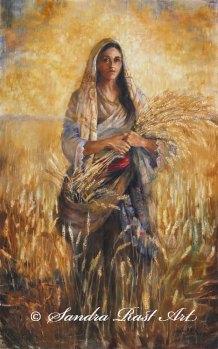
So Ruth worked alongside the women in Boaz’s fields and gathered grain with them until the end of the barley harvest. Then she continued working with them through the wheat harvest in early summer. And all the while she lived with her mother-in-law.
Ruth at the Threshing Floor
Ruth 3 (NLT)
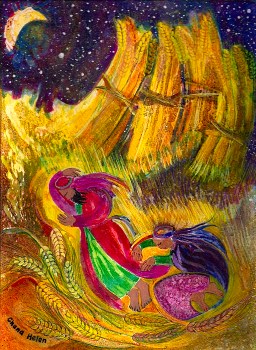
+ Naomi the matchmaker – One day Naomi said to Ruth, “My daughter, it’s time that I found a permanent home for you, so that you will be provided for. Boaz is a close relative of ours, and he’s been very kind by letting you gather grain with his young women. Tonight he will be winnowing barley at the threshing floor. Now do as I tell you—take a bath and put on perfume and dress in your nicest clothes. Then go to the threshing floor, but don’t let Boaz see you until he has finished eating and drinking. Be sure to notice where he lies down; then go and uncover his feet and lie down there. He will tell you what to do.”
“I will do everything you say,” Ruth replied. So she went down to the threshing floor that night and followed the instructions of her mother-in-law.
+ Ruth asks for redemption – After Boaz had finished eating and drinking and was in good spirits, he lay down at the far end of the pile of grain and went to sleep. Then Ruth came quietly, uncovered his feet, and lay down. Around midnight Boaz suddenly woke up and turned over. He was surprised to find a woman lying at his feet! “Who are you?” he asked.
“I am your servant Ruth,” she replied. “Spread the corner of your covering over me, for you are my family redeemer.”
+ Boaz, a man of honor – “The Lord bless you, my daughter!” Boaz exclaimed. “You are showing even more family loyalty now than you did before, for you have not gone after a younger man, whether rich or poor. Now don’t worry about a thing, my daughter. I will do what is necessary, for everyone in town knows you are a virtuous woman. But while it’s true that I am one of your family redeemers, there is another man who is more closely related to you than I am. Stay here tonight, and in the morning I will talk to him. If he is willing to redeem you, very well. Let him marry you. But if he is not willing, then as surely as the Lord lives, I will redeem you myself! Now lie down here until morning.”
+ Boaz protects Ruth’s honor – So Ruth lay at Boaz’s feet until the morning, but she got up before it was light enough for people to recognize each other. For Boaz had said, “No one must know that a woman was here at the threshing floor.” Then Boaz said to her, “Bring your cloak and spread it out.” He measured six scoops of barley into the cloak and placed it on her back. Then he returned to the town.
When Ruth went back to her mother-in-law, Naomi asked, “What happened, my daughter?”
Ruth told Naomi everything Boaz had done for her, and she added, “He gave me these six scoops of barley and said, ‘Don’t go back to your mother-in-law empty-handed.’”
+ Naomi counsels patience – Then Naomi said to her, “Just be patient, my daughter, until we hear what happens. The man won’t rest until he has settled things today.”
Boaz Marries Ruth
Ruth 4 (NLT)
+ Boaz proffers Naomi’s land – Boaz went to the town gate and took a seat there. Just then the family redeemer he had mentioned came by, so Boaz called out to him, “Come over here and sit down, friend. I want to talk to you.” So they sat down together. Then Boaz called ten leaders from the town and asked them to sit as witnesses. And Boaz said to the family redeemer, “You know Naomi, who came back from Moab. She is selling the land that belonged to our relative Elimelech. I thought I should speak to you about it so that you can redeem it if you wish. If you want the land, then buy it here in the presence of these witnesses. But if you don’t want it, let me know right away, because I am next in line to redeem it after you.”
The man replied, “All right, I’ll redeem it.”
+ Ruth included in the fine print – Then Boaz told him, “Of course, your purchase of the land from Naomi also requires that you marry Ruth, the Moabite widow. That way she can have children who will carry on her husband’s name and keep the land in the family.”
+ Offer rejected – “Then I can’t redeem it,” the family redeemer replied, “because this might endanger my own estate. You redeem the land; I cannot do it.”
Now in those days it was the custom in Israel for anyone transferring a right of purchase to remove his sandal and hand it to the other party. This publicly validated the transaction. So the other family redeemer drew off his sandal as he said to Boaz, “You buy the land.”
+ Boaz acquires the land and Ruth – Then Boaz said to the elders and to the crowd standing around, “You are witnesses that today I have bought from Naomi all the property of Elimelech, Kilion, and Mahlon. And with the land I have acquired Ruth, the Moabite widow of Mahlon, to be my wife. This way she can have a son to carry on the family name of her dead husband and to inherit the family property here in his hometown. You are all witnesses today.”
+ Elders give their blessing – Then the elders and all the people standing in the gate replied, “We are witnesses! May the Lord make this woman who is coming into your home like Rachel and Leah, from whom all the nation of Israel descended! May you prosper in Ephrathah and be famous in Bethlehem. And may the Lord give you descendants by this young woman who will be like those of our ancestor Perez, the son of Tamar and Judah.”
The Descendants of Boaz
+ A redeemer is born – So Boaz took Ruth into his home, and she became his wife. When he slept with her, the Lord enabled her to become pregnant, and she gave birth to a son. Then the women of the town said to Naomi, “Praise the Lord, who has now provided a redeemer for your family! May this child be famous in Israel. May he restore your youth and care for you in your old age. For he is the son of your daughter-in-law who loves you and has been better to you than seven sons!”
+ The grandfather of King David – Naomi took the baby and cuddled him to her breast. And she cared for him as if he were her own. The neighbor women said, “Now at last Naomi has a son again!” And they named him Obed. He became the father of Jesse and the grandfather of David.
This is the genealogical record of their ancestor Perez:
Perez was the father of Hezron.
Hezron was the father of Ram.
Ram was the father of Amminadab.
Amminadab was the father of Nahshon.
Nahshon was the father of Salmon.
Salmon was the father of Boaz.
Boaz was the father of Obed.
Obed was the father of Jesse.
Jesse was the father of David.
__________
“Song Of Ruth” – Lamb III
Wherever you go – There you will find me | Wherever you lodge – That is my home
Wherever you die – There I’ll be buried | Your people are mine – Your God is my God
Do not ever urge me to go | Or desert your side and leave you | For may God to me | And more if anything | But death separate you from me
Dai dai dai – dai dai dai dai | Dai dai dai dai – dai dai dai
For may God to me | And more If anything | But death separate you from me
__________
May the peace of the Lord Christ go with you, wherever He may send you. May He guide you through the wilderness, protect you through the storm. May He bring you home rejoicing at the wonders He has shown you. May He bring you home rejoicing once again into our doors.
__________
+ In the name of the Father, and the Son, and the Holy Spirit. Amen!
One thing I have asked of the Lord, this is what I seek: that I may dwell in the house of the Lord all the days of my life; to behold the beauty of the Lord and to seek Him in His temple.
Praise to You, Lord Jesus Christ, King of endless glory.
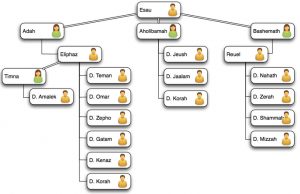
This is the account of the descendants of Esau (also known as Edom). Esau married two young women from Canaan: Adah, the daughter of Elon the Hittite; and Oholibamah, the daughter of Anah and granddaughter of Zibeon the Hivite. He also married his cousin Basemath, who was the daughter of Ishmael and the sister of Nebaioth. Adah gave birth to a son named Eliphaz for Esau. Basemath gave birth to a son named Reuel. Oholibamah gave birth to sons named Jeush, Jalam, and Korah. All these sons were born to Esau in the land of Canaan.
Esau took his wives, his children, and his entire household, along with his livestock and cattle—all the wealth he had acquired in the land of Canaan—and moved away from his brother, Jacob. There was not enough land to support them both because of all the livestock and possessions they had acquired. So Esau (also known as Edom) settled in the hill country of Seir….
Original Peoples of Edom
These are the names of the tribes that descended from Seir the Horite. They lived in the land of Edom: Lotan, Shobal, Zibeon, Anah, Dishon, Ezer, and Dishan. These were the Horite clan leaders, the descendants of Seir, who lived in the land of Edom…..
Leaders of Edomites
These are the names of the leaders of the clans descended from Esau, who lived in the places named for them: Timna, Alvah, Jetheth, Oholibamah, Elah, Pinon, Kenaz, Teman, Mibzar, Magdiel, and Iram. These are the leaders of the clans of Edom, listed according to their settlements in the land they occupied. They all descended from Esau, the ancestor of the Edomites.
Joseph’s Dreams
Genesis 37 (NLT)
So Jacob settled again in the land of Canaan, where his father had lived as a foreigner.
+ Joseph the snitch – This is the account of Jacob and his family. When Joseph was seventeen years old, he often tended his father’s flocks. He worked for his half brothers, the sons of his father’s wives Bilhah and Zilpah. But Joseph reported to his father some of the bad things his brothers were doing.
+ Joseph the favorite – Jacob loved Joseph more than any of his other children because Joseph had been born to him in his old age. So one day Jacob had a special gift made for Joseph—a beautiful robe. But his brothers hated Joseph because their father loved him more than the rest of them. They couldn’t say a kind word to him.
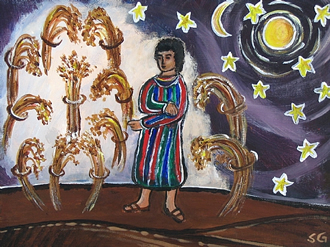
+ Joseph the dreamer – One night Joseph had a dream, and when he told his brothers about it, they hated him more than ever. “Listen to this dream,” he said. “We were out in the field, tying up bundles of grain. Suddenly my bundle stood up, and your bundles all gathered around and bowed low before mine!”
+ His brothers hated him – His brothers responded, “So you think you will be our king, do you? Do you actually think you will reign over us?” And they hated him all the more because of his dreams and the way he talked about them.
Soon Joseph had another dream, and again he told his brothers about it. “Listen, I have had another dream,” he said. “The sun, moon, and eleven stars bowed low before me!”
+ His father was curious – This time he told the dream to his father as well as to his brothers, but his father scolded him. “What kind of dream is that?” he asked. “Will your mother and I and your brothers actually come and bow to the ground before you?” But while his brothers were jealous of Joseph, his father wondered what the dreams meant.
+ Joseph’s recon mission – Soon after this, Joseph’s brothers went to pasture their father’s flocks at Shechem. When they had been gone for some time, Jacob said to Joseph, “Your brothers are pasturing the sheep at Shechem. Get ready, and I will send you to them.”
“I’m ready to go,” Joseph replied.
“Go and see how your brothers and the flocks are getting along,” Jacob said. “Then come back and bring me a report.” So Jacob sent him on his way, and Joseph traveled to Shechem from their home in the valley of Hebron.
When he arrived there, a man from the area noticed him wandering around the countryside. “What are you looking for?” he asked.
“I’m looking for my brothers,” Joseph replied. “Do you know where they are pasturing their sheep?”
“Yes,” the man told him. “They have moved on from here, but I heard them say, ‘Let’s go on to Dothan.’” So Joseph followed his brothers to Dothan and found them there.
Joseph Sold into Slavery
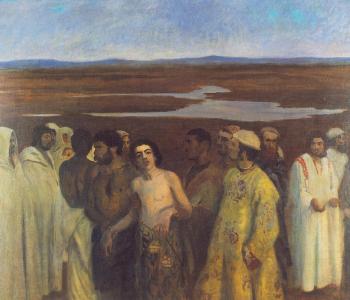
+ The murder plot – When Joseph’s brothers saw him coming, they recognized him in the distance. As he approached, they made plans to kill him. “Here comes the dreamer!” they said. “Come on, let’s kill him and throw him into one of these cisterns. We can tell our father, ‘A wild animal has eaten him.’ Then we’ll see what becomes of his dreams!”
+ Reuben to the rescue – But when Reuben heard of their scheme, he came to Joseph’s rescue. “Let’s not kill him,” he said. “Why should we shed any blood? Let’s just throw him into this empty cistern here in the wilderness. Then he’ll die without our laying a hand on him.” Reuben was secretly planning to rescue Joseph and return him to his father.
+ Joseph on hold – So when Joseph arrived, his brothers ripped off the beautiful robe he was wearing. Then they grabbed him and threw him into the cistern. Now the cistern was empty; there was no water in it. Then, just as they were sitting down to eat, they looked up and saw a caravan of camels in the distance coming toward them. It was a group of Ishmaelite traders taking a load of gum, balm, and aromatic resin from Gilead down to Egypt.
+ Sold, problem solved – Judah said to his brothers, “What will we gain by killing our brother? We’d have to cover up the crime. Instead of hurting him, let’s sell him to those Ishmaelite traders. After all, he is our brother—our own flesh and blood!” And his brothers agreed. So when the Ishmaelites, who were Midianite traders, came by, Joseph’s brothers pulled him out of the cistern and sold him to them for twenty pieces of silver. And the traders took him to Egypt.
Some time later, Reuben returned to get Joseph out of the cistern. When he discovered that Joseph was missing, he tore his clothes in grief. Then he went back to his brothers and lamented, “The boy is gone! What will I do now?”
+ The robe ruse – Then the brothers killed a young goat and dipped Joseph’s robe in its blood. They sent the beautiful robe to their father with this message: “Look at what we found. Doesn’t this robe belong to your son?”
+ Jacob is inconsolable – Their father recognized it immediately. “Yes,” he said, “it is my son’s robe. A wild animal must have eaten him. Joseph has clearly been torn to pieces!” Then Jacob tore his clothes and dressed himself in burlap. He mourned deeply for his son for a long time. His family all tried to comfort him, but he refused to be comforted. “I will go to my grave mourning for my son,” he would say, and then he would weep.
+ Joseph sold to an Egyptian – Meanwhile, the Midianite traders arrived in Egypt, where they sold Joseph to Potiphar, an officer of Pharaoh, the king of Egypt. Potiphar was captain of the palace guard.
Judah and Tamar
Genesis 38 (NLT)
+ Judah’s Canaanite wives – About this time, Judah left home and moved to Adullam, where he stayed with a man named Hirah. There he saw a Canaanite woman, the daughter of Shua, and he married her. When he slept with her, she became pregnant and gave birth to a son, and he named the boy Er. Then she became pregnant again and gave birth to another son, and she named him Onan. And when she gave birth to a third son, she named him Shelah. At the time of Shelah’s birth, they were living at Kezib.
+ Tamar widowed – In the course of time, Judah arranged for his firstborn son, Er, to marry a young woman named Tamar. But Er was a wicked man in the Lord’s sight, so the Lord took his life. Then Judah said to Er’s brother Onan, “Go and marry Tamar, as our law requires of the brother of a man who has died. You must produce an heir for your brother.”
+ Tamar’s plight – But Onan was not willing to have a child who would not be his own heir. So whenever he had intercourse with his brother’s wife, he spilled the semen on the ground. This prevented her from having a child who would belong to his brother. But the Lord considered it evil for Onan to deny a child to his dead brother. So the Lord took Onan’s life, too.
+ Tamar rejected – Then Judah said to Tamar, his daughter-in-law, “Go back to your parents’ home and remain a widow until my son Shelah is old enough to marry you.” (But Judah didn’t really intend to do this because he was afraid Shelah would also die, like his two brothers.) So Tamar went back to live in her father’s home.
Some years later Judah’s wife died. After the time of mourning was over, Judah and his friend Hirah the Adullamite went up to Timnah to supervise the shearing of his sheep. Someone told Tamar, “Look, your father-in-law is going up to Timnah to shear his sheep.”
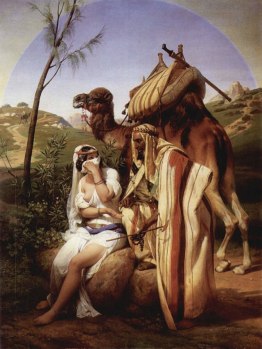
+ Tamar’s ruse – Tamar was aware that Shelah had grown up, but no arrangements had been made for her to come and marry him. So she changed out of her widow’s clothing and covered herself with a veil to disguise herself. Then she sat beside the road at the entrance to the village of Enaim, which is on the road to Timnah. Judah noticed her and thought she was a prostitute, since she had covered her face. So he stopped and propositioned her. “Let me have sex with you,” he said, not realizing that she was his own daughter-in-law.
“How much will you pay to have sex with me?” Tamar asked.
“I’ll send you a young goat from my flock,” Judah promised.
“But what will you give me to guarantee that you will send the goat?” she asked.
“What kind of guarantee do you want?” he replied.
+ Tamar’s guarantee – She answered, “Leave me your identification seal and its cord and the walking stick you are carrying.” So Judah gave them to her. Then he had intercourse with her, and she became pregnant. Afterward she went back home, took off her veil, and put on her widow’s clothing as usual.
Later Judah asked his friend Hirah the Adullamite to take the young goat to the woman and to pick up the things he had given her as his guarantee. But Hirah couldn’t find her. So he asked the men who lived there, “Where can I find the shrine prostitute who was sitting beside the road at the entrance to Enaim?”
“We’ve never had a shrine prostitute here,” they replied.
So Hirah returned to Judah and told him, “I couldn’t find her anywhere, and the men of the village claim they’ve never had a shrine prostitute there.”
“Then let her keep the things I gave her,” Judah said. “I sent the young goat as we agreed, but you couldn’t find her. We’d be the laughingstock of the village if we went back again to look for her.”
+ Judah’s entrapment – About three months later, Judah was told, “Tamar, your daughter-in-law, has acted like a prostitute. And now, because of this, she’s pregnant.”
“Bring her out, and let her be burned!” Judah demanded.
But as they were taking her out to kill her, she sent this message to her father-in-law: “The man who owns these things made me pregnant. Look closely. Whose seal and cord and walking stick are these?”
+ Gotcha – Judah recognized them immediately and said, “She is more righteous than I am, because I didn’t arrange for her to marry my son Shelah.” And Judah never slept with Tamar again.
When the time came for Tamar to give birth, it was discovered that she was carrying twins. While she was in labor, one of the babies reached out his hand. The midwife grabbed it and tied a scarlet string around the child’s wrist, announcing, “This one came out first.” But then he pulled back his hand, and out came his brother! “What!” the midwife exclaimed. “How did you break out first?” So he was named Perez. Then the baby with the scarlet string on his wrist was born, and he was named Zerah.
Joseph in Potiphar’s House
Genesis 39 (NLT)
When Joseph was taken to Egypt by the Ishmaelite traders, he was purchased by Potiphar, an Egyptian officer. Potiphar was captain of the guard for Pharaoh, the king of Egypt.
+ God makes Joseph successful – The Lord was with Joseph, so he succeeded in everything he did as he served in the home of his Egyptian master. Potiphar noticed this and realized that the Lord was with Joseph, giving him success in everything he did. This pleased Potiphar, so he soon made Joseph his personal attendant. He put him in charge of his entire household and everything he owned. From the day Joseph was put in charge of his master’s household and property, the Lord began to bless Potiphar’s household for Joseph’s sake. All his household affairs ran smoothly, and his crops and livestock flourished. So Potiphar gave Joseph complete administrative responsibility over everything he owned. With Joseph there, he didn’t worry about a thing—except what kind of food to eat!
+ The lust of Potiphar’s wife – Joseph was a very handsome and well-built young man, and Potiphar’s wife soon began to look at him lustfully. “Come and sleep with me,” she demanded.
But Joseph refused. “Look,” he told her, “my master trusts me with everything in his entire household. No one here has more authority than I do. He has held back nothing from me except you, because you are his wife. How could I do such a wicked thing? It would be a great sin against God.”
+ She persists – She kept putting pressure on Joseph day after day, but he refused to sleep with her, and he kept out of her way as much as possible. One day, however, no one else was around when he went in to do his work. She came and grabbed him by his cloak, demanding, “Come on, sleep with me!” Joseph tore himself away, but he left his cloak in her hand as he ran from the house.
+ She cries rape – When she saw that she was holding his cloak and he had fled, she called out to her servants. Soon all the men came running. “Look!” she said. “My husband has brought this Hebrew slave here to make fools of us! He came into my room to rape me, but I screamed. When he heard me scream, he ran outside and got away, but he left his cloak behind with me.”
+ She repeats the lie – She kept the cloak with her until her husband came home. Then she told him her story. “That Hebrew slave you’ve brought into our house tried to come in and fool around with me,” she said. “But when I screamed, he ran outside, leaving his cloak with me!”
Joseph Put in Prison
+ God makes Joseph successful – Potiphar was furious when he heard his wife’s story about how Joseph had treated her. So he took Joseph and threw him into the prison where the king’s prisoners were held, and there he remained. But the Lord was with Joseph in the prison and showed him his faithful love. And the Lord made Joseph a favorite with the prison warden. Before long, the warden put Joseph in charge of all the other prisoners and over everything that happened in the prison. The warden had no more worries, because Joseph took care of everything. The Lord was with him and caused everything he did to succeed.
__________
May the peace of the Lord Christ go with you, wherever He may send you. May He guide you through the wilderness, protect you through the storm. May He bring you home rejoicing at the wonders He has shown you. May He bring you home rejoicing once again into our doors.
__________
+ In the name of the Father, and the Son, and the Holy Spirit. Amen!
+ In the name of the Father, and the Son, and the Holy Spirit. Amen!
Opening Prayer
Holy God, the folly of the cross mocks our human wisdom, and the weakness of the crucified puts worldly power to shame. Banish from our hearts every pretense of might and of knowledge, that by the power flowing from Christ’s resurrection your people may be raised up from the death of sin and fashioned into a living temple of your glory. Grant this through Christ, our redeemer, who lives and reigns with you in the unity of the Holy Spirit, holy and mighty God for ever and ever. Amen.
__________
“Only a Holy God” – City Alight
__________
Gospel Reading: John 2:13-25 (NLT)
It was nearly time for the Jewish Passover celebration, so Jesus went to Jerusalem. In the Temple area he saw merchants selling cattle, sheep, and doves for sacrifices; he also saw dealers at tables exchanging foreign money. Jesus made a whip from some ropes and chased them all out of the Temple. He drove out the sheep and cattle, scattered the money changers’ coins over the floor, and turned over their tables. Then, going over to the people who sold doves, he told them, “Get these things out of here. Stop turning my Father’s house into a marketplace!”
Then his disciples remembered this prophecy from the Scriptures: “Passion for God’s house will consume me.”
But the Jewish leaders demanded, “What are you doing? If God gave you authority to do this, show us a miraculous sign to prove it.”
“All right,” Jesus replied. “Destroy this temple, and in three days I will raise it up.”
“What!” they exclaimed. “It has taken forty-six years to build this Temple, and you can rebuild it in three days?” But when Jesus said “this temple,” he meant his own body. After he was raised from the dead, his disciples remembered he had said this, and they believed both the Scriptures and what Jesus had said.
Because of the miraculous signs Jesus did in Jerusalem at the Passover celebration, many began to trust in him. But Jesus didn’t trust them, because he knew all about people. No one needed to tell him about human nature, for he knew what was in each person’s heart.
__________
Prayers of Intercession:
Holy God, we come before your throne of grace in the name of your Son, Jesus Christ: grant us mercy and help us. We pray especially –
+ For your church – Fill us with the desire to search for your truth revealed in Christ crucified, that we may transform the world, becoming fools for your sake….
+ For your creation – Fill us with your wisdom, that the earth may reflect the wonder of the universe, in the glory of the risen Christ….
+ For our companions – Show us the narrow path among the brambles and pitfalls on this Lenten journey . And, thank you for friendships in Christ that endure through times of sorrow and joy….
+ For all those who suffer – Bind the broken-hearted, release the captives, and comfort those who mourn. Bless them with beauty instead of ashes, the oil of gladness in place of grief, and a garment of unending praise in place of despair….
+ For the communion of saints – Raise in Christ all who have died in him, especially Billy Graham, that they may rest in your eternal home and join the flights of angels singing your glory….
God of wisdom and light: Guide us by your Word and Spirit and, in your mercy, create in us clean hearts we ask through Jesus Christ our Lord. Amen.
__________
“Clean Heart” – Matt Maher
Woke up this morning | The whole world was yelling | I wish I was dreaming | Of all that we’ve been through | My soul has been searching | For some deeper meaning | I know there’s a kindness | That leads me to the truth
When everybody’s looking for another fight | When trouble’s on the rise, no end in sight | Oh Savior, won’t You come and make the wrong things right | Let me be the place You start | Give me a clean heart | Give me a clean heart
What is forgiveness if it isn’t given | We measure our mercy | When mercy is a flood | Give us a vision | Your eyes of compassion | In all this division | May we be known by our love
You blessed those who cursed You | You loved those who hated You | On the cross You died for me | To bless those who curse You | And love those who hate You | You said to love my enemies!
__________
Blessing – Jude 24-25
“Now to him who is able to keep you from stumbling and to present you blameless before the presence of his glory with great joy, to the only God, our Savior, through Jesus Christ our Lord, be glory, majesty, dominion, and authority, before all time and now and forever. Amen.”
__________
+ In the name of the Father, and the Son, and the Holy Spirit. Amen!
One thing I have asked of the Lord, this is what I seek: that I may dwell in the house of the Lord all the days of my life; to behold the beauty of the Lord and to seek Him in His temple.
Praise to You, Lord Jesus Christ, King of endless glory.
Reading: 1 Corinthians 1-2 (NLT)
Greetings from Paul
1 Corinthians 1 (NLT)
This letter is from Paul, chosen by the will of God to be an apostle of Christ Jesus, and from our brother Sosthenes.
I am writing to God’s church in Corinth, to you who have been called by God to be his own holy people. He made you holy by means of Christ Jesus, just as he did for all people everywhere who call on the name of our Lord Jesus Christ, their Lord and ours.
May God our Father and the Lord Jesus Christ give you grace and peace.
Paul Gives Thanks to God
+ God has enriched you and will keep you strong – I always thank my God for you and for the gracious gifts he has given you, now that you belong to Christ Jesus. Through him, God has enriched your church in every way—with all of your eloquent words and all of your knowledge. This confirms that what I told you about Christ is true. Now you have every spiritual gift you need as you eagerly wait for the return of our Lord Jesus Christ. He will keep you strong to the end so that you will be free from all blame on the day when our Lord Jesus Christ returns. God will do this, for he is faithful to do what he says, and he has invited you into partnership with his Son, Jesus Christ our Lord.
Divisions in the Church
+ Live as one – I appeal to you, dear brothers and sisters, by the authority of our Lord Jesus Christ, to live in harmony with each other. Let there be no divisions in the church. Rather, be of one mind, united in thought and purpose. For some members of Chloe’s household have told me about your quarrels, my dear brothers and sisters. Some of you are saying, “I am a follower of Paul.” Others are saying, “I follow Apollos,” or “I follow Peter,” or “I follow only Christ.”
+ As Christ is one – Has Christ been divided into factions? Was I, Paul, crucified for you? Were any of you baptized in the name of Paul? Of course not! I thank God that I did not baptize any of you except Crispus and Gaius, for now no one can say they were baptized in my name. (Oh yes, I also baptized the household of Stephanas, but I don’t remember baptizing anyone else.) For Christ didn’t send me to baptize, but to preach the Good News—and not with clever speech, for fear that the cross of Christ would lose its power.
The Wisdom of God
+ The message of the cross – The message of the cross is foolish to those who are headed for destruction! But we who are being saved know it is the very power of God. As the Scriptures say,
“I will destroy the wisdom of the wise and discard the intelligence of the intelligent.”
+ Foolishness to the world – So where does this leave the philosophers, the scholars, and the world’s brilliant debaters? God has made the wisdom of this world look foolish. Since God in his wisdom saw to it that the world would never know him through human wisdom, he has used our foolish preaching to save those who believe. It is foolish to the Jews, who ask for signs from heaven. And it is foolish to the Greeks, who seek human wisdom. So when we preach that Christ was crucified, the Jews are offended and the Gentiles say it’s all nonsense.
+ Wisdom to the called – But to those called by God to salvation, both Jews and Gentiles, Christ is the power of God and the wisdom of God. This foolish plan of God is wiser than the wisest of human plans, and God’s weakness is stronger than the greatest of human strength.
+ God chose the foolish to shame the wise – Remember, dear brothers and sisters, that few of you were wise in the world’s eyes or powerful or wealthy when God called you. Instead, God chose things the world considers foolish in order to shame those who think they are wise. And he chose things that are powerless to shame those who are powerful. God chose things despised by the world, things counted as nothing at all, and used them to bring to nothing what the world considers important. As a result, no one can ever boast in the presence of God.
+ United in Christ – God has united you with Christ Jesus. For our benefit God made him to be wisdom itself. Christ made us right with God; he made us pure and holy, and he freed us from sin. Therefore, as the Scriptures say, “If you want to boast, boast only about the Lord.”
Paul’s Message of Wisdom
1 Corinthians 2 (NLT)
+ Plain preaching: Christ crucified – When I first came to you, dear brothers and sisters, I didn’t use lofty words and impressive wisdom to tell you God’s secret plan. For I decided that while I was with you I would forget everything except Jesus Christ, the one who was crucified. I came to you in weakness—timid and trembling. And my message and my preaching were very plain. Rather than using clever and persuasive speeches, I relied only on the power of the Holy Spirit. I did this so you would trust not in human wisdom but in the power of God.
+ The mystery of God – Yet when I am among mature believers, I do speak with words of wisdom, but not the kind of wisdom that belongs to this world or to the rulers of this world, who are soon forgotten. No, the wisdom we speak of is the mystery of God—his plan that was previously hidden, even though he made it for our ultimate glory before the world began. But the rulers of this world have not understood it; if they had, they would not have crucified our glorious Lord. That is what the Scriptures mean when they say,
“No eye has seen, no ear has heard, and no mind has imagined what God has prepared for those who love him.”
+ Revealed by God’s Spirit – But it was to us that God revealed these things by his Spirit. For his Spirit searches out everything and shows us God’s deep secrets. No one can know a person’s thoughts except that person’s own spirit, and no one can know God’s thoughts except God’s own Spirit. And we have received God’s Spirit (not the world’s spirit), so we can know the wonderful things God has freely given us.
+ Using spiritual words to explain spiritual truth – When we tell you these things, we do not use words that come from human wisdom. Instead, we speak words given to us by the Spirit, using the Spirit’s words to explain spiritual truths. But people who aren’t spiritual can’t receive these truths from God’s Spirit. It all sounds foolish to them and they can’t understand it, for only those who are spiritual can understand what the Spirit means. Those who are spiritual can evaluate all things, but they themselves cannot be evaluated by others. For,
“Who can know the Lord’s thoughts? Who knows enough to teach him?”
But we understand these things, for we have the mind of Christ.
__________
“The Cross of Christ” – Darlene Zschech
Grace and mercy beckon me | My heart leans heavenward again | To the love that bought my shame | The Cross of Christ my saving grace
My hope is found in Jesus | Spirit life rising up in me | My heart is home in Jesus | Now forever my soul will sing | Lord, You reign for eternity
Perfect love has brought me home | This hope an anchor for my soul | Spirit draw me closer still | The Cross of Christ my hope secure
Come and see the glory of the Lord | Come into His presence all the earth | Singing halleluiah all the glory all the praise | Every nation, tribe and every tongue | Will declare the work of Christ the Son | Singing hallelujah all the glory all the praise
__________
May the peace of the Lord Christ go with you, wherever He may send you. May He guide you through the wilderness, protect you through the storm. May He bring you home rejoicing at the wonders He has shown you. May He bring you home rejoicing once again into our doors.
__________
+ In the name of the Father, and the Son, and the Holy Spirit. Amen!

 “My complaint is with God, not with people. I have good reason to be so impatient. Look at me and be stunned. Put your hand over your mouth in shock. When I think about what I am saying, I shudder. My body trembles.
 + You must have done something wicked – “For example, you must have lent money to your friend and demanded clothing as security. Yes, you stripped him to the bone. You must have refused water for the thirsty and food for the hungry. You probably think the land belongs to the powerful and only the privileged have a right to it! You must have sent widows away empty-handed and crushed the hopes of orphans. That is why you are surrounded by traps and tremble from sudden fears. That is why you cannot see in the darkness, and waves of water cover you.