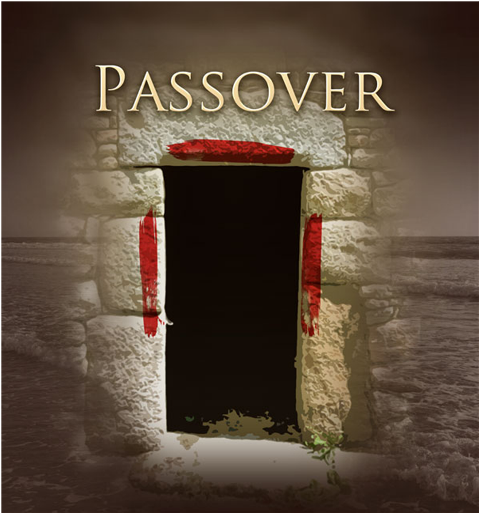
Morning Reading: Mon, 02 Apr – Exodus 1-4 ~ Go down, Moses!

Morning Reading

+ In the name of the Father, and the Son, and the Holy Spirit. Amen!

Opening – (Northumbria Community)

One thing I have asked of the Lord, this is what I seek: that I may dwell in the house of the Lord all the days of my life; to behold the beauty of the Lord and to seek Him in His temple.

Praise to You, Lord Jesus Christ, King of endless glory.

Reading: Exodus 1-4 (NLT)

The Israelites in Egypt

Exodus 1 (NLT)

These are the names of the sons of Israel (that is, Jacob) who moved to Egypt with their father, each with his family: Reuben, Simeon, Levi, Judah, Issachar, Zebulun, Benjamin, Dan, Naphtali, Gad, and Asher. In all, Jacob had seventy descendants in Egypt, including Joseph, who was already there.

+ Israelites multiply – In time, Joseph and all of his brothers died, ending that entire generation. But their descendants, the Israelites, had many children and grandchildren. In fact, they multiplied so greatly that they became extremely powerful and filled the land.

+ Egyptians outnumbered –  Eventually, a new king came to power in Egypt who knew nothing about Joseph or what he had done. He said to his people, “Look, the people of Israel now outnumber us and are stronger than we are. We must make a plan to keep them from growing even more. If we don’t, and if war breaks out, they will join our enemies and fight against us. Then they will escape from the country.”

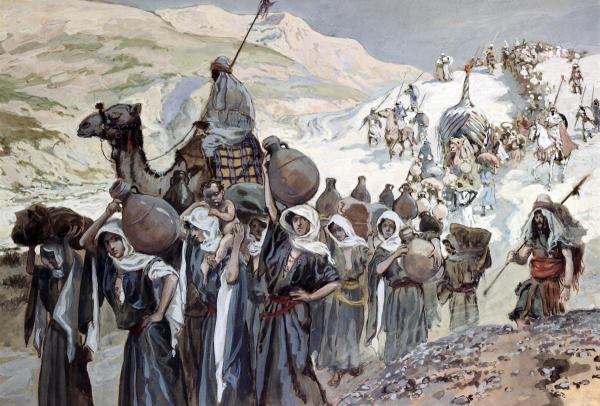
+ Israelites enslaved – So the Egyptians made the Israelites their slaves. They appointed brutal slave drivers over them, hoping to wear them down with crushing labor. They forced them to build the cities of Pithom and Rameses as supply centers for the king. But the more the Egyptians oppressed them, the more the Israelites multiplied and spread, and the more alarmed the Egyptians became. So the Egyptians worked the people of Israel without mercy. They made their lives bitter, forcing them to mix mortar and make bricks and do all the work in the fields. They were ruthless in all their demands.

+ Pharaoh: abort the boys – Then Pharaoh, the king of Egypt, gave this order to the Hebrew midwives, Shiphrah and Puah: “When you help the Hebrew women as they give birth, watch as they deliver. If the baby is a boy, kill him; if it is a girl, let her live.” But because the midwives feared God, they refused to obey the king’s orders. They allowed the boys to live, too.

+ Midwives refuse – So the king of Egypt called for the midwives. “Why have you done this?” he demanded. “Why have you allowed the boys to live?”

“The Hebrew women are not like the Egyptian women,” the midwives replied. “They are more vigorous and have their babies so quickly that we cannot get there in time.”

+ Israelites continue to multiply – So God was good to the midwives, and the Israelites continued to multiply, growing more and more powerful. And because the midwives feared God, he gave them families of their own.

+ Pharaoh: drown the boys – Then Pharaoh gave this order to all his people: “Throw every newborn Hebrew boy into the Nile River. But you may let the girls live.”

The Birth of Moses

Exodus 2 (NLT)

+ Mother hides baby – About this time, a man and woman from the tribe of Levi got married. The woman became pregnant and gave birth to a son. She saw that he was a special baby and kept him hidden for three months. But when she could no longer hide him, she got a basket made of papyrus reeds and waterproofed it with tar and pitch. She put the baby in the basket and laid it among the reeds along the bank of the Nile River. The baby’s sister then stood at a distance, watching to see what would happen to him.

+ Princess finds baby – Soon Pharaoh’s daughter came down to bathe in the river, and her attendants walked along the riverbank. When the princess saw the basket among the reeds, she sent her maid to get it for her. When the princess opened it, she saw the baby. The little boy was crying, and she felt sorry for him. “This must be one of the Hebrew children,” she said.

+ Mother fosters baby – Then the baby’s sister approached the princess. “Should I go and find one of the Hebrew women to nurse the baby for you?” she asked.

“Yes, do!” the princess replied. So the girl went and called the baby’s mother.

“Take this baby and nurse him for me,” the princess told the baby’s mother. “I will pay you for your help.” So the woman took her baby home and nursed him.

+ Princess adopts baby – Later, when the boy was older, his mother brought him back to Pharaoh’s daughter, who adopted him as her own son. The princess named him Moses, for she explained, “I lifted him out of the water.”

Moses Escapes to Midian

+ Moses kills Egyptian – Many years later, when Moses had grown up, he went out to visit his own people, the Hebrews, and he saw how hard they were forced to work. During his visit, he saw an Egyptian beating one of his fellow Hebrews. After looking in all directions to make sure no one was watching, Moses killed the Egyptian and hid the body in the sand.

The next day, when Moses went out to visit his people again, he saw two Hebrew men fighting. “Why are you beating up your friend?” Moses said to the one who had started the fight.

The man replied, “Who appointed you to be our prince and judge? Are you going to kill me as you killed that Egyptian yesterday?”

+ Moses escapes from Pharaoh – Then Moses was afraid, thinking, “Everyone knows what I did.” And sure enough, Pharaoh heard what had happened, and he tried to kill Moses. But Moses fled from Pharaoh and went to live in the land of Midian.

+ Moses rescues Reuel’s daughters –  When Moses arrived in Midian, he sat down beside a well. Now the priest of Midian had seven daughters who came as usual to draw water and fill the water troughs for their father’s flocks. But some other shepherds came and chased them away. So Moses jumped up and rescued the girls from the shepherds. Then he drew water for their flocks.

When the girls returned to Reuel, their father, he asked, “Why are you back so soon today?”

“An Egyptian rescued us from the shepherds,” they answered. “And then he drew water for us and watered our flocks.”

“Then where is he?” their father asked. “Why did you leave him there? Invite him to come and eat with us.”

+ Moses marries and settles in – Moses accepted the invitation, and he settled there with him. In time, Reuel gave Moses his daughter Zipporah to be his wife. Later she gave birth to a son, and Moses named him Gershom, for he explained, “I have been a foreigner in a foreign land.”

+ God hears the Israelites’ cries – Years passed, and the king of Egypt died. But the Israelites continued to groan under their burden of slavery. They cried out for help, and their cry rose up to God. God heard their groaning, and he remembered his covenant promise to Abraham, Isaac, and Jacob. He looked down on the people of Israel and knew it was time to act.

Moses and the Burning Bush

Exodus 3 (NLT)

+ God appears to Moses – One day Moses was tending the flock of his father-in-law, Jethro, the priest of Midian. He led the flock far into the wilderness and came to Sinai, the mountain of God. There the angel of the Lord appeared to him in a blazing fire from the middle of a bush. Moses stared in amazement. Though the bush was engulfed in flames, it didn’t burn up. “This is amazing,” Moses said to himself. “Why isn’t that bush burning up? I must go see it.”

When the Lord saw Moses coming to take a closer look, God called to him from the middle of the bush, “Moses! Moses!”

“Here I am!” Moses replied.

“Do not come any closer,” the Lord warned. “Take off your sandals, for you are standing on holy ground. I am the God of your father—the God of Abraham, the God of Isaac, and the God of Jacob.” When Moses heard this, he covered his face because he was afraid to look at God.

+ God calls Moses – Then the Lord told him, “I have certainly seen the oppression of my people in Egypt. I have heard their cries of distress because of their harsh slave drivers. Yes, I am aware of their suffering. So I have come down to rescue them from the power of the Egyptians and lead them out of Egypt into their own fertile and spacious land. It is a land flowing with milk and honey—the land where the Canaanites, Hittites, Amorites, Perizzites, Hivites, and Jebusites now live. Look! The cry of the people of Israel has reached me, and I have seen how harshly the Egyptians abuse them. Now go, for I am sending you to Pharaoh. You must lead my people Israel out of Egypt.”

+ Moses protests – But Moses protested to God, “Who am I to appear before Pharaoh? Who am I to lead the people of Israel out of Egypt?”

God answered, “I will be with you. And this is your sign that I am the one who has sent you: When you have brought the people out of Egypt, you will worship God at this very mountain.”

+ Moses protests again – But Moses protested, “If I go to the people of Israel and tell them, ‘The God of your ancestors has sent me to you,’ they will ask me, ‘What is his name?’ Then what should I tell them?”

+ God reveals His Name – God replied to Moses, “I am who i am. Say this to the people of Israel: I am has sent me to you.” God also said to Moses, “Say this to the people of Israel: Yahweh, the God of your ancestors—the God of Abraham, the God of Isaac, and the God of Jacob—has sent me to you.

This is my eternal name, my name to remember for all generations.

+ God will rescue Israelites – “Now go and call together all the elders of Israel. Tell them, ‘Yahweh, the God of your ancestors—the God of Abraham, Isaac, and Jacob—has appeared to me. He told me, “I have been watching closely, and I see how the Egyptians are treating you. I have promised to rescue you from your oppression in Egypt. I will lead you to a land flowing with milk and honey—the land where the Canaanites, Hittites, Amorites, Perizzites, Hivites, and Jebusites now live.”’

“The elders of Israel will accept your message. Then you and the elders must go to the king of Egypt and tell him, ‘The Lord, the God of the Hebrews, has met with us. So please let us take a three-day journey into the wilderness to offer sacrifices to the Lord, our God.’

+ Pharaoh will resist – “But I know that the king of Egypt will not let you go unless a mighty hand forces him. So I will raise my hand and strike the Egyptians, performing all kinds of miracles among them. Then at last he will let you go. And I will cause the Egyptians to look favorably on you. They will give you gifts when you go so you will not leave empty-handed. Every Israelite woman will ask for articles of silver and gold and fine clothing from her Egyptian neighbors and from the foreign women in their houses. You will dress your sons and daughters with these, stripping the Egyptians of their wealth.”

Signs of the Lord’s Power

Exodus 4 (NLT)

+ Moses protests yet again – But Moses protested again, “What if they won’t believe me or listen to me? What if they say, ‘The Lord never appeared to you’?”

Then the Lord asked him, “What is that in your hand?”

“A shepherd’s staff,” Moses replied.

+ Miracle of staff and snake – “Throw it down on the ground,” the Lord told him. So Moses threw down the staff, and it turned into a snake! Moses jumped back.

Then the Lord told him, “Reach out and grab its tail.” So Moses reached out and grabbed it, and it turned back into a shepherd’s staff in his hand.

“Perform this sign,” the Lord told him. “Then they will believe that the Lord, the God of their ancestors—the God of Abraham, the God of Isaac, and the God of Jacob—really has appeared to you.”

+ Miracle of leprous hand – Then the Lord said to Moses, “Now put your hand inside your cloak.” So Moses put his hand inside his cloak, and when he took it out again, his hand was white as snow with a severe skin disease. “Now put your hand back into your cloak,” the Lord said. So Moses put his hand back in, and when he took it out again, it was as healthy as the rest of his body.

+ Miracle of water to blood – The Lord said to Moses, “If they do not believe you and are not convinced by the first miraculous sign, they will be convinced by the second sign. And if they don’t believe you or listen to you even after these two signs, then take some water from the Nile River and pour it out on the dry ground. When you do, the water from the Nile will turn to blood on the ground.”

+ Moses still protests – But Moses pleaded with the Lord, “O Lord, I’m not very good with words. I never have been, and I’m not now, even though you have spoken to me. I get tongue-tied, and my words get tangled.”

Then the Lord asked Moses, “Who makes a person’s mouth? Who decides whether people speak or do not speak, hear or do not hear, see or do not see? Is it not I, the Lord? Now go! I will be with you as you speak, and I will instruct you in what to say.”

But Moses again pleaded, “Lord, please! Send anyone else.”

+ God assigns Aaron as spokesman – Then the Lord became angry with Moses. “All right,” he said. “What about your brother, Aaron the Levite? I know he speaks well. And look! He is on his way to meet you now. He will be delighted to see you. Talk to him, and put the words in his mouth. I will be with both of you as you speak, and I will instruct you both in what to do. Aaron will be your spokesman to the people. He will be your mouthpiece, and you will stand in the place of God for him, telling him what to say. And take your shepherd’s staff with you, and use it to perform the miraculous signs I have shown you.”

Moses Returns to Egypt

So Moses went back home to Jethro, his father-in-law. “Please let me return to my relatives in Egypt,” Moses said. “I don’t even know if they are still alive.”

“Go in peace,” Jethro replied.

Before Moses left Midian, the Lord said to him, “Return to Egypt, for all those who wanted to kill you have died.”

+ Moses obeys God – So Moses took his wife and sons, put them on a donkey, and headed back to the land of Egypt. In his hand he carried the staff of God.

And the Lord told Moses, “When you arrive back in Egypt, go to Pharaoh and perform all the miracles I have empowered you to do. But I will harden his heart so he will refuse to let the people go. Then you will tell him, ‘This is what the Lord says: Israel is my firstborn son. I commanded you, “Let my son go, so he can worship me.” But since you have refused, I will now kill your firstborn son!’”

+ Zipporah circumcises son – On the way to Egypt, at a place where Moses and his family had stopped for the night, the Lord confronted him and was about to kill him. But Moses’ wife, Zipporah, took a flint knife and circumcised her son. She touched his feet with the foreskin and said, “Now you are a bridegroom of blood to me.” (When she said “a bridegroom of blood,” she was referring to the circumcision.) After that, the Lord left him alone.

+ Moses meets Aaron – Now the Lord had said to Aaron, “Go out into the wilderness to meet Moses.” So Aaron went and met Moses at the mountain of God, and he embraced him. Moses then told Aaron everything the Lord had commanded him to say. And he told him about the miraculous signs the Lord had commanded him to perform.

+ Israelites welcome Moses – Then Moses and Aaron returned to Egypt and called all the elders of Israel together. Aaron told them everything the Lord had told Moses, and Moses performed the miraculous signs as they watched. Then the people of Israel were convinced that the Lord had sent Moses and Aaron. When they heard that the Lord was concerned about them and had seen their misery, they bowed down and worshiped.
__________

“Go Down Moses” – Louis Armstrong


__________

Blessing – (Northumbrian Community)

May the peace of the Lord Christ go with you, wherever He may send you. May He guide you through the wilderness, protect you through the storm. May He bring you home rejoicing at the wonders He has shown you. May He bring you home rejoicing once again into our doors.
__________

+ In the name of the Father, and the Son, and the Holy Spirit. Amen!

Easter Sunday: The Resurrection of the Lord – 01 Apr – John 20:1-9 ~ The week that changed the world. (Part II)

Easter Sunday: The Resurrection of the Lord

+ In the name of the Father, and the Son, and the Holy Spirit. Amen!

Opening

God of undying life, by Your mighty hand You raised up Jesus from the grave and appointed Him judge of the living and the dead. Bestow upon those baptized into His death the power flowing from His resurrection, that we may proclaim near and far the pardon and peace You give us. Grant this through our Lord Jesus Christ, firstborn from the dead, who lives with You now and always in the unity of the Holy Spirit, God for ever and ever. Amen.
__________

Easter Song” – Glad


__________

Gospel Reading: John 20:1-9 (NLT)

Early on Sunday morning, while it was still dark, Mary Magdalene came to the tomb and found that the stone had been rolled away from the entrance. She ran and found Simon Peter and the other disciple, the one whom Jesus loved. She said, “They have taken the Lord’s body out of the tomb, and we don’t know where they have put him!”

Peter and the other disciple started out for the tomb. They were both running, but the other disciple outran Peter and reached the tomb first. He stooped and looked in and saw the linen wrappings lying there, but he didn’t go in. Then Simon Peter arrived and went inside. He also noticed the linen wrappings lying there, while the cloth that had covered Jesus’ head was folded up and lying apart from the other wrappings. Then the disciple who had reached the tomb first also went in, and he saw and believed — for until then they still hadn’t understood the Scriptures that said Jesus must rise from the dead.
__________

Prayers of Intercession:

Lord God Almighty: we give you our thanks and praise, for You are good and Your love has no end! You answered the prayers of Your Beloved Son: in Your mercy, hear us and help us now in our time of need –

+ That all believers who celebrate the Resurrection of Christ may be one in faith, hope, and love….
+ That all who have been baptized around the world this Easter may always walk in the light of Christ….
+ That all our friends and neighbors for whom faith in Christ is irrelevant may come to believe….
+ That all who are in need of support and love may experience God’s love and care through us….
+ That all who are destitute and dislocated may receive help and relief through us….
+ That all who are sick and suffering may experience compassion, healing and hope through us….
+ That all who have died in Christ may share in the glory of His resurrection….

Lord God Almighty, our Savior and Redeemer: You lead Your people from defeat to triumph. Hear the cries of our hearts and answer our prayers according to Your perfect will. We ask this through Jesus Christ our risen Lord. Amen.
__________

“Because He Lives” – David Crowder Band


__________

Blessing – Colossians 3:1-4

Since you have been raised to new life with Christ, set your sights on the realities of heaven, where Christ sits in the place of honor at God’s right hand. Think about the things of heaven, not the things of earth. For you died to this life, and your real life is hidden with Christ in God. And when Christ, who is your life, is revealed to the whole world, you will share in all his glory.
__________

+ In the name of the Father, and the Son, and the Holy Spirit. Amen!

Morning Reading: Sat, 31 Mar – 1 Corinthians 9-10 ~ on finding common ground to share the Good News

Morning Reading

+ In the name of the Father, and the Son, and the Holy Spirit. Amen!

Opening – (Northumbria Community)

One thing I have asked of the Lord, this is what I seek: that I may dwell in the house of the Lord all the days of my life; to behold the beauty of the Lord and to seek Him in His temple.

Praise to You, Lord Jesus Christ, King of endless glory.

Reading: 1 Corinthians 9-10 (NLT)

Paul Gives Up His Rights

1 Corinthians 9 (NLT)

+ I am an apostle to you – Am I not as free as anyone else? Am I not an apostle? Haven’t I seen Jesus our Lord with my own eyes? Isn’t it because of my work that you belong to the Lord? Even if others think I am not an apostle, I certainly am to you. You yourselves are proof that I am the Lord’s apostle.

+ All apostles have rights – This is my answer to those who question my authority. Don’t we have the right to live in your homes and share your meals? Don’t we have the right to bring a believing wife with us as the other apostles and the Lord’s brothers do, and as Peter does? Or is it only Barnabas and I who have to work to support ourselves?

+ All workers have rights – What soldier has to pay his own expenses? What farmer plants a vineyard and doesn’t have the right to eat some of its fruit? What shepherd cares for a flock of sheep and isn’t allowed to drink some of the milk? Am I expressing merely a human opinion, or does the law say the same thing? For the law of Moses says, “You must not muzzle an ox to keep it from eating as it treads out the grain.” Was God thinking only about oxen when he said this? Wasn’t he actually speaking to us? Yes, it was written for us, so that the one who plows and the one who threshes the grain might both expect a share of the harvest.

+ But I haven’t asked for anything – Since we have planted spiritual seed among you, aren’t we entitled to a harvest of physical food and drink? If you support others who preach to you, shouldn’t we have an even greater right to be supported? But we have never used this right. We would rather put up with anything than be an obstacle to the Good News about Christ.

+ I preach without charge – Don’t you realize that those who work in the temple get their meals from the offerings brought to the temple? And those who serve at the altar get a share of the sacrificial offerings. In the same way, the Lord ordered that those who preach the Good News should be supported by those who benefit from it. Yet I have never used any of these rights. And I am not writing this to suggest that I want to start now. In fact, I would rather die than lose my right to boast about preaching without charge. Yet preaching the Good News is not something I can boast about. I am compelled by God to do it. How terrible for me if I didn’t preach the Good News!

+ My preaching is a sacred trust – If I were doing this on my own initiative, I would deserve payment. But I have no choice, for God has given me this sacred trust. What then is my pay? It is the opportunity to preach the Good News without charging anyone. That’s why I never demand my rights when I preach the Good News.

+ My purpose is to bring many to Christ – Even though I am a free man with no master, I have become a slave to all people to bring many to Christ. When I was with the Jews, I lived like a Jew to bring the Jews to Christ. When I was with those who follow the Jewish law, I too lived under that law. Even though I am not subject to the law, I did this so I could bring to Christ those who are under the law. When I am with the Gentiles who do not follow the Jewish law, I too live apart from that law so I can bring them to Christ. But I do not ignore the law of God; I obey the law of Christ.

+ I try to find common ground to spread the Good News – When I am with those who are weak, I share their weakness, for I want to bring the weak to Christ. Yes, I try to find common ground with everyone, doing everything I can to save some. I do everything to spread the Good News and share in its blessings.

+ I live for an eternal purpose – Don’t you realize that in a race everyone runs, but only one person gets the prize? So run to win! All athletes are disciplined in their training. They do it to win a prize that will fade away, but we do it for an eternal prize. So I run with purpose in every step. I am not just shadowboxing. I discipline my body like an athlete, training it to do what it should. Otherwise, I fear that after preaching to others I myself might be disqualified.

Lessons from Israel’s Idolatry

1 Corinthians 10 (NLT)

+ God gave our ancestors spiritual food – I don’t want you to forget, dear brothers and sisters, about our ancestors in the wilderness long ago. All of them were guided by a cloud that moved ahead of them, and all of them walked through the sea on dry ground. In the cloud and in the sea, all of them were baptized as followers of Moses. All of them ate the same spiritual food, and all of them drank the same spiritual water. For they drank from the spiritual rock that traveled with them, and that rock was Christ. Yet God was not pleased with most of them, and their bodies were scattered in the wilderness.

+ Do not crave evil things– These things happened as a warning to us, so that we would not crave evil things as they did, or worship idols as some of them did. As the Scriptures say, “The people celebrated with feasting and drinking, and they indulged in pagan revelry.” And we must not engage in sexual immorality as some of them did, causing 23,000 of them to die in one day.

+ Do not test Christ – Nor should we put Christ to the test, as some of them did and then died from snakebites. And don’t grumble as some of them did, and then were destroyed by the angel of death. These things happened to them as examples for us. They were written down to warn us who live at the end of the age.

+ Be careful and trust God – If you think you are standing strong, be careful not to fall. The temptations in your life are no different from what others experience. And God is faithful. He will not allow the temptation to be more than you can stand. When you are tempted, he will show you a way out so that you can endure.

+ We share the blood and body of Christ – So, my dear friends, flee from the worship of idols. You are reasonable people. Decide for yourselves if what I am saying is true. When we bless the cup at the Lord’s Table, aren’t we sharing in the blood of Christ? And when we break the bread, aren’t we sharing in the body of Christ? And though we are many, we all eat from one loaf of bread, showing that we are one body. Think about the people of Israel. Weren’t they united by eating the sacrifices at the altar?

+ Do not indulge evil – What am I trying to say? Am I saying that food offered to idols has some significance, or that idols are real gods? No, not at all. I am saying that these sacrifices are offered to demons, not to God. And I don’t want you to participate with demons. You cannot drink from the cup of the Lord and from the cup of demons, too. You cannot eat at the Lord’s Table and at the table of demons, too. What? Do we dare to rouse the Lord’s jealousy? Do you think we are stronger than he is?

+ Restrain your appetites – You say, “I am allowed to do anything”—but not everything is good for you. You say, “I am allowed to do anything”—but not everything is beneficial. Don’t be concerned for your own good but for the good of others.

+ Choose spiritually healthy food – So you may eat any meat that is sold in the marketplace without raising questions of conscience. For “the earth is the Lord’s, and everything in it.”

+ Be considerate and conscientious – If someone who isn’t a believer asks you home for dinner, accept the invitation if you want to. Eat whatever is offered to you without raising questions of conscience. (But suppose someone tells you, “This meat was offered to an idol.” Don’t eat it, out of consideration for the conscience of the one who told you. It might not be a matter of conscience for you, but it is for the other person.) For why should my freedom be limited by what someone else thinks? If I can thank God for the food and enjoy it, why should I be condemned for eating it?

+ Do everything for God’s glory – So whether you eat or drink, or whatever you do, do it all for the glory of God. Don’t give offense to Jews or Gentiles or the church of God. I, too, try to please everyone in everything I do. I don’t just do what is best for me; I do what is best for others so that many may be saved.
__________

“Behold the Lamb” – Stuart Townend


__________

Blessing – (Northumbrian Community)

May the peace of the Lord Christ go with you, wherever He may send you. May He guide you through the wilderness, protect you through the storm. May He bring you home rejoicing at the wonders He has shown you. May He bring you home rejoicing once again into our doors.
__________

+ In the name of the Father, and the Son, and the Holy Spirit. Amen!
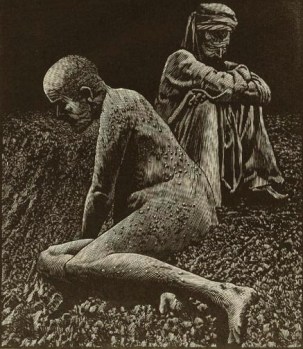
Good Friday, 30 Mar – John 18:1—19:42 ~ obedient to the point of death

Good Friday of the Lord’s Passion

+ In the name of the Father, and the Son, and the Holy Spirit. Amen!

Opening Sentences

Almighty God, we pray you graciously to behold this your family, for whom our Lord Jesus Christ was willing to be betrayed, and given into the hands of sinners, and to suffer death upon the cross. Amen.
__________

Reading: John 18:1—19:42 (NLT)

Jesus Is Betrayed and Arrested

After saying these things, Jesus crossed the Kidron Valley with his disciples and entered a grove of olive trees. Judas, the betrayer, knew this place, because Jesus had often gone there with his disciples. The leading priests and Pharisees had given Judas a contingent of Roman soldiers and Temple guards to accompany him. Now with blazing torches, lanterns, and weapons, they arrived at the olive grove.

Jesus fully realized all that was going to happen to him, so he stepped forward to meet them. “Who are you looking for?” he asked.

“Jesus the Nazarene,” they replied.

“I am he,” Jesus said. (Judas, who betrayed him, was standing with them.) As Jesus said “I am he,” they all drew back and fell to the ground! Once more he asked them, “Who are you looking for?”

And again they replied, “Jesus the Nazarene.”

“I told you that I am he,” Jesus said. “And since I am the one you want, let these others go.” He did this to fulfill his own statement: “I did not lose a single one of those you have given me.”

Then Simon Peter drew a sword and slashed off the right ear of Malchus, the high priest’s slave. But Jesus said to Peter, “Put your sword back into its sheath. Shall I not drink from the cup of suffering the Father has given me?”

Jesus at the High Priest’s House

So the soldiers, their commanding officer, and the Temple guards arrested Jesus and tied him up. First they took him to Annas, since he was the father-in-law of Caiaphas, the high priest at that time. Caiaphas was the one who had told the other Jewish leaders, “It’s better that one man should die for the people.”

Peter’s First Denial

Simon Peter followed Jesus, as did another of the disciples. That other disciple was acquainted with the high priest, so he was allowed to enter the high priest’s courtyard with Jesus. Peter had to stay outside the gate. Then the disciple who knew the high priest spoke to the woman watching at the gate, and she let Peter in. The woman asked Peter, “You’re not one of that man’s disciples, are you?”

“No,” he said, “I am not.”

Because it was cold, the household servants and the guards had made a charcoal fire. They stood around it, warming themselves, and Peter stood with them, warming himself.

The High Priest Questions Jesus

Inside, the high priest began asking Jesus about his followers and what he had been teaching them. Jesus replied, “Everyone knows what I teach. I have preached regularly in the synagogues and the Temple, where the people gather. I have not spoken in secret. Why are you asking me this question? Ask those who heard me. They know what I said.”

Then one of the Temple guards standing nearby slapped Jesus across the face. “Is that the way to answer the high priest?” he demanded.

Jesus replied, “If I said anything wrong, you must prove it. But if I’m speaking the truth, why are you beating me?”

Then Annas bound Jesus and sent him to Caiaphas, the high priest.

Peter’s Second and Third Denials

Meanwhile, as Simon Peter was standing by the fire warming himself, they asked him again, “You’re not one of his disciples, are you?”

He denied it, saying, “No, I am not.”

But one of the household slaves of the high priest, a relative of the man whose ear Peter had cut off, asked, “Didn’t I see you out there in the olive grove with Jesus?” Again Peter denied it. And immediately a rooster crowed.

Jesus’ Trial before Pilate

Jesus’ trial before Caiaphas ended in the early hours of the morning. Then he was taken to the headquarters of the Roman governor. His accusers didn’t go inside because it would defile them, and they wouldn’t be allowed to celebrate the Passover. So Pilate, the governor, went out to them and asked, “What is your charge against this man?”

“We wouldn’t have handed him over to you if he weren’t a criminal!” they retorted.

“Then take him away and judge him by your own law,” Pilate told them.

“Only the Romans are permitted to execute someone,” the Jewish leaders replied. (This fulfilled Jesus’ prediction about the way he would die.

Then Pilate went back into his headquarters and called for Jesus to be brought to him. “Are you the king of the Jews?” he asked him.

Jesus replied, “Is this your own question, or did others tell you about me?”

“Am I a Jew?” Pilate retorted. “Your own people and their leading priests brought you to me for trial. Why? What have you done?”

Jesus answered, “My Kingdom is not an earthly kingdom. If it were, my followers would fight to keep me from being handed over to the Jewish leaders. But my Kingdom is not of this world.”

Pilate said, “So you are a king?”

Jesus responded, “You say I am a king. Actually, I was born and came into the world to testify to the truth. All who love the truth recognize that what I say is true.”

“What is truth?” Pilate asked. Then he went out again to the people and told them, “He is not guilty of any crime. But you have a custom of asking me to release one prisoner each year at Passover. Would you like me to release this ‘King of the Jews’?”

But they shouted back, “No! Not this man. We want Barabbas!” (Barabbas was a revolutionary.)

Jesus Sentenced to Death

Then Pilate had Jesus flogged with a lead-tipped whip. The soldiers wove a crown of thorns and put it on his head, and they put a purple robe on him. “Hail! King of the Jews!” they mocked, as they slapped him across the face.

Pilate went outside again and said to the people, “I am going to bring him out to you now, but understand clearly that I find him not guilty.” Then Jesus came out wearing the crown of thorns and the purple robe. And Pilate said, “Look, here is the man!”

When they saw him, the leading priests and Temple guards began shouting, “Crucify him! Crucify him!”

“Take him yourselves and crucify him,” Pilate said. “I find him not guilty.”

The Jewish leaders replied, “By our law he ought to die because he called himself the Son of God.”

When Pilate heard this, he was more frightened than ever. He took Jesus back into the headquarters again and asked him, “Where are you from?” But Jesus gave no answer. “Why don’t you talk to me?” Pilate demanded. “Don’t you realize that I have the power to release you or crucify you?”

Then Jesus said, “You would have no power over me at all unless it were given to you from above. So the one who handed me over to you has the greater sin.”

Then Pilate tried to release him, but the Jewish leaders shouted, “If you release this man, you are no ‘friend of Caesar.’ Anyone who declares himself a king is a rebel against Caesar.”

When they said this, Pilate brought Jesus out to them again. Then Pilate sat down on the judgment seat on the platform that is called the Stone Pavement (in Hebrew, Gabbatha). It was now about noon on the day of preparation for the Passover. And Pilate said to the people, “Look, here is your king!”

“Away with him,” they yelled. “Away with him! Crucify him!”

“What? Crucify your king?” Pilate asked.

“We have no king but Caesar,” the leading priests shouted back.

Then Pilate turned Jesus over to them to be crucified.

The Crucifixion

So they took Jesus away. Carrying the cross by himself, he went to the place called Place of the Skull (in Hebrew, Golgotha). There they nailed him to the cross. Two others were crucified with him, one on either side, with Jesus between them. And Pilate posted a sign on the cross that read, “Jesus of Nazareth, the King of the Jews.” The place where Jesus was crucified was near the city, and the sign was written in Hebrew, Latin, and Greek, so that many people could read it.

Then the leading priests objected and said to Pilate, “Change it from ‘The King of the Jews’ to ‘He said, I am King of the Jews.’”

Pilate replied, “No, what I have written, I have written.”

When the soldiers had crucified Jesus, they divided his clothes among the four of them. They also took his robe, but it was seamless, woven in one piece from top to bottom. So they said, “Rather than tearing it apart, let’s throw dice for it.” This fulfilled the Scripture that says, “They divided my garments among themselves and threw dice for my clothing.” So that is what they did.

Standing near the cross were Jesus’ mother, and his mother’s sister, Mary (the wife of Clopas), and Mary Magdalene. When Jesus saw his mother standing there beside the disciple he loved, he said to her, “Dear woman, here is your son.” And he said to this disciple, “Here is your mother.” And from then on this disciple took her into his home.

The Death of Jesus

Jesus knew that his mission was now finished, and to fulfill Scripture he said, “I am thirsty.” A jar of sour wine was sitting there, so they soaked a sponge in it, put it on a hyssop branch, and held it up to his lips. When Jesus had tasted it, he said, “It is finished!” Then he bowed his head and gave up his spirit.

It was the day of preparation, and the Jewish leaders didn’t want the bodies hanging there the next day, which was the Sabbath (and a very special Sabbath, because it was Passover week). So they asked Pilate to hasten their deaths by ordering that their legs be broken. Then their bodies could be taken down. So the soldiers came and broke the legs of the two men crucified with Jesus. But when they came to Jesus, they saw that he was already dead, so they didn’t break his legs. One of the soldiers, however, pierced his side with a spear, and immediately blood and water flowed out. (This report is from an eyewitness giving an accurate account. He speaks the truth so that you also may continue to believe. These things happened in fulfillment of the Scriptures that say, “Not one of his bones will be broken,” and “They will look on the one they pierced.”

The Burial of Jesus

Afterward Joseph of Arimathea, who had been a secret disciple of Jesus (because he feared the Jewish leaders), asked Pilate for permission to take down Jesus’ body. When Pilate gave permission, Joseph came and took the body away. With him came Nicodemus, the man who had come to Jesus at night. He brought about seventy-five pounds of perfumed ointment made from myrrh and aloes. Following Jewish burial custom, they wrapped Jesus’ body with the spices in long sheets of linen cloth. The place of crucifixion was near a garden, where there was a new tomb, never used before. And so, because it was the day of preparation for the Jewish Passover and since the tomb was close at hand, they laid Jesus there.
__________

Prayer:

Christ, our Redeemer, you suffered for us, was buried, and rose from the dead – have mercy on us.

+ Lord and master, for us you became obedient even to death; keep us faithful to the Father’s will in the darkness of our lives.
+ Jesus, our life, by dying on the cross you destroyed hell and death; grant that we may die with you and rise with you in glory.
+ Christ, our king, you were the scorn of the people, a worm not a man; teach us to tread your path of humility.
+ Jesus, our Savior, you laid down your life for your friends; let us love one another as you have loved us.
+ Jesus, our hope, you stretched out your hands on the cross to embrace all ages of men; gather all God’s scattered children into the kingdom of salvation.

Be mindful, Lord God, of this your family, for whose sake our Lord Jesus Christ, when betrayed, did not hesitate to yield himself into his enemies’ hands and undergo the agony of the cross. Amen.
__________

The Power Of The Cross – Keith & Kristyn Getty, Stuart Townend


__________

Blessing

Those who belong to Christ Jesus have nailed the passions and desires of their sinful nature to his cross and crucified them there. – Galatians 5:24

+ In the name of the Father, and the Son, and the Holy Spirit. Amen!

Morning Reading: Fri, 30 Mar – Mark 5-6 ~ Jesus healing, sending, feeding, walking

Morning Reading

+ In the name of the Father, and the Son, and the Holy Spirit. Amen!
Opening – (Northumbria Community)

One thing I have asked of the Lord, this is what I seek: that I may dwell in the house of the Lord all the days of my life; to behold the beauty of the Lord and to seek Him in His temple.

Praise to You, Lord Jesus Christ, King of endless glory.

Reading: Mark 5-6 (NLT)

Jesus Heals a Demon-Possessed Man

Mark 5 (NLT)

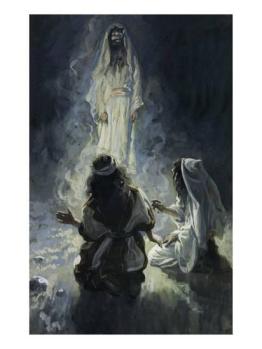
So they arrived at the other side of the lake, in the region of the Gerasenes. When Jesus climbed out of the boat, a man possessed by an evil spirit came out from the tombs to meet him. This man lived in the burial caves and could no longer be restrained, even with a chain. Whenever he was put into chains and shackles—as he often was—he snapped the chains from his wrists and smashed the shackles. No one was strong enough to subdue him. Day and night he wandered among the burial caves and in the hills, howling and cutting himself with sharp stones.

When Jesus was still some distance away, the man saw him, ran to meet him, and bowed low before him. With a shriek, he screamed, “Why are you interfering with me, Jesus, Son of the Most High God? In the name of God, I beg you, don’t torture me!” For Jesus had already said to the spirit, “Come out of the man, you evil spirit.”

Then Jesus demanded, “What is your name?”

And he replied, “My name is Legion, because there are many of us inside this man.” Then the evil spirits begged him again and again not to send them to some distant place.

There happened to be a large herd of pigs feeding on the hillside nearby. “Send us into those pigs,” the spirits begged. “Let us enter them.”

So Jesus gave them permission. The evil spirits came out of the man and entered the pigs, and the entire herd of about 2,000 pigs plunged down the steep hillside into the lake and drowned in the water.

The herdsmen fled to the nearby town and the surrounding countryside, spreading the news as they ran. People rushed out to see what had happened. A crowd soon gathered around Jesus, and they saw the man who had been possessed by the legion of demons. He was sitting there fully clothed and perfectly sane, and they were all afraid. Then those who had seen what happened told the others about the demon-possessed man and the pigs. And the crowd began pleading with Jesus to go away and leave them alone.

As Jesus was getting into the boat, the man who had been demon possessed begged to go with him. But Jesus said, “No, go home to your family, and tell them everything the Lord has done for you and how merciful he has been.” So the man started off to visit the Ten Towns of that region and began to proclaim the great things Jesus had done for him; and everyone was amazed at what he told them.

Jesus Heals in Response to Faith

Jesus got into the boat again and went back to the other side of the lake, where a large crowd gathered around him on the shore. Then a leader of the local synagogue, whose name was Jairus, arrived. When he saw Jesus, he fell at his feet, pleading fervently with him. “My little daughter is dying,” he said. “Please come and lay your hands on her; heal her so she can live.”

Jesus went with him, and all the people followed, crowding around him. A woman in the crowd had suffered for twelve years with constant bleeding. She had suffered a great deal from many doctors, and over the years she had spent everything she had to pay them, but she had gotten no better. In fact, she had gotten worse. She had heard about Jesus, so she came up behind him through the crowd and touched his robe. For she thought to herself, “If I can just touch his robe, I will be healed.” Immediately the bleeding stopped, and she could feel in her body that she had been healed of her terrible condition.

Jesus realized at once that healing power had gone out from him, so he turned around in the crowd and asked, “Who touched my robe?”

His disciples said to him, “Look at this crowd pressing around you. How can you ask, ‘Who touched me?’”

But he kept on looking around to see who had done it. Then the frightened woman, trembling at the realization of what had happened to her, came and fell to her knees in front of him and told him what she had done. And he said to her, “Daughter, your faith has made you well. Go in peace. Your suffering is over.”

While he was still speaking to her, messengers arrived from the home of Jairus, the leader of the synagogue. They told him, “Your daughter is dead. There’s no use troubling the Teacher now.”

But Jesus overheard them and said to Jairus, “Don’t be afraid. Just have faith.”

Then Jesus stopped the crowd and wouldn’t let anyone go with him except Peter, James, and John (the brother of James). When they came to the home of the synagogue leader, Jesus saw much commotion and weeping and wailing. He went inside and asked, “Why all this commotion and weeping? The child isn’t dead; she’s only asleep.”

The crowd laughed at him. But he made them all leave, and he took the girl’s father and mother and his three disciples into the room where the girl was lying. Holding her hand, he said to her, “Talitha koum,” which means “Little girl, get up!” And the girl, who was twelve years old, immediately stood up and walked around! They were overwhelmed and totally amazed. Jesus gave them strict orders not to tell anyone what had happened, and then he told them to give her something to eat.

Jesus Rejected at Nazareth

Mark 6 (NLT)

Jesus left that part of the country and returned with his disciples to Nazareth, his hometown. The next Sabbath he began teaching in the synagogue, and many who heard him were amazed. They asked, “Where did he get all this wisdom and the power to perform such miracles?” Then they scoffed, “He’s just a carpenter, the son of Mary and the brother of James, Joseph, Judas, and Simon. And his sisters live right here among us.” They were deeply offended and refused to believe in him.

Then Jesus told them, “A prophet is honored everywhere except in his own hometown and among his relatives and his own family.” And because of their unbelief, he couldn’t do any miracles among them except to place his hands on a few sick people and heal them. And he was amazed at their unbelief.

Jesus Sends Out the Twelve Disciples

Then Jesus went from village to village, teaching the people. And he called his twelve disciples together and began sending them out two by two, giving them authority to cast out evil spirits. He told them to take nothing for their journey except a walking stick—no food, no traveler’s bag, no money. He allowed them to wear sandals but not to take a change of clothes.

“Wherever you go,” he said, “stay in the same house until you leave town. But if any place refuses to welcome you or listen to you, shake its dust from your feet as you leave to show that you have abandoned those people to their fate.”

So the disciples went out, telling everyone they met to repent of their sins and turn to God. And they cast out many demons and healed many sick people, anointing them with olive oil.

The Death of John the Baptist

Herod Antipas, the king, soon heard about Jesus, because everyone was talking about him. Some were saying, “This must be John the Baptist raised from the dead. That is why he can do such miracles.” Others said, “He’s the prophet Elijah.” Still others said, “He’s a prophet like the other great prophets of the past.”

When Herod heard about Jesus, he said, “John, the man I beheaded, has come back from the dead.”

For Herod had sent soldiers to arrest and imprison John as a favor to Herodias. She had been his brother Philip’s wife, but Herod had married her. John had been telling Herod, “It is against God’s law for you to marry your brother’s wife.” So Herodias bore a grudge against John and wanted to kill him. But without Herod’s approval she was powerless, for Herod respected John; and knowing that he was a good and holy man, he protected him. Herod was greatly disturbed whenever he talked with John, but even so, he liked to listen to him.

Herodias’s chance finally came on Herod’s birthday. He gave a party for his high government officials, army officers, and the leading citizens of Galilee. Then his daughter, also named Herodias, came in and performed a dance that greatly pleased Herod and his guests. “Ask me for anything you like,” the king said to the girl, “and I will give it to you.” He even vowed, “I will give you whatever you ask, up to half my kingdom!”

She went out and asked her mother, “What should I ask for?”

Her mother told her, “Ask for the head of John the Baptist!”

So the girl hurried back to the king and told him, “I want the head of John the Baptist, right now, on a tray!”

Then the king deeply regretted what he had said; but because of the vows he had made in front of his guests, he couldn’t refuse her. So he immediately sent an executioner to the prison to cut off John’s head and bring it to him. The soldier beheaded John in the prison, brought his head on a tray, and gave it to the girl, who took it to her mother. When John’s disciples heard what had happened, they came to get his body and buried it in a tomb.

Jesus Feeds Five Thousand

The apostles returned to Jesus from their ministry tour and told him all they had done and taught. Then Jesus said, “Let’s go off by ourselves to a quiet place and rest awhile.” He said this because there were so many people coming and going that Jesus and his apostles didn’t even have time to eat.

So they left by boat for a quiet place, where they could be alone. But many people recognized them and saw them leaving, and people from many towns ran ahead along the shore and got there ahead of them. Jesus saw the huge crowd as he stepped from the boat, and he had compassion on them because they were like sheep without a shepherd. So he began teaching them many things.

Late in the afternoon his disciples came to him and said, “This is a remote place, and it’s already getting late. Send the crowds away so they can go to the nearby farms and villages and buy something to eat.”

But Jesus said, “You feed them.”

“With what?” they asked. “We’d have to work for months to earn enough money to buy food for all these people!”

“How much bread do you have?” he asked. “Go and find out.”

They came back and reported, “We have five loaves of bread and two fish.”

Then Jesus told the disciples to have the people sit down in groups on the green grass. So they sat down in groups of fifty or a hundred.

Jesus took the five loaves and two fish, looked up toward heaven, and blessed them. Then, breaking the loaves into pieces, he kept giving the bread to the disciples so they could distribute it to the people. He also divided the fish for everyone to share. They all ate as much as they wanted, and afterward, the disciples picked up twelve baskets of leftover bread and fish. A total of 5,000 men and their families were fed.

Jesus Walks on Water

Immediately after this, Jesus insisted that his disciples get back into the boat and head across the lake to Bethsaida, while he sent the people home. After telling everyone good-bye, he went up into the hills by himself to pray.

Late that night, the disciples were in their boat in the middle of the lake, and Jesus was alone on land. He saw that they were in serious trouble, rowing hard and struggling against the wind and waves. About three o’clock in the morning Jesus came toward them, walking on the water. He intended to go past them, but when they saw him walking on the water, they cried out in terror, thinking he was a ghost. They were all terrified when they saw him.

But Jesus spoke to them at once. “Don’t be afraid,” he said. “Take courage! I am here!” Then he climbed into the boat, and the wind stopped. They were totally amazed, for they still didn’t understand the significance of the miracle of the loaves. Their hearts were too hard to take it in.

After they had crossed the lake, they landed at Gennesaret. They brought the boat to shore and climbed out. The people recognized Jesus at once, and they ran throughout the whole area, carrying sick people on mats to wherever they heard he was. Wherever he went—in villages, cities, or the countryside—they brought the sick out to the marketplaces. They begged him to let the sick touch at least the fringe of his robe, and all who touched him were healed.
__________

“When You Walk Into the Room” – Bryan & Katie Torwalt


__________

Blessing – (Northumbrian Community)

May the peace of the Lord Christ go with you, wherever He may send you. May He guide you through the wilderness, protect you through the storm. May He bring you home rejoicing at the wonders He has shown you. May He bring you home rejoicing once again into our doors.
__________

+ In the name of the Father, and the Son, and the Holy Spirit. Amen!