Morning Reading: Thu, 05 Apr – Jeremiah 12-16 ~ God forsaken and abandoned

Morning Reading

+ In the name of the Father, and the Son, and the Holy Spirit. Amen!

Opening – (Northumbria Community)

One thing I have asked of the Lord, this is what I seek: that I may dwell in the house of the Lord all the days of my life; to behold the beauty of the Lord and to seek Him in His temple.

Praise to You, Lord Jesus Christ, King of endless glory.

Reading: Jeremiah 12-16 (NLT)

Jeremiah Questions the Lord’s Justice

Jeremiah 12 (NLT)

Lord, you always give me justice when I bring a case before you. So let me bring you this complaint: Why are the wicked so prosperous? Why are evil people so happy? You have planted them, and they have taken root and prospered. Your name is on their lips, but you are far from their hearts.

But as for me, Lord, you know my heart. You see me and test my thoughts. Drag these people away like sheep to be butchered! Set them aside to be slaughtered! How long must this land mourn? Even the grass in the fields has withered. The wild animals and birds have disappeared because of the evil in the land. For the people have said, “The Lord doesn’t see what’s ahead for us!”

The Lord’s Reply to Jeremiah

“If racing against mere men makes you tired, how will you race against horses? If you stumble and fall on open ground, what will you do in the thickets near the Jordan? Even your brothers, members of your own family, have turned against you. They plot and raise complaints against you. Do not trust them, no matter how pleasantly they speak.
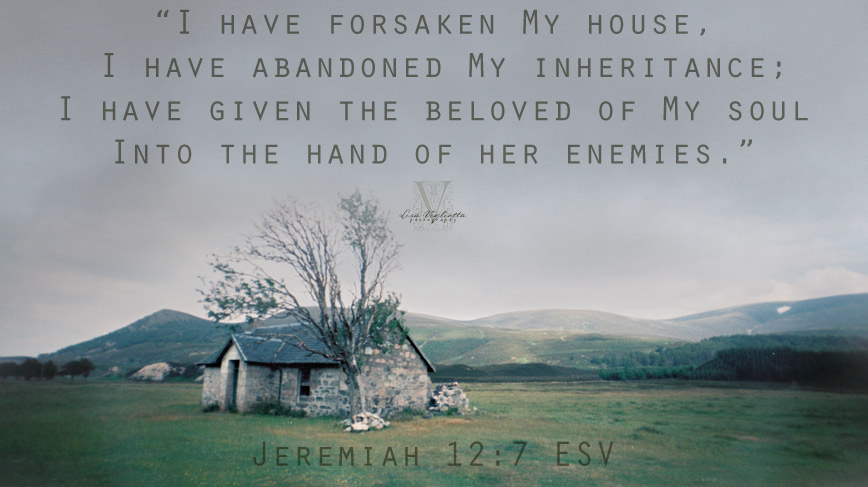
“I have abandoned my people, my special possession. I have surrendered my dearest ones to their enemies. My chosen people have roared at me like a lion of the forest, so I have treated them with contempt. My chosen people act like speckled vultures, but they themselves are surrounded by vultures. Bring on the wild animals to pick their corpses clean!

“Many rulers have ravaged my vineyard, trampling down the vines and turning all its beauty into a barren wilderness. They have made it an empty wasteland; I hear its mournful cry. The whole land is desolate, and no one even cares. On all the bare hilltops, destroying armies can be seen. The sword of the Lord devours people from one end of the nation to the other. No one will escape! My people have planted wheat but are harvesting thorns. They have worn themselves out, but it has done them no good. They will harvest a crop of shame because of the fierce anger of the Lord.”

A Message for Israel’s Neighbors

Now this is what the Lord says: “I will uproot from their land all the evil nations reaching out for the possession I gave my people Israel. And I will uproot Judah from among them. But afterward I will return and have compassion on all of them. I will bring them home to their own lands again, each nation to its own possession. And if these nations truly learn the ways of my people, and if they learn to swear by my name, saying, ‘As surely as the Lord lives’ (just as they taught my people to swear by the name of Baal), then they will be given a place among my people. But any nation who refuses to obey me will be uprooted and destroyed. I, the Lord, have spoken!”

Jeremiah’s Linen Loincloth

Jeremiah 13 (NLT)

This is what the Lord said to me: “Go and buy a linen loincloth and put it on, but do not wash it.” So I bought the loincloth as the Lord directed me, and I put it on.

Then the Lord gave me another message: “Take the linen loincloth you are wearing, and go to the Euphrates River. Hide it there in a hole in the rocks.” So I went and hid it by the Euphrates as the Lord had instructed me.

A long time afterward the Lord said to me, “Go back to the Euphrates and get the loincloth I told you to hide there.” So I went to the Euphrates and dug it out of the hole where I had hidden it. But now it was rotting and falling apart. The loincloth was good for nothing.

Then I received this message from the Lord: “This is what the Lord says: This shows how I will rot away the pride of Judah and Jerusalem. These wicked people refuse to listen to me. They stubbornly follow their own desires and worship other gods. Therefore, they will become like this loincloth—good for nothing! As a loincloth clings to a man’s waist, so I created Judah and Israel to cling to me, says the Lord. They were to be my people, my pride, my glory—an honor to my name. But they would not listen to me.

“So tell them, ‘This is what the Lord, the God of Israel, says: May all your jars be filled with wine.’ And they will reply, ‘Of course! Jars are made to be filled with wine!’

“Then tell them, ‘No, this is what the Lord means: I will fill everyone in this land with drunkenness—from the king sitting on David’s throne to the priests and the prophets, right down to the common people of Jerusalem. I will smash them against each other, even parents against children, says the Lord. I will not let my pity or mercy or compassion keep me from destroying them.’”

A Warning against Pride

Listen and pay attention! Do not be arrogant, for the Lord has spoken. Give glory to the Lord your God before it is too late. Acknowledge him before he brings darkness upon you, causing you to stumble and fall on the darkening  mountains. For then, when you look for light, you will find only terrible darkness and gloom.

And if you still refuse to listen, I will weep alone because of your pride. My eyes will overflow with tears, because the Lord’s flock will be led away into exile.

Say to the king and his mother, “Come down from your thrones and sit in the dust, for your glorious crowns will soon be snatched from your heads.” The towns of the Negev will close their gates, and no one will be able to open them. The people of Judah will be taken away as captives. All will be carried into exile. Open up your eyes and see the armies marching down from the north! Where is your flock—your beautiful flock—that he gave you to care for?

What will you say when the Lord takes the allies you have cultivated and appoints them as your rulers? Pangs of anguish will grip you, like those of a woman in labor! You may ask yourself, “Why is all this happening to me?” It is because of your many sins! That is why you have been stripped and raped by invading armies. Can an Ethiopian change the color of his skin? Can a leopard take away its spots? Neither can you start doing good, for you have always done evil.

“I will scatter you like chaff that is blown away by the desert winds. This is your allotment, the portion I have assigned to you,” says the Lord, “for you have forgotten me, putting your trust in false gods. I myself will strip you and expose you to shame. I have seen your adultery and lust, and your disgusting idol worship out in the fields and on the hills. What sorrow awaits you, Jerusalem! How long before you are pure?”

Judah’s Terrible Drought

Jeremiah 14 (NLT)

This message came to Jeremiah from the Lord, explaining why he was holding back the rain:

“Judah wilts; commerce at the city gates grinds to a halt. All the people sit on the ground in mourning, and a great cry rises from Jerusalem. The nobles send servants to get water, but all the wells are dry. The servants return with empty pitchers, confused and desperate, covering their heads in grief. The ground is parched and cracked for lack of rain. The farmers are deeply troubled; they, too, cover their heads. Even the doe abandons her newborn fawn because there is no grass in the field. The wild donkeys stand on the bare hills panting like thirsty jackals. They strain their eyes looking for grass, but there is none to be found.”

The people say, “Our wickedness has caught up with us, Lord, but help us for the sake of your own reputation. We have turned away from you and sinned against you again and again. O Hope of Israel, our Savior in times of trouble, why are you like a stranger to us? Why are you like a traveler passing through the land, stopping only for the night? Are you also confused? Is our champion helpless to save us? You are right here among us, Lord. We are known as your people. Please don’t abandon us now!”

So this is what the Lord says to his people: “You love to wander far from me and do not restrain yourselves. Therefore, I will no longer accept you as my people. Now I will remember all your wickedness and will punish you for your sins.”

The Lord Forbids Jeremiah to Intercede

Then the Lord said to me, “Do not pray for these people anymore. When they fast, I will pay no attention. When they present their burnt offerings and grain offerings to me, I will not accept them. Instead, I will devour them with war, famine, and disease.”

Then I said, “O Sovereign Lord, their prophets are telling them, ‘All is well—no war or famine will come. The Lord will surely send you peace.’”

Then the Lord said, “These prophets are telling lies in my name. I did not send them or tell them to speak. I did not give them any messages. They prophesy of visions and revelations they have never seen or heard. They speak foolishness made up in their own lying hearts. Therefore, this is what the Lord says: I will punish these lying prophets, for they have spoken in my name even though I never sent them. They say that no war or famine will come, but they themselves will die by war and famine! As for the people to whom they prophesy—their bodies will be thrown out into the streets of Jerusalem, victims of famine and war. There will be no one left to bury them. Husbands, wives, sons, and daughters—all will be gone. For I will pour out their own wickedness on them.
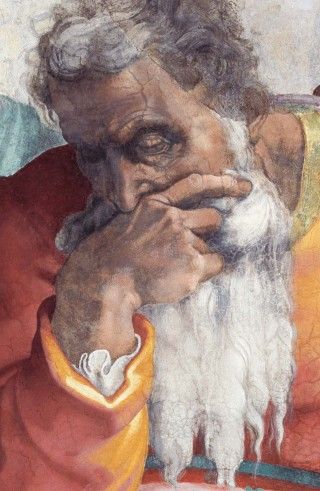
Now, Jeremiah, say this to them: “Night and day my eyes overflow with tears. I cannot stop weeping, for my virgin daughter—my precious people—has been struck down and lies mortally wounded. If I go out into the fields, I see the bodies of people slaughtered by the enemy. If I walk the city streets, I see people who have died of starvation. The prophets and priests continue with their work, but they don’t know what they’re doing.”

A Prayer for Healing

Lord, have you completely rejected Judah? Do you really hate Jerusalem? Why have you wounded us past all hope of healing? We hoped for peace, but no peace came. We hoped for a time of healing, but found only terror.

Lord, we confess our wickedness and that of our ancestors, too. We all have sinned against you. For the sake of your reputation, Lord, do not abandon us. Do not disgrace your own glorious throne. Please remember us, and do not break your covenant with us.

Can any of the worthless foreign gods send us rain? Does it fall from the sky by itself? No, you are the one, O Lord our God! Only you can do such things. So we will wait for you to help us.

Judah’s Inevitable Doom

Jeremiah 15 (NLT)

Then the Lord said to me, “Even if Moses and Samuel stood before me pleading for these people, I wouldn’t help them. Away with them! Get them out of my sight! And if they say to you, ‘But where can we go?’ tell them, ‘This is what the Lord says:

“‘Those who are destined for death, to death; those who are destined for war, to war; those who are destined for famine, to famine; those who are destined for captivity, to captivity.’

“I will send four kinds of destroyers against them,” says the Lord. “I will send the sword to kill, the dogs to drag away, the vultures to devour, and the wild animals to finish up what is left. Because of the wicked things Manasseh son of Hezekiah, king of Judah, did in Jerusalem, I will make my people an object of horror to all the kingdoms of the earth.

“Who will feel sorry for you, Jerusalem? Who will weep for you? Who will even bother to ask how you are? You have abandoned me and turned your back on me,” says the Lord. “Therefore, I will raise my fist to destroy you. I am tired of always giving you another chance. I will winnow you like grain at the gates of your cities and take away the children you hold dear. I will destroy my own people, because they refuse to change their evil ways. There will be more widows than the grains of sand on the seashore. At noontime I will bring a destroyer against the mothers of young men. I will cause anguish and terror to come upon them suddenly. The mother of seven grows faint and gasps for breath; her sun has gone down while it is still day. She sits childless now, disgraced and humiliated. And I will hand over those who are left to be killed by the enemy. I, the Lord, have spoken!”

Jeremiah’s Complaint

Then I said, “What sorrow is mine, my mother. Oh, that I had died at birth! I am hated everywhere I go. I am neither a lender who threatens to foreclose nor a borrower who refuses to pay—yet they all curse me.”

The Lord replied, “I will take care of you, Jeremiah. Your enemies will ask you to plead on their behalf in times of trouble and distress. Can a man break a bar of iron from the north, or a bar of bronze? At no cost to them, I will hand over your wealth and treasures as plunder to your enemies, for sin runs rampant in your land. I will tell your enemies to take you as captives to a foreign land. For my anger blazes like a fire that will burn forever.”

Then I said, “Lord, you know what’s happening to me. Please step in and help me. Punish my persecutors! Please give me time; don’t let me die young. It’s for your sake that I am suffering. When I discovered your words, I devoured them. They are my joy and my heart’s delight, for I bear your name, O Lord God of Heaven’s Armies. I never joined the people in their merry feasts. I sat alone because your hand was on me. I was filled with indignation at their sins. Why then does my suffering continue? Why is my wound so incurable? Your help seems as uncertain as a seasonal brook, like a spring that has gone dry.”

This is how the Lord responds: “If you return to me, I will restore you so you can continue to serve me. If you speak good words rather than worthless ones, you will be my spokesman. You must influence them; do not let them influence you! They will fight against you like an attacking army, but I will make you as secure as a fortified wall of bronze. They will not conquer you, for I am with you to protect and rescue you. I, the Lord, have spoken! Yes, I will certainly keep you safe from these wicked men. I will rescue you from their cruel hands.”

Jeremiah Forbidden to Marry

Jeremiah 16 (NLT)

The Lord gave me another message. He said, “Do not get married or have children in this place. For this is what the Lord says about the children born here in this city and about their mothers and fathers: They will die from terrible diseases. No one will mourn for them or bury them, and they will lie scattered on the ground like manure. They will die from war and famine, and their bodies will be food for the vultures and wild animals.”

Judah’s Coming Punishment

This is what the Lord says: “Do not go to funerals to mourn and show sympathy for these people, for I have removed my protection and peace from them. I have taken away my unfailing love and my mercy. Both the great and the lowly will die in this land. No one will bury them or mourn for them. Their friends will not cut themselves in sorrow or shave their heads in sadness. No one will offer a meal to comfort those who mourn for the dead—not even at the death of a mother or father. No one will send a cup of wine to console them.

“And do not go to their feasts and parties. Do not eat and drink with them at all. For this is what the Lord of Heaven’s Armies, the God of Israel, says: In your own lifetime, before your very eyes, I will put an end to the happy singing and laughter in this land. The joyful voices of bridegrooms and brides will no longer be heard.

“When you tell the people all these things, they will ask, ‘Why has the Lord decreed such terrible things against us? What have we done to deserve such treatment? What is our sin against the Lord our God?’

“Then you will give them the Lord’s reply: ‘It is because your ancestors were unfaithful to me. They worshiped other gods and served them. They abandoned me and did not obey my word. And you are even worse than your ancestors! You stubbornly follow your own evil desires and refuse to listen to me. So I will throw you out of this land and send you into a foreign land where you and your ancestors have never been. There you can worship idols day and night—and I will grant you no favors!’

Hope despite the Disaster

“But the time is coming,” says the Lord, “when people who are taking an oath will no longer say, ‘As surely as the Lord lives, who rescued the people of Israel from the land of Egypt.’ Instead, they will say, ‘As surely as the Lord lives, who brought the people of Israel back to their own land from the land of the north and from all the countries to which he had exiled them.’ For I will bring them back to this land that I gave their ancestors.

“But now I am sending for many fishermen who will catch them,” says the Lord. “I am sending for hunters who will hunt them down in the mountains, hills, and caves. I am watching them closely, and I see every sin. They cannot hope to hide from me. I will double their punishment for all their sins, because they have defiled my land with lifeless images of their detestable gods and have filled my territory with their evil deeds.”

Jeremiah’s Prayer of Confidence

Lord, you are my strength and fortress, my refuge in the day of trouble! Nations from around the world will come to you and say, “Our ancestors left us a foolish heritage, for they worshiped worthless idols. Can people make their own gods? These are not real gods at all!”

The Lord says, “Now I will show them my power; now I will show them my might. At last they will know and understand that I am the Lord.
__________

“Return To Me” – Steve Pettit Evangelistic Team


__________

Blessing – (Northumbrian Community)

May the peace of the Lord Christ go with you, wherever He may send you. May He guide you through the wilderness, protect you through the storm. May He bring you home rejoicing at the wonders He has shown you. May He bring you home rejoicing once again into our doors.
__________

+ In the name of the Father, and the Son, and the Holy Spirit. Amen!

Morning Reading: Wed, 04 Apr – Job 29-30 ~ Job’s blessing and anguish

Morning Reading

+ In the name of the Father, and the Son, and the Holy Spirit. Amen!

Opening – (Northumbria Community)

One thing I have asked of the Lord, this is what I seek: that I may dwell in the house of the Lord all the days of my life; to behold the beauty of the Lord and to seek Him in His temple.

Praise to You, Lord Jesus Christ, King of endless glory.

Reading: Job 29-30 (NLT)

Job Speaks of His Former Blessings

Job 29 (NLT)

Job continued speaking:

+ I was a friend of God – “I long for the years gone by when God took care of me, when he lit up the way before me and I walked safely through the darkness. When I was in my prime, God’s friendship was felt in my home. The Almighty was still with me, and my children were around me. My steps were awash in cream, and the rocks gushed olive oil for me.

+ I was respected – “Those were the days when I went to the city gate and took my place among the honored leaders. The young stepped aside when they saw me, and even the aged rose in respect at my coming. The princes stood in silence and put their hands over their mouths. The highest officials of the city stood quietly, holding their tongues in respect.

+ I was righteous and just – “All who heard me praised me. All who saw me spoke well of me. For I assisted the poor in their need and the orphans who required help. I helped those without hope, and they blessed me. And I caused the widows’ hearts to sing for joy. Everything I did was honest. Righteousness covered me like a robe, and I wore justice like a turban. I served as eyes for the blind and feet for the lame. I was a father to the poor and assisted strangers who needed help. I broke the jaws of godless oppressors and plucked their victims from their teeth.

+ I was strong and secure – “I thought, ‘Surely I will die surrounded by my family after a long, good life. For I am like a tree whose roots reach the water, whose branches are refreshed with the dew. New honors are constantly bestowed on me, and my strength is continually renewed.’

+ I lived like a king – “Everyone listened to my advice. They were silent as they waited for me to speak. And after I spoke, they had nothing to add, for my counsel satisfied them. They longed for me to speak as people long for rain. They drank my words like a refreshing spring rain. When they were discouraged, I smiled at them. My look of approval was precious to them. Like a chief, I told them what to do. I lived like a king among his troops and comforted those who mourned.

Job Speaks of His Anguish

Job 30 (NLT)

+ Now I am mocked by nameless fools – “But now I am mocked by people younger than I, by young men whose fathers are not worthy to run with my sheepdogs. A lot of good they are to me—those worn-out wretches! They are gaunt from poverty and hunger. They claw the dry ground in desolate wastelands. They pluck wild greens from among the bushes and eat from the roots of broom trees. They are driven from human society, and people shout at them as if they were thieves. So now they live in frightening ravines, in caves and among the rocks. They sound like animals howling among the bushes, huddled together beneath the nettles. They are nameless fools, outcasts from society.

+ Now I am despised and terrified – “And now they mock me with vulgar songs! They taunt me! They despise me and won’t come near me, except to spit in my face. For God has cut my bowstring. He has humbled me, so they have thrown off all restraint. These outcasts oppose me to my face. They send me sprawling and lay traps in my path. They block my road and do everything they can to destroy me. They know I have no one to help me. They come at me from all directions. They jump on me when I am down. I live in terror now. My honor has blown away in the wind, and my prosperity has vanished like a cloud.

+ Now I am depressed and in pain – “And now my life seeps away. Depression haunts my days. At night my bones are filled with pain, which gnaws at me relentlessly. With a strong hand, God grabs my shirt. He grips me by the collar of my coat. He has thrown me into the mud. I’m nothing more than dust and ashes.

+ Now God ignores me – “I cry to you, O God, but you don’t answer. I stand before you, but you don’t even look. You have become cruel toward me. You use your power to persecute me. You throw me into the whirlwind and destroy me in the storm. And I know you are sending me to my death—the destination of all who live.

+ Now I an troubled and tormented – “Surely no one would turn against the needy when they cry for help in their trouble. Did I not weep for those in trouble? Was I not deeply grieved for the needy? So I looked for good, but evil came instead. I waited for the light, but darkness fell. My heart is troubled and restless. Days of suffering torment me. I walk in gloom, without sunlight. I stand in the public square and cry for help. Instead, I am considered a brother to jackals and a companion to owls. My skin has turned dark, and my bones burn with fever. My harp plays sad music, and my flute accompanies those who weep.
__________

“Restore Me” – Kutless


__________

Blessing – (Northumbrian Community)

May the peace of the Lord Christ go with you, wherever He may send you. May He guide you through the wilderness, protect you through the storm. May He bring you home rejoicing at the wonders He has shown you. May He bring you home rejoicing once again into our doors.
__________

+ In the name of the Father, and the Son, and the Holy Spirit. Amen!

Morning Reading: Tue, 03 Apr – 1 Samuel 16-20 ~ Saul’s descent / David’s ascent

Morning Reading

+ In the name of the Father, and the Son, and the Holy Spirit. Amen!

Opening – (Northumbria Community)

One thing I have asked of the Lord, this is what I seek: that I may dwell in the house of the Lord all the days of my life; to behold the beauty of the Lord and to seek Him in His temple.

Praise to You, Lord Jesus Christ, King of endless glory.

Reading: 1 Samuel 16-20 (NLT)

Samuel Anoints David as King

1 Samuel 16 (NLT)

Now the Lord said to Samuel, “You have mourned long enough for Saul. I have rejected him as king of Israel, so fill your flask with olive oil and go to Bethlehem. Find a man named Jesse who lives there, for I have selected one of his sons to be my king.”

But Samuel asked, “How can I do that? If Saul hears about it, he will kill me.”

“Take a heifer with you,” the Lord replied, “and say that you have come to make a sacrifice to the Lord. Invite Jesse to the sacrifice, and I will show you which of his sons to anoint for me.”

So Samuel did as the Lord instructed. When he arrived at Bethlehem, the elders of the town came trembling to meet him. “What’s wrong?” they asked. “Do you come in peace?”

“Yes,” Samuel replied. “I have come to sacrifice to the Lord. Purify yourselves and come with me to the sacrifice.” Then Samuel performed the purification rite for Jesse and his sons and invited them to the sacrifice, too.

When they arrived, Samuel took one look at Eliab and thought, “Surely this is the Lord’s anointed!”

+ The Lord looks at the heart – But the Lord said to Samuel, “Don’t judge by his appearance or height, for I have rejected him. The Lord doesn’t see things the way you see them. People judge by outward appearance, but the Lord looks at the heart.”

Then Jesse told his son Abinadab to step forward and walk in front of Samuel. But Samuel said, “This is not the one the Lord has chosen.” Next Jesse summoned Shimea, but Samuel said, “Neither is this the one the Lord has chosen.” In the same way all seven of Jesse’s sons were presented to Samuel. But Samuel said to Jesse, “The Lord has not chosen any of these.” Then Samuel asked, “Are these all the sons you have?”

“There is still the youngest,” Jesse replied. “But he’s out in the fields watching the sheep and goats.”

“Send for him at once,” Samuel said. “We will not sit down to eat until he arrives.”

So Jesse sent for him. He was dark and handsome, with beautiful eyes.

And the Lord said, “This is the one; anoint him.”

+ David was filled with Spirit – So as David stood there among his brothers, Samuel took the flask of olive oil he had brought and anointed David with the oil. And the Spirit of the Lord came powerfully upon David from that day on. Then Samuel returned to Ramah.

David Serves in Saul’s Court

+ The Spirit had left Samuel – Now the Spirit of the Lord had left Saul, and the Lord sent a tormenting spirit that filled him with depression and fear.

Some of Saul’s servants said to him, “A tormenting spirit from God is troubling you. Let us find a good musician to play the harp whenever the tormenting spirit troubles you. He will play soothing music, and you will soon be well again.”

“All right,” Saul said. “Find me someone who plays well, and bring him here.”

One of the servants said to Saul, “One of Jesse’s sons from Bethlehem is a talented harp player. Not only that—he is a brave warrior, a man of war, and has good judgment. He is also a fine-looking young man, and the Lord is with him.”

So Saul sent messengers to Jesse to say, “Send me your son David, the shepherd.” Jesse responded by sending David to Saul, along with a young goat, a donkey loaded with bread, and a wineskin full of wine.

So David went to Saul and began serving him. Saul loved David very much, and David became his armor bearer.

Then Saul sent word to Jesse asking, “Please let David remain in my service, for I am very pleased with him.”

+ Saul filled with tormenting spirit – And whenever the tormenting spirit from God troubled Saul, David would play the harp. Then Saul would feel better, and the tormenting spirit would go away.

Goliath Challenges the Israelites

1 Samuel 17 (NLT)

The Philistines now mustered their army for battle and camped between Socoh in Judah and Azekah at Ephes-dammim. Saul countered by gathering his Israelite troops near the valley of Elah. So the Philistines and Israelites faced each other on opposite hills, with the valley between them.

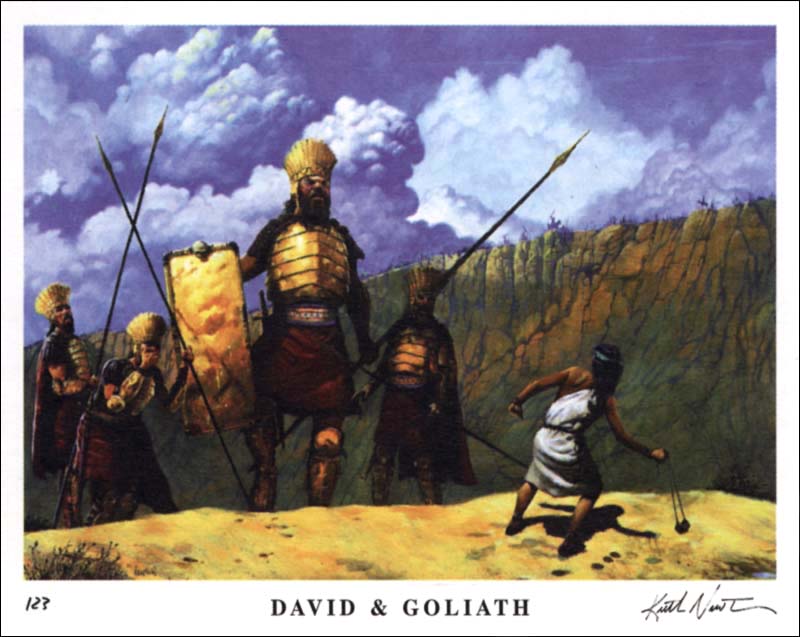
Then Goliath, a Philistine champion from Gath, came out of the Philistine ranks to face the forces of Israel. He was over nine feet tall! He wore a bronze helmet, and his bronze coat of mail weighed 125 pounds. He also wore bronze leg armor, and he carried a bronze javelin on his shoulder. The shaft of his spear was as heavy and thick as a weaver’s beam, tipped with an iron spearhead that weighed 15 pounds. His armor bearer walked ahead of him carrying a shield.

Goliath stood and shouted a taunt across to the Israelites. “Why are you all coming out to fight?” he called. “I am the Philistine champion, but you are only the servants of Saul. Choose one man to come down here and fight me! If he kills me, then we will be your slaves. But if I kill him, you will be our slaves! I defy the armies of Israel today! Send me a man who will fight me!” When Saul and the Israelites heard this, they were terrified and deeply shaken.

Jesse Sends David to Saul’s Camp

Now David was the son of a man named Jesse, an Ephrathite from Bethlehem in the land of Judah. Jesse was an old man at that time, and he had eight sons. Jesse’s three oldest sons—Eliab, Abinadab, and Shimea—had already joined Saul’s army to fight the Philistines. David was the youngest son. David’s three oldest brothers stayed with Saul’s army, but David went back and forth so he could help his father with the sheep in Bethlehem.

For forty days, every morning and evening, the Philistine champion strutted in front of the Israelite army.

One day Jesse said to David, “Take this basket of roasted grain and these ten loaves of bread, and carry them quickly to your brothers. And give these ten cuts of cheese to their captain. See how your brothers are getting along, and bring back a report on how they are doing.” David’s brothers were with Saul and the Israelite army at the valley of Elah, fighting against the Philistines.

So David left the sheep with another shepherd and set out early the next morning with the gifts, as Jesse had directed him. He arrived at the camp just as the Israelite army was leaving for the battlefield with shouts and battle cries. Soon the Israelite and Philistine forces stood facing each other, army against army. David left his things with the keeper of supplies and hurried out to the ranks to greet his brothers. As he was talking with them, Goliath, the Philistine champion from Gath, came out from the Philistine ranks. Then David heard him shout his usual taunt to the army of Israel.

As soon as the Israelite army saw him, they began to run away in fright. “Have you seen the giant?” the men asked. “He comes out each day to defy Israel. The king has offered a huge reward to anyone who kills him. He will give that man one of his daughters for a wife, and the man’s entire family will be exempted from paying taxes!”

David asked the soldiers standing nearby, “What will a man get for killing this Philistine and ending his defiance of Israel? Who is this pagan Philistine anyway, that he is allowed to defy the armies of the living God?”

And these men gave David the same reply. They said, “Yes, that is the reward for killing him.”

But when David’s oldest brother, Eliab, heard David talking to the men, he was angry. “What are you doing around here anyway?” he demanded. “What about those few sheep you’re supposed to be taking care of? I know about your pride and deceit. You just want to see the battle!”

“What have I done now?” David replied. “I was only asking a question!” He walked over to some others and asked them the same thing and received the same answer. Then David’s question was reported to King Saul, and the king sent for him.

David Kills Goliath

“Don’t worry about this Philistine,” David told Saul. “I’ll go fight him!”

“Don’t be ridiculous!” Saul replied. “There’s no way you can fight this Philistine and possibly win! You’re only a boy, and he’s been a man of war since his youth.”

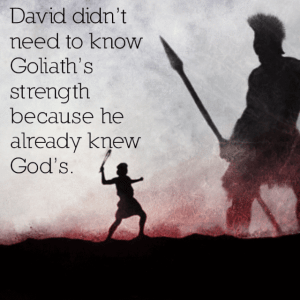
But David persisted. “I have been taking care of my father’s sheep and goats,” he said. “When a lion or a bear comes to steal a lamb from the flock, I go after it with a club and rescue the lamb from its mouth. If the animal turns on me, I catch it by the jaw and club it to death. I have done this to both lions and bears, and I’ll do it to this pagan Philistine, too, for he has defied the armies of the living God! The Lord who rescued me from the claws of the lion and the bear will rescue me from this Philistine!”

Saul finally consented. “All right, go ahead,” he said. “And may the Lord be with you!”

Then Saul gave David his own armor—a bronze helmet and a coat of mail. David put it on, strapped the sword over it, and took a step or two to see what it was like, for he had never worn such things before.

“I can’t go in these,” he protested to Saul. “I’m not used to them.” So David took them off again. He picked up five smooth stones from a stream and put them into his shepherd’s bag. Then, armed only with his shepherd’s staff and sling, he started across the valley to fight the Philistine.

Goliath walked out toward David with his shield bearer ahead of him, sneering in contempt at this ruddy-faced boy. “Am I a dog,” he roared at David, “that you come at me with a stick?” And he cursed David by the names of his gods. “Come over here, and I’ll give your flesh to the birds and wild animals!” Goliath yelled.

+ God rescues His people – David replied to the Philistine, “You come to me with sword, spear, and javelin, but I come to you in the name of the Lord of Heaven’s Armies—the God of the armies of Israel, whom you have defied. Today the Lord will conquer you, and I will kill you and cut off your head. And then I will give the dead bodies of your men to the birds and wild animals, and the whole world will know that there is a God in Israel! And everyone assembled here will know that the Lord rescues his people, but not with sword and spear. This is the Lord’s battle, and he will give you to us!”

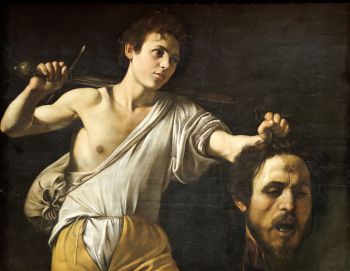
As Goliath moved closer to attack, David quickly ran out to meet him. Reaching into his shepherd’s bag and taking out a stone, he hurled it with his sling and hit the Philistine in the forehead. The stone sank in, and Goliath stumbled and fell face down on the ground.

So David triumphed over the Philistine with only a sling and a stone, for he had no sword. Then David ran over and pulled Goliath’s sword from its sheath. David used it to kill him and cut off his head.

Israel Routs the Philistines

When the Philistines saw that their champion was dead, they turned and ran. Then the men of Israel and Judah gave a great shout of triumph and rushed after the Philistines, chasing them as far as Gath and the gates of Ekron. The bodies of the dead and wounded Philistines were strewn all along the road from Shaaraim, as far as Gath and Ekron. Then the Israelite army returned and plundered the deserted Philistine camp. (David took the Philistine’s head to Jerusalem, but he stored the man’s armor in his own tent.)

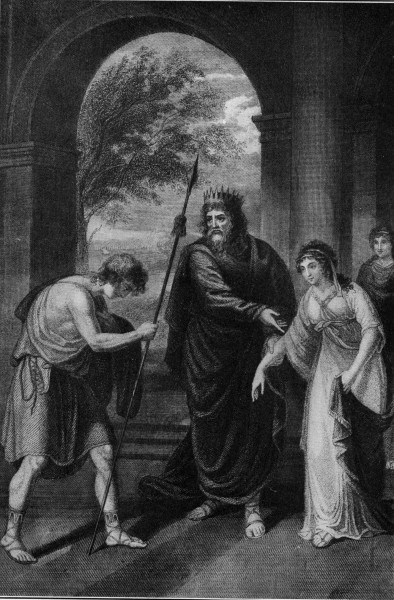
As Saul watched David go out to fight the Philistine, he asked Abner, the commander of his army, “Abner, whose son is this young man?”

“I really don’t know,” Abner declared.

“Well, find out who he is!” the king told him.

As soon as David returned from killing Goliath, Abner brought him to Saul with the Philistine’s head still in his hand. “Tell me about your father, young man,” Saul said.

And David replied, “His name is Jesse, and we live in Bethlehem.”

Saul Becomes Jealous of David

1 Samuel 18 (NLT)

+ Jonathan makes pact with David – After David had finished talking with Saul, he met Jonathan, the king’s son. There was an immediate bond between them, for Jonathan loved David. From that day on Saul kept David with him and wouldn’t let him return home. And Jonathan made a solemn pact with David, because he loved him as he loved himself. Jonathan sealed the pact by taking off his robe and giving it to David, together with his tunic, sword, bow, and belt.

Whatever Saul asked David to do, David did it successfully. So Saul made him a commander over the men of war, an appointment that was welcomed by the people and Saul’s officers alike.

When the victorious Israelite army was returning home after David had killed the Philistine, women from all the towns of Israel came out to meet King Saul. They sang and danced for joy with tambourines and cymbals. This was their song:

“Saul has killed his thousands,and David his ten thousands!”

This made Saul very angry. “What’s this?” he said. “They credit David with ten thousands and me with only thousands. Next they’ll be making him their king!” So from that time on Saul kept a jealous eye on David.

The very next day a tormenting spirit from God overwhelmed Saul, and he began to rave in his house like a madman. David was playing the harp, as he did each day. But Saul had a spear in his hand, and he suddenly hurled it at David, intending to pin him to the wall. But David escaped him twice.

Saul was then afraid of David, for the Lord was with David and had turned away from Saul. Finally, Saul sent him away and appointed him commander over 1,000 men, and David faithfully led his troops into battle.

David continued to succeed in everything he did, for the Lord was with him. When Saul recognized this, he became even more afraid of him. But all Israel and Judah loved David because he was so successful at leading his troops into battle.

David Marries Saul’s Daughter

One day Saul said to David, “I am ready to give you my older daughter, Merab, as your wife. But first you must prove yourself to be a real warrior by fighting the Lord’s battles.” For Saul thought, “I’ll send him out against the Philistines and let them kill him rather than doing it myself.”

“Who am I, and what is my family in Israel that I should be the king’s son-in-law?” David exclaimed. “My father’s family is nothing!” So when the time came for Saul to give his daughter Merab in marriage to David, he gave her instead to Adriel, a man from Meholah.

In the meantime, Saul’s daughter Michal had fallen in love with David, and Saul was delighted when he heard about it. “Here’s another chance to see him killed by the Philistines!” Saul said to himself. But to David he said, “Today you have a second chance to become my son-in-law!”

Then Saul told his men to say to David, “The king really likes you, and so do we. Why don’t you accept the king’s offer and become his son-in-law?”

When Saul’s men said these things to David, he replied, “How can a poor man from a humble family afford the bride price for the daughter of a king?”

When Saul’s men reported this back to the king, he told them, “Tell David that all I want for the bride price is 100 Philistine foreskins! Vengeance on my enemies is all I really want.” But what Saul had in mind was that David would be killed in the fight.

David was delighted to accept the offer. Before the time limit expired, he and his men went out and killed 200 Philistines. Then David fulfilled the king’s requirement by presenting all their foreskins to him. So Saul gave his daughter Michal to David to be his wife.

When Saul realized that the Lord was with David and how much his daughter Michal loved him, Saul became even more afraid of him, and he remained David’s enemy for the rest of his life.

Every time the commanders of the Philistines attacked, David was more successful against them than all the rest of Saul’s officers. So David’s name became very famous.

Saul Tries to Kill David

1 Samuel 19 (NLT)

Saul now urged his servants and his son Jonathan to assassinate David. But Jonathan, because of his strong affection for David, told him what his father was planning. “Tomorrow morning,” he warned him, “you must find a hiding place out in the fields. I’ll ask my father to go out there with me, and I’ll talk to him about you. Then I’ll tell you everything I can find out.”

The next morning Jonathan spoke with his father about David, saying many good things about him. “The king must not sin against his servant David,” Jonathan said. “He’s never done anything to harm you. He has always helped you in any way he could. Have you forgotten about the time he risked his life to kill the Philistine giant and how the Lord brought a great victory to all Israel as a result? You were certainly happy about it then. Why should you murder an innocent man like David? There is no reason for it at all!”

So Saul listened to Jonathan and vowed, “As surely as the Lord lives, David will not be killed.”

Afterward Jonathan called David and told him what had happened. Then he brought David to Saul, and David served in the court as before.

War broke out again after that, and David led his troops against the Philistines. He attacked them with such fury that they all ran away.

But one day when Saul was sitting at home, with spear in hand, the tormenting spirit from the Lord suddenly came upon him again. As David played his harp, Saul hurled his spear at David. But David dodged out of the way, and leaving the spear stuck in the wall, he fled and escaped into the night.

Michal Saves David’s Life

Then Saul sent troops to watch David’s house. They were told to kill David when he came out the next morning. But Michal, David’s wife, warned him, “If you don’t escape tonight, you will be dead by morning.” So she helped him climb out through a window, and he fled and escaped. Then she took an idol and put it in his bed, covered it with blankets, and put a cushion of goat’s hair at its head.

When the troops came to arrest David, she told them he was sick and couldn’t get out of bed.

But Saul sent the troops back to get David. He ordered, “Bring him to me in his bed so I can kill him!” But when they came to carry David out, they discovered that it was only an idol in the bed with a cushion of goat’s hair at its head.

“Why have you betrayed me like this and let my enemy escape?” Saul demanded of Michal.

“I had to,” Michal replied. “He threatened to kill me if I didn’t help him.”

+ David escapes to Ramah – So David escaped and went to Ramah to see Samuel, and he told him all that Saul had done to him. Then Samuel took David with him to live at Naioth. When the report reached Saul that David was at Naioth in Ramah, he sent troops to capture him. But when they arrived and saw Samuel leading a group of prophets who were prophesying, the Spirit of God came upon Saul’s men, and they also began to prophesy. When Saul heard what had happened, he sent other troops, but they, too, prophesied! The same thing happened a third time. Finally, Saul himself went to Ramah and arrived at the great well in Secu. “Where are Samuel and David?” he demanded.

“They are at Naioth in Ramah,” someone told him.

But on the way to Naioth in Ramah the Spirit of God came even upon Saul, and he, too, began to prophesy all the way to Naioth! He tore off his clothes and lay naked on the ground all day and all night, prophesying in the presence of Samuel. The people who were watching exclaimed, “What? Is even Saul a prophet?”

Jonathan Helps David

1 Samuel 20 (NLT)

David now fled from Naioth in Ramah and found Jonathan. “What have I done?” he exclaimed. “What is my crime? How have I offended your father that he is so determined to kill me?”

“That’s not true!” Jonathan protested. “You’re not going to die. He always tells me everything he’s going to do, even the little things. I know my father wouldn’t hide something like this from me. It just isn’t so!”

Then David took an oath before Jonathan and said, “Your father knows perfectly well about our friendship, so he has said to himself, ‘I won’t tell Jonathan—why should I hurt him?’ But I swear to you that I am only a step away from death! I swear it by the Lord and by your own soul!”

“Tell me what I can do to help you,” Jonathan exclaimed.

David replied, “Tomorrow we celebrate the new moon festival. I’ve always eaten with the king on this occasion, but tomorrow I’ll hide in the field and stay there until the evening of the third day. If your father asks where I am, tell him I asked permission to go home to Bethlehem for an annual family sacrifice. If he says, ‘Fine!’ you will know all is well. But if he is angry and loses his temper, you will know he is determined to kill me. Show me this loyalty as my sworn friend—for we made a solemn pact before the Lord—or kill me yourself if I have sinned against your father. But please don’t betray me to him!”

“Never!” Jonathan exclaimed. “You know that if I had the slightest notion my father was planning to kill you, I would tell you at once.”

Then David asked, “How will I know whether or not your father is angry?”

“Come out to the field with me,” Jonathan replied. And they went out there together. Then Jonathan told David, “I promise by the Lord, the God of Israel, that by this time tomorrow, or the next day at the latest, I will talk to my father and let you know at once how he feels about you. If he speaks favorably about you, I will let you know. But if he is angry and wants you killed, may the Lord strike me and even kill me if I don’t warn you so you can escape and live. May the Lord be with you as he used to be with my father. And may you treat me with the faithful love of the Lord as long as I live. But if I die, treat my family with this faithful love, even when the Lord destroys all your enemies from the face of the earth.”

So Jonathan made a solemn pact with David, saying, “May the Lord destroy all your enemies!” And Jonathan made David reaffirm his vow of friendship again, for Jonathan loved David as he loved himself.

Then Jonathan said, “Tomorrow we celebrate the new moon festival. You will be missed when your place at the table is empty. The day after tomorrow, toward evening, go to the place where you hid before, and wait there by the stone pile. I will come out and shoot three arrows to the side of the stone pile as though I were shooting at a target. Then I will send a boy to bring the arrows back. If you hear me tell him, ‘They’re on this side,’ then you will know, as surely as the Lord lives, that all is well, and there is no trouble. But if I tell him, ‘Go farther—the arrows are still ahead of you,’ then it will mean that you must leave immediately, for the Lord is sending you away. And may the Lord make us keep our promises to each other, for he has witnessed them.”

So David hid himself in the field, and when the new moon festival began, the king sat down to eat. He sat at his usual place against the wall, with Jonathan sitting opposite him and Abner beside him. But David’s place was empty. Saul didn’t say anything about it that day, for he said to himself, “Something must have made David ceremonially unclean.” But when David’s place was empty again the next day, Saul asked Jonathan, “Why hasn’t the son of Jesse been here for the meal either yesterday or today?”

Jonathan replied, “David earnestly asked me if he could go to Bethlehem. He said, ‘Please let me go, for we are having a family sacrifice. My brother demanded that I be there. So please let me get away to see my brothers.’ That’s why he isn’t here at the king’s table.”

Saul boiled with rage at Jonathan. “You stupid son of a whore!” he swore at him. “Do you think I don’t know that you want him to be king in your place, shaming yourself and your mother? As long as that son of Jesse is alive, you’ll never be king. Now go and get him so I can kill him!”

“But why should he be put to death?” Jonathan asked his father. “What has he done?” Then Saul hurled his spear at Jonathan, intending to kill him. So at last Jonathan realized that his father was really determined to kill David.

Jonathan left the table in fierce anger and refused to eat on that second day of the festival, for he was crushed by his father’s shameful behavior toward David.

The next morning, as agreed, Jonathan went out into the field and took a young boy with him to gather his arrows. “Start running,” he told the boy, “so you can find the arrows as I shoot them.” So the boy ran, and Jonathan shot an arrow beyond him. When the boy had almost reached the arrow, Jonathan shouted, “The arrow is still ahead of you. Hurry, hurry, don’t wait.” So the boy quickly gathered up the arrows and ran back to his master. He, of course, suspected nothing; only Jonathan and David understood the signal. Then Jonathan gave his bow and arrows to the boy and told him to take them back to town.

As soon as the boy was gone, David came out from where he had been hiding near the stone pile. Then David bowed three times to Jonathan with his face to the ground. Both of them were in tears as they embraced each other and said good-bye, especially David.

At last Jonathan said to David, “Go in peace, for we have sworn loyalty to each other in the Lord’s name. The Lord is the witness of a bond between us and our children forever.” Then David left, and Jonathan returned to the town.
__________

“Blessed Be Your Name” – Maranatha! Music


__________

Blessing – (Northumbrian Community)

May the peace of the Lord Christ go with you, wherever He may send you. May He guide you through the wilderness, protect you through the storm. May He bring you home rejoicing at the wonders He has shown you. May He bring you home rejoicing once again into our doors.
__________

+ In the name of the Father, and the Son, and the Holy Spirit. Amen!
Morning Reading: Mon, 02 Apr – Exodus 1-4 ~ Go down, Moses!

Morning Reading

+ In the name of the Father, and the Son, and the Holy Spirit. Amen!

Opening – (Northumbria Community)

One thing I have asked of the Lord, this is what I seek: that I may dwell in the house of the Lord all the days of my life; to behold the beauty of the Lord and to seek Him in His temple.

Praise to You, Lord Jesus Christ, King of endless glory.

Reading: Exodus 1-4 (NLT)

The Israelites in Egypt

Exodus 1 (NLT)

These are the names of the sons of Israel (that is, Jacob) who moved to Egypt with their father, each with his family: Reuben, Simeon, Levi, Judah, Issachar, Zebulun, Benjamin, Dan, Naphtali, Gad, and Asher. In all, Jacob had seventy descendants in Egypt, including Joseph, who was already there.

+ Israelites multiply – In time, Joseph and all of his brothers died, ending that entire generation. But their descendants, the Israelites, had many children and grandchildren. In fact, they multiplied so greatly that they became extremely powerful and filled the land.

+ Egyptians outnumbered –  Eventually, a new king came to power in Egypt who knew nothing about Joseph or what he had done. He said to his people, “Look, the people of Israel now outnumber us and are stronger than we are. We must make a plan to keep them from growing even more. If we don’t, and if war breaks out, they will join our enemies and fight against us. Then they will escape from the country.”

+ Israelites enslaved – So the Egyptians made the Israelites their slaves. They appointed brutal slave drivers over them, hoping to wear them down with crushing labor. They forced them to build the cities of Pithom and Rameses as supply centers for the king. But the more the Egyptians oppressed them, the more the Israelites multiplied and spread, and the more alarmed the Egyptians became. So the Egyptians worked the people of Israel without mercy. They made their lives bitter, forcing them to mix mortar and make bricks and do all the work in the fields. They were ruthless in all their demands.

+ Pharaoh: abort the boys – Then Pharaoh, the king of Egypt, gave this order to the Hebrew midwives, Shiphrah and Puah: “When you help the Hebrew women as they give birth, watch as they deliver. If the baby is a boy, kill him; if it is a girl, let her live.” But because the midwives feared God, they refused to obey the king’s orders. They allowed the boys to live, too.

+ Midwives refuse – So the king of Egypt called for the midwives. “Why have you done this?” he demanded. “Why have you allowed the boys to live?”

“The Hebrew women are not like the Egyptian women,” the midwives replied. “They are more vigorous and have their babies so quickly that we cannot get there in time.”

+ Israelites continue to multiply – So God was good to the midwives, and the Israelites continued to multiply, growing more and more powerful. And because the midwives feared God, he gave them families of their own.

+ Pharaoh: drown the boys – Then Pharaoh gave this order to all his people: “Throw every newborn Hebrew boy into the Nile River. But you may let the girls live.”

The Birth of Moses

Exodus 2 (NLT)

+ Mother hides baby – About this time, a man and woman from the tribe of Levi got married. The woman became pregnant and gave birth to a son. She saw that he was a special baby and kept him hidden for three months. But when she could no longer hide him, she got a basket made of papyrus reeds and waterproofed it with tar and pitch. She put the baby in the basket and laid it among the reeds along the bank of the Nile River. The baby’s sister then stood at a distance, watching to see what would happen to him.

+ Princess finds baby – Soon Pharaoh’s daughter came down to bathe in the river, and her attendants walked along the riverbank. When the princess saw the basket among the reeds, she sent her maid to get it for her. When the princess opened it, she saw the baby. The little boy was crying, and she felt sorry for him. “This must be one of the Hebrew children,” she said.

+ Mother fosters baby – Then the baby’s sister approached the princess. “Should I go and find one of the Hebrew women to nurse the baby for you?” she asked.

“Yes, do!” the princess replied. So the girl went and called the baby’s mother.

“Take this baby and nurse him for me,” the princess told the baby’s mother. “I will pay you for your help.” So the woman took her baby home and nursed him.

+ Princess adopts baby – Later, when the boy was older, his mother brought him back to Pharaoh’s daughter, who adopted him as her own son. The princess named him Moses, for she explained, “I lifted him out of the water.”

Moses Escapes to Midian

+ Moses kills Egyptian – Many years later, when Moses had grown up, he went out to visit his own people, the Hebrews, and he saw how hard they were forced to work. During his visit, he saw an Egyptian beating one of his fellow Hebrews. After looking in all directions to make sure no one was watching, Moses killed the Egyptian and hid the body in the sand.

The next day, when Moses went out to visit his people again, he saw two Hebrew men fighting. “Why are you beating up your friend?” Moses said to the one who had started the fight.

The man replied, “Who appointed you to be our prince and judge? Are you going to kill me as you killed that Egyptian yesterday?”

+ Moses escapes from Pharaoh – Then Moses was afraid, thinking, “Everyone knows what I did.” And sure enough, Pharaoh heard what had happened, and he tried to kill Moses. But Moses fled from Pharaoh and went to live in the land of Midian.

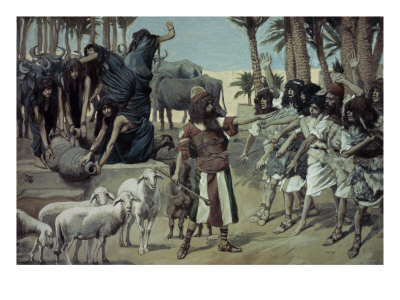
+ Moses rescues Reuel’s daughters –  When Moses arrived in Midian, he sat down beside a well. Now the priest of Midian had seven daughters who came as usual to draw water and fill the water troughs for their father’s flocks. But some other shepherds came and chased them away. So Moses jumped up and rescued the girls from the shepherds. Then he drew water for their flocks.

When the girls returned to Reuel, their father, he asked, “Why are you back so soon today?”

“An Egyptian rescued us from the shepherds,” they answered. “And then he drew water for us and watered our flocks.”

“Then where is he?” their father asked. “Why did you leave him there? Invite him to come and eat with us.”

+ Moses marries and settles in – Moses accepted the invitation, and he settled there with him. In time, Reuel gave Moses his daughter Zipporah to be his wife. Later she gave birth to a son, and Moses named him Gershom, for he explained, “I have been a foreigner in a foreign land.”

+ God hears the Israelites’ cries – Years passed, and the king of Egypt died. But the Israelites continued to groan under their burden of slavery. They cried out for help, and their cry rose up to God. God heard their groaning, and he remembered his covenant promise to Abraham, Isaac, and Jacob. He looked down on the people of Israel and knew it was time to act.

Moses and the Burning Bush

Exodus 3 (NLT)

+ God appears to Moses – One day Moses was tending the flock of his father-in-law, Jethro, the priest of Midian. He led the flock far into the wilderness and came to Sinai, the mountain of God. There the angel of the Lord appeared to him in a blazing fire from the middle of a bush. Moses stared in amazement. Though the bush was engulfed in flames, it didn’t burn up. “This is amazing,” Moses said to himself. “Why isn’t that bush burning up? I must go see it.”

When the Lord saw Moses coming to take a closer look, God called to him from the middle of the bush, “Moses! Moses!”

“Here I am!” Moses replied.

“Do not come any closer,” the Lord warned. “Take off your sandals, for you are standing on holy ground. I am the God of your father—the God of Abraham, the God of Isaac, and the God of Jacob.” When Moses heard this, he covered his face because he was afraid to look at God.

+ God calls Moses – Then the Lord told him, “I have certainly seen the oppression of my people in Egypt. I have heard their cries of distress because of their harsh slave drivers. Yes, I am aware of their suffering. So I have come down to rescue them from the power of the Egyptians and lead them out of Egypt into their own fertile and spacious land. It is a land flowing with milk and honey—the land where the Canaanites, Hittites, Amorites, Perizzites, Hivites, and Jebusites now live. Look! The cry of the people of Israel has reached me, and I have seen how harshly the Egyptians abuse them. Now go, for I am sending you to Pharaoh. You must lead my people Israel out of Egypt.”

+ Moses protests – But Moses protested to God, “Who am I to appear before Pharaoh? Who am I to lead the people of Israel out of Egypt?”

God answered, “I will be with you. And this is your sign that I am the one who has sent you: When you have brought the people out of Egypt, you will worship God at this very mountain.”

+ Moses protests again – But Moses protested, “If I go to the people of Israel and tell them, ‘The God of your ancestors has sent me to you,’ they will ask me, ‘What is his name?’ Then what should I tell them?”

+ God reveals His Name – God replied to Moses, “I am who i am. Say this to the people of Israel: I am has sent me to you.” God also said to Moses, “Say this to the people of Israel: Yahweh, the God of your ancestors—the God of Abraham, the God of Isaac, and the God of Jacob—has sent me to you.

This is my eternal name, my name to remember for all generations.

+ God will rescue Israelites – “Now go and call together all the elders of Israel. Tell them, ‘Yahweh, the God of your ancestors—the God of Abraham, Isaac, and Jacob—has appeared to me. He told me, “I have been watching closely, and I see how the Egyptians are treating you. I have promised to rescue you from your oppression in Egypt. I will lead you to a land flowing with milk and honey—the land where the Canaanites, Hittites, Amorites, Perizzites, Hivites, and Jebusites now live.”’

“The elders of Israel will accept your message. Then you and the elders must go to the king of Egypt and tell him, ‘The Lord, the God of the Hebrews, has met with us. So please let us take a three-day journey into the wilderness to offer sacrifices to the Lord, our God.’

+ Pharaoh will resist – “But I know that the king of Egypt will not let you go unless a mighty hand forces him. So I will raise my hand and strike the Egyptians, performing all kinds of miracles among them. Then at last he will let you go. And I will cause the Egyptians to look favorably on you. They will give you gifts when you go so you will not leave empty-handed. Every Israelite woman will ask for articles of silver and gold and fine clothing from her Egyptian neighbors and from the foreign women in their houses. You will dress your sons and daughters with these, stripping the Egyptians of their wealth.”

Signs of the Lord’s Power

Exodus 4 (NLT)

+ Moses protests yet again – But Moses protested again, “What if they won’t believe me or listen to me? What if they say, ‘The Lord never appeared to you’?”

Then the Lord asked him, “What is that in your hand?”

“A shepherd’s staff,” Moses replied.

+ Miracle of staff and snake – “Throw it down on the ground,” the Lord told him. So Moses threw down the staff, and it turned into a snake! Moses jumped back.

Then the Lord told him, “Reach out and grab its tail.” So Moses reached out and grabbed it, and it turned back into a shepherd’s staff in his hand.

“Perform this sign,” the Lord told him. “Then they will believe that the Lord, the God of their ancestors—the God of Abraham, the God of Isaac, and the God of Jacob—really has appeared to you.”

+ Miracle of leprous hand – Then the Lord said to Moses, “Now put your hand inside your cloak.” So Moses put his hand inside his cloak, and when he took it out again, his hand was white as snow with a severe skin disease. “Now put your hand back into your cloak,” the Lord said. So Moses put his hand back in, and when he took it out again, it was as healthy as the rest of his body.

+ Miracle of water to blood – The Lord said to Moses, “If they do not believe you and are not convinced by the first miraculous sign, they will be convinced by the second sign. And if they don’t believe you or listen to you even after these two signs, then take some water from the Nile River and pour it out on the dry ground. When you do, the water from the Nile will turn to blood on the ground.”

+ Moses still protests – But Moses pleaded with the Lord, “O Lord, I’m not very good with words. I never have been, and I’m not now, even though you have spoken to me. I get tongue-tied, and my words get tangled.”

Then the Lord asked Moses, “Who makes a person’s mouth? Who decides whether people speak or do not speak, hear or do not hear, see or do not see? Is it not I, the Lord? Now go! I will be with you as you speak, and I will instruct you in what to say.”

But Moses again pleaded, “Lord, please! Send anyone else.”

+ God assigns Aaron as spokesman – Then the Lord became angry with Moses. “All right,” he said. “What about your brother, Aaron the Levite? I know he speaks well. And look! He is on his way to meet you now. He will be delighted to see you. Talk to him, and put the words in his mouth. I will be with both of you as you speak, and I will instruct you both in what to do. Aaron will be your spokesman to the people. He will be your mouthpiece, and you will stand in the place of God for him, telling him what to say. And take your shepherd’s staff with you, and use it to perform the miraculous signs I have shown you.”

Moses Returns to Egypt

So Moses went back home to Jethro, his father-in-law. “Please let me return to my relatives in Egypt,” Moses said. “I don’t even know if they are still alive.”

“Go in peace,” Jethro replied.

Before Moses left Midian, the Lord said to him, “Return to Egypt, for all those who wanted to kill you have died.”

+ Moses obeys God – So Moses took his wife and sons, put them on a donkey, and headed back to the land of Egypt. In his hand he carried the staff of God.

And the Lord told Moses, “When you arrive back in Egypt, go to Pharaoh and perform all the miracles I have empowered you to do. But I will harden his heart so he will refuse to let the people go. Then you will tell him, ‘This is what the Lord says: Israel is my firstborn son. I commanded you, “Let my son go, so he can worship me.” But since you have refused, I will now kill your firstborn son!’”

+ Zipporah circumcises son – On the way to Egypt, at a place where Moses and his family had stopped for the night, the Lord confronted him and was about to kill him. But Moses’ wife, Zipporah, took a flint knife and circumcised her son. She touched his feet with the foreskin and said, “Now you are a bridegroom of blood to me.” (When she said “a bridegroom of blood,” she was referring to the circumcision.) After that, the Lord left him alone.

+ Moses meets Aaron – Now the Lord had said to Aaron, “Go out into the wilderness to meet Moses.” So Aaron went and met Moses at the mountain of God, and he embraced him. Moses then told Aaron everything the Lord had commanded him to say. And he told him about the miraculous signs the Lord had commanded him to perform.

+ Israelites welcome Moses – Then Moses and Aaron returned to Egypt and called all the elders of Israel together. Aaron told them everything the Lord had told Moses, and Moses performed the miraculous signs as they watched. Then the people of Israel were convinced that the Lord had sent Moses and Aaron. When they heard that the Lord was concerned about them and had seen their misery, they bowed down and worshiped.
__________

“Go Down Moses” – Louis Armstrong


__________

Blessing – (Northumbrian Community)

May the peace of the Lord Christ go with you, wherever He may send you. May He guide you through the wilderness, protect you through the storm. May He bring you home rejoicing at the wonders He has shown you. May He bring you home rejoicing once again into our doors.
__________

+ In the name of the Father, and the Son, and the Holy Spirit. Amen!
Easter Sunday: The Resurrection of the Lord – 01 Apr – John 20:1-9 ~ The week that changed the world. (Part II)

Easter Sunday: The Resurrection of the Lord

+ In the name of the Father, and the Son, and the Holy Spirit. Amen!
Opening

God of undying life, by Your mighty hand You raised up Jesus from the grave and appointed Him judge of the living and the dead. Bestow upon those baptized into His death the power flowing from His resurrection, that we may proclaim near and far the pardon and peace You give us. Grant this through our Lord Jesus Christ, firstborn from the dead, who lives with You now and always in the unity of the Holy Spirit, God for ever and ever. Amen.
__________

Easter Song” – Glad


__________

Gospel Reading: John 20:1-9 (NLT)

Early on Sunday morning, while it was still dark, Mary Magdalene came to the tomb and found that the stone had been rolled away from the entrance. She ran and found Simon Peter and the other disciple, the one whom Jesus loved. She said, “They have taken the Lord’s body out of the tomb, and we don’t know where they have put him!”

Peter and the other disciple started out for the tomb. They were both running, but the other disciple outran Peter and reached the tomb first. He stooped and looked in and saw the linen wrappings lying there, but he didn’t go in. Then Simon Peter arrived and went inside. He also noticed the linen wrappings lying there, while the cloth that had covered Jesus’ head was folded up and lying apart from the other wrappings. Then the disciple who had reached the tomb first also went in, and he saw and believed — for until then they still hadn’t understood the Scriptures that said Jesus must rise from the dead.
__________

Prayers of Intercession:

Lord God Almighty: we give you our thanks and praise, for You are good and Your love has no end! You answered the prayers of Your Beloved Son: in Your mercy, hear us and help us now in our time of need –

+ That all believers who celebrate the Resurrection of Christ may be one in faith, hope, and love….
+ That all who have been baptized around the world this Easter may always walk in the light of Christ….
+ That all our friends and neighbors for whom faith in Christ is irrelevant may come to believe….
+ That all who are in need of support and love may experience God’s love and care through us….
+ That all who are destitute and dislocated may receive help and relief through us….
+ That all who are sick and suffering may experience compassion, healing and hope through us….
+ That all who have died in Christ may share in the glory of His resurrection….

Lord God Almighty, our Savior and Redeemer: You lead Your people from defeat to triumph. Hear the cries of our hearts and answer our prayers according to Your perfect will. We ask this through Jesus Christ our risen Lord. Amen.
__________

“Because He Lives” – David Crowder Band


__________

Blessing – Colossians 3:1-4

Since you have been raised to new life with Christ, set your sights on the realities of heaven, where Christ sits in the place of honor at God’s right hand. Think about the things of heaven, not the things of earth. For you died to this life, and your real life is hidden with Christ in God. And when Christ, who is your life, is revealed to the whole world, you will share in all his glory.
__________

+ In the name of the Father, and the Son, and the Holy Spirit. Amen!