Morning Reading: Tue, 13 Mar – 1 Samuel 1-5 ~ Samuel speaks for God

Morning Reading

+ In the name of the Father, and the Son, and the Holy Spirit. Amen!

Opening – (Northumbria Community)

One thing I have asked of the Lord, this is what I seek: that I may dwell in the house of the Lord all the days of my life; to behold the beauty of the Lord and to seek Him in His temple.

Praise to You, Lord Jesus Christ, King of endless glory.

Reading: 1 Samuel 1-5 (NLT)

Elkanah and His Family

1 Samuel 1 (NLT)

There was a man named Elkanah who lived in Ramah in the region of Zuph in the hill country of Ephraim. He was the son of Jeroham, son of Elihu, son of Tohu, son of Zuph, of Ephraim. Elkanah had two wives, Hannah and Peninnah. Peninnah had children, but Hannah did not.

+ Hannah’s tribulation – Each year Elkanah would travel to Shiloh to worship and sacrifice to the Lord of Heaven’s Armies at the Tabernacle. The priests of the Lord at that time were the two sons of Eli—Hophni and Phinehas. On the days Elkanah presented his sacrifice, he would give portions of the meat to Peninnah and each of her children. And though he loved Hannah, he would give her only one choice portion because the Lord had given her no children. So Peninnah would taunt Hannah and make fun of her because the Lord had kept her from having children. Year after year it was the same—Peninnah would taunt Hannah as they went to the Tabernacle. Each time, Hannah would be reduced to tears and would not even eat.

“Why are you crying, Hannah?” Elkanah would ask. “Why aren’t you eating? Why be downhearted just because you have no children? You have me—isn’t that better than having ten sons?”

Hannah’s Prayer for a Son

+ Hannah’s vow – Once after a sacrificial meal at Shiloh, Hannah got up and went to pray. Eli the priest was sitting at his customary place beside the entrance of the Tabernacle. Hannah was in deep anguish, crying bitterly as she prayed to the Lord. And she made this vow: “O Lord of Heaven’s Armies, if you will look upon my sorrow and answer my prayer and give me a son, then I will give him back to you. He will be yours for his entire lifetime, and as a sign that he has been dedicated to the Lord, his hair will never be cut.”

As she was praying to the Lord, Eli watched her. Seeing her lips moving but hearing no sound, he thought she had been drinking. “Must you come here drunk?” he demanded. “Throw away your wine!”

“Oh no, sir!” she replied. “I haven’t been drinking wine or anything stronger. But I am very discouraged, and I was pouring out my heart to the Lord. Don’t think I am a wicked woman! For I have been praying out of great anguish and sorrow.”

+ Eli’s blessing – “In that case,” Eli said, “go in peace! May the God of Israel grant the request you have asked of him.”

“Oh, thank you, sir!” she exclaimed. Then she went back and began to eat again, and she was no longer sad.

Samuel’s Birth and Dedication

The entire family got up early the next morning and went to worship the Lord once more. Then they returned home to Ramah. When Elkanah slept with Hannah, the Lord remembered her plea, and in due time she gave birth to a son. She named him Samuel, for she said, “I asked the Lord for him.”

+ Hannah holds on to Samuel – The next year Elkanah and his family went on their annual trip to offer a sacrifice to the Lord and to keep his vow. But Hannah did not go. She told her husband, “Wait until the boy is weaned. Then I will take him to the Tabernacle and leave him there with the Lord permanently.”

“Whatever you think is best,” Elkanah agreed. “Stay here for now, and may the Lord help you keep your promise.” So she stayed home and nursed the boy until he was weaned.

+ Hannah fulfills her vow – When the child was weaned, Hannah took him to the Tabernacle in Shiloh. They brought along a three-year-old bull for the sacrifice and a basket of flour and some wine. After sacrificing the bull, they brought the boy to Eli. “Sir, do you remember me?” Hannah asked. “I am the very woman who stood here several years ago praying to the Lord. I asked the Lord to give me this boy, and he has granted my request. Now I am giving him to the Lord, and he will belong to the Lord his whole life.” And they worshiped the Lord there.

Hannah’s Prayer of Praise

1 Samuel 2 (NLT)

Then Hannah prayed:

“My heart rejoices in the Lord! The Lord has made me strong. Now I have an answer for my enemies; I rejoice because you rescued me. No one is holy like the Lord! There is no one besides you; there is no Rock like our God.

“Stop acting so proud and haughty! Don’t speak with such arrogance! For the Lord is a God who knows what you have done; he will judge your actions.

  • The bow of the mighty is now broken, and those who stumbled are now strong.
  • Those who were well fed are now starving, and those who were starving are now full.
  • The childless woman now has seven children, and the woman with many children wastes away.
  • The Lord gives both death and life; he brings some down to the grave but raises others up.
  • The Lord makes some poor and others rich; he brings some down and lifts others up.
  • He lifts the poor from the dust and the needy from the garbage dump. He sets them among princes, placing them in seats of honor.
  • For all the earth is the Lord’s, and he has set the world in order.

“He will protect his faithful ones, but the wicked will disappear in darkness. No one will succeed by strength alone. Those who fight against the Lord will be shattered. He thunders against them from heaven; the Lord judges throughout the earth. He gives power to his king; he increases the strength of his anointed one.”

Then Elkanah returned home to Ramah without Samuel. And the boy served the Lord by assisting Eli the priest.

Eli’s Wicked Sons

+ Disrespect for God – Now the sons of Eli were scoundrels who had no respect for the Lord or for their duties as priests. Whenever anyone offered a sacrifice, Eli’s sons would send over a servant with a three-pronged fork. While the meat of the sacrificed animal was still boiling, the servant would stick the fork into the pot and demand that whatever it brought up be given to Eli’s sons. All the Israelites who came to worship at Shiloh were treated this way. Sometimes the servant would come even before the animal’s fat had been burned on the altar. He would demand raw meat before it had been boiled so that it could be used for roasting.
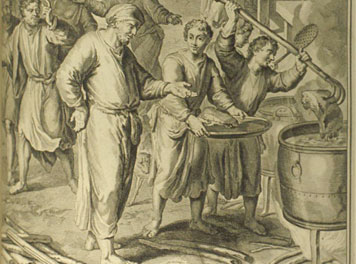
+ Contempt for offerings – The man offering the sacrifice might reply, “Take as much as you want, but the fat must be burned first.” Then the servant would demand, “No, give it to me now, or I’ll take it by force.” So the sin of these young men was very serious in the Lord’s sight, for they treated the Lord’s offerings with contempt.

+ But Samuel served God – But Samuel, though he was only a boy, served the Lord. He wore a linen garment like that of a priest. Each year his mother made a small coat for him and brought it to him when she came with her husband for the sacrifice. Before they returned home, Eli would bless Elkanah and his wife and say, “May the Lord give you other children to take the place of this one she gave to the Lord.” And the Lord blessed Hannah, and she conceived and gave birth to three sons and two daughters. Meanwhile, Samuel grew up in the presence of the Lord.

+ Refuse discipline – Now Eli was very old, but he was aware of what his sons were doing to the people of Israel. He knew, for instance, that his sons were seducing the young women who assisted at the entrance of the Tabernacle. Eli said to them, “I have been hearing reports from all the people about the wicked things you are doing. Why do you keep sinning? You must stop, my sons! The reports I hear among the Lord’s people are not good. If someone sins against another person, God can mediate for the guilty party. But if someone sins against the Lord, who can intercede?” But Eli’s sons wouldn’t listen to their father, for the Lord was already planning to put them to death.

+ But Samuel grew in God’s favor – Meanwhile, the boy Samuel grew taller and grew in favor with the Lord and with the people.

A Warning for Eli’s Family

+ It’s a matter of honor – One day a man of God came to Eli and gave him this message from the Lord: “I revealed myself to your ancestors when they were Pharaoh’s slaves in Egypt. I chose your ancestor Aaron from among all the tribes of Israel to be my priest, to offer sacrifices on my altar, to burn incense, and to wear the priestly vest as he served me. And I assigned the sacrificial offerings to you priests. So why do you scorn my sacrifices and offerings? Why do you give your sons more honor than you give me—for you and they have become fat from the best offerings of my people Israel!

+ Dishonor and death – “Therefore, the Lord, the God of Israel, says: I promised that your branch of the tribe of Levi would always be my priests. But I will honor those who honor me, and I will despise those who think lightly of me. The time is coming when I will put an end to your family, so it will no longer serve as my priests. All the members of your family will die before their time. None will reach old age. You will watch with envy as I pour out prosperity on the people of Israel. But no members of your family will ever live out their days. The few not cut off from serving at my altar will survive, but only so their eyes can go blind and their hearts break, and their children will die a violent death. And to prove that what I have said will come true, I will cause your two sons, Hophni and Phinehas, to die on the same day!

+ Honor and reward – “Then I will raise up a faithful priest who will serve me and do what I desire. I will establish his family, and they will be priests to my anointed kings forever. Then all of your surviving family will bow before him, begging for money and food. ‘Please,’ they will say, ‘give us jobs among the priests so we will have enough to eat.’”

The Lord Speaks to Samuel

1 Samuel 3 (NLT)

Meanwhile, the boy Samuel served the Lord by assisting Eli. Now in those days messages from the Lord were very rare, and visions were quite uncommon.

One night Eli, who was almost blind by now, had gone to bed. The lamp of God had not yet gone out, and Samuel was sleeping in the Tabernacle near the Ark of God. Suddenly the Lord called out, “Samuel!”

“Yes?” Samuel replied. “What is it?” He got up and ran to Eli. “Here I am. Did you call me?”

“I didn’t call you,” Eli replied. “Go back to bed.” So he did.

Then the Lord called out again, “Samuel!”

Again Samuel got up and went to Eli. “Here I am. Did you call me?”

“I didn’t call you, my son,” Eli said. “Go back to bed.”

Samuel did not yet know the Lord because he had never had a message from the Lord before. So the Lord called a third time, and once more Samuel got up and went to Eli. “Here I am. Did you call me?”
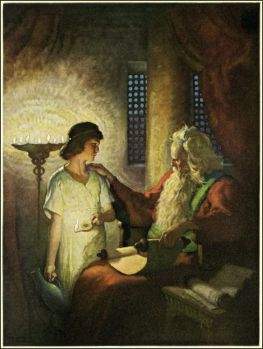
Then Eli realized it was the Lord who was calling the boy. So he said to Samuel, “Go and lie down again, and if someone calls again, say, ‘Speak, Lord, your servant is listening.’” So Samuel went back to bed.

And the Lord came and called as before, “Samuel! Samuel!”

And Samuel replied, “Speak, your servant is listening.”

Then the Lord said to Samuel, “I am about to do a shocking thing in Israel. I am going to carry out all my threats against Eli and his family, from beginning to end. I have warned him that judgment is coming upon his family forever, because his sons are blaspheming God and he hasn’t disciplined them. So I have vowed that the sins of Eli and his sons will never be forgiven by sacrifices or offerings.”

Samuel Speaks for the Lord

Samuel stayed in bed until morning, then got up and opened the doors of the Tabernacle as usual. He was afraid to tell Eli what the Lord had said to him. But Eli called out to him, “Samuel, my son.”

“Here I am,” Samuel replied.

“What did the Lord say to you? Tell me everything. And may God strike you and even kill you if you hide anything from me!” So Samuel told Eli everything; he didn’t hold anything back. “It is the Lord’s will,” Eli replied. “Let him do what he thinks best.”

As Samuel grew up, the Lord was with him, and everything Samuel said proved to be reliable. And all Israel, from Dan in the north to Beersheba in the south, knew that Samuel was confirmed as a prophet of the Lord. The Lord continued to appear at Shiloh and gave messages to Samuel there at the Tabernacle.

1 Samuel 4 (NLT) And Samuel’s words went out to all the people of Israel.

The Philistines Capture the Ark

+ Israel’s defeat – At that time Israel was at war with the Philistines. The Israelite army was camped near Ebenezer, and the Philistines were at Aphek. The Philistines attacked and defeated the army of Israel, killing 4,000 men. After the battle was over, the troops retreated to their camp, and the elders of Israel asked, “Why did the Lord allow us to be defeated by the Philistines?” Then they said, “Let’s bring the Ark of the Covenant of the Lord from Shiloh. If we carry it into battle with us, it will save us from our enemies.”

So they sent men to Shiloh to bring the Ark of the Covenant of the Lord of Heaven’s Armies, who is enthroned between the cherubim. Hophni and Phinehas, the sons of Eli, were also there with the Ark of the Covenant of God. When all the Israelites saw the Ark of the Covenant of the Lord coming into the camp, their shout of joy was so loud it made the ground shake!

+ Philistine’s desperation – “What’s going on?” the Philistines asked. “What’s all the shouting about in the Hebrew camp?” When they were told it was because the Ark of the Lord had arrived, they panicked. “The gods have come into their camp!” they cried. “This is a disaster! We have never had to face anything like this before! Help! Who can save us from these mighty gods of Israel? They are the same gods who destroyed the Egyptians with plagues when Israel was in the wilderness. Fight as never before, Philistines! If you don’t, we will become the Hebrews’ slaves just as they have been ours! Stand up like men and fight!”

+ Prophecy fulfilled – So the Philistines fought desperately, and Israel was defeated again. The slaughter was great; 30,000 Israelite soldiers died that day. The survivors turned and fled to their tents. The Ark of God was captured, and Hophni and Phinehas, the two sons of Eli, were killed.

The Death of Eli

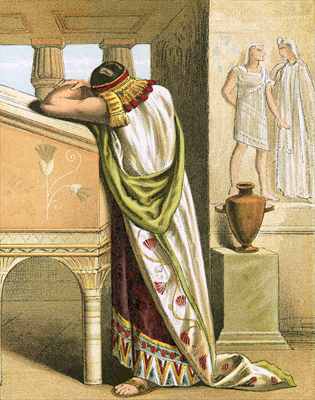
+ Eli’s foreboding – A man from the tribe of Benjamin ran from the battlefield and arrived at Shiloh later that same day. He had torn his clothes and put dust on his head to show his grief. Eli was waiting beside the road to hear the news of the battle, for his heart trembled for the safety of the Ark of God. When the messenger arrived and told what had happened, an outcry resounded throughout the town.

“What is all the noise about?” Eli asked.

The messenger rushed over to Eli, who was ninety-eight years old and blind. He said to Eli, “I have just come from the battlefield—I was there this very day.”

“What happened, my son?” Eli demanded.

+ Disaster report – “Israel has been defeated by the Philistines,” the messenger replied. “The people have been slaughtered, and your two sons, Hophni and Phinehas, were also killed. And the Ark of God has been captured.”
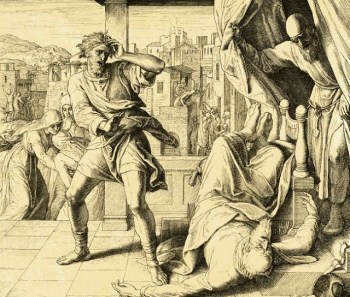
When the messenger mentioned what had happened to the Ark of God, Eli fell backward from his seat beside the gate. He broke his neck and died, for he was old and overweight. He had been Israel’s judge for forty years.

Eli’s daughter-in-law, the wife of Phinehas, was pregnant and near her time of delivery. When she heard that the Ark of God had been captured and that her father-in-law and husband were dead, she went into labor and gave birth. She died in childbirth, but before she passed away the midwives tried to encourage her. “Don’t be afraid,” they said. “You have a baby boy!” But she did not answer or pay attention to them.

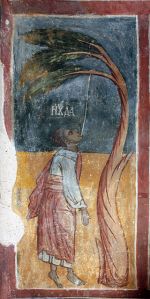
+ A child named Ichabod – She named the child Ichabod (which means “Where is the glory?”), for she said, “Israel’s glory is gone.” She named him this because the Ark of God had been captured and because her father-in-law and husband were dead. Then she said, “The glory has departed from Israel, for the Ark of God has been captured.”

The Ark in Philistia

1 Samuel 5 (NLT)

+ Dagon broken – After the Philistines captured the Ark of God, they took it from the battleground at Ebenezer to the town of Ashdod. They carried the Ark of God into the temple of Dagon and placed it beside an idol of Dagon. But when the citizens of Ashdod went to see it the next morning, Dagon had fallen with his face to the ground in front of the Ark of the Lord! So they took Dagon and put him in his place again. But the next morning the same thing happened—Dagon had fallen face down before the Ark of the Lord again. This time his head and hands had broken off and were lying in the doorway. Only the trunk of his body was left intact. That is why to this day neither the priests of Dagon nor anyone who enters the temple of Dagon in Ashdod will step on its threshold.

+ Ashdod plagued – Then the Lord’s heavy hand struck the people of Ashdod and the nearby villages with a plague of tumors. When the people realized what was happening, they cried out, “We can’t keep the Ark of the God of Israel here any longer! He is against us! We will all be destroyed along with Dagon, our god.” So they called together the rulers of the Philistine towns and asked, “What should we do with the Ark of the God of Israel?”

+ Gath panics – The rulers discussed it and replied, “Move it to the town of Gath.” So they moved the Ark of the God of Israel to Gath. But when the Ark arrived at Gath, the Lord’s heavy hand fell on its men, young and old; he struck them with a plague of tumors, and there was a great panic.

+ Ekron punts – So they sent the Ark of God to the town of Ekron, but when the people of Ekron saw it coming they cried out, “They are bringing the Ark of the God of Israel here to kill us, too!” The people summoned the Philistine rulers again and begged them, “Please send the Ark of the God of Israel back to its own country, or it will kill us all.” For the deadly plague from God had already begun, and great fear was sweeping across the town. Those who didn’t die were afflicted with tumors; and the cry from the town rose to heaven.
__________

“Fall Afresh” – Amanda Cook


__________

Blessing – (Northumbrian Community)

May the peace of the Lord Christ go with you, wherever He may send you. May He guide you through the wilderness, protect you through the storm. May He bring you home rejoicing at the wonders He has shown you. May He bring you home rejoicing once again into our doors.
__________

+ In the name of the Father, and the Son, and the Holy Spirit. Amen!
Morning Reading: Mon, 12 Mar – Genesis 40-43 ~ Joseph’s success / his brothers’ subjection

Morning Reading

+ In the name of the Father, and the Son, and the Holy Spirit. Amen!

Opening – (Northumbria Community)

One thing I have asked of the Lord, this is what I seek: that I may dwell in the house of the Lord all the days of my life; to behold the beauty of the Lord and to seek Him in His temple.

Praise to You, Lord Jesus Christ, King of endless glory.

Reading: Genesis 40-43 (NLT)

Joseph Interprets Two Dreams

Genesis 40 (NLT)

Some time later, Pharaoh’s chief cup-bearer and chief baker offended their royal master. Pharaoh became angry with these two officials, and he put them in the prison where Joseph was, in the palace of the captain of the guard. They remained in prison for quite some time, and the captain of the guard assigned them to Joseph, who looked after them.

+ First dream – While they were in prison, Pharaoh’s cup-bearer and baker each had a dream one night, and each dream had its own meaning. When Joseph saw them the next morning, he noticed that they both looked upset. “Why do you look so worried today?” he asked them.

And they replied, “We both had dreams last night, but no one can tell us what they mean.”

“Interpreting dreams is God’s business,” Joseph replied. “Go ahead and tell me your dreams.”

So the chief cup-bearer told Joseph his dream first. “In my dream,” he said, “I saw a grapevine in front of me. The vine had three branches that began to bud and blossom, and soon it produced clusters of ripe grapes. I was holding Pharaoh’s wine cup in my hand, so I took a cluster of grapes and squeezed the juice into the cup. Then I placed the cup in Pharaoh’s hand.”

+ Good news for the cup-bearer – “This is what the dream means,” Joseph said. “The three branches represent three days. Within three days Pharaoh will lift you up and restore you to your position as his chief cup-bearer. And please remember me and do me a favor when things go well for you. Mention me to Pharaoh, so he might let me out of this place. For I was kidnapped from my homeland, the land of the Hebrews, and now I’m here in prison, but I did nothing to deserve it.”

+ Second dream –  When the chief baker saw that Joseph had given the first dream such a positive interpretation, he said to Joseph, “I had a dream, too. In my dream there were three baskets of white pastries stacked on my head. The top basket contained all kinds of pastries for Pharaoh, but the birds came and ate them from the basket on my head.”

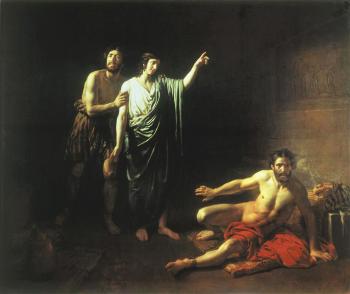
+ Bad news for the baker – “This is what the dream means,” Joseph told him. “The three baskets also represent three days. Three days from now Pharaoh will lift you up and impale your body on a pole. Then birds will come and peck away at your flesh.”

+ Joseph: out of sight, out of mind – Pharaoh’s birthday came three days later, and he prepared a banquet for all his officials and staff. He summoned his chief cup-bearer and chief baker to join the other officials. He then restored the chief cup-bearer to his former position, so he could again hand Pharaoh his cup. But Pharaoh impaled the chief baker, just as Joseph had predicted when he interpreted his dream. Pharaoh’s chief cup-bearer, however, forgot all about Joseph, never giving him another thought.

Pharaoh’s Dreams

Genesis 41 (NLT)

+ First dream – Two full years later, Pharaoh dreamed that he was standing on the bank of the Nile River. In his dream he saw seven fat, healthy cows come up out of the river and begin grazing in the marsh grass. Then he saw seven more cows come up behind them from the Nile, but these were scrawny and thin. These cows stood beside the fat cows on the riverbank. Then the scrawny, thin cows ate the seven healthy, fat cows! At this point in the dream, Pharaoh woke up.

+ Second dream – But he fell asleep again and had a second dream. This time he saw seven heads of grain, plump and beautiful, growing on a single stalk. Then seven more heads of grain appeared, but these were shriveled and withered by the east wind. And these thin heads swallowed up the seven plump, well-formed heads! Then Pharaoh woke up again and realized it was a dream.

The next morning Pharaoh was very disturbed by the dreams. So he called for all the magicians and wise men of Egypt. When Pharaoh told them his dreams, not one of them could tell him what they meant.

+ Joseph recalled – Finally, the king’s chief cup-bearer spoke up. “Today I have been reminded of my failure,” he told Pharaoh. “Some time ago, you were angry with the chief baker and me, and you imprisoned us in the palace of the captain of the guard. One night the chief baker and I each had a dream, and each dream had its own meaning. There was a young Hebrew man with us in the prison who was a slave of the captain of the guard. We told him our dreams, and he told us what each of our dreams meant. And everything happened just as he had predicted. I was restored to my position as cup-bearer, and the chief baker was executed and impaled on a pole.”

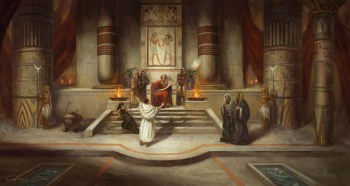
Pharaoh sent for Joseph at once, and he was quickly brought from the prison. After he shaved and changed his clothes, he went in and stood before Pharaoh. Then Pharaoh said to Joseph, “I had a dream last night, and no one here can tell me what it means. But I have heard that when you hear about a dream you can interpret it.”

“It is beyond my power to do this,” Joseph replied. “But God can tell you what it means and set you at ease.”

+ Dreams retold – So Pharaoh told Joseph his dream. “In my dream,” he said, “I was standing on the bank of the Nile River, and I saw seven fat, healthy cows come up out of the river and begin grazing in the marsh grass. But then I saw seven sick-looking cows, scrawny and thin, come up after them. I’ve never seen such sorry-looking animals in all the land of Egypt. These thin, scrawny cows ate the seven fat cows. But afterward you wouldn’t have known it, for they were still as thin and scrawny as before! Then I woke up.

“In my dream I also saw seven heads of grain, full and beautiful, growing on a single stalk. Then seven more heads of grain appeared, but these were blighted, shriveled, and withered by the east wind. And the shriveled heads swallowed the seven healthy heads. I told these dreams to the magicians, but no one could tell me what they mean.”

+ God’s warning to Pharaoh – Joseph responded, “Both of Pharaoh’s dreams mean the same thing. God is telling Pharaoh in advance what he is about to do. The seven healthy cows and the seven healthy heads of grain both represent seven years of prosperity. The seven thin, scrawny cows that came up later and the seven thin heads of grain, withered by the east wind, represent seven years of famine.

+ Prosperity followed by famine – “This will happen just as I have described it, for God has revealed to Pharaoh in advance what he is about to do. The next seven years will be a period of great prosperity throughout the land of Egypt. But afterward there will be seven years of famine so great that all the prosperity will be forgotten in Egypt. Famine will destroy the land. This famine will be so severe that even the memory of the good years will be erased. As for having two similar dreams, it means that these events have been decreed by God, and he will soon make them happen.

+ Plan ahead – “Therefore, Pharaoh should find an intelligent and wise man and put him in charge of the entire land of Egypt. Then Pharaoh should appoint supervisors over the land and let them collect one-fifth of all the crops during the seven good years. Have them gather all the food produced in the good years that are just ahead and bring it to Pharaoh’s storehouses. Store it away, and guard it so there will be food in the cities. That way there will be enough to eat when the seven years of famine come to the land of Egypt. Otherwise this famine will destroy the land.”

Joseph Made Ruler of Egypt

Joseph’s suggestions were well received by Pharaoh and his officials. So Pharaoh asked his officials, “Can we find anyone else like this man so obviously filled with the spirit of God?” Then Pharaoh said to Joseph, “Since God has revealed the meaning of the dreams to you, clearly no one else is as intelligent or wise as you are. You will be in charge of my court, and all my people will take orders from you. Only I, sitting on my throne, will have a rank higher than yours.”

Pharaoh said to Joseph, “I hereby put you in charge of the entire land of Egypt.” Then Pharaoh removed his signet ring from his hand and placed it on Joseph’s finger. He dressed him in fine linen clothing and hung a gold chain around his neck. Then he had Joseph ride in the chariot reserved for his second-in-command. And wherever Joseph went, the command was shouted, “Kneel down!” So Pharaoh put Joseph in charge of all Egypt. And Pharaoh said to him, “I am Pharaoh, but no one will lift a hand or foot in the entire land of Egypt without your approval.”

+ New name and wife – Then Pharaoh gave Joseph a new Egyptian name, Zaphenath-paneah. He also gave him a wife, whose name was Asenath. She was the daughter of Potiphera, the priest of On. So Joseph took charge of the entire land of Egypt. He was thirty years old when he began serving in the court of Pharaoh, the king of Egypt. And when Joseph left Pharaoh’s presence, he inspected the entire land of Egypt.

+ Seven years of plenty – As predicted, for seven years the land produced bumper crops. During those years, Joseph gathered all the crops grown in Egypt and stored the grain from the surrounding fields in the cities. He piled up huge amounts of grain like sand on the seashore. Finally, he stopped keeping records because there was too much to measure.

+ Joseph’s two sons – During this time, before the first of the famine years, two sons were born to Joseph and his wife, Asenath, the daughter of Potiphera, the priest of On. Joseph named his older son Manasseh, for he said, “God has made me forget all my troubles and everyone in my father’s family.” Joseph named his second son Ephraim, for he said, “God has made me fruitful in this land of my grief.”

+ Seven years of famine – At last the seven years of bumper crops throughout the land of Egypt came to an end. Then the seven years of famine began, just as Joseph had predicted. The famine also struck all the surrounding countries, but throughout Egypt there was plenty of food. Eventually, however, the famine spread throughout the land of Egypt as well. And when the people cried out to Pharaoh for food, he told them, “Go to Joseph, and do whatever he tells you.” So with severe famine everywhere, Joseph opened up the storehouses and distributed grain to the Egyptians, for the famine was severe throughout the land of Egypt. And people from all around came to Egypt to buy grain from Joseph because the famine was severe throughout the world.

Joseph’s Brothers Go to Egypt

Genesis 42 (NLT)

When Jacob heard that grain was available in Egypt, he said to his sons, “Why are you standing around looking at one another? I have heard there is grain in Egypt. Go down there, and buy enough grain to keep us alive. Otherwise we’ll die.”

So Joseph’s ten older brothers went down to Egypt to buy grain. But Jacob wouldn’t let Joseph’s younger brother, Benjamin, go with them, for fear some harm might come to him. So Jacob’s sons arrived in Egypt along with others to buy food, for the famine was in Canaan as well.

+ Joseph recognizes his brothers – Since Joseph was governor of all Egypt and in charge of selling grain to all the people, it was to him that his brothers came. When they arrived, they bowed before him with their faces to the ground. Joseph recognized his brothers instantly, but he pretended to be a stranger and spoke harshly to them. “Where are you from?” he demanded.

“From the land of Canaan,” they replied. “We have come to buy food.”

+ Joseph remembers his dreams – Although Joseph recognized his brothers, they didn’t recognize him. And he remembered the dreams he’d had about them many years before. He said to them, “You are spies! You have come to see how vulnerable our land has become.”

“No, my lord!” they exclaimed. “Your servants have simply come to buy food. We are all brothers—members of the same family. We are honest men, sir! We are not spies!”

“Yes, you are!” Joseph insisted. “You have come to see how vulnerable our land has become.”

“Sir,” they said, “there are actually twelve of us. We, your servants, are all brothers, sons of a man living in the land of Canaan. Our youngest brother is back there with our father right now, and one of our brothers is no longer with us.”

+ Joseph tests his brothers – But Joseph insisted, “As I said, you are spies! This is how I will test your story. I swear by the life of Pharaoh that you will never leave Egypt unless your youngest brother comes here! One of you must go and get your brother. I’ll keep the rest of you here in prison. Then we’ll find out whether or not your story is true. By the life of Pharaoh, if it turns out that you don’t have a younger brother, then I’ll know you are spies.”

So Joseph put them all in prison for three days. On the third day Joseph said to them, “I am a God-fearing man. If you do as I say, you will live. If you really are honest men, choose one of your brothers to remain in prison. The rest of you may go home with grain for your starving families. But you must bring your youngest brother back to me. This will prove that you are telling the truth, and you will not die.” To this they agreed.

+ Joseph’s brothers lament – Speaking among themselves, they said, “Clearly we are being punished because of what we did to Joseph long ago. We saw his anguish when he pleaded for his life, but we wouldn’t listen. That’s why we’re in this trouble.”

“Didn’t I tell you not to sin against the boy?” Reuben asked. “But you wouldn’t listen. And now we have to answer for his blood!”

+ Simeon taken as surety – Of course, they didn’t know that Joseph understood them, for he had been speaking to them through an interpreter. Now he turned away from them and began to weep. When he regained his composure, he spoke to them again. Then he chose Simeon from among them and had him tied up right before their eyes.

+ Joseph’s brothers return home –  Joseph then ordered his servants to fill the men’s sacks with grain, but he also gave secret instructions to return each brother’s payment at the top of his sack. He also gave them supplies for their journey home. So the brothers loaded their donkeys with the grain and headed for home.

+ Joseph’s largesse – But when they stopped for the night and one of them opened his sack to get grain for his donkey, he found his money in the top of his sack. “Look!” he exclaimed to his brothers. “My money has been returned; it’s here in my sack!” Then their hearts sank. Trembling, they said to each other, “What has God done to us?”

+ Brothers report to Jacob – When the brothers came to their father, Jacob, in the land of Canaan, they told him everything that had happened to them. “The man who is governor of the land spoke very harshly to us,” they told him. “He accused us of being spies scouting the land. But we said, ‘We are honest men, not spies. We are twelve brothers, sons of one father. One brother is no longer with us, and the youngest is at home with our father in the land of Canaan.’

“Then the man who is governor of the land told us, ‘This is how I will find out if you are honest men. Leave one of your brothers here with me, and take grain for your starving families and go on home. But you must bring your youngest brother back to me. Then I will know you are honest men and not spies. Then I will give you back your brother, and you may trade freely in the land.’”

+ Jacob’s alarm – As they emptied out their sacks, there in each man’s sack was the bag of money he had paid for the grain! The brothers and their father were terrified when they saw the bags of money. Jacob exclaimed, “You are robbing me of my children! Joseph is gone! Simeon is gone! And now you want to take Benjamin, too. Everything is going against me!”

Then Reuben said to his father, “You may kill my two sons if I don’t bring Benjamin back to you. I’ll be responsible for him, and I promise to bring him back.”

+ Jacob laments – But Jacob replied, “My son will not go down with you. His brother Joseph is dead, and he is all I have left. If anything should happen to him on your journey, you would send this grieving, white-haired man to his grave.”

The Brothers Return to Egypt

Genesis 43 (NLT)

But the famine continued to ravage the land of Canaan. When the grain they had brought from Egypt was almost gone, Jacob said to his sons, “Go back and buy us a little more food.”

+ Jacob’s dilemma – But Judah said, “The man was serious when he warned us, ‘You won’t see my face again unless your brother is with you.’ If you send Benjamin with us, we will go down and buy more food. But if you don’t let Benjamin go, we won’t go either. Remember, the man said, ‘You won’t see my face again unless your brother is with you.’”

“Why were you so cruel to me?” Jacob moaned. “Why did you tell him you had another brother?”

“The man kept asking us questions about our family,” they replied. “He asked, ‘Is your father still alive? Do you have another brother?’ So we answered his questions. How could we know he would say, ‘Bring your brother down here’?”

Judah said to his father, “Send the boy with me, and we will be on our way. Otherwise we will all die of starvation—and not only we, but you and our little ones. I personally guarantee his safety. You may hold me responsible if I don’t bring him back to you. Then let me bear the blame forever. If we hadn’t wasted all this time, we could have gone and returned twice by now.”

+ Jacob relies on God’s mercy – So their father, Jacob, finally said to them, “If it can’t be avoided, then at least do this. Pack your bags with the best products of this land. Take them down to the man as gifts—balm, honey, gum, aromatic resin, pistachio nuts, and almonds. Also take double the money that was put back in your sacks, as it was probably someone’s mistake. Then take your brother, and go back to the man. May God Almighty give you mercy as you go before the man, so that he will release Simeon and let Benjamin return. But if I must lose my children, so be it.”

+ Return to Egypt – So the men packed Jacob’s gifts and double the money and headed off with Benjamin. They finally arrived in Egypt and presented themselves to Joseph. When Joseph saw Benjamin with them, he said to the manager of his household, “These men will eat with me this noon. Take them inside the palace. Then go slaughter an animal, and prepare a big feast.” So the man did as Joseph told him and took them into Joseph’s palace.

The brothers were terrified when they saw that they were being taken into Joseph’s house. “It’s because of the money someone put in our sacks last time we were here,” they said. “He plans to pretend that we stole it. Then he will seize us, make us slaves, and take our donkeys.”

A Feast at Joseph’s Palace

+ Fears abound – The brothers approached the manager of Joseph’s household and spoke to him at the entrance to the palace. “Sir,” they said, “we came to Egypt once before to buy food. But as we were returning home, we stopped for the night and opened our sacks. Then we discovered that each man’s money—the exact amount paid—was in the top of his sack! Here it is; we have brought it back with us. We also have additional money to buy more food. We have no idea who put our money in our sacks.”

+ Fears relieved – “Relax. Don’t be afraid,” the household manager told them. “Your God, the God of your father, must have put this treasure into your sacks. I know I received your payment.” Then he released Simeon and brought him out to them.

The manager then led the men into Joseph’s palace. He gave them water to wash their feet and provided food for their donkeys. They were told they would be eating there, so they prepared their gifts for Joseph’s arrival at noon.

+ Gifts proffered – When Joseph came home, they gave him the gifts they had brought him, then bowed low to the ground before him. After greeting them, he asked, “How is your father, the old man you spoke about? Is he still alive?”

“Yes,” they replied. “Our father, your servant, is alive and well.” And they bowed low again.

+ Benjamin introduced – Then Joseph looked at his brother Benjamin, the son of his own mother. “Is this your youngest brother, the one you told me about?” Joseph asked. “May God be gracious to you, my son.” Then Joseph hurried from the room because he was overcome with emotion for his brother. He went into his private room, where he broke down and wept. After washing his face, he came back out, keeping himself under control. Then he ordered, “Bring out the food!”

+ The feast – The waiters served Joseph at his own table, and his brothers were served at a separate table. The Egyptians who ate with Joseph sat at their own table, because Egyptians despise Hebrews and refuse to eat with them. Joseph told each of his brothers where to sit, and to their amazement, he seated them according to age, from oldest to youngest. And Joseph filled their plates with food from his own table, giving Benjamin five times as much as he gave the others. So they feasted and drank freely with him.
__________

“A Shield About Me” – Acappella Ministries


__________

Blessing – (Northumbrian Community)

May the peace of the Lord Christ go with you, wherever He may send you. May He guide you through the wilderness, protect you through the storm. May He bring you home rejoicing at the wonders He has shown you. May He bring you home rejoicing once again into our doors.
__________

+ In the name of the Father, and the Son, and the Holy Spirit. Amen!
The 4th Sunday of Lent: 11 Mar – John 3:14-21 ~ come into the light

The Fourth Sunday of Lent

+ In the name of the Father, and the Son, and the Holy Spirit. Amen!

Opening Prayer

O God, rich in mercy, You so loved the world that, when we were dead in our sins, You sent Your only Son for our deliverance. Lifted up from the earth, He is light and life; exalted upon the cross, He is truth and salvation.

Raise us up with Christ and make us rich in good works, that we may walk as children of light toward the paschal feast of heaven.

We ask this through Christ, our deliverance and hope, who lives and reigns with You in the unity of the Holy Spirit, holy and mighty God for ever and ever. Amen.
__________

“Lift High The Cross”


__________

Gospel Reading: John 3:14-21 (NLT)

And as Moses lifted up the bronze snake on a pole in the wilderness, so the Son of Man must be lifted up, so that everyone who believes in him will have eternal life.

“For this is how God loved the world: He gave his one and only Son, so that everyone who believes in him will not perish but have eternal life. God sent his Son into the world not to judge the world, but to save the world through him.

“There is no judgment against anyone who believes in him. But anyone who does not believe in him has already been judged for not believing in God’s one and only Son. And the judgment is based on this fact: God’s light came into the world, but people loved the darkness more than the light, for their actions were evil. All who do evil hate the light and refuse to go near it for fear their sins will be exposed. But those who do what is right come to the light so others can see that they are doing what God wants.”
__________

Prayers of Intercession:

Gracious God: Fill us with the Light of Christ, that we may live as You want us to live. And, in Your mercy, hear our prayers –

+ For the Church of Christ –

Lord, You formed us for Your glory. Forgive the discontent and dissension which has arisen in Your Church. Let your light so shine before us that all eyes are lifted to see the salvation of the Cross. Give us hearts to long for You, grace to discern You and courage to proclaim You….

  • Lord, shine Your light into every corner of our world.

+ For Creation, Human Society, and All in Authority –

Lord, You are with us through all our bewilderment, redeeming our wastes and our sorrows. We go astray in the wilderness; but You set our feet on a path we had not seen, and You lead us to a place we can make our own. You break the chains that keep us imprisoned and lead us gently into the light….

  • Lord, shine Your light into every corner of our world.

+ For Our Neighborhood –

Lord, grant us the vision to reach out beyond ourselves and share our lives with others. Stretch our capabilities, our awareness of where we can help. Help us to know that when we give to others we do so from a well deep within ourselves that can never run dry….

  • Lord, shine Your light into every corner of our world.

+ For All who Suffer –

Lord, You have heard our cries and born our pain and suffering on the cross. Strengthen our faith that You are always with us, just as You promised. Make us bearers of good news to the poor, comfort to the broken-hearted, freedom to the captives, and light to those living in darkness….

  • Lord, shine Your light into every corner of our world.

+ For the Communion of Saints –

Gracious God: out of love, You gave us Your Son to lead us into Your kingdom. We pray for all who have died in Christ, that they may experience the joy of living in the light of Your endless glory forever….

  • We ask all this in the name of our Lord, Jesus Christ, who lives and reigns with You in the unity of the Holy Spirit, holy and mighty God for ever and ever. Amen.

__________

“Crowder – All My Hope” – ft. Tauren Wells


__________

Blessing – Jude 24-25

“Now to him who is able to keep you from stumbling and to present you blameless before the presence of his glory with great joy, to the only God, our Savior, through Jesus Christ our Lord, be glory, majesty, dominion, and authority, before all time and now and forever. Amen.”
__________

+ In the name of the Father, and the Son, and the Holy Spirit. Amen!

Morning Reading: Sat, 10 Mar – 1 Corinthians 3-4 ~ Just a lot of talk; or living by God’s power?

Morning Reading

+ In the name of the Father, and the Son, and the Holy Spirit. Amen!

Opening – (Northumbria Community)

One thing I have asked of the Lord, this is what I seek: that I may dwell in the house of the Lord all the days of my life; to behold the beauty of the Lord and to seek Him in His temple.

Praise to You, Lord Jesus Christ, King of endless glory.

Reading: 1 Corinthians 3-4 (NLT)

Paul and Apollos, Servants of Christ

1 Corinthians 3 (NLT)

+ You are still infants in Christ – Dear brothers and sisters, when I was with you I couldn’t talk to you as I would to spiritual people. I had to talk as though you belonged to this world or as though you were infants in Christ. I had to feed you with milk, not with solid food, because you weren’t ready for anything stronger. And you still aren’t ready, for you are still controlled by your sinful nature. You are jealous of one another and quarrel with each other. Doesn’t that prove you are controlled by your sinful nature? Aren’t you living like people of the world? When one of you says, “I am a follower of Paul,” and another says, “I follow Apollos,” aren’t you acting just like people of the world?

+ Different workers, different jobs – After all, who is Apollos? Who is Paul? We are only God’s servants through whom you believed the Good News. Each of us did the work the Lord gave us. I planted the seed in your hearts, and Apollos watered it, but it was God who made it grow. It’s not important who does the planting, or who does the watering. What’s important is that God makes the seed grow. The one who plants and the one who waters work together with the same purpose. And both will be rewarded for their own hard work. For we are both God’s workers. And you are God’s field. You are God’s building.

+ One foundation – Because of God’s grace to me, I have laid the foundation like an expert builder. Now others are building on it. But whoever is building on this foundation must be very careful. For no one can lay any foundation other than the one we already have—Jesus Christ.

+ God will judge – Anyone who builds on that foundation may use a variety of materials—gold, silver, jewels, wood, hay, or straw. But on the judgment day, fire will reveal what kind of work each builder has done. The fire will show if a person’s work has any value. If the work survives, that builder will receive a reward. But if the work is burned up, the builder will suffer great loss. The builder will be saved, but like someone barely escaping through a wall of flames.

+ Reality check – Don’t you realize that all of you together are the temple of God and that the Spirit of God lives in you? God will destroy anyone who destroys this temple. For God’s temple is holy, and you are that temple.

Stop deceiving yourselves. If you think you are wise by this world’s standards, you need to become a fool to be truly wise. For the wisdom of this world is foolishness to God.

  • As the Scriptures say, “He traps the wise in the snare of their own cleverness.”
  • And again, “The Lord knows the thoughts of the wise; he knows they are worthless.”

+ You belong to Christ – So don’t boast about following a particular human leader. For everything belongs to you — whether Paul or Apollos or Peter, or the world, or life and death, or the present and the future. Everything belongs to you, and you belong to Christ, and Christ belongs to God.

Paul’s Relationship with the Corinthians

1 Corinthians 4 (NLT)

+ You are not my boss – So look at Apollos and me as mere servants of Christ who have been put in charge of explaining God’s mysteries. Now, a person who is put in charge as a manager must be faithful. As for me, it matters very little how I might be evaluated by you or by any human authority. I don’t even trust my own judgment on this point. My conscience is clear, but that doesn’t prove I’m right. It is the Lord himself who will examine me and decide.

+ God will sort it out – So don’t make judgments about anyone ahead of time—before the Lord returns. For he will bring our darkest secrets to light and will reveal our private motives. Then God will give to each one whatever praise is due.

+ No right to make judgements – Dear brothers and sisters, I have used Apollos and myself to illustrate what I’ve been saying. If you pay attention to what I have quoted from the Scriptures, you won’t be proud of one of your leaders at the expense of another. For what gives you the right to make such a judgment? What do you have that God hasn’t given you? And if everything you have is from God, why boast as though it were not a gift?

+ We are like prisoners of war – You think you already have everything you need. You think you are already rich. You have begun to reign in God’s kingdom without us! I wish you really were reigning already, for then we would be reigning with you. Instead, I sometimes think God has put us apostles on display, like prisoners of war at the end of a victor’s parade, condemned to die. We have become a spectacle to the entire world—to people and angels alike.

+ We are fools for Christ – Our dedication to Christ makes us look like fools, but you claim to be so wise in Christ! We are weak, but you are so powerful! You are honored, but we are ridiculed. Even now we go hungry and thirsty, and we don’t have enough clothes to keep warm. We are often beaten and have no home. We work wearily with our own hands to earn our living. We bless those who curse us. We are patient with those who abuse us. We appeal gently when evil things are said about us. Yet we are treated like the world’s garbage, like everybody’s trash—right up to the present moment.

+ Be warned – I am not writing these things to shame you, but to warn you as my beloved children. For even if you had ten thousand others to teach you about Christ, you have only one spiritual father. For I became your father in Christ Jesus when I preached the Good News to you. So I urge you to imitate me.

That’s why I have sent Timothy, my beloved and faithful child in the Lord. He will remind you of how I follow Christ Jesus, just as I teach in all the churches wherever I go.

+ It’s your choice: talk or power – Some of you have become arrogant, thinking I will not visit you again. But I will come—and soon—if the Lord lets me, and then I’ll find out whether these arrogant people just give pretentious speeches or whether they really have God’s power. For the Kingdom of God is not just a lot of talk; it is living by God’s power. Which do you choose? Should I come with a rod to punish you, or should I come with love and a gentle spirit?
__________

“Jesus, Firm Foundation” – Mike Donehey, Steven Curtis Chapman, Mark Hall, Mandisa


__________

Blessing – (Northumbrian Community)

May the peace of the Lord Christ go with you, wherever He may send you. May He guide you through the wilderness, protect you through the storm. May He bring you home rejoicing at the wonders He has shown you. May He bring you home rejoicing once again into our doors.
__________

+ In the name of the Father, and the Son, and the Holy Spirit. Amen!

Morning Reading: Fri, 09 Mar – Matthew 26-28 ~ the way of the cross

Morning Reading

+ In the name of the Father, and the Son, and the Holy Spirit. Amen!

Opening – (Northumbria Community)

One thing I have asked of the Lord, this is what I seek: that I may dwell in the house of the Lord all the days of my life; to behold the beauty of the Lord and to seek Him in His temple.

Praise to You, Lord Jesus Christ, King of endless glory.

Reading: Matthew 26-28 (NLT)

The Plot to Kill Jesus

Matthew 26 (NLT)

When Jesus had finished saying all these things, he said to his disciples, “As you know, Passover begins in two days, and the Son of Man will be handed over to be crucified.”

At that same time the leading priests and elders were meeting at the residence of Caiaphas, the high priest, plotting how to capture Jesus secretly and kill him. “But not during the Passover celebration,” they agreed, “or the people may riot.”

Jesus Anointed at Bethany

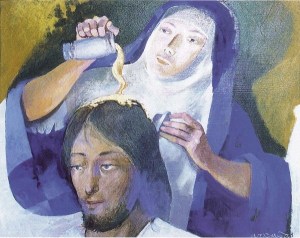
Meanwhile, Jesus was in Bethany at the home of Simon, a man who had previously had leprosy. While he was eating, a woman came in with a beautiful alabaster jar of expensive perfume and poured it over his head.

The disciples were indignant when they saw this. “What a waste!” they said. “It could have been sold for a high price and the money given to the poor.”

But Jesus, aware of this, replied, “Why criticize this woman for doing such a good thing to me? You will always have the poor among you, but you will not always have me. She has poured this perfume on me to prepare my body for burial. I tell you the truth, wherever the Good News is preached throughout the world, this woman’s deed will be remembered and discussed.”

Judas Agrees to Betray Jesus

Then Judas Iscariot, one of the twelve disciples, went to the leading priests and asked, “How much will you pay me to betray Jesus to you?” And they gave him thirty pieces of silver. From that time on, Judas began looking for an opportunity to betray Jesus.

The Last Supper

On the first day of the Festival of Unleavened Bread, the disciples came to Jesus and asked, “Where do you want us to prepare the Passover meal for you?”

“As you go into the city,” he told them, “you will see a certain man. Tell him, ‘The Teacher says: My time has come, and I will eat the Passover meal with my disciples at your house.’” So the disciples did as Jesus told them and prepared the Passover meal there.

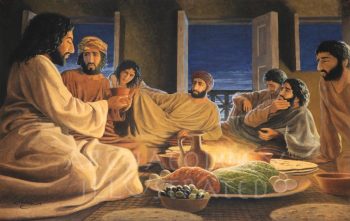
When it was evening, Jesus sat down at the table with the Twelve. While they were eating, he said, “I tell you the truth, one of you will betray me.”

Greatly distressed, each one asked in turn, “Am I the one, Lord?”

He replied, “One of you who has just eaten from this bowl with me will betray me. For the Son of Man must die, as the Scriptures declared long ago. But how terrible it will be for the one who betrays him. It would be far better for that man if he had never been born!”

Judas, the one who would betray him, also asked, “Rabbi, am I the one?”

And Jesus told him, “You have said it.”

As they were eating, Jesus took some bread and blessed it. Then he broke it in pieces and gave it to the disciples, saying, “Take this and eat it, for this is my body.”

And he took a cup of wine and gave thanks to God for it. He gave it to them and said, “Each of you drink from it, for this is my blood, which confirms the covenant between God and his people. It is poured out as a sacrifice to forgive the sins of many. Mark my words—I will not drink wine again until the day I drink it new with you in my Father’s Kingdom.”

Then they sang a hymn and went out to the Mount of Olives.

Jesus Predicts Peter’s Denial

On the way, Jesus told them, “Tonight all of you will desert me. For the Scriptures say,

‘God will strike the Shepherd, and the sheep of the flock will be scattered.’

But after I have been raised from the dead, I will go ahead of you to Galilee and meet you there.”

Peter declared, “Even if everyone else deserts you, I will never desert you.”

Jesus replied, “I tell you the truth, Peter—this very night, before the rooster crows, you will deny three times that you even know me.”

“No!” Peter insisted. “Even if I have to die with you, I will never deny you!” And all the other disciples vowed the same.

Jesus Prays in Gethsemane

Then Jesus went with them to the olive grove called Gethsemane, and he said, “Sit here while I go over there to pray.” He took Peter and Zebedee’s two sons, James and John, and he became anguished and distressed. He told them, “My soul is crushed with grief to the point of death. Stay here and keep watch with me.”

He went on a little farther and bowed with his face to the ground, praying, “My Father! If it is possible, let this cup of suffering be taken away from me. Yet I want your will to be done, not mine.”

Then he returned to the disciples and found them asleep. He said to Peter, “Couldn’t you watch with me even one hour? Keep watch and pray, so that you will not give in to temptation. For the spirit is willing, but the body is weak!”

Then Jesus left them a second time and prayed, “My Father! If this cup cannot be taken away unless I drink it, your will be done.” When he returned to them again, he found them sleeping, for they couldn’t keep their eyes open.

So he went to pray a third time, saying the same things again. Then he came to the disciples and said, “Go ahead and sleep. Have your rest. But look—the time has come. The Son of Man is betrayed into the hands of sinners. Up, let’s be going. Look, my betrayer is here!”

Jesus Is Betrayed and Arrested

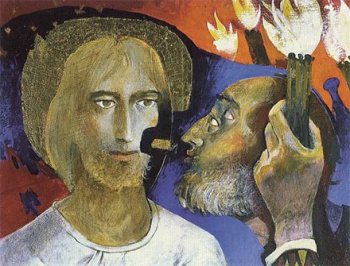
And even as Jesus said this, Judas, one of the twelve disciples, arrived with a crowd of men armed with swords and clubs. They had been sent by the leading priests and elders of the people. The traitor, Judas, had given them a prearranged signal: “You will know which one to arrest when I greet him with a kiss.” So Judas came straight to Jesus. “Greetings, Rabbi!” he exclaimed and gave him the kiss.

Jesus said, “My friend, go ahead and do what you have come for.”

Then the others grabbed Jesus and arrested him. But one of the men with Jesus pulled out his sword and struck the high priest’s slave, slashing off his ear.

“Put away your sword,” Jesus told him. “Those who use the sword will die by the sword. Don’t you realize that I could ask my Father for thousands of angels to protect us, and he would send them instantly? But if I did, how would the Scriptures be fulfilled that describe what must happen now?”

Then Jesus said to the crowd, “Am I some dangerous revolutionary, that you come with swords and clubs to arrest me? Why didn’t you arrest me in the Temple? I was there teaching every day. But this is all happening to fulfill the words of the prophets as recorded in the Scriptures.” At that point, all the disciples deserted him and fled.

Jesus before the Council

Then the people who had arrested Jesus led him to the home of Caiaphas, the high priest, where the teachers of religious law and the elders had gathered. Meanwhile, Peter followed him at a distance and came to the high priest’s courtyard. He went in and sat with the guards and waited to see how it would all end.

Inside, the leading priests and the entire high council were trying to find witnesses who would lie about Jesus, so they could put him to death. But even though they found many who agreed to give false witness, they could not use anyone’s testimony. Finally, two men came forward who declared, “This man said, ‘I am able to destroy the Temple of God and rebuild it in three days.’”

Then the high priest stood up and said to Jesus, “Well, aren’t you going to answer these charges? What do you have to say for yourself?” But Jesus remained silent. Then the high priest said to him, “I demand in the name of the living God—tell us if you are the Messiah, the Son of God.”

Jesus replied, “You have said it. And in the future you will see the Son of Man seated in the place of power at God’s right hand and coming on the clouds of heaven.”

Then the high priest tore his clothing to show his horror and said, “Blasphemy! Why do we need other witnesses? You have all heard his blasphemy. What is your verdict?”

“Guilty!” they shouted. “He deserves to die!”

Then they began to spit in Jesus’ face and beat him with their fists. And some slapped him, jeering, “Prophesy to us, you Messiah! Who hit you that time?”

Peter Denies Jesus

Meanwhile, Peter was sitting outside in the courtyard. A servant girl came over and said to him, “You were one of those with Jesus the Galilean.”

But Peter denied it in front of everyone. “I don’t know what you’re talking about,” he said.

Later, out by the gate, another servant girl noticed him and said to those standing around, “This man was with Jesus of Nazareth.”

Again Peter denied it, this time with an oath. “I don’t even know the man,” he said.

A little later some of the other bystanders came over to Peter and said, “You must be one of them; we can tell by your Galilean accent.”

Peter swore, “A curse on me if I’m lying—I don’t know the man!” And immediately the rooster crowed.

Suddenly, Jesus’ words flashed through Peter’s mind: “Before the rooster crows, you will deny three times that you even know me.” And he went away, weeping bitterly.

Judas Hangs Himself

Matthew 27 (NLT)

Very early in the morning the leading priests and the elders of the people met again to lay plans for putting Jesus to death. Then they bound him, led him away, and took him to Pilate, the Roman governor.

When Judas, who had betrayed him, realized that Jesus had been condemned to die, he was filled with remorse. So he took the thirty pieces of silver back to the leading priests and the elders. “I have sinned,” he declared, “for I have betrayed an innocent man.”

“What do we care?” they retorted. “That’s your problem.”

Then Judas threw the silver coins down in the Temple and went out and hanged himself.

The leading priests picked up the coins. “It wouldn’t be right to put this money in the Temple treasury,” they said, “since it was payment for murder.” After some discussion they finally decided to buy the potter’s field, and they made it into a cemetery for foreigners. That is why the field is still called the Field of Blood. This fulfilled the prophecy of Jeremiah that says,

“They took the thirty pieces of silver—the price at which he was valued by the people of Israel, and purchased the potter’s field, as the Lord directed.”

Jesus’ Trial before Pilate

Now Jesus was standing before Pilate, the Roman governor. “Are you the king of the Jews?” the governor asked him.

Jesus replied, “You have said it.”

But when the leading priests and the elders made their accusations against him, Jesus remained silent. “Don’t you hear all these charges they are bringing against you?” Pilate demanded. But Jesus made no response to any of the charges, much to the governor’s surprise.

Now it was the governor’s custom each year during the Passover celebration to release one prisoner to the crowd—anyone they wanted. This year there was a notorious prisoner, a man named Barabbas. As the crowds gathered before Pilate’s house that morning, he asked them, “Which one do you want me to release to you—Barabbas, or Jesus who is called the Messiah?” (He knew very well that the religious leaders had arrested Jesus out of envy.)

Just then, as Pilate was sitting on the judgment seat, his wife sent him this message: “Leave that innocent man alone. I suffered through a terrible nightmare about him last night.”

Meanwhile, the leading priests and the elders persuaded the crowd to ask for Barabbas to be released and for Jesus to be put to death. So the governor asked again, “Which of these two do you want me to release to you?”

The crowd shouted back, “Barabbas!”

Pilate responded, “Then what should I do with Jesus who is called the Messiah?”

They shouted back, “Crucify him!”

“Why?” Pilate demanded. “What crime has he committed?”

But the mob roared even louder, “Crucify him!”

Pilate saw that he wasn’t getting anywhere and that a riot was developing. So he sent for a bowl of water and washed his hands before the crowd, saying, “I am innocent of this man’s blood. The responsibility is yours!”

And all the people yelled back, “We will take responsibility for his death—we and our children!”

So Pilate released Barabbas to them. He ordered Jesus flogged with a lead-tipped whip, then turned him over to the Roman soldiers to be crucified.

The Soldiers Mock Jesus

Some of the governor’s soldiers took Jesus into their headquarters and called out the entire regiment. They stripped him and put a scarlet robe on him. They wove thorn branches into a crown and put it on his head, and they placed a reed stick in his right hand as a scepter. Then they knelt before him in mockery and taunted, “Hail! King of the Jews!” And they spit on him and grabbed the stick and struck him on the head with it. When they were finally tired of mocking him, they took off the robe and put his own clothes on him again. Then they led him away to be crucified.

The Crucifixion

Along the way, they came across a man named Simon, who was from Cyrene, and the soldiers forced him to carry Jesus’ cross. And they went out to a place called Golgotha (which means “Place of the Skull”). The soldiers gave Jesus wine mixed with bitter gall, but when he had tasted it, he refused to drink it.

After they had nailed him to the cross, the soldiers gambled for his clothes by throwing dice. Then they sat around and kept guard as he hung there. A sign was fastened above Jesus’ head, announcing the charge against him. It read: “This is Jesus, the King of the Jews.” Two revolutionaries were crucified with him, one on his right and one on his left.

The people passing by shouted abuse, shaking their heads in mockery. “Look at you now!” they yelled at him. “You said you were going to destroy the Temple and rebuild it in three days. Well then, if you are the Son of God, save yourself and come down from the cross!”

The leading priests, the teachers of religious law, and the elders also mocked Jesus. “He saved others,” they scoffed, “but he can’t save himself! So he is the King of Israel, is he? Let him come down from the cross right now, and we will believe in him! He trusted God, so let God rescue him now if he wants him! For he said, ‘I am the Son of God.’” Even the revolutionaries who were crucified with him ridiculed him in the same way.

The Death of Jesus

At noon, darkness fell across the whole land until three o’clock. At about three o’clock, Jesus called out with a loud voice, “Eli, Eli, lema sabachthani?” which means “My God, my God, why have you abandoned me?”

Some of the bystanders misunderstood and thought he was calling for the prophet Elijah. One of them ran and filled a sponge with sour wine, holding it up to him on a reed stick so he could drink. But the rest said, “Wait! Let’s see whether Elijah comes to save him.”

Then Jesus shouted out again, and he released his spirit. At that moment the curtain in the sanctuary of the Temple was torn in two, from top to bottom. The earth shook, rocks split apart, and tombs opened. The bodies of many godly men and women who had died were raised from the dead. They left the cemetery after Jesus’ resurrection, went into the holy city of Jerusalem, and appeared to many people.

The Roman officer and the other soldiers at the crucifixion were terrified by the earthquake and all that had happened. They said, “This man truly was the Son of God!”

And many women who had come from Galilee with Jesus to care for him were watching from a distance. Among them were Mary Magdalene, Mary (the mother of James and Joseph), and the mother of James and John, the sons of Zebedee.

The Burial of Jesus

As evening approached, Joseph, a rich man from Arimathea who had become a follower of Jesus, went to Pilate and asked for Jesus’ body. And Pilate issued an order to release it to him. Joseph took the body and wrapped it in a long sheet of clean linen cloth. He placed it in his own new tomb, which had been carved out of the rock. Then he rolled a great stone across the entrance and left. Both Mary Magdalene and the other Mary were sitting across from the tomb and watching.

The Guard at the Tomb

The next day, on the Sabbath, the leading priests and Pharisees went to see Pilate. They told him, “Sir, we remember what that deceiver once said while he was still alive: ‘After three days I will rise from the dead.’ So we request that you seal the tomb until the third day. This will prevent his disciples from coming and stealing his body and then telling everyone he was raised from the dead! If that happens, we’ll be worse off than we were at first.”

Pilate replied, “Take guards and secure it the best you can.” So they sealed the tomb and posted guards to protect it.

The Resurrection

Matthew 28 (NLT)

Early on Sunday morning, as the new day was dawning, Mary Magdalene and the other Mary went out to visit the tomb.

Suddenly there was a great earthquake! For an angel of the Lord came down from heaven, rolled aside the stone, and sat on it. His face shone like lightning, and his clothing was as white as snow. The guards shook with fear when they saw him, and they fell into a dead faint.

Then the angel spoke to the women. “Don’t be afraid!” he said. “I know you are looking for Jesus, who was crucified. He isn’t here! He is risen from the dead, just as he said would happen. Come, see where his body was lying. And now, go quickly and tell his disciples that he has risen from the dead, and he is going ahead of you to Galilee. You will see him there. Remember what I have told you.”

The women ran quickly from the tomb. They were very frightened but also filled with great joy, and they rushed to give the disciples the angel’s message. And as they went, Jesus met them and greeted them. And they ran to him, grasped his feet, and worshiped him. Then Jesus said to them, “Don’t be afraid! Go tell my brothers to leave for Galilee, and they will see me there.”

The Report of the Guard

As the women were on their way, some of the guards went into the city and told the leading priests what had happened. A meeting with the elders was called, and they decided to give the soldiers a large bribe. They told the soldiers, “You must say, ‘Jesus’ disciples came during the night while we were sleeping, and they stole his body.’ If the governor hears about it, we’ll stand up for you so you won’t get in trouble.” So the guards accepted the bribe and said what they were told to say. Their story spread widely among the Jews, and they still tell it today.

The Great Commission

Then the eleven disciples left for Galilee, going to the mountain where Jesus had told them to go. When they saw him, they worshiped him—but some of them doubted!

Jesus came and told his disciples, “I have been given all authority in heaven and on earth. Therefore, go and make disciples of all the nations, baptizing them in the name of the Father and the Son and the Holy Spirit. Teach these new disciples to obey all the commands I have given you. And be sure of this: I am with you always, even to the end of the age.”
__________

“The Cross Has the Final Word” – Newsboys


__________

Blessing – (Northumbrian Community)

May the peace of the Lord Christ go with you, wherever He may send you. May He guide you through the wilderness, protect you through the storm. May He bring you home rejoicing at the wonders He has shown you. May He bring you home rejoicing once again into our doors.
__________

+ In the name of the Father, and the Son, and the Holy Spirit. Amen!