
Morning Reading
+ In the name of the Father, and the Son, and the Holy Spirit. Amen!
Opening – (Northumbria Community)
One thing I have asked of the Lord, this is what I seek: that I may dwell in the house of the Lord all the days of my life; to behold the beauty of the Lord and to seek Him in His temple.
Praise to You, Lord Jesus Christ, King of endless glory.
Reading: 1 Samuel 11-15 (NLT)
[Nahash, king of the Ammonites, had been grievously oppressing the people of Gad and Reuben who lived east of the Jordan River. He gouged out the right eye of each of the Israelites living there, and he didn’t allow anyone to come and rescue them. In fact, of all the Israelites east of the Jordan, there wasn’t a single one whose right eye Nahash had not gouged out. But there were 7,000 men who had escaped from the Ammonites, and they had settled in Jabesh-gilead.]
Saul Defeats the Ammonites
1 Samuel 11 (NLT)
 About a month later, King Nahash of Ammon led his army against the Israelite town of Jabesh-gilead. But all the citizens of Jabesh asked for peace. “Make a treaty with us, and we will be your servants,” they pleaded.
+ Nahash intent on disgracing Israel – All right,” Nahash said, “but only on one condition. I will gouge out the right eye of every one of you as a disgrace to all Israel!”
“Give us seven days to send messengers throughout Israel!” replied the elders of Jabesh. “If no one comes to save us, we will agree to your terms.”
When the messengers came to Gibeah of Saul and told the people about their plight, everyone broke into tears. Saul had been plowing a field with his oxen, and when he returned to town, he asked, “What’s the matter? Why is everyone crying?” So they told him about the message from Jabesh.
+ God arouses Saul’s anger – Then the Spirit of God came powerfully upon Saul, and he became very angry. He took two oxen and cut them into pieces and sent the messengers to carry them throughout Israel with this message: “This is what will happen to the oxen of anyone who refuses to follow Saul and Samuel into battle!” And the Lord made the people afraid of Saul’s anger, and all of them came out together as one. When Saul mobilized them at Bezek, he found that there were 300,000 men from Israel and 30,000 men from Judah.
So Saul sent the messengers back to Jabesh-gilead to say, “We will rescue you by noontime tomorrow!” There was great joy throughout the town when that message arrived!
+ Saul slaughters the Ammonites – The men of Jabesh then told their enemies, “Tomorrow we will come out to you, and you can do to us whatever you wish.” But before dawn the next morning, Saul arrived, having divided his army into three detachments. He launched a surprise attack against the Ammonites and slaughtered them the whole morning. The remnant of their army was so badly scattered that no two of them were left together.
Then the people exclaimed to Samuel, “Now where are those men who said, ‘Why should Saul rule over us?’ Bring them here, and we will kill them!”
But Saul replied, “No one will be executed today, for today the Lord has rescued Israel!”
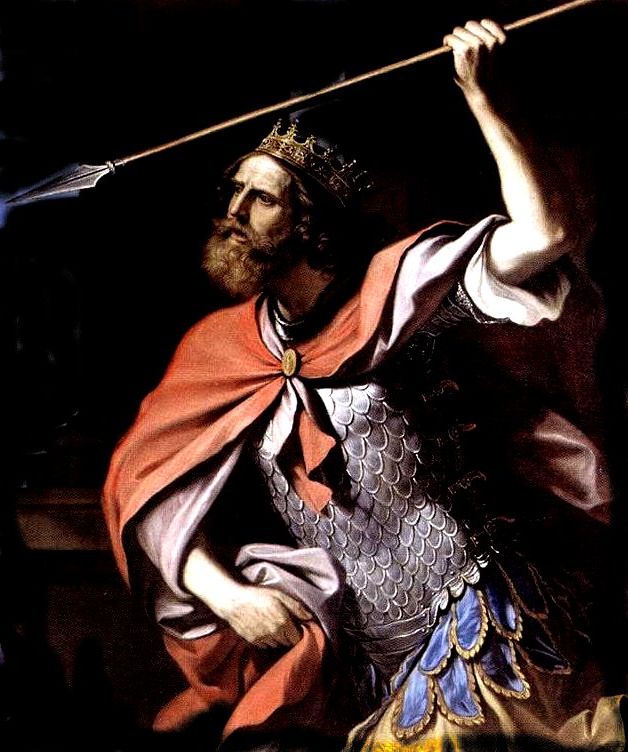 + Saul made king of Israel – Then Samuel said to the people, “Come, let us all go to Gilgal to renew the kingdom.” So they all went to Gilgal, and in a solemn ceremony before the Lord they made Saul king. Then they offered peace offerings to the Lord, and Saul and all the Israelites were filled with joy.
Samuel’s Farewell Address
1 Samuel 12 (NLT)
+ Your king is now your leader – Then Samuel addressed all Israel: “I have done as you asked and given you a king. Your king is now your leader. I stand here before you—an old, gray-haired man—and my sons serve you. I have served as your leader from the time I was a boy to this very day. Now testify against me in the presence of the Lord and before his anointed one. Whose ox or donkey have I stolen? Have I ever cheated any of you? Have I ever oppressed you? Have I ever taken a bribe and perverted justice? Tell me and I will make right whatever I have done wrong.”
“No,” they replied, “you have never cheated or oppressed us, and you have never taken even a single bribe.”
+ My hands are clean – “The Lord and his anointed one are my witnesses today,” Samuel declared, “that my hands are clean.”
“Yes, he is a witness,” they replied.
+ Remember what God has done for you – “It was the Lord who appointed Moses and Aaron,” Samuel continued. “He brought your ancestors out of the land of Egypt. Now stand here quietly before the Lord as I remind you of all the great things the Lord has done for you and your ancestors.
“When the Israelites were in Egypt and cried out to the Lord, he sent Moses and Aaron to rescue them from Egypt and to bring them into this land. But the people soon forgot about the Lord their God, so he handed them over to Sisera, the commander of Hazor’s army, and also to the Philistines and to the king of Moab, who fought against them.
“Then they cried to the Lord again and confessed, ‘We have sinned by turning away from the Lord and worshiping the images of Baal and Ashtoreth. But we will worship you and you alone if you will rescue us from our enemies.’ Then the Lord sent Gideon, Bedan, Jephthah, and Samuel to save you, and you lived in safety.
+ Now God has given you the king you requested – “But when you were afraid of Nahash, the king of Ammon, you came to me and said that you wanted a king to reign over you, even though the Lord your God was already your king. All right, here is the king you have chosen. You asked for him, and the Lord has granted your request.
+ Still you must fear, worship, and obey God – “Now if you fear and worship the Lord and listen to his voice, and if you do not rebel against the Lord’s commands, then both you and your king will show that you recognize the Lord as your God. But if you rebel against the Lord’s commands and refuse to listen to him, then his hand will be as heavy upon you as it was upon your ancestors.
+ Samuel asks God for a show of power – “Now stand here and see the great thing the Lord is about to do. You know that it does not rain at this time of the year during the wheat harvest. I will ask the Lord to send thunder and rain today. Then you will realize how wicked you have been in asking the Lord for a king!”
So Samuel called to the Lord, and the Lord sent thunder and rain that day. And all the people were terrified of the Lord and of Samuel. “Pray to the Lord your God for us, or we will die!” they all said to Samuel. “For now we have added to our sins by asking for a king.”
+ Worship God with all your heart – “Don’t be afraid,” Samuel reassured them. “You have certainly done wrong, but make sure now that you worship the Lord with all your heart, and don’t turn your back on him. Don’t go back to worshiping worthless idols that cannot help or rescue you—they are totally useless! The Lord will not abandon his people, because that would dishonor his great name. For it has pleased the Lord to make you his very own people.
+ Follow my example and serve God – “As for me, I will certainly not sin against the Lord by ending my prayers for you. And I will continue to teach you what is good and right. But be sure to fear the Lord and faithfully serve him. Think of all the wonderful things he has done for you. But if you continue to sin, you and your king will be swept away.”
Continued War with Philistia
1 Samuel 13 (NLT)
Saul was thirty years old when he became king, and he reigned for forty-two years.
+ Saul’s special forces – Saul selected 3,000 special troops from the army of Israel and sent the rest of the men home. He took 2,000 of the chosen men with him to Micmash and the hill country of Bethel. The other 1,000 went with Saul’s son Jonathan to Gibeah in the land of Benjamin.
+ Jonathan’s success – Soon after this, Jonathan attacked and defeated the garrison of Philistines at Geba. The news spread quickly among the Philistines. So Saul blew the ram’s horn throughout the land, saying, “Hebrews, hear this! Rise up in revolt!” All Israel heard the news that Saul had destroyed the Philistine garrison at Geba and that the Philistines now hated the Israelites more than ever. So the entire Israelite army was summoned to join Saul at Gilgal.
+ Philistines mobilize – The Philistines mustered a mighty army of 3,000 chariots, 6,000 charioteers, and as many warriors as the grains of sand on the seashore! They camped at Micmash east of Beth-aven. The men of Israel saw what a tight spot they were in; and because they were hard pressed by the enemy, they tried to hide in caves, thickets, rocks, holes, and cisterns. Some of them crossed the Jordan River and escaped into the land of Gad and Gilead.
Saul’s Disobedience and Samuel’s Rebuke
 + Saul’s fearful forces – Meanwhile, Saul stayed at Gilgal, and his men were trembling with fear. Saul waited there seven days for Samuel, as Samuel had instructed him earlier, but Samuel still didn’t come. Saul realized that his troops were rapidly slipping away. So he demanded, “Bring me the burnt offering and the peace offerings!” And Saul sacrificed the burnt offering himself.
+ Saul’s foolishness – Just as Saul was finishing with the burnt offering, Samuel arrived. Saul went out to meet and welcome him, but Samuel said, “What is this you have done?”
Saul replied, “I saw my men scattering from me, and you didn’t arrive when you said you would, and the Philistines are at Micmash ready for battle. So I said, ‘The Philistines are ready to march against us at Gilgal, and I haven’t even asked for the Lord’s help!’ So I felt compelled to offer the burnt offering myself before you came.”
+ Samuel’s prophecy – “How foolish!” Samuel exclaimed. “You have not kept the command the Lord your God gave you. Had you kept it, the Lord would have established your kingdom over Israel forever. But now your kingdom must end, for the Lord has sought out a man after his own heart. The Lord has already appointed him to be the leader of his people, because you have not kept the Lord’s command.”
Israel’s Military Disadvantage
+ Numbers – Samuel then left Gilgal and went on his way, but the rest of the troops went with Saul to meet the army. They went up from Gilgal to Gibeah in the land of Benjamin. When Saul counted the men who were still with him, he found only 600 were left! Saul and Jonathan and the troops with them were staying at Geba in the land of Benjamin. The Philistines set up their camp at Micmash. Three raiding parties soon left the camp of the Philistines. One went north toward Ophrah in the land of Shual, another went west to Beth-horon, and the third moved toward the border above the valley of Zeboim near the wilderness.
+ Weapons – There were no blacksmiths in the land of Israel in those days. The Philistines wouldn’t allow them for fear they would make swords and spears for the Hebrews. So whenever the Israelites needed to sharpen their plowshares, picks, axes, or sickles, they had to take them to a Philistine blacksmith. The charges were as follows: a quarter of an ounce of silver for sharpening a plowshare or a pick, and an eighth of an ounce for sharpening an ax or making the point of an ox goad. So on the day of the battle none of the people of Israel had a sword or spear, except for Saul and Jonathan.
+ Position – The pass at Micmash had meanwhile been secured by a contingent of the Philistine army.
Jonathan’s Daring Plan
1 Samuel 14 (NLT)
One day Jonathan said to his armor bearer, “Come on, let’s go over to where the Philistines have their outpost.” But Jonathan did not tell his father what he was doing.
Meanwhile, Saul and his 600 men were camped on the outskirts of Gibeah, around the pomegranate tree at Migron. Among Saul’s men was Ahijah the priest, who was wearing the ephod, the priestly vest. Ahijah was the son of Ichabod’s brother Ahitub, son of Phinehas, son of Eli, the priest of the Lord who had served at Shiloh.
 + Jonathan’s infiltration plan – No one realized that Jonathan had left the Israelite camp. To reach the Philistine outpost, Jonathan had to go down between two rocky cliffs that were called Bozez and Seneh. The cliff on the north was in front of Micmash, and the one on the south was in front of Geba. “Let’s go across to the outpost of those pagans,” Jonathan said to his armor bearer. “Perhaps the Lord will help us, for nothing can hinder the Lord. He can win a battle whether he has many warriors or only a few!”
“Do what you think is best,” the armor bearer replied. “I’m with you completely, whatever you decide.”
+ Jonathan seeks a sign – “All right, then,” Jonathan told him. “We will cross over and let them see us. If they say to us, ‘Stay where you are or we’ll kill you,’ then we will stop and not go up to them. But if they say, ‘Come on up and fight,’ then we will go up. That will be the Lord’s sign that he will help us defeat them.”
When the Philistines saw them coming, they shouted, “Look! The Hebrews are crawling out of their holes!” Then the men from the outpost shouted to Jonathan, “Come on up here, and we’ll teach you a lesson!”
“Come on, climb right behind me,” Jonathan said to his armor bearer, “for the Lord will help us defeat them!”
+ Jonathan destroys the outpost – So they climbed up using both hands and feet, and the Philistines fell before Jonathan, and his armor bearer killed those who came behind them. They killed some twenty men in all, and their bodies were scattered over about half an acre.
+ God causes panic – Suddenly, panic broke out in the Philistine army, both in the camp and in the field, including even the outposts and raiding parties. And just then an earthquake struck, and everyone was terrified.
Israel Defeats the Philistines
Saul’s lookouts in Gibeah of Benjamin saw a strange sight—the vast army of Philistines began to melt away in every direction. “Call the roll and find out who’s missing,” Saul ordered. And when they checked, they found that Jonathan and his armor bearer were gone.
Then Saul shouted to Ahijah, “Bring the ephod here!” For at that time Ahijah was wearing the ephod in front of the Israelites. But while Saul was talking to the priest, the confusion in the Philistine camp grew louder and louder. So Saul said to the priest, “Never mind; let’s get going!”
+ God saved Israel – Then Saul and all his men rushed out to the battle and found the Philistines killing each other. There was terrible confusion everywhere. Even the Hebrews who had previously gone over to the Philistine army revolted and joined in with Saul, Jonathan, and the rest of the Israelites. Likewise, the men of Israel who were hiding in the hill country of Ephraim joined the chase when they saw the Philistines running away. So the Lord saved Israel that day, and the battle continued to rage even beyond Beth-aven.
Saul’s Foolish Oath
+ The foolish oath – Now the men of Israel were pressed to exhaustion that day, because Saul had placed them under an oath, saying, “Let a curse fall on anyone who eats before evening—before I have full revenge on my enemies.” So no one ate anything all day, even though they had all found honeycomb on the ground in the forest. They didn’t dare touch the honey because they all feared the oath they had taken.
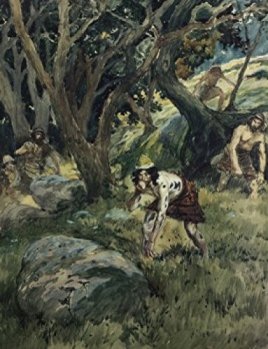 + Unwittingly broken – But Jonathan had not heard his father’s command, and he dipped the end of his stick into a piece of honeycomb and ate the honey. After he had eaten it, he felt refreshed. But one of the men saw him and said, “Your father made the army take a strict oath that anyone who eats food today will be cursed. That is why everyone is weary and faint.”
+ Jonathan’s assessment – “My father has made trouble for us all!” Jonathan exclaimed. “A command like that only hurts us. See how refreshed I am now that I have eaten this little bit of honey. If the men had been allowed to eat freely from the food they found among our enemies, think how many more Philistines we could have killed!”
+ Famished and faint – They chased and killed the Philistines all day from Micmash to Aijalon, growing more and more faint. That evening they rushed for the battle plunder and butchered the sheep, goats, cattle, and calves, but they ate them without draining the blood. Someone reported to Saul, “Look, the men are sinning against the Lord by eating meat that still has blood in it.”
“That is very wrong,” Saul said. “Find a large stone and roll it over here. Then go out among the troops and tell them, ‘Bring the cattle, sheep, and goats here to me. Kill them here, and drain the blood before you eat them. Do not sin against the Lord by eating meat with the blood still in it.’”
+ Saul’s belated sacrifice – So that night all the troops brought their animals and slaughtered them there. Then Saul built an altar to the Lord; it was the first of the altars he built to the Lord.
Then Saul said, “Let’s chase the Philistines all night and plunder them until sunrise. Let’s destroy every last one of them.”
His men replied, “We’ll do whatever you think is best.”
But the priest said, “Let’s ask God first.”
+ God is silent – So Saul asked God, “Should we go after the Philistines? Will you help us defeat them?” But God made no reply that day.
+ Saul repeats his oath – Then Saul said to the leaders, “Something’s wrong! I want all my army commanders to come here. We must find out what sin was committed today. I vow by the name of the Lord who rescued Israel that the sinner will surely die, even if it is my own son Jonathan!” But no one would tell him what the trouble was.
Then Saul said, “Jonathan and I will stand over here, and all of you stand over there.”
And the people responded to Saul, “Whatever you think is best.”
+ God speaks by lot – Then Saul prayed, “O Lord, God of Israel, please show us who is guilty and who is innocent.” Then they cast sacred lots, and Jonathan and Saul were chosen as the guilty ones, and the people were declared innocent.
Then Saul said, “Now cast lots again and choose between me and Jonathan.” And Jonathan was shown to be the guilty one.
“Tell me what you have done,” Saul demanded of Jonathan.
+ Truth revealed – “I tasted a little honey,” Jonathan admitted. “It was only a little bit on the end of my stick. Does that deserve death?”
+ Saul foolishness compounded – “Yes, Jonathan,” Saul said, “you must die! May God strike me and even kill me if you do not die for this.”
+ Jonathan rescued – But the people broke in and said to Saul, “Jonathan has won this great victory for Israel. Should he die? Far from it! As surely as the Lord lives, not one hair on his head will be touched, for God helped him do a great deed today.” So the people rescued Jonathan, and he was not put to death.
Then Saul called back the army from chasing the Philistines, and the Philistines returned home.
Saul’s Military Successes
Now when Saul had secured his grasp on Israel’s throne, he fought against his enemies in every direction—against Moab, Ammon, Edom, the kings of Zobah, and the Philistines. And wherever he turned, he was victorious. He performed great deeds and conquered the Amalekites, saving Israel from all those who had plundered them.
+ Saul’s family – Saul’s sons included Jonathan, Ishbosheth, and Malkishua. He also had two daughters: Merab, who was older, and Michal. Saul’s wife was Ahinoam, the daughter of Ahimaaz. The commander of Saul’s army was Abner, the son of Saul’s uncle Ner. Saul’s father, Kish, and Abner’s father, Ner, were both sons of Abiel.
+ Samuel’s prophecy fulfilled – The Israelites fought constantly with the Philistines throughout Saul’s lifetime. So whenever Saul observed a young man who was brave and strong, he drafted him into his army.
Saul Defeats the Amalekites
1 Samuel 15 (NLT)
One day Samuel said to Saul, “It was the Lord who told me to anoint you as king of his people, Israel. Now listen to this message from the Lord! This is what the Lord of Heaven’s Armies has declared: I have decided to settle accounts with the nation of Amalek for opposing Israel when they came from Egypt. Now go and completely destroy the entire Amalekite nation—men, women, children, babies, cattle, sheep, goats, camels, and donkeys.”
+ Saul defeats the Amalekites – So Saul mobilized his army at Telaim. There were 200,000 soldiers from Israel and 10,000 men from Judah. Then Saul and his army went to a town of the Amalekites and lay in wait in the valley. Saul sent this warning to the Kenites: “Move away from where the Amalekites live, or you will die with them. For you showed kindness to all the people of Israel when they came up from Egypt.” So the Kenites packed up and left.
+ Saul disobeys God – Then Saul slaughtered the Amalekites from Havilah all the way to Shur, east of Egypt. He captured Agag, the Amalekite king, but completely destroyed everyone else. Saul and his men spared Agag’s life and kept the best of the sheep and goats, the cattle, the fat calves, and the lambs—everything, in fact, that appealed to them. They destroyed only what was worthless or of poor quality.
The Lord Rejects Saul
Then the Lord said to Samuel, “I am sorry that I ever made Saul king, for he has not been loyal to me and has refused to obey my command.” Samuel was so deeply moved when he heard this that he cried out to the Lord all night.
Early the next morning Samuel went to find Saul. Someone told him, “Saul went to the town of Carmel to set up a monument to himself; then he went on to Gilgal.”
When Samuel finally found him, Saul greeted him cheerfully. “May the Lord bless you,” he said. “I have carried out the Lord’s command!”
“Then what is all the bleating of sheep and goats and the lowing of cattle I hear?” Samuel demanded.
“It’s true that the army spared the best of the sheep, goats, and cattle,” Saul admitted. “But they are going to sacrifice them to the Lord your God. We have destroyed everything else.”
Then Samuel said to Saul, “Stop! Listen to what the Lord told me last night!”
“What did he tell you?” Saul asked.
And Samuel told him, “Although you may think little of yourself, are you not the leader of the tribes of Israel? The Lord has anointed you king of Israel. And the Lord sent you on a mission and told you, ‘Go and completely destroy the sinners, the Amalekites, until they are all dead.’ Why haven’t you obeyed the Lord? Why did you rush for the plunder and do what was evil in the Lord’s sight?”
“But I did obey the Lord,” Saul insisted. “I carried out the mission he gave me. I brought back King Agag, but I destroyed everyone else. Then my troops brought in the best of the sheep, goats, cattle, and plunder to sacrifice to the Lord your God in Gilgal.”
But Samuel replied,
“What is more pleasing to the Lord: your burnt offerings and sacrifices or your obedience to his voice? Listen! Obedience is better than sacrifice, and submission is better than offering the fat of rams. Rebellion is as sinful as witchcraft, and stubbornness as bad as worshiping idols. So because you have rejected the command of the Lord,
he has rejected you as king.”
Saul Pleads for Forgiveness
+ I was afraid of the people – Then Saul admitted to Samuel, “Yes, I have sinned. I have disobeyed your instructions and the Lord’s command, for I was afraid of the people and did what they demanded. But now, please forgive my sin and come back with me so that I may worship the Lord.”
But Samuel replied, “I will not go back with you! Since you have rejected the Lord’s command, he has rejected you as king of Israel.”
 + God has rejected you – As Samuel turned to go, Saul tried to hold him back and tore the hem of his robe. And Samuel said to him, “The Lord has torn the kingdom of Israel from you today and has given it to someone else—one who is better than you. And he who is the Glory of Israel will not lie, nor will he change his mind, for he is not human that he should change his mind!”
+ Small consolation – Then Saul pleaded again, “I know I have sinned. But please, at least honor me before the elders of my people and before Israel by coming back with me so that I may worship the Lord your God.” So Samuel finally agreed and went back with him, and Saul worshiped the Lord.
Samuel Executes King Agag
Then Samuel said, “Bring King Agag to me.” Agag arrived full of hope, for he thought, “Surely the worst is over, and I have been spared!” But Samuel said, “As your sword has killed the sons of many mothers, now your mother will be childless.” And Samuel cut Agag to pieces before the Lord at Gilgal.
Then Samuel went home to Ramah, and Saul returned to his house at Gibeah of Saul. Samuel never went to meet with Saul again, but he mourned constantly for him. And the Lord was sorry he had ever made Saul king of Israel.
__________
“Kyrie Eleison” – Divna Ljubojevic
__________
Blessing – (Northumbrian Community)
May the peace of the Lord Christ go with you, wherever He may send you. May He guide you through the wilderness, protect you through the storm. May He bring you home rejoicing at the wonders He has shown you. May He bring you home rejoicing once again into our doors.
__________
+ In the name of the Father, and the Son, and the Holy Spirit. Amen!
 The Peanut Gallery