Morning Reading: Tue, 16 Jan – Joshua 11-15 ~ The Northern Conquest: war, rest, and allotment of land

Morning Reading

+ In the name of the Father, and the Son, and the Holy Spirit. Amen!

Opening – (Northumbria Community)

One thing I have asked of the Lord, this is what I seek: that I may dwell in the house of the Lord all the days of my life; to behold the beauty of the Lord and to seek Him in His temple.

Praise to You, Lord Jesus Christ, King of endless glory.

Please Read: Joshua 11-15 (NLT) – click here

Reading Excerpts

Israel Defeats the Northern Armies

Joshua 11 (NLT) – When King Jabin of Hazor heard what had happened, he sent messages to the following kings: King Jobab of Madon; the king of Shimron; the king of Acshaph; all the kings of the northern hill country; the kings in the Jordan Valley south of Galilee; the kings in the Galilean foothills; the kings of Naphoth-dor on the west; the kings of Canaan, both east and west; the kings of the Amorites, the Hittites, the Perizzites, the Jebusites in the hill country, and the Hivites in the towns on the slopes of Mount Hermon in the land of Mizpah.

All these kings came out to fight. Their combined armies formed a vast horde. And with all their horses and chariots, they covered the landscape like the sand on the seashore. The kings joined forces and established their camp around the water near Merom to fight against Israel.
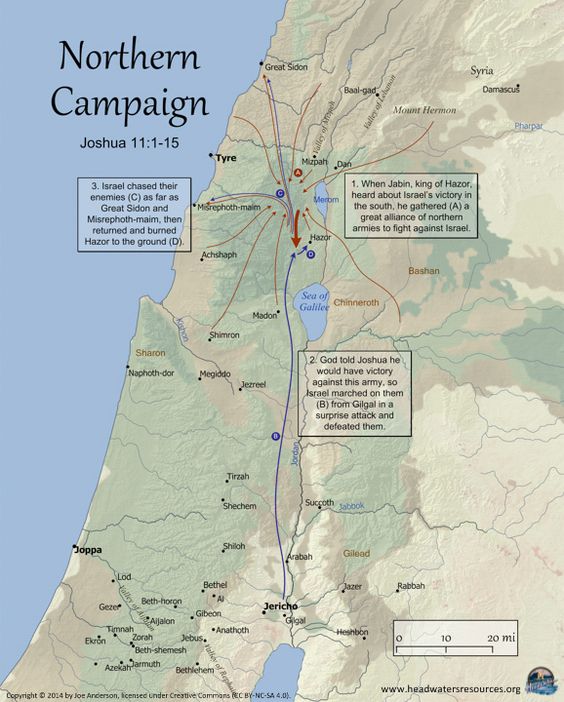
Then the Lord said to Joshua, “Do not be afraid of them. By this time tomorrow I will hand all of them over to Israel as dead men. Then you must cripple their horses and burn their chariots.”

So Joshua and all his fighting men traveled to the water near Merom and attacked suddenly. And the Lord gave them victory over their enemies. The Israelites chased them as far as Greater Sidon and Misrephoth-maim, and eastward into the valley of Mizpah, until not one enemy warrior was left alive. Then Joshua crippled the horses and burned all the chariots, as the Lord had instructed.

Joshua then turned back and captured Hazor and killed its king. (Hazor had at one time been the capital of all these kingdoms.) The Israelites completely destroyed every living thing in the city, leaving no survivors. Not a single person was spared. And then Joshua burned the city.

Joshua slaughtered all the other kings and their people, completely destroying them, just as Moses, the servant of the Lord, had commanded. But the Israelites did not burn any of the towns built on mounds except Hazor, which Joshua burned. And the Israelites took all the plunder and livestock of the ravaged towns for themselves. But they killed all the people, leaving no survivors. As the Lord had commanded his servant Moses, so Moses commanded Joshua. And Joshua did as he was told, carefully obeying all the commands that the Lord had given to Moses.

So Joshua conquered the entire region—the hill country, the entire Negev, the whole area around the town of Goshen, the western foothills, the Jordan Valley, the mountains of Israel, and the Galilean foothills. The Israelite territory now extended all the way from Mount Halak, which leads up to Seir in the south, as far north as Baal-gad at the foot of Mount Hermon in the valley of Lebanon. Joshua killed all the kings of those territories, waging war for a long time to accomplish this. No one in this region made peace with the Israelites except the Hivites of Gibeon. All the others were defeated. For the Lord hardened their hearts and caused them to fight the Israelites. So they were completely destroyed without mercy, as the Lord had commanded Moses.

During this period Joshua destroyed all the descendants of Anak, who lived in the hill country of Hebron, Debir, Anab, and the entire hill country of Judah and Israel. He killed them all and completely destroyed their towns. None of the descendants of Anak were left in all the land of Israel, though some still remained in Gaza, Gath, and Ashdod.

So Joshua took control of the entire land, just as the Lord had instructed Moses. He gave it to the people of Israel as their special possession, dividing the land among the tribes. So the land finally had rest from war.

Kings Defeated East and West of Jordan

Joshua 12 (NLT) – These are the kings east of the Jordan River who had been killed by the Israelites and whose land was taken…. The following is a list of the kings that Joshua and the Israelite armies defeated on the west side of the Jordan…. In all, thirty-one kings were defeated.
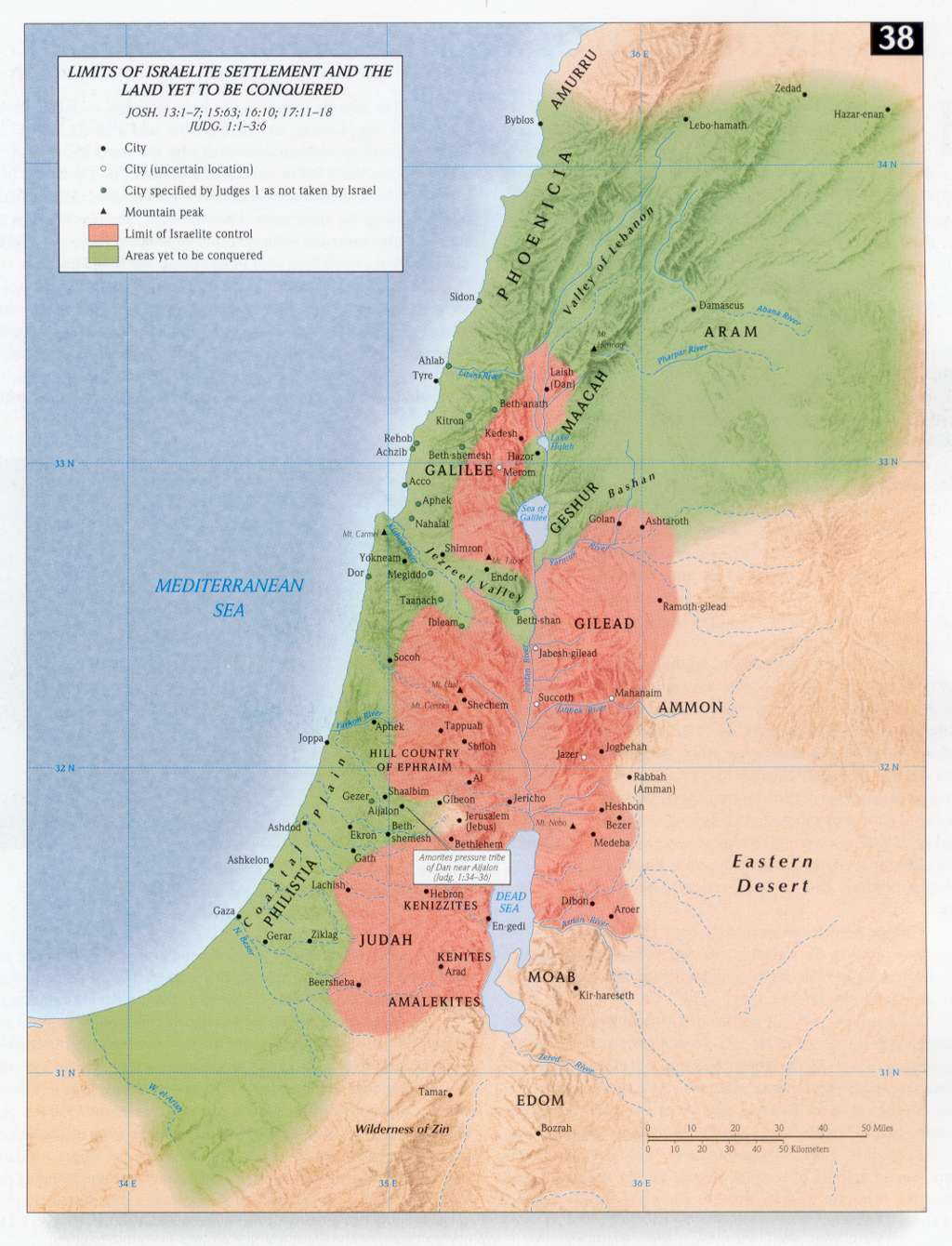
The Land Yet to Be Conquered

Joshua 13 (NLT) – When Joshua was an old man, the Lord said to him, “You are growing old, and much land remains to be conquered. This is the territory that remains: all the regions of the Philistines and the Geshurites, and the larger territory of the Canaanites, extending from the stream of Shihor on the border of Egypt, northward to the boundary of Ekron. It includes the territory of the five Philistine rulers of Gaza, Ashdod, Ashkelon, Gath, and Ekron. The land of the Avvites in the south also remains to be conquered. In the north, the following area has not yet been conquered: all the land of the Canaanites, including Mearah (which belongs to the Sidonians), stretching northward to Aphek on the border of the Amorites; the land of the Gebalites and all of the Lebanon mountain area to the east, from Baal-gad below Mount Hermon to Lebo-hamath; and all the hill country from Lebanon to Misrephoth-maim, including all the land of the Sidonians.

“I myself will drive these people out of the land ahead of the Israelites. So be sure to give this land to Israel as a special possession, just as I have commanded you. Include all this territory as Israel’s possession when you divide this land among the nine tribes and the half-tribe of Manasseh.”

Joshua’s Allotment of Land

+ East of the Jordan – Half the tribe of Manasseh and the tribes of Reuben and Gad had already received their grants of land on the east side of the Jordan, for Moses, the servant of the Lord, had previously assigned this land to them…. But the Israelites failed to drive out the people of Geshur and Maacah, so they continue to live among the Israelites to this day.

+ The Tribe of Levi – Moses did not assign any allotment of land to the tribe of Levi. Instead, as the Lord had promised them, their allotment came from the offerings burned on the altar to the Lord, the God of Israel.

+ The Tribe of Reuben – Moses had assigned the following area to the clans of the tribe of Reuben. Their territory extended from Aroer on the edge of the Arnon Gorge (including the town in the middle of the gorge) to the plain beyond Medeba…. The Jordan River marked the western boundary for the tribe of Reuben. The towns and their surrounding villages in this area were given as a homeland to the clans of the tribe of Reuben.

The  Tribe of Gad – Moses had assigned the following area to the clans of the tribe of Gad. Their territory included Jazer, all the towns of Gilead, and half of the land of Ammon…. The western boundary ran along the Jordan River, extended as far north as the tip of the Sea of Galilee, and then turned eastward. The towns and their surrounding villages in this area were given as a homeland to the clans of the tribe of Gad.

+ The Half-Tribe of Manasseh – Moses had assigned the following area to the clans of the half-tribe of Manasseh. Their territory extended from Mahanaim, including all of Bashan, all the former kingdom of King Og, and the sixty towns of Jair in Bashan. It also included half of Gilead and King Og’s royal cities of Ashtaroth and Edrei. All this was given to the clans of the descendants of Makir, who was Manasseh’s son.

These are the allotments Moses had made while he was on the plains of Moab, across the Jordan River, east of Jericho. But Moses gave no allotment of land to the tribe of Levi, for the Lord, the God of Israel, had promised that he himself would be their allotment.

The Land Divided West of the Jordan

Joshua 14 (NLT) – The remaining tribes of Israel received land in Canaan as allotted by Eleazar the priest, Joshua son of Nun, and the tribal leaders. These nine and a half tribes received their grants of land by means of sacred lots, in accordance with the Lord’s command through Moses. Moses had already given a grant of land to the two and a half tribes on the east side of the Jordan River, but he had given the Levites no such allotment. The descendants of Joseph had become two separate tribes—Manasseh and Ephraim. And the Levites were given no land at all, only towns to live in with surrounding pasturelands for their livestock and all their possessions. So the land was distributed in strict accordance with the Lord’s commands to Moses.

+ Caleb Requests His Land – A delegation from the tribe of Judah, led by Caleb son of Jephunneh the Kenizzite, came to Joshua at Gilgal. Caleb said to Joshua, “Remember what the Lord said to Moses, the man of God, about you and me when we were at Kadesh-barnea. I was forty years old when Moses, the servant of the Lord, sent me from Kadesh-barnea to explore the land of Canaan. I returned and gave an honest report, but my brothers who went with me frightened the people from entering the Promised Land. For my part, I wholeheartedly followed the Lord my God. So that day Moses solemnly promised me, ‘The land of Canaan on which you were just walking will be your grant of land and that of your descendants forever, because you wholeheartedly followed the Lord my God.’
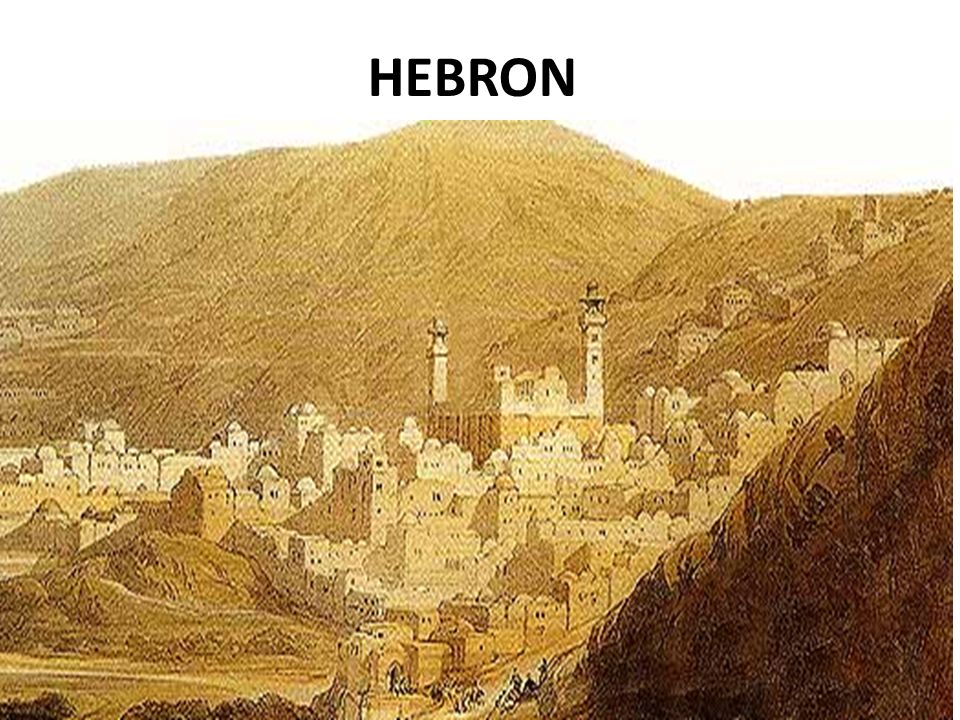
“Now, as you can see, the Lord has kept me alive and well as he promised for all these forty-five years since Moses made this promise—even while Israel wandered in the wilderness. Today I am eighty-five years old. I am as strong now as I was when Moses sent me on that journey, and I can still travel and fight as well as I could then. So give me the hill country that the Lord promised me. You will remember that as scouts we found the descendants of Anak living there in great, walled towns. But if the Lord is with me, I will drive them out of the land, just as the Lord said.”

So Joshua blessed Caleb son of Jephunneh and gave Hebron to him as his portion of land. Hebron still belongs to the descendants of Caleb son of Jephunneh the Kenizzite because he wholeheartedly followed the Lord, the God of Israel. (Previously Hebron had been called Kiriath-arba. It had been named after Arba, a great hero of the descendants of Anak.)

And the land had rest from war.

The Tribe of Judah

Joshua 15 (NLT) – The allotment for the clans of the tribe of Judah reached southward to the border of Edom, as far south as the wilderness of Zin.

The southern boundary began at the south bay of the Dead Sea, ran south… until it finally reached the Brook of Egypt, which it followed to the Mediterranean Sea. This was their southern boundary.

The eastern boundary extended along the Dead Sea to the mouth of the Jordan River.

The northern boundary began at the bay where the Jordan River empties into the Dead Sea…. From that point it went through the valley of Achor to Debir, turning north toward Gilgal…. The boundary then passed through the valley of Ben-Hinnom, along the southern slopes of the Jebusites, where the city of Jerusalem is located. Then it went west to the top of the mountain above the valley of Hinnom, and on up to the northern end of the valley of Rephaim…. The boundary circled west of Baalah to Mount Seir…. The boundary then proceeded to the slope of the hill north of Ekron, where it turned toward Shikkeron and Mount Baalah. It passed Jabneel and ended at the Mediterranean Sea.

The western boundary was the shoreline of the Mediterranean Sea.

These are the boundaries for the clans of the tribe of Judah.

The Land Given to Caleb

The Lord commanded Joshua to assign some of Judah’s territory to Caleb son of Jephunneh. So Caleb was given the town of Kiriath-arba (that is, Hebron), which had been named after Anak’s ancestor. Caleb drove out the three groups of Anakites—the descendants of Sheshai, Ahiman, and Talmai, the sons of Anak.

From there he went to fight against the people living in the town of Debir (formerly called Kiriath-sepher). Caleb said, “I will give my daughter Acsah in marriage to the one who attacks and captures Kiriath-sepher.” Othniel, the son of Caleb’s brother Kenaz, was the one who conquered it, so Acsah became Othniel’s wife.

When Acsah married Othniel, she urged him to ask her father for a field. As she got down off her donkey, Caleb asked her, “What’s the matter?”

She said, “Give me another gift. You have already given me land in the Negev; now please give me springs of water, too.” So Caleb gave her the upper and lower springs.

The Towns Allotted to Judah

This was the homeland allocated to the clans of the tribe of Judah.

The towns of Judah situated along the borders of Edom in the extreme south were…  twenty-nine towns with their surrounding villages. The following towns situated in the western foothills were also given to Judah… fourteen towns with their surrounding villages. Also included were sixteen towns with their surrounding villages. Besides these, there were nine towns with their surrounding villages. The territory of the tribe of Judah also included Ekron and its surrounding settlements and villages. From Ekron the boundary extended west and included the towns near Ashdod with their surrounding villages. It also included Ashdod with its surrounding settlements and villages and Gaza with its settlements and villages, as far as the Brook of Egypt and along the coast of the Mediterranean Sea.

Judah also received the following towns in the hill country… eleven towns with their surrounding villages. Also included were… nine towns with their surrounding villages. Besides these, there were… ten towns with their surrounding villages. In addition, there were… six towns with their surrounding villages. There were also Kiriath-baal (that is, Kiriath-jearim) and Rabbah—two towns with their surrounding villages. In the wilderness there were… the City of Salt, and En-gedi—six towns with their surrounding villages.

But the tribe of Judah could not drive out the Jebusites, who lived in the city of Jerusalem, so the Jebusites live there among the people of Judah to this day.
__________

“Pray for the peace of Jerusalem” – with Areyeh Samberg


__________

Blessing – (Northumbrian Community)

May the peace of the Lord Christ go with you, wherever He may send you. May He guide you through the wilderness, protect you through the storm. May He bring you home rejoicing at the wonders He has shown you. May He bring you home rejoicing once again into our doors.
__________

+ In the name of the Father, and the Son, and the Holy Spirit. Amen!

Morning Reading: Mon, 15 Jan – Genesis 8-11 ~ “I will never again curse the ground because of the human race….”

Morning Reading

+ In the name of the Father, and the Son, and the Holy Spirit. Amen!

Opening – (Northumbria Community)

One thing I have asked of the Lord, this is what I seek: that I may dwell in the house of the Lord all the days of my life; to behold the beauty of the Lord and to seek Him in His temple.

Praise to You, Lord Jesus Christ, King of endless glory.

Please Read: Genesis 8-11 (NLT) – click here

Reading Excerpts

The Flood Recedes

Genesis 8 (NLT) – But God remembered Noah and all the wild animals and livestock with him in the boat. He sent a wind to blow across the earth, and the floodwaters began to recede. The underground waters stopped flowing, and the torrential rains from the sky were stopped. So the floodwaters gradually receded from the earth. After 150 days, exactly five months from the time the flood began, the boat came to rest on the mountains of Ararat. Two and a half months later, as the waters continued to go down, other mountain peaks became visible.

After another forty days, Noah opened the window he had made in the boat and released a raven. The bird flew back and forth until the floodwaters on the earth had dried up. He also released a dove to see if the water had receded and it could find dry ground. But the dove could find no place to land because the water still covered the ground. So it returned to the boat, and Noah held out his hand and drew the dove back inside. After waiting another seven days, Noah released the dove again. This time the dove returned to him in the evening with a fresh olive leaf in its beak. Then Noah knew that the floodwaters were almost gone. He waited another seven days and then released the dove again. This time it did not come back.

Noah was now 601 years old. On the first day of the new year, ten and a half months after the flood began, the floodwaters had almost dried up from the earth. Noah lifted back the covering of the boat and saw that the surface of the ground was drying. Two more months went by, and at last the earth was dry!

Then God said to Noah, “Leave the boat, all of you—you and your wife, and your sons and their wives. Release all the animals—the birds, the livestock, and the small animals that scurry along the ground—so they can be fruitful and multiply throughout the earth.”

So Noah, his wife, and his sons and their wives left the boat. And all of the large and small animals and birds came out of the boat, pair by pair.

Then Noah built an altar to the Lord, and there he sacrificed as burnt offerings the animals and birds that had been approved for that purpose. And the Lord was pleased with the aroma of the sacrifice and said to himself, “I will never again curse the ground because of the human race, even though everything they think or imagine is bent toward evil from childhood. I will never again destroy all living things. As long as the earth remains, there will be planting and harvest, cold and heat, summer and winter, day and night.”

God Confirms His Covenant

Genesis 9 (NLT) – Then God blessed Noah and his sons and told them, “Be fruitful and multiply. Fill the earth. All the animals of the earth, all the birds of the sky, all the small animals that scurry along the ground, and all the fish in the sea will look on you with fear and terror. I have placed them in your power. I have given them to you for food, just as I have given you grain and vegetables. But you must never eat any meat that still has the lifeblood in it.

“And I will require the blood of anyone who takes another person’s life. If a wild animal kills a person, it must die. And anyone who murders a fellow human must die. If anyone takes a human life, that person’s life will also be taken by human hands. For God made human beings in his own image. Now be fruitful and multiply, and repopulate the earth.”

Then God told Noah and his sons, “I hereby confirm my covenant with you and your descendants, and with all the animals that were on the boat with you—the birds, the livestock, and all the wild animals—every living creature on earth. Yes, I am confirming my covenant with you. Never again will floodwaters kill all living creatures; never again will a flood destroy the earth.”

Then God said, “I am giving you a sign of my covenant with you and with all living creatures, for all generations to come. I have placed my rainbow in the clouds. It is the sign of my covenant with you and with all the earth. When I send clouds over the earth, the rainbow will appear in the clouds, and I will remember my covenant with you and with all living creatures. Never again will the floodwaters destroy all life. When I see the rainbow in the clouds, I will remember the eternal covenant between God and every living creature on earth.” Then God said to Noah, “Yes, this rainbow is the sign of the covenant I am confirming with all the creatures on earth.”

Noah’s Sons

The sons of Noah who came out of the boat with their father were Shem, Ham, and Japheth. (Ham is the father of Canaan.) From these three sons of Noah came all the people who now populate the earth.

  • Noah’s Shame -After the flood, Noah began to cultivate the ground, and he planted a vineyard. One day he drank some wine he had made, and he became drunk and lay naked inside his tent. Ham, the father of Canaan, saw that his father was naked and went outside and told his brothers. Then Shem and Japheth took a robe, held it over their shoulders, and backed into the tent to cover their father. As they did this, they looked the other way so they would not see him naked.
  • Ham / Canaan’s Curse -When Noah woke up from his stupor, he learned what Ham, his youngest son, had done. Then he cursed Canaan, the son of Ham: “May Canaan be cursed! May he be the lowest of servants to his relatives.”
  • Shem & Japheth’s Blessing -Then Noah said, “May the Lord, the God of Shem, be blessed, and may Canaan be his servant! May God expand the territory of Japheth! May Japheth share the prosperity of Shem, and may Canaan be his servant.”

Noah lived another 350 years after the great flood. He lived 950 years, and then he died.

Noah’s Descendants

Genesis 10 (NLT) – This is the account of the families of Shem, Ham, and Japheth, the three sons of Noah. Many children were born to them after the great flood.

+ The descendants of Japheth – The descendants of Japheth… became the seafaring peoples that spread out to various lands, each identified by its own language, clan, and national identity.

The Descendants of HamThe descendants of Ham were Cush, Mizraim… and Canaan…. Cush was also the ancestor of Nimrod, who was the first heroic warrior on earth…. He built his kingdom in the land of Babylonia, with the cities of Babylon, Erech, Akkad, and Calneh. From there he expanded his territory to Assyria, building the cities of Nineveh…..

Mizraim was the ancestor of… the Caphtorites, from whom the Philistines came. Canaan’s oldest son was Sidon, the ancestor of the Sidonians. Canaan was also the ancestor of the Hittites, Jebusites, Amorites, Girgashites, Hivites, Arkites, Sinites, Arvadites, Zemarites, and Hamathites. The Canaanite clans eventually spread out, and the territory of Canaan extended from Sidon in the north to Gerar and Gaza in the south, and east as far as Sodom, Gomorrah, Admah, and Zeboiim, near Lasha. These were the descendants of Ham, identified by clan, language, territory, and national identity.

+ Descendants of Shem – Sons were also born to Shem, the older brother of Japheth. Shem was the ancestor of all the descendants of Eber…. Eber had two sons. The first was named Peleg (which means “division”), for during his lifetime the people of the world were divided into different language groups. His brother’s name was Joktan…. The territory they occupied extended from Mesha all the way to Sephar in the eastern mountains. These were the descendants of Shem, identified by clan, language, territory, and national identity.

These are the clans that descended from Noah’s sons, arranged by nation according to their lines of descent. All the nations of the earth descended from these clans after the great flood.

The Tower of Babel

Genesis 11 (NLT) – At one time all the people of the world spoke the same language and used the same words. As the people migrated to the east, they found a plain in the land of Babylonia and settled there.

They began saying to each other, “Let’s make bricks and harden them with fire.” (In this region bricks were used instead of stone, and tar was used for mortar.) Then they said, “Come, let’s build a great city for ourselves with a tower that reaches into the sky. This will make us famous and keep us from being scattered all over the world.”

But the Lord came down to look at the city and the tower the people were building. “Look!” he said. “The people are united, and they all speak the same language. After this, nothing they set out to do will be impossible for them! Come, let’s go down and confuse the people with different languages. Then they won’t be able to understand each other.”

In that way, the Lord scattered them all over the world, and they stopped building the city. That is why the city was called Babel, because that is where the Lord confused the people with different languages. In this way he scattered them all over the world.

The Line of Descent from Shem to Abram

This is the account of Shem’s family.

Two years after the great flood, when Shem was 100 years old, he became the father of Arphaxad. After the birth of Arphaxad, Shem lived another 500 years and had other sons and daughters…. When Nahor was 29 years old, he became the father of Terah. After the birth of Terah, Nahor lived another 119 years and had other sons and daughters.

After Terah was 70 years old, he became the father of Abram, Nahor, and Haran.

The Family of Terah

This is the account of Terah’s family. Terah was the father of Abram, Nahor, and Haran; and Haran was the father of Lot. But Haran died in Ur of the Chaldeans, the land of his birth, while his father, Terah, was still living. Meanwhile, Abram and Nahor both married. The name of Abram’s wife was Sarai, and the name of Nahor’s wife was Milcah. (Milcah and her sister Iscah were daughters of Nahor’s brother Haran.) But Sarai was unable to become pregnant and had no children.

One day Terah took his son Abram, his daughter-in-law Sarai (his son Abram’s wife), and his grandson Lot (his son Haran’s child) and moved away from Ur of the Chaldeans. He was headed for the land of Canaan, but they stopped at Haran and settled there. Terah lived for 205 years and died while still in Haran.
__________

“Who Is Like Our God” – Dustin Smith


__________

Blessing – (Northumbrian Community)

May the peace of the Lord Christ go with you, wherever He may send you. May He guide you through the wilderness, protect you through the storm. May He bring you home rejoicing at the wonders He has shown you. May He bring you home rejoicing once again into our doors.
__________

+ In the name of the Father, and the Son, and the Holy Spirit. Amen!

The 2nd Sunday in Ordinary Time: 14 Jan – John 1:35-42 ~ “Look! There is the Lamb of God!”

The Second Sunday in Ordinary Time

Now that the Christmas season is behind us and we are moving into the New Year, the liturgy challenges us to reflect on what following Christ means. We gather as God’s people, called to follow the Lamb of God and we praise God, with thanksgiving.

+ In the name of the Father, and the Son, and the Holy Spirit. Amen!

Opening Prayer

From our earliest days, O God, you call us by name. Make our ears attentive to your voice, our spirits eager to respond, that, having heard you in Jesus your anointed one, we may draw others to be his disciples. We ask this through our Lord Jesus Christ, your Son, who lives and reigns with you in the unity of the Holy Spirit, God for ever and ever.
__________

“He Knows My Name” – Tommy Walker


__________

Gospel Reading: John 1:35-42 (NLT)

The following day John was again standing with two of his disciples. As Jesus walked by, John looked at him and declared, “Look! There is the Lamb of God!” When John’s two disciples heard this, they followed Jesus.

Jesus looked around and saw them following. “What do you want?” he asked them.

They replied, “Rabbi” (which means “Teacher”), “where are you staying?”

“Come and see,” he said. It was about four o’clock in the afternoon when they went with him to the place where he was staying, and they remained with him the rest of the day.

Andrew, Simon Peter’s brother, was one of these men who heard what John said and then followed Jesus. Andrew went to find his brother, Simon, and told him, “We have found the Messiah” (which means “Christ”).

Then Andrew brought Simon to meet Jesus. Looking intently at Simon, Jesus said, “Your name is Simon, son of John—but you will be called Cephas” (which means “Peter”).

Prayers of Intercession:

Gracious God: Attend to the cries of your people. Have mercy on us and hear our prayers –

+ For church leaders around the world, that their lives might reflect the loving-kindness of Christ….
+ For believers around the world, that we may answer the call to follow Christ every day….
+ For believing minorities in Asia, that they may be able to practice their faith in freedom….
+ For persecuted believers, that people of good will may stand up for them and protect them….
+ For the displaced and dispossessed, that they may receive compassion and support….
+ For our friends and neighbors who are sick or suffering, that they may receive healing….
+ For those who have died in Christ, that they may be raised to eternal life in Christ….

Sovereign God: Attend to the cries of your people, and answer our prayers, through Christ our Lord. Amen.
__________

“Follow Me” – Casting Crowns


__________

Blessing

We have found the Messiah, and he is full of unfailing love and faithfulness. We have seen his glory, the glory of the Father’s one and only Son.
__________

+ In the name of the Father, and the Son, and the Holy Spirit. Amen!

Morning Reading: Sat, 13 Jan – Romans 3-4 ~ made right with God by faith

Morning Reading

+ In the name of the Father, and the Son, and the Holy Spirit. Amen!

Opening – (Northumbria Community)

One thing I have asked of the Lord, this is what I seek: that I may dwell in the house of the Lord all the days of my life; to behold the beauty of the Lord and to seek Him in His temple.

Praise to You, Lord Jesus Christ, King of endless glory.

Reading in Full: Romans 3-4 (NLT)

God’s Faithfulness

Romans 3 (NLT) – Then what’s the advantage of being a Jew? Is there any value in the ceremony of circumcision? Yes, there are great benefits! First of all, the Jews were entrusted with the whole revelation of God.

True, some of them were unfaithful; but just because they were unfaithful, does that mean God will be unfaithful? f course not! Even if everyone else is a liar, God is true. As the Scriptures say about him,

“You will be proved right in what you say, and you will win your case in court.”

“But,” some might say, “our sinfulness serves a good purpose, for it helps people see how righteous God is. Isn’t it unfair, then, for him to punish us?” (This is merely a human point of view.) Of course not! If God were not entirely fair, how would he be qualified to judge the world? “But,” someone might still argue, “how can God condemn me as a sinner if my dishonesty highlights his truthfulness and brings him more glory?” And some people even slander us by claiming that we say, “The more we sin, the better it is!” Those who say such things deserve to be condemned.

Our Sinfulness

Well then, should we conclude that we Jews are better than others? No, not at all, for we have already shown that all people, whether Jews or Gentiles, are under the power of sin. As the Scriptures say,

“No one is righteous—not even one. No one is truly wise; no one is seeking God. All have turned away; all have become useless. No one does good, not a single one.”

  • “Their talk is foul, like the stench from an open grave. Their tongues are filled with lies.”
  • “Snake venom drips from their lips.”
  • “Their mouths are full of cursing and bitterness.”
  • “They rush to commit murder. Destruction and misery always follow them. They don’t know where to find peace.”
  • “They have no fear of God at all.”

No Excuses

Obviously, the law applies to those to whom it was given, for its purpose is to keep people from having excuses, and to show that the entire world is guilty before God. For no one can ever be made right with God by doing what the law commands. The law simply shows us how sinful we are.

God’s Grace through Christ’s Sacrifice

But now God has shown us a way to be made right with him without keeping the requirements of the law, as was promised in the writings of Moses and the prophets long ago. We are made right with God by placing our faith in Jesus Christ. And this is true for everyone who believes, no matter who we are.

For everyone has sinned; we all fall short of God’s glorious standard. Yet God, in his grace, freely makes us right in his sight. He did this through Christ Jesus when he freed us from the penalty for our sins. For God presented Jesus as the sacrifice for sin. People are made right with God when they believe that Jesus sacrificed his life, shedding his blood. This sacrifice shows that God was being fair when he held back and did not punish those who sinned in times past, for he was looking ahead and including them in what he would do in this present time. God did this to demonstrate his righteousness, for he himself is fair and just, and he makes sinners right in his sight when they believe in Jesus.

Counted as Righteous by Faith

Can we boast, then, that we have done anything to be accepted by God? No, because our acquittal is not based on obeying the law. It is based on faith. So we are made right with God through faith and not by obeying the law.

After all, is God the God of the Jews only? Isn’t he also the God of the Gentiles? Of course he is. There is only one God, and he makes people right with himself only by faith, whether they are Jews or Gentiles. Well then, if we emphasize faith, does this mean that we can forget about the law? Of course not! In fact, only when we have faith do we truly fulfill the law.

Abraham: Counted as Righteous by Faith

Romans 4 (NLT) – Abraham was, humanly speaking, the founder of our Jewish nation. What did he discover about being made right with God? If his good deeds had made him acceptable to God, he would have had something to boast about. But that was not God’s way. For the Scriptures tell us,

“Abraham believed God, and God counted him as righteous because of his faith.”

When people work, their wages are not a gift, but something they have earned. But people are counted as righteous, not because of their work, but because of their faith in God who forgives sinners. David also spoke of this when he described the happiness of those who are declared righteous without working for it:

“Oh, what joy for those whose disobedience is forgiven, whose sins are put out of sight. Yes, what joy for those whose record the Lord has cleared of sin.”

Now, is this blessing only for the Jews, or is it also for uncircumcised Gentiles? Well, we have been saying that Abraham was counted as righteous by God because of his faith. But how did this happen? Was he counted as righteous only after he was circumcised, or was it before he was circumcised? Clearly, God accepted Abraham before he was circumcised!

Circumcision was a sign that Abraham already had faith and that God had already accepted him and declared him to be righteous—even before he was circumcised. So Abraham is the spiritual father of those who have faith but have not been circumcised. They are counted as righteous because of their faith. And Abraham is also the spiritual father of those who have been circumcised, but only if they have the same kind of faith Abraham had before he was circumcised.

Abraham: Believed God’s Promise

Clearly, God’s promise to give the whole earth to Abraham and his descendants was based not on his obedience to God’s law, but on a right relationship with God that comes by faith. If God’s promise is only for those who obey the law, then faith is not necessary and the promise is pointless. For the law always brings punishment on those who try to obey it. (The only way to avoid breaking the law is to have no law to break!)

So the promise is received by faith. It is given as a free gift. And we are all certain to receive it, whether or not we live according to the law of Moses, if we have faith like Abraham’s. For Abraham is the father of all who believe. That is what the Scriptures mean when God told him, “I have made you the father of many nations.” This happened because Abraham believed in the God who brings the dead back to life and who creates new things out of nothing.

Even when there was no reason for hope, Abraham kept hoping—believing that he would become the father of many nations. For God had said to him, “That’s how many descendants you will have!” And Abraham’s faith did not weaken, even though, at about 100 years of age, he figured his body was as good as dead—and so was Sarah’s womb.

Our Benefit: Counted as Righteous by Faith

Abraham never wavered in believing God’s promise. In fact, his faith grew stronger, and in this he brought glory to God. He was fully convinced that God is able to do whatever he promises. And because of Abraham’s faith, God counted him as righteous. And when God counted him as righteous, it wasn’t just for Abraham’s benefit. It was recorded for our benefit, too, assuring us that God will also count us as righteous if we believe in him, the one who raised Jesus our Lord from the dead. He was handed over to die because of our sins, and he was raised to life to make us right with God.
__________

“Lord I Need You” – Chris Tomlin


__________

Blessing – (Northumbrian Community)

May the peace of the Lord Christ go with you, wherever He may send you. May He guide you through the wilderness, protect you through the storm. May He bring you home rejoicing at the wonders He has shown you. May He bring you home rejoicing once again into our doors.
__________

+ In the name of the Father, and the Son, and the Holy Spirit. Amen!

Morning Reading: Fri, 12 Jan – Matthew 3-4 ~ And so it begins: Jesus’ baptism, temptation and ministry

Morning Reading

+ In the name of the Father, and the Son, and the Holy Spirit. Amen!

Opening – (Northumbria Community)

One thing I have asked of the Lord, this is what I seek: that I may dwell in the house of the Lord all the days of my life; to behold the beauty of the Lord and to seek Him in His temple.

Praise to You, Lord Jesus Christ, King of endless glory.

Reading In Full: Matthew 3-4 (NLT)

John the Baptist Prepares the Way

Matthew 3 (NLT)In those days John the Baptist came to the Judean wilderness and began preaching. His message was, “Repent of your sins and turn to God, for the Kingdom of Heaven is near.” The prophet Isaiah was speaking about John when he said, “He is a voice shouting in the wilderness, ‘Prepare the way for the Lord’s coming! Clear the road for him!’”

John’s clothes were woven from coarse camel hair, and he wore a leather belt around his waist. For food he ate locusts and wild honey. People from Jerusalem and from all of Judea and all over the Jordan Valley went out to see and hear John. And when they confessed their sins, he baptized them in the Jordan River.

Baptism with Water for Repentance

But when he saw many Pharisees and Sadducees coming to watch him baptize, he denounced them. “You brood of snakes!” he exclaimed. “Who warned you to flee the coming wrath? Prove by the way you live that you have repented of your sins and turned to God. Don’t just say to each other, ‘We’re safe, for we are descendants of Abraham.’ That means nothing, for I tell you, God can create children of Abraham from these very stones. Even now the ax of God’s judgment is poised, ready to sever the roots of the trees. Yes, every tree that does not produce good fruit will be chopped down and thrown into the fire.

Baptism with the Holy Spirit and Fire

“I baptize with water those who repent of their sins and turn to God. But someone is coming soon who is greater than I am—so much greater that I’m not worthy even to be his slave and carry his sandals. He will baptize you with the Holy Spirit and with fire. He is ready to separate the chaff from the wheat with his winnowing fork. Then he will clean up the threshing area, gathering the wheat into his barn but burning the chaff with never-ending fire.”

The Baptism of Jesus

Then Jesus went from Galilee to the Jordan River to be baptized by John. But John tried to talk him out of it. “I am the one who needs to be baptized by you,” he said, “so why are you coming to me?”

But Jesus said, “It should be done, for we must carry out all that God requires.” So John agreed to baptize him.

After his baptism, as Jesus came up out of the water, the heavens were opened and he saw the Spirit of God descending like a dove and settling on him. And a voice from heaven said, “This is my dearly loved Son, who brings me great joy.”

The Temptation of Jesus

Matthew 4 (NLT) – Then Jesus was led by the Spirit into the wilderness to be tempted there by the devil. For forty days and forty nights he fasted and became very hungry.

During that time the devil came and said to him, “If you are the Son of God, tell these stones to become loaves of bread.”

But Jesus told him, “No! The Scriptures say, ‘People do not live by bread alone, but by every word that comes from the mouth of God.’”

Then the devil took him to the holy city, Jerusalem, to the highest point of the Temple, and said, “If you are the Son of God, jump off! For the Scriptures say, ‘He will order his angels to protect you. And they will hold you up with their hands so you won’t even hurt your foot on a stone.’”

Jesus responded, “The Scriptures also say, ‘You must not test the Lord your God.’”

Next the devil took him to the peak of a very high mountain and showed him all the kingdoms of the world and their glory. “I will give it all to you,” he said, “if you will kneel down and worship me.”

“Get out of here, Satan,” Jesus told him. “For the Scriptures say, ‘You must worship the Lord your God and serve only him.’”

Then the devil went away, and angels came and took care of Jesus.

The Ministry of Jesus Begins

When Jesus heard that John had been arrested, he left Judea and returned to Galilee. He went first to Nazareth, then left there and moved to Capernaum, beside the Sea of Galilee, in the region of Zebulun and Naphtali. This fulfilled what God said through the prophet Isaiah:

“In the land of Zebulun and of Naphtali, beside the sea, beyond the Jordan River, in Galilee where so many Gentiles live, the people who sat in darkness have seen a great light. And for those who lived in the land where death casts its shadow, a light has shined.”

From then on Jesus began to preach, “Repent of your sins and turn to God, for the Kingdom of Heaven is near.”

The First Disciples

One day as Jesus was walking along the shore of the Sea of Galilee, he saw two brothers—Simon, also called Peter, and Andrew—throwing a net into the water, for they fished for a living. Jesus called out to them, “Come, follow me, and I will show you how to fish for people!” And they left their nets at once and followed him.

A little farther up the shore he saw two other brothers, James and John, sitting in a boat with their father, Zebedee, repairing their nets. And he called them to come, too. They immediately followed him, leaving the boat and their father behind.

Jesus’ Preaching, Teaching and Healing

Jesus traveled throughout the region of Galilee, teaching in the synagogues and announcing the Good News about the Kingdom. And he healed every kind of disease and illness. News about him spread as far as Syria, and people soon began bringing to him all who were sick. And whatever their sickness or disease, or if they were demon possessed or epileptic or paralyzed—he healed them all. Large crowds followed him wherever he went—people from Galilee, the Ten Towns, Jerusalem, from all over Judea, and from east of the Jordan River.
__________

“Father, Let Your Kingdom Come” – featuring Urban Doxology, Liz Vice, and Latifah Alattas


__________

Blessing – (Northumbrian Community)

May the peace of the Lord Christ go with you, wherever He may send you. May He guide you through the wilderness, protect you through the storm. May He bring you home rejoicing at the wonders He has shown you. May He bring you home rejoicing once again into our doors.
__________

+ In the name of the Father, and the Son, and the Holy Spirit. Amen!