
Morning Prayer: 05 September – Romans 11:11-16 ~ jealous for God’s blessing

Reading through Romans

+ In the name of the Father, and of the Son, and of the Holy Spirit. Amen.

Opening sentence

Praise to You, Lord Jesus Christ, King of endless glory. You have the words of eternal life, and we have believed and have come to know that You are the Holy One of God.
__________

A reading from Romans: Romans 11:11-16 (NLT)
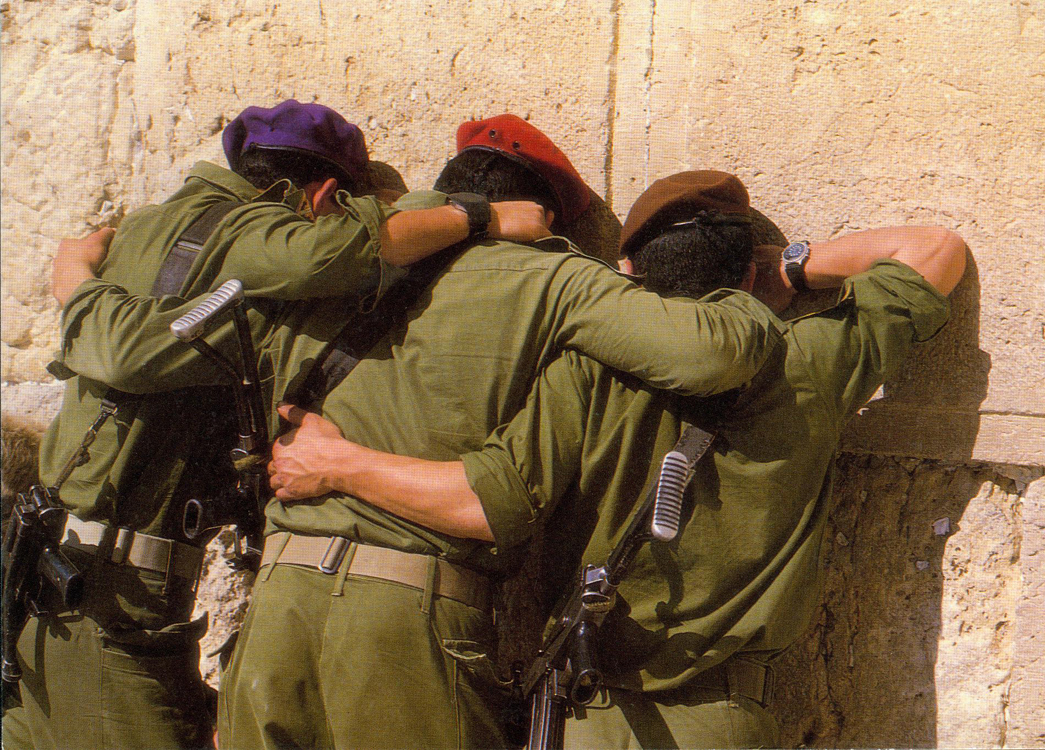
Soldiers at Wall color smaller

Did God’s people stumble and fall beyond recovery? Of course not! They were disobedient, so God made salvation available to the Gentiles. But he wanted his own people to become jealous and claim it for themselves. Now if the Gentiles were enriched because the people of Israel turned down God’s offer of salvation, think how much greater a blessing the world will share when they finally accept it.

I am saying all this especially for you Gentiles. God has appointed me as the apostle to the Gentiles. I stress this, for I want somehow to make the people of Israel jealous of what you Gentiles have, so I might save some of them. For since their rejection meant that God offered salvation to the rest of the world, their acceptance will be even more wonderful. It will be life for those who were dead! And since Abraham and the other patriarchs were holy, their descendants will also be holy — just as the entire batch of dough is holy because the portion given as an offering is holy. For if the roots of the tree are holy, the branches will be, too.
__________

Reflection: Romans 11:11-16  (John Stott, The Message of Romans: God’s Good News for the World)

The plan of God for Jews and Gentiles: (Romans 9–11)

The dominant theme [of these three chapters] is Jewish unbelief, together with the problems which it raised…. Each chapter handles a different aspect of God’s relation to Israel, past, present and future:

  1. Israel’s fall (9: 1– 33): God’s purpose of election
  2. Israel’s fault (10: 1– 21): God’s dismay over her disobedience
  3. Israel’s future (11: 1– 32): God’s long-term design
  4. Doxology (11: 33– 36): God’s wisdom and generosity

Israel’s future: God’s long-term design (11:1–32)

The future prospect (11:11-32)

Israel’s fall, which in the first paragraph he has proved to be not total, is not final either. On the contrary, far from their being on a downward spiral, the spiral is upwards. They have not stumbled so as to fall beyond recovery, but rather to rise, and in that rise both to experience, and to cause Gentiles to experience, greater blessings than would have been the case if they had not fallen in the first place. Such is God’s merciful providence.

A chain of blessing (11–16)

It is essential to grasp Paul’s sequence of thought in this paragraph, since it recurs with modifications throughout the chapter. It is like a chain with three links.

First, already through Israel’s fall salvation has come to the Gentiles…. The Jews had rejected the gospel and the Gentiles had accepted it…. God thus overruled the sin of Israel for the salvation of the Gentiles.

Second, this Gentile salvation will make Israel envious and so lead to her restoration or ‘fullness’…. When Israel sees the blessings of salvation being enjoyed by believing Gentiles (their reconciliation to God and to each other, their forgiveness, their love, joy and peace through the Spirit), they will covet these blessings for themselves and, it is implied, will repent and believe in Jesus in order to secure them. Thus provoked to envy, they will be led to conversion.

Third, Israel’s fullness will bring yet much greater riches to the world…. As for the Gentiles… the blessing which they will receive through Israel’s fullness is called much greater riches, i.e. ‘the reconciliation of the world’, surely because Christ ‘has destroyed the barrier, the dividing wall of hostility’ both between them and God and between them and the Jews.

Thus the blessing ricochets from Israel to the Gentiles, from the Gentiles back to Israel, and from Israel to the Gentiles again.
__________

Return Back to Me, My Love Israel


__________

Canticle

Christ, as a light illumine and guide me. Christ, as a shield overshadow me. Christ under me; Christ over me; Christ beside me on my left and my right. This day be within and without me, lowly and meek, yet all-powerful. Be in the heart of each to whom I speak; in the mouth of each who speaks unto me. This day be within and without me, lowly and meek, yet all-powerful. Christ as a light; Christ as a shield; Christ beside me on my left and my right.

Blessing

May the peace of the Lord Christ go with you, wherever He may send you. May He guide you through the wilderness, protect you through the storm. May He bring you home rejoicing at the wonders He has shown you. May He bring you home rejoicing once again into our doors.

+ In the name of the Father, and of the Son, and of the Holy Spirit. Amen

Morning Prayer: 04 September – Romans 11:1-10 ~ a chosen remnant

Reading through Romans

+ In the name of the Father, and of the Son, and of the Holy Spirit. Amen.

Opening sentence

Praise to You, Lord Jesus Christ, King of endless glory. You have the words of eternal life, and we have believed and have come to know that You are the Holy One of God.
__________

A reading from Romans: Romans 11:1-10 (NLT)

I ask, then, has God rejected his own people, the nation of Israel? Of course not! I myself am an Israelite, a descendant of Abraham and a member of the tribe of Benjamin.

The Anawim are the
The Anawim are the “poor of God.”
In Hebrew, poverty means not only a lack of material resources, or money, it contains the idea of smallness and lowering and also relates to the person’s character – having an attitude of spiritual poverty toward God. The anawim are those who cry out to God and are true.

No, God has not rejected his own people, whom he chose from the very beginning. Do you realize what the Scriptures say about this? Elijah the prophet complained to God about the people of Israel and said, “Lord, they have killed your prophets and torn down your altars. I am the only one left, and now they are trying to kill me, too.”

And do you remember God’s reply? He said, “No, I have 7,000 others who have never bowed down to Baal!”

It is the same today, for a few of the people of Israel have remained faithful because of God’s grace — his undeserved kindness in choosing them. And since it is through God’s kindness, then it is not by their good works. For in that case, God’s grace would not be what it really is — free and undeserved.

So this is the situation: Most of the people of Israel have not found the favor of God they are looking for so earnestly. A few have — the ones God has chosen — but the hearts of the rest were hardened. As the Scriptures say,

“God has put them into a deep sleep. To this day he has shut their eyes so they do not see, and closed their ears so they do not hear.”

Likewise, David said,

“Let their bountiful table become a snare, a trap that makes them think all is well. Let their blessings cause them to stumble, and let them get what they deserve. Let their eyes go blind so they cannot see, and let their backs be bent forever.”

__________

Reflection: Romans 11:1-10  (John Stott, The Message of Romans: God’s Good News for the World)

The plan of God for Jews and Gentiles: (Romans 9–11)

The dominant theme [of these three chapters] is Jewish unbelief, together with the problems which it raised…. Each chapter handles a different aspect of God’s relation to Israel, past, present and future:

  1. Israel’s fall (9: 1– 33): God’s purpose of election
  2. Israel’s fault (10: 1– 21): God’s dismay over her disobedience
  3. Israel’s future (11: 1– 32): God’s long-term design
  4. Doxology (11: 33– 36): God’s wisdom and generosity

Israel’s future: God’s long-term design (11:1–32)

The present situation (11:1-10)

God did not reject his people…. and [Paul] brings forward four pieces of evidence to back it up.

The first is personal: he himself as a Jew was proof that God had not rejected his people, not even him, the blasphemer and persecutor ‘who with all his strength had contended against God’.

The second is theological: he describes [the people of the covenant] as God’s people, whom he foreknew (foreloved)…. Foreknowledge and rejection are mutually incompatible.

The third is biblical: God said: ‘I have reserved for myself seven thousand who have not bowed the knee to Baal’…. Although the doctrine of the remnant was not developed until Isaiah’s time, the faithful remnant itself already existed during the prophetic ministry of Elijah at least a century earlier.

The fourth was contemporary: in Paul’s day, there is a remnant…. The chief characteristic of this remnant was that it had been chosen by grace… Literally, it had come into existence ‘according to the election of grace’…. ‘Grace’ emphasizes that God has called the remnant into being…. For grace is God’s gracious kindness to the undeserving….

How does Paul apply this remnant theology to the facts of his own day and experience? It obliges him to stop generalizing about ‘Israel’ and to make a division. For what Israel sought so earnestly (presumably the righteousness of 9: 31) it did not obtain, at least not as a whole; but the elect did, namely those who were chosen by grace (5) and so justified by faith. The others, the unbelieving Israelite majority, were hardened (7).
__________

By Grace Alone


__________

Canticle

Christ, as a light illumine and guide me. Christ, as a shield overshadow me. Christ under me; Christ over me; Christ beside me on my left and my right. This day be within and without me, lowly and meek, yet all-powerful. Be in the heart of each to whom I speak; in the mouth of each who speaks unto me. This day be within and without me, lowly and meek, yet all-powerful. Christ as a light; Christ as a shield; Christ beside me on my left and my right.

Blessing

May the peace of the Lord Christ go with you, wherever He may send you. May He guide you through the wilderness, protect you through the storm. May He bring you home rejoicing at the wonders He has shown you. May He bring you home rejoicing once again into our doors.

+ In the name of the Father, and of the Son, and of the Holy Spirit. Amen

Morning Prayer: 03 September – Romans 10:16-21 ~ disobedient and obstinate

Reading through Romans

+ In the name of the Father, and of the Son, and of the Holy Spirit. Amen.

Opening sentence

Praise to You, Lord Jesus Christ, King of endless glory. You have the words of eternal life, and we have believed and have come to know that You are the Holy One of God.
__________

A reading from Romans: Romans 10:16-21 (NLT)

moody_child_ODD

But not everyone welcomes the Good News, for Isaiah the prophet said, “Lord, who has believed our message?” So faith comes from hearing, that is, hearing the Good News about Christ. But I ask, have the people of Israel actually heard the message? Yes, they have:

“The message has gone throughout the earth, and the words to all the world.”

But I ask, did the people of Israel really understand? Yes, they did, for even in the time of Moses, God said,

“I will rouse your jealousy through people who are not even a nation. I will provoke your anger through the foolish Gentiles.”

And later Isaiah spoke boldly for God, saying,

“I was found by people who were not looking for me. I showed myself to those who were not asking for me.”

But regarding Israel, God said,

“All day long I opened my arms to them, but they were disobedient and rebellious.”

__________

Reflection: Romans 10:16-21  (John Stott, The Message of Romans: God’s Good News for the World)

The plan of God for Jews and Gentiles: (Romans 9–11)

The dominant theme [of these three chapters] is Jewish unbelief, together with the problems which it raised…. Each chapter handles a different aspect of God’s relation to Israel, past, present and future:

  1. Israel’s fall (9: 1– 33): God’s purpose of election
  2. Israel’s fault (10: 1– 21): God’s dismay over her disobedience
  3. Israel’s future (11: 1– 32): God’s long-term design
  4. Doxology (11: 33– 36): God’s wisdom and generosity

Israel’s fault: God’s dismay over her disobedience (10:1–21)

(10:16-21) The reason for Israel’s unbelief

God’s initiative to Israel is even more pronounced [than to the Gentiles]. He does not simply allow himself to be found; he actively holds out his hands to them. Like a parent inviting a child to come home, offering a hug and a kiss, and promising a welcome, so God has opened and stretched out his arms to his people, and has kept them continuously outstretched, all day long, pleading with them to return. But he has received no response. They do not even give him the neutral response of the Gentiles, who decline either to ask or to seek. No, their response is negative, resistant, recalcitrant, dismissive. They are determined to remain a disobedient and obstinate people. We feel God’s dismay, his grief.
__________

Hear O Israel & Come People of the Risen King


__________

Canticle

Christ, as a light illumine and guide me. Christ, as a shield overshadow me. Christ under me; Christ over me; Christ beside me on my left and my right. This day be within and without me, lowly and meek, yet all-powerful. Be in the heart of each to whom I speak; in the mouth of each who speaks unto me. This day be within and without me, lowly and meek, yet all-powerful. Christ as a light; Christ as a shield; Christ beside me on my left and my right.

Blessing

May the peace of the Lord Christ go with you, wherever He may send you. May He guide you through the wilderness, protect you through the storm. May He bring you home rejoicing at the wonders He has shown you. May He bring you home rejoicing once again into our doors.

+ In the name of the Father, and of the Son, and of the Holy Spirit. Amen

Morning Prayer: 02 September – Romans 10:14-15 ~ beautiful feet

Reading through Romans

+ In the name of the Father, and of the Son, and of the Holy Spirit. Amen.

Opening sentence

Praise to You, Lord Jesus Christ, King of endless glory. You have the words of eternal life, and we have believed and have come to know that You are the Holy One of God.
__________

A reading from Romans: Romans 10:14-15 (NLT)

feet

But how can they call on him to save them unless they believe in him? And how can they believe in him if they have never heard about him? And how can they hear about him unless someone tells them? And how will anyone go and tell them without being sent? That is why the Scriptures say, “How beautiful are the feet of messengers who bring good news!”
__________

Reflection: Romans 10:14-15  (John Stott, The Message of Romans: God’s Good News for the World)

The plan of God for Jews and Gentiles: (Romans 9–11)

The dominant theme [of these three chapters] is Jewish unbelief, together with the problems which it raised…. Each chapter handles a different aspect of God’s relation to Israel, past, present and future:

  1. Israel’s fall (9: 1– 33): God’s purpose of election
  2. Israel’s fault (10: 1– 21): God’s dismay over her disobedience
  3. Israel’s future (11: 1– 32): God’s long-term design
  4. Doxology (11: 33– 36): God’s wisdom and generosity

Israel’s fault: God’s dismay over her disobedience (10:1–21)

(10:14-15) The necessity of evangelism

The essence of Paul’s argument is seen if we put his six verbs in the opposite order: Christ sends heralds; heralds preach; people hear; hearers believe; believers call; and those who call are saved.

And the relentless logic of Paul’s case for evangelism is felt most forcibly when the stages are stated negatively and each is seen to be essential to the next. Thus, unless some people are commissioned for the task, there will be no gospel preachers; unless the gospel is preached, sinners will not hear Christ’s message and voice; unless they hear him, they will not believe the truths of his death and resurrection; unless they believe these truths, they will not call on him; and unless they call on his name, they will not be saved.
__________

Ma Navu (How Beautiful)


__________

Canticle

Christ, as a light illumine and guide me. Christ, as a shield overshadow me. Christ under me; Christ over me; Christ beside me on my left and my right. This day be within and without me, lowly and meek, yet all-powerful. Be in the heart of each to whom I speak; in the mouth of each who speaks unto me. This day be within and without me, lowly and meek, yet all-powerful. Christ as a light; Christ as a shield; Christ beside me on my left and my right.

Blessing

May the peace of the Lord Christ go with you, wherever He may send you. May He guide you through the wilderness, protect you through the storm. May He bring you home rejoicing at the wonders He has shown you. May He bring you home rejoicing once again into our doors.

+ In the name of the Father, and of the Son, and of the Holy Spirit. Amen
Morning Prayer: 01 September – Romans 10:5-13 ~ an open declaration and heartfelt belief

Reading through Romans

+ In the name of the Father, and of the Son, and of the Holy Spirit. Amen.

Opening sentence

Praise to You, Lord Jesus Christ, King of endless glory. You have the words of eternal life, and we have believed and have come to know that You are the Holy One of God.
__________

A reading from Romans: Romans 10:5-13 (NLT)

For Moses writes that the law’s way of making a person right with God requires obedience to all of its commands. But faith’s way of getting right with God says, “Don’t say in your heart, ‘Who will go up to heaven?’ (to bring Christ down to earth). And don’t say, ‘Who will go down to the place of the dead?’ (to bring Christ back to life again).” In fact, it says,

“The message is very close at hand; it is on your lips and in your heart.”

20150617_170822

And that message is the very message about faith that we preach: If you openly declare that Jesus is Lord and believe in your heart that God raised him from the dead, you will be saved. For it is by believing in your heart that you are made right with God, and it is by openly declaring your faith that you are saved. As the Scriptures tell us, “Anyone who trusts in him will never be disgraced.” Jew and Gentile are the same in this respect. They have the same Lord, who gives generously to all who call on him. For “Everyone who calls on the name of the Lord will be saved.”
__________

Reflection: Romans 10:5-13  (John Stott, The Message of Romans: God’s Good News for the World)

The plan of God for Jews and Gentiles: (Romans 9–11)

The dominant theme [of these three chapters] is Jewish unbelief, together with the problems which it raised…. Each chapter handles a different aspect of God’s relation to Israel, past, present and future:

  1. Israel’s fall (9: 1– 33): God’s purpose of election
  2. Israel’s fault (10: 1– 21): God’s dismay over her disobedience
  3. Israel’s future (11: 1– 32): God’s long-term design
  4. Doxology (11: 33– 36): God’s wisdom and generosity

Israel’s fault: God’s dismay over her disobedience (10:1–21)

(10:5-13) Alternative ways of righteousness

Paul now summarizes the gospel in these terms: That if you confess with your mouth, ‘Jesus is Lord’ (the earliest and simplest of all Christian creeds), and believe in your heart that God raised him from the dead, you will be saved. Thus heart and mouth, inward belief and outward confession, belong essentially together.

Implicit in the good news are the truths that Jesus Christ died, was raised, was exalted, and now reigns as Lord and bestows salvation on those who believe. This is not salvation by slogan but by faith, that is, by an intelligent faith which lays hold of Christ as the crucified and resurrected Lord and Savior. This is the positive message of ‘the righteousness that is by faith’.

…The designation of saving faith as ‘trust’ shows that the ‘belief’ and the ‘confession’ of the two previous verses (9–10) are not to be understood as a mere subscription to credal formula.
_____

It is a marvelous affirmation that through Christ there is no distinction between Jew and Gentile…. Between those who have been justified by faith and are now in Christ, all distinctions, not only of race, but also of sex and culture, are not so much abolished (since Jews are still Jews, Gentiles Gentiles, men men and women women) as rendered irrelevant.
_____

What then, according to this section, is necessary to salvation? First the fact of the historic Jesus Christ, incarnate, crucified, risen, reigning as Lord, and accessible. Secondly, the apostolic gospel, the word of faith (8), which makes him known. Thirdly, simple trust on the part of the hearers, calling on the name of the Lord, combining faith in the heart and confession with the mouth. But still something is missing. There is, fourthly, the evangelist who proclaims Christ and urges people to put their trust in him. It is of Christian evangelists that Paul writes in the next paragraph.
__________

Jesus is Lord


__________

Canticle

Christ, as a light illumine and guide me. Christ, as a shield overshadow me. Christ under me; Christ over me; Christ beside me on my left and my right. This day be within and without me, lowly and meek, yet all-powerful. Be in the heart of each to whom I speak; in the mouth of each who speaks unto me. This day be within and without me, lowly and meek, yet all-powerful. Christ as a light; Christ as a shield; Christ beside me on my left and my right.

Blessing

May the peace of the Lord Christ go with you, wherever He may send you. May He guide you through the wilderness, protect you through the storm. May He bring you home rejoicing at the wonders He has shown you. May He bring you home rejoicing once again into our doors.

+ In the name of the Father, and of the Son, and of the Holy Spirit. Amen