
Morning Prayer: 25 September – Romans 15:23-32 ~ travel planning

Reading through Romans

+ In the name of the Father, and of the Son, and of the Holy Spirit. Amen.

Opening sentence

Praise to You, Lord Jesus Christ, King of endless glory. You have the words of eternal life, and we have believed and have come to know that You are the Holy One of God.
__________

A reading from Romans: Romans 15:23-32 (NLT)

But now I have finished my work in these regions, and after all these long years of waiting, I am eager to visit you. I am planning to go to Spain, and when I do, I will stop off in Rome. And after I have enjoyed your fellowship for a little while, you can provide for my journey.

But before I come, I must go to Jerusalem to take a gift to the believers there. For you see, the believers in Macedonia and Achaia have eagerly taken up an offering for the poor among the believers in Jerusalem. They were glad to do this because they feel they owe a real debt to them. Since the Gentiles received the spiritual blessings of the Good News from the believers in Jerusalem, they feel the least they can do in return is to help them financially. As soon as I have delivered this money and completed this good deed of theirs, I will come to see you on my way to Spain. And I am sure that when I come, Christ will richly bless our time together.

The Apostle Paul, Rembrandt van Rijn (and Workshop?) c. 1657 Widener Collection, National Gallery of Art Washington, DC

Dear brothers and sisters, I urge you in the name of our Lord Jesus Christ to join in my struggle by praying to God for me. Do this because of your love for me, given to you by the Holy Spirit. Pray that I will be rescued from those in Judea who refuse to obey God. Pray also that the believers there will be willing to accept the donation I am taking to Jerusalem. Then, by the will of God, I will be able to come to you with a joyful heart, and we will be an encouragement to each other.

__________

Reflection: Romans 15:23-32 (John Stott, The Message of Romans: God’s Good News for the World)

Conclusion: The providence of God in the ministry of Paul (Romans 15:14–16:27)

Paul takes the Roman church into his confidence about the salient characteristics of his ministry… giving us insight into the outworking of God’s providence in his life and work.

His travel plans (Romans 15:23–32)

Paul now looks into the future and confides to the Romans his travel plans. He specifies three destinations. First, he is about to sail from Corinth to Jerusalem, taking with him the collection which he has long been organizing. Secondly, he is intending to go from Jerusalem to Rome, even though he will only be ‘passing through’ rather than settling down among them for an appreciable period. Thirdly, from Rome he will travel on to Spain, determined to resume his pioneer evangelistic commitment.

1. He plans to visit Rome (23–24)

Although Paul has so far been hindered from coming to Rome, now at last the time seems to be ripe for his long-awaited, long-postponed visit. A combination of three factors has facilitated it. First, his missionary service in the East Mediterranean zone is complete…. Second, he has been longing for many years to see them…. Third, he has come to see his visit to Rome as a stepping-stone to Spain…. Perhaps Paul hopes to establish an ongoing relationship with the Christians in Rome, so that they will continue to support him, as other churches have done previously. This conjunction of three factors must have presented itself to Paul as evidence of the providential guidance of God. It has led him to make plans to go to Rome. But first, he explains, he has another journey to make.
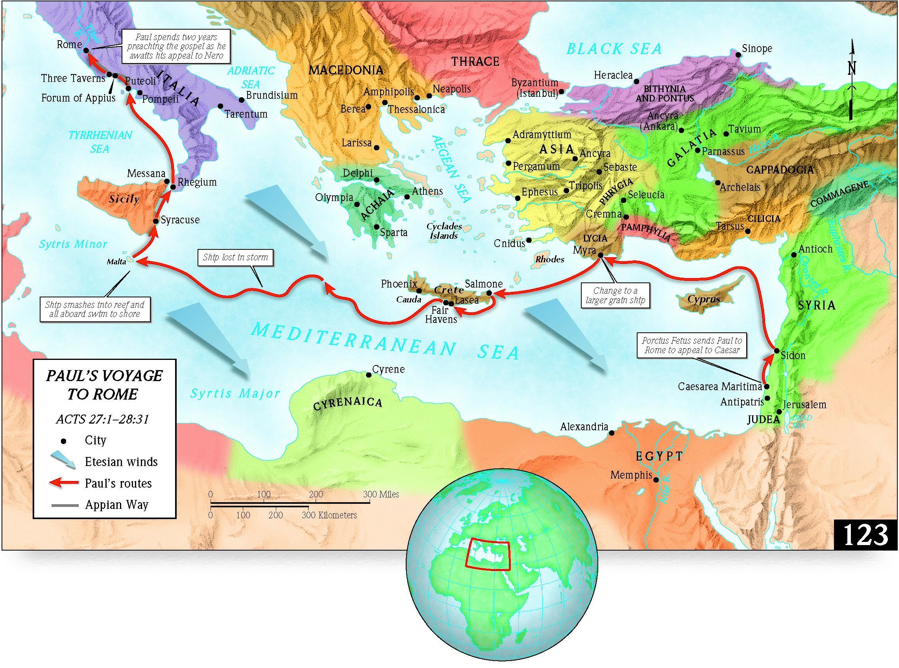
Paul's voyage to Rome.
Paul’s voyage to Rome.

2. He plans to visit Jerusalem (25–27)

The facts may be simply stated. For Macedonia and Achaia (that is, the churches of northern and southern Greece respectively) were pleased to make a contribution for the poor among the saints in Jerusalem (26). In order to understand this, we need to think first about the poor in Jerusalem, and then about the Christians of Macedonia and Achaia.

First, no explanation is given of the cause of poverty in Jerusalem. It may have been caused partly by the ‘severe famine’ which Agabus predicted. But the plausible suggestion has also often been made that it was related to the economic sharing of the first church there…. Second, Paul writes that the Macedonian and Achaian Christians were pleased to make a contribution for the Jerusalem poor…. They did give freely and willingly, but only because Paul had urged them to do so!

It is right for Gentiles to acknowledge what they owe to the Jews. When we Gentiles are thinking of the great blessings of salvation, we are hugely in debt to the Jews, and always will be. Paul sees the offering from the Gentile churches as a humble, material, symbolic demonstration of this indebtedness.

3. He plans to visit Spain (28–29)

Having explained the facts and the significance of the offering, Paul now looks beyond its presentation in Jerusalem, and hopefully its acceptance, to the long westward journey which he plans then to undertake to Spain via Rome. So after “I have completed this task and have made sure that they have received” this expression of solidarity (offering), “I will go to Spain and visit you on the way” (28).

Whether he reached and evangelized Spain we shall probably never know. The nearest thing we have to evidence is the statement by Clement of Rome in his first letter to the Corinthians (usually dated AD 96–97) about Paul’s ‘noble renown’ as a herald of the gospel: ‘To the whole world he taught righteousness, and reaching the limits of the West he bore his witness before rulers.’

As Paul mentally prepares for his visit to Rome, however, he is full of assurance…. Paul’s confidence is not in himself but in Christ.

4. He requests prayer for his visits (30–32)

Paul refers to prayer as a struggle… our need to wrestle with the principalities and powers of darkness. .. and/or an activity demanding great exertion, a struggle in fact with ourselves, in which we seek to align ourselves with God’s will.

Two topics: first – for his protection and deliverance from his opponents… Paul knows he is in danger, even for his life; and second -for acceptance among believers… Paul longs that Jewish—Gentile solidarity in the body of Christ may be strengthened by the Jewish Christians’ acceptance of its tangible symbol (the offering).

Paul now requests prayer also for his visit to Rome. Indeed he sees the two visits to be inseparably connected. Only if his mission in Jerusalem succeeds will his voyage to Rome be possible. So he asks the Romans to pray that he may be protected and his gift accepted in Jerusalem, not only because these things are important in themselves, but also so that by God’s will I may come to you with joy and together with you be refreshed (32).
__________

“Send the Light”


__________

Canticle

Christ, as a light illumine and guide me. Christ, as a shield overshadow me. Christ under me; Christ over me; Christ beside me on my left and my right. This day be within and without me, lowly and meek, yet all-powerful. Be in the heart of each to whom I speak; in the mouth of each who speaks unto me. This day be within and without me, lowly and meek, yet all-powerful. Christ as a light; Christ as a shield; Christ beside me on my left and my right.

Blessing

May the peace of the Lord Christ go with you, wherever He may send you. May He guide you through the wilderness, protect you through the storm. May He bring you home rejoicing at the wonders He has shown you. May He bring you home rejoicing once again into our doors.

+ In the name of the Father, and of the Son, and of the Holy Spirit. Amen
Morning Prayer: 24 September – Romans 15:14-22 ~ a grace-filled reminder

Reading through Romans

+ In the name of the Father, and of the Son, and of the Holy Spirit. Amen.

Opening sentence

Praise to You, Lord Jesus Christ, King of endless glory. You have the words of eternal life, and we have believed and have come to know that You are the Holy One of God.
__________

A reading from Romans: Romans 15:14-22 (NLT)

St Paul icon

I am fully convinced, my dear brothers and sisters, that you are full of goodness. You know these things so well you can teach each other all about them. Even so, I have been bold enough to write about some of these points, knowing that all you need is this reminder. For by God’s grace, I am a special messenger from Christ Jesus to you Gentiles. I bring you the Good News so that I might present you as an acceptable offering to God, made holy by the Holy Spirit. So I have reason to be enthusiastic about all Christ Jesus has done through me in my service to God. Yet I dare not boast about anything except what Christ has done through me, bringing the Gentiles to God by my message and by the way I worked among them. They were convinced by the power of miraculous signs and wonders and by the power of God’s Spirit. In this way, I have fully presented the Good News of Christ from Jerusalem all the way to Illyricum.

My ambition has always been to preach the Good News where the name of Christ has never been heard, rather than where a church has already been started by someone else. I have been following the plan spoken of in the Scriptures, where it says, “Those who have never been told about him will see, and those who have never heard of him will understand.”

In fact, my visit to you has been delayed so long because I have been preaching in these places.
__________

Reflection: Romans 15:14-22 (John Stott, The Message of Romans: God’s Good News for the World)

Conclusion: The providence of God in the ministry of Paul (Romans 15:14–16:27)

Paul takes the Roman church into his confidence about the salient characteristics of his ministry… giving us insight into the outworking of God’s providence in his life and work.

His apostolic service (Romans 15:14–22)

Paul begins by… assuring them that he knows and appreciates their qualities — their kindness, extensive Christian knowledge and proven ability to teach and admonish one another. Paul has written to them 1. to remind them of the original message of the Gospel, calling them back to it; and 2. of his special vocation, by God’s grace alone, to be the apostle to the Gentiles, as follows:

1. Paul’s ministry was a priestly ministry (16–17)

Although Paul’s priestly ministry as apostle to the Gentiles was unique, the principle he enunciates has a vital contemporary application. All evangelists are priests, because they offer their converts to God. Indeed, it is this truth more than any other which effectively unites the church’s two major roles of worship and witness. It is when we worship God, glorying in his holy name, that we are driven out to proclaim his name to the world. And when through our witness people are brought to Christ, we then offer them to God. Further, they themselves join in his worship, until they too go out to witness. Thus worship leads to witness, and witness to worship. It is a perpetual cycle.

image

2. Paul’s ministry was a powerful ministry (18–19a)

Paul alludes to at least five features of his ministry: 1. Its objective is to lead the Gentiles to obey God; 2. He is Christ’s agent or instrument, Christ working ‘through’ him and Christ receiving the glory; 3. What Christ has accomplished has been by what Paul have said and done… words explain works, but works dramatize words; 4. Christ’s ministry through Paul was by the power of signs and miracles; and 5. Paul’s ministry was also through the power of the Spirit… including both physical miracles… and the power of the Word of God… in the minds, hearts, consciences and wills of the hearers. Every conversion is a power encounter, in which the Spirit through the gospel rescues and regenerates sinners.

3. Paul’s ministry was a pioneer ministry (19b–22)

Paul succinctly and modestly summarizes ten years of strenuous apostolic labor, including his three heroic missionary journeys…. Paul’s own calling and gift as apostle to the Gentiles were to pioneer the evangelization of the Gentile world, and then leave to others, especially to local, residential presbyters, the pastoral care of the churches…. On the one hand, because he was concentrating on pioneer evangelism elsewhere, he was not free to come to the Roman church. On the other hand, because the Roman church had not been founded by him, he did not feel at liberty to come and stay. Soon, however, as he is about to explain, he will visit them, since he will only be ‘passing through’ on his way to the unevangelized field of Spain.
__________

“I Will Go”

__________

Canticle

Christ, as a light illumine and guide me. Christ, as a shield overshadow me. Christ under me; Christ over me; Christ beside me on my left and my right. This day be within and without me, lowly and meek, yet all-powerful. Be in the heart of each to whom I speak; in the mouth of each who speaks unto me. This day be within and without me, lowly and meek, yet all-powerful. Christ as a light; Christ as a shield; Christ beside me on my left and my right.

Blessing

May the peace of the Lord Christ go with you, wherever He may send you. May He guide you through the wilderness, protect you through the storm. May He bring you home rejoicing at the wonders He has shown you. May He bring you home rejoicing once again into our doors.

+ In the name of the Father, and of the Son, and of the Holy Spirit. Amen
Morning Prayer: 23 September – Romans 15:1-13 ~ accept each other

Reading through Romans

+ In the name of the Father, and of the Son, and of the Holy Spirit. Amen.

Opening sentence

Praise to You, Lord Jesus Christ, King of endless glory. You have the words of eternal life, and we have believed and have come to know that You are the Holy One of God.
__________

A reading from Romans: Romans 15:1-13 (NLT)

We who are strong must be considerate of those who are sensitive about things like this. We must not just please ourselves. We should help others do what is right and build them up in the Lord. For even Christ didn’t live to please himself. As the Scriptures say, “The insults of those who insult you, O God, have fallen on me.”

Such things were written in the Scriptures long ago to teach us. And the Scriptures give us hope and encouragement as we wait patiently for God’s promises to be fulfilled.

May God, who gives this patience and encouragement, help you live in complete harmony with each other, as is fitting for followers of Christ Jesus. Then all of you can join together with one voice, giving praise and glory to God, the Father of our Lord Jesus Christ.

image

Therefore, accept each other just as Christ has accepted you so that God will be given glory.

Remember that Christ came as a servant to the Jews to show that God is true to the promises he made to their ancestors. He also came so that the Gentiles might give glory to God for his mercies to them.

That is what the psalmist meant when he wrote: “For this, I will praise you among the Gentiles; I will sing praises to your name.” And in another place it is written, “Rejoice with his people, you Gentiles.” And yet again, “Praise the Lord , all you Gentiles. Praise him, all you people of the earth.” And in another place Isaiah said, “The heir to David’s throne will come, and he will rule over the Gentiles. They will place their hope on him.”

I pray that God, the source of hope, will fill you completely with joy and peace because you trust in him. Then you will overflow with confident hope through the power of the Holy Spirit.
__________

Reflection: Romans 14:13b-23 (John Stott, The Message of Romans: God’s Good News for the World)

The will of God for changed relationships: (Romans 12:1–15:13)

All believers, irrespective of their ethnic origin, are brothers and sisters in the one international family of God, and so all have precisely the same vocation to be the holy, committed, humble, loving and conscientious people of God.

(Romans 14:1-15:13) Our relationship to the weak: welcoming, and not despising, judging or offending them

If we are trying to picture a weaker brother or sister, we must not envisage a vulnerable Christian easily overcome by temptation, but a sensitive Christian full of indecision and scruples. What the weak lack is not strength of self-control but liberty of conscience.

2. The negative consequences (Romans 14:2–15:13)

c. Do not please yourselves (15:1–13)

What is [the strong] Christian’s responsibility towards the weak? 1. Bear with the weak’s failings; 2. not please themselves; and 3. build up the weak. Edification is a constructive alternative to demolition.

Why should we please our neighbour and not ourselves?

(i) Because Christ did not please himself (3–4)

This simple statement ‘sums up with eloquent reticence both the meaning of the incarnation and the character of Christ’s earthly life’.

(ii) Because Christ is the way to united worship (5–6)

Christian unity is unity in Christ; the person of Jesus Christ himself is the focus of our unity; and therefore the more we agree with him and about him, the more we will agree with one another… so that with one heart and mouth you may glorify the God and Father of our Lord Jesus Christ.

(iii) Because Christ accepted you (7)

The weak brother is to be accepted for God has accepted him, and the members are to welcome each other just as Christ accepted you. Moreover, Christ’s acceptance of us was also in order to bring praise to God. The entire credit for the welcome we have received goes to him who took the initiative through Christ to reconcile us to himself and to each other.

(iv) Because Christ has become a servant (8–13)

Then Christ’s role as the servant of the Jews, that is, as the Jewish Messiah, is seen to have two parallel purposes, first to confirm the promises made to the patriarchs and secondly to incorporate the Gentiles as well.

Paul concludes this section of his letter with a benediction: May the God of hope fill you with all joy and peace as you trust in him (13a).
__________

“In Christ Alone”


__________

Canticle

Christ, as a light illumine and guide me. Christ, as a shield overshadow me. Christ under me; Christ over me; Christ beside me on my left and my right. This day be within and without me, lowly and meek, yet all-powerful. Be in the heart of each to whom I speak; in the mouth of each who speaks unto me. This day be within and without me, lowly and meek, yet all-powerful. Christ as a light; Christ as a shield; Christ beside me on my left and my right.

Blessing

May the peace of the Lord Christ go with you, wherever He may send you. May He guide you through the wilderness, protect you through the storm. May He bring you home rejoicing at the wonders He has shown you. May He bring you home rejoicing once again into our doors.

+ In the name of the Father, and of the Son, and of the Holy Spirit. Amen

Morning Prayer: 22 September – Romans 14:13b-23 ~ the Kingdom trumps food

Reading through Romans

+ In the name of the Father, and of the Son, and of the Holy Spirit. Amen.

Opening sentence

Praise to You, Lord Jesus Christ, King of endless glory. You have the words of eternal life, and we have believed and have come to know that You are the Holy One of God.
__________

A reading from Romans: Romans 14:13-23 (NLT)

So let’s stop condemning each other. Decide instead to live in such a way that you will not cause another believer to stumble and fall.

veg vs meat

I know and am convinced on the authority of the Lord Jesus that no food, in and of itself, is wrong to eat. But if someone believes it is wrong, then for that person it is wrong. And if another believer is distressed by what you eat, you are not acting in love if you eat it. Don’t let your eating ruin someone for whom Christ died. Then you will not be criticized for doing something you believe is good. For the Kingdom of God is not a matter of what we eat or drink, but of living a life of goodness and peace and joy in the Holy Spirit. If you serve Christ with this attitude, you will please God, and others will approve of you, too. So then, let us aim for harmony in the church and try to build each other up.

Don’t tear apart the work of God over what you eat. Remember, all foods are acceptable, but it is wrong to eat something if it makes another person stumble. It is better not to eat meat or drink wine or do anything else if it might cause another believer to stumble. You may believe there’s nothing wrong with what you are doing, but keep it between yourself and God. Blessed are those who don’t feel guilty for doing something they have decided is right. But if you have doubts about whether or not you should eat something, you are sinning if you go ahead and do it. For you are not following your convictions. If you do anything you believe is not right, you are sinning.
__________

Reflection: Romans 14:13b-23 (John Stott, The Message of Romans: God’s Good News for the World)

The will of God for changed relationships: (Romans 12:1–15:13)

All believers, irrespective of their ethnic origin, are brothers and sisters in the one international family of God, and so all have precisely the same vocation to be the holy, committed, humble, loving and conscientious people of God.

(Romans 14:1-15:13) Our relationship to the weak: welcoming, and not despising, judging or offending them

If we are trying to picture a weaker brother or sister, we must not envisage a vulnerable Christian easily overcome by temptation, but a sensitive Christian full of indecision and scruples. What the weak lack is not strength of self-control but liberty of conscience.

2. The negative consequences (Romans 14:2–15:13)

(b) Do not offend or destroy the weaker person (14:13b-23)

Two additional theological foundations:

(i) Welcome him because he is your brother for whom Christ died (14–16)

If your brother is distressed (feels grief and even pain) because of what you eat, not only because he sees you doing something of which he disapproves, but because he is induced to follow your example against his conscience, you are no longer acting in love, no longer walking the path of love. For love never disregards weak consciences. Love limits its own liberty out of respect for them.

Paul’s warning is that the strong who mislead the weak to go against their consciences will seriously damage their Christian discipleship. He urges the strong against causing such injury to the weak. Do not allow what you consider good (i.e. the liberty you have found in Christ) to be spoken of as evil, because you flaunt it to the detriment of the weak.

(ii) Welcome him because the kingdom of God is more important than food (17–21)

The kingdom of God is not a matter of eating and drinking, but of righteousness, peace and joy in the Holy Spirit…. Our responsibility is to seek to build up the fellowship, not to tear it down. And in particular we must not tear it down for the sake of food.

So it would be evil for the strong to use their liberty to harm the weak. Alternatively, it would be good for the strong (Paul drives the argument to its logical conclusion) to eat no meat and drink no wine, that is, to become vegetarians and total abstainers, and to go to any other extreme of renunciation, if that were necessary to serve the welfare of the weak.

Paul concludes (22–23) by drawing a distinction between belief and action, that is, between private conviction and public behavior.

There is no need either to parade your [private] views or to impose them on other people. As for public behavior, there are two options: 1. The strong Christian is blessed because his conscience approves of his eating everything, so that he can follow his conscience without any guilt feelings. 2. The weak Christian who is plagued with misgivings because his conscience gives him vacillating signals, is condemned if he eats, because his eating is not from faith; and everything that does not come from faith… is sin.
__________

“Let Your Kingdom Come” – Sovereign Grace


__________

Canticle

Christ, as a light illumine and guide me. Christ, as a shield overshadow me. Christ under me; Christ over me; Christ beside me on my left and my right. This day be within and without me, lowly and meek, yet all-powerful. Be in the heart of each to whom I speak; in the mouth of each who speaks unto me. This day be within and without me, lowly and meek, yet all-powerful. Christ as a light; Christ as a shield; Christ beside me on my left and my right.

Blessing

May the peace of the Lord Christ go with you, wherever He may send you. May He guide you through the wilderness, protect you through the storm. May He bring you home rejoicing at the wonders He has shown you. May He bring you home rejoicing once again into our doors.

+ In the name of the Father, and of the Son, and of the Holy Spirit. Amen
Morning Prayer: 21 September – Romans 14:2–13a ~ stop criticizing each other

Reading through Romans

+ In the name of the Father, and of the Son, and of the Holy Spirit. Amen.

Opening sentence

Praise to You, Lord Jesus Christ, King of endless glory. You have the words of eternal life, and we have believed and have come to know that You are the Holy One of God.
__________

A reading from Romans: Romans 14:2–13a (NLT)

girl-covered-eye

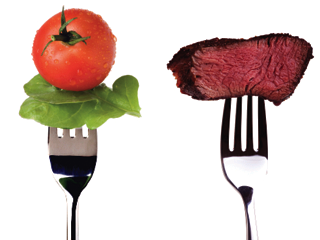
For instance, one person believes it’s all right to eat anything. But another believer with a sensitive conscience will eat only vegetables. Those who feel free to eat anything must not look down on those who don’t. And those who don’t eat certain foods must not condemn those who do, for God has accepted them. Who are you to condemn someone else’s servants? Their own master will judge whether they stand or fall. And with the Lord’s help, they will stand and receive his approval.

In the same way, some think one day is more holy than another day, while others think every day is alike. You should each be fully convinced that whichever day you choose is acceptable. Those who worship the Lord on a special day do it to honor him. Those who eat any kind of food do so to honor the Lord, since they give thanks to God before eating. And those who refuse to eat certain foods also want to please the Lord and give thanks to God. For we don’t live for ourselves or die for ourselves. If we live, it’s to honor the Lord. And if we die, it’s to honor the Lord. So whether we live or die, we belong to the Lord. Christ died and rose again for this very purpose — to be Lord both of the living and of the dead.

So why do you condemn another believer? Why do you look down on another believer? Remember, we will all stand before the judgment seat of God. For the Scriptures say, “‘As surely as I live,’ says the Lord, ‘every knee will bend to me, and every tongue will declare allegiance to God.’”

Yes, each of us will give a personal account to God. So let’s stop condemning each other.
__________

Reflection: Romans 14:2–13a (John Stott, The Message of Romans: God’s Good News for the World)

The will of God for changed relationships: (Romans 12:1–15:13)

All believers, irrespective of their ethnic origin, are brothers and sisters in the one international family of God, and so all have precisely the same vocation to be the holy, committed, humble, loving and conscientious people of God.

(Romans 14:1-15:13) Our relationship to the weak: welcoming, and not despising, judging or offending them

If we are trying to picture a weaker brother or sister, we must not envisage a vulnerable Christian easily overcome by temptation, but a sensitive Christian full of indecision and scruples. What the weak lack is not strength of self-control but liberty of conscience.

2. The negative consequences (Romans 14:2–15:13)

(a) Do not despise or condemn the weak person (14:2–13a)

Four underlying theological principles:

(i) Welcome him because God has welcomed him (2–3)

The best way to determine what our attitude to other people should be is to determine what God’s attitude to them is. This principle is better even than the golden rule. It is safe to treat others as we would like them to treat us, but it is safer still to treat them as God does.

(ii) Welcome him because Christ died and rose to be the Lord (4–9)

Jesus is Lord of heaven and earth

[Paul] lifts the very mundane question of our mutual relationships in the Christian community to the high theological level of the death, resurrection and consequent universal lordship of Jesus. Because he is our Lord, we must live for him. Because he is also the Lord of our fellow Christians, we must respect their relationship to him and mind our own business. For he died and rose to be Lord.

(iii) Welcome him because he is your brother (10a)

We are related to one another in the strongest possible way, by family ties. Whether we are thinking of the weak, with all their tedious doubts and fears, or of the strong, with all their brash assurances and freedoms, they are our brothers and sisters. When we remember this, our attitude to them becomes at once less critical and impatient, more generous and tender.

(iv) Welcome him because we will all stand before God’s judgment seat (10b–13a)

Because God is the Judge and we are among the judged, let us stop passing judgment on one another, for then we shall avoid the extreme folly of trying to usurp God’s prerogative and anticipate judgment day.
__________

“Revelation Song” – Kari Jobe


__________

Canticle

Christ, as a light illumine and guide me. Christ, as a shield overshadow me. Christ under me; Christ over me; Christ beside me on my left and my right. This day be within and without me, lowly and meek, yet all-powerful. Be in the heart of each to whom I speak; in the mouth of each who speaks unto me. This day be within and without me, lowly and meek, yet all-powerful. Christ as a light; Christ as a shield; Christ beside me on my left and my right.

Blessing

May the peace of the Lord Christ go with you, wherever He may send you. May He guide you through the wilderness, protect you through the storm. May He bring you home rejoicing at the wonders He has shown you. May He bring you home rejoicing once again into our doors.

+ In the name of the Father, and of the Son, and of the Holy Spirit. Amen