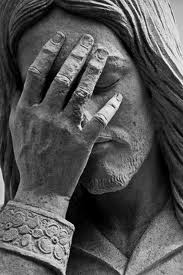
Saving Rock and Roll | God is a “Wild Old Dog” | First Things Reblog

Saving Rock and Roll | Web Exclusives | First Things.
__________

Peanut Gallery: I doubt if this music will show up any time soon in your local church, but the imagery is riveting and the tune haunting. Stephen Webb places Patty Griffin’s song “Wild Old Dog” within a framework of faith. And it’s given me a lot to think about as I approach the Lenten season.

I’ve included a YouTube version with words below so that you can judge for yourself. I’d love to hear your comments.
__________

SAVING ROCK AND ROLL

by Stephen H. Webb;

Rock and roll has a rebellious sound. I write that hesitantly, because there is really no such thing as rock and roll, in terms of having a permanent nature or ongoing essence. Speed, loudness, and distorted acoustical effects do not a musical genre make. Rock is a mishmash of various musical traditions — Gospel, blues, jazz, folk, country, swing — rather than a tradition of its own. When bands began using string instruments in the late sixties, for example, they changed the way most people hear classical music, and classical music, to the extent that it is still culturally relevant, has had to adapt accordingly. Even calling rock rebellious is a dated description. Like a vampire, rock needs fresh blood to survive, and it leaves its victims forever altered by draining their lifeblood. But what will happen when all music becomes, to one degree or another, rockified? Can rock be, musically speaking, everything and still be rock and roll?

Monopolies have no competitors, but there is a competing brand to rebellious rock, and that is contemporary Christian music. Once derided not just by traditionalist Christians but also by rock devotees, Christian rock has come of age. Precisely because it tries to sound different from the rock mainstream, much of it is as good as or better than secular rock — although it is still tightly segregated, like Christian fiction, from the mainstream markets.

patty griffin

If I were a trend-spotter, I would wager that secular rock will increasingly look to its Christian rival for new infusions of creativity and power. Take, for example, Patty Griffin’s “Wild Old Dog,” an intensely meditative song that gains in theological power with each new hearing. It begins:

God is a wild old dog

Someone left out on the highway

I seen him running by me

He don’t belong to no one now.

The song tells the story of a family that pulls over on the side of a highway in order to abandon their mangy and nearly blind old dog. When they set out for the ride, one of the family members tries to kick him into the car, but “He just climbed on in just like he knew.” He is a willing victim. Indeed, his destiny is to have his broken bones crushed and whittled down to nothing.

The pathos in this song is heavy, but it is redeemed from its own melodrama by the soaring quality of Griffin’s voice. She can be uplifting even when the words are driving you down, while the gracefulness of her singing sounds utterly forlorn. I know nothing about Griffin’s religious beliefs, but she has written a great religious song that begs to be interpreted theologically.

When the dog is let go, to the surprise of the singer and against all expectation, he tears “off runnin’ like we set him free.” The dog is not running away from the family, nor is he blindly running around, with no direction. In fact, with bad hips and knees, it is a miracle that he is running at all. It is uncertain what this does to the singer’s faith. The dog disappears right in front of her and leaves her thinking about how

Sometimes a heart can turn to dust

Get whittled down to nothing

Broken down and crushed.

The dog’s fate deeply wounds the singer, and this song is her attempt at healing.

But what about the dog, who is, after all, identified with God? The dog never loses his dignity. In fact, his sudden running seems to be telling the family that it is all right that they have kicked him out. The dog is old, but by embracing the wildness they have forced on him, he takes away the consequences of their cruelty. The dog is not just any kind of God, but the God who died to set us free.

We live in a world where sound has become a salvific commodity. Plugging in is how many people escape the drudgery of the ordinary and everyday. Favorite songs provide three minutes of transcendence. Nevertheless, rock is so ubiquitous that it is in danger of becoming musical wallpaper, with one style looking like another and none looking all that interesting, which leaves you wanting to tear them all down just to see the wall again.

Music lets us hear ideas that can be hard to grasp on an abstract or conceptual level. Griffin’s voice in this song, for example, makes the sadness of her words come alive in a way that expands our theological senses. We can hear in her voice the sound of the loss she is describing. More specifically, we can hear in her song the hard truth that Jesus Christ was never more like us than when we abandoned him.

Griffin is not Christian rock. But secular rock will increasingly look like Griffin, or it should. The future of rock is either to suffer a slow cultural death or be saved by more satisfying sounds by rebelling against its original rebellion and becoming more explicitly spiritual. Even if I am wrong about that prediction, the possibility that the best popular music can carry rich theological themes is something to celebrate.

Stephen H. Webb is a columnist for First Things. He is the author of Jesus Christ, Eternal God and, forthcoming, Mormon Christianity. His book on Bob Dylan is Dylan Redeemed.
__________

God is a wild old dog, / Someone left out on the highway. / I seen him running by me, / He don’t belong to noone now.

They dropped him out on 93. / Mange was setting in on his hips and on his knees. / Between the highways runnin north and south / They pulled on over and put him out

Willie said he was old and goin blind. / Momma told me how she didn’t mind. / When Willie kicked him with his shoe, / He just climbed on in just like he knew

God is a wild old dog / Someone left out on the highway / I seen him runnin by me / He don’t belong to noone now

It’s lonely on the highway / Sometimes a heart can turn to dust / Get whittled down to nothin / Broken down and crushed / In with the bones of wild old dogs / Wild old dogs

They dropped him out on 93 / Tall grass was waving there just like the sea / He tore off runnin like we set him free / Just disappeared right in front of me

God is a wild old dog / Someone left out on the highway / I seen him runnin by me / He don’t belong to noone now / He don’t belong to noone now.
Morning Prayer, 04 Mar – John 11:45-57 ~ one for all

Morning Prayer

+ In the name of the Father, and of the Son, and of the Holy Spirit. Amen

Opening sentences – Brigid of Kildare (c. 450-523)

Christ in our coming and in our leaving, the Door and the Keeper; for us and our dear ones, this day and every day, blessing for always. Amen.

Morning readings

John 11:45-57 ESV:

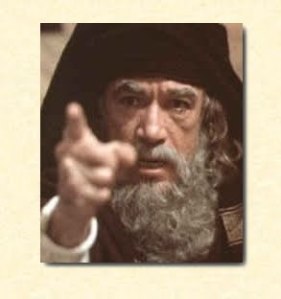
chief-priest

Many of the Jews therefore, who had come with Mary and had seen what he did, believed in him, but some of them went to the Pharisees and told them what Jesus had done. So the chief priests and the Pharisees gathered the council and said, “What are we to do? For this man performs many signs. If we let him go on like this, everyone will believe in him, and the Romans will come and take away both our place and our nation.”

But one of them, Caiaphas, who was high priest that year, said to them, “You know nothing at all. Nor do you understand that it is better for you that one man should die for the people, not that the whole nation should perish.” He did not say this of his own accord, but being high priest that year he prophesied that Jesus would die for the nation, and not for the nation only, but also to gather into one the children of God who are scattered abroad. So from that day on they made plans to put him to death.

Jesus therefore no longer walked openly among the Jews, but went from there to the region near the wilderness, to a town called Ephraim, and there he stayed with the disciples.

Now the Passover of the Jews was at hand, and many went up from the country to Jerusalem before the Passover to purify themselves. They were looking for Jesus and saying to one another as they stood in the temple, “What do you think? That he will not come to the feast at all?” Now the chief priests and the Pharisees had given orders that if anyone knew where he was, he should let them know, so that they might arrest him.

Reflections:

faith and fear

There are a variety of responses to Jesus’ raising of Lazarus – many put faith in him, but others inform the authorities. The report alarms the Pharisees, and so the chief priests and the Pharisees called a meeting of the Sanhedrin.

Like many religious leaders since, Jesus is accused of being a threat to national security. Jesus’ popularity could look like a popular uprising that would require calling in the Roman legions destroying both their religious positions and the entire nation. The irony is that they do destroy the temple of Jesus’ body, but this does not prevent the Romans from destroying their temple and their nation, nor does it prevent increasing numbers of people from believing in Jesus.

Their plot prevented neither of the things they feared, even though they succeeded in getting Jesus killed.

atonement and oneness

Caiaphas unwittingly prophesies that Jesus would die for the Jewish nation, but John sees the divine intent that Jesus die in place of the nation for their sin… and for the sin of all humanity. Jesus’ death is also for the scattered children of God, to bring them together and make them one. Jesus’ work as the Good Shepherd is accomplished through his death.

The oneness with God that the atonement accomplishes is complemented by the oneness of the people of God drawn from the whole of the human race. They are already referred to as children of God since each one who enters Christ’s community has been given to him by the Father and has responded in faith and has been born again. It is Christ, especially Christ crucified, that unites the people of God.

seclusion and speculation

Jesus goes back into seclusion because of the increased danger. His movement in and out of seclusion shows him working around the intentions of his enemies as he works out the intentions of his Father. There is a similar pattern in his work in the lives of his followers today. He moves in and out of seclusion in our lives, not because his life is threatened but as part of his love for us, to wean us from false attachments, even false views we may have of God himself.

Meanwhile, as Passover approaches, friends and foes speculate whether or not Jesus will come to the feast, aware that the chief priests and Pharisees are seeking his arrest. But Jesus has already departed from the temple and will not be standing where they are standing as they ask such questions. He will come up to this feast, but he will not be coming to the temple. Rather, the one true sacrifice is about to take place in the temple of his body.

The IVP New Testament Commentary Series

__________


__________

Canticle:

Christ, as a light… illumine and guide me. Christ, as a shield… overshadow me. Christ under me; Christ over me; Christ beside me on my left and my right.

This day be within and without me, lowly and meek, yet all-powerful. Be in the heart of each to whom I speak; in the mouth of each who speaks unto me. This day be within and without me, lowly and meek, yet all-powerful.

Christ as a light; Christ as a shield; Christ beside me on my left and my right.

Blessing

May the peace of the Lord Christ go with you, wherever He may send you. May He guide you through the wilderness, protect you through the storm. May He bring you home rejoicing at the wonders He has shown you. May He bring you home rejoicing once again into our doors.

+ In the name of the Father, and of the Son, and of the Holy Spirit. Amen

_____________________________________

Peanut Gallery: A brief word of explanation – the general format for Morning Prayer is adapted from the Northumbrian Community‘s Daily Office, as found in Celtic Daily Prayer (see online resources here.) The Scripture readings are primarily from the Gospel of John, with the intent to complete the reading by Easter. Other Scriptures which illuminate the Gospel of John will be included along the way.

Reflections from various saints will be included as their memorial days occur during the calendar year.

On Sundays, I’ll return to the USCCB readings (see online resources here) and various liturgical resources in order to reflect the Church’s worship and concerns throughout the world.

Photo illustrations and music videos, available online, are included as they illustrate or illuminate the readings. I will try to give credit and link to sources as best I can.

Morning Prayer, 03 Mar – John 11:38-44 ~ You raise me up

Morning Prayer

+ In the name of the Father, and of the Son, and of the Holy Spirit. Amen

Opening sentences – Brigid of Kildare (c. 450-523)

Peace be here in the Name of the King of life; the peace of Christ above all peace, the Lord’s blessing over you.

Child of my heart, the joy of God be in thy face, joy to all who see thee.

The circle of God around thee, angels of God shielding thee.

Joy of night and day be thine; joy of sun and moon be thine; joy of men and women be thine.

Each land and sea thou goest, each land and sea thou goest, be every season happy for thee; be every season bright for thee; be every season glad for thee.

Be thine the compassing of the God of life; be thine the compassing of the Christ of love; be thine the compassing of the Spirit of grace: to befriend thee and aid thee, thou beloved child of my heart.

Morning readings

John 11:38-44 ESV:

'The Raising of Lazarus' Duccio di Buoninsegna (1310–11) Kimbell Art Museum
‘The Raising of Lazarus’
Duccio di Buoninsegna (1310–11)
Kimbell Art Museum

Then Jesus, deeply moved again, came to the tomb. It was a cave, and a stone lay against it. Jesus said, “Take away the stone.”

Martha, the sister of the dead man, said to him, “Lord, by this time there will be an odor, for he has been dead four days.”

Jesus said to her, “Did I not tell you that if you believed you would see the glory of God?” So they took away the stone.

And Jesus lifted up his eyes and said, “Father, I thank you that you have heard me. I knew that you always hear me, but I said this on account of the people standing around, that they may believe that you sent me.” When he had said these things, he cried out with a loud voice, “Lazarus, come out.”

The man who had died came out, his hands and feet bound with linen strips, and his face wrapped with a cloth.

Jesus said to them, “Unbind him, and let him go.”

Reflections:

bodily resurrection

Martha’s objection that there would be a stench due to decomposition highlights the greatness of this sign. Jesus is raising someone who should already have begun to decay. There is no indication in the story that Lazarus comes out bearing marks of decay. Here we see a revelation of Jesus’ power and authority as the agent of creation. He does not just bring the person back to life by reuniting soul and body, he also restores the body itself.

Not only is the raising of Lazarus a sign of Jesus’ identity and authority as life-giver, it also reflects the reality of the resurrection of the body. God is able to restore physical bodies after decay. The analogy is not complete, since Lazarus is not raised as an imperishable, spiritual body, as will be the case at the resurrection of the dead. But there is a continuity between the spiritual body and the physical body: it is a bodily resurrection. The overcoming of corruption in the raising of Lazarus thus provides, in part, a sign of the future resurrection.

God the Father

Here is the most powerful sign of Jesus’ power and authority, but it does not point to him except as evidence that he is doing what he sees the Father doing. He is here to glorify God, not himself.

This dependency upon the Father is further emphasized in Jesus’ prayer. Indeed, for Christians, God is now known primarily as the Father of Jesus. Our language for God as Father has its source in Jesus’ own revelation of God. It is his relationship with God that a Christian enters into and thus comes to know God as Jesus knows him, within the limitations of our human nature.

God the Son

Jesus vocalizes his prayer for the sake of the crowd – it is not enough for people to be impressed with Jesus. They must believe in him as the one sent from God. It is precisely because Jesus is sent from God and does as God directs him that he is heard by God. The Father as the sender is primary. Jesus is not a wonderworker who is able to get God to do what he wants him to do. He is the obedient Son sent by the Father to do the Father’s will. The Father’s will and the Son’s petition coincide exactly.

In saying the purpose of this prayer is that they might believe, Jesus is again acting with divine graciousness and mercy. Such belief brings eternal life. Thus, this miracle is not just for the sake of Lazarus and his sisters, who already do have such faith and the life it brings, but for others that they may have life. The miracle reveals Jesus as the life-giver sent from the Father, and one receives life from him as one has faith in him.

Word of life

Jesus could have healed Lazarus when he was still sick with a word of command, even across the miles. But now he utters a mightier word across a much greater distance — that between the living and the dead. The Word through whom all was made here speaks forth life. Those standing around were given tasks to do, such as taking away the stone and unbinding Lazarus. The physical contact helped drive home the reality of what was happening. But for Jesus, his work is his word.

Jesus’ command – “Take off the grave clothes and let him go” – is a cry of victory. The grave has been defeated and liberty achieved – it is a great sign of the life that is stronger than death, which those who believe in Jesus share. And it is a graphic sign of Jesus’ own power and authority.

This story speaks to all Christians bound by the fear of death and, on another level, bound by various sins. The Christian is in union with the one who himself is resurrection and life. As Christ offers freedom from the power of sin, so faith in Christ as resurrection and life brings freedom from the fear of death.

The IVP New Testament Commentary Series

__________

__________

Canticle:

Christ, as a light… illumine and guide me. Christ, as a shield… overshadow me. Christ under me; Christ over me; Christ beside me on my left and my right.

This day be within and without me, lowly and meek, yet all-powerful. Be in the heart of each to whom I speak; in the mouth of each who speaks unto me. This day be within and without me, lowly and meek, yet all-powerful.

Christ as a light; Christ as a shield; Christ beside me on my left and my right.

Blessing

May the peace of the Lord Christ go with you, wherever He may send you. May He guide you through the wilderness, protect you through the storm. May He bring you home rejoicing at the wonders He has shown you. May He bring you home rejoicing once again into our doors.

+ In the name of the Father, and of the Son, and of the Holy Spirit. Amen

_____________________________________

Peanut Gallery: A brief word of explanation – the general format for Morning Prayer is adapted from the Northumbrian Community‘s Daily Office, as found in Celtic Daily Prayer (see online resources here.) The Scripture readings are primarily from the Gospel of John, with the intent to complete the reading by Easter. Other Scriptures which illuminate the Gospel of John will be included along the way.

Reflections from various saints will be included as their memorial days occur during the calendar year.

On Sundays, I’ll return to the USCCB readings (see online resources here) and various liturgical resources in order to reflect the Church’s worship and concerns throughout the world.

Photo illustrations and music videos, available online, are included as they illustrate or illuminate the readings. I will try to give credit and link to sources as best I can.

8th Ordinary Sunday: Isaiah 49:14-15; Psalm 62:2-3, 6-9; 1 Corinthians 4:1-5; Matthew 6:24-34 ~ never forgotten

8th Sunday in Ordinary Time

+ In the Name of the Father, and the Son, and the Holy Spirit. Amen

Opening sentence and prayer:

The Lord gathers me in to His loving embrace, the Lord who invites me not to worry about tomorrow. Setting my heart on His kingdom, I entrust all my tomorrows to Him and ask Him to help me live for this, His day.
__________

Lord God, Your care for me surpasses even a mother’s tender love. Renew my trust in Your provident care, that I may abandon all anxiety and seek first Your kingdom. I ask this through my Lord Jesus Christ, Your Son, who lives and reigns with You in the unity of the Holy Spirit, God for ever and ever.

A Reading from the Old Testament: Isaiah 49:14-15 (NLT)

"Mother Jeanne Nursing Her Baby" Mary Cassatt (1907-08)
“Mother Jeanne Nursing Her Baby”
Mary Cassatt (1907-08)

Yet Jerusalem says, “The Lord has deserted us; the Lord has forgotten us.”

“Never! Can a mother forget her nursing child? Can she feel no love for the child she has borne? But even if that were possible, I would not forget you!”

A Reading from the Psalms: Psalm 62:2-3, 6-9 (NLT)

He alone is my rock and my salvation, my fortress where I will never be shaken.

So many enemies against one man — all of them trying to kill me. To them I’m just a broken-down wall or a tottering fence.

He alone is my rock and my salvation, my fortress where I will not be shaken. My victory and honor come from God alone. He is my refuge, a rock where no enemy can reach me. O my people, trust in him at all times. Pour out your heart to him, for God is our refuge.

Common people are as worthless as a puff of wind, and the powerful are not what they appear to be. If you weigh them on the scales, together they are lighter than a breath of air.
__________


__________

A Reading from the Letters: 1 Corinthians 4:1-5 (NLT)

So look at Apollos and me as mere servants of Christ who have been put in charge of explaining God’s mysteries. Now, a person who is put in charge as a manager must be faithful. As for me, it matters very little how I might be evaluated by you or by any human authority. I don’t even trust my own judgment on this point. My conscience is clear, but that doesn’t prove I’m right. It is the Lord himself who will examine me and decide.

So don’t make judgments about anyone ahead of time — before the Lord returns. For he will bring our darkest secrets to light and will reveal our private motives. Then God will give to each one whatever praise is due.

A Reading from the Gospels: Matthew 6:24-34 (NLT)

“No one can serve two masters. For you will hate one and love the other; you will be devoted to one and despise the other. You cannot serve both God and money.

“That is why I tell you not to worry about everyday life — whether you have enough food and drink, or enough clothes to wear. Isn’t life more than food, and your body more than clothing? Look at the birds. They don’t plant or harvest or store food in barns, for your heavenly Father feeds them. And aren’t you far more valuable to him than they are? Can all your worries add a single moment to your life?

“And why worry about your clothing? Look at the lilies of the field and how they grow. They don’t work or make their clothing, yet Solomon in all his glory was not dressed as beautifully as they are. And if God cares so wonderfully for wildflowers that are here today and thrown into the fire tomorrow, he will certainly care for you. Why do you have so little faith?

“So don’t worry about these things, saying, ‘What will we eat? What will we drink? What will we wear?’ These things dominate the thoughts of unbelievers, but your heavenly Father already knows all your needs. Seek the Kingdom of God above all else, and live righteously, and he will give you everything you need.

“So don’t worry about tomorrow, for tomorrow will bring its own worries. Today’s trouble is enough for today.”

Intercessions:

Mighty God – my rock, my stronghold – hear the cries of my heart for the needs of Your people:

+ For all who believe, that we may experience Your tender love…. Lord, hear my prayer.
+ For all who are anxious and fearful, that we may find rest and peace in Your gracious care…. Lord, hear my prayer.
+ For Christian leaders, that they may teach the world who You are – Father, Son and Spirit…. Lord, hear my prayer.
+ For mothers, that they may always be well supported in their task of raising the next generation…. Lord, hear my prayer.
+ For respect for women, that all cultures may respect women’s rights and dignity…. Lord, hear my prayer.
+ For fathers, that we may always provide godly love and support for our wives and families…. Lord, hear my prayer.
+ For all who are suffering hardship, persecution and even death because of their Chrisitan faith…. Lord, hear my prayer.
+ For all those who are embroiled in violence, wars and rumors of wars – especially in Syria, the Middle East, Africa and Ukraine – that Your church may bring light and life, hope and help, to those living in the shadow of death…. Lord, hear my prayer.
+ For all those who rejoice at the birth of children, and those who mourn at the death of loved one’s, that they may know that their lives are in Your gracious and merciful hands…. Lord, hear my prayer.

Mighty God, my fortress and my strength, hear my prayers on behalf of Your people and help us grow in trust of You. Through Christ my Lord. Amen.

Hymn: “Holy God, we praise your name”Ignace Franz

Holy God, we praise your name; Lord of all, we bow before you. Saints on earth your rule acclaim; all in heaven above adore you. Infinite your vast domain; everlasting is your reign.

Hark, the glad celestial hymn / angel choirs above are raising; cherubim and seraphim, in unceasing chorus praising, fill the heavens with sweet accord: “Holy, holy, holy Lord!”

Spare Thy people, Lord, we pray, By a thousand snares surrounded: Keep us without sin today, Never let us be confounded. Lo, I put my trust in Thee; Never, Lord, abandon me.

+ In the Name of the Father, and the Son, and the Holy Spirit. Amen

Morning Prayer, 01 Mar – John 11:28-37 ~ run to Jesus

Morning Prayer

+ In the name of the Father, and of the Son, and of the Holy Spirit. Amen

Opening sentences – Brigid of Kildare (c. 450-523)

Peace be here in the Name of the King of life; the peace of Christ above all peace, the Lord’s blessing over you.

May all be welcomed here as the Christ-child at the stable: in simplicity and joy, and may the smile of the Son of Peace be found here whenever the door is opened.

Morning readings

John 11:28-37 ESV:

jesus wept

When [Martha] had said this, she went and called her sister Mary, saying in private, “The Teacher is here and is calling for you.” And when she heard it, she rose quickly and went to him. Now Jesus had not yet come into the village, but was still in the place where Martha had met him. When the Jews who were with her in the house, consoling her, saw Mary rise quickly and go out, they followed her, supposing that she was going to the tomb to weep there.

Now when Mary came to where Jesus was and saw him, she fell at his feet, saying to him, “Lord, if you had been here, my brother would not have died.” When Jesus saw her weeping, and the Jews who had come with her also weeping, he was deeply moved in his spirit and greatly troubled. And he said, “Where have you laid him?” They said to him, “Lord, come and see.” Jesus wept.

So the Jews said, “See how he loved him!” But some of them said, “Could not he who opened the eyes of the blind man also have kept this man from dying?”

Reflections:

Mary runs to Jesus, as had Martha, showing their great attachment to Jesus, which reciprocated his love for them. In coming to Jesus in the midst of suffering the sisters provide a model for all believers.

The wailing of Mary and those with her provokes a strong emotional reaction in Jesus – translated literally, “became angry in spirit and very agitated.” Jesus’ anger is most likely directed at death itself, the pain and sadness it causes, and the reign of terror it exercises. In a Gospel in which life is one of the primary themes, death is clearly the great enemy.

The mourners invitation to “come and see” where Lazarus has been buried wrings Jesus’ heart. He is not in anguish over the death of Lazarus, but rather saddened by the pain and sadness they feel. He is weeping with those who weep because he loves them.

The grief caused by death is one facet of death’s evil that caused Jesus’ anger. He is angry at death and saddened at grief. In both cases the reason is the same, namely, Jesus’ love for his friends. The love of God for us and his wrath toward that which corrupts and destroys us are two sides of a single coin.

The IVP New Testament Commentary Series

__________


__________

Canticle:

Christ, as a light… illumine and guide me. Christ, as a shield… overshadow me. Christ under me; Christ over me; Christ beside me on my left and my right.

This day be within and without me, lowly and meek, yet all-powerful. Be in the heart of each to whom I speak; in the mouth of each who speaks unto me. This day be within and without me, lowly and meek, yet all-powerful.

Christ as a light; Christ as a shield; Christ beside me on my left and my right.

Blessing

May the peace of the Lord Christ go with you, wherever He may send you. May He guide you through the wilderness, protect you through the storm. May He bring you home rejoicing at the wonders He has shown you. May He bring you home rejoicing once again into our doors.

+ In the name of the Father, and of the Son, and of the Holy Spirit. Amen

_____________________________________

Peanut Gallery: A brief word of explanation – the general format for Morning Prayer is adapted from the Northumbrian Community‘s Daily Office, as found in Celtic Daily Prayer (see online resources here.) The Scripture readings are primarily from the Gospel of John, with the intent to complete the reading by Easter. Other Scriptures which illuminate the Gospel of John will be included along the way.

Reflections from various saints will be included as their memorial days occur during the calendar year.

On Sundays, I’ll return to the USCCB readings (see online resources here) and various liturgical resources in order to reflect the Church’s worship and concerns throughout the world.

Photo illustrations and music videos, available online, are included as they illustrate or illuminate the readings. I will try to give credit and link to sources as best I can.