
9 (More) Things You Should Know About Roe v. Wade ~ Reblog

THE GOSPEL COALITION

Joe Carter
TGC Blog | January 22, 2014

image

Today is the forty-first anniversary of the landmark abortion decision, Roe v. Wade, in which the Supreme Court eliminated the abortion laws of all 50 states, and in the companion case of Doe v. Bolton — which was released on the same day — which eliminated state health and safety regulations of abortion. Last year I noted nine things everyone should know about Roe. Here are nine more:

1. The case was filed by Norma McCorvey, known in court documents as Jane ROE against Henry WADE, the district attorney of Dallas County from 1951 to 1987, who enforced a Texas law that prohibited abortion, except to save a woman’s life.

2. In 1969, McCorvey was 22 years old, divorced, homeless, and pregnant for the third time (she had placed her first two children for adoption). An adoption agency connected her with two young lawyers fresh out of law school who were eager to challenge the Texas statutes on abortion. McCorvey only met with her lawyers twice-once for beer and pizza, the other time to sign an affidavit (which she didn’t read). In order to speed things up McCorvey lied and told them she had been raped. She never appeared in court, and she found out about the infamous ruling from the newspapers. The baby she was seeking to abort was born and placed for adoption.

3. When McCorvey met her lawyers she didn’t know the meaning of “abortion.” Her lawyers told her that abortion just dealt with a piece of tissue, and that it was like passing a period rather than the termination of a distinct, living, and whole human organism. Abortion was a taboo topic in 1970, and Norma had dropped out of school at the age of 14. She knew that John Wayne movies talked about “aborting the mission,” so she thought it meant to “go back”—as in, going back to not being pregnant. She honestly believed “abortion” meant a child was prevented from coming into existence.

4. In the late-1990s, McCorvey was working at a Dallas abortion clinic when the anti-abortion group Operation Rescue moved its offices next door. She says Rev. Phillip Benham, Operation Rescue’s national director, started “sharing the Gospel of Jesus Christ” with her. She later became a Christian and committed pro-life advocate.

5. Together, Roe and Doe effectively forbid states from prohibiting abortion even in the final stages of pregnancy. The Court said (in the 1992 Casey decision) that “[w]e reject the trimester framework, which we do not consider to be part of the essential holding of Roe.”

6. The Court’s majority relied heavily on popular, but unproved and later disproved, 1970s-era evidence that there was an urgent need for population control in the United States. As legal scholar Clark Forsythe explains, “Fear of ‘the population crisis’ was a huge influence. [The Court] drank that in without any trial or evidence or expert opinion in the lower courts. There was no evidence. There was no record. They absorbed that through the media.”

7. Without any record evidence, the court in 1973 also adopted the medical myth that “abortion was safer than childbirth.” That influential myth, says Forsythe, has been told to millions of women considering abortion ever since. “It was wrong in 1973, and it’s wrong today. The myth is based on the mechanical comparison of the published U.S. maternal (childbirth) mortality rate and the published U.S. abortion mortality rate. These two rates are like apples and oranges; what goes into their numerators and denominators is completely different.”

8. Many pro-life advocates mistakenly believe that state laws to define human life as beginning at conception (or fertilization) would pose as challenge to Roe. But as Forsythe notes, “no state can – by statute or constitutional amendment – change the meaning of the 14th Amendment to the federal constitution.” Additionally, he explains, “not one justice on the current Supreme Court supports the proposition that the unborn are protected as “persons” within the meaning of the 14th Amendment. Not one. All have rejected it, explicitly or implicitly.”

9. Many Americans believe the myth that “overturning” Roe would make abortion immediately illegal everywhere. However, most states have repealed their pre-Roe prohibitions. Fifteen other states have state judicial versions of Roe that would prevent any prohibitions. The reality is that if Roe were overturned today, abortion would be legal tomorrow, up to viability, in at least 42 states and probably all 50.

 

Four Accounts, One Savior – The Gospel Coalition Reblog

By: Petar Nenadov – The Gospel Coalition

FOUR ACCOUNTS, ONE SAVIOR

nativity-story-300x200

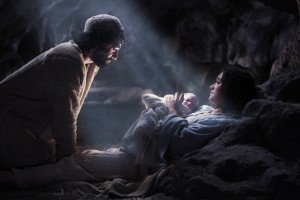
If you have ever tried to read about the story of Jesus’ birth from one of the Gospels in the New Testament, you will have already discovered two things. First, no one Gospel tells you everything about the birth of Jesus. And second, some Gospels do not tell you anything about the birth of Jesus.

What do we make of this reality?

One takeaway should be that the significance of Jesus’ birth is best understood in the totality of his life, teachings, death, and resurrection. Whether you have just begun to consider Jesus or already consider yourself a believer in him, let me encourage you to read through the four Gospels this Advent season to gain a fuller appreciation for the significance of his birth.

Here’s a brief description of each Gospel’s unique contribution to our overall understanding of Jesus, followed by a calendar for reading through them this December.

Matthew: The story of Christmas is rooted in history.

Matthew’s account begins with a genealogy, demonstrating the birth of Jesus is not an isolated event but one rooted in history. In other words, the birth of Jesus is not the beginning of the story. To properly understand Jesus’ birth, one must understand the history from which he came.

If we were to consider the birth of Jesus as an isolated event, we could conclude that Jesus is powerful. Surely the virgin birth would require divine power. When we learn from Matthew that the virgin birth was rooted in history and anticipated in prophecy, we learn that Jesus is not only powerful, but also faithful to promises made in history.

Mark: The story of Christmas requires our repentance.

When you turn to Mark you notice that he begins with the ministry of John the Baptist, not the birth of Jesus. John’s ministry was a plea for Israel to repent. In Mark 1:14-15, we are told that John was arrested and Jesus began to preach the same message: “The time is fulfilled, and the kingdom of God is at hand; repent and believe in the gospel.” Repent is the key word for Mark. John preached it, Jesus preached it, and Mark wants all of us to remember it. Why?

We cannot properly celebrate the birth of our Savior until we acknowledge the reality of our sin. Until we are willing to repent, all the details that surround Jesus’ birth and life are rendered inconsequential. Otherwise who cares if it was three wise men or wise men bearing three gifts? Or whether he was God incarnate or an angel in human form? Mark tells us news he believes can change our lives. So are we willing to be changed? Are we willing to acknowledge that we are not as we should be? According to Mark, we cannot properly celebrate the birth of our Savior until we acknowledge our need to be saved.

Luke: The story of Christmas invites our worship.

As you turn to Luke, you notice that he gives us the most details of any of the Gospel writers surrounding the birth of Jesus. When people announce that they will read the Christmas story, they are more often than not reading from the second chapter of Luke. It’s striking about Luke’s attention to detail how often he focuses on the worship that surrounded the birth of Jesus.

For example, in Luke 1:46, Luke could have simply said that Mary worshiped God. Instead he records for us details of how she expressed her worship in what we now commonly call the Magnificat. You will notice this detail again in verses 67-79 when Zechariah worshiped God. Then Luke tells us of the heavenly host praising God in 2:13-14 and the shepherds praising God in 2:20. When Jesus is presented in the temple, Luke tells us of Simeon’s worship. Before, during, and after the birth of Jesus there is worship!

Much like the Psalms of the Old Testament, the details of these expressions of worship are not given to simply inform us of past events, but to invite us to join in their expression. When all the facts are considered, as Luke claims to have compiled them, one discovers that the Christmas story is not only true but also glorious.

John: The story of Christmas restores our relationship.

John does not begin with the birth of Jesus, the ministry of John the Baptist, nor does he begin with the history of Israel. John writes, “In the beginning.” The beginning of what? The beginning of everything! According to John, Jesus was with God and was God from before time began. These verses are key the church’s understanding of the Trinity.

As it relates to the Christmas story, we affirm that Jesus was sent from God. The Creator is the Redeemer; the Judge is the Savior. John’s account is similar to Mark’s in that he makes the story immediately personal. Jesus is the unique Son of God who came into the world, so that you and I could become children of God as well (John 1:12-13).

One Conclusion

Four different Gospel accounts and one conclusion—Jesus is sufficient.

  • Intellectually, according to Matthew, the Christmas story is rooted in history.
  • Morally, according to Mark, the Christmas story requires our repentance.
  • Emotionally, according to Luke, the Christmas story invites our worship.
  • And relationally, according to John, the Christmas story restores our relationship with God.

Read the story for yourself.

*****************************************************************

Advent-Reading-Plan

Petar Nenadov is an elder and serves on the staff of Lakeside Christian Church in Akron, Ohio.