
Morning Prayer, 25 Mar – John 15:1-6 ~ remain in me

Morning Prayer

+ In the name of the Father, and of the Son, and of the Holy Spirit. Amen

Opening sentences – Cuthbert of Northumbria (635-87)

Do not put out the Spirit’s fire; do not treat prophecies with contempt. Test everything. Hold on to the good. Resist every kind of evil.

Morning reading

John 15:1-6 ESV:

iamthevine

“I am the true vine, and my Father is the vinedresser. Every branch in me that does not bear fruit he takes away, and every branch that does bear fruit he prunes, that it may bear more fruit. Already you are clean because of the word that I have spoken to you. Abide in me, and I in you. As the branch cannot bear fruit by itself, unless it abides in the vine, neither can you, unless you abide in me. I am the vine; you are the branches. Whoever abides in me and I in him, he it is that bears much fruit, for apart from me you can do nothing. If anyone does not abide in me he is thrown away like a branch and withers; and the branches are gathered, thrown into the fire, and burned.”

Reflections:

The main point of the image of vine and branches is clear enough: the intimate union of believers with Jesus. The disciple’s very life depends on this union. As branches, believers either bear fruit and are pruned to bear more fruit or do not bear fruit and are thrown away and burned – all the details have significance.

new people of God

When Jesus refers to himself as the true vine he is once again taking an image for Israel and applying it to himself. Jesus himself is true Israel. This claim corresponds to his break with the temple at the end of chapter 8 and his forming a renewed people that began in chapter 9 and came clearly to the fore in chapter 10. Israel’s place as the people of God is now taken by Jesus and his disciples, the vine and its branches. This is not a rejection of Judaism as such, but its fulfillment in its Messiah.

The identification of the people of God with a particular nation is now replaced with a particular man who incorporates in himself the new people of God composed of Jews and non-Jews.

bear fruit for God

The new community has been established and now must bear fruit for God. However, among Jesus’ disciples, there are those who bear fruit and those who do not.

What is this fruit? Converts, Christian character – but underlying both is the possession of the divine life itself and especially the chief characteristics of that life, knowledge of God and love. Jesus says when they bear much fruit they demonstrate that they are his disciples. Love is the evidence that one is a disciple and is in union with God and with one another. The image of fruit symbolizes that which is at the heart of both Christian witness and ethics — union with God.

separation from God

Separation from God, the source of all light and life and love, is the essence of all judgment. The ones who are so judged in this passage are those who have refused to remain in Christ. They have rejected Jesus and thereby turned their backs on God and thus life itself. Their former intimacy with Jesus, such as it was, makes their rejection all the more worthy of judgment.

“How a man can be `in Christ,’ and yet afterwards separate himself from Him, is a mystery neither greater nor less than that involved in the fall of a creature created innocent” (Westcott).

The believer’s assurance is not in the decision to follow Jesus, but in the graciousness and faithfulness of the Father and the Son. Though God allows us to reject him, his own disposition toward us is love, a love that continues to pursue even those who reject him. Those who are worried about the assurance of their salvation should find comfort in the character and actions of God. Our fretting over ourselves is itself a preoccupation with self that must be pruned away, for it inhibits our relation with God, our bearing of the fruit of eternal life.

pruned by God

The disciples certainly believe Jesus is come from God. And, even more obvious is their love for Jesus, mostly evidenced in their willingness to lay down their lives for him. That they came to Jerusalem is evidence of this willingness. They are not yet capable of such love when things get bleak, but at least they have the desire to be loyal. Their humility in accepting Jesus, even though this willingness is weaker than they realize, manifests the love that is crucial for remaining in Jesus.

They still have much in their lives that is not in keeping with the life of God. Such false growths need to be pruned away so God’s eternal life might grow and increase in their lives. Part of the good news is that the Father undertakes such pruning in the life of each disciple. The discipline may be painful as the life of self and rebellion is cut away, but the result will be untold blessing for the disciple and for others through him or her. The Father’s pruning is for the sake of growth, which suggests the eternal life is a very dynamic reality.

life in God

Jesus stresses the impossibility of producing this fruit apart from him. People are able to produce much without God, including converts, good deeds and even prophesies, exorcisms and miracles (cf. Mt 7:22-23; Ridderbos). But the divine life such as we see in Jesus is dependent on God’s own character, power and guidance at work in the life of the disciple. Jesus did not will nor speak nor act from himself; neither is the branch capable of bearing fruit “from itself”. Hence Jesus’ command to remain in me.

The Father prunes and cleanses, and the Son has cleansed by his word, showing the Son’s oneness with the Father (cf. Chrysostom). But the disciples themselves must make an effort to remain. Remaining is not simply believing in him, though that is crucial, but includes being in union with him, sharing his thoughts, emotions, intentions and power. In a relationship both parties must be engaged. The divine must take the initiative and provide the means and the ability for the union to take place, but it cannot happen without the response of the disciple.

The IVP New Testament Commentary Series

__________

__________

Canticle:

Christ, as a light… illumine and guide me. Christ, as a shield… overshadow me. Christ under me; Christ over me; Christ beside me on my left and my right.

This day be within and without me, lowly and meek, yet all-powerful. Be in the heart of each to whom I speak; in the mouth of each who speaks unto me. This day be within and without me, lowly and meek, yet all-powerful.

Christ as a light; Christ as a shield; Christ beside me on my left and my right.

Blessing

May the peace of the Lord Christ go with you, wherever He may send you. May He guide you through the wilderness, protect you through the storm. May He bring you home rejoicing at the wonders He has shown you. May He bring you home rejoicing once again into our doors.

+ In the name of the Father, and of the Son, and of the Holy Spirit. Amen

_____________________________________

Peanut Gallery: A brief word of explanation – the general format for Morning Prayer is adapted from the Northumbrian Community‘s Daily Office, as found in Celtic Daily Prayer (see online resources here.) The Scripture readings are primarily from the Gospel of John, with the intent to complete the reading by Easter. Other Scriptures which illuminate the Gospel of John will be included along the way.

Reflections from various saints will be included as their memorial days occur during the calendar year.

On Sundays, I’ll return to the USCCB readings (see online resources here) and various liturgical resources in order to reflect the Church’s worship and concerns throughout the world.

Photo illustrations and music videos, available online, are included as they illustrate or illuminate the readings. I will try to give credit and link to sources as best I can.

Morning Prayer, 24 Mar – John 14:25-31 ~ the peace of Christ

Morning Prayer

+ In the name of the Father, and of the Son, and of the Holy Spirit. Amen

Opening sentences – Cuthbert of Northumbria (635-87)

Under protection of the King of life, a protection that will not betray us: May the Holy Spirit come upon us; may Christ deliver us, bless us.

Morning reading

John 14:25-31 ESV:

rainbows

“These things I have spoken to you while I am still with you. But the Helper, the Holy Spirit, whom the Father will send in my name, he will teach you all things and bring to your remembrance all that I have said to you.

“Peace I leave with you; my peace I give to you. Not as the world gives do I give to you. Let not your hearts be troubled, neither let them be afraid. You heard me say to you, ‘I am going away, and I will come to you.’ If you loved me, you would have rejoiced, because I am going to the Father, for the Father is greater than I. And now I have told you before it takes place, so that when it does take place you may believe.

“I will no longer talk much with you, for the ruler of this world is coming. He has no claim on me, but I do as the Father has commanded me, so that the world may know that I love the Father. Rise, let us go from here.”

Reflections:

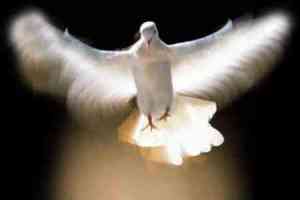
Holy Spirit

The Counselor, the Holy Spirit, will teach and remind believers – in union with Jesus and in conformity with Jesus’ character and mission. “Jesus bore God’s name because he was the revelation of God to men; the Spirit is sent in Jesus’ name because he unfolds the meaning of Jesus for men” (Brown).

The Spirit understands all about Jesus and will clarify all that he has taught – he will leave out nothing of what Jesus has taught. Jesus is the fullness of the revelation of the Father. No further revelation is needed, nor would it be possible. What is called for is an understanding of the revelation that has come in Jesus, and this is what the Paraclete will provide.

peace of Christ

The peace Jesus is talking about is not the cessation of hostilities from enemies, but rather the gift of calmness and confidence that comes from union with God and faith in him and his purposes. The world’s idea of peace is something that comes through destroying of enemies and consists of physical and emotional comfort.

The peace that Jesus gives is grounded in God and not in circumstances. It is the peace that Jesus himself has exhibited in this Gospel and is exhibiting in this farewell discourse, even while he knows he is about to be killed. Soon he will speak of the continued trouble his disciples will experience in the world, but they will simply be living out what he himself has already been experiencing. They will share his troubles, but they will also have his peace, for they will share in his own relationship with the Father.

no fear

This word family is always used of fear in a negative sense, as the opposite of courage. Those with a settled disposition of such fear evidence a lack of faith in God and a denial of his presence, his goodness and his power.

Those who experience such fear, which includes virtually all of us to some degree, may take comfort that as God’s life grows within us and as our hearts are healed, we enter into the inheritance of Jesus’ peace, which replaces our sinful fear. Jesus here calls us to receive his peace. The grounds of this peace is the “perfect love” that “drives out fear” (1 Jn 4:18). This love is ultimately a sharing of the relationship between the Father and the Son.

love and joy

Jesus’ announcement that he is departing to the Father should fill them with joy instead of disturbance and fear. If you loved me indicates that Jesus’ view is that they have not done so. So their response shows that they have not yet come to love him in the truest sense. They think they love him, but in fact they are more focused on themselves than on him (Westcott).

Fear in itself is focused on self and circumstances rather than on God. Focus on God is central to all Jesus does and says, as it is here: If you loved me, you would be glad that I am going to the Father…. Jesus’ great love and focus is the Father; thus the prospect of returning to him fills Jesus with joy. If the disciples shared this focus and really loved Jesus, that is, willed the best for him, they also would share this joy.

The IVP New Testament Commentary Series

__________


__________

Canticle:

Christ, as a light… illumine and guide me. Christ, as a shield… overshadow me. Christ under me; Christ over me; Christ beside me on my left and my right.

This day be within and without me, lowly and meek, yet all-powerful. Be in the heart of each to whom I speak; in the mouth of each who speaks unto me. This day be within and without me, lowly and meek, yet all-powerful.

Christ as a light; Christ as a shield; Christ beside me on my left and my right.

Blessing

May the peace of the Lord Christ go with you, wherever He may send you. May He guide you through the wilderness, protect you through the storm. May He bring you home rejoicing at the wonders He has shown you. May He bring you home rejoicing once again into our doors.

+ In the name of the Father, and of the Son, and of the Holy Spirit. Amen

_____________________________________

Peanut Gallery: A brief word of explanation – the general format for Morning Prayer is adapted from the Northumbrian Community‘s Daily Office, as found in Celtic Daily Prayer (see online resources here.) The Scripture readings are primarily from the Gospel of John, with the intent to complete the reading by Easter. Other Scriptures which illuminate the Gospel of John will be included along the way.

Reflections from various saints will be included as their memorial days occur during the calendar year.

On Sundays, I’ll return to the USCCB readings (see online resources here) and various liturgical resources in order to reflect the Church’s worship and concerns throughout the world.

Photo illustrations and music videos, available online, are included as they illustrate or illuminate the readings. I will try to give credit and link to sources as best I can.

Morning Prayer, 21 Mar – John 14:15-17 ~ another Helper

Morning Prayer

+ In the name of the Father, and of the Son, and of the Holy Spirit. Amen

Opening sentences – Cuthbert of Northumbria (635-87)

O King of Kings, O King of the universe, King who will be, who is, may You forgive us each and every one. Accept my prayer, O King of grace…. Lord, let our tongue be no accomplice in the judgement of a brother.

Morning reading

Holy-Spirit-is-the-representative-of-Jesus-and-his-living-presence-in-our-lives

John 14:15-17 ESV:

“If you love me, you will keep my commandments. And I will ask the Father, and he will give you another Helper, to be with you forever, even the Spirit of truth, whom the world cannot receive, because it neither sees him nor knows him. You know him, for he dwells with you and will be in you.”

Reflections:

love and obey

This statement is a definition of love itself. Jesus is referring not only to his ethical instructions, which are very few in this Gospel, but to the whole of his teaching, including his way of life. Accordingly, John will instruct his disciples later, saying, “Whoever claims to live in him must walk as Jesus did” (1 Jn 2:6). Now the hallmark of Jesus’ “ways,” his “walk,” was complete dependence on and obedience to the Father, only doing and speaking what he received from the Father. Such a life is itself an expression of love, since love, for John, is the laying down of one’s life (1 Jn 3:16). Thus Jesus himself has modeled the life of love he describes here in terms of obedience. Love, like faith, is the engagement of the whole person, especially the person’s will.

another Helper

The Paraclete [another Helper], like the Son, comes from the Father as a gift of the Father, for Jesus says the Father will give them the Paraclete at the Son’s request. In contrast to Jesus, who is now departing, the Paraclete will be with them forever. It is only Jesus’ visible presence that will be absent from them; Jesus himself will remain in union with them. Thus both Jesus and the Paraclete will be with the believers. Further connection with Jesus is evident when he refers to the Paraclete as the Spirit of truth, since Jesus is the truth, as he has just affirmed. The Paraclete’s relation to the world is like Jesus’, since the world cannot accept him, because it neither sees him nor knows him, as has been the case with Jesus.

new intimacy

Jesus contrasts the disciples to the world. Although Jesus says this Paraclete will be in you, he already remains among them. The Spirit is not absent before the glorification. Indeed, he is present “without limit” in Jesus (Burge) and must be at work in the disciples in order for them to have the faith and love that Jesus mentions (Augustine). But the Paraclete has not yet been sent to the disciples and received by them in the new way Jesus is opening up. Both Jesus and this Paraclete have been present to the disciples already, even though the coming level of intimacy with both will be so much deeper that it is the difference between death and life.

The IVP New Testament Commentary Series

__________


__________

Canticle:

Christ, as a light… illumine and guide me. Christ, as a shield… overshadow me. Christ under me; Christ over me; Christ beside me on my left and my right.

This day be within and without me, lowly and meek, yet all-powerful. Be in the heart of each to whom I speak; in the mouth of each who speaks unto me. This day be within and without me, lowly and meek, yet all-powerful.

Christ as a light; Christ as a shield; Christ beside me on my left and my right.

Blessing

May the peace of the Lord Christ go with you, wherever He may send you. May He guide you through the wilderness, protect you through the storm. May He bring you home rejoicing at the wonders He has shown you. May He bring you home rejoicing once again into our doors.

+ In the name of the Father, and of the Son, and of the Holy Spirit. Amen

_____________________________________

Peanut Gallery: A brief word of explanation – the general format for Morning Prayer is adapted from the Northumbrian Community‘s Daily Office, as found in Celtic Daily Prayer (see online resources here.) The Scripture readings are primarily from the Gospel of John, with the intent to complete the reading by Easter. Other Scriptures which illuminate the Gospel of John will be included along the way.

Reflections from various saints will be included as their memorial days occur during the calendar year.

On Sundays, I’ll return to the USCCB readings (see online resources here) and various liturgical resources in order to reflect the Church’s worship and concerns throughout the world.

Photo illustrations and music videos, available online, are included as they illustrate or illuminate the readings. I will try to give credit and link to sources as best I can.
Morning Prayer, 18 Feb – John 8:31-38 ~ freedom

Morning Prayer

+ In the name of the Father, and of the Son, and of the Holy Spirit. Amen

Opening sentences – Brendan the Navigator (c. 486-575)

Christ of the mysteries, can I trust You to be stronger than each storm in me? Do I still yearn for Your glory to lighten on me?

I will show others the care You’ve given me. I determine amidst all uncertainty always to trust.

Morning readings

John 8:31-38 ESV:

paid in full

So Jesus said to the Jews who had believed him, “If you abide in my word, you are truly my disciples, and you will know the truth, and the truth will set you free.”

They answered him, “We are offspring of Abraham and have never been enslaved to anyone. How is it that you say, ‘You will become free’?”

Jesus answered them, “Truly, truly, I say to you, everyone who practices sin is a slave to sin. The slave does not remain in the house forever; the son remains forever. So if the Son sets you free, you will be free indeed. I know that you are offspring of Abraham; yet you seek to kill me because my word finds no place in you. I speak of what I have seen with my Father, and you do what you have heard from your father.”

Reflections:

trust

Jesus tests his disciples by giving them further revelation that stretches them and requires them to put their trust in him, rather than in their understanding of all he is saying and doing. They need to understand him well enough to recognize that he is from God, but the very fact that he is from God means he is going to speak and act in ways that are not in keeping with this world.

truth

To know Jesus is to be liberated from all error and evil, for it is to know God himself, who is truth and purity and life. In Jesus’ teaching and in the teaching of Judaism obedience to God is true freedom. This truth is quite different from the thinking of most people today, for it takes God, rather than our own personal feelings and ambitions, as the one good. The freedom in view is not a freedom to do whatever we wish according to the dictates of our own fallen selves, but a freedom from our fallen selves and the power and guidance to act in accordance with God himself, the source of all goodness and life.

freedom

Jesus is speaking of inner spiritual freedom – freedom from sin, and sin, at its heart, is an alienation from God. This alienation is caused by sin in the sense of both error and evil. The antidote, faith, corresponds to both of these aspects since it is the appropriation of knowledge of God (which replaces the error) and of forgiveness for our rebellion against God (which overcomes the evil). Jesus is offering a restored relationship of intimacy with God, which brings life in place of death.

union

The freedom Jesus is offering is union with the Father, the source of all true life. The way to receive this life, with its freedom from sin’s alienation and death, is to remain in his teaching. This involves an actual remaining in the Son himself, which includes remaining in his commands. In order to receive the power to become children of God we must receive the Son of God and share in the Son’s own relationship with the Father.

The IVP New Testament Commentary Series

__________

__________

Canticle:

Christ, as a light… illumine and guide me. Christ, as a shield… overshadow me. Christ under me; Christ over me; Christ beside me on my left and my right.

This day be within and without me, lowly and meek, yet all-powerful. Be in the heart of each to whom I speak; in the mouth of each who speaks unto me. This day be within and without me, lowly and meek, yet all-powerful.

Christ as a light; Christ as a shield; Christ beside me on my left and my right.

Blessing

May the peace of the Lord Christ go with you, wherever He may send you. May He guide you through the wilderness, protect you through the storm. May He bring you home rejoicing at the wonders He has shown you. May He bring you home rejoicing once again into our doors.

+ In the name of the Father, and of the Son, and of the Holy Spirit. Amen

_____________________________________

Peanut Gallery: A brief word of explanation – the general format for Morning Prayer is adapted from the Northumbrian Community‘s Daily Office, as found in Celtic Daily Prayer (see online resources here.) The Scripture readings are primarily from the Gospel of John, with the intent to complete the reading by Easter. Other Scriptures which illuminate the Gospel of John will be included along the way.

Reflections from various saints will be included as their memorial days occur during the calendar year.

On Sundays, I’ll return to the USCCB readings (see online resources here) and various liturgical resources in order to reflect the Church’s worship and concerns throughout the world.

Photo illustrations and music videos, available online, are included as they illustrate or illuminate the readings. I will try to give credit and link to sources as best I can.

Morning Prayer, 17 Feb – John 8:21-30 ~ from above

Morning Prayer

+ In the name of the Father, and of the Son, and of the Holy Spirit. Amen

Opening sentences – Brendan the Navigator (c. 486-575)

Lord, I will trust You, help me journey beyond the familiar and into the unknown. Give me the faith to leave old ways and break fresh ground with You.

Morning readings

John 8:21-30 ESV:

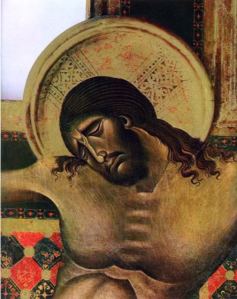
Crucifix  (Cimabue, Santa Croce)
Crucifix
(Cimabue, Santa Croce)

So [Jesus] said to them again, “I am going away, and you will seek me, and you will die in your sin. Where I am going, you cannot come.”

So the Jews said, “Will he kill himself, since he says, ‘Where I am going, you cannot come’?”

He said to them, “You are from below; I am from above. You are of this world; I am not of this world. I told you that you would die in your sins, for unless you believe that I am he you will die in your sins.”

So they said to him, “Who are you?”

Jesus said to them, “Just what I have been telling you from the beginning. I have much to say about you and much to judge, but he who sent me is true, and I declare to the world what I have heard from him.” They did not understand that he had been speaking to them about the Father.

So Jesus said to them, “When you have lifted up the Son of Man, then you will know that I am he, and that I do nothing on my own authority, but speak just as the Father taught me. And he who sent me is with me. He has not left me alone, for I always do the things that are pleasing to him.”

As he was saying these things, many believed in him.

Reflections:

not of this world

Jesus and the Jews are not in the same sphere. Jesus has come from God and is bringing God’s own presence into our midst, but they have no openness to God. Jesus has come into this world in the fullness of humanity, but unlike them, he is not of this world, that is, of human society as it exists apart from God. Indeed, it is because he is above this world that he is able to help the world.

In saying that he is from above Jesus contrasts himself with every other agent of revelation. He is not simply a human being who has achieved enlightenment and now has come to share what he has learned. His point of origin is not this world to begin with. He is a human being just as we are, but there is more to Jesus than that… as the church later came to express it — Jesus is fully God as well as fully man.

peril

Without faith in Jesus as God’s divine Son who has come from above, they will die in their sins. By repeating this warning Jesus is shining as the light of the world, revealing their true condition and its consequences. If we cannot see God in the clearest and most accessible revelation of him ever given — the clearest it is even possible to give — then how can we see him in any lesser manifestation? How are we going to recognize the cryptic, invisible God whom nobody has seen if we cannot recognize his Son incarnate?

Sin is separation from God and therefore a state of death, since God is the source of all life. Jesus says they are in their sins, which means they are alienated from God and thus under the wrath of God. Human beings apart from God are not in neutral territory. They are in a state of rebellion against God that began at the first rebellion and is characterized by death. The people Jesus addresses are as ignorant of their own condition as they are of his identity.

remedy

The Father’s will is simply life itself — Reality. All life is an expression of the Father’s one life. To do what pleases him is not simply a matter of morality but of sharing in his life itself. It is another way of saying that Christ does what he sees the Father doing and speaks what he hears from the Father. As such he is the model of all discipleship. The life Jesus is offering involves being taken up into the one life of the Father himself.

As Jesus thus speaks clearly, many put their faith in him.

The IVP New Testament Commentary Series

__________

__________

Canticle:

Christ, as a light… illumine and guide me. Christ, as a shield… overshadow me. Christ under me; Christ over me; Christ beside me on my left and my right.

This day be within and without me, lowly and meek, yet all-powerful. Be in the heart of each to whom I speak; in the mouth of each who speaks unto me. This day be within and without me, lowly and meek, yet all-powerful.

Christ as a light; Christ as a shield; Christ beside me on my left and my right.

Blessing

May the peace of the Lord Christ go with you, wherever He may send you. May He guide you through the wilderness, protect you through the storm. May He bring you home rejoicing at the wonders He has shown you. May He bring you home rejoicing once again into our doors.

+ In the name of the Father, and of the Son, and of the Holy Spirit. Amen

_____________________________________

Peanut Gallery: A brief word of explanation – the general format for Morning Prayer is adapted from the Northumbrian Community‘s Daily Office, as found in Celtic Daily Prayer (see online resources here.) The Scripture readings are primarily from the Gospel of John, with the intent to complete the reading by Easter. Other Scriptures which illuminate the Gospel of John will be included along the way.

Reflections from various saints will be included as their memorial days occur during the calendar year.

On Sundays, I’ll return to the USCCB readings (see online resources here) and various liturgical resources in order to reflect the Church’s worship and concerns throughout the world.

Photo illustrations and music videos, available online, are included as they illustrate or illuminate the readings. I will try to give credit and link to sources as best I can.