
Morning Prayer
+ In the name of the Father, and of the Son, and of the Holy Spirit. Amen
Opening sentences – Brigid of Kildare (c. 450-523)
Peace be here in the Name of the King of life; the peace of Christ above all peace, the Lord’s blessing over you.
Child of my heart, the joy of God be in thy face, joy to all who see thee.
The circle of God around thee, angels of God shielding thee.
Joy of night and day be thine; joy of sun and moon be thine; joy of men and women be thine.
Each land and sea thou goest, each land and sea thou goest, be every season happy for thee; be every season bright for thee; be every season glad for thee.
Be thine the compassing of the God of life; be thine the compassing of the Christ of love; be thine the compassing of the Spirit of grace: to befriend thee and aid thee, thou beloved child of my heart.
Morning readings
John 11:38-44 ESV:

Duccio di Buoninsegna (1310–11)
Kimbell Art Museum
Then Jesus, deeply moved again, came to the tomb. It was a cave, and a stone lay against it. Jesus said, “Take away the stone.”
Martha, the sister of the dead man, said to him, “Lord, by this time there will be an odor, for he has been dead four days.”
Jesus said to her, “Did I not tell you that if you believed you would see the glory of God?” So they took away the stone.
And Jesus lifted up his eyes and said, “Father, I thank you that you have heard me. I knew that you always hear me, but I said this on account of the people standing around, that they may believe that you sent me.” When he had said these things, he cried out with a loud voice, “Lazarus, come out.”
The man who had died came out, his hands and feet bound with linen strips, and his face wrapped with a cloth.
Jesus said to them, “Unbind him, and let him go.”
Reflections:
bodily resurrection
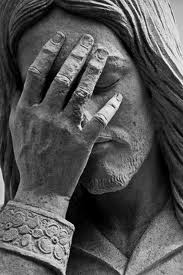
Martha’s objection that there would be a stench due to decomposition highlights the greatness of this sign. Jesus is raising someone who should already have begun to decay. There is no indication in the story that Lazarus comes out bearing marks of decay. Here we see a revelation of Jesus’ power and authority as the agent of creation. He does not just bring the person back to life by reuniting soul and body, he also restores the body itself.
Not only is the raising of Lazarus a sign of Jesus’ identity and authority as life-giver, it also reflects the reality of the resurrection of the body. God is able to restore physical bodies after decay. The analogy is not complete, since Lazarus is not raised as an imperishable, spiritual body, as will be the case at the resurrection of the dead. But there is a continuity between the spiritual body and the physical body: it is a bodily resurrection. The overcoming of corruption in the raising of Lazarus thus provides, in part, a sign of the future resurrection.
God the Father
Here is the most powerful sign of Jesus’ power and authority, but it does not point to him except as evidence that he is doing what he sees the Father doing. He is here to glorify God, not himself.
This dependency upon the Father is further emphasized in Jesus’ prayer. Indeed, for Christians, God is now known primarily as the Father of Jesus. Our language for God as Father has its source in Jesus’ own revelation of God. It is his relationship with God that a Christian enters into and thus comes to know God as Jesus knows him, within the limitations of our human nature.
God the Son
Jesus vocalizes his prayer for the sake of the crowd – it is not enough for people to be impressed with Jesus. They must believe in him as the one sent from God. It is precisely because Jesus is sent from God and does as God directs him that he is heard by God. The Father as the sender is primary. Jesus is not a wonderworker who is able to get God to do what he wants him to do. He is the obedient Son sent by the Father to do the Father’s will. The Father’s will and the Son’s petition coincide exactly.
In saying the purpose of this prayer is that they might believe, Jesus is again acting with divine graciousness and mercy. Such belief brings eternal life. Thus, this miracle is not just for the sake of Lazarus and his sisters, who already do have such faith and the life it brings, but for others that they may have life. The miracle reveals Jesus as the life-giver sent from the Father, and one receives life from him as one has faith in him.
Word of life
Jesus could have healed Lazarus when he was still sick with a word of command, even across the miles. But now he utters a mightier word across a much greater distance — that between the living and the dead. The Word through whom all was made here speaks forth life. Those standing around were given tasks to do, such as taking away the stone and unbinding Lazarus. The physical contact helped drive home the reality of what was happening. But for Jesus, his work is his word.
Jesus’ command – “Take off the grave clothes and let him go” – is a cry of victory. The grave has been defeated and liberty achieved – it is a great sign of the life that is stronger than death, which those who believe in Jesus share. And it is a graphic sign of Jesus’ own power and authority.
This story speaks to all Christians bound by the fear of death and, on another level, bound by various sins. The Christian is in union with the one who himself is resurrection and life. As Christ offers freedom from the power of sin, so faith in Christ as resurrection and life brings freedom from the fear of death.
__________
__________
Canticle:
Christ, as a light… illumine and guide me. Christ, as a shield… overshadow me. Christ under me; Christ over me; Christ beside me on my left and my right.
This day be within and without me, lowly and meek, yet all-powerful. Be in the heart of each to whom I speak; in the mouth of each who speaks unto me. This day be within and without me, lowly and meek, yet all-powerful.
Christ as a light; Christ as a shield; Christ beside me on my left and my right.
Blessing
May the peace of the Lord Christ go with you, wherever He may send you. May He guide you through the wilderness, protect you through the storm. May He bring you home rejoicing at the wonders He has shown you. May He bring you home rejoicing once again into our doors.
+ In the name of the Father, and of the Son, and of the Holy Spirit. Amen
_____________________________________
Peanut Gallery: A brief word of explanation – the general format for Morning Prayer is adapted from the Northumbrian Community‘s Daily Office, as found in Celtic Daily Prayer (see online resources here.) The Scripture readings are primarily from the Gospel of John, with the intent to complete the reading by Easter. Other Scriptures which illuminate the Gospel of John will be included along the way.
Reflections from various saints will be included as their memorial days occur during the calendar year.
On Sundays, I’ll return to the USCCB readings (see online resources here) and various liturgical resources in order to reflect the Church’s worship and concerns throughout the world.
Photo illustrations and music videos, available online, are included as they illustrate or illuminate the readings. I will try to give credit and link to sources as best I can.


 The Peanut Gallery