
Morning Prayer, 03 Mar – John 11:38-44 ~ You raise me up

Morning Prayer

+ In the name of the Father, and of the Son, and of the Holy Spirit. Amen

Opening sentences – Brigid of Kildare (c. 450-523)

Peace be here in the Name of the King of life; the peace of Christ above all peace, the Lord’s blessing over you.

Child of my heart, the joy of God be in thy face, joy to all who see thee.

The circle of God around thee, angels of God shielding thee.

Joy of night and day be thine; joy of sun and moon be thine; joy of men and women be thine.

Each land and sea thou goest, each land and sea thou goest, be every season happy for thee; be every season bright for thee; be every season glad for thee.

Be thine the compassing of the God of life; be thine the compassing of the Christ of love; be thine the compassing of the Spirit of grace: to befriend thee and aid thee, thou beloved child of my heart.

Morning readings

John 11:38-44 ESV:

'The Raising of Lazarus' Duccio di Buoninsegna (1310–11) Kimbell Art Museum
‘The Raising of Lazarus’
Duccio di Buoninsegna (1310–11)
Kimbell Art Museum

Then Jesus, deeply moved again, came to the tomb. It was a cave, and a stone lay against it. Jesus said, “Take away the stone.”

Martha, the sister of the dead man, said to him, “Lord, by this time there will be an odor, for he has been dead four days.”

Jesus said to her, “Did I not tell you that if you believed you would see the glory of God?” So they took away the stone.

And Jesus lifted up his eyes and said, “Father, I thank you that you have heard me. I knew that you always hear me, but I said this on account of the people standing around, that they may believe that you sent me.” When he had said these things, he cried out with a loud voice, “Lazarus, come out.”

The man who had died came out, his hands and feet bound with linen strips, and his face wrapped with a cloth.

Jesus said to them, “Unbind him, and let him go.”

Reflections:

bodily resurrection

Martha’s objection that there would be a stench due to decomposition highlights the greatness of this sign. Jesus is raising someone who should already have begun to decay. There is no indication in the story that Lazarus comes out bearing marks of decay. Here we see a revelation of Jesus’ power and authority as the agent of creation. He does not just bring the person back to life by reuniting soul and body, he also restores the body itself.

Not only is the raising of Lazarus a sign of Jesus’ identity and authority as life-giver, it also reflects the reality of the resurrection of the body. God is able to restore physical bodies after decay. The analogy is not complete, since Lazarus is not raised as an imperishable, spiritual body, as will be the case at the resurrection of the dead. But there is a continuity between the spiritual body and the physical body: it is a bodily resurrection. The overcoming of corruption in the raising of Lazarus thus provides, in part, a sign of the future resurrection.

God the Father

Here is the most powerful sign of Jesus’ power and authority, but it does not point to him except as evidence that he is doing what he sees the Father doing. He is here to glorify God, not himself.

This dependency upon the Father is further emphasized in Jesus’ prayer. Indeed, for Christians, God is now known primarily as the Father of Jesus. Our language for God as Father has its source in Jesus’ own revelation of God. It is his relationship with God that a Christian enters into and thus comes to know God as Jesus knows him, within the limitations of our human nature.

God the Son

Jesus vocalizes his prayer for the sake of the crowd – it is not enough for people to be impressed with Jesus. They must believe in him as the one sent from God. It is precisely because Jesus is sent from God and does as God directs him that he is heard by God. The Father as the sender is primary. Jesus is not a wonderworker who is able to get God to do what he wants him to do. He is the obedient Son sent by the Father to do the Father’s will. The Father’s will and the Son’s petition coincide exactly.

In saying the purpose of this prayer is that they might believe, Jesus is again acting with divine graciousness and mercy. Such belief brings eternal life. Thus, this miracle is not just for the sake of Lazarus and his sisters, who already do have such faith and the life it brings, but for others that they may have life. The miracle reveals Jesus as the life-giver sent from the Father, and one receives life from him as one has faith in him.

Word of life

Jesus could have healed Lazarus when he was still sick with a word of command, even across the miles. But now he utters a mightier word across a much greater distance — that between the living and the dead. The Word through whom all was made here speaks forth life. Those standing around were given tasks to do, such as taking away the stone and unbinding Lazarus. The physical contact helped drive home the reality of what was happening. But for Jesus, his work is his word.

Jesus’ command – “Take off the grave clothes and let him go” – is a cry of victory. The grave has been defeated and liberty achieved – it is a great sign of the life that is stronger than death, which those who believe in Jesus share. And it is a graphic sign of Jesus’ own power and authority.

This story speaks to all Christians bound by the fear of death and, on another level, bound by various sins. The Christian is in union with the one who himself is resurrection and life. As Christ offers freedom from the power of sin, so faith in Christ as resurrection and life brings freedom from the fear of death.

The IVP New Testament Commentary Series

__________

__________

Canticle:

Christ, as a light… illumine and guide me. Christ, as a shield… overshadow me. Christ under me; Christ over me; Christ beside me on my left and my right.

This day be within and without me, lowly and meek, yet all-powerful. Be in the heart of each to whom I speak; in the mouth of each who speaks unto me. This day be within and without me, lowly and meek, yet all-powerful.

Christ as a light; Christ as a shield; Christ beside me on my left and my right.

Blessing

May the peace of the Lord Christ go with you, wherever He may send you. May He guide you through the wilderness, protect you through the storm. May He bring you home rejoicing at the wonders He has shown you. May He bring you home rejoicing once again into our doors.

+ In the name of the Father, and of the Son, and of the Holy Spirit. Amen

_____________________________________

Peanut Gallery: A brief word of explanation – the general format for Morning Prayer is adapted from the Northumbrian Community‘s Daily Office, as found in Celtic Daily Prayer (see online resources here.) The Scripture readings are primarily from the Gospel of John, with the intent to complete the reading by Easter. Other Scriptures which illuminate the Gospel of John will be included along the way.

Reflections from various saints will be included as their memorial days occur during the calendar year.

On Sundays, I’ll return to the USCCB readings (see online resources here) and various liturgical resources in order to reflect the Church’s worship and concerns throughout the world.

Photo illustrations and music videos, available online, are included as they illustrate or illuminate the readings. I will try to give credit and link to sources as best I can.

Morning Prayer, 28 Feb – John 11:17-27 ~ yes Lord

Morning Prayer

+ In the name of the Father, and of the Son, and of the Holy Spirit. Amen

Opening sentences – Brigid of Kildare (c. 450-523)

Peace be here in the Name of the King of life; the peace of Christ above all peace, the Lord’s blessing over you.

May God the Father be the guardian of this place and bring His peace, that fear may find no entry here. May Christ be a chosen companion and friend. May loneliness be banished. May the Spirit bring lightness and laughter, and be the comforter of tears. Courage be at each going out; rest be present at each return; each day, each night, each going out and each returning.

Morning readings

John 11:17-27 ESV:

Resurrection-and-Life

Now when Jesus came, he found that Lazarus had already been in the tomb four days. Bethany was near Jerusalem, about two miles off, and many of the Jews had come to Martha and Mary to console them concerning their brother. So when Martha heard that Jesus was coming, she went and met him, but Mary remained seated in the house.

Martha said to Jesus, “Lord, if you had been here, my brother would not have died. But even now I know that whatever you ask from God, God will give you.”

Jesus said to her, “Your brother will rise again.”

Martha said to him, “I know that he will rise again in the resurrection on the last day.”

Jesus said to her, “I am the resurrection and the life. Whoever believes in me, though he die, yet shall he live, and everyone who lives and believes in me shall never die. Do you believe this?”

She said to him, “Yes, Lord; I believe that you are the Christ, the Son of God, who is coming into the world.”

Reflections:

if only

Martha’s lament recaps her grief over the loss of her brother and her trust in Jesus as a friend and healer. Her belief that Jesus’ prayers are answered picks up on the truth of Jesus’ dependence upon the Father.

even now

Martha believes that it is never too late for Jesus to do something because of his special relationship with the Father.

She continues to believe in Jesus even though Lazarus’ death seems to call into question the messengers’ report that Jesus had said, This sickness will not end in death. Moreover, even though Jesus has delayed coming to help, she continues to believe that Jesus is the agent of the gracious God — despite the fact that this graciousness was not present to heal her brother.

Her trust in God’s love for one that Christ clearly loved is not shaken.

The IVP New Testament Commentary Series

__________

__________

the resurrection

Martha has expressed her faith in her brother’s future resurrection and Jesus responds by challenging her with a deeper revelation of himself: “I am the resurrection and the life. He who believes in me will live, even though he dies; and whoever lives and believes in me will never die.”

Jesus’ own identity spans the gap between the already and the not yet: “The resurrection because the life” (Augustine). The life Jesus is talking about even encompasses the resurrection life of the world to come. In the raising of Lazarus, we have a revelation of Jesus’ authority and his identity as life-giver because he is life itself. Jesus’ role goes far beyond our earthly existence.

the life

Jesus’ claim is mind-boggling. He says it is faith in him that brings one back to life at the resurrection at the last day. But then he goes even further. “I am the life”: and whoever lives and believes in me will never die. The life that comes through believing in Jesus is not interrupted by physical death.

The very nature of the life of the believer is one that death cannot destroy since the believer is in union with Jesus who is the Life. By taking humanity into Himself He has revealed the permanence of man’s individuality and being. But this permanence can be found only in union with Him. Thus two main thoughts are laid down: Life (resurrection) is present, and this Life is in a Person.

yes Lord

Martha’s faith is genuine and solid, for it is in Jesus himself. She is not grasping all that he is saying about himself, but she is sticking with him and confessing as much as she knows, which is what faith is all about. As the events of the raising of Lazarus unfold Jesus will instruct her in what he has just claimed, thus bringing her step by step in her knowledge of who he is and what he is offering so she may respond in faith.

This example of patient progress in our Lord’s dealing with Martha should be a great encouragement to those of us who are not always quick on the uptake when it comes to God’s revelation of himself to us.

The IVP New Testament Commentary Series

__________


__________

Canticle:

Christ, as a light… illumine and guide me. Christ, as a shield… overshadow me. Christ under me; Christ over me; Christ beside me on my left and my right.

This day be within and without me, lowly and meek, yet all-powerful. Be in the heart of each to whom I speak; in the mouth of each who speaks unto me. This day be within and without me, lowly and meek, yet all-powerful.

Christ as a light; Christ as a shield; Christ beside me on my left and my right.

Blessing

May the peace of the Lord Christ go with you, wherever He may send you. May He guide you through the wilderness, protect you through the storm. May He bring you home rejoicing at the wonders He has shown you. May He bring you home rejoicing once again into our doors.

+ In the name of the Father, and of the Son, and of the Holy Spirit. Amen

_____________________________________

Peanut Gallery: A brief word of explanation – the general format for Morning Prayer is adapted from the Northumbrian Community‘s Daily Office, as found in Celtic Daily Prayer (see online resources here.) The Scripture readings are primarily from the Gospel of John, with the intent to complete the reading by Easter. Other Scriptures which illuminate the Gospel of John will be included along the way.

Reflections from various saints will be included as their memorial days occur during the calendar year.

On Sundays, I’ll return to the USCCB readings (see online resources here) and various liturgical resources in order to reflect the Church’s worship and concerns throughout the world.

Photo illustrations and music videos, available online, are included as they illustrate or illuminate the readings. I will try to give credit and link to sources as best I can.

Morning Prayer, 6 Feb – John 6:52-59 ~ flesh and blood

Morning Prayer

+ In the name of the Father, and of the Son, and of the Holy Spirit. Amen

Opening sentences –

There is one God and one mediator between heaven and earth, the Son of Man – Christ Jesus – who gave Himself as a ransom for all people.

Morning readings

John 6:52-59 ESV:

The Jews then disputed among themselves, saying, “How can this man give us his flesh to eat?”

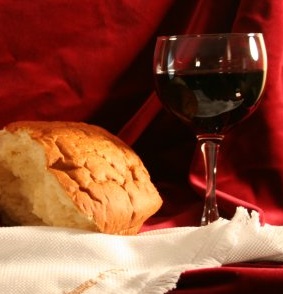
EucharistCup

So Jesus said to them, “Truly, truly, I say to you, unless you eat the flesh of the Son of Man and drink his blood, you have no life in you. Whoever feeds on my flesh and drinks my blood has eternal life, and I will raise him up on the last day. For my flesh is true food, and my blood is true drink. Whoever feeds on my flesh and drinks my blood abides in me, and I in him. As the living Father sent me, and I live because of the Father, so whoever feeds on me, he also will live because of me. This is the bread that came down from heaven, not like the bread the fathers ate, and died. Whoever feeds on this bread will live forever.”

Jesus said these things in the synagogue, as he taught at Capernaum.

Reflections:

dead

Apart from the life Jesus offers, we are dead. Our utter neediness is seen clearly when set against the greatness of his offer: Whoever eats my flesh and drinks my blood has eternal life, and I will raise him up at the last day. Jesus is promising a new quality of life now and resurrection in the future.

alive

The ultimate source of our life is the Father. Our union with the Son enables us to share his life, just as Jesus in turn lives because of the Father. Our life is entirely dependent on Jesus, as is his on the Father.

Eucharist

Christians naturally find reference here to the Eucharist, the point being that there is some connection between partaking of Christ’s flesh and blood in the Eucharist and having eternal life. Both faith and this eating and drinking would be necessary for eternal life. It is not for nothing that our Lord commands us to hold Eucharist!

__________

For I received from the Lord what I also delivered to you, that the Lord Jesus on the night when he was betrayed took bread, and when he had given thanks, he broke it, and said, “This is my body which is for you. Do this in remembrance of me.” 

In the same way also he took the cup, after supper, saying, “This cup is the new covenant in my blood. Do this, as often as you drink it, in remembrance of me.”

For as often as you eat this bread and drink the cup, you proclaim the Lord’s death until he comes.

(1 Corinthians 11:23-26)

__________

faith

This parallel between faith and Eucharist does not, however, deny the primacy of faith. If both are necessary for life, faith is still the more primary in that it is necessary for obtaining the benefits of the Eucharist.

God’s life is available in the Eucharist because he promises to be present. We do not attract him there or make him present by our faith. The Eucharist is a point of contact with divine reality; it is a means of grace, a means of God’s power and life in our lives. But the actual life-giving efficacy in feeding is only appropriated by faith.

(The IVP New Testament Commentary Series)

__________

__________

Canticle:

Christ, as a light… illumine and guide me. Christ, as a shield… overshadow me. Christ under me; Christ over me; Christ beside me on my left and my right.

This day be within and without me, lowly and meek, yet all-powerful. Be in the heart of each to whom I speak; in the mouth of each who speaks unto me. This day be within and without me, lowly and meek, yet all-powerful.

Christ as a light; Christ as a shield; Christ beside me on my left and my right.

Blessing

May the peace of the Lord Christ go with you, wherever He may send you. May He guide you through the wilderness, protect you through the storm. May He bring you home rejoicing at the wonders He has shown you. May He bring you home rejoicing once again into our doors.

+ In the name of the Father, and of the Son, and of the Holy Spirit. Amen

_____________________________________

Peanut Gallery: A brief word of explanation – the general format for Morning Prayer is adapted from the Northumbrian Community‘s Daily Office, as found in Celtic Daily Prayer (see online resources here.) The Scripture readings are primarily from the Gospel of John, with the intent to complete the reading by Easter. Other Scriptures which illuminate the Gospel of John will be included along the way.

Reflections from various saints will be included as their memorial days occur during the calendar year.

On Sundays, I’ll return to the USCCB readings (see online resources here) and various liturgical resources in order to reflect the Church’s worship and concerns throughout the world.

Photo illustrations and music videos, available online, are included as they illustrate or illuminate the readings. I will try to give credit and link to sources as best I can.

Morning Prayer, 5 Feb – John 6:41-51 ~ the living bread

Morning Prayer

+ In the name of the Father, and of the Son, and of the Holy Spirit. Amen

Opening sentences – Hild of Whitby (614-80)

I trust in Thee, O Lord. I say, “Thou art my God. My times are in Thy hand, my times are in Thy hand.”

Morning readings

John 6:41-51 ESV:

communion-wafer

So the Jews grumbled about him, because he said, “I am the bread that came down from heaven.” They said, “Is not this Jesus, the son of Joseph, whose father and mother we know? How does he now say, ‘I have come down from heaven’?”

Jesus answered them, “Do not grumble among yourselves. No one can come to me unless the Father who sent me draws him. And I will raise him up on the last day. It is written in the Prophets, ‘And they will all be taught by God.’ Everyone who has heard and learned from the Father comes to me — not that anyone has seen the Father except he who is from God; he has seen the Father. Truly, truly, I say to you, whoever believes has eternal life. I am the bread of life. Your fathers ate the manna in the wilderness, and they died. This is the bread that comes down from heaven, so that one may eat of it and not die. I am the living bread that came down from heaven. If anyone eats of this bread, he will live forever. And the bread that I will give for the life of the world is my flesh.”

Reflections:

grumbling

The crowd’s problem is with Jesus’ origins. They know Joseph and Jesus’ mother and they judge Jesus’ claims on the basis of what they think they already know. All this highlights the incarnation – Jesus’ divine origin, and the fact that the divine has come amongst us within humanity.

Jesus calls upon them to stop grumbling but instead to respond in faith. It is, in effect, a call to repent and to become receptive of Jesus’ teaching about himself.

teaching

The one who listens to God and learns will be taught by God and be drawn to Jesus, for Jesus is the one who speaks God’s word and manifests his presence. To listen and to learn require humility – a receptive openness to God.

living

What sort of bread could give eternal life? The bread of sacrifice – Christ’s death is indeed a sacrifice on behalf of his flock, the Jewish people, the nations and his disciples. The divine gift of eternal life will be given through the Messiah’s death.

(The IVP New Testament Commentary Series)

__________


__________

Canticle:

Christ, as a light… illumine and guide me. Christ, as a shield… overshadow me. Christ under me; Christ over me; Christ beside me on my left and my right.

This day be within and without me, lowly and meek, yet all-powerful. Be in the heart of each to whom I speak; in the mouth of each who speaks unto me. This day be within and without me, lowly and meek, yet all-powerful.

Christ as a light; Christ as a shield; Christ beside me on my left and my right.

Blessing

May the peace of the Lord Christ go with you, wherever He may send you. May He guide you through the wilderness, protect you through the storm. May He bring you home rejoicing at the wonders He has shown you. May He bring you home rejoicing once again into our doors.

+ In the name of the Father, and of the Son, and of the Holy Spirit. Amen

_____________________________________

Peanut Gallery: A brief word of explanation – the general format for Morning Prayer is adapted from the Northumbrian Community‘s Daily Office, as found in Celtic Daily Prayer (see online resources here.) The Scripture readings are primarily from the Gospel of John, with the intent to complete the reading by Easter. Other Scriptures which illuminate the Gospel of John will be included along the way.

Reflections from various saints will be included as their memorial days occur during the calendar year.

On Sundays, I’ll return to the USCCB readings (see online resources here) and various liturgical resources in order to reflect the Church’s worship and concerns throughout the world.

Photo illustrations and music videos, available online, are included as they illustrate or illuminate the readings. I will try to give credit and link to sources as best I can.

Morning Prayer, 4 Feb – John 6:30-40 ~ the source of life

Morning Prayer

+ In the name of the Father, and of the Son, and of the Holy Spirit. Amen

Opening sentences – Chad of Lichfield (?-672)

On Your path, O my God, and not my own, be all my journeying. Rule this heart of mine that it be only Yours.

Morning readings

John 6:30-40 ESV:

communion-wafer

So they said to him, “Then what sign do you do, that we may see and believe you? What work do you perform? Our fathers ate the manna in the wilderness; as it is written, ‘He gave them bread from heaven to eat.’” Jesus then said to them, “Truly, truly, I say to you, it was not Moses who gave you the bread from heaven, but my Father gives you the true bread from heaven. For the bread of God is he who comes down from heaven and gives life to the world.” They said to him, “Sir, give us this bread always.”

Jesus said to them, “I am the bread of life; whoever comes to me shall not hunger, and whoever believes in me shall never thirst. But I said to you that you have seen me and yet do not believe. All that the Father gives me will come to me, and whoever comes to me I will never cast out. For I have come down from heaven, not to do my own will but the will of him who sent me. And this is the will of him who sent me, that I should lose nothing of all that he has given me, but raise it up on the last day. For this is the will of my Father, that everyone who looks on the Son and believes in him should have eternal life, and I will raise him up on the last day.”

Reflections:

“I am…”

Jesus claims, I am the bread of life. Seven times in John the phrase I am is used with a predicate, including the passages on bread of life (6:35, 51); the light of the world (8:12; 9:5); the gate (10:7, 9); the Good Shepherd (10:11, 14); the resurrection and the life (11:25); the way, the truth and the life (14:6); and the true vine (15:1, 5). In these sayings Jesus’ own identity and the salvation he offers are brought together.

“… the bread of life”

It is in union with Jesus that believers receive that which is needed in order to have life… to continue to live. What is required of us is that we come to him and believe. But behind the human side is the divine will. It is God’s gracious action in our lives that saves us from beginning to end… and it is God’s desire that all be saved.

It is a mystery how salvation can be open to all yet dependent on the will of God. Salvation is a matter of sharing in God’s life through an intimate relationship with him. Our assurance is not in our decision to follow Jesus, but in the graciousness and faithfulness of the Father and the Son who hold fast to those who are of God. Our job is to receive, trusting him for both the ability to receive and the obedience that is part of the life of faith.

“I will raise him up…”

For my Father’s will is that everyone who looks to the Son and believes in him shall have eternal life, and I will raise him up at the last day. In this one statement the major themes of this section are brought together — the Father’s will, human seeing and believing and the gift of eternal life.

(The IVP New Testament Commentary Series)

__________

Romans 8:35, 37-39 (ESV)

Who shall separate us from the love of Christ? Shall tribulation, or distress, or persecution, or famine, or nakedness, or danger, or sword?

No, in all these things we are more than conquerors through him who loved us. For I am sure that neither death nor life, nor angels nor rulers, nor things present nor things to come, nor powers, nor height nor depth, nor anything else in all creation, will be able to separate us from the love of God in Christ Jesus our Lord.
__________


__________

Canticle:

Christ, as a light… illumine and guide me. Christ, as a shield… overshadow me. Christ under me; Christ over me; Christ beside me on my left and my right.

This day be within and without me, lowly and meek, yet all-powerful. Be in the heart of each to whom I speak; in the mouth of each who speaks unto me. This day be within and without me, lowly and meek, yet all-powerful.

Christ as a light; Christ as a shield; Christ beside me on my left and my right.

Blessing

May the peace of the Lord Christ go with you, wherever He may send you. May He guide you through the wilderness, protect you through the storm. May He bring you home rejoicing at the wonders He has shown you. May He bring you home rejoicing once again into our doors.

+ In the name of the Father, and of the Son, and of the Holy Spirit. Amen

_____________________________________

Peanut Gallery: A brief word of explanation – the general format for Morning Prayer is adapted from the Northumbrian Community‘s Daily Office, as found in Celtic Daily Prayer (see online resources here.) The Scripture readings are primarily from the Gospel of John, with the intent to complete the reading by Easter. Other Scriptures which illuminate the Gospel of John will be included along the way.

Reflections from various saints will be included as their memorial days occur during the calendar year.

On Sundays, I’ll return to the USCCB readings (see online resources here) and various liturgical resources in order to reflect the Church’s worship and concerns throughout the world.

Photo illustrations and music videos, available online, are included as they illustrate or illuminate the readings. I will try to give credit and link to sources as best I can.