USCCB: Fortnight for Freedom – Current Threats To Religious Liberty

Peanut Gallery: We are not living in North Korea or Saudi Arabia… no one in America is being tortured or imprisoned for their Christian beliefs.  Not yet anyways. 

image
A bald eagle and U.S. flag are seen in an illustration for religious liberty that was created by photographer Lisa Johnston of the St. Louis Review.

But Religious Freedom in America is intentionally and systematically being dismantled by secular statists in our government… one seemingly small battle at a time. They are moving with the secular tide… sinking one boat at a time.

The USCCB has been in the forefront of the battle to stem the tide. You may, or may not, agree with all their positions… but it doesn’t matter.  Christian believers of every stripe are in this battle together like it or not. It’s time to wake up and join the fray.

See USCCB “Fortnight for Freedom” – everyone can pray. 

Do what you can where God has placed you.  The secularists have not won the war yet. Exercise your right to speak up for what you believe.  Silence is consent. 
_______________________________

An Overview of Specific Examples

Pope Benedict XVI spoke last year about his worry that religious liberty in the United States is being weakened.  He called religious liberty the “most cherished of American freedoms.”  However, unfortunately, our most cherished freedom is under threat.  

Consider the following:

HHS mandate for contraception, sterilization, and abortion-inducing drugs.  The mandate of the Department of Health and Human Services forces religious institutions to facilitate and fund a product contrary to their own moral teaching.  Further, the federal government tries to define which religious institutions are “religious enough” to merit protection of their religious liberty. 

Catholic foster care and adoption services.  Boston, San Francisco, the District of Columbia, and the State of Illinois have driven local Catholic Charities out of the business of providing adoption or foster care services—by revoking their licenses, by ending their government contracts, or both—because those Charities refused to place children with same-sex couples or unmarried opposite-sex couples who cohabit. 

State immigration laws.  Several states have recently passed laws that forbid what they deem as “harboring” of undocumented immigrants—and what the Church deems Christian charity and pastoral care to these immigrants.

Discrimination against small church congregations.  New York City adopted a policy that barred the Bronx Household of Faith and other churches from renting public schools on weekends for worship services, even though non-religious groups could rent the same schools for many other uses.  Litigation in this case continues. 

Discrimination against Catholic humanitarian services.  After years of excellent performance by the U.S. Conference of Catholic Bishops’ Migration and Refugee Services (MRS) in administering contract services for victims of human trafficking, the federal government changed its contract specifications to require MRS to provide or refer for contraceptive and abortion services in violation of Catholic teaching. 

Christian students on campus.  In its over-100-year history, the University of California Hastings College of Law has denied student organization status to only one group, the Christian Legal Society, because it required its leaders to be Christian and to abstain from sexual activity outside of marriage.

Forcing religious groups to host same-sex “marriage” or civil union ceremonies.  A New Jersey judge recently found that a Methodist ministry violated state law when the ministry declined to allow two women to hold a “civil union” ceremony on its private property.  Further, a civil rights complaint has been filed against the Catholic Church in Hawaii by a person requesting to use a chapel to hold a same-sex “marriage” ceremony. 

Is our most cherished freedom truly under threat?  Yes, Pope Benedict XVI recognized just last year that various attempts to limit the freedom of religion in the U.S. are particularly concerning.  

The threat to religious freedom is larger than any single case or issue and has its roots in secularism in our culture.  The Holy Father has asked for the laity to have courage to counter secularism that would “delegitimize the Church’s participation in public debate about the issues which are determining the future of American society.”

Link to “Fortnight for Freedom” pdf flyer.

Religious freedom is not a ‘second-class right’ – WaPo Re-Blog

image
A rosary is held in the hand of a walker during a “Rosary Walk” rally supporting religious freedom. Over 100 people from through out the Belleville Diocese participated in the walk and mass at St. Peter’s Cathedral in Belleville, Illinois. The walk was in response to the recent U.S. Department of Health and Human Services mandate that requires private health care plans to provide coverage of contraceptives. (AP)

by Mary Ann Glendon, m.washingtonpost.com

The recently-erupted scandal over efforts by IRS officials to penalize conservative organizations has taken Washington and the country by surprise. Few scandals in recent decades have captured the public discourse so quickly or completely.

But careful observers of this “new” scandal will see that it fits a larger pattern of governmental efforts to use state power to enforce ideological conformity. Nowhere is that pattern more evident than in the realm of religious freedom where recent years have seen efforts, both subtle and overt, to squelch diversity of ideas.

No one in the United States is at risk of being tortured or killed by the government on account of his or her religious beliefs, as is the case in many other countries. But as the old Woody Guthrie song goes, “Some rob you with a six gun and some with a fountain pen.”

Today, millions of Americans whose religious convictions conflict with government-favored policies on abortion and same-sex marriage are increasingly subjected to penalties and classified as enemies of government policy. And official insistence that religious providers of health, educational and social services cooperate with government’s ideological programs threatens a death blow to the diversity that has made our vibrant civil society one of the wonders of the world.

The gravity of the situation is clear from the fact that religious freedom itself is in danger of becoming a second-class right.

Continue reading “Religious freedom is not a ‘second-class right’ – WaPo Re-Blog”

Please pray for Christians in Mauritania – World Watch List #23

MAURITANIA (Wikipedia)

Mauritania mapPopulation: 3.6 million (4,500 Christians)
Main Religion: Islam
Government: Islamic republic
Source of Persecution: Islamic extremism

Mauritania is proud to be a pure Muslim country, and its laws prohibit conversion to the Christian faith. Harsh government restrictions make it very difficult for Christian missions to operate here. Religious beliefs and practices are strongly restricted by government policies, although the government is weak in enforcing them. Pressure on Muslim-background believers from family, tribe members and local Muslim leaders is very high. The Arab Spring has not yet had an impact but Islam extremism is becoming more influential.

Mauritania_WomanPLEASE PRAY:

  • There were reports of believers being beaten for their faith in 2012. Pray for protection and perseverance for God’s people
  • Al-Qaeda in the Maghreb is monitoring Christian activity. Pray that its influence will diminish
  • That literacy and translation projects will give more Mauritanians access to the Bible in their own language.

PERSECUTION DYNAMICS

Mauritania is not often in the news and seems to have been forgotten by the international community. Very little attention has been given to the suffering of the small, local church. The country’s constitution does not include any provisions for religious freedom and its laws prohibit conversion to the Christian faith. Pressure on Muslim-background believers from family, tribe members and leaders of local mosques is constant throughout the country.

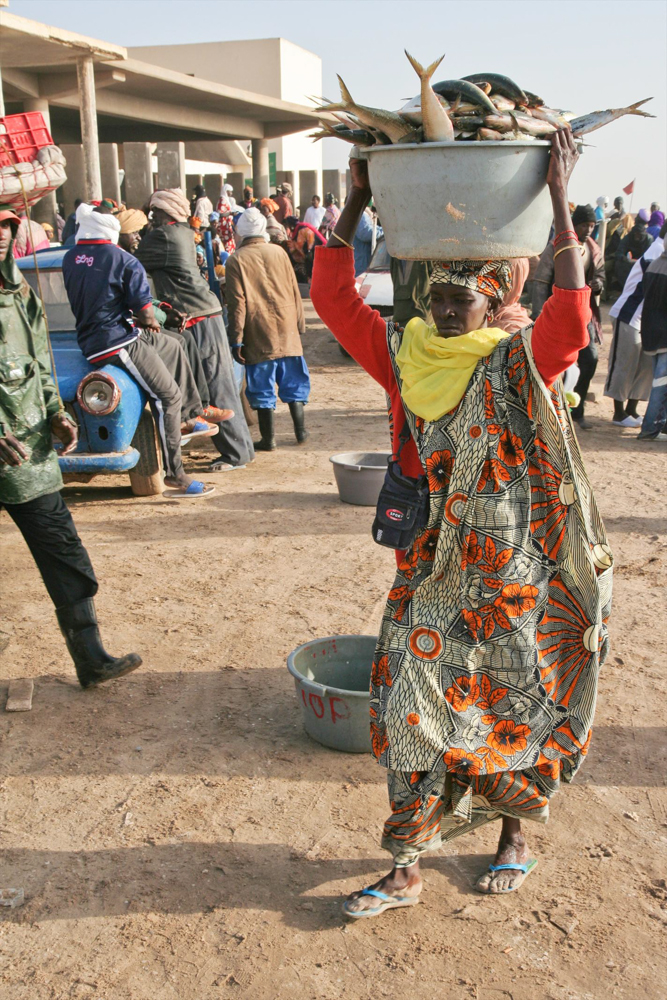
Mauratania woman carrying fishIn December 2012, Islamist Members of Parliament questioned the government about their attitude towards foreign Christian organisations and in July 2011, the council of Mauritanian Imams asked the government to criminalise obvious apostasy and proselytising. The influence of al-Qaeda in the Maghreb is growing and attempting to monitor Christian activity in the country.

BACKGROUND – There are a few countries on the World Watch List that we can’t share stories from. Even if we were to use different names, the Christian population is so small, that the story could easily be traced back to the individual. For their security, we are providing a different way to pray for the country this week.

Here are the top 10 things to know about what life is like for Christians in Mauritania:

1 – Mauritania has been under military rule for more than 30 years, with only a short democratic interruption in 2007. Promises to bring democracy back to the country have only resulted in rigged elections.

image
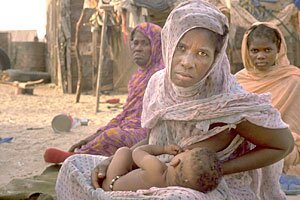
A woman breastfeeds her infant at a health centre. Lack of food and limited access to basic services have contributed to a rising rate of malnutrition in children.

2 – Mauritania is one of the world’s poorest countries. One third of the children are malnourished, and when there is enough food, it is often too expensive for the poor to afford.

3 – During the winter of 2010/2011 several articles in the local media portrayed the “foreign” activities in Mauritania, including the names and the organizations deemed most guilty of Christianization. In early July 2011, some prominent Imams published their request to the Mauritanian parliament to protect the Mauritanian people from hearing the Gospel and to reject every Christian organization by a fight to have every attempt of sharing the Gospel in Mauritania curtailed.

image
Militiaman from the Ansar Dine Islamic group, who said they had come from Niger and Mauritania, ride on a vehicle at Kidal in northeastern Mali, in this 16 June 2012 file photo. (Photo: Reuters - Adama Diarra)

4 – The main persecution dynamic in Mauritania is ‘Islamic extremism’ which has become more visible demonstrating the growing influence of Salafism.

5 – The first locals coming to Jesus were reported in the 90s. Mauritanian believers are few (with estimates ranging from around 150 all the way to 700).

image
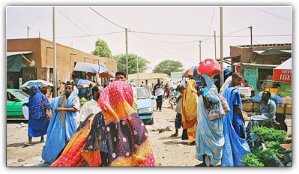
A market in Nouakchott, the capital of Mauritania, where Christians make up a tiny 0.16% of the populatio

6 – Many Christians don’t know the Ten Commandments and their ethics are influenced by the Muslim environment. It seems that the lack of biblical knowledge creates ethic problems. Other difficult obstacles for the church are its poverty and the illiteracy.

7 – The Church is divided in many groups. Some of them are united in networks but many believers are alone in their villages. In the countryside, Mauritanian leaders notice an interest for the faith issues and the Bible. The testimonies of the believers arrested and tortured in 2009 have encouraged more local believers to share about Jesus in the country.

image
The most common threat to Christians abroad is militant IslamPicture: ALAMY

8 – Pressure on Muslim Background Believers from family, tribe members and leaders of local mosques, is very high. There is some freedom for expat churches, but even for expats residing in the country, it is complicated. It remains completely impossible for Mauritanian Christians to register their churches, so they must meet in secret.

9 – There are many barriers such as low literacy rates, no Scriptures completed in Hassaniya Arabic, only a few local radio broadcasts from Senegal, and laws that forbid Mauritanians from hearing the gospel or believing in Jesus.

10 – Al-Qaeda in the Maghreb is monitoring Christian activity.

Men in Black Robes: Revolutionary Preaching – The Christian Post (Re-Blog)

Bestselling author Eric Metaxas address industry leaders at the National Religious Broadcasters dinner in Nashville, Tenn., on Sunday, March 3, 2013 (Photo: The Christian Post/Scott Liu)
(Photo: The Christian Post/Scott Liu)

By Eric MetaxasChristian Post Contributor
June 11, 2013

The secular powers that be are putting pressure on pastors to limit their practice of the Christian faith to just the four walls of the local church.

That’s why the current administration has emphasized a restricted “freedom of worship” rather than the First Amendment’s robust guarantee of Freedom of Religion; it’s why believers concerned about the redefinition of marriage are being told to shut up and go along, and why organizations such as Catholic Charities face crushing fines if they don’t provide contraceptives to their employees.

Now of course, we all know that some churches and ministers have been accused of becoming too involved in partisan politics. Even when we’ve been right to enter the political arena for good causes, too often we have been self-righteous, a tad arrogant, and sometimes beholden to this party or that.

But just because sometimes we get it wrong doesn’t mean we should stop altogether. As G. K. Chesterton observed, “If a thing is worth doing, it is worth doing badly.”

Fortunately, we have plenty of good examples of how pastors can be effectively and biblically engaged in the issues of the day-pastors who stood tall as our Republic was being founded.

The Colson Center‘s T. M. Moore points to certain men in black. “The British,” T.M. says, “referred to colonial pastors as the ‘Black Brigade,’ men in robes who fought against them by the words of their mouths as effectively as the colonial militia did with their weapons. To show their disdain of the American clergy, the British quartered their horses in the churches when they could.”

 That harassment did not deter the clergy, however. “Many sermons urging the revolutionary cause,” T.M. says, “were printed as broadsides and circulated up and down the eastern seaboard, where they were read and discussed in what were called Committees of Correspondence. These ‘small groups’ were highly effective in preparing the ground for the Revolution.”

Now T.M. isn’t advocating a revolution-except, perhaps, in our thinking about the role of ministers in the American experiment. “Ministers helped to lead the way to a new country,” he says. “Their preaching was bold, visionary, and soundly biblical, and many of their sermons worked to rally their people to the patriotic cause, but within the framework of a Kingdom vision.”

That kind of preaching-and thinking-is rare in our churches today. And that’s why as we approach the Fourth of July, T. M.’s “Pastor to Pastor” e-newsletter is focusing on classic sermons from the revolutionary era: to encourage today’s pastors to rethink their own callings as preachers, especially in the light of our nation’s great need for revival, renewal, and awakening.

You-and your pastor-can get “Pastor to Pastor” in your inbox each day. Please come to BreakPoint.org, click on this commentary, and sign up.

Just to whet your appetite, here are the words of John Witherspoon, from his sermon, “The Dominion of Providence over the Passions of Men:” “There is not a greater evidence either of the reality or the power of religion than a firm belief of God’s universal presence, and a constant attention to the influence and operation of his providence. It is by this means that Christians may be said, in the emphatic scripture language, ‘to walk with God, and to endure as seeing him who is invisible.’ ”

T. M. says, “What our nation needs today is ‘greater evidence of the reality and the power of religion.’ Why is there so little evidence of these among the members of the Christian community today?”

For the answer, and for inspiration, please come to BreakPoint.org and sign up for “Pastor to Pastor” today!

Read more at http://www.christianpost.com/news/men-in-black-robes-revolutionary-preaching-97735/#pVxYKtrwOQcvPkmb.99

Catholic Archbishop: Wake Up! Religious Liberty at Risk in USA (CNS Re-Blog)

Peanut Gallery: Archbishop Chaput of Philadelphia issued a wake-up call to all Christians. Full text may be found here.

“[T]he latest IRS ugliness,” he wrote, “is a hint of the treatment disfavored religious groups may face in the future, if we sleep through the national discussion of religious liberty now. The day when Americans could take the Founders’ understanding of religious freedom as a given is over. We need to wake up.”

By Terence P. Jeffrey

Archbishop Charles Chaput
Archbishop Charles Chaput of Philadelphia on Ash Wednesday, Feb. 22, 2012. (AP Photo/Matt Rourke)

(CNSNews.com) – Roman Catholic Archbishop Charles J. Chaput is calling on Americans to wake up and recognize that the Founding Fathers’ vision of religious freedom is now threatened by the federal government.

“The day when Americans could take the Founders’ understanding of religious freedom as a given is over,” said the archbishop. “We need to wake up.”

Chaput, who leads the Roman Catholic Archdiocese of Philadelphia, pointed to Obamacare’s sterilization-contraception-abortifacient regulation as one example. The regulation, issued by Health and Human Services Secretary Kathleen Sebelius, requires almost all health-care plans in the United States to provide coverage for sterilizations, artificial contraceptives and abortion-inducing drugs to all women of reproductive age–even if the person or employer providing the insurance coverage and even if the female beneficiaries themselves do not want the coverage and believe it is morally wrong and violates their religious beliefs.

“[T]he HHS mandate can only be understood as a form of coercion,” the archbishop wrote in a recent column posted on the website of the Archdiocese of Philadelphia. The column is entitled, “Religious Freedom and the Need to Wake Up.

Last year, the Catholic bishops of the United States unanimously approved a statement describing the HHS regulation as an “unjust and illegal mandate.” The unanimous bishops said the regulation not only violated the religious freedom of religious institutions but also the “personal civil rights” of individual Americans who will be forced to comply with it either as employers or employees.

Archbishop Chaput noted that the bishops believe “basic medical care is a matter of social justice and human dignity.” That principal, however, does not empower the government to force Americans to violate their moral and religious convictions.

“But health care has now morphed into a religious liberty issue provoked entirely–and needlessly–by the current White House,” the archbishop wrote. “Despite a few small concessions under pressure, the administration refuses to withdraw or reasonably modify a Health and Human Services (HHS) contraceptive mandate that violates the moral and religious convictions of many individuals, private employers and religiously affiliated and inspired organizations.”

The archbishop noted that the administration’s disregard for religious liberty in the enforcement of this regulation is in line with its refusal to defend the Defense of Marriage Act and its advocacy in the Hosanna-Tabor case.

The Defense of Marriage Act says that a state cannot be forced to recognize a same-sex marriage contracted in another state and that for federal purposes marriage is between one man and one women. The Supreme Court is now considering the constitutionality of DOMA, and the administration has asked the court that the law be thrown out, arguing that opposition to same-sex marriage (which is the position of the Catholic Church and many other religious denominations) is the constitutional equivalent of racial discrimination.

In the Hosanna-Tabor case, the administration argued unsuccessfully in the Supreme Court that the government could tell a Lutheran school it must restore as a “commissioned minister” a person who violated the teachings of the Lutheran faith.

“Coupled with the White House’s refusal to uphold the 1996 Defense of Marriage Act, and its astonishing disregard for the unique nature of religious freedom displayed by its arguments in a 9-0 defeat in the 2012 Hosanna-Tabor Supreme Court decision, the HHS mandate can only be understood as a form of coercion,” wrote the archbishop.

“Access to inexpensive contraception is a problem nowhere in the United States,” he said. “The mandate is thus an ideological statement; the imposition of a preferential option for infertility. And if millions of Americans disagree with it on principle–too bad.”

The archbishop went on to observe that abortion advocates use fraudulent language in describing their position.

“The fraud at the heart of our nation’s ‘reproductive rights’ vocabulary runs very deep and very high,” he wrote. “In his April 26 remarks to the Planned Parenthood Federation of America, the president never once used the word ‘abortion,’ despite the ongoing Kermit Gosnell trial in Philadelphia and despite Planned Parenthood’s massive role in the abortion industry.”

The archbishop noted that the scandal “involving IRS targeting of ‘conservative’ organizations … also has a religious dimension.”

“But the latest IRS ugliness,” he wrote, “is a hint of the treatment disfavored religious groups may face in the future, if we sleep through the national discussion of religious liberty now. The day when Americans could take the Founders’ understanding of religious freedom as a given is over. We need to wake up.”