Today, tens of thousands of people from around the country will gather in Washington to brave the cold for a cause they believe in. Some are marching for the first time, and others have been traveling to the nation’s capital since the Roe v. Wade decision in 1973. For the 41st year, they’ll meet again for the same reason — the sanctity of life.
We’re also celebrating life today, and we hope you will, too. Here are 19 moving reminders of the beauty of new life:
>>> Learn more: “How to Speak Up for Life,” produced by Heritage in collaboration with Alliance Defending Freedom, Americans United for Life, Concerned Women for America, Focus on the Family, March for Life Education and Defense Fund, and the Susan B. Anthony List Education Fund
“[T]he power of this world can neither attack us, neither excuse us, for if God justifye who can condemn and if God condemn there is none can justifye.”
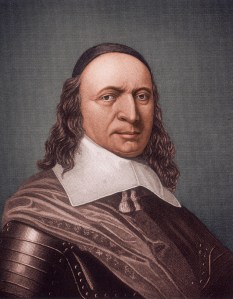
Portrait of Peter Stuyvesant in 1660. Getty Images
In January more than 350 years ago, two men of Vlissingen—now Flushing, N.Y., near Manhattan—sat in jail for defending the rights of Quakers to publicly practice their faith. This early act of courage in support of religious freedom is one of America’s most important, yet least known, declarations of private and public rights of conscience.
In a colony then called New Netherlands, the governor, Peter Stuyvesant, supported the Dutch Reformed Church with law and money. Other faiths were tolerated, but very grudgingly. As long as those faiths were practiced in private, their adherents often went undisturbed, despite Stuyvesant’s animosity. This mirrored Holland’s own uneasy sectarian détente.
This relationship collapsed when Quakers landed in Vlissingen. Their enthusiastic, public faith was incompatible with clandestine worship and quickly attracted attention. Outraged, Stuyvesant decreed harsh penalties for anyone who dared host a Quaker.
In response, on Dec. 27, 1657, a group of more than two dozen “Vlissingen-ites” signed a petition called the “Remonstrance of the Inhabitants of the Town of Flushing,” known today as the Flushing Remonstrance. This brave band declared their defiance of the edict concerning the Quakers because “we cannot in conscience lay violent hands upon them, but give them free egresse and regresse unto our Town, and houses, as God shall persuade our consciences.”
The Vlissingen-ites duly referenced their legal rights under Dutch law. Far more eloquently, they appealed to nonnegotiable obligations of conscience. They knew that their rebellion violated earthly authority, but they declared “the power of this world can neither attack us, neither excuse us, for if God justifye who can condemn and if God condemn there is none can justifye.” They relied on “the law written in his heart designed for the good of all,” maintaining that, contrary to the edict of their governor, they “are bounde by the law of God and man to doe good unto all men and evil to noe man.”
Not surprisingly, swift, harsh consequences came quickly. Stuyvesant responded by arresting four of the most prominent signatories, including the writer of the Flushing Remonstrance, town clerk Edward Hart, and the sheriff of Flushing, Tobias Feake. Others quickly recanted, but Hart and Feake refused and remained jailed for more than a month. Both were eventually released, but only after their point had been made. Seven years later, in 1664, Stuyvesant was forced to surrender New Netherlands to England. Ironically, the carefully negotiated Articles of Capitulation provided that the Dutch who remained in the now newly British colony of New York “shall enjoy the liberty of their consciences in Divine Worship and church discipline.”
Today, some scholars say the Flushing Remonstrance was a direct ancestor of the free-exercise clause in the Bill of Rights; others say its influence was far more limited because its pedigree was Dutch, not English. Nevertheless, as questions of conscience swirl anew, it is worth recalling three lessons from the signers of the Remonstrance.
First, they recognized that allowing private freedom of worship but not its public expression is, at best, false freedom. Free exercise means little if it may not be publicly expressed. Today, it is worth asking whether we embrace religious freedom with an all-too-narrow reading. Those in Vlissingen did not fight for the narrow freedom to worship, important as that was. They knew this would be empty if it did not also encompass the freedom to live by the dictates of faith, both in private and in public.
Second, it is worth noting that no signer of the Flushing Remonstrance was himself Quaker. Some likely disagreed with Quaker beliefs; some might have been skeptical about this new religion, and all had much to lose. Yet the signers fully understood that if a directive burdened those of one faith, then all should fear similar intrusion. Today, it is worth asking whether we too easily abandon those making claims of conscience when the particular rights they assert or claims they make lack majority support.
Third, the Remonstrance reflects the unique place of religion and conscience in the panoply of rights. In 1657, it was often argued that benefits would flow from restricting the open expression of multiple faiths because this restriction would foster harmony, strengthening a fledgling community needing cohesion. Vlissingen’s people didn’t see it this way. Today, it is worth asking whether we are too willing to surrender priceless freedoms in exchange for perceived advantages and benefits whose value pales in comparison with conscience rights surrendered.
Ordinary people signed the Flushing Remonstrance—not leaving to those of rank and prominence the task of protecting basic freedoms. The town clerk and sheriff, Hart and Feake, were unlikely heroes in the cause of religious freedom. Most information about other signers is forgotten in history’s fog. Some could not even sign their own names. Yet they didn’t shrink from confronting a governor who exceeded the limits of “the law written in his heart.”
In the centuries since 1657, America has wrestled with protecting religious practice and private conscience, sometimes more messily than perfectly. In each era, we have been prodded on by those like Hart, Feake and their companions who remain “bounde by the law of God” when it is in conflict with man-made laws. Today, we can easily take religious freedom and rights of conscience for granted. The people of old Vlissingen didn’t have that luxury.
__________
Ms. Silecchia is a law professor at the Catholic University of America in Washington, D.C., and a native of Flushing, N.Y.
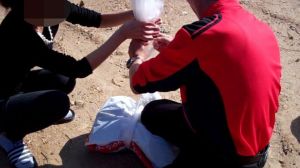
Members of Seoul USA launch a 40-foot balloon with a cargo of Bibles for North Koreans. (Seoul USA)
On a rainy afternoon last Spring, American pastor Eric Foley and his wife stood in a muddy field near the North Korea border and prayed – their hands clasped to a 40-foot homemade balloon that would carry Bibles to the communist dictatorship’s underground Christians.
“I get choked up, every time, as I let go and watch it take off,” Foley told FoxNews.com.
The balloons, made from a large sheet of “farm plastic,” said Foley, are filled with hydrogen before the Bibles and “tracts” – testimonials written by other North Korean Christians – are attached at the bottom inside a sack or box. Timers are then used to release the materials in stages, dispersing them at high altitudes across North Korea. Foley and members of his Christian mission group, Seoul USA, use GPS technology to help direct where the Bibles land. Around 50,000 of them have dropped from the skies in the last year.
“They are the most persecuted believers on earth,” Foley said of North Korea’s estimated 100,000 Christians – 30,000 of whom are believed to be locked inside concentration camps, where they are overworked, starved, tortured, and killed. Other activist groups, like Open Doors USA, estimate that number to be even higher, reporting that the secretive nation has about 400,000 Christians.
The balloons are launched from South Korea, and carry the coveted Bibles to North Korea’s estimated 100,000 underground Christians. (Seoul USA)
In North Korea, the practice of Christianity is illegal. Owning a Bible is a crime, and any person caught with one is sent – along with three generations of his or her family – to prison. Foley said despite the risks, demand for Bibles is strong within North Korea. His group targets rural areas where they might be picked up discreetly, he said.
North Koreans are forced to embrace Juche ideology, which mixes Marxism with worship of the late “Great Leader” Kim Il Sung and his family – a warped version of Christianity, says Foley, because Kim took concepts from Christianity, like the Trinity and church hymns, to create a religion in which he is worshipped. Foley said that if North Koreans learned about Christ, they would realize “this is all a fraud.”
“It’s a distortion of Christianity,” Foley said. “And the best way to reach them [North Koreans] is through mindset and knowledge.”
Foley, who is in his late 40s, founded Colorado-based Seoul USA in 2003 with his wife, a South Korean who immigrated to the U.S. in 1984. The two, along with other members of their group, launched their first balloon — strapped with Bibles — from South Korea in 2006. Foley said the balloons are typically sent out overnight from a muddy field at a high altitude between May and October. He said the best conditions are during a “rain storm or really bad weather because of the currents.”
“We are constantly monitoring the wind conditions as we’re launching,” he said, “And the North Korean border is always within the sight line.”
Seoul USA leader the Rev. Eric Foley and members of his group pray before each launch that the Bibles make it to North Korea’s persecuted Christians. (Seoul USA)
The balloons also include tracts, or testimonies, written by other North Korean Christians — some of whom managed to flee to South Korea — about Christ.
“The North Koreans respond very well to story,” Foley explained, “Because all are required to memorize 100 stories” related to Kim’s ideology.
In addition to supplying religious materials by air, Foley’s group produces short-wave radio programs with North Korean defectors reading the Bible. He said about 20 percent of North Koreans own radios, which are illegal.
Foley and his group won the legal rights to conduct the balloon launches from South Korea, but officials there “don’t make it easy,” he said, noting that they often try to force hydrogen suppliers not to sell the group hydrogen.
“Every time we fill up one of these balloons, we hold it and we pray together in English, North Korean and South Korean,” Foley said. “We pray loudly and always with tears.”
We are united in our resolve to continue to defend our right to live by our faith, and our duty to serve the poor, heal the sick, keep our apostolates strong and faithful, and insure our people. I remain grateful for your continued unity in response to this matter of deep concern to us all. (Timothy Cardinal Dolan)
WASHINGTON, DC (USCCB) – The U.S. bishops continue to study the legal and moral implications of the U.S. Department of Health and Human Services (HHS) mandate in the Affordable Care Act, and to “develop avenues of response that would both preserve our strong unity and protect our consciences,” Cardinal Timothy M. Dolan said in a September 17 letter to bishops. His letter followed the September 10-11 meeting of the U.S. Conference of Catholic Bishops’ (USCCB) Administrative Committee, the top ranking USCCB body outside a plenary session.
The bishops’ “efforts are proceeding apace, and, as you know, include a careful legal and moral analysis of the final rule,” Cardinal Dolan said. Further discussion will take place at the bishops’ fall plenary, Nov. 11-14 in Baltimore. “We are united in our resolve to continue to defend our right to live by our faith, and our duty to serve the poor, heal the sick, keep our apostolates strong and faithful, and insure our people,” he said.
The full text of Cardinal Dolan’s letter follows.
The HHS mandate requires virtually all employers to facilitate access to sterilization and contraception, as well as drugs and devices that may cause abortion, even if doing so violates deeply-held religious beliefs. Despite serious religious liberty concerns expressed by believers of many faiths, the Administration finalized its mandate with only minor changes. The final rule, Cardinal Dolan said, “still suffers from the same three basic problems”:
1) “Its narrow definition of ‘religious employer’ reduces religious freedom to the freedom of worship by dividing our community between houses of worship and ministries of service,”
2) “Its second-class treatment of those great ministries – the so-called ‘accommodation’ – leaves them without adequate relief,” and
3) “Its failure to offer any relief to for-profit businesses run by so many of our faithful in the pews.”
Cardinal Dolan stressed the bishops’ longstanding advocacy of policies that advance the goal of affordable health care. “Now we are being burdened because of the same Catholic values that compel us into these ministries,” he said.
Cardinal Dolan emphasized that the members of the Administrative Committee “were unanimous in their resolve to continue our struggle against the HHS Mandate.” He likewise voiced concern regarding the Catholic Health Association’s “hurried acceptance of the accommodation” which he called “untimely and unhelpful.”
“We highly value CHA’s great expertise in their ministry of healing,” Cardinal Dolan said, “but as they have been the first to say, they do not represent the Magisterium of the Church.”
—–
The full text of Cardinal Dolan’s letter
September 17, 2013
Year of Faith
My brother bishops,
I write at the request of our brother bishops on the USCCB Administrative Committee, who asked me to update you, as I have now grown accustomed to doing, on the tough and delicate matter of the HHS Mandate, and our ongoing response to it. You won’t be surprised to hear that, at our meeting last week, we spent a great deal of time focused on this matter of major concern to us all.
I have to tell you first that we took the occasion to vent. The Catholic Church in America has long been a leader in providing affordable health care, and in advocating for policies that advance that goal. The bishops on a national level have been at it for almost one hundred years, and our heroic women and men religious have done so even longer. Yet, instead of spending our time, energy, and treasure on increasing access to health care, as we have done for many decades, we’re now forced to spend those resources on determining how to respond to recently enacted government regulations that restrict and burden our religious freedom. Catholics – our parents and grandparents, religious sisters, brothers and priests – were among the first at the table to advance and provide health care, and now we are being burdened because of the same Catholic values that compel us into these ministries! All this in a country that puts religious liberty first on the list of its most cherished freedoms. As I’ve said before, this is a fight that we didn\’t ask for, and would rather not be in, but it’s certainly one that we won’t run from.
It might be helpful if we keep in mind our recent history on the HHS mandate and our efforts regarding it. Last February 1, the Administration announced its updated “accommodation.” We immediately said that we needed time to analyze it, but that our initial read indicated that, regrettably, not much had changed, and our objections remained. Nonetheless, we took the administration at its word when it said it would consider our concerns, and after a detailed analysis, our Conference again submitted extensive comments, as invited to do by HHS.
On June 28, we got our answer: despite our grave concerns – concerns we share with believers of many other faiths, and with so many of the 400,000 others who commented on the rule – the “accommodation” was finalized with only minor changes. While the administration gave us a much-needed extra five months to determine how to respond, the final version of the mandate still suffers from the same three basic problems we have highlighted from the start: its narrow definition of “religious employer” reduces religious freedom to the freedom of worship by dividing our community between houses of worship and ministries of service; its second-class treatment of those great ministries-the so-called “accommodation”-leaves them without adequate relief; and its failure to offer any relief at all to for-profit businesses run by so many of our faithful in the pews.
As you know, we are continuing our efforts in Congress and in the courts, and we are confident that our rights under the Constitution and other laws protecting religious freedom will eventually be vindicated. While much remains uncertain, it is plain that the HHS Mandate lessens the ability of our ministries to give full-throated witness to our faith, a central mission of all Catholic apostolates.
At the Administrative Committee meeting, the members were unanimous in their resolve to continue our struggle against the HHS Mandate, and they asked me to convey that firm resolve to you. If there\’s any perception that our dedication to this fight is flagging, that’s dead wrong.
That perception may come in part from the Catholic Health Association’s hurried acceptance of the accommodation, which was, I’m afraid, untimely and unhelpful. We highly value CHA’s great expertise in their ministry of healing, but as they have been the first to say, they do not represent the Magisterium of the Church. Even in their document stating that they could live with the “accommodation” they remarked that we bishops, along with others, have wider concerns than they do.
We continue to follow the excellent process established at the meeting of the body of bishops in June, to develop avenues of response that would both preserve our strong unity and protect our consciences. Those efforts are proceeding apace, and as you know, include a careful legal and moral analysis of the final rule. We will then have another opportunity to discuss the rule at our November plenary assembly.
We are united in our resolve to continue to defend our right to live by our faith, and our duty to serve the poor, heal the sick, keep our apostolates strong and faithful, and insure our people. I remain grateful for your continued unity in response to this matter of deep concern to us all. I’ll try my best to keep you posted.
With prayerful best wishes, I am,
Fraternally in Christ,
Timothy Cardinal Dolan
Archbishop of New York
President
U.S. Conference of Catholic Bishops
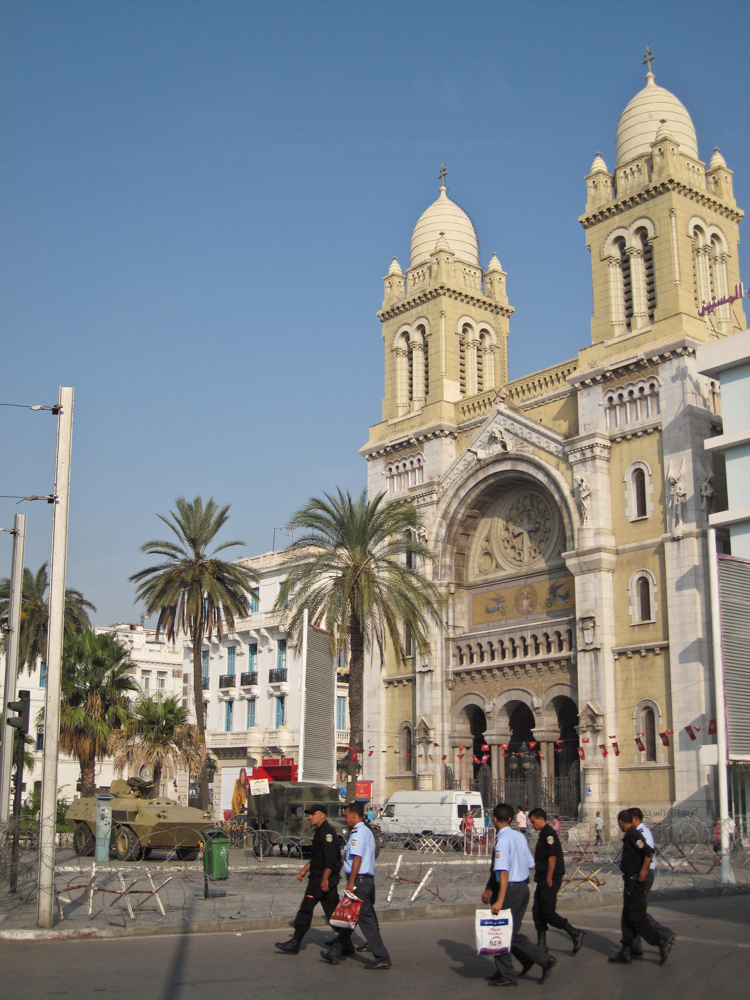
Population: 10.7 million (24,000 Christians) Main Religion: Islam Government: Republic Source of Persecution: Islamic extremism
Under former President Ben Ali, Tunisia was a secular country in which timid expressions of Christianity were tolerated. Now, Christians face increasing persecution from the moderately Islamic government and from aggressive Salafist groups. Expat churches face few problems, but local Muslim-background believers face pressure from society, and may be questioned and beaten once their conversion is known. The secular legal system remains in place, but the government is moving towards implementing Islamic law. Despite the increasing pressure, the small indigenous church is growing slowly.
PLEASE PRAY:
Radical Muslims are returning to the country and spreading extremist messages. Pray that their influence will not spread
The economy is in a bad state and unemployment is growing. Pray for wisdom for the government
Importation of Christian books in the Arabic language is obstructed. Ask God to protect Open Doors co-workers distributing Bibles in the country.
Tunisian Christians experience increasing pressure at the private and family level and pressure is clearly greater for those who come to Christ from a Muslim background than for the few expat churches. The secular legal system remains in place, but this is likely to change as the country’s Islamic government is taking steps towards the implementation of Sharia (Islamic law). Although the constitution currently respects freedom of religion, importing Christian books is obstructed, national churches cannot register and local Christians are questioned and beaten once their conversion is known.
Tunisia needs a new political system; the economy is in a bad state, unemployment is growing and tourism levels have dropped. Radical Muslims are returning to the country and spreading extremist messages. The rise of Salafism is also a stressful development for many believers. With political developments looking grim and Islamic movements getting stronger, the situation of the small Christian population in the country has deteriorated and is not expected to improve. However, on a positive note, the small indigenous church seems to be growing slowly.
Things have changed in Tunisia after the Arab Spring first erupted in this North-African country. Dictator Ben Ali is gone and the elections were held with a landslide win for the Islamists. Christians see a greater spiritual openness than ever before in the country, and see discipleship as the principal need at this moment.
The Tunisian Church has already been changing for the last fifteen years. Till the end of last century, there were only house groups of Christians active in this North-African country. Now churches choose to be visible. Last year the church especially grew outside the capital Tunis.
“Coming more to the surface seems to have strengthened the Christians,” explains an Open Doors field worker. Self-awareness grew and the level of fear went down. Now you can see during the Saturday services interested people coming in from the street, attracted by curiosity of what is going on in the churches. We see Church engaging with society. Groups of Christians meet in several smaller cities in Tunisia.” Tunisian Christians see a strong response to the gospel. “I heard of people accepting Christ while escaping teargas,” the field worker. says.
We also spoke with Raatib*, a Christian that doesn’t hide his faith. Raatib is discipling two groups of young Christians in two different cities. He travels a great distance to these places to be able to give the training to the new believers. He is using Open Doors training material. “The church needs discipleship in any way or form, it is by far the most prevalent need for the church,” he says with conviction.








 The Peanut Gallery