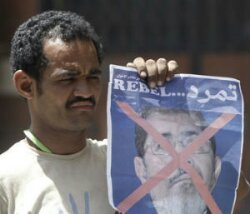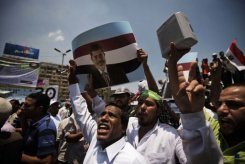
Please pray for Christians in Egypt

Peanut Gallery: The chaos continues in Egypt and Christians are easy targets for Islamist thugs.

The Western world had pretty much abandoned Egypt’s Christians since the onset of the so-called Arab Spring… and their situation deteriorated steadily under the Morsi-Muslim Brotherhood regime. They simply could not count on the Morsi government to protect them from Islamist attacks. That’s why Coptic Christians generally supported the Egyptian military’s overthrow of Morsi.

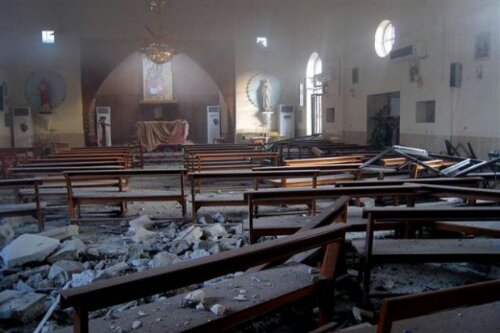
Egypt church burning3Now it’s pay-back time for the ousted Islamists. How bad is it? In the last few days, 58 Christian churches, schools, institutions, shops torched by the Muslim Brotherhood.

See photos here… here… and here. The list below, compiled by Asia News, tells the sad story.

Is it any wonder that Christians have turned to the Egyptian military to protect them? And they have found a champion in the Egyptian military, Gen. Abdel Fattah El-Sisi . El-Sisi has vowed to rebuild Coptic Churches destroyed by the Muslim Brotherhood. In fact, the Egyptian military broadly represents the demographics of the Egyptian people and is intimately entwined with the industrial / manufacturing / commercial community of Egypt. It is the only entity capable of stabilizing Egypt today… and has broad popular support.

PLEASE PRAY:

  • For Pope Tawadros II – wisdom and courage to lead the Coptic Church through these dangerous times
  • For Gen. Abdel Fattah El-Sisi – wisdom and restraint in the use of force to restore order in Egypt
  • For Morsi and the Muslim Brotherhood – reject violence, days of rage, and the forces of darkness that  permeate their ranks
  • For Egyptian People – God’s guidance through the wilderness in which they find themselves

Egypt: Islamists Burn Down Dozens Of Coptic Christian Churches

The List of Christian Churches, Schools, Institutions, Shops Torched by the Muslim Brotherhood in the Last Few Days

Cairo (AsiaNews) – At least 58 Christian churches, schools, institutions, homes and shops have been attacked, looted and torched over the last three days by the Muslim Brotherhood and supporters of Mohamed Morsi, the former Egyptian president who was deposed on 3 July . On August 14 the army has tried to evict the sit-in of the Islamists in Rabaa El Nahda Square and Adaweya. In a wave of devastating violence, over 600 people were killed and thousands injured. But violent attacks were also carried out on Catholic, Orthodox, Evangelical churches as well as the homes and shops of Christians, as we have documented
The representatives of the Christian Churches have drawn up a list which we publish below. The list was handed over to AsiaNews by the Press Office of the Catholic Church in Egypt.

The following list of 58 looted and burned buildings (including convents and schools) has been verified by representatives of the Christian Churches.

Catholic churches and convents

  • 1. Franciscan church and school (road 23) – burned (Suez)
  • 2. Monastery of the Holy Shepherd and hospital – burned (Suez)
  • 3. Church of the Good Shepherd, Monastery of the Good Shepherd – burned in molotov attack (Asuit)
  • 4. Coptic Catholic Church of St. George – burned (Minya, Upper Egypt)
  • 5. Church of the Jesuits – burned (Minya, Upper Egypt)
  • 6. Fatima Basilica – attacked – Heliopolis
  • 7. Coptic Catholic Church of St. Mark – burned (Minya – Upper Egypt)
  • 8. Franciscan convent (Sisters of the Immaculate Heart of Mary) – burned (Beni Suef, Upper Egypt)
  • 9. Church of St. Teresa – burned (Asuit, Upper Egypt)
  • 10. Franciscan Church and School – burned (Asuit, Upper Egypt)
  • 11. Convent of St Joseph and school – burned (Minya, Upper Egypt)
  • 12. Coptic Catholic Church of the Sacred Heart – torched (Minya, Upper Egypt)
  • 13 Convent of the Sisters of Saint Mary – attacked (Cairo)
  • 14. School of the Holy Shepherd – attacked (Minya, Upper Egypt)

Orthodox and Evangelical Churches

  • 1. Anglican Church of St. Saviour – burned (Suez)
  • 2. Evangelical Church of St Michael – surrounded and sacked (Asuit, Upper Egypt)
  • 3. Coptic Orthodox Church of St. George – Burned (Minya, Upper Egypt)
  • 4. Church of Al-Esla – burned (Asuit, Upper Egypt)
  •  5. Adventist Church – burned, the pastor and his wife abducted (Asuit, Upper Egypt)
  •  6. Church of the Apostles – burned (Asuit, Upper Egypt)
  •  7. Church of the Holy renewal – burned (Asuit, Upper Egypt)
  • 8. Diocesan Centre Coptic Orthodox Qusiya – burned (Asuit, Upper Egypt)
  • 9. Church of St. George – burned (Arish, North Egypt)
  • 10. Church of St. George in al-Wasta – burned (Beni Suef, Upper Egypt)
  • 11. Church of the Virgin Mary – attacked (Maadi, Cairo)
  • 12. Church of the Virgin Mary – attacked (Mostorod, Cairo)
  • 13. Coptic Orthodox Church of St. George – attacked (Helwan, Cairo)
  • 14. Church of ​​St. Mary of El Naziah – burned (Fayoum, Upper Egypt)
  • 15. Church of Santa Damiana – sacked and burned (Fayoum, Upper Egypt)
  • 16. Church of St. Theodore – burned (Fayoum, Upper Egypt)
  • 17. Evangelical Church of al-Zorby – Sacked and destroyed (Fayoum, Upper Egypt)
  • 18. Church of St. Joseph – burned (Fayoum, Upper Egypt)
  • 19. Franciscan School – burned (Fayoum, Upper Egypt)
  • 20. Coptic Orthodox Diocesan Center of St. Paul – burned (Gharbiya, Delta)
  • 21. Coptic Orthodox Church of St. Anthony – burned (Giza)
  • 22. Coptic Church of St. George – burned (Atfeeh, Giza)
  • 23. Church of the Virgin Mary and father Abraham – burned (Delga, Deir Mawas, Minya, Upper Egypt)
  • 24. Church of St. Mina Abu Hilal Kebly – burned (Minya, Upper Egypt)
  • 25. Baptist Church in Beni Mazar – burned (Minya, Upper Egypt)
  • 26. Church of Amir Tawadros – burned (Minya, Upper Egypt)
  • 27. Evangelical Church – burned (Minya, Upper Egypt)
  • 28. Church of Anba Moussa al-Aswad- burned (Minya, Upper Egypt)
  • 29. Church of the Apostles – burned (Minya, Upper Egypt)
  • 30. Church of St Mary – arson attempt (Qena, Upper Egypt)
  • 31. Coptic Church of St. George – burned (Sohag, Upper Egypt)
  • 32. Church of Santa Damiana – Attacked and burned (Sohag, Upper Egypt)
  • 33. Church of the Virgin Mary – burned (Sohag, Upper Egypt)
  • 34. Church of St. Mark and community center – burned (Sohag, Upper Egypt)
  • 35. Church of Anba Abram – destroyed and burned (Sohag, Upper Egypt)

Christian institutions

  • 1. House of Fr. Angelos (pastor of the church of the Virgin Mary and Father Abraham) – burned (Minya, Upper Egypt)
  • 2. Properties and shops of Christians – Burnt (Arish, North Egypt)
  • 3. 17 Christian homes attacked and looted (Minya, Upper Egypt)
  • 4. Christian homes – Attach (Asuit, Upper Egypt)
  • 5. Offices of the Evangelical Foundation – burned (Minya, Upper Egypt)
  • 6. Stores, pharmacies, hotels owned by Christians – attacked and looted (Luxor, Upper Egypt)
  • 7. Library of the Bible Society – burned (Cairo)
  • 8. Bible Society – burned (Fayoum, Upper Egypt)
  • 9. Bible Society- burned (Asuit, North Egypt).

Burned buildings owned by Christians

  • 1. 58 houses.
  • 2. 85 shops.
  • 3. 16 pharmacies.
  • 4.  3 hotels (Upper Egypt)
  • 5. 75 buses and cars.

Other

  • 7 Victims (killed); 17 kidnapped; and hundreds injured.
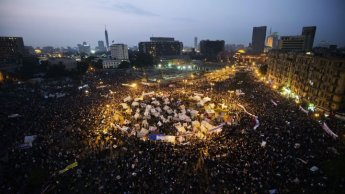
30 June – Hundreds of thousands in Cairo for anti-Morsi protest – France24

30/06/2013 – France24

image
Tahrir Square, Cairo

Hundreds of thousands of protesters massed in the streets of Cairo on Sunday to demand Egyptian President Mohammed Morsi’s resignation one year after he first took office.

__________________________
Huge turnout at Egypt’s Presidential Palace protest
__________________________

___________________________

Hundreds of thousands of Egyptians flooded into the streets on the first anniversary of Islamist President Mohamed Mursi’s inauguration on Sunday to demand that he resign.

Waving national flags and chanting “Get out!”, a crowd of more than 200,000 had massed by sunset on Cairo’s central Tahrir Square in the biggest demonstration since the 2011 uprising that overthrew Mursi’s predecessor, Hosni Mubarak.

“The people want the fall of the regime!” they shouted, echoing the Arab Spring rallying cry that brought down Mubarak – this time yelling it not against an ageing dictator but against the first elected leader in Egypt’s 5,000 year recorded history.

Many bellowed their anger at Mursi’s Muslim Brotherhood, accused of hijacking the revolution and using electoral victories to monopolise power and push through Islamic law.

Others have been alienated by a deepening economic crisis and worsening personal security, aggravated by a political deadlock over which Mursi has presided.

As the working day ended and 38 Celsius (100 Fahrenheit) heat eased, more protesters converged through the eerily deserted streets of the shuttered city centre, while smaller crowds protested in several other areas of the capital.

The veteran leaders of Egypt’s secular, liberal and left-wing opposition, including former chief of the U.N. nuclear watchdog Mohamed ElBaradei and leftist presidential candidate Hamdeen Sabahi, joined protest marches in Cairo.

A Reuters journalist said hundreds of thousands of anti-government protesters marched through the Mediterranean port of Alexandria, Egypt’s second city, and a military source reported protests in at least 20 towns around the country.

Mursi, an engineering professor propelled to power by the Muslim Brotherhood, was monitoring events from the heavily guarded Qubba presidential palace, where an official spokesman appealed for the demonstrations to remain peaceful.

“Maintaining the security of Egypt is the common responsibility of everyone,” presidential spokesman Ehab Fahmy told a news conference. “Dialogue is the only way to reach mutual understanding and to reach national agreement around the different issues of our homeland.”

Legitimacy

Security sources said three Brotherhood offices were set on fire by demonstrators in towns in the Nile Delta – the latest in more than a week of sporadic violence in which hundreds have been hurt and several killed, including an American student.

More than 20,000 supporters of Mursi congregated outside a Cairo mosque not far from another suburban presidential palace, where protest organisers planned a sit-in from Sunday evening.

Interviewed by a British newspaper, Mursi voiced his determination to ride out what he sees as an undemocratic attack on his electoral legitimacy. But he also offered to revise the new, Islamist-inspired constitution, saying clauses on religious authority, which fuelled liberal resentment, were not his choice.

He made a similar offer last week, after the head of the army issued a strong call for politicians to compromise. But the opposition dismissed it as too little to late. They hope Mursi will resign in the face of large numbers on the streets.

“We call on Mohamed Mursi, who has completely lost the legitimacy of his power, to quickly respond to the clear will of the people which is plain today in all corners of revolutionary Egypt,” the June 30 movement, which organised a nationwide petition demanding his resignation, said in a statement.

Some Egyptians seem to believe the army might force the president’s hand, if not to quit then at least to make major concessions to the opposition.

In Cairo, demonstrators stopped to shake hands and take photographs with soldiers guarding key buildings. At least six high-ranking police officers took to the Tahrir Square podium in support of demonstrators, a Reuters witness said.

The armed forces used military helicopters to monitor the protests in Cairo and Alexandria and a military source said chief-of-staff and Defence Minister General Abdel Fattah al-Sisi was following the situation from a special operations room.

Mursi and the Brotherhood hope the protests will fizzle like previous outbursts last December and in January. If they do not, some form of compromise, possibly arbitrated by the army, may be on the cards.

Violence

Both sides insist they plan no violence but accuse the other – and agents provocateurs from the old regime – of planning it.

The U.S.-equipped army shows little sign of wanting power but warned last week it may have to step in if deadlocked politicians let violence slip out of control.

U.S. President Barack Obama called for dialogue and warned trouble in the most populous Arab nation could unsettle an already turbulent region. Washington has evacuated non-essential personnel and reinforced security at diplomatic missions.

In an interview with London’s Guardian newspaper, Mursi repeated accusations that what he sees as entrenched interests from the Mubarak era are plotting to foil his attempt to govern. But he dismissed the demands that he give up and resign.

If that became the norm, he said, “well, there will be people or opponents opposing the new president too, and a week or a month later, they will ask him to step down”.

Liberal leaders say nearly half the voting population – 22 million people – has signed a petition calling for new elections, although there is no obvious challenger to Mursi.

The opposition, fractious and defeated in a series of ballots last year, hope that by putting millions on the streets they can force Mursi to relent and hand over to a technocrat administration that can organise new elections.

Army role

Religious authorities have warned of “civil war”. The army insists it will respect the “will of the people”, though the two sides have opposing views of what that means.

Islamists interpret that to mean army support for their election victories. Opponents believe that the army may heed the popular will as expressed on the streets, as it did in early 2011 when the generals decided Mubarak’s time was up.

Having staged shows of force earlier this month, the Brotherhood has not called on supporters to go out on Sunday.

Among the Islamists in Cairo, Ahmed Hosny, 37, said: “I came here to say, ‘We are with you Mursi, with the legitimate order and against the thugs’.

“This is our revolution and no one will take it from us.”

At Tahrir Square, banners ranged from “The Revolution Goes On”, “Out, Out Like Mubarak” to “Obama Backs Terrorism” – a reference to liberal anger at U.S. support for Mursi’s legitimacy and criticism of protests as bad for the economy.

“I am here to bring down Mursi and the Brotherhood,” said Ahmed Ali al-Badri, a feed merchant in a white robe. “Just look at this country. It’s gone backwards for 20 years. There’s no diesel, gasoline, electricity. Life is just too expensive.”

The army, half a million strong and financed by Washington since it backed a peace treaty with Israel three decades ago, says it has deployed to protect key installations.

Among these is the Suez Canal. Cities along the waterway vital to global trade are bastions of anti-government sentiment. A bomb killed a protester in Port Said on Friday. A police general was gunned down in Sinai, close to the Israeli border.

There are some similarities with Turkey, where an Islamist prime minister with a strong electoral mandate was confronted in the streets by angry secularists this month. But Egypt is much poorer, its economy is crumbling rather than booming and its new democracy was born in a revolution just two years ago.

For many Egyptians, all the turmoil since 2011 has just made life harder. Standing by his lonely barrow at an eerily quiet downtown Cairo street market, 23-year-old Zeeka was afraid more violence was coming.

“We’re not for one side or the other,” he said. “What’s happening now in Egypt is shameful. There is no work, thugs are everywhere … I won’t go out to any protest.

“It’s nothing to do with me. I’m the tomato guy.”

Egypt’s Christians vs “the Lions” – Raymond Ibrahim Re-Blog

U.S. ASKS EGYPT’S CHRISTIANS NOT TO OPPOSE MORSI

By: Raymond Ibrahim 6/26/2013

image

As Egyptians of all factions prepare to demonstrate in mass against the Muslim Brotherhood and President Morsi’s rule on June 30, the latter has been trying to reduce their numbers, which some predict will be in the millions and eclipse the Tahrir protests that earlier ousted Mubarak.

image
Egypt's Coptic Pope Tawadros II

Among other influential Egyptians, Morsi recently called on Coptic Christian Pope Tawadros II to urge his flock, Egypt’s millions of Christians, not to join the June 30 protests.

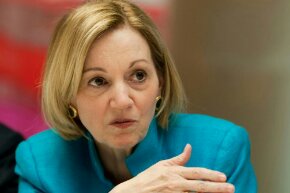
While that may be expected, more troubling is that the U.S. ambassador to Egypt is also trying to prevent Egyptians from protesting—including the Copts. The June 18th edition of Sadi al-Balad reports that lawyer Ramses Naggar, the Coptic Church’s legal counsel, said that during Patterson’s June 17 meeting with Pope Tawadros, she “asked him to urge the Copts not to participate” in the demonstrations against Morsi and the Brotherhood.

The Pope politely informed her that his spiritual authority over the Copts does not extend to political matters.

image
US Ambassador Anne Patterson

Regardless, many Egyptian activists are condemning Patterson for flagrantly behaving like the Muslim Brotherhood’s stooge. Leading opposition activist Shady el-Ghazali Harb said Patterson showed “blatant bias” in favor of Morsi and the Brotherhood, adding that her remarks had earned the U.S. administration “the enmity of the Egyptian people.” Coptic activists like George Ishaq openly told Patterson to “shut up and mind your own business.” And Christian business tycoon Naguib Sawiris—no stranger to Islamist hostility—posted a message on his Twitter account addressed to the ambassador saying “Bless us with your silence.”

Indeed, the U.S. ambassador’s position as the Brotherhood’s lackey is disturbing—and revealing—on several levels. First, all throughout the Middle East, the U.S. has been supporting anyone and everyone opposing their leaders—in Libya against Gaddafi, in Egypt itself against 30-year U.S. ally Mubarak, and now in Syria against Assad. In all these cases, the U.S. has presented its support in the name of the human rights and freedoms of the people against dictatorial leaders.

So why is the Obama administration now asking Christians not to oppose their rulers—in this case, Islamists—who have daily proven themselves corrupt and worse, to the point that millions of Egyptians, most of them Muslims, are trying to oust them?

image
Egyptian Christians face increasing persecution from the Islamists in control of the state.

What’s worse is that the human rights abuses Egypt’s Coptic Christians have been suffering under Muslim Brotherhood rule are significantly worse than the human rights abuses that the average Egyptian suffered under Mubarak—making the Copts’ right to protest even more legitimate, and, if anything, more worthy of U.S support.

Among other things, under Morsi’s rule, the persecution of Copts has practically been legalized, as unprecedented numbers of Christians—men, women, and children—have been arrested, often receiving more than double the maximum prison sentence, under the accusation that they “blasphemed” Islam and/or its prophet.

It was also under Morsi’s reign that another unprecedented scandal occurred: the St. Mark Cathedral—holiest site of Coptic Christianity and headquarters to the Pope Tawadros himself—was besieged in broad daylight by Islamic rioters. When security came, they too joined in the attack on the cathedral. And the targeting of Christian children—for abduction, ransom, rape, and/or forced conversion—has also reached unprecedented levels under Morsi.

(For more on the plight of the Copts under Morsi’s rule, see my new book Crucified Again: Exposing Islam’s New War on Christians.)

Yet despite the fact that if anyone in Egypt has a legitimate human rights concern against the current Egyptian government, it most certainly is the Christian Copts, here is the U.S., in the person of Ms. Patterson, asking them not to join the planned protests.

In other words, and consistent with Obama administration’s doctrine, when Islamists—including rapists and cannibals—wage jihad on secular leaders, the U.S. supports them; when Christians protest Islamist rulers who are making their lives a living hell, the administration asks them to “know their place” and behave like dhimmis, Islam’s appellation for non-Muslim “infidels” who must live as third class “citizens” and never complain about their inferior status.

Raymond Ibrahim is author of Crucified Again: Exposing Islam’s New War on Christians. He is a Shillman Fellow at the David Horowitz Freedom Center and an Associate Fellow at the Middle East Forum.

Egypt Update: Sexual harassment against women – USA Today post

Egyptian women rising up against sexual harassment

Sarah Lynch, Special for USA TODAY / June 23, 2013

CAIRO – Women here say it crosses class barriers, generations and faiths. It prevails in public buses, trains, streets and homes. It exists online, on university campuses, and in parks, markets, at work and in cafes.

image
(Photo: Khalil Hamra, AP)

STORY HIGHLIGHTS
+ Men pay few penalties for grabbing and groping women in a violent manner
+ 99.3% of Egyptian women surveyed reported experiencing some form of sexual harassment
+ Islamists have blamed victims for their harassment

Sexual harassment of women is epidemic in Egypt, where men pay few penalties for grabbing and groping women in a violent manner.

image
In the film, Cairio 678, one of the lead characters, played by actress Bushra, is repeatedly harassed on bus

The harassment appears to permeate the nation’s every pore, academics say. After decades of such behavior, a growing number of groups and initiatives are working to do something about it.

“For many women who have to rely on walking, public transportation or the metro, it’s a grinding thing that happens every day,” said Helen Rizzo, associate professor of sociology at the American University in Cairo.

“For some women, it’s been very serious: grabbing, touching, trying to pull women into cars, and the whole phenomena of attacking protests,” she said.

A recent report by U.N. Women said 99.3% of Egyptian women surveyed in a recent study reported experiencing some form of sexual harassment — everything from inappropriate sexual jokes, to whistling, touching, groping and rape.

“Through this study we are able to confirm the spread of sexual harassment in Egypt to unprecedented levels,” stated the U.N. report.

Some believe the problem has grown worse since the 2011 revolution that ousted dictator Hosni Mubarak and led to a government under Muslim Brotherhood rule, perhaps due to a drop in effective security.

“Certainly sexual harassment and sexual assault and violent attacks are something not new in Egypt,” said Diana Eltahawy, Amnesty International’s Egypt researcher, noting that under Mubarak they were used as tools to repress women.

The survey is striking for the sheer range of places where women feel they can be victimized.

Almost 83% of surveyed women said they don’t feel safe in the street and 79% don’t feel safe in a taxi. Sixty-seven percent said girls are subject to harassment regardless of what they wear, how they look, their manner of speech or their gait. Female workers and students are most exposed to harassment.

Brutality in the public space now has symbolic value for the nation too, Eltahawy said. Vicious mob attacks and assault happen often in Tahrir Square, the heart of that nation’s uprising where men and women joined and camped out for days to demand democratic freedoms and a fair justice system.

An organization called HarassMap founded in 2010, allows women to report locations of abuse using technology. Through advertising on television, radio, in music and print the group seeks to change perceptions associated with harassment and remind the public it is a punishable offense.

While the law doesn’t explicitly criminalize sexual harassment, three laws that address rape, public indecency and assault can be applied to harassment cases.

“It’s all about culture and misconceptions,” said Dina Samir, communications manager at HarassMap, who says harassment has worsened over the last decade. “If the culture changes it would put pressure on the government to enforce laws.”

“We believe we can play a big role in changing perceptions,” she said.

Men are also getting involved because “it’s not just a women’s issue,” said Ayman Nagy, who founded the Anti-Harassment Movement. “It’s a humanity issue.”

Nagy and a group of 73 full-time volunteers hold workshops in universities and even in the streets among other places to talk about issues that include sexual abuse.

“We need to solve the problem from its roots,” Nagy said. “We’re going to work on the harasser himself, because we think he is a sick person and needs help, and that we can help him.”

Other groups such as Operation Anti-Sexual Harassment seek to end mob harassment and assault, and Tahrir Bodyguard has a team of volunteers in bright green vests who intervene when they see sexual violence taking place during protests.

In March, President Mohammed Morsi launched an effort to help identify challenges facing women through workshops, fieldwork and discussions. Last month, local press reported that the government created an all-female unit of police to battle sexual harassment.

“Time will tell whether or not these are serious attempts, and also whether or not they are going to bring about real changes and results the way grass-roots movements have been able to do,” said Soraya Bahgat, who founded Tahrir Bodyguard and is now working more generally on women’s issues.

Not all groups, however, are on board with efforts to empower women and Islamists have blamed victims for their harassment.

Earlier this year the powerful Muslim Brotherhood condemned a United Nations report meant to reduce violence against women. The Brotherhood criticized articles in the document that gave judges, rather than husbands, authority in cases of divorce and granted women full rights to file legal complaints against their husbands for rape or sexual harassment.

“The document includes articles that contradict established principles of Islam, undermine Islamic ethics and destroy the family,” the Muslim Brotherhood said in a statement.

Despite challenges, activists persist, although their efforts have not led to a measurable drop in harassment.

“We cannot say it has decreased because of our work but the positive side is that it has become less of a taboo and so many activists and initiatives are working on the topic,” HarassMap’s Samir said. “These are the only glimmers of hope.”

Will Coptic Christians Share in the Arab Spring While Morsi Is President of Egypt? – Re-Blog

By Michael Terheyden / 6/22/2013
Catholic Online (www.catholic.org)

Is it really a Spring at all, or a frightening return of an worse Winter?

https://www.youtube.com/watch?v=Rnhh9Vt2xwE&feature=youtube_gdata_player

As the one year anniversary of the election of Egypt’s President Mohamed Morsi approaches, tensions are high. Tens of thousands of Islamists have begun pouring into Cairo in anticipation of anti-Morsi demonstrations planned for June 30, 2013, by opponents of the new government.

image

KNOXVILLE, TN (Catholic Online) – As the one year anniversary of the election of Egypt’s President Mohamed Morsi approaches, tensions are high. Tens of thousands of Islamists have begun pouring into Cairo in anticipation of anti-Morsi demonstrations planned for June 30, 2013, by opponents of the new government.

image
Egyptian Islamists led by the ruling Muslim Brotherhood shout slogans during a demonstration on June 21, 2013 in Cairo to mark the upcoming one year anniversary since President Mohamed Morsi's election. Tens of thousands of Islamists gathered for a show of strength ahead of planned opposition protests against Morsi, highlighting the tense political divide in the Arab world's most populous state.

According to France 24, an international news site, Islamists carrying Egyptian flags and pictures of Morsi held a demonstration on Friday, June 21. It was led by the Muslim Brotherhood, and its aim was to show that Morsi and his government had the support of the Egyptian people. But the Egyptian people are clearly divided.

Morsi was elected one year ago, after the fall of President Hosni Mubarak in February of 2011. Morsi promised to be the President of all Egyptians, including the Coptic Christian community. He said the Copts would be given full equal rights. At one point Morsi said,  “I will not be biased against any son of Egypt.” But this is not what has happened.

Instead, it appears that Morsi has used every opportunity to turn Egypt into an Islamist state since he became president. This past November, President Morsi issued a declaration giving himself sweeping dictatorial-style power over the drafting of Egypt’s new constitution. The President’s actions unleashed a firestorm.

A group of judges said, “The state of law is at stake.” The Vice-President of the Supreme Constitutional Court, Tahani al-Gebali, said that Morsi was now an “illegitimate president.” And Mohamed ElBaradei, a Nobel Peace Prize winner, said, “Morsi today usurped all state powers and appointed himself Egypt’s new pharaoh.”

Protestors marched on the presidential palace in Cairo and clashed with supporters of the Muslim Brotherhood. At one point, an estimated 200,000 anti-Morsi protestors flooded into Cairo’s famous Tahrir Square.

President Morsi seemingly backed down, but the final Constitution was drafted by a committee dominated by Islamists who used the Constitution to strengthen sharia law. Sharia law highly discriminates against non-Muslims and women.

Since taking office, Morsi has also had run-ins with the national judiciary, the media and the police. More recently, Morsi appointed seven members of the Muslim Brotherhood as provincial governors. He also gave the Luxor governorship to a member of the militant Islamist group responsible for the massacre of 58 foreign tourists in 1997. These appointments led to several clashes between Morsi’s supporters and his opponents.

According to his opponents, Morsi is “giving the Islamists a monopoly over public institutions.” However, the president’s supporters claim he is merely cleaning up corrupt institutions from the days of Mubarak.

Yet, organizers of the June 30 demonstration say they have collected 15 million signatures on a petition which demands the resignation of Morsi. Nevertheless, Ahmed Aqila, a representative of the Muslim Brotherhood Freedom and Justice Party, does not believe it can happen. He said, “Those who say ‘President Morsi will be toppled on June 30’ live in an illusion they must give up.”

The Coptic Christian community has been concerned that the Morsi government is allowing Islamists to act more aggressively toward non-Muslims. Heba Morayef, a director for Regional Human Rights Watch, says that some Muslims are using more discriminatory language on television. He says, “It’s very scary because of the sudden uptick in violence, compounded by the fact that the Muslim Brotherhood has in no way tried to reign it back and has at times participated.”

For instance, a member of the Muslim Brotherhood, Safwat Hegazi, recalling demonstrations last December which turned violent, told the Copts, “You share this country with us, but there are red lines, and one red line is the legitimacy of Dr. Morsi. Whoever splashes water on that, we will spill his blood.” Hegazi has since been appointed to the National Council on Human Rights in Egypt.

Consequently, some people are nervous about the upcoming demonstration scheduled at the end of this month and with good reason. There is much at stake. Coptic Christians and women have the most to lose, but so too do all Muslims, especially more moderate and secular Muslims.

While spokesmen from both sides are rightly calling for calm, they also realize that people have a right to address the Morsi government. Although he did not officially endorse the upcoming demonstration, according to one source, Pope Tawadros II of the Coptic Orthodox Church said, “Members of Egypt’s Christian minority are free to express their opinions on the streets, just as they were to vote for whomever candidate they supported in the past presidential elections.”

That is the way it should be in a true democracy, and President Morsi knows it. After one of the demonstrations last year, he said, “I will protect for my brothers in the opposition all their rights so they can exercise their role.” Now Morsi needs to prove it. Is Egypt a true democracy or not? Will Egypt’s Coptic Christians ever share in the Arab Spring, or was it a lie? We shall find out at the end of the month.
Let us pray for the safety of our brave brethren who will be demonstrating on June 30, and for a free Egypt where all Egyptians can live in peace. They are not alone. They are merely on the front lines of a battle that is threatening to engulf Christians throughout the world.
________________

Michael Terheyden was born into a Catholic family, but that is not why he is a Catholic. He is a Catholic because he believes that truth is real, that it is beautiful and good, and that the fullness of truth is in the Catholic Church. However, he knows that God’s grace operating throughout his life is the main reason he is a Catholic. He is greatly blessed to share his faith and his life with his beautiful wife, Dorothy. They have four grown children and three grandchildren.