Cardinal Dolan Reaffirms Commitment to Oppose HHS Mandate, Protect Conscience ~ reblog

Cardinal Dolan Reaffirms Commitment to Oppose HHS Mandate, Protect Conscience
catholic.orgUsccbSeptember 19th, 2013 view original

We are united in our resolve to continue to defend our right to live by our faith, and our duty to serve the poor, heal the sick, keep our apostolates strong and faithful, and insure our people. I remain grateful for your continued unity in response to this matter of deep concern to us all. (Timothy Cardinal Dolan)

WASHINGTON, DC (USCCB) – The U.S. bishops continue to study the legal and moral implications of the U.S. Department of Health and Human Services (HHS) mandate in the Affordable Care Act, and to “develop avenues of response that would both preserve our strong unity and protect our consciences,” Cardinal Timothy M. Dolan said in a September 17 letter to bishops. His letter followed the September 10-11 meeting of the U.S. Conference of Catholic Bishops’ (USCCB) Administrative Committee, the top ranking USCCB body outside a plenary session.

The bishops’ “efforts are proceeding apace, and, as you know, include a careful legal and moral analysis of the final rule,” Cardinal Dolan said. Further discussion will take place at the bishops’ fall plenary, Nov. 11-14 in Baltimore. “We are united in our resolve to continue to defend our right to live by our faith, and our duty to serve the poor, heal the sick, keep our apostolates strong and faithful, and insure our people,” he said.

The full text of Cardinal Dolan’s letter follows.

The HHS mandate requires virtually all employers to facilitate access to sterilization and contraception, as well as drugs and devices that may cause abortion, even if doing so violates deeply-held religious beliefs. Despite serious religious liberty concerns expressed by believers of many faiths, the Administration finalized its mandate with only minor changes. The final rule, Cardinal Dolan said, “still suffers from the same three basic problems”:

1) “Its narrow definition of ‘religious employer’ reduces religious freedom to the freedom of worship by dividing our community between houses of worship and ministries of service,”

2) “Its second-class treatment of those great ministries – the so-called ‘accommodation’ – leaves them without adequate relief,” and

3) “Its failure to offer any relief to for-profit businesses run by so many of our faithful in the pews.”

Cardinal Dolan stressed the bishops’ longstanding advocacy of policies that advance the goal of affordable health care. “Now we are being burdened because of the same Catholic values that compel us into these ministries,” he said.

Cardinal Dolan emphasized that the members of the Administrative Committee “were unanimous in their resolve to continue our struggle against the HHS Mandate.” He likewise voiced concern regarding the Catholic Health Association’s “hurried acceptance of the accommodation” which he called “untimely and unhelpful.”

“We highly value CHA’s great expertise in their ministry of healing,” Cardinal Dolan said, “but as they have been the first to say, they do not represent the Magisterium of the Church.”

—–

The full text of Cardinal Dolan’s letter

September 17, 2013
Year of Faith

My brother bishops,

I write at the request of our brother bishops on the USCCB Administrative Committee, who asked me to update you, as I have now grown accustomed to doing, on the tough and delicate matter of the HHS Mandate, and our ongoing response to it. You won’t be surprised to hear that, at our meeting last week, we spent a great deal of time focused on this matter of major concern to us all.

I have to tell you first that we took the occasion to vent. The Catholic Church in America has long been a leader in providing affordable health care, and in advocating for policies that advance that goal. The bishops on a national level have been at it for almost one hundred years, and our heroic women and men religious have done so even longer. Yet, instead of spending our time, energy, and treasure on increasing access to health care, as we have done for many decades, we’re now forced to spend those resources on determining how to respond to recently enacted government regulations that restrict and burden our religious freedom. Catholics – our parents and grandparents, religious sisters, brothers and priests – were among the first at the table to advance and provide health care, and now we are being burdened because of the same Catholic values that compel us into these ministries! All this in a country that puts religious liberty first on the list of its most cherished freedoms. As I’ve said before, this is a fight that we didn\’t ask for, and would rather not be in, but it’s certainly one that we won’t run from.

It might be helpful if we keep in mind our recent history on the HHS mandate and our efforts regarding it. Last February 1, the Administration announced its updated “accommodation.” We immediately said that we needed time to analyze it, but that our initial read indicated that, regrettably, not much had changed, and our objections remained. Nonetheless, we took the administration at its word when it said it would consider our concerns, and after a detailed analysis, our Conference again submitted extensive comments, as invited to do by HHS.

On June 28, we got our answer: despite our grave concerns – concerns we share with believers of many other faiths, and with so many of the 400,000 others who commented on the rule – the “accommodation” was finalized with only minor changes. While the administration gave us a much-needed extra five months to determine how to respond, the final version of the mandate still suffers from the same three basic problems we have highlighted from the start: its narrow definition of “religious employer” reduces religious freedom to the freedom of worship by dividing our community between houses of worship and ministries of service; its second-class treatment of those great ministries-the so-called “accommodation”-leaves them without adequate relief; and its failure to offer any relief at all to for-profit businesses run by so many of our faithful in the pews.

As you know, we are continuing our efforts in Congress and in the courts, and we are confident that our rights under the Constitution and other laws protecting religious freedom will eventually be vindicated. While much remains uncertain, it is plain that the HHS Mandate lessens the ability of our ministries to give full-throated witness to our faith, a central mission of all Catholic apostolates.

At the Administrative Committee meeting, the members were unanimous in their resolve to continue our struggle against the HHS Mandate, and they asked me to convey that firm resolve to you. If there\’s any perception that our dedication to this fight is flagging, that’s dead wrong.

That perception may come in part from the Catholic Health Association’s hurried acceptance of the accommodation, which was, I’m afraid, untimely and unhelpful. We highly value CHA’s great expertise in their ministry of healing, but as they have been the first to say, they do not represent the Magisterium of the Church. Even in their document stating that they could live with the “accommodation” they remarked that we bishops, along with others, have wider concerns than they do.

We continue to follow the excellent process established at the meeting of the body of bishops in June, to develop avenues of response that would both preserve our strong unity and protect our consciences. Those efforts are proceeding apace, and as you know, include a careful legal and moral analysis of the final rule. We will then have another opportunity to discuss the rule at our November plenary assembly.

We are united in our resolve to continue to defend our right to live by our faith, and our duty to serve the poor, heal the sick, keep our apostolates strong and faithful, and insure our people. I remain grateful for your continued unity in response to this matter of deep concern to us all. I’ll try my best to keep you posted.

With prayerful best wishes, I am,

Fraternally in Christ,

Timothy Cardinal Dolan
Archbishop of New York
President
U.S. Conference of Catholic Bishops

Please pray for Christians in Oman – World Watch List #22

OMAN (Wikipedia) – World Watch List #22 (Open Doors UK)

oman MAPPopulation: 2.9 million (35,000 Christians)
Main Religion: Islam
Government: Absolute Monarchy
Source of PersecutionIslamic extremism/dictatorial paranoia

The legal system names all citizens as Muslim and all legislation is based on Islamic law. Apostasy is not a criminal offence, but Omani converts face legal discrimination and could lose their family, job, or even their life if their faith is discovered. Almost the entire Christian population is expatriate; there are few indigenous Christians. All religious organisations must register and Christian meetings are monitored. Several foreign workers were deported in 2011 because of their Christian activities.

PLEASE PRAY:

  • That the few indigenous believers will find ways to meet for fellowship
  • Open evangelism is prohibited by law. Pray for wisdom for Christians sharing the gospel
  • Permission is needed from the authorities for the distribution of religious literature. Pray that God’s Word will spread through Christian TV and internet sites.

PERSECUTION DYNAMICS

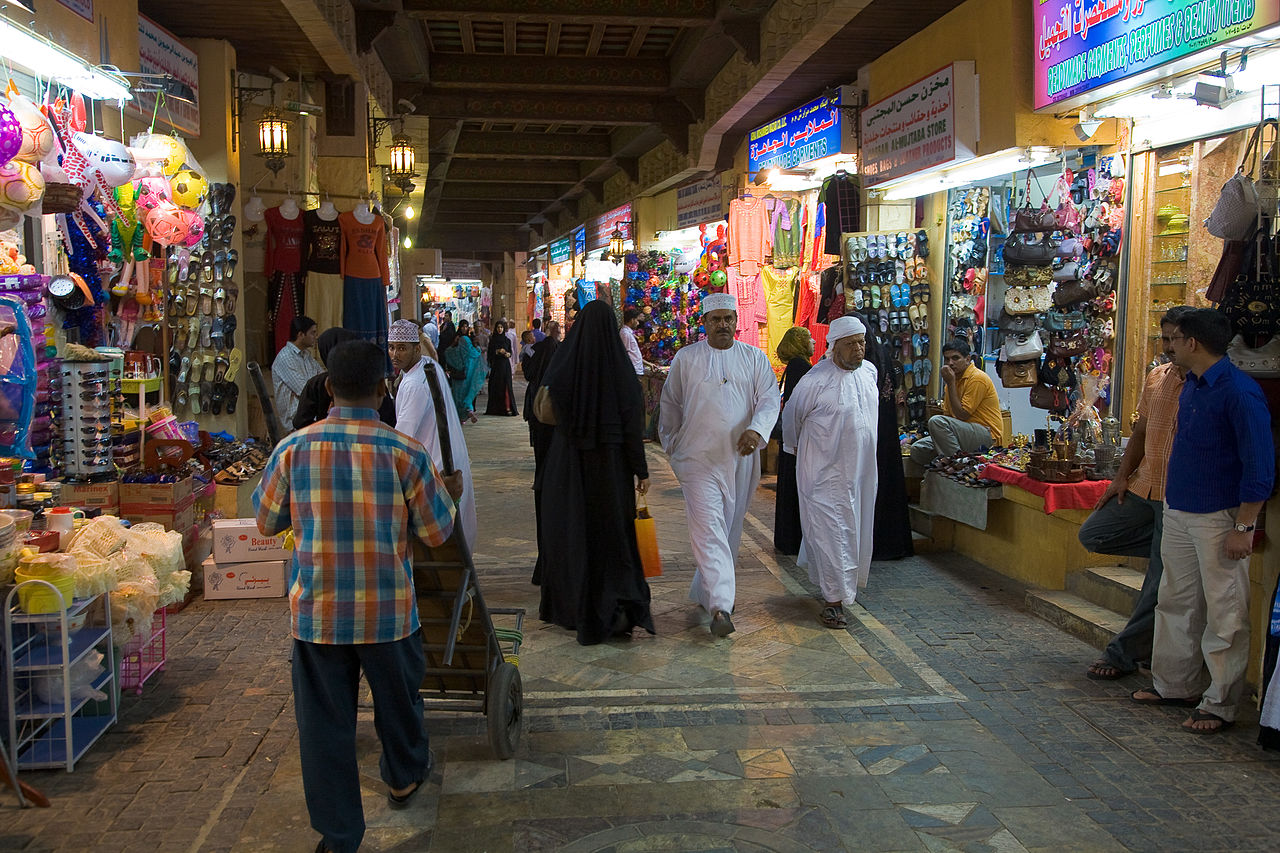
Oman travelThere has been no visible change in recent years in the situation for Christians in Oman. Islam is the state religion and Sharia (Islamic law) forms the basis for legislation. The very concept of a change of faith for an Omani citizen is anathema. An Omani convert faces problems under the Personal Status and Family Legal Code, which prohibits a father from having custody of his children if he leaves Islam.

All religious organisations must register and Christian meetings are monitored for political messages and nationals who may be attending. Although no violent persecution has been reported, there have been deportations of expat Christians in the past. This was primarily because of their open witness, which is prohibited by law. Permission is needed from the authorities for the distribution of religious literature also.

Oman BazzaarTOP TEN – things to know about what life is like for Christians in Oman

  1. The law prohibits religious discrimination but all religious organizations must register.
  2. All public school curriculums (grades K-12) include instruction in Islam.
  3. Almost the entire Christian population (around 35,000) is made up of expatriates; indigenous Christians number only a few hundred.
  4. Foreign Christians are often tolerated and allowed to worship in private homes or work compounds.
  5. The government records religious affiliation on national identity cards for citizens and on residency cards for non-citizens.
  6. Muslim Background Believers risk persecution from family and society, but the government may intervene on request from the family. In such cases, these believers are often treated as psychiatric patients.
  7. Muslim Background Believers can lose their family, house, and job and can even be killed.
  8. There are some government limitations on proselytizing and printing religious material. Non-Muslim groups are prohibited from publishing religious material, although non-Muslim religious material printed abroad may be imported after government inspection and approval.
  9. The Protestant Church in Oman (PCO) is the fruit of the active presence of RCA, a branch of the Reformed Church of America (RCA), which started its work in Oman in 1893.
  10. Currently PCO, under the combined leadership of the Reformed Church of America and the Anglican Church, ministers to over 1000 believers from 60 countries.

Indonesian Christians Singing at PCO (Protestant Church in Oman)
________________________________________

“Religious Freedom Day” – not so much!

Peanut Gallery:Words mean things.” And President Obama choses his words very carefully. That’s why his substitution of the word worship for freedom in his Religious Freedom Day proclamation (Jan 16) was important – and the Becket Fund for Religious Liberty called him on it.

Religious Freedom Rally

Perhaps this mismatch between words and deeds can be explained by the phrase “freedom of worship,” which the President uses in the first sentence of his proclamation. Religious freedom certainly includes worship, but it extends beyond the four walls of a church. If it is not to be an empty promise, religious freedom must also include acting on one’s deepest religious beliefs when one is feeding the poor, caring for the sick, educating the young, or running a business.

The Becket Fund focused on the HHS mandate affecting churches and religious institutions but the word switch (worship for religion) would also limit evengelism beyond the four walls of a church.

So what is he up to? Maybe he thinks if he says it often enough and long enough people will accept the change… and stay in their place? Out of sight and out of mind.

I don’t think God is going to go for that.
_______________________________________________

The report from Christianity Today is found below –

Becket Fund Pushes Back on Obama’s ‘Religious Freedom Day’ Proclamation

by Jeremy Weber, blog.christianitytoday.com

Today (Wed, Jan 16), President Barack Obama continued the tradition of observing Religious Freedom Day with a presidential proclamation. But this year, the Becket Fund for Religious Liberty critiqued his use of “freedom of worship” rhetoric—a debate that first arose in 2010.

“Foremost among the rights Americans hold sacred is the freedom to worship as we choose,” begins Obama’s proclamation (full text at bottom), which later asserts “religious liberty … is a universal human right to be protected here at home and across the globe. This freedom is an essential part of human dignity, and without it our world cannot know lasting peace.”

Becket challenged the president’s statement in light of the Affordable Care Act’s contraception mandate, which currently faces 43 legal challenges (many led by Becket) based on religious freedom concerns. Continue reading ““Religious Freedom Day” – not so much!”

New Egyptian Charter enshrines Sharia Law – Please pray for Coptic Christians

Peanut Gallery: This article accurately describes the ideological struggle taking place in the streets of Cairo… between Islam and Secularism.

“Egypt is Islamic, it will not be secular, it will not be liberal,” thousands of Morsi supporters chanted Friday after the funeral of two men killed in clashes earlier this week. Witnesses say the violence began when Islamists attacked an anti-Morsi protest camp outside the presidential palace.

“Bottom line, this is a struggle between ideologies — the Islamic ideology moving with a clear plan with public support, and the secularists,” said pro-Morsi demonstrator Khaled Omar, his head bandaged from Wednesday’s fighting. “We are defending Islam, which people want.”

Morsi and the Muslim Brotherhood are “fast-tracking” the Islamification of Egypt… and they will not be denied. The article is well worth the read to see what’s at stake in Egypt. It does not bode well for Christian communities in the Middle East.

Please pray for Coptic Christians and the new Coptic Pope who are trying to navigate these treacherous waters.
______________________________

In articles explicit and vague, Egypt draft constitution allows widespread use of Islamic law – Fox News/World Link

CAIRO – One of Egypt’s most prominent ultraconservative Muslim clerics had high praise for the country’s draft constitution. Speaking to fellow clerics, he said this was the charter they had long wanted, ensuring that laws and rights would be strictly subordinated to Islamic law.

Sheik Yasser Borhami

“This constitution has more complete restraints on rights than ever existed before in any Egyptian constitution,” Sheik Yasser Borhami assured the clerics. “This will not be a democracy that can allow what God forbids or forbid what God allows.”

The draft constitution that is now at the center of worsening political turmoil would empower Islamists to carry out the most widespread and strictest implementation of Islamic law that modern Egypt has seen. That authority rests on the three articles that explicitly mention Shariah, as well as obscure legal language buried in a number of other articles that few noticed during the charter’s drafting but that Islamists insisted on including.

According to both supporters and opponents of the draft, the charter not only makes Muslim clerics the arbiters for many civil rights, it also could give a constitutional basis for citizens to set up Saudi-style “religious police” to monitor morals and enforce segregation of the sexes, imposition of Islamic dress codes and even harsh punishments for adultery and theft — regardless of what laws on the books say.
_________________________________

Violence continues in the streets of Cairo – Fox News Video – click here
_________________________________

The spiraling crisis is threatening to turn into an outright fight for the identity of post-revolutionary Egypt, splitting the nation between those who want an Islamic state and those who oppose it, two years after the fall of autocrat Hosni Mubarak.

For Islamists, the constitution is the keystone for their ambitions to bring Islamic rule, a goal they say is justified by their large victory in last winter’s parliamentary elections. President Mohammed Morsi, who hails from the Muslim Brotherhood, has rejected opposition demands that he cancel a Dec. 15 nationwide referendum on the draft.

riots in cairo“Egypt is Islamic, it will not be secular, it will not be liberal,” thousands of Morsi supporters chanted Friday after the funeral of two men killed in clashes earlier this week. Witnesses say the violence began when Islamists attacked an anti-Morsi protest camp outside the presidential palace.

“Bottom line, this is a struggle between ideologies — the Islamic ideology moving with a clear plan with public support, and the secularists,” said pro-Morsi demonstrator Khaled Omar, his head bandaged from Wednesday’s fighting. “We are defending Islam, which people want.”

The opposition is determined to stop the draft, and thousands marched for a third straight day Friday on the palace.

The Brotherhood is “unleashing its gang chanting jihadi slogans, as if they are in a holy war against the infidels,” said businessman Magdi Ashri, who opposes Morsi. “Their agenda is to monopolize power in Egypt, whatever it takes.”

Egypt’s Islamist-dominated Constituent Assembly debated the draft for months, until most liberal members — and all the Christian ones — walked out Continue reading “New Egyptian Charter enshrines Sharia Law – Please pray for Coptic Christians”