
Morning Prayer, 11 Mar – John 12:44-50 ~ Saviour of the world

Morning Prayer

+ In the name of the Father, and of the Son, and of the Holy Spirit. Amen

Opening sentences – Cuthbert of Northumbria (635-87)

Softly as the dew-fall of heaven, may the Holy Spirit come upon me to aid me and to raise me, to bind my prayer firmly at the throne of the King of life.

Morning reading

John 12:44-50 ESV:

Salvator Mundi Andrea Previtali (1519)
Salvator Mundi
Andrea Previtali (1519)

And Jesus cried out and said, “Whoever believes in me, believes not in me but in him who sent me. And whoever sees me sees him who sent me. I have come into the world as light, so that whoever believes in me may not remain in darkness. If anyone hears my words and does not keep them, I do not judge him; for I did not come to judge the world but to save the world. The one who rejects me and does not receive my words has a judge; the word that I have spoken will judge him on the last day. For I have not spoken on my own authority, but the Father who sent me has himself given me a commandment — what to say and what to speak. And I know that his commandment is eternal life. What I say, therefore, I say as the Father has told me.”

Reflections:

faith and oneness

Faith is not just in Jesus but in the Father who sent him. Likewise, to see Jesus is to see the Father who sent him. Because faith in Jesus is faith in God the cowardice of the would-be believers in the previous section is heinous. This unity between Jesus and the Father who sent him grounds the whole Gospel.

light in darkness

Jesus has come into the world as the light. The world is dark precisely because it is alienated from God, who is light. Because Jesus has brought the light of God everyone who believes in him no longer remains in the darkness.

unbelief

+ as disobedience – Hearing without doing, ie they will not take the teaching into their life and live according to it. Jesus says he will not judge such a person since he came to save the world, not condemn it. However, his very presence as the light, revealing God, is an exposure and thus condemnation of the darkness. So in fact judgment does take place through him.

Although judgment takes place it is still of the utmost importance to understand that God’s intent is salvific, ie to save the world.

+ as rejection – To refuse to receive Jesus’ word is to reject Jesus himself, just as to refuse to receive the Father’s Word, Jesus, is to reject the Father himself. Jesus says, that very word which I spoke will condemn him at the last day. Condemnation begins with the rejection and, if one persists in rejecting him, it will lead to condemnation at the last day.

eternal life

The teaching that unbelievers reject comes from the Father and offers eternal life – “his command is eternal life.” The command has to do with a relationship with God himself and a sharing in his life. It is not just a description of a pattern of life and a demand to conform to it. It is a life that expresses the pattern of God’s own character. Since Jesus’ teachings come from God and offer eternal life, a rejection of these teachings is itself condemnation, for it is a rejection of God and his offer of life.

The IVP New Testament Commentary Series

__________

__________

Canticle:

Christ, as a light… illumine and guide me. Christ, as a shield… overshadow me. Christ under me; Christ over me; Christ beside me on my left and my right.

This day be within and without me, lowly and meek, yet all-powerful. Be in the heart of each to whom I speak; in the mouth of each who speaks unto me. This day be within and without me, lowly and meek, yet all-powerful.

Christ as a light; Christ as a shield; Christ beside me on my left and my right.

Blessing

May the peace of the Lord Christ go with you, wherever He may send you. May He guide you through the wilderness, protect you through the storm. May He bring you home rejoicing at the wonders He has shown you. May He bring you home rejoicing once again into our doors.

+ In the name of the Father, and of the Son, and of the Holy Spirit. Amen

_____________________________________

Peanut Gallery: A brief word of explanation – the general format for Morning Prayer is adapted from the Northumbrian Community‘s Daily Office, as found in Celtic Daily Prayer (see online resources here.) The Scripture readings are primarily from the Gospel of John, with the intent to complete the reading by Easter. Other Scriptures which illuminate the Gospel of John will be included along the way.

Reflections from various saints will be included as their memorial days occur during the calendar year.

On Sundays, I’ll return to the USCCB readings (see online resources here) and various liturgical resources in order to reflect the Church’s worship and concerns throughout the world.

Photo illustrations and music videos, available online, are included as they illustrate or illuminate the readings. I will try to give credit and link to sources as best I can.

Morning Prayer, 26 Feb – John 10:22-42 ~ Son of God

Morning Prayer

+ In the name of the Father, and of the Son, and of the Holy Spirit. Amen

Opening sentences – Brigid of Kildare (c. 450-523)

Come to a warm place in this house, come in the name of Christ. My heart and I agree, welcome in the name of the Lord.

There is a fiery power in the gentle heart of the Spirit. Our hearts are agreed as we kneel by the hearth, and call on the Sacred Three to save, shield and surround us and our kin, this house, this home, this day, this night, and every night, each single night.

Morning readings

John 10:22-42 ESV:

Son_of_God_film_poster

At that time the Feast of Dedication (Hanukkah) took place at Jerusalem. It was winter, and Jesus was walking in the temple, in the colonnade of Solomon. So the Jews gathered around him and said to him, “How long will you keep us in suspense? If you are the Christ, tell us plainly.”

Jesus answered them, “I told you, and you do not believe. The works that I do in my Father’s name bear witness about me, but you do not believe because you are not among my sheep. My sheep hear my voice, and I know them, and they follow me. I give them eternal life, and they will never perish, and no one will snatch them out of my hand. My Father, who has given them to me, is greater than all, and no one is able to snatch them out of the Father’s hand. I and the Father are one.”

The Jews picked up stones again to stone him.

Jesus answered them, “I have shown you many good works from the Father; for which of them are you going to stone me?”

The Jews answered him, “It is not for a good work that we are going to stone you but for blasphemy, because you, being a man, make yourself God.”

Jesus answered them, “Is it not written in your Law, ‘I said, you are gods’? If he called them gods to whom the word of God came — and Scripture cannot be broken — do you say of him whom the Father consecrated and sent into the world, ‘You are blaspheming,’ because I said, ‘I am the Son of God’? If I am not doing the works of my Father, then do not believe me; but if I do them, even though you do not believe me, believe the works, that you may know and understand that the Father is in me and I am in the Father.”

Again they sought to arrest him, but he escaped from their hands.

He went away again across the Jordan to the place where John had been baptizing at first, and there he remained. And many came to him. And they said, “John did no sign, but everything that John said about this man was true.” And many believed in him there.

Reflections:

my sheep

[Those who belong to Jesus] hear his voice, are known by him, follow him and have eternal life. And, because the Father has given them to Jesus, are safe and secure.

This passage of infinite comfort touches once again upon the mysteries of divine sovereignty and human responsibility. We have both the call of God and the response of faith on the part of the sheep. If man falls at any stage in his spiritual life, it is not from want of divine grace, nor from the overwhelming power of adversaries, but from his neglect to the means of grace available to him. We cannot be protected against ourselves in spite of ourselves.

The sense of the divine protection is at any moment sufficient to inspire confidence, but not to render effort (abiding, remaining, following) unnecessary.

Oneness

“I and the Father are one.” What is this oneness? The Father not only gave Jesus life, as he has done for believers, but has made him the giver of life, a divine attribute illustrated in what Jesus says about the bread and the water and which will be climactically demonstrated in the raising of Lazarus. It implies a oneness in essence since “infinite power is an essential attribute of God; and it is impossible to suppose that two beings distinct in essence could be equal in power” – it is a powerful claim to deity.

Son of God

What Jesus means by the title Son of God goes beyond anything they had thought before, but it is not a denial of the truths of Scripture. Nevertheless, as with all other arguments, it only makes sense if the listener is open to entertaining the truth of who Jesus is.

Jesus’ deeds are like the deeds of God, both in power and in graciousness – they are not only powerful or awesome or supernatural, they are also in keeping with God’s own character — they manifest his gracious love (“The Father is in me and I am in the Father”).

The IVP New Testament Commentary Series

__________


__________

Canticle:

Christ, as a light… illumine and guide me. Christ, as a shield… overshadow me. Christ under me; Christ over me; Christ beside me on my left and my right.

This day be within and without me, lowly and meek, yet all-powerful. Be in the heart of each to whom I speak; in the mouth of each who speaks unto me. This day be within and without me, lowly and meek, yet all-powerful.

Christ as a light; Christ as a shield; Christ beside me on my left and my right.

Blessing

May the peace of the Lord Christ go with you, wherever He may send you. May He guide you through the wilderness, protect you through the storm. May He bring you home rejoicing at the wonders He has shown you. May He bring you home rejoicing once again into our doors.

+ In the name of the Father, and of the Son, and of the Holy Spirit. Amen

_____________________________________

Peanut Gallery: A brief word of explanation – the general format for Morning Prayer is adapted from the Northumbrian Community‘s Daily Office, as found in Celtic Daily Prayer (see online resources here.) The Scripture readings are primarily from the Gospel of John, with the intent to complete the reading by Easter. Other Scriptures which illuminate the Gospel of John will be included along the way.

Reflections from various saints will be included as their memorial days occur during the calendar year.

On Sundays, I’ll return to the USCCB readings (see online resources here) and various liturgical resources in order to reflect the Church’s worship and concerns throughout the world.

Photo illustrations and music videos, available online, are included as they illustrate or illuminate the readings. I will try to give credit and link to sources as best I can.

Morning Prayer, 20 Feb – John 8:48-59 ~ “I AM” has left the building

Morning Prayer

+ In the name of the Father, and of the Son, and of the Holy Spirit. Amen

Opening sentences – Brendan the Navigator (c. 486-575)

Lord, I will trust You, help me to journey beyond the familiar and into the unknown.

I will trust You in the darkness and know that my times are still in Your hand. I will believe You for my future, chapter by chapter, until all the story is written.

Morning readings

John 8:48-59 ESV:

I-AM

The Jews answered him, “Are we not right in saying that you are a Samaritan and have a demon?”

Jesus answered, “I do not have a demon, but I honor my Father, and you dishonor me. Yet I do not seek my own glory; there is One who seeks it, and he is the judge. Truly, truly, I say to you, if anyone keeps my word, he will never see death.”

The Jews said to him, “Now we know that you have a demon! Abraham died, as did the prophets, yet you say, ‘If anyone keeps my word, he will never taste death.’ Are you greater than our father Abraham, who died? And the prophets died! Who do you make yourself out to be?”

Jesus answered, “If I glorify myself, my glory is nothing. It is my Father who glorifies me, of whom you say, ‘He is our God.’ But you have not known him. I know him. If I were to say that I do not know him, I would be a liar like you, but I do know him and I keep his word. Your father Abraham rejoiced that he would see my day. He saw it and was glad.”

So the Jews said to him, “You are not yet fifty years old, and have you seen Abraham?”

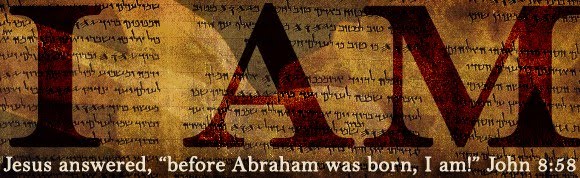
Jesus said to them, “Truly, truly, I say to you, before Abraham was, I am.”

So they picked up stones to throw at him, but Jesus hid himself and went out of the temple.

Reflections:

never see death

The idea of abiding or remaining in Jesus’ teaching is now complemented by the motif of keeping it. This refers to remaining watchful, attentive and focused so as not to disregard it but rather to continue to obey it. It takes work to keep in touch with Jesus’ teaching. The disciple must expend energy to remain true to his teaching.

The promise that the faithful disciple will not die does not mean the disciple will not physically die; it means that he or she will not enter that state of “selfish isolation which is the negation of life”. The very fact that the disciple remains in contact with Jesus, the source of life, suggests such communion, with its death to self and life to God.

straight talk

1. Jesus speaks plainly about the Father – he refuses to glorify himself but says his Father will do so.
2. Jesus speaks plainly about his opponents ignorance of God – they are “liars.”
3. Jesus speaks plainly aboout his relationship to God – “I . . . keep his word.”
4. Jesus speaks plainly about his own divine identity – “before Abraham was born, I am!”

re-formation

The main points of chapters 7 & 8 have been Jesus divine identity, his role as the bringer of God’s salvation as water and light and the opponents’ utter alienation from God. This alienation has been stated explicitly, depicted dramatically in their questions and behavior and is now expressed symbolically in Jesus’ leaving in hiddenness.

Jesus has claimed to be I AM, the divine presence. So when he leaves the temple it is nothing less than “the departure of the Divine Presence from the old `Holy Space’.” He will not return again to the temple; he will come only to its outer precincts. His formation of a community apart from the temple will now become more apparent.

The IVP New Testament Commentary Series

__________

I want to be close, close to Your side / So Heaven is real and death is a lie / I want to hear voices of angels above / Singing as one

Hallelujah, holy, holy / God Almighty, the great I AM / Who is worthy, none beside Thee / God Almighty, the great I AM

I want to be near, near to Your heart / Loving the world and hating the dark / I want to see dry bones living again / Singing as one

Hallelujah, holy, holy / God Almighty, the great I AM / Who is worthy, none beside Thee / God Almighty, the great I AM

The mountains shake before You the demons run and flee / At the mention of the name King of Majesty / There is no power in hell / Or any who can stand / Before the power and the presence of the great I AM

The great I AM / the great I AM / The great I AM / The great I AM / The great I AM

__________

Canticle:

Christ, as a light… illumine and guide me. Christ, as a shield… overshadow me. Christ under me; Christ over me; Christ beside me on my left and my right.

This day be within and without me, lowly and meek, yet all-powerful. Be in the heart of each to whom I speak; in the mouth of each who speaks unto me. This day be within and without me, lowly and meek, yet all-powerful.

Christ as a light; Christ as a shield; Christ beside me on my left and my right.

Blessing

May the peace of the Lord Christ go with you, wherever He may send you. May He guide you through the wilderness, protect you through the storm. May He bring you home rejoicing at the wonders He has shown you. May He bring you home rejoicing once again into our doors.

+ In the name of the Father, and of the Son, and of the Holy Spirit. Amen

_____________________________________

Peanut Gallery: A brief word of explanation – the general format for Morning Prayer is adapted from the Northumbrian Community‘s Daily Office, as found in Celtic Daily Prayer (see online resources here.) The Scripture readings are primarily from the Gospel of John, with the intent to complete the reading by Easter. Other Scriptures which illuminate the Gospel of John will be included along the way.

Reflections from various saints will be included as their memorial days occur during the calendar year.

On Sundays, I’ll return to the USCCB readings (see online resources here) and various liturgical resources in order to reflect the Church’s worship and concerns throughout the world.

Photo illustrations and music videos, available online, are included as they illustrate or illuminate the readings. I will try to give credit and link to sources as best I can.
Morning Prayer, 7 Feb – John 6:60-71 ~ nowhere else to go

Morning Prayer

+ In the name of the Father, and of the Son, and of the Holy Spirit. Amen

Opening sentences – Hild of Whitby (614-80)

Dear Lord, You alone know what my soul truly desires, and You alone can satisfy those desires.

I trust in Thee, O Lord. I say, “Thou art my God. My times are in Thy hand, my times are in Thy hand.”

Morning readings

John 6:60-71 ESV:

God_speakWhen many of his disciples heard it, they said, “This is a hard saying; who can listen to it?” But Jesus, knowing in himself that his disciples were grumbling about this, said to them, “Do you take offense at this? Then what if you were to see the Son of Man ascending to where he was before? It is the Spirit who gives life; the flesh is no help at all. The words that I have spoken to you are spirit and life. But there are some of you who do not believe.” (For Jesus knew from the beginning who those were who did not believe, and who it was who would betray him.) And he said, “This is why I told you that no one can come to me unless it is granted him by the Father.”

After this many of his disciples turned back and no longer walked with him. So Jesus said to the Twelve, “Do you want to go away as well?” Simon Peter answered him, “Lord, to whom shall we go? You have the words of eternal life, and we have believed, and have come to know, that you are the Holy One of God.” Jesus answered them, “Did I not choose you, the Twelve? And yet one of you is a devil.” He spoke of Judas the son of Simon Iscariot, for he, one of the Twelve, was going to betray him.

Reflections:

hard teachings

The question Jesus’ disciples raise reveals their real problem: This is a hard teaching. Who can accept it?. This is a profound question that points to their own hearts. By saying Who can accept it? they suggest they are not to blame, that this is too much for anyone to accept. But in fact it shows that they are not humbly docile, as true disciples are. A mark of docility is the ability and willingness to listen and receive. By saying they are unable to hear or to listen to Jesus’ teaching they stand self-condemned.

Instead of cutting them slack, Jesus confronts them with their response by asking, Does this offend you?. Here we see the light revealing the darkness. Their offense is the opposite of faith, and Jesus makes sure they realize what they are saying. This question searches the soul of each of us. Do we find any of Jesus’ teachings offensive? What causes us to falter? There is much in Jesus’ teaching to scandalize each of us. But those who are born from above, those who have faith, trust in Jesus even when his teachings or his ways are puzzling.

In fact, none of Jesus’ teaching makes sense unless we realize who he really is.

God knows the condition of our hearts and sends circumstances that will reveal our hearts to us. How do we respond to such exposure? Does it drive us to despair or to deeper dependency upon the Lord? For those whose trust is in God alone, even the exposure of their lack of faith can be an occasion of deeper faith. We are not saved by faith, but by the one in whom we have faith, whom we may trust to increase our faith through a deeper experience of himself as we, by his grace, live in obedience to what we have received from him.

spirit and life

The Twelve accept Jesus’ claim that his words are spirit and life. They do not claim to have understood what Jesus has been saying. But they do recognize that Jesus is speaking from God: We believe and know that you are the Holy One of God.

This passage speaks of human responsibility – the importance of faith. Even Jesus’ choice for someone to be a member of his inner circle of disciples is not going to save that person unless one has faith. Judas had the most intimate access to Jesus; he had one of the best seats in the house for seeing God revealed in the flesh. But he lacked humble trust and love for Jesus as Jesus actually was.

This thought is very sobering. The human heart is capable of seeing God in his great beauty and of rejecting him. Indeed, all of us are capable of such betrayal, as our sin testifies. What is our inner disposition? Have we found in Jesus the Holy One of God who has the words of eternal life? Do we actually live our lives as those who believe this truth? Have we met God in such a way that we can trust his character even when we do not understand his words and deeds?

The IVP New Testament Commentary Series

__________


__________

Canticle:

Christ, as a light… illumine and guide me. Christ, as a shield… overshadow me. Christ under me; Christ over me; Christ beside me on my left and my right.

This day be within and without me, lowly and meek, yet all-powerful. Be in the heart of each to whom I speak; in the mouth of each who speaks unto me. This day be within and without me, lowly and meek, yet all-powerful.

Christ as a light; Christ as a shield; Christ beside me on my left and my right.

Blessing

May the peace of the Lord Christ go with you, wherever He may send you. May He guide you through the wilderness, protect you through the storm. May He bring you home rejoicing at the wonders He has shown you. May He bring you home rejoicing once again into our doors.

+ In the name of the Father, and of the Son, and of the Holy Spirit. Amen

_____________________________________

Peanut Gallery: A brief word of explanation – the general format for Morning Prayer is adapted from the Northumbrian Community‘s Daily Office, as found in Celtic Daily Prayer (see online resources here.) The Scripture readings are primarily from the Gospel of John, with the intent to complete the reading by Easter. Other Scriptures which illuminate the Gospel of John will be included along the way.

Reflections from various saints will be included as their memorial days occur during the calendar year.

On Sundays, I’ll return to the USCCB readings (see online resources here) and various liturgical resources in order to reflect the Church’s worship and concerns throughout the world.

Photo illustrations and music videos, available online, are included as they illustrate or illuminate the readings. I will try to give credit and link to sources as best I can.

Morning Prayer, 6 Feb – John 6:52-59 ~ flesh and blood

Morning Prayer

+ In the name of the Father, and of the Son, and of the Holy Spirit. Amen

Opening sentences –

There is one God and one mediator between heaven and earth, the Son of Man – Christ Jesus – who gave Himself as a ransom for all people.

Morning readings

John 6:52-59 ESV:

The Jews then disputed among themselves, saying, “How can this man give us his flesh to eat?”

EucharistCup

So Jesus said to them, “Truly, truly, I say to you, unless you eat the flesh of the Son of Man and drink his blood, you have no life in you. Whoever feeds on my flesh and drinks my blood has eternal life, and I will raise him up on the last day. For my flesh is true food, and my blood is true drink. Whoever feeds on my flesh and drinks my blood abides in me, and I in him. As the living Father sent me, and I live because of the Father, so whoever feeds on me, he also will live because of me. This is the bread that came down from heaven, not like the bread the fathers ate, and died. Whoever feeds on this bread will live forever.”

Jesus said these things in the synagogue, as he taught at Capernaum.

Reflections:

dead

Apart from the life Jesus offers, we are dead. Our utter neediness is seen clearly when set against the greatness of his offer: Whoever eats my flesh and drinks my blood has eternal life, and I will raise him up at the last day. Jesus is promising a new quality of life now and resurrection in the future.

alive

The ultimate source of our life is the Father. Our union with the Son enables us to share his life, just as Jesus in turn lives because of the Father. Our life is entirely dependent on Jesus, as is his on the Father.

Eucharist

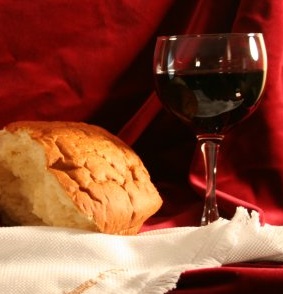
Christians naturally find reference here to the Eucharist, the point being that there is some connection between partaking of Christ’s flesh and blood in the Eucharist and having eternal life. Both faith and this eating and drinking would be necessary for eternal life. It is not for nothing that our Lord commands us to hold Eucharist!

__________

For I received from the Lord what I also delivered to you, that the Lord Jesus on the night when he was betrayed took bread, and when he had given thanks, he broke it, and said, “This is my body which is for you. Do this in remembrance of me.” 

In the same way also he took the cup, after supper, saying, “This cup is the new covenant in my blood. Do this, as often as you drink it, in remembrance of me.”

For as often as you eat this bread and drink the cup, you proclaim the Lord’s death until he comes.

(1 Corinthians 11:23-26)

__________

faith

This parallel between faith and Eucharist does not, however, deny the primacy of faith. If both are necessary for life, faith is still the more primary in that it is necessary for obtaining the benefits of the Eucharist.

God’s life is available in the Eucharist because he promises to be present. We do not attract him there or make him present by our faith. The Eucharist is a point of contact with divine reality; it is a means of grace, a means of God’s power and life in our lives. But the actual life-giving efficacy in feeding is only appropriated by faith.

(The IVP New Testament Commentary Series)

__________

__________

Canticle:

Christ, as a light… illumine and guide me. Christ, as a shield… overshadow me. Christ under me; Christ over me; Christ beside me on my left and my right.

This day be within and without me, lowly and meek, yet all-powerful. Be in the heart of each to whom I speak; in the mouth of each who speaks unto me. This day be within and without me, lowly and meek, yet all-powerful.

Christ as a light; Christ as a shield; Christ beside me on my left and my right.

Blessing

May the peace of the Lord Christ go with you, wherever He may send you. May He guide you through the wilderness, protect you through the storm. May He bring you home rejoicing at the wonders He has shown you. May He bring you home rejoicing once again into our doors.

+ In the name of the Father, and of the Son, and of the Holy Spirit. Amen

_____________________________________

Peanut Gallery: A brief word of explanation – the general format for Morning Prayer is adapted from the Northumbrian Community‘s Daily Office, as found in Celtic Daily Prayer (see online resources here.) The Scripture readings are primarily from the Gospel of John, with the intent to complete the reading by Easter. Other Scriptures which illuminate the Gospel of John will be included along the way.

Reflections from various saints will be included as their memorial days occur during the calendar year.

On Sundays, I’ll return to the USCCB readings (see online resources here) and various liturgical resources in order to reflect the Church’s worship and concerns throughout the world.

Photo illustrations and music videos, available online, are included as they illustrate or illuminate the readings. I will try to give credit and link to sources as best I can.