
Morning Prayer, 22 Feb – John 9:13-41 ~ now I see

Morning Prayer

+ In the name of the Father, and of the Son, and of the Holy Spirit. Amen

Opening sentences – Brendan the Navigator (c. 486-575)

Teach me to live with eternity in mind. Tune my spirit to the music of heaven.

Feed me, and, somehow, make my obedience count for You.

Morning readings

John 9:13-41 ESV:

eyes

They brought to the Pharisees the man who had formerly been blind. Now it was a Sabbath day when Jesus made the mud and opened his eyes. So the Pharisees again asked him how he had received his sight. And he said to them, “He put mud on my eyes, and I washed, and I see.” Some of the Pharisees said, “This man is not from God, for he does not keep the Sabbath.” But others said, “How can a man who is a sinner do such signs?” And there was a division among them. So they said again to the blind man, “What do you say about him, since he has opened your eyes?” He said, “He is a prophet.”

The Jews did not believe that he had been blind and had received his sight, until they called the parents of the man who had received his sight and asked them, “Is this your son, who you say was born blind? How then does he now see?” His parents answered, “We know that this is our son and that he was born blind. But how he now sees we do not know, nor do we know who opened his eyes. Ask him; he is of age. He will speak for himself.” (His parents said these things because they feared the Jews, for the Jews had already agreed that if anyone should confess Jesus to be Christ, he was to be put out of the synagogue.) Therefore his parents said, “He is of age; ask him.”

So for the second time they called the man who had been blind and said to him, “Give glory to God. We know that this man is a sinner.” He answered, “Whether he is a sinner I do not know. One thing I do know, that though I was blind, now I see.” They said to him, “What did he do to you? How did he open your eyes?” He answered them, “I have told you already, and you would not listen. Why do you want to hear it again? Do you also want to become his disciples?” And they reviled him, saying, “You are his disciple, but we are disciples of Moses. We know that God has spoken to Moses, but as for this man, we do not know where he comes from.” The man answered, “Why, this is an amazing thing! You do not know where he comes from, and yet he opened my eyes. We know that God does not listen to sinners, but if anyone is a worshiper of God and does his will, God listens to him. Never since the world began has it been heard that anyone opened the eyes of a man born blind. If this man were not from God, he could do nothing.” They answered him, “You were born in utter sin, and would you teach us?” And they cast him out.

Jesus heard that they had cast him out, and having found him he said, “Do you believe in the Son of Man?” He answered, “And who is he, sir, that I may believe in him?” Jesus said to him, “You have seen him, and it is he who is speaking to you.” He said, “Lord, I believe,” and he worshiped him. Jesus said, “For judgment I came into this world, that those who do not see may see, and those who see may become blind.” Some of the Pharisees near him heard these things, and said to him, “Are we also blind?” Jesus said to them, “If you were blind, you would have no guilt; but now that you say, ‘We see,’ your guilt remains.

Reflections:

division

The Pharisees face a dilemma for Jesus’ sabbath breaking suggests he is not of God whereas his extraordinary power to heal suggests he is of God. Jesus’ disregard for their sabbath regulations is so blatant the opponents cannot accept the idea that God would honor such lawlessness. So to reconcile what has happened to their presuppositions, they assume that the man must not have been blind.

Not only do they reject the man’s evaluation of Jesus as a prophet, they don’t even accept his testimony about his own former condition!

intimidation

The man’s parents are not allowed to give thanks to God for the great thing he has done for their son. They must have agonized over his blindness and the begging he was forced into. Now he has been miraculously healed, and they must put aside the overwhelming parental joy and knuckle under to the goons from the committee for the investigation of un-Jewish activity, as it were. Their fear stems from the threat that anyone who acknowledged that Jesus was the Christ would be put out of the synagogue.

Jesus’ healing would have far-reaching implications concerning God’s gracious acceptance of sinful humanity. Not only was their son released from the bondage of his blindness and its related life of begging, but they and their son would see themselves in a new relation to God. Yet they had to stifle all of these feelings of joy and gratitude when they were called in by the authorities for questioning.

witness

The man has told them the truth, but they don’t really want the truth, they want their own answer. They are demanding that he give glory to God by confessing his sin, but the man has given glory to God by bearing witness to Jesus. He points to the one certain fact of the case — he was blind and now he sees.

In asking if the authorities want to become disciples themselves, the man is doing the work of an evangelist – offering God’s grace to those most deeply opposed to Jesus and alienated from God. It is remarkable that those who know God and his ways so well would not be able to recognize one who is able to do what is unheard of — open the eyes of a man who had been blind from birth. Nevertheless, their response is to throw the man out of the synagogue.

faith

Belief is not merely an intellectual assent to a proposition, but an attachment of trust to an individual as the one who comes from God. Such an expression of a “longing and inquiring soul” does not go unanswered. Jesus has cured him and found him, but he now reveals something of his identity to the man.

The man responds with faith which leads to worship. He has been progressing from knowledge of Jesus’ name, to confession of him as a prophet, to bearing witness that Jesus is one come from God and finally to accepting his claim to be the Son of Man. Even if he does not understand the full significance of his confession and homage to Jesus, he is accepting Jesus on Jesus’ own terms and thus placing himself in the position to receive further revelation and grow in his understanding of Jesus and his relationship with him.

The IVP New Testament Commentary Series

__________

Prayer

Heavenly Father:
+ Help me to realize my own utter poverty, blindness and need apart from Your Son, Jesus Christ;
+ Give me His eyes to see the desperate condition of all who live in darkness, apart from the Light of the world;
+ Fill me with Your Spirit that I might not reject the evidence of my own experience because of a faulty understanding of You and Your ways.

Holy Spirit:
+ Clarify my thinking against the objective truth of Your Word as manifested in Jesus’ life, death and resurrection, and revealed in Scripture as guided and understood by the church.

Lord Jesus: Be my center of reference so that I may be stable, secure and bold no matter what hassles come to me due to my relationship with You – for, in You, I have experienced the goodness and mercy of God.
__________

__________

Canticle:

Christ, as a light… illumine and guide me. Christ, as a shield… overshadow me. Christ under me; Christ over me; Christ beside me on my left and my right.

This day be within and without me, lowly and meek, yet all-powerful. Be in the heart of each to whom I speak; in the mouth of each who speaks unto me. This day be within and without me, lowly and meek, yet all-powerful.

Christ as a light; Christ as a shield; Christ beside me on my left and my right.

Blessing

May the peace of the Lord Christ go with you, wherever He may send you. May He guide you through the wilderness, protect you through the storm. May He bring you home rejoicing at the wonders He has shown you. May He bring you home rejoicing once again into our doors.

+ In the name of the Father, and of the Son, and of the Holy Spirit. Amen

_____________________________________

Peanut Gallery: A brief word of explanation – the general format for Morning Prayer is adapted from the Northumbrian Community‘s Daily Office, as found in Celtic Daily Prayer (see online resources here.) The Scripture readings are primarily from the Gospel of John, with the intent to complete the reading by Easter. Other Scriptures which illuminate the Gospel of John will be included along the way.

Reflections from various saints will be included as their memorial days occur during the calendar year.

On Sundays, I’ll return to the USCCB readings (see online resources here) and various liturgical resources in order to reflect the Church’s worship and concerns throughout the world.

Photo illustrations and music videos, available online, are included as they illustrate or illuminate the readings. I will try to give credit and link to sources as best I can.

Morning Prayer, 8 Feb – John 7:1-13 ~ in God’s time

Morning Prayer

+ In the name of the Father, and of the Son, and of the Holy Spirit. Amen

Opening sentences – Cuthbert of Northumbria (635-87)

My eyes, my eyes have seen the King. The vision of His beauty has pierced me deep within. To whom else can I go?

My heart, my heart desires Him. He’s touched something inside of me that’s now reaching out for Him. And I know that I must go.

Morning readings

John 7:1-13 ESV:

image

After this Jesus went about in Galilee. He would not go about in Judea, because the Jews were seeking to kill him.

Now the Jews’ Feast of Booths was at hand. So his brothers said to him, “Leave here and go to Judea, that your disciples also may see the works you are doing. For no one works in secret if he seeks to be known openly. If you do these things, show yourself to the world.” For not even his brothers believed in him. Jesus said to them, “My time has not yet come, but your time is always here. The world cannot hate you, but it hates me because I testify about it that its works are evil. You go up to the feast. I am not going up to this feast, for my time has not yet fully come.” After saying this, he remained in Galilee.

But after his brothers had gone up to the feast, then he also went up, not publicly but in private. The Jews were looking for him at the feast, and saying, “Where is he?” And there was much muttering about him among the people. While some said, “He is a good man,” others said, “No, he is leading the people astray.” Yet for fear of the Jews no one spoke openly of him.

Reflections:

trouble

It appears Jesus’ movement is falling apart. Many disciples have left Jesus, his betrayal is in view, and he has to lay low in Galilee because of death threats in Judea. Jesus’ brothers give him some family advice: he should go back to Judea and do some miracles so that his disciples may see the miracles he does. However, Jesus’ aim is not to gain a following but to reveal his Father by being faithful and obedient to him. Jesus does not need suggestions from others, even those closest to him in his family.

The problem with their timing is precisely that it is theirs and not God’s. Rather than being of God they are of the world; that is, they are among those who are alienated from God. Evil is understood as that which is not of the Father. Jesus’ statement to his brothers is an example of his testimony to the world’s evil, for he reveals that their apparent faith is, in fact, not faith at all.

timing

The fact that Jesus does actually go to the feast suggests that he received instructions from the Father to go after he spoke to his brothers. Such apparent inconsistency is a common feature in the lives of believers who are sensitive to the Lord’s leading. “The one consistency of the saint is not to a principle, but to the Divine life” (Oswald Chambers). Not even those closest to Jesus in human terms could influence him. He must be entirely open and obedient to God.

truth

In our pluralistic society we have lost the sense of significance regarding religious views. Jesus and his opponents cannot both be correct, and the choosing between them has eternal consequences. If Jesus is Lord, then he cannot be wedded to any other religion or philosophy. Rather, he is the standard of truth by which we assess all other claims.

The IVP New Testament Commentary Series

__________


__________

Canticle:

Christ, as a light… illumine and guide me. Christ, as a shield… overshadow me. Christ under me; Christ over me; Christ beside me on my left and my right.

This day be within and without me, lowly and meek, yet all-powerful. Be in the heart of each to whom I speak; in the mouth of each who speaks unto me. This day be within and without me, lowly and meek, yet all-powerful.

Christ as a light; Christ as a shield; Christ beside me on my left and my right.

Blessing

May the peace of the Lord Christ go with you, wherever He may send you. May He guide you through the wilderness, protect you through the storm. May He bring you home rejoicing at the wonders He has shown you. May He bring you home rejoicing once again into our doors.

+ In the name of the Father, and of the Son, and of the Holy Spirit. Amen

_____________________________________

Peanut Gallery: A brief word of explanation – the general format for Morning Prayer is adapted from the Northumbrian Community‘s Daily Office, as found in Celtic Daily Prayer (see online resources here.) The Scripture readings are primarily from the Gospel of John, with the intent to complete the reading by Easter. Other Scriptures which illuminate the Gospel of John will be included along the way.

Reflections from various saints will be included as their memorial days occur during the calendar year.

On Sundays, I’ll return to the USCCB readings (see online resources here) and various liturgical resources in order to reflect the Church’s worship and concerns throughout the world.

Photo illustrations and music videos, available online, are included as they illustrate or illuminate the readings. I will try to give credit and link to sources as best I can.
Morning Prayer, 7 Feb – John 6:60-71 ~ nowhere else to go

Morning Prayer

+ In the name of the Father, and of the Son, and of the Holy Spirit. Amen

Opening sentences – Hild of Whitby (614-80)

Dear Lord, You alone know what my soul truly desires, and You alone can satisfy those desires.

I trust in Thee, O Lord. I say, “Thou art my God. My times are in Thy hand, my times are in Thy hand.”

Morning readings

John 6:60-71 ESV:

God_speakWhen many of his disciples heard it, they said, “This is a hard saying; who can listen to it?” But Jesus, knowing in himself that his disciples were grumbling about this, said to them, “Do you take offense at this? Then what if you were to see the Son of Man ascending to where he was before? It is the Spirit who gives life; the flesh is no help at all. The words that I have spoken to you are spirit and life. But there are some of you who do not believe.” (For Jesus knew from the beginning who those were who did not believe, and who it was who would betray him.) And he said, “This is why I told you that no one can come to me unless it is granted him by the Father.”

After this many of his disciples turned back and no longer walked with him. So Jesus said to the Twelve, “Do you want to go away as well?” Simon Peter answered him, “Lord, to whom shall we go? You have the words of eternal life, and we have believed, and have come to know, that you are the Holy One of God.” Jesus answered them, “Did I not choose you, the Twelve? And yet one of you is a devil.” He spoke of Judas the son of Simon Iscariot, for he, one of the Twelve, was going to betray him.

Reflections:

hard teachings

The question Jesus’ disciples raise reveals their real problem: This is a hard teaching. Who can accept it?. This is a profound question that points to their own hearts. By saying Who can accept it? they suggest they are not to blame, that this is too much for anyone to accept. But in fact it shows that they are not humbly docile, as true disciples are. A mark of docility is the ability and willingness to listen and receive. By saying they are unable to hear or to listen to Jesus’ teaching they stand self-condemned.

Instead of cutting them slack, Jesus confronts them with their response by asking, Does this offend you?. Here we see the light revealing the darkness. Their offense is the opposite of faith, and Jesus makes sure they realize what they are saying. This question searches the soul of each of us. Do we find any of Jesus’ teachings offensive? What causes us to falter? There is much in Jesus’ teaching to scandalize each of us. But those who are born from above, those who have faith, trust in Jesus even when his teachings or his ways are puzzling.

In fact, none of Jesus’ teaching makes sense unless we realize who he really is.

God knows the condition of our hearts and sends circumstances that will reveal our hearts to us. How do we respond to such exposure? Does it drive us to despair or to deeper dependency upon the Lord? For those whose trust is in God alone, even the exposure of their lack of faith can be an occasion of deeper faith. We are not saved by faith, but by the one in whom we have faith, whom we may trust to increase our faith through a deeper experience of himself as we, by his grace, live in obedience to what we have received from him.

spirit and life

The Twelve accept Jesus’ claim that his words are spirit and life. They do not claim to have understood what Jesus has been saying. But they do recognize that Jesus is speaking from God: We believe and know that you are the Holy One of God.

This passage speaks of human responsibility – the importance of faith. Even Jesus’ choice for someone to be a member of his inner circle of disciples is not going to save that person unless one has faith. Judas had the most intimate access to Jesus; he had one of the best seats in the house for seeing God revealed in the flesh. But he lacked humble trust and love for Jesus as Jesus actually was.

This thought is very sobering. The human heart is capable of seeing God in his great beauty and of rejecting him. Indeed, all of us are capable of such betrayal, as our sin testifies. What is our inner disposition? Have we found in Jesus the Holy One of God who has the words of eternal life? Do we actually live our lives as those who believe this truth? Have we met God in such a way that we can trust his character even when we do not understand his words and deeds?

The IVP New Testament Commentary Series

__________


__________

Canticle:

Christ, as a light… illumine and guide me. Christ, as a shield… overshadow me. Christ under me; Christ over me; Christ beside me on my left and my right.

This day be within and without me, lowly and meek, yet all-powerful. Be in the heart of each to whom I speak; in the mouth of each who speaks unto me. This day be within and without me, lowly and meek, yet all-powerful.

Christ as a light; Christ as a shield; Christ beside me on my left and my right.

Blessing

May the peace of the Lord Christ go with you, wherever He may send you. May He guide you through the wilderness, protect you through the storm. May He bring you home rejoicing at the wonders He has shown you. May He bring you home rejoicing once again into our doors.

+ In the name of the Father, and of the Son, and of the Holy Spirit. Amen

_____________________________________

Peanut Gallery: A brief word of explanation – the general format for Morning Prayer is adapted from the Northumbrian Community‘s Daily Office, as found in Celtic Daily Prayer (see online resources here.) The Scripture readings are primarily from the Gospel of John, with the intent to complete the reading by Easter. Other Scriptures which illuminate the Gospel of John will be included along the way.

Reflections from various saints will be included as their memorial days occur during the calendar year.

On Sundays, I’ll return to the USCCB readings (see online resources here) and various liturgical resources in order to reflect the Church’s worship and concerns throughout the world.

Photo illustrations and music videos, available online, are included as they illustrate or illuminate the readings. I will try to give credit and link to sources as best I can.

Morning Prayer, 6 Feb – John 6:52-59 ~ flesh and blood

Morning Prayer

+ In the name of the Father, and of the Son, and of the Holy Spirit. Amen

Opening sentences –

There is one God and one mediator between heaven and earth, the Son of Man – Christ Jesus – who gave Himself as a ransom for all people.

Morning readings

John 6:52-59 ESV:

The Jews then disputed among themselves, saying, “How can this man give us his flesh to eat?”

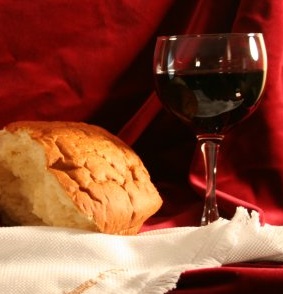
EucharistCup

So Jesus said to them, “Truly, truly, I say to you, unless you eat the flesh of the Son of Man and drink his blood, you have no life in you. Whoever feeds on my flesh and drinks my blood has eternal life, and I will raise him up on the last day. For my flesh is true food, and my blood is true drink. Whoever feeds on my flesh and drinks my blood abides in me, and I in him. As the living Father sent me, and I live because of the Father, so whoever feeds on me, he also will live because of me. This is the bread that came down from heaven, not like the bread the fathers ate, and died. Whoever feeds on this bread will live forever.”

Jesus said these things in the synagogue, as he taught at Capernaum.

Reflections:

dead

Apart from the life Jesus offers, we are dead. Our utter neediness is seen clearly when set against the greatness of his offer: Whoever eats my flesh and drinks my blood has eternal life, and I will raise him up at the last day. Jesus is promising a new quality of life now and resurrection in the future.

alive

The ultimate source of our life is the Father. Our union with the Son enables us to share his life, just as Jesus in turn lives because of the Father. Our life is entirely dependent on Jesus, as is his on the Father.

Eucharist

Christians naturally find reference here to the Eucharist, the point being that there is some connection between partaking of Christ’s flesh and blood in the Eucharist and having eternal life. Both faith and this eating and drinking would be necessary for eternal life. It is not for nothing that our Lord commands us to hold Eucharist!

__________

For I received from the Lord what I also delivered to you, that the Lord Jesus on the night when he was betrayed took bread, and when he had given thanks, he broke it, and said, “This is my body which is for you. Do this in remembrance of me.” 

In the same way also he took the cup, after supper, saying, “This cup is the new covenant in my blood. Do this, as often as you drink it, in remembrance of me.”

For as often as you eat this bread and drink the cup, you proclaim the Lord’s death until he comes.

(1 Corinthians 11:23-26)

__________

faith

This parallel between faith and Eucharist does not, however, deny the primacy of faith. If both are necessary for life, faith is still the more primary in that it is necessary for obtaining the benefits of the Eucharist.

God’s life is available in the Eucharist because he promises to be present. We do not attract him there or make him present by our faith. The Eucharist is a point of contact with divine reality; it is a means of grace, a means of God’s power and life in our lives. But the actual life-giving efficacy in feeding is only appropriated by faith.

(The IVP New Testament Commentary Series)

__________

__________

Canticle:

Christ, as a light… illumine and guide me. Christ, as a shield… overshadow me. Christ under me; Christ over me; Christ beside me on my left and my right.

This day be within and without me, lowly and meek, yet all-powerful. Be in the heart of each to whom I speak; in the mouth of each who speaks unto me. This day be within and without me, lowly and meek, yet all-powerful.

Christ as a light; Christ as a shield; Christ beside me on my left and my right.

Blessing

May the peace of the Lord Christ go with you, wherever He may send you. May He guide you through the wilderness, protect you through the storm. May He bring you home rejoicing at the wonders He has shown you. May He bring you home rejoicing once again into our doors.

+ In the name of the Father, and of the Son, and of the Holy Spirit. Amen

_____________________________________

Peanut Gallery: A brief word of explanation – the general format for Morning Prayer is adapted from the Northumbrian Community‘s Daily Office, as found in Celtic Daily Prayer (see online resources here.) The Scripture readings are primarily from the Gospel of John, with the intent to complete the reading by Easter. Other Scriptures which illuminate the Gospel of John will be included along the way.

Reflections from various saints will be included as their memorial days occur during the calendar year.

On Sundays, I’ll return to the USCCB readings (see online resources here) and various liturgical resources in order to reflect the Church’s worship and concerns throughout the world.

Photo illustrations and music videos, available online, are included as they illustrate or illuminate the readings. I will try to give credit and link to sources as best I can.

Morning Prayer, 5 Feb – John 6:41-51 ~ the living bread

Morning Prayer

+ In the name of the Father, and of the Son, and of the Holy Spirit. Amen

Opening sentences – Hild of Whitby (614-80)

I trust in Thee, O Lord. I say, “Thou art my God. My times are in Thy hand, my times are in Thy hand.”

Morning readings

John 6:41-51 ESV:

communion-wafer

So the Jews grumbled about him, because he said, “I am the bread that came down from heaven.” They said, “Is not this Jesus, the son of Joseph, whose father and mother we know? How does he now say, ‘I have come down from heaven’?”

Jesus answered them, “Do not grumble among yourselves. No one can come to me unless the Father who sent me draws him. And I will raise him up on the last day. It is written in the Prophets, ‘And they will all be taught by God.’ Everyone who has heard and learned from the Father comes to me — not that anyone has seen the Father except he who is from God; he has seen the Father. Truly, truly, I say to you, whoever believes has eternal life. I am the bread of life. Your fathers ate the manna in the wilderness, and they died. This is the bread that comes down from heaven, so that one may eat of it and not die. I am the living bread that came down from heaven. If anyone eats of this bread, he will live forever. And the bread that I will give for the life of the world is my flesh.”

Reflections:

grumbling

The crowd’s problem is with Jesus’ origins. They know Joseph and Jesus’ mother and they judge Jesus’ claims on the basis of what they think they already know. All this highlights the incarnation – Jesus’ divine origin, and the fact that the divine has come amongst us within humanity.

Jesus calls upon them to stop grumbling but instead to respond in faith. It is, in effect, a call to repent and to become receptive of Jesus’ teaching about himself.

teaching

The one who listens to God and learns will be taught by God and be drawn to Jesus, for Jesus is the one who speaks God’s word and manifests his presence. To listen and to learn require humility – a receptive openness to God.

living

What sort of bread could give eternal life? The bread of sacrifice – Christ’s death is indeed a sacrifice on behalf of his flock, the Jewish people, the nations and his disciples. The divine gift of eternal life will be given through the Messiah’s death.

(The IVP New Testament Commentary Series)

__________


__________

Canticle:

Christ, as a light… illumine and guide me. Christ, as a shield… overshadow me. Christ under me; Christ over me; Christ beside me on my left and my right.

This day be within and without me, lowly and meek, yet all-powerful. Be in the heart of each to whom I speak; in the mouth of each who speaks unto me. This day be within and without me, lowly and meek, yet all-powerful.

Christ as a light; Christ as a shield; Christ beside me on my left and my right.

Blessing

May the peace of the Lord Christ go with you, wherever He may send you. May He guide you through the wilderness, protect you through the storm. May He bring you home rejoicing at the wonders He has shown you. May He bring you home rejoicing once again into our doors.

+ In the name of the Father, and of the Son, and of the Holy Spirit. Amen

_____________________________________

Peanut Gallery: A brief word of explanation – the general format for Morning Prayer is adapted from the Northumbrian Community‘s Daily Office, as found in Celtic Daily Prayer (see online resources here.) The Scripture readings are primarily from the Gospel of John, with the intent to complete the reading by Easter. Other Scriptures which illuminate the Gospel of John will be included along the way.

Reflections from various saints will be included as their memorial days occur during the calendar year.

On Sundays, I’ll return to the USCCB readings (see online resources here) and various liturgical resources in order to reflect the Church’s worship and concerns throughout the world.

Photo illustrations and music videos, available online, are included as they illustrate or illuminate the readings. I will try to give credit and link to sources as best I can.