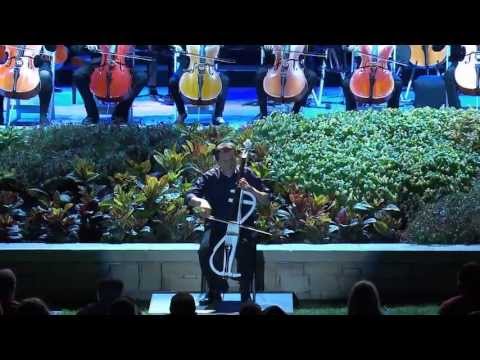
Peanut Gallery: Music to lift the soul in a world gone mad. Thank you “Piano Guys.”


Peanut Gallery: Can any good come out of Belfast? The answer is a resounding YES!
Belfast, Northern Ireland (UK) is Europe’s last best hope. But it is taking a movement of God.
“Some nations boast of their chariots and horses, but we boast in the name of the Lord our God.”
Psalm 20.7 (NLT)
Northern Ireland is struggling… and the communities that make up West Belfast are on the bottom of the pile. Economic stagnation, unemployment, poor health and education, cramped housing, general poverty, teen pregnancy, and crime… all contribute to the highest suicide rate in Northern Ireland. Kids roam the streets at night with nothing to do and nowhere to go. As they congregate, police move them on from one place to the next. It’s not an environment I’d want for my kid.
While some areas of Northern Ireland are prospering, predominantly Nationalist West Belfast is being left behind.
It’s been 15 years since the Belfast Peace accords (Good Friday Agreement) were signed and while everything has changed, nothing has changed. There is no peace… only a fragile truce, or cease fire, which is being strained to its limits by extremes in both the Nationalist and Unionist communities.
One woman said: “The young people involved in the current round of protest and violence never lived through The Troubles. We are reaping the harvest of my generation’s unforgiveness… and passing it on to our children.”
And yet, in the middle of it all, God is pouring out His Spirit… lives are being changed and the Kingdom of God is at hand… accompanied by signs and wonders. Believers from all sides of the divide are sacrificially pouring out their lives in worship and prayer… and in untold acts of kindness and mercy. The invisible Church is rising up… and God is moving among His people.
Robin Mark captures the mood in “Revival in Belfast” while the video background overviews the city. More later….
________________
Revival in Belfast – Robin Mark (with video of Northern Ireland)
I hear the voice of one calling, prepare ye the way of the Lord. And make His paths straight in the wilderness. And let your light shine in the darkness. And let your rain fall in the desert.
As sure as gold is precious and the honey sweet, So you love this city and you love these streets. Every child out playing by their own front door. Every baby laying on the bedroom floor.
Every dreamer dreaming in her dead-end job. Every driver driving through the rush hour mob. I feel it in my spirit, feel it in my bones. You’re going to send revival, bring them all back home.
I can hear that thunder in the distance. Like a train on the edge of town. I can feel the brooding of Your Spirit. “Lay your burdens down, Lay your burdens down”.
From the Preacher preaching when the well is dry. To the lost soul reaching for a higher high. From the young man working through his hopes and fears. To the widow walking through the veil of tears.
Every man and woman, every old and young. Every fathers daughter, every mothers son. I feel it in my spirit, feel it in my bones. You’re going to send revival, bring them all back home
I can hear that thunder in the distance. Like a train on the edge of town. I can feel the brooding of Your Spirit. “Lay your burdens down, Lay your burdens down”.
Revive us, Revive us, Revive us with your fire!
 Peanut Gallery: I’m off to Northern Ireland today to meet up with a small mission team from 24/7 Prayer International.
A prayer community in West Belfast issued the call through 24/7 Prayer International (which I have been following online) and I heard it as the Holy Spirit’s word to me to reconnect with what God is doing in Belfast… and to offer “words of encouragement” as in today’s morning reading.
Four of us, from Scotland, England, Slovakia and USA, responded to the world-wide invitation. We’ll meet each other, and the West Belfast community, for the first time on Sunday in Belfast. Our team’s different backgrounds, experiences and wide age span (23, 33, 43, 73) will provide the West Belfast community with a rich variety of perspectives… and will be a learning experience for us all.
I’ve been to Belfast four times before. The first time was in 1992, on an official Presbyterian (PCUSA) Reconciliation Mission to assess NGO funding possibilities in Northern Ireland and in the Republic of Ireland. Northern Ireland was in the thick of “The Troubles,” and under the direct rule from London… it was an armed camp. We were given access to high level people on all sides of the divide – political, religious and social. It was was truly a once-in-a-lifetime insight into the conflict.
Following up, I participated in two month-long, summer pulpit exchanges with a Presbyterian Pastor in Belfast. My family accompanied me and we were welcomed and received most warmly by the church community. It was a wonderful opportunity to personally connect with good, decent, Christian people who were trying to make a positive Christian witness during difficult times. My last visit to Belfast was on a quick layover from other travel.
But all of that was before 1998, when the Belfast “Good Friday” Agreement was signed. A lot has changed since then, but deep wounds remain and mutual trust is low. And, Northern Ireland is currently going through difficult economic times.

The Belfast Telegraph is a good read to catch up on what’s going on… particularly during this holiday weekend of “The Twelfth” with its bonfires and parades.
It’s a curious time to be traveling to West Belfast on a mission of encouragement and prayer. But the Holy Spirit has his own way in these things, and that’s good enough for me.
I’ll keep you posted.
Peanut Gallery: Here’s a basic primer from the USCCB on why the marriage between one man and one woman benefits civil society. You might find it helpful in discussions with your friends.
Please click on link below to go to the USCCB website.
The Common Good FAQ | Marriage Unique for a Reason.
Overview: The Common Good and Human Dignity: FAQs
1. What does “intrinsic dignity of the human person” mean?
2. What does marriage have to do with human dignity?
3. Does the Church believe that people who experience same-sex attraction have equal dignity?
4. What does “the common good” mean?
5. Isn’t marriage a private relationship? What does it have to do with the common good?
6. Isn’t marriage just a religious issue that the government should stay out of?
7. What are basic human rights?
8. Is marriage a basic human right?
9. What’s the harm of same-sex “marriage”?
10. But isn’t it unjust discrimination to not allow two men (or two women) to marry?
11. What about civil rights?
12. Isn’t allowing two men or two women to marry just an extension of allowing interracial couples to marry?
13. What about equality and fairness?
14. What about “civil unions” or “domestic partnerships” between two persons of the same sex?
1. What does “intrinsic dignity of the human person” mean?
The Church firmly teaches that each and every human being is a unique and irreplaceable person, created in the image of God (see Gen 1:27). Because of this, every man, woman, and child has great dignity and worth, a dignity that can never be taken away (i.e., it is intrinsic and inviolable). Respecting a person’s dignity means treating them justly. It also means helping them to flourish as a human being. The intrinsic dignity of the human person should be the starting point for all moral principles.
2. What does marriage have to do with human dignity?
Marriage protects and promotes the dignity of men and women, the dignity of children, and the dignity of all persons in society. First, the lifelong partnership of marriage is the only place where men and women can truly “speak” the language of sexual love – total, faithful, forever, and open to children. Only within marriage can sexual relations mean what they are supposed to mean as an expression of self-giving love between a man and a woman (not selfish use). The promises of a husband and a wife speak a high level of mutual trust and invite the confidence that sex will not be exploitative but will manifest true union and life-giving love. Second, marriage provides a context within which the rights of children to a mother and a father are legally protected. Marriage also helps assure that children will be welcomed as gifts; apart from the life-long commitment of marriage, children are likely to be viewed as threats or acquired as products. Finally, the family, founded on marriage, is a place where a person can exist for his or her own sake (see LF, no. 11). Marriages teach society not to value persons only for their usefulness.
3. Does the Church believe that people who experience same-sex attraction have equal dignity?
Of course! Every single human person has great inviolable dignity and worth, including those who experience same-sex attraction. All persons should be treated with respect, sensitivity, and love. The Church calls everyone to a life of holiness and chastity, and to live in accord with God’s will for their lives. For more information on the Church’s ministry to persons with same-sex attraction, see USCCB, Ministry to Persons with a Homosexual Inclination (2006).
4. What does “the common good” mean?
Quoting Pope Benedict XVI, the common good is “the good of ‘all of us,’” the good of every member of society (CV, no. 7). A society focused on the common good upholds the fundamental dignity of each person, and progresses “from less than human conditions to truly human ones” (PP, no. 20; cf. CV, no. 8). In short, the common good is “the sum total of social conditions which allow people, either as groups or as individuals, to reach their fulfillment more fully and more easily” (GS, no. 26).
5. Isn’t marriage a private relationship? What does it have to do with the common good?
Marriage is a personal relationship, but not a private one. In fact, marriages play a crucial role in society. By publicly joining hands in marriage, husband and wife enter into a unique communion and sharing of their whole lives that not only joins their distinct families into one, fostering greater connections between people, but also provides the essential context for welcoming new human life. By being open to children, each marriage is the foundation of a new family, rightly called the “key cell” of society (CCC, nos. 2207). In fact, because of its procreative aspect, marriage can be said to be the very source of society (see CSDC, no. 214), the “cradle of life and love” (CL, no. 40). Furthermore, both the irrevocable bond that unites husband and wife in marriage, as well as the sacrificial love that fathers and mothers show their children, create a “dynamic of love” that makes the family the “first and irreplaceable school of social life” (CSDC, no. 221; FC, no. 43). By practicing loving interdependence, husband and wife teach society to reject individualism and seek the common good for all. In modeling love and communion by welcoming and raising new human life and by taking care of the weak, sick and old, marriages and families provide social stability and thus foster the principles of solidarity and subsidiarity.
6. Isn’t marriage just a religious issue that the government should stay out of?
No. The social value of marriage is great and is apparent even to those who do not share the Catholic understanding of its religious meaning. Marriage as a lifelong, faithful, and fruitful union between husband and wife serves the good of all – it serves the good of the spouses, the good of the children who may issue from their marital union, and the good of society in assuring that reproduction happens in a socially responsible way. To be sure, these goods are affirmed and reinforced by most religions. But they do not rely on any religious premises; they are based instead on the nature of the human person and are accessible to right reason. The government has the responsibility of promoting the common good and the best interests of all people, especially the most vulnerable, and upholding authentic marriage does precisely that. The fact that the responsibility of government to promote and protect marriage coincides with widely held religious convictions is not a reason for government to abdicate that responsibility.
7. What are basic human rights?
Basic human rights flow from the nature and dignity of the human person. To know what counts as a “right”, we must know what it means to flourish as a human person, as a man or a woman. According to the Second Vatican Council, basic human rights include “everything necessary for leading a life truly human, such as food, clothing, and shelter,” as well as education, a fair wage, and so on (GS, no. 26). Rights are inseparable from duties and responsibilities (see CV, no. 43). Since genuine rights promote the good of the whole human person, and all people, they should never be in competition with each other.
8. Is marriage a basic human right?
The Church does speak of a “right of marriage”: “No human law can abolish the natural and primitive right of marriage, or in any way limit the chief and principal purpose of marriage…‘Increase and multiply’” (RN, no. 9). But having the right to marry does not mean having the right to enter into a relationship that is not marriage, and then to force others by civil law to treat it as marriage. All persons have the right to marry, but not the right to redefine marriage. Relationships between two persons of the same sex are not, and can never be, marriages, because two people of the same sex fail to meet a basic defining element for a married couple (sexual difference); they are not denied the right to marry any more than different-sex couples that fail to meet the other basic defining elements of marriage (e.g., age, consanguinity). Thus, the right to marry does not include the right to a so-called same-sex “union.”
9. What’s the harm of same-sex “marriage”?
Marriage has great public significance (see question #5, above). And laws always promote a vision of “the good life.” Because of this, redefining civil “marriage” to include two persons of the same sex would have far-reaching consequences in society. Law is a teacher, and such a law would teach many bad lessons, backed by the moral authority, financial resources, and coercive power of the state, such as the following: that marriage is only about the romantic fulfillment of adults and has nothing to do with legally attaching parents to the children they procreate, so that each child may have his or her right to a mother and father safeguarded, and his or her development and well-being served to the greatest extent possible; that mothers and fathers are wholly interchangeable and, in turn, that gender is inconsequential, both to the development of children and more broadly; that same-sex sexual conduct is not merely morally permissible, but a positive good equal in moral value to marital sex, and so worthy of the same protection and support of society by law; that people who adhere to the perennial and universal definition of marriage are bigots, whose beliefs can only be explained by hatred for persons with a homosexual inclination, and whom, in turn, the state has a duty to punish and marginalize for persisting in those beliefs.
10. But isn’t it unjust discrimination to not allow two men (or two women) to marry?
Treating different things differently is not unjust discrimination. Marriage can only be between a man and a woman. There’s nothing else like it. Only a man and a woman are capable of giving themselves to each other so that “the two become one flesh.” And only a man and a woman are capable of sexual activity that may yield children. The government has a very strong interest in protecting the right of those children to a mother and a father, and in reducing the likelihood that those children will become wards of the state. The civil law of marriage serves both these interests by legally bonding adult couples to any children they may create, and to each other. The sexual activity of two persons of the same-sex never yields children, so the government’s interest in bonding same-sex “couples” is different and weaker. Government is thus eminently reasonable, and in no way unjust, in distinguishing between two persons of the same sex and a different-sex couple in conferring the rights and duties of legal marriage.
11. What about civil rights?
Respecting everyone’s civil rights is unmistakably important, and the right to marry is unmistakably a civil right. But the “right to marry” is the right to enter into a very particular kind of relationship having distinct characteristics that serve important social purposes; the “right to marry” is not the right to enter a relationship that is not a marriage, and then force others by law to treat that relationship as if it were a marriage. Advocates for same-sex “marriage” ignore this distinction. Far from serving the cause of civil rights, redefining marriage would threaten the civil right of religious freedom: it would compel everyone—even those opposed in conscience to same-sex sexual conduct—to treat same-sex relationships as if they represented the same moral good as marital relationships.
12. Isn’t allowing two men or two women to marry just an extension of allowing interracial couples to marry?
There is no valid analogy between the goal of “redefining” marriage to include persons of the same sex, and the historical movement to allow interracial couples to marry. The sexual relations between a man and a woman are simply not the same as the sexual relations between two men or between two women, regardless of their ethnicity. The intimate acts of husband and wife are able to unite them fully and to enable them to welcome children. Sexual difference is an essential characteristic of marriage; ethnic sameness or difference is not. Marriage is rooted in nature: two people of the same sex are no more being denied the “right” to marry than a man is “denied” the “right” to gestate and nurse a child. (As was said above in number 7, authentic human rights flow from the nature and the dignity of the human person, a nature that includes sexual difference.)
13. What about equality and fairness?
All persons deserve fair and equal treatment, in recognition of their great dignity. But protecting and promoting marriage as the union of one man and one woman is not denying equality or being unfair. Every person has the right to marry, but those who seek to enter same-sex unions seek something other than to marry; instead, they seek to have the civil law force others to treat their non-marital relationships as if they were marriage. But the relationships are not the same, either functionally or morally. Defending marriage is not unfair, it’s just respecting reality — the reality of marriage as the total, fruitful union of man and woman. Real fairness, real equality, depends on truth.
14. What about “civil unions” or “domestic partnerships” between two persons of the same sex?
Marriage is a unique good in itself. Nothing compares to the unique partnership of husband and wife, who through their sexual difference form a life-giving communion. No relationship between persons of the same sex can be the same as that between a man and a woman, nor should they ever be treated as analogous to marriage in any way. Thus, legal categories such as “civil unions” or “domestic partnerships” that claim equivalent or analogous status to marriage are wrong and unjust, harmful both to the person and to society. Legal categories such as “civil unions” or “domestic partnerships” should never be treated as analogous to marriage. Such legal approval of “civil unions” contributes to the erosion of the authentic meaning of marriage. As such, they are never acceptable. Basic human rights are not protected but violated by the erosion and redefinition of marriage.
Peanut Gallery: I’ve got two great kids and eight terrific grandkids. Thanks, Josh & Amy! You have made me proud.
Proverbs 23:24 NLT
“The father of godly children has cause for joy. What a pleasure to have children who are wise.”
 The Peanut Gallery