Erdem Gunduz stands in Taksim Square during a 'duranadam' or standing man protest in Istanbul, Turkey, early 18 June 2013.
A Turkish man has staged an eight-hour silent vigil in Istanbul’s Taksim Square, the scene of violent clashes between police and anti-government protesters in recent weeks, inspiring hundreds of others to follow his lead.
Erdem Gunduz said he wanted to take a stand against police stopping demonstrations near the square, the Dogan news agency reported.He stood silently, facing the Ataturk Cultural Centre which was draped in Turkish flags and a portrait of Turkey’s founder Mustafa Kemal Ataturk, from 6pm on Monday.
By 2am on Tuesday, when the police moved in, about 300 people had joined him. Ten people, who refused to be moved on by police, were detained.Gunduz, swiftly dubbed “standing man” on social media in Turkey, inspired similar protests elsewhere in Istanbul, as well as in the capital, Ankara, and the city of Izmir on the Aegean coast.
The silent protests were in stark contrast to demonstrations at the weekend, which saw some of the fiercest clashes so far when police fired teargas and water cannons to clear thousands from Taksim Square.
What began in May as a protest by environmentalists upset over plans to build on a park adjoining Taksim Square has grown into a movement against the prime minister, Recep Tayyip Erdoğan, presenting the greatest public challenge to his 10-year leadership.
“You have to have some detailed knowledge of evangelicalism and the people involved to recognize that EIT and its acolytes represent a fringe element of political activism, and not the duly adopted positions of thousands of evangelical congregations and their local leadership. American evangelicals haven’t changed their views on Congress’s approach to immigration; rather, a small group of left-wing activists has been funded by Soros to urge evangelicals to act in a certain way – and to advertise its agenda as an evangelical one.”
It’s as bad as the Tea Party thinks it is. It’s worse. In some ways, it’s a pig in a poke: it’s not about immigration as much as it is about changing the way government business is done in the United States.
A couple of points up front.
Legal immigration is good
First, I am a pro-immigration voter. Not only am I pro-immigration, I am happy to accept immigrants who aren’t Ph.D.s, IT professionals, and bioengineers. I have nothing against credentialed professionals, but the truth is that they are not the economic accelerators that small business entrepreneurs are. America has had tremendous success with legal immigration; we should do more of it than we do today, and we should not seek to admit only those who come laden with wealth and credentials. That is not the path to national prosperity.
The Jewish leaders were infuriated by Stephen’s accusation, and they shook their fists at him in rage.
But Stephen, full of the Holy Spirit, gazed steadily into heaven and saw the glory of God, and he saw Jesus standing in the place of honor at God’s right hand.
And he told them, “Look, I see the heavens opened and the Son of Man standing in the place of honor at God’s right hand!”
Then they put their hands over their ears and began shouting. They rushed at him and dragged him out of the city and began to stone him. His accusers took off their coats and laid them at the feet of a young man named Saul.
As they stoned him, Stephen prayed, “Lord Jesus, receive my spirit.” He fell to his knees, shouting, “Lord, don’t charge them with this sin!” And with that, he died.
The Martyrdom of St Stephen, Tryptic Peter Paul Reubens, 1577-1640 Musee des Beaux Arts, Valenciennes, France
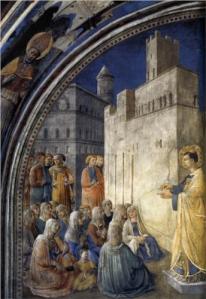
Then the high priest asked Stephen, “Are these accusations true?”
The Sermon of St. Stephen Fra Angelico, 1449 Cappella Niccolina, Palazzi Pontifici, Vatican
This was Stephen’s reply: “Brothers and fathers, listen to me. Our glorious God appeared to our ancestor Abraham in Mesopotamia before he settled in Haran. God told him, ‘Leave your native land and your relatives, and come into the land that I will show you.’ So Abraham left the land of the Chaldeans and lived in Haran until his father died. Then God brought him here to the land where you now live.
“But God gave him no inheritance here, not even one square foot of land. God did promise, however, that eventually the whole land would belong to Abraham and his descendants—even though he had no children yet. God also told him that his descendants would live in a foreign land, where they would be oppressed as slaves for 400 years. ‘But I will punish the nation that enslaves them,’ God said, ‘and in the end they will come out and worship me here in this place.’
“God also gave Abraham the covenant of circumcision at that time. So when Abraham became the father of Isaac, he circumcised him on the eighth day. And the practice was continued when Isaac became the father of Jacob, and when Jacob became the father of the twelve patriarchs of the Israelite nation.
“These patriarchs were jealous of their brother Joseph, and they sold him to be a slave in Egypt. But God was with him and rescued him from all his troubles. And God gave him favor before Pharaoh, king of Egypt. God also gave Joseph unusual wisdom, so that Pharaoh appointed him governor over all of Egypt and put him in charge of the palace.
“But a famine came upon Egypt and Canaan. There was great misery, and our ancestors ran out of food. Jacob heard that there was still grain in Egypt, so he sent his sons—our ancestors—to buy some. The second time they went, Joseph revealed his identity to his brothers, and they were introduced to Pharaoh. Then Joseph sent for his father, Jacob, and all his relatives to come to Egypt, seventy-five persons in all. So Jacob went to Egypt. He died there, as did our ancestors. Their bodies were taken to Shechem and buried in the tomb Abraham had bought for a certain price from Hamor’s sons in Shechem.
“As the time drew near when God would fulfill his promise to Abraham, the number of our people in Egypt greatly increased. But then a new king came to the throne of Egypt who knew nothing about Joseph. This king exploited our people and oppressed them, forcing parents to abandon their newborn babies so they would die.
“At that time Moses was born—a beautiful child in God’s eyes. His parents cared for him at home for three months. When they had to abandon him, Pharaoh’s daughter adopted him and raised him as her own son. Moses was taught all the wisdom of the Egyptians, and he was powerful in both speech and action.
“One day when Moses was forty years old, he decided to visit his relatives, the people of Israel. He saw an Egyptian mistreating an Israelite. So Moses came to the man’s defense and avenged him, killing the Egyptian. Moses assumed his fellow Israelites would realize that God had sent him to rescue them, but they didn’t.
“The next day he visited them again and saw two men of Israel fighting. He tried to be a peacemaker. ‘Men,’ he said, ‘you are brothers. Why are you fighting each other?’
“But the man in the wrong pushed Moses aside. ‘Who made you a ruler and judge over us?’ he asked. ‘Are you going to kill me as you killed that Egyptian yesterday?’ When Moses heard that, he fled the country and lived as a foreigner in the land of Midian. There his two sons were born.
“Forty years later, in the desert near Mount Sinai, an angel appeared to Moses in the flame of a burning bush. When Moses saw it, he was amazed at the sight. As he went to take a closer look, the voice of the Lord called out to him, ‘I am the God of your ancestors—the God of Abraham, Isaac, and Jacob.’ Moses shook with terror and did not dare to look.
“Then the Lord said to him, ‘Take off your sandals, for you are standing on holy ground. I have certainly seen the oppression of my people in Egypt. I have heard their groans and have come down to rescue them. Now go, for I am sending you back to Egypt.’
“So God sent back the same man his people had previously rejected when they demanded, ‘Who made you a ruler and judge over us?’ Through the angel who appeared to him in the burning bush, God sent Moses to be their ruler and savior. And by means of many wonders and miraculous signs, he led them out of Egypt, through the Red Sea, and through the wilderness for forty years.
“Moses himself told the people of Israel, ‘God will raise up for you a Prophet like me from among your own people.’ Moses was with our ancestors, the assembly of God’s people in the wilderness, when the angel spoke to him at Mount Sinai. And there Moses received life-giving words to pass on to us.
“But our ancestors refused to listen to Moses. They rejected him and wanted to return to Egypt. They told Aaron, ‘Make us some gods who can lead us, for we don’t know what has become of this Moses, who brought us out of Egypt.’ So they made an idol shaped like a calf, and they sacrificed to it and celebrated over this thing they had made.
“Then God turned away from them and abandoned them to serve the stars of heaven as their gods! In the book of the prophets it is written, ‘Was it to me you were bringing sacrifices and offerings during those forty years in the wilderness, Israel? No, you carried your pagan gods — the shrine of Molech, the star of your god Rephan, and the images you made to worship them. So I will send you into exile as far away as Babylon.’
“Our ancestors carried the Tabernacle with them through the wilderness. It was constructed according to the plan God had shown to Moses. Years later, when Joshua led our ancestors in battle against the nations that God drove out of this land, the Tabernacle was taken with them into their new territory. And it stayed there until the time of King David.
“David found favor with God and asked for the privilege of building a permanent Temple for the God of Jacob. But it was Solomon who actually built it. However, the Most High doesn’t live in temples made by human hands. As the prophet says, ‘Heaven is my throne, and the earth is my footstool. Could you build me a temple as good as that?’ asks the Lord. ‘Could you build me such a resting place? Didn’t my hands make both heaven and earth?’
“You stubborn people! You are heathen at heart and deaf to the truth. Must you forever resist the Holy Spirit? That’s what your ancestors did, and so do you! Name one prophet your ancestors didn’t persecute! They even killed the ones who predicted the coming of the Righteous One—the Messiah whom you betrayed and murdered. You deliberately disobeyed God’s law, even though you received it from the hands of angels.”
Prayer: Heavenly Father – Give me the clarity of Stephen to know who I am… where I came from… and what you have done for me in Jesus Christ. And give me the boldness to proclaim it… whatever the cost. In Jesus’ name. Amen.
Population: 3.6 million (4,500 Christians) Main Religion: Islam Government: Islamic republic Source of Persecution: Islamic extremism
Mauritania is proud to be a pure Muslim country, and its laws prohibit conversion to the Christian faith. Harsh government restrictions make it very difficult for Christian missions to operate here. Religious beliefs and practices are strongly restricted by government policies, although the government is weak in enforcing them. Pressure on Muslim-background believers from family, tribe members and local Muslim leaders is very high. The Arab Spring has not yet had an impact but Islam extremism is becoming more influential.
PLEASE PRAY:
There were reports of believers being beaten for their faith in 2012. Pray for protection and perseverance for God’s people
Al-Qaeda in the Maghreb is monitoring Christian activity. Pray that its influence will diminish
That literacy and translation projects will give more Mauritanians access to the Bible in their own language.
PERSECUTION DYNAMICS
Mauritania is not often in the news and seems to have been forgotten by the international community. Very little attention has been given to the suffering of the small, local church. The country’s constitution does not include any provisions for religious freedom and its laws prohibit conversion to the Christian faith. Pressure on Muslim-background believers from family, tribe members and leaders of local mosques is constant throughout the country.
In December 2012, Islamist Members of Parliament questioned the government about their attitude towards foreign Christian organisations and in July 2011, the council of Mauritanian Imams asked the government to criminalise obvious apostasy and proselytising. The influence of al-Qaeda in the Maghreb is growing and attempting to monitor Christian activity in the country.
BACKGROUND – There are a few countries on the World Watch List that we can’t share stories from. Even if we were to use different names, the Christian population is so small, that the story could easily be traced back to the individual. For their security, we are providing a different way to pray for the country this week.
Here are the top 10 things to know about what life is like for Christians in Mauritania:
1 – Mauritania has been under military rule for more than 30 years, with only a short democratic interruption in 2007. Promises to bring democracy back to the country have only resulted in rigged elections.
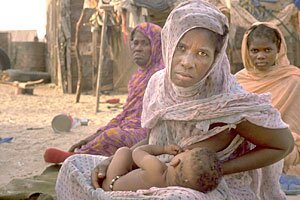
A woman breastfeeds her infant at a health centre. Lack of food and limited access to basic services have contributed to a rising rate of malnutrition in children.
2 – Mauritania is one of the world’s poorest countries. One third of the children are malnourished, and when there is enough food, it is often too expensive for the poor to afford.
3 – During the winter of 2010/2011 several articles in the local media portrayed the “foreign” activities in Mauritania, including the names and the organizations deemed most guilty of Christianization. In early July 2011, some prominent Imams published their request to the Mauritanian parliament to protect the Mauritanian people from hearing the Gospel and to reject every Christian organization by a fight to have every attempt of sharing the Gospel in Mauritania curtailed.
Militiaman from the Ansar Dine Islamic group, who said they had come from Niger and Mauritania, ride on a vehicle at Kidal in northeastern Mali, in this 16 June 2012 file photo. (Photo: Reuters - Adama Diarra)
4 – The main persecution dynamic in Mauritania is ‘Islamic extremism’ which has become more visible demonstrating the growing influence of Salafism.
5 – The first locals coming to Jesus were reported in the 90s. Mauritanian believers are few (with estimates ranging from around 150 all the way to 700).
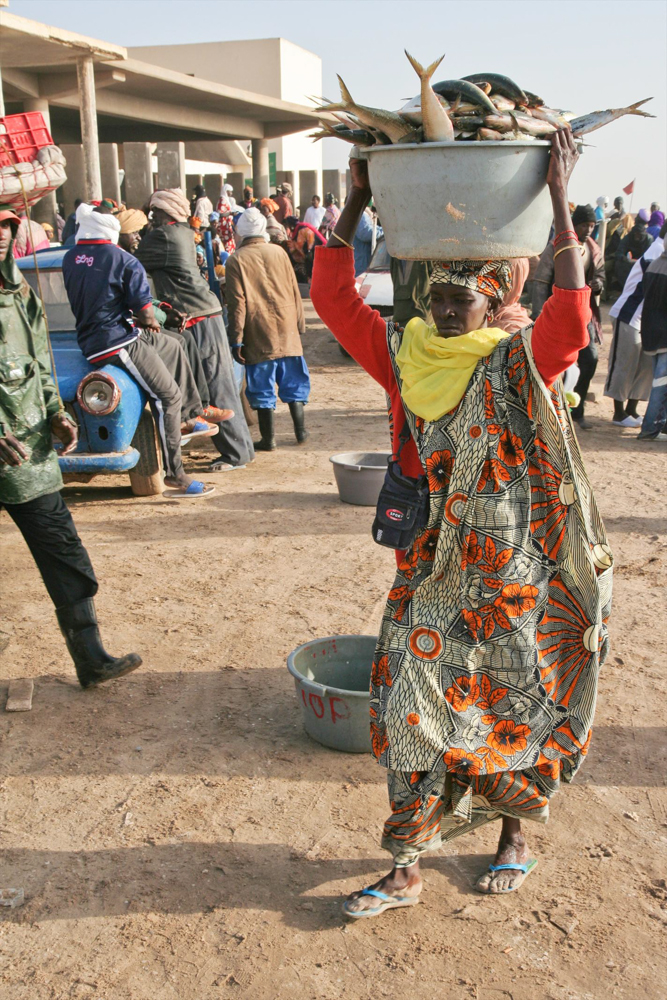
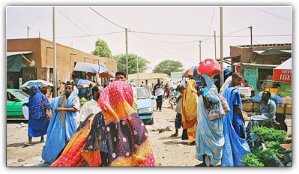
A market in Nouakchott, the capital of Mauritania, where Christians make up a tiny 0.16% of the populatio
6 – Many Christians don’t know the Ten Commandments and their ethics are influenced by the Muslim environment. It seems that the lack of biblical knowledge creates ethic problems. Other difficult obstacles for the church are its poverty and the illiteracy.
7 – The Church is divided in many groups. Some of them are united in networks but many believers are alone in their villages. In the countryside, Mauritanian leaders notice an interest for the faith issues and the Bible. The testimonies of the believers arrested and tortured in 2009 have encouraged more local believers to share about Jesus in the country.
The most common threat to Christians abroad is militant IslamPicture: ALAMY
8 – Pressure on Muslim Background Believers from family, tribe members and leaders of local mosques, is very high. There is some freedom for expat churches, but even for expats residing in the country, it is complicated. It remains completely impossible for Mauritanian Christians to register their churches, so they must meet in secret.
9 – There are many barriers such as low literacy rates, no Scriptures completed in Hassaniya Arabic, only a few local radio broadcasts from Senegal, and laws that forbid Mauritanians from hearing the gospel or believing in Jesus.
10 – Al-Qaeda in the Maghreb is monitoring Christian activity.