
Morning Prayer, 9 Apr – John 17:25-26 ~ mediated intimacy

Mornng Prayer

+ In the name of the Father, and of the Son, and of the Holy Spirit. Amen

Opening sentences – Cuthbert of Northumbria (635-87)

My eyes, my eyes have seen the King. The vision of His beauty has pierced me deep within. To whom else can I go?

My heart, my heart desires Him. He’s touched somerthing inside of me that’s now reaching out for Him. And I know that I must go.

My God is my love, my guard, my healing one; my bright love is my merciful Lord; my sweet love is Christ; His heart is my delight; all my love are You, O King of glory.

Morning reading
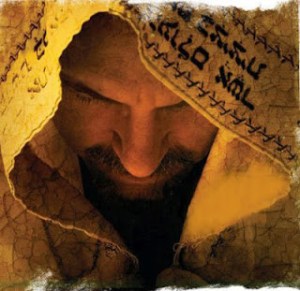
jesus-praying

John 17:25-26 ESV

“O righteous Father, even though the world does not know you, I know you, and these know that you have sent me. I made known to them your name, and I will continue to make it known, that the love with which you have loved me may be in them, and I in them.”

Reflections:

bad news / good news

Jesus begins with the bad news: the world did not know, or recognize, the Father. In contrast, the good news is Jesus knew the Father and his disciples knew that the Father sent the Son. In contrast with the world’s ignorance of the Father is not the disciples’ knowledge of the Father, but their knowledge of the Son as sent by the Father. Again we see the primacy of Jesus’ role. It is precisely in and through the Son that they know the Father, for the Son has made known to them the Father’s name. Earlier in the prayer the name was an expression for the revelation brought by the Son that actually brings contact with God and not just information about him.

Jesus’ contimued presence

Jesus then pledges to continue to make the Father’s name known to his disciples in the future. On one important level he refers here to his imminent Passion and resurrection, for these events are the climax of his revelation of the Father, which shows most clearly the love of God. On another level he is speaking of his continued presence among the believers and his continued revelation of the Father to them after his ascension. He is repeating his promise to be with them in his resurrection appearances and beyond. His continued revelation parallels the activity of the Paraclete.

mediated intimacy

The purpose of Jesus’ making God’s name known to them is that they would have intimacy in order that the love you have for me may be in them and that I myself may be in them. In his ministry Jesus revealed the Father’s love for them, and in the future he will continue to help his disciples actually receive this love within each of them and amongst them as a community. Jesus himself is the point of contact. It is precisely by his being in them that they will receive the love of the Father, for it is the Father’s love for the Son that they are enabled to share.

The Son’s coming to earth brought the presence of God’s love, and his coming into the lives of believers also brings that love, for God is love. Our relationship with the Father will always be mediated through the Son, even in eternity. Meditation on such truths begins to give us a faint glimpse of the Father’s glorifying the Son and the Son’s glorifying the Father. It also helps us understand why, in this final section of the prayer, Jesus addresses his Father as righteous. All that Jesus has done and all that he will continue to do are in response to God’s righteous will. He is righteous because he is truth itself and does only what is right. His purposes are perfect, reflecting his own characteristic life and light and love.

The IVP New Testament Commentary Series

__________

__________

Canticle:

Christ, as a light… illumine and guide me. Christ, as a shield… overshadow me. Christ under me; Christ over me; Christ beside me on my left and my right.

This day be within and without me, lowly and meek, yet all-powerful. Be in the heart of each to whom I speak; in the mouth of each who speaks unto me. This day be within and without me, lowly and meek, yet all-powerful.

Christ as a light; Christ as a shield; Christ beside me on my left and my right.

Blessing

May the peace of the Lord Christ go with you, wherever He may send you. May He guide you through the wilderness, protect you through the storm. May He bring you home rejoicing at the wonders He has shown you. May He bring you home rejoicing once again into our doors.

+ In the name of the Father, and of the Son, and of the Holy Spirit. Amen

_____________________________________

Peanut Gallery: A brief word of explanation – the general format for Morning Prayer is adapted from the Northumbrian Community‘s Daily Office, as found in Celtic Daily Prayer (see online resources here.) The Scripture readings are primarily from the Gospel of John, with the intent to complete the reading by Easter. Other Scriptures which illuminate the Gospel of John will be included along the way.

Reflections from various saints will be included as their memorial days occur during the calendar year.

On Sundays, I’ll return to the USCCB readings (see online resources here) and various liturgical resources in order to reflect the Church’s worship and concerns throughout the world.

Photo illustrations and music videos, available online, are included as they illustrate or illuminate the readings. I will try to give credit and link to sources as best I can.

Morning Prayer, 8 Apr – John 17:20-24 ~ proof of origin

Mornng Prayer

+ In the name of the Father, and of the Son, and of the Holy Spirit. Amen

Opening sentences – Cuthbert of Northumbria (635-87)

O King of Kings, O King of the universe, King who will be, who is, may You forgive us each and every one. Accept my prayer, O King of grace.

Lord, let my memory provide no shelter for grievance against another.

Lord, let my heart provide no harbor for hatred against another.

Lord, let my tongue be no accomplice in the judgement of a brother.

Morning reading

John 17:20-24 ESV:

cross-hands1

“I do not ask for these only, but also for those who will believe in me through their word, that they may all be one, just as you, Father, are in me, and I in you, that they also may be in us, so that the world may believe that you have sent me.

“The glory that you have given me I have given to them, that they may be one even as we are one, I in them and you in me, that they may become perfectly one, so that the world may know that you sent me and loved them even as you loved me. Father, I desire that they also, whom you have given me, may be with me where I am, to see my glory that you have given me because you loved me before the foundation of the world….”

Reflections:

unity of believers

Jesus speaks of the oneness of all believers and then links this with the mutual indwelling of the Father and the Son. The NIV has this indwelling as the model for the relationship among believers: just as you are in me and I am in you. The word translated just as can signal not only comparison but cause. Both of these two meanings are appropriate here, for the mutual indwelling of the Father and the Son is both the reason that all may be one and the pattern for such oneness. This becomes clearer when Jesus adds “that they themselves also may be in us”. The oneness of believers is to be found in us, in their relation to the Father and the Son. The same twofold thought occurs when Jesus repeats that they may be one as we are one. The oneness of the Father and the Son is both the cause of and the model for the believers’ unity.

community of believers

The Father and the Son’s oneness includes both a unity of being and a distinctness of person, and it has been seen especially as a oneness of will and love. These are also the characteristics of the oneness that Jesus desires for his disciples to have in their relationship with one another in God. The believers have a mutual indwelling with the Father, but only by the Son, for no one comes to the Father except through the Son. So the oneness of the Son with the Father is unique, for Jesus shares in the deity of the Father. But in the Son believers have access to the Father and share in his very life, the eternal life.

Jesus seems to suggest that the actual outworking of the believers’ oneness with one another in the Father through the Son is a process that will take some time, for he adds, may they be brought to complete unity – more literally, “may they have been perfected into one.” He is speaking, in part, about the oneness that is further perfected as the “other sheep” and the “scattered children of God” are gathered in. But this oneness must also refer to the oneness that is present throughout the life of the community as the community makes “every effort to keep the unity of the Spirit through the bond of peace” (Eph 4:3), for it is something that the world can notice. So this is a spiritual oneness that comes from God, but it has to do with how the community of believers lives in the world.

living proof

Jesus says the purpose of this oneness is that the world may believe that you have sent me. Such belief is the key response Jesus has received from his disciples, so this is a reference to those who are still in the world yet are becoming believers. The disciples are sent on mission just as Jesus was sent, and the very purpose of their life together is to bear witness to the Father and the Son. This oneness flows from a common life that is characterized chiefly by love, and thus the world will see that the Father has loved the disciples as he has loved the Son.

The amazing transcendent love evident between the Father and the Son is not an exclusive glory that humans must be content only to admire from afar. The love the Father has for Jesus is the same love he has for believers, indeed for the whole world. The believers are to embody this love and thereby provide living proof of God’s gracious character, which is his mercy, love and truth. They will be an advertisement, inviting people to join in this union with God.

The love of God evident in the church is a revelation that there is a welcome awaiting those who will quit the rebellion and return home. Here is the missionary strategy of this Gospel — the community of disciples, indwelt with God’s life and light and love, witnessing to the Father in the Son by the Spirit by word and deed, continuing to bear witness as the Son has done.

shared future

Jesus’ request that they be with him… suggests strongly he is referring to heaven. This being the case, his prayer takes in the whole span of the believers’ life, from then on into eternity. Specifically, he wants them to see my glory, the glory you have given me because you loved me before the creation of the world. We have already seen his glory, but there is a yet more complete vision of his glory awaiting believers. John later says that at his coming “we shall be like him, for we shall see him as he is” (1 Jn 3:2; cf. Col 3:4).

What begins at his second coming will continue on, for Jesus is talking not about his coming itself but about that which takes place afterwards. He has promised Peter, and, through him, his other disciples that they will follow him later, and here is what they will meet, the glory of the Lord — the glory that comes from the Father, who is the source of all, and that is a gift of love. That which Jesus has revealed in his earthly ministry is a mere glimpse of an eternal reality that existed before creation.

In his prayer, Jesus has been speaking of the future from an eternal perspective. Here in his final petition he looks on ahead to the ultimate future.

The IVP New Testament Commentary Series

__________

__________

Canticle:

Christ, as a light… illumine and guide me. Christ, as a shield… overshadow me. Christ under me; Christ over me; Christ beside me on my left and my right.

This day be within and without me, lowly and meek, yet all-powerful. Be in the heart of each to whom I speak; in the mouth of each who speaks unto me. This day be within and without me, lowly and meek, yet all-powerful.

Christ as a light; Christ as a shield; Christ beside me on my left and my right.

Blessing

May the peace of the Lord Christ go with you, wherever He may send you. May He guide you through the wilderness, protect you through the storm. May He bring you home rejoicing at the wonders He has shown you. May He bring you home rejoicing once again into our doors.

+ In the name of the Father, and of the Son, and of the Holy Spirit. Amen

_____________________________________

Peanut Gallery: A brief word of explanation – the general format for Morning Prayer is adapted from the Northumbrian Community‘s Daily Office, as found in Celtic Daily Prayer (see online resources here.) The Scripture readings are primarily from the Gospel of John, with the intent to complete the reading by Easter. Other Scriptures which illuminate the Gospel of John will be included along the way.

Reflections from various saints will be included as their memorial days occur during the calendar year.

On Sundays, I’ll return to the USCCB readings (see online resources here) and various liturgical resources in order to reflect the Church’s worship and concerns throughout the world.

Photo illustrations and music videos, available online, are included as they illustrate or illuminate the readings. I will try to give credit and link to sources as best I can.
Morning Prayer, 7 Apr – John 17:11-19 ~ consecration

Mornng Prayer

+ In the name of the Father, and of the Son, and of the Holy Spirit. Amen

Opening sentences – Cuthbert of Northumbria (635-87)

In the true faith may we remain; in Jesus may we find hope; against exploitation of the poor may we help; against our faults may we fight; our bad habits abandon; the name of our neighbor may we defend; in the work of mercy may we advance; those in misery may we help; every danger of sin may we avoid; in holy charity may we grow strong; in the well of grace in confession may we wash; may we the friendship of our brothers and sisters win. Amen.

Morning reading

John 17:11-19 ESV :

christ-in-gesthemane-01

“Holy Father, keep them in your name, which you have given me, that they may be one, even as we are one. While I was with them, I kept them in your name, which you have given me. I have guarded them, and not one of them has been lost except the son of destruction, that the Scripture might be fulfilled.

“But now I am coming to you, and these things I speak in the world, that they may have my joy fulfilled in themselves. I have given them your word, and the world has hated them because they are not of the world, just as I am not of the world. I do not ask that you take them out of the world, but that you keep them from the evil one. They are not of the world, just as I am not of the world. Sanctify them in the truth; your word is truth. As you sent me into the world, so I have sent them into the world. And for their sake I consecrate myself, that they also may be sanctified in truth….”

Reflections:

in God’s Name

The expression Holy Father is not found anywhere else in the Bible. Holiness refers to divine otherness, the realm of the divine in contrast to the mundane – this phrase captures beautifully God’s “purity and tenderness” (Westcott), the “transcendence and intimacy characteristic of Jesus’ personal attitude to God and of his teaching about God” (Beasley-Murray).

Name here refers to the reality that has been revealed — the Father himself. The name is the point of contact between Christ and his disciples in the Father. When Jesus says (again speaking from an eternal perspective) while I was with them, I protected them and kept them safe by that name you gave me, he is referring to the protection they had by his own divine presence among them as the I AM. Jesus is asking God to continue to protect them by his powerful presence, a presence that will be mediated by himself and the Spirit.

what happened to Judas

Jesus points to two explanations:

1. Judas’ action fulfilled the scriptural pattern of the enemy of the righteous sufferer. This does not mean Judas was locked into some deterministic plan but rather “Jesus knew himself to be one with, and had to go the way of, the threatened people of God in the world to fulfill their God-given task” (Ridderbos). Thus, Jesus finds an assurance in the Scripture of the same sort he is offering his disciples, for they also are the threatened people of God.

2. Judas’s own character as “the son of destruction” – its basic idea is “to denote one who shares in this thing or who is worthy of it, or who stands in some other close relation to it” (Bauer, Gingrich and Danker). Judas had heard the words and seen the deeds and even been the recipient of special signs of love from Jesus, but in his heart he was not of the Father and so did not receive with humility, faith and obedience the one sent from the Father. When one rejects the offer of life one is left only with destruction.

The disciples have confidence because this same offer is made to them, as it is to everyone, and they have responded and received. Jesus is saying these things in the world, that is, in the arena of conflict, so that his disciples can have the full measure of his joy within them. This joy comes from total confidence in the Father and in his protection as well as in the intimate communion with him such as Judas lacked.

the Father’s protection

1. The Father’s protection is to be in the midst of the world, not through removal from it. In their identification with Jesus they draw upon themselves the world’s hatred of him, but they also share in his mission to the world.

2. The Father’s protection is from the evil one. Behind this world, which hates them, is the evil one, for “the whole world is under the control of the evil one”. The warfare motif runs throughout Scripture and is fundamental in Jesus’ own understanding of reality.

Although Jesus is about to complete his work of salvation, God’s warfare with the world will continue. Neither the Father nor the Son is going to abandon the world; rather they will continue to engage it, confront it and call it to repentance. “The disciples’ place in the world is not something that they can give up because the world is not something that God can give up” (Ridderbos).

the disciples’ consecration

Sanctifying is not the same as the cleansing, but it is related to the pruning. The word used here is related to the word “holy” that Jesus has just used of the Father. It means to consecrate, to set apart. It is used for the preparation necessary for entering the presence of God and for the commissioning for a divine task, e.g of a priest or a prophet. The whole people of God are set apart for God as a holy nation, answering the call to be holy as God is holy, in contrast to the foreign nations.

All three of these nuances are relevant to Jesus’ prayer. This sanctification is by the truth, that is, God’s word – i.e. Jesus’ revelation of God in word and deed. Jesus is himself the Word, as he is the truth. God’s word and truth correspond to what has already been referred to in this prayer as God’s glory and name. They are all manifestations of God that point to and actually enable contact with him in and through Jesus. As the disciples share in God’s glory and are in his name, so here this sanctification means being drawn “into the truth, into the unity between Father and Son, and into salvation in such a way that the Father’s being, his holiness, permeates them” (Tolmie).

Because the disciples have God’s truth they are set apart and sent into the world, just as Jesus was. Like him they are to be in the world but not of it, judging and calling the world by being the presence of God’s light, bearing witness to his love and offering his life in the midst of the world. They share in the very life of God in the Son of God through the Spirit of God, and thus they do the work of God as Jesus has done, revealing God’s love and life and light.

In this way, all three aspects of sanctification are evident: they are set apart to enter God’s presence, indeed, to have his presence enter them; they are commissioned for holy service; and they constitute the holy people of God, restored Israel, who are distinct from all others in the world because of the divine presence.

sacrificial love

Sanctification, like glorification, includes a reference to the cross, the moment of revelation when the truth of God — his heart of sacrificial love — is most clearly seen. The cross is the ultimate revelation of the truth, and thus his sacrificial death is necessary if the disciples are to be truly sanctified, an expression that could also be translated “sanctified in the truth”. The cross is also the final and supreme act of Jesus’ humility, obedience and death to self that have characterized his whole ministry and are at the heart of his relation with God. So his sacrificial death not only takes away the sins of the world and reveals God; it also completes the pattern of life that he will share with them.

The disciples are to have their life in Christ, as branches are in a vine, thus sharing in his very life with the Father, which includes a death of self. They will live out the life of Christ by receiving life from the Father and by dying to self and the world. And at the end, after walking as Jesus walked, their deaths, like Jesus’, will also be a glorification of the Father. Both sacrificial living and dying, whether by martyrdom or not, are part of the disciples’ sanctification (Chrysostom).

As the disciples bear witness to God in this way they will produce followers of God, just as Jesus has done. So the themes of consecration and sending lead naturally to the next section of the prayer, Jesus’ petition for those who will believe as a result of the disciples’ witness.

The IVP New Testament Commentary Series

__________


__________

Canticle:

Christ, as a light… illumine and guide me. Christ, as a shield… overshadow me. Christ under me; Christ over me; Christ beside me on my left and my right.

This day be within and without me, lowly and meek, yet all-powerful. Be in the heart of each to whom I speak; in the mouth of each who speaks unto me. This day be within and without me, lowly and meek, yet all-powerful.

Christ as a light; Christ as a shield; Christ beside me on my left and my right.

Blessing

May the peace of the Lord Christ go with you, wherever He may send you. May He guide you through the wilderness, protect you through the storm. May He bring you home rejoicing at the wonders He has shown you. May He bring you home rejoicing once again into our doors.

+ In the name of the Father, and of the Son, and of the Holy Spirit. Amen

_____________________________________

Peanut Gallery: A brief word of explanation – the general format for Morning Prayer is adapted from the Northumbrian Community‘s Daily Office, as found in Celtic Daily Prayer (see online resources here.) The Scripture readings are primarily from the Gospel of John, with the intent to complete the reading by Easter. Other Scriptures which illuminate the Gospel of John will be included along the way.

Reflections from various saints will be included as their memorial days occur during the calendar year.

On Sundays, I’ll return to the USCCB readings (see online resources here) and various liturgical resources in order to reflect the Church’s worship and concerns throughout the world.

Photo illustrations and music videos, available online, are included as they illustrate or illuminate the readings. I will try to give credit and link to sources as best I can.

5th Sunday of Lent: Ezekiel 37:12-14; Psalm 130:1-8; Romans 8:8-11; John 11:3-7, 20-27, 33-45 ~ raised from the depths

5th Sunday of Lent 

In the Name of the Father, and the Son, and the Holy Spirit. Amen

Opening sentence and prayer:

Easter with its celebration of baptism is soon approaching. Gracious God – help all who are preparing for baptism, and all who will renew their baptismal vows, to welcome with joy and anticipation Your promised new life and infilling of Your Spirit.

Merciful God, You showed Your glory to our fallen race by sending Your Son to confound the powers of death. Call us forth from sin’s dark tomb. Break the bonds which hold us, that we may believe and proclaim Christ, the cause of our freedom and the source of life, who lives and reigns with You in the unity of the Holy Spirit, holy and mighty God for ever and ever. Amen.

A Reading from the Old Testament: Ezekiel 37:12-14 (NLT)

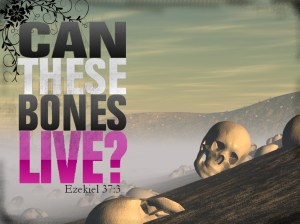
dry bones

“Therefore, prophesy to them and say, ‘This is what the Sovereign Lord says: O my people, I will open your graves of exile and cause you to rise again. Then I will bring you back to the land of Israel. When this happens, O my people, you will know that I am the Lord. I will put my Spirit in you, and you will live again and return home to your own land. Then you will know that I, the Lord, have spoken, and I have done what I said. Yes, the Lord has spoken!’”

A Reading from the Psalms: Psalm 130:1-8 (NLT)

From the depths of despair, O Lord, I call for your help. Hear my cry, O Lord. Pay attention to my prayer.

Lord, if you kept a record of our sins, who, O Lord, could ever survive? But you offer forgiveness, that we might learn to fear you.

I am counting on the Lord; yes, I am counting on him. I have put my hope in his word. I long for the Lord more than sentries long for the dawn, yes, more than sentries long for the dawn.

O Israel, hope in the Lord; for with the Lord there is unfailing love. His redemption overflows. He himself will redeem Israel from every kind of sin.

__________


__________

A Reading from the Letters: Romans 8:8-11 (NLT)

That’s why those who are still under the control of their sinful nature can never please God.

But you are not controlled by your sinful nature. You are controlled by the Spirit if you have the Spirit of God living in you. (And remember that those who do not have the Spirit of Christ living in them do not belong to him at all.) And Christ lives within you, so even though your body will die because of sin, the Spirit gives you life because you have been made right with God. The Spirit of God, who raised Jesus from the dead, lives in you. And just as God raised Christ Jesus from the dead, he will give life to your mortal bodies by this same Spirit living within you.

A Reading from the Gospels: John 11:3-7, 20-27, 33-45 (NLT)

So the two sisters sent a message to Jesus telling him, “Lord, your dear friend is very sick.”

But when Jesus heard about it he said, “Lazarus’ sickness will not end in death. No, it happened for the glory of God so that the Son of God will receive glory from this.” So although Jesus loved Martha, Mary, and Lazarus, he stayed where he was for the next two days. Finally, he said to his disciples, “Let’s go back to Judea.”
_____

When Martha got word that Jesus was coming, she went to meet him. But Mary stayed in the house. Martha said to Jesus, “Lord, if only you had been here, my brother would not have died. But even now I know that God will give you whatever you ask.”

Jesus told her, “Your brother will rise again.”

“Yes,” Martha said, “he will rise when everyone else rises, at the last day.”

Jesus told her, “I am the resurrection and the life. Anyone who believes in me will live, even after dying. Everyone who lives in me and believes in me will never ever die. Do you believe this, Martha?”

“Yes, Lord,” she told him. “I have always believed you are the Messiah, the Son of God, the one who has come into the world from God.”
_____

Raising of Lazarus Simon Bisley
Raising of Lazarus
Simon Bisley

When Jesus saw her weeping and saw the other people wailing with her, a deep anger welled up within him, and he was deeply troubled. “Where have you put him?” he asked them.

They told him, “Lord, come and see.” Then Jesus wept. The people who were standing nearby said, “See how much he loved him!” But some said, “This man healed a blind man. Couldn’t he have kept Lazarus from dying?”

Jesus was still angry as he arrived at the tomb, a cave with a stone rolled across its entrance. “Roll the stone aside,” Jesus told them.

But Martha, the dead man’s sister, protested, “Lord, he has been dead for four days. The smell will be terrible.”

Jesus responded, “Didn’t I tell you that you would see God’s glory if you believe?” So they rolled the stone aside. Then Jesus looked up to heaven and said, “Father, thank you for hearing me. You always hear me, but I said it out loud for the sake of all these people standing here, so that they will believe you sent me.” Then Jesus shouted, “Lazarus, come out!” And the dead man came out, his hands and feet bound in graveclothes, his face wrapped in a headcloth. Jesus told them, “Unwrap him and let him go!”

Many of the people who were with Mary believed in Jesus when they saw this happen.

Intercessions:

Heavenly Father, hear my prayers on behalf of Your children –

+ That all believers may have a present hope of life beyond the grave….  Lord, hear my prayer.

+ That people plagued by doubts and fears may be inspired by the Word of God…. Lord, hear my prayer.

+ That those preparing to celebrate baptism this Easter may begin a full, new life in Christ… Lord, hear my prayer.

+ That all who reaffirm their baptismal vows may receive strength to grow daily in their Christian life…. Lord, hear my prayer.

+ That those who suffer because one they love has died may know the compassion of Christ, who wept at the death of Lazarus…. Lord, hear my prayer.

+ That all the faithful departed may meet Christ the resurrection and the life…. Lord, hear my prayer.

Heavenly Father, receive my prayers, and fill our hearts with your mercy, so that safeguarding the gifts received through your goodness, we may walk in newness of life. Through Christ our Lord. Amen.

Hymn: “You Alone Can Rescue”

+ In the Name of the Father, and the Son, and the Holy Spirit. Amen

Morning Prayer, 5 Apr – John 17:6-11 ~ for God’s own

Mornng Prayer

+ In the name of the Father, and of the Son, and of the Holy Spirit. Amen

Opening sentences – Cuthbert of Northumbria (635-87)

My heart, my heart desires Him. He’s touched something inside of me that’s now reaching out for Him. And I know that I must go.

Morning reading

John 17:6-11 ESV :

John 17:6-11 ESV

MEDION DIGITAL CAMERA

“I have manifested your name to the people whom you gave me out of the world. Yours they were, and you gave them to me, and they have kept your word. Now they know that everything that you have given me is from you. For I have given them the words that you gave me, and they have received them and have come to know in truth that I came from you; and they have believed that you sent me.

“I am praying for them. I am not praying for the world but for those whom you have given me, for they are yours. All mine are yours, and yours are mine, and I am glorified in them. And I am no longer in the world, but they are in the world, and I am coming to you. Holy Father, keep them in your name, which you have given me, that they may be one, even as we are one….

Reflections:

God’s grace

The disciples were given to Jesus by the Father from the world, another reference to the amazing grace of God. The Father is the ultimate agent in the disciples’ lives just as he is in Jesus’ life. Jesus is probably speaking not of an eternal relation but of the relation the disciples had with God through the covenant with Israel (Westcott; Ridderbos). Those true Israelites, who had an affinity with God, were already God’s and were awaiting his Messiah, who would bring them to the fulfillment of that relationship. The Father gave them to the Son for this purpose; and through their faith and obedience, as they were drawn by God to the Son and his teaching, they demonstrated that they were God’s.

This relationship is about to be changed radically, for the disciples are now on the brink of the birth from above. The point is, however, that true Israelites whom God has shepherded have been handed over by him to Jesus, and the sheep have recognized his voice and have received Jesus as come from God.

the disciples’ faith

These disciples, who are of God and are given by God to the Son, have been able to recognize and receive as from the Father all that the Son has received from the Father and passed on to them – specifically, Jesus’ teaching. Jesus’ words are God’s words, and these bring life and judgment. The focus is on Jesus and their acceptance of him – they knew and believed the truth about both the Son and the Father in their mutual relation.

The disciples’ knowledge and faith are not as complete as they think it is, but Jesus affirms they have reached a decisive point. They have believed in him and hung in with him, even when most of his followers abandoned him – the foundation has been laid, and it is secure. They have been receptive, the fundamental attitude of a true disciple, and now they have grasped the crux of the revelation — the identity of the Son in relation to the Father. The grace of revelation has been met by human response of humble openness, faith and obedience. Here we see God’s acceptance of believers despite their great ignorance and weakness.

Jesus prays for believers

Jesus’ petitions for the disciples are about protection, sanctification and union with God. None of these petitions are applicable to the world, to the system and those beings in rebellion against God. Nevertheless, since it is through the disciples’ witness that the world will continue to be challenged with God’s love and call, Jesus’ prayer for his disciples is actually an indirect prayer for the world (Beasley-Murray).

The disciples’ very relations with the Father and Son bear witness to this foundational truth – they have been given to the Son and yet remain the Father’s because of the divine oneness. Here, as throughout this Gospel, Jesus’ deeds and words make no sense unless one realizes he is God. Indeed, this very statement bears witness to this claim. For anyone can, and should, truthfully say to the Father, all I have is yours. But the reverse, all you have is mine — “this can no creature say before God” (Alford). The glory that Jesus says has come to him through them comes from both the Father and the disciples. In the Father’s giving the disciples to Jesus, the Father bore witness to this relation of oneness; and the disciples, who were of the Father, recognized him and believed in him.

The IVP New Testament Commentary Series

__________

__________

Canticle:

Christ, as a light… illumine and guide me. Christ, as a shield… overshadow me. Christ under me; Christ over me; Christ beside me on my left and my right.

This day be within and without me, lowly and meek, yet all-powerful. Be in the heart of each to whom I speak; in the mouth of each who speaks unto me. This day be within and without me, lowly and meek, yet all-powerful.

Christ as a light; Christ as a shield; Christ beside me on my left and my right.

Blessing

May the peace of the Lord Christ go with you, wherever He may send you. May He guide you through the wilderness, protect you through the storm. May He bring you home rejoicing at the wonders He has shown you. May He bring you home rejoicing once again into our doors.

+ In the name of the Father, and of the Son, and of the Holy Spirit. Amen

_____________________________________

Peanut Gallery: A brief word of explanation – the general format for Morning Prayer is adapted from the Northumbrian Community‘s Daily Office, as found in Celtic Daily Prayer (see online resources here.) The Scripture readings are primarily from the Gospel of John, with the intent to complete the reading by Easter. Other Scriptures which illuminate the Gospel of John will be included along the way.

Reflections from various saints will be included as their memorial days occur during the calendar year.

On Sundays, I’ll return to the USCCB readings (see online resources here) and various liturgical resources in order to reflect the Church’s worship and concerns throughout the world.

Photo illustrations and music videos, available online, are included as they illustrate or illuminate the readings. I will try to give credit and link to sources as best I can.