Religious Freedom: Peter Stuyvesant vs. the Quakers (Reblog)

How a revolt in Dutch New York planted the seeds for religious freedom.

“[T]he power of this world can neither attack us, neither excuse us, for if God justifye who can condemn and if God condemn there is none can justifye.”
By Lucia A. Silecchia

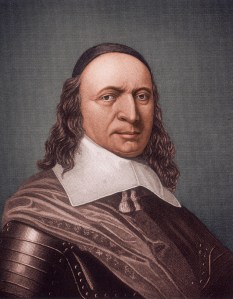
Portrait of Peter Stuyvesant in 1660.  Getty Images
Portrait of Peter Stuyvesant in 1660.
Getty Images

In January more than 350 years ago, two men of Vlissingen—now Flushing, N.Y., near Manhattan—sat in jail for defending the rights of Quakers to publicly practice their faith. This early act of courage in support of religious freedom is one of America’s most important, yet least known, declarations of private and public rights of conscience.

In a colony then called New Netherlands, the governor, Peter Stuyvesant, supported the Dutch Reformed Church with law and money. Other faiths were tolerated, but very grudgingly. As long as those faiths were practiced in private, their adherents often went undisturbed, despite Stuyvesant’s animosity. This mirrored Holland’s own uneasy sectarian détente.

This relationship collapsed when Quakers landed in Vlissingen. Their enthusiastic, public faith was incompatible with clandestine worship and quickly attracted attention. Outraged, Stuyvesant decreed harsh penalties for anyone who dared host a Quaker.

In response, on Dec. 27, 1657, a group of more than two dozen “Vlissingen-ites” signed a petition called the “Remonstrance of the Inhabitants of the Town of Flushing,” known today as the Flushing Remonstrance. This brave band declared their defiance of the edict concerning the Quakers because “we cannot in conscience lay violent hands upon them, but give them free egresse and regresse unto our Town, and houses, as God shall persuade our consciences.”

The Vlissingen-ites duly referenced their legal rights under Dutch law. Far more eloquently, they appealed to nonnegotiable obligations of conscience. They knew that their rebellion violated earthly authority, but they declared “the power of this world can neither attack us, neither excuse us, for if God justifye who can condemn and if God condemn there is none can justifye.” They relied on “the law written in his heart designed for the good of all,” maintaining that, contrary to the edict of their governor, they “are bounde by the law of God and man to doe good unto all men and evil to noe man.”

Not surprisingly, swift, harsh consequences came quickly. Stuyvesant responded by arresting four of the most prominent signatories, including the writer of the Flushing Remonstrance, town clerk Edward Hart, and the sheriff of Flushing, Tobias Feake. Others quickly recanted, but Hart and Feake refused and remained jailed for more than a month. Both were eventually released, but only after their point had been made. Seven years later, in 1664, Stuyvesant was forced to surrender New Netherlands to England. Ironically, the carefully negotiated Articles of Capitulation provided that the Dutch who remained in the now newly British colony of New York “shall enjoy the liberty of their consciences in Divine Worship and church discipline.”

Today, some scholars say the Flushing Remonstrance was a direct ancestor of the free-exercise clause in the Bill of Rights; others say its influence was far more limited because its pedigree was Dutch, not English. Nevertheless, as questions of conscience swirl anew, it is worth recalling three lessons from the signers of the Remonstrance.

First, they recognized that allowing private freedom of worship but not its public expression is, at best, false freedom. Free exercise means little if it may not be publicly expressed. Today, it is worth asking whether we embrace religious freedom with an all-too-narrow reading. Those in Vlissingen did not fight for the narrow freedom to worship, important as that was. They knew this would be empty if it did not also encompass the freedom to live by the dictates of faith, both in private and in public.

Second, it is worth noting that no signer of the Flushing Remonstrance was himself Quaker. Some likely disagreed with Quaker beliefs; some might have been skeptical about this new religion, and all had much to lose. Yet the signers fully understood that if a directive burdened those of one faith, then all should fear similar intrusion. Today, it is worth asking whether we too easily abandon those making claims of conscience when the particular rights they assert or claims they make lack majority support.

Third, the Remonstrance reflects the unique place of religion and conscience in the panoply of rights. In 1657, it was often argued that benefits would flow from restricting the open expression of multiple faiths because this restriction would foster harmony, strengthening a fledgling community needing cohesion. Vlissingen’s people didn’t see it this way. Today, it is worth asking whether we are too willing to surrender priceless freedoms in exchange for perceived advantages and benefits whose value pales in comparison with conscience rights surrendered.

Ordinary people signed the Flushing Remonstrance—not leaving to those of rank and prominence the task of protecting basic freedoms. The town clerk and sheriff, Hart and Feake, were unlikely heroes in the cause of religious freedom. Most information about other signers is forgotten in history’s fog. Some could not even sign their own names. Yet they didn’t shrink from confronting a governor who exceeded the limits of “the law written in his heart.”

In the centuries since 1657, America has wrestled with protecting religious practice and private conscience, sometimes more messily than perfectly. In each era, we have been prodded on by those like Hart, Feake and their companions who remain “bounde by the law of God” when it is in conflict with man-made laws. Today, we can easily take religious freedom and rights of conscience for granted. The people of old Vlissingen didn’t have that luxury.
__________

Ms. Silecchia is a law professor at the Catholic University of America in Washington, D.C., and a native of Flushing, N.Y.

Sunday ~ The Baptism of the Lord: Isaiah 42:1-4, 6-7; Psalm 29:1-4, 9-10; Acts 10:34-38; Matthew 3:13-17 ~ anointed

Last Sunday of Christmas: The Baptism of the Lord

+ In the Name of the Father, and the Son, and the Holy Spirit. Amen

Opening sentence and prayer:

Today Jesus was baptized in the Jordan; the Father recognized Him as His beloved Son; the Holy Spirit prepared Him for His mission of service. May the Lord’s Spirit of sonship and service be always with you.
__________

God our Father, with Jesus you call us to be your beloved sons and daughters and with Him you give us the mission to become humble and dedicated servants. Grant that we may not break those crushed by sin and sorrow. Help us to serve always the cause of right, to be eyes to the blind and a voice for the downtrodden. May we please you in all we do. We ask this in the name of Jesus our Lord.

A Reading from the Old Testament: Isaiah 42:1-4, 6-7 (NLT)

candle

“Look at my servant, whom I strengthen. He is my chosen one, who pleases me. I have put my Spirit upon him. He will bring justice to the nations. He will not shout or raise his voice in public. He will not crush the weakest reed or put out a flickering candle. He will bring justice to all who have been wronged. He will not falter or lose heart until justice prevails throughout the earth. Even distant lands beyond the sea will wait for his instruction.”
__________

“I, the Lord, have called you to demonstrate my righteousness. I will take you by the hand and guard you, and I will give you to my people, Israel, as a symbol of my covenant with them. And you will be a light to guide the nations. You will open the eyes of the blind. You will free the captives from prison, releasing those who sit in dark dungeons.”

A Reading from the Psalms: Psalm 29:1-4, 9-10 (NLT)

Honor the Lord, you heavenly beings; honor the Lord for his glory and strength. Honor the Lord for the glory of his name. Worship the Lord in the splendor of his holiness. The voice of the Lord echoes above the sea. The God of glory thunders. The Lord thunders over the mighty sea. The voice of the Lord is powerful; the voice of the Lord is majestic.
__________

The voice of the Lord twists mighty oaks and strips the forests bare. In his Temple everyone shouts, “Glory!” The Lord rules over the floodwaters. The Lord reigns as king forever.

A Reading from Acts of the Apostles: Acts 10:34-38 (NLT)

Then Peter replied, “I see very clearly that God shows no favoritism. In every nation he accepts those who fear him and do what is right. This is the message of Good News for the people of Israel — that there is peace with God through Jesus Christ, who is Lord of all. You know what happened throughout Judea, beginning in Galilee, after John began preaching his message of baptism. And you know that God anointed Jesus of Nazareth with the Holy Spirit and with power. Then Jesus went around doing good and healing all who were oppressed by the devil, for God was with him.”

Baptism of Jesus

A Reading from the Gospels: Matthew 3:13-17 (NLT)

Then Jesus went from Galilee to the Jordan River to be baptized by John. But John tried to talk him out of it. “I am the one who needs to be baptized by you,” he said, “so why are you coming to me?”

But Jesus said, “It should be done, for we must carry out all that God requires.” So John agreed to baptize him.

After his baptism, as Jesus came up out of the water, the heavens were opened and he saw the Spirit of God descending like a dove and settling on him. And a voice from heaven said, “This is my dearly loved Son, who brings me great joy.”

Intercessions:

Heavenly Father: You sent Jesus to live among us as a servant… to set us free… and to make us new. Lord, hear me as I pray.

+ For the Church and its leaders – that they may not seek compromises with wealth and power but serve and help the poor, the sick, and the broken-hearted. Lord, hear my prayer.
+ For all those who are baptized – that we may follow Christ and that, like Him, we may learn to serve rather than to be served. Lord, hear my prayer.
+ For Christian communities around the world – that the eucharist may strengthen in us the gifts of the Holy Spirit and make us ever more faithful to our calling as Your beloved children. Lord, hear my prayer.
+ For Christians and for all people – that the Holy Spirit may guide us to respect all who are little and defenseless, particularly the unborn; and that we may not crush them but offer them justice, mercy and grace. Lord, hear my prayer.
+ For all those who don’t know Christ or who are estranged from the Church – that the way I live out my Christian life may reveal to them the love of Christ. Lord, hear my prayer.

Lord God, You have called me to become a new creation when I was baptized and filled with the Holy Spirit. Forgive me my fears and anxieties and keep on renewing me through Your Spirit – that I may have the courage to go with Christ all the way, for He is Your Son and my Lord for ever. Amen.

Spiritual Song: “Take Us to the River”Robin Mark

+ In the Name of the Father, and the Son, and the Holy Spirit. Amen

Morning Prayer, 11 Jan – John 1:40-42 ~ life changing

Morning Prayer

+ In the name of the Father, and of the Son, and of the Holy Spirit. Amen

Opening sentence

I arise today through a mighty strength, the invocation of the Trinity, through belief in the Threeness, through confession of the Oneness of the Creator of creation.

I arise today through the strength of Christ’s birth with His baptism, through the strength of His crucifixion with His burial, through the strength of His resurrection with His ascension, through the strength of His descent for the day of judgment.

(St Patrick’s Breastplate)

Morning readings

The Calling of Saints Peter and Andrew Caravaggio (1603-1606) Royal Collection, London
The Calling of Saints Peter and Andrew
Caravaggio (1603-1606)
Royal Collection, London

John 1:40-42 ESV:

One of the two who heard John speak and followed Jesus was Andrew, Simon Peter’s brother. He first found his own brother Simon and said to him, “We have found the Messiah” (which means Christ). He brought him to Jesus. Jesus looked at him and said, “You are Simon the son of John. You shall be called Cephas” (which means Peter).

Reflections / Prayer:

The two disciples, Andrew and the unnamed disciple, stay with Jesus. We are not told how Jesus began teaching such open-hearted people. The implication is that something impressive occurred, for we find Andrew going to his brother Simon Peter and telling him, We have found the Messiah. If Peter had been expecting something impressive, he was not disappointed. Jesus immediately claims sovereign authority over him by renaming him.
__________

For most ancient peoples, “the name is inextricably bound up with the person” (Bietenhard 1976:648). The name is a point of contact between the person and those around, as when we refer to one’s name, colloquially, as a “handle.” For the ancients this contact goes below the surface, for the name reveals something of who the person actually is. Therefore changing a name means changing one’s identity (cf. Jn 1:42).
__________

For Peter, meeting Jesus was a life-changing event.

(The IVP New Testament Commentary Series)


__________

Lord Jesus – I am not the person I was before I met You, but neither am I the person I want to be (or better, You want me to be.) You have already changed my life, but don’t stop now… stay with me through to the end. Continue the process of change until I finally see You – Face to face… in glory. Amen.

Canticle

Christ, as a light… illumine and guide me. Christ, as a shield… overshadow me. Christ under me; Christ over me; Christ beside me on my left and my right.

This day be within and without me, lowly and meek, yet all-powerful. Be in the heart of each to whom I speak; in the mouth of each who speaks unto me. This day be within and without me, lowly and meek, yet all-powerful.

Christ as a light; Christ as a shield; Christ beside me on my left and my right.

Blessing

May the peace of the Lord Christ go with you, wherever He may send you. May He guide you through the wilderness, protect you through the storm. May He bring you home rejoicing at the wonders He has shown you. May He bring you home rejoicing once again into our doors.

+ In the name of the Father, and of the Son, and of the Holy Spirit. Amen

_____________________________________

Peanut Gallery: A brief word of explanation – the general format for Morning Prayer is adapted from the Northumbrian Community‘s Daily Office, as found in Celtic Daily Prayer (see online resources here.) The Scripture readings are primarily from the Gospel of John, with the intent to complete the reading by Easter. Other Scriptures which illuminate the Gospel of John will be included along the way.

Reflections from various saints will be included as their memorial days occur during the calendar year.

On Sundays, I’ll return to the USCCB readings (see online resources here) and various liturgical resources in order to reflect the Church’s worship and concerns throughout the world.

Photo illustrations and music videos, available online, are included as they illustrate or illuminate the readings. I will try to give credit and link to sources as best I can.

Morning Prayer, 10 Jan – John 1:35-39 ~ come and see

Morning Prayer

+ In the name of the Father, and of the Son, and of the Holy Spirit. Amen

Opening sentence

I arise today through a mighty strength, the invocation of the Trinity, through belief in the Threeness, through confession of the Oneness of the Creator of creation.

I bind to myself today the power of Heaven, the light of the sun, the brightness of the moon, the splendour of fire, the flashing of lightning, the swiftness of wind, the depth of sea, the stability of earth, the compactness of rocks.

I bind to myself today God’s Power to guide me, God’s Might to uphold me, God’s Wisdom to teach me, God’s Eye to watch over me, God’s Ear to hear me, God’s Word to give me speech, God’s Hand to guide me, God’s Way to lie before me, God’s Shield to shelter me, God’s Host to secure me…. (St Patrick’s Breastplate)

Morning readings

John 1:35-39 ESV:

come-and-see

The next day again John was standing with two of his disciples, and he looked at Jesus as he walked by and said, “Behold, the Lamb of God!” The two disciples heard him say this, and they followed Jesus. Jesus turned and saw them following and said to them, “What are you seeking?” And they said to him, “Rabbi” (which means Teacher), “where are you staying?” He said to them, “Come and you will see.” So they came and saw where he was staying, and they stayed with him that day, for it was about the tenth hour.

Reflections / Prayer:

The picture of Jesus that emerges from this opening scene is quite different from the picture we usually have of him. The great activity surrounding Jesus that we usually think of will in fact be described by John. But here at the outset John gives us a glimpse of the enormous depths of silence that lay behind all that Jesus does. Jesus is fully engaged in his historical circumstances, but he is not centered in them nor controlled by them…. Even his silence speaks powerfully of a life centered in God.

Similarly, these disciples, who will shortly be so full of words, opinions and activity, are characterized at the outset by a desire for the presence of Jesus more than for answers to questions. Their immaturity will become evident immediately, but the crucial issue in discipleship is not whether we are mature but whether we desire to come and see and then abide in the divine presence, the only source of eternal life and growth in grace and truth.

(The IVP New Testament Commentary Series)

We need to find God, and he cannot be found in noise and restlessness. God is the friend of silence. See how nature – trees, flowers, grass – grows in silence; see the stars, the moon and the sun, how they move in silence… We need silence to be able to touch souls.

Mother Teresa

__________

Lord Jesus – Today I have places to go, people to see, things to do. But in the midst of my busy-ness, I hear Your voice asking me – “What do you want?”

Forgive me Lord. I confess that I want stuff from You, more than I want to simply be with You. I want to fit You in to my schedule, instead of abandoning all to be with You. I want to know where I’m going, before I take the first step. Lamb of God who takes away the sin of the world, have mercy on me.

Holy Spirit – Help me to find rest and refreshment in the silence that You offer. Help me learn how to abide quietly in Your presence. And fill my emptiness with Your light and life – Your grace and truth.

Heavenly Father – The universe declares Your majesty. May I find You in everything that I encounter today. Amen.


“See, I am near, says the Lord / See, I make all things new.”

Canticle

Christ, as a light… illumine and guide me. Christ, as a shield… overshadow me. Christ under me; Christ over me; Christ beside me on my left and my right.

This day be within and without me, lowly and meek, yet all-powerful. Be in the heart of each to whom I speak; in the mouth of each who speaks unto me. This day be within and without me, lowly and meek, yet all-powerful.

Christ as a light; Christ as a shield; Christ beside me on my left and my right.

Blessing

May the peace of the Lord Christ go with you, wherever He may send you. May He guide you through the wilderness, protect you through the storm. May He bring you home rejoicing at the wonders He has shown you. May He bring you home rejoicing once again into our doors.

+ In the name of the Father, and of the Son, and of the Holy Spirit. Amen

_____________________________________

Peanut Gallery: A brief word of explanation – the general format for Morning Prayer is adapted from the Northumbrian Community‘s Daily Office, as found in Celtic Daily Prayer (see online resources here.) The Scripture readings are primarily from the Gospel of John, with the intent to complete the reading by Easter. Other Scriptures which illuminate the Gospel of John will be included along the way.

Reflections from various saints will be included as their memorial days occur during the calendar year.

On Sundays, I’ll return to the USCCB readings (see online resources here) and various liturgical resources in order to reflect the Church’s worship and concerns throughout the world.

Photo illustrations and music videos, available online, are included as they illustrate or illuminate the readings. I will try to give credit and link to sources as best I can.

Christian “martyr” deaths double in 2013 – reported by Open Doors (Reblog)

Reuters

8:12 am, January 8, 2014

image

* Syria tops “martyr count” with more than 2012 global total

* North Korea still most dangerous state for Christians

* Violence against Christians rising in Africa

By Tom Heneghan, Religion Editor (click on link for original article)

LONDON, Jan 8 (Reuters) – Reported cases of Christians killed for their faith around the world doubled in 2013 from the year before, with Syria accounting for more than the whole global total in 2012, according to an annual survey.

Open Doors, a non-denominational group supporting persecuted Christians worldwide, said on Wednesday it had documented 2,123 “martyr” killings, compared with 1,201 in 2012. There were 1,213 such deaths in Syria alone last year, it said.

“This is a very minimal count based on what has been reported in the media and we can confirm,” said Frans Veerman, head of research for Open Doors. Estimates by other Christian groups put the annual figure as high as 8,000.

The Open Doors report placed North Korea at the top of its list of 50 most dangerous countries for Christians, a position it has held since the annual survey began 12 years ago. Somalia, Syria, Iraq and Afghanistan were the next four in line.

The United States-based group reported increasing violence against Christians in Africa and said radical Muslims were the main source of persecution in 36 countries on its list.

“Islamist extremism is the worst persecutor of the worldwide church,” it said.

WAR AGAINST THE CHURCH

Christianity is the largest and most widely spread faith in the world, with 2.2 billion followers, or 32 percent of the world population, according to a survey by the U.S.-based Pew Forum on religion and Public Life.

It faces restrictions and hostility in 111 countries, ahead of the 90 countries limiting or harassing the second-largest faith, Islam, another Pew survey has reported.

Michel Varton, head of Open Doors France, told journalists in Strasbourg that failing states with civil wars or persistent internal tensions were often the most dangerous for Christians.

“In Syria, another war is thriving in the shadow of the civil war — the war against the church,” he said while presenting the Open Doors report there.

About 10 percent of Syrians are Christians. Many have become targets for Islamist rebels who see them as supporters of President Bashar al-Assad.

Nine of the 10 countries listed as dangerous for Christians are Muslim-majority states, many of them torn by conflicts with radical Islamists. Saudi Arabia is an exception but ranked sixth because of its total ban on practicing faiths other than Islam.

In the list of killings, Syria was followed by Nigeria with 612 cases last year after 791 in 2012. Pakistan was third with 88, up from 15 in 2012. Egypt ranked fourth with 83 deaths after 19 the previous year.

The report spoke of “horrific violence often directed at Christians” in the Central African Republic but said only nine deaths were confirmed last year because “most analysts still fail to recognise the religious dimension of the conflict.”

NORTH KOREA

The report had no figures for killings in North Korea but said Christians there faced “the highest imaginable pressure” and some 50,000 to 70,000 lived in political prison camps.

“The God-like worship of the rulers leaves no room for any other religion,” it said.

There was now “a strong drive to purge Christianity from Somalia,” the report added, and Islamist attacks on Iraqi Christians have been increasing in the semi-autonomous Kurdish north, formerly a relatively safe area for them.

Veerman, based near Utrecht in the Netherlands, said that killings were only the most extreme examples of persecutions. Christians also face attacks on churches and schools, discrimination, threats, sexual assaults and expulsion from countries.

Open Doors, which began in the 1950s smuggling Bibles into communist states and now works in more than 60 countries, estimated last year that about 100 million Christians around the world suffered persecution for their faith.