
How a revolt in Dutch New York planted the seeds for religious freedom.
“[T]he power of this world can neither attack us, neither excuse us, for if God justifye who can condemn and if God condemn there is none can justifye.”
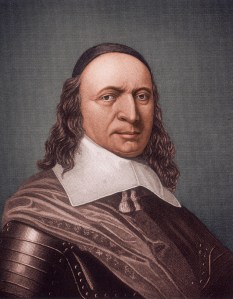
Getty Images
In January more than 350 years ago, two men of Vlissingen—now Flushing, N.Y., near Manhattan—sat in jail for defending the rights of Quakers to publicly practice their faith. This early act of courage in support of religious freedom is one of America’s most important, yet least known, declarations of private and public rights of conscience.
In a colony then called New Netherlands, the governor, Peter Stuyvesant, supported the Dutch Reformed Church with law and money. Other faiths were tolerated, but very grudgingly. As long as those faiths were practiced in private, their adherents often went undisturbed, despite Stuyvesant’s animosity. This mirrored Holland’s own uneasy sectarian détente.
This relationship collapsed when Quakers landed in Vlissingen. Their enthusiastic, public faith was incompatible with clandestine worship and quickly attracted attention. Outraged, Stuyvesant decreed harsh penalties for anyone who dared host a Quaker.
In response, on Dec. 27, 1657, a group of more than two dozen “Vlissingen-ites” signed a petition called the “Remonstrance of the Inhabitants of the Town of Flushing,” known today as the Flushing Remonstrance. This brave band declared their defiance of the edict concerning the Quakers because “we cannot in conscience lay violent hands upon them, but give them free egresse and regresse unto our Town, and houses, as God shall persuade our consciences.”
The Vlissingen-ites duly referenced their legal rights under Dutch law. Far more eloquently, they appealed to nonnegotiable obligations of conscience. They knew that their rebellion violated earthly authority, but they declared “the power of this world can neither attack us, neither excuse us, for if God justifye who can condemn and if God condemn there is none can justifye.” They relied on “the law written in his heart designed for the good of all,” maintaining that, contrary to the edict of their governor, they “are bounde by the law of God and man to doe good unto all men and evil to noe man.”
Not surprisingly, swift, harsh consequences came quickly. Stuyvesant responded by arresting four of the most prominent signatories, including the writer of the Flushing Remonstrance, town clerk Edward Hart, and the sheriff of Flushing, Tobias Feake. Others quickly recanted, but Hart and Feake refused and remained jailed for more than a month. Both were eventually released, but only after their point had been made. Seven years later, in 1664, Stuyvesant was forced to surrender New Netherlands to England. Ironically, the carefully negotiated Articles of Capitulation provided that the Dutch who remained in the now newly British colony of New York “shall enjoy the liberty of their consciences in Divine Worship and church discipline.”
Today, some scholars say the Flushing Remonstrance was a direct ancestor of the free-exercise clause in the Bill of Rights; others say its influence was far more limited because its pedigree was Dutch, not English. Nevertheless, as questions of conscience swirl anew, it is worth recalling three lessons from the signers of the Remonstrance.
First, they recognized that allowing private freedom of worship but not its public expression is, at best, false freedom. Free exercise means little if it may not be publicly expressed. Today, it is worth asking whether we embrace religious freedom with an all-too-narrow reading. Those in Vlissingen did not fight for the narrow freedom to worship, important as that was. They knew this would be empty if it did not also encompass the freedom to live by the dictates of faith, both in private and in public.
Second, it is worth noting that no signer of the Flushing Remonstrance was himself Quaker. Some likely disagreed with Quaker beliefs; some might have been skeptical about this new religion, and all had much to lose. Yet the signers fully understood that if a directive burdened those of one faith, then all should fear similar intrusion. Today, it is worth asking whether we too easily abandon those making claims of conscience when the particular rights they assert or claims they make lack majority support.
Third, the Remonstrance reflects the unique place of religion and conscience in the panoply of rights. In 1657, it was often argued that benefits would flow from restricting the open expression of multiple faiths because this restriction would foster harmony, strengthening a fledgling community needing cohesion. Vlissingen’s people didn’t see it this way. Today, it is worth asking whether we are too willing to surrender priceless freedoms in exchange for perceived advantages and benefits whose value pales in comparison with conscience rights surrendered.
Ordinary people signed the Flushing Remonstrance—not leaving to those of rank and prominence the task of protecting basic freedoms. The town clerk and sheriff, Hart and Feake, were unlikely heroes in the cause of religious freedom. Most information about other signers is forgotten in history’s fog. Some could not even sign their own names. Yet they didn’t shrink from confronting a governor who exceeded the limits of “the law written in his heart.”
In the centuries since 1657, America has wrestled with protecting religious practice and private conscience, sometimes more messily than perfectly. In each era, we have been prodded on by those like Hart, Feake and their companions who remain “bounde by the law of God” when it is in conflict with man-made laws. Today, we can easily take religious freedom and rights of conscience for granted. The people of old Vlissingen didn’t have that luxury.
__________
Ms. Silecchia is a law professor at the Catholic University of America in Washington, D.C., and a native of Flushing, N.Y.


 The Peanut Gallery