Catholic Archbishop: Wake Up! Religious Liberty at Risk in USA (CNS Re-Blog)

Peanut Gallery: Archbishop Chaput of Philadelphia issued a wake-up call to all Christians. Full text may be found here.

“[T]he latest IRS ugliness,” he wrote, “is a hint of the treatment disfavored religious groups may face in the future, if we sleep through the national discussion of religious liberty now. The day when Americans could take the Founders’ understanding of religious freedom as a given is over. We need to wake up.”

By Terence P. Jeffrey

Archbishop Charles Chaput
Archbishop Charles Chaput of Philadelphia on Ash Wednesday, Feb. 22, 2012. (AP Photo/Matt Rourke)

(CNSNews.com) – Roman Catholic Archbishop Charles J. Chaput is calling on Americans to wake up and recognize that the Founding Fathers’ vision of religious freedom is now threatened by the federal government.

“The day when Americans could take the Founders’ understanding of religious freedom as a given is over,” said the archbishop. “We need to wake up.”

Chaput, who leads the Roman Catholic Archdiocese of Philadelphia, pointed to Obamacare’s sterilization-contraception-abortifacient regulation as one example. The regulation, issued by Health and Human Services Secretary Kathleen Sebelius, requires almost all health-care plans in the United States to provide coverage for sterilizations, artificial contraceptives and abortion-inducing drugs to all women of reproductive age–even if the person or employer providing the insurance coverage and even if the female beneficiaries themselves do not want the coverage and believe it is morally wrong and violates their religious beliefs.

“[T]he HHS mandate can only be understood as a form of coercion,” the archbishop wrote in a recent column posted on the website of the Archdiocese of Philadelphia. The column is entitled, “Religious Freedom and the Need to Wake Up.

Last year, the Catholic bishops of the United States unanimously approved a statement describing the HHS regulation as an “unjust and illegal mandate.” The unanimous bishops said the regulation not only violated the religious freedom of religious institutions but also the “personal civil rights” of individual Americans who will be forced to comply with it either as employers or employees.

Archbishop Chaput noted that the bishops believe “basic medical care is a matter of social justice and human dignity.” That principal, however, does not empower the government to force Americans to violate their moral and religious convictions.

“But health care has now morphed into a religious liberty issue provoked entirely–and needlessly–by the current White House,” the archbishop wrote. “Despite a few small concessions under pressure, the administration refuses to withdraw or reasonably modify a Health and Human Services (HHS) contraceptive mandate that violates the moral and religious convictions of many individuals, private employers and religiously affiliated and inspired organizations.”

The archbishop noted that the administration’s disregard for religious liberty in the enforcement of this regulation is in line with its refusal to defend the Defense of Marriage Act and its advocacy in the Hosanna-Tabor case.

The Defense of Marriage Act says that a state cannot be forced to recognize a same-sex marriage contracted in another state and that for federal purposes marriage is between one man and one women. The Supreme Court is now considering the constitutionality of DOMA, and the administration has asked the court that the law be thrown out, arguing that opposition to same-sex marriage (which is the position of the Catholic Church and many other religious denominations) is the constitutional equivalent of racial discrimination.

In the Hosanna-Tabor case, the administration argued unsuccessfully in the Supreme Court that the government could tell a Lutheran school it must restore as a “commissioned minister” a person who violated the teachings of the Lutheran faith.

“Coupled with the White House’s refusal to uphold the 1996 Defense of Marriage Act, and its astonishing disregard for the unique nature of religious freedom displayed by its arguments in a 9-0 defeat in the 2012 Hosanna-Tabor Supreme Court decision, the HHS mandate can only be understood as a form of coercion,” wrote the archbishop.

“Access to inexpensive contraception is a problem nowhere in the United States,” he said. “The mandate is thus an ideological statement; the imposition of a preferential option for infertility. And if millions of Americans disagree with it on principle–too bad.”

The archbishop went on to observe that abortion advocates use fraudulent language in describing their position.

“The fraud at the heart of our nation’s ‘reproductive rights’ vocabulary runs very deep and very high,” he wrote. “In his April 26 remarks to the Planned Parenthood Federation of America, the president never once used the word ‘abortion,’ despite the ongoing Kermit Gosnell trial in Philadelphia and despite Planned Parenthood’s massive role in the abortion industry.”

The archbishop noted that the scandal “involving IRS targeting of ‘conservative’ organizations … also has a religious dimension.”

“But the latest IRS ugliness,” he wrote, “is a hint of the treatment disfavored religious groups may face in the future, if we sleep through the national discussion of religious liberty now. The day when Americans could take the Founders’ understanding of religious freedom as a given is over. We need to wake up.”

Morning Reading: Acts 5.1-11 NLT – truth or consequences

Reading: Acts 5.1-11 NLT

But there was a certain man named Ananias who, with his wife, Sapphira, sold some property. He brought part of the money to the apostles, claiming it was the full amount. With his wife’s consent, he kept the rest.

Then Peter said, “Ananias, why have you let Satan fill your heart? You lied to the Holy Spirit, and you kept some of the money for yourself. The property was yours to sell or not sell, as you wished. And after selling it, the money was also yours to give away. How could you do a thing like this? You weren’t lying to us but to God!”

The Death of Sapphira by Nicolas Poussin, 1652  Louvre, Paris, France.
The Death of Sapphira
by Nicolas Poussin, 1652
Louvre, Paris, France.

As soon as Ananias heard these words, he fell to the floor and died. Everyone who heard about it was terrified. Then some young men got up, wrapped him in a sheet, and took him out and buried him.

About three hours later his wife came in, not knowing what had happened. Peter asked her, “Was this the price you and your husband received for your land?”

“Yes,” she replied, “that was the price.”

And Peter said, “How could the two of you even think of conspiring to test the Spirit of the Lord like this? The young men who buried your husband are just outside the door, and they will carry you out, too.”

Instantly, she fell to the floor and died. When the young men came in and saw that she was dead, they carried her out and buried her beside her husband.

Great fear gripped the entire church and everyone else who heard what had happened.

Prayer: Lord God – You know all things… there are no secrets hidden from you. Shine your light of truth into the hidden places of my heart… reveal my sin… restore my good senses – so that I might repent, turn away from my sin, and continue to follow you. I ask it in Jesus’ name. Amen.

Hymn: “I’d Rather Have Jesus” – Rhea F. Miller (1922)

Please pray for Christians in Oman – World Watch List #22

OMAN (Wikipedia) – World Watch List #22 (Open Doors UK)

oman MAPPopulation: 2.9 million (35,000 Christians)
Main Religion: Islam
Government: Absolute Monarchy
Source of PersecutionIslamic extremism/dictatorial paranoia

The legal system names all citizens as Muslim and all legislation is based on Islamic law. Apostasy is not a criminal offence, but Omani converts face legal discrimination and could lose their family, job, or even their life if their faith is discovered. Almost the entire Christian population is expatriate; there are few indigenous Christians. All religious organisations must register and Christian meetings are monitored. Several foreign workers were deported in 2011 because of their Christian activities.

PLEASE PRAY:

  • That the few indigenous believers will find ways to meet for fellowship
  • Open evangelism is prohibited by law. Pray for wisdom for Christians sharing the gospel
  • Permission is needed from the authorities for the distribution of religious literature. Pray that God’s Word will spread through Christian TV and internet sites.

PERSECUTION DYNAMICS

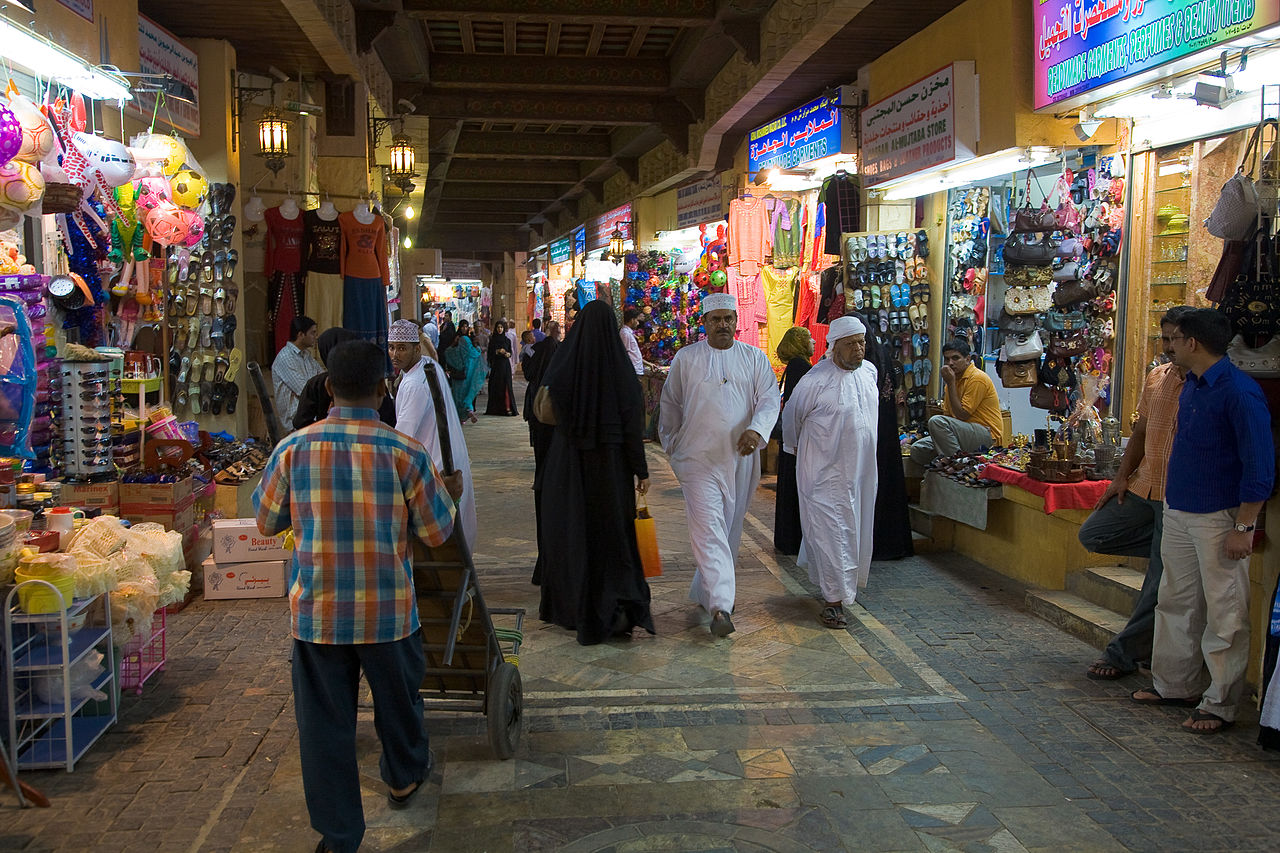
Oman travelThere has been no visible change in recent years in the situation for Christians in Oman. Islam is the state religion and Sharia (Islamic law) forms the basis for legislation. The very concept of a change of faith for an Omani citizen is anathema. An Omani convert faces problems under the Personal Status and Family Legal Code, which prohibits a father from having custody of his children if he leaves Islam.

All religious organisations must register and Christian meetings are monitored for political messages and nationals who may be attending. Although no violent persecution has been reported, there have been deportations of expat Christians in the past. This was primarily because of their open witness, which is prohibited by law. Permission is needed from the authorities for the distribution of religious literature also.

Oman BazzaarTOP TEN – things to know about what life is like for Christians in Oman

  1. The law prohibits religious discrimination but all religious organizations must register.
  2. All public school curriculums (grades K-12) include instruction in Islam.
  3. Almost the entire Christian population (around 35,000) is made up of expatriates; indigenous Christians number only a few hundred.
  4. Foreign Christians are often tolerated and allowed to worship in private homes or work compounds.
  5. The government records religious affiliation on national identity cards for citizens and on residency cards for non-citizens.
  6. Muslim Background Believers risk persecution from family and society, but the government may intervene on request from the family. In such cases, these believers are often treated as psychiatric patients.
  7. Muslim Background Believers can lose their family, house, and job and can even be killed.
  8. There are some government limitations on proselytizing and printing religious material. Non-Muslim groups are prohibited from publishing religious material, although non-Muslim religious material printed abroad may be imported after government inspection and approval.
  9. The Protestant Church in Oman (PCO) is the fruit of the active presence of RCA, a branch of the Reformed Church of America (RCA), which started its work in Oman in 1893.
  10. Currently PCO, under the combined leadership of the Reformed Church of America and the Anglican Church, ministers to over 1000 believers from 60 countries.

Indonesian Christians Singing at PCO (Protestant Church in Oman)
________________________________________

In Istanbul’s Heart, Leader’s Obsession, Perhaps Achilles’ Heel – NY Times Re-Blog

Peanut Gallery: This NY Times article overviews the current popular resistance to the Islamization of Turkey. It is truly a clash of world views – secularist Ataturk vs Islamist Erdoğan.

Taksim is the latest reminder of the power of public space. The square has become an arena for clashing worldviews: an unyielding leader’s top-down, neo-Ottoman, conservative vision of the nation as a regional power versus a bottom-up, pluralist, disordered, primarily young, less Islamist vision of the country as a modern democracy.

Ataturk brought Turkey kicking and screaming into the modern Western world.  Erdoğan is trying to reverse the process – taking Turkey kicking and screaming back into the 17th century world of the Ottomans.

This article is well worth the read.
___________________________

by MICHAEL KIMMELMANnytimes.com / June 7th 2013

image

More Photos »Photo by: Kitra Cahana for The New York Times

ISTANBUL — On a normal day, Taksim Square is a mess of buses and crowds, a tangle of plazas, streets, shops and taxi horns. Turkey’s prime minister, Recep Tayyip Erdogan, is determined to clean it up and make it into a pedestrian zone, with a new mall, mosque and tunnels for traffic to move underground.

The outrage in response has filled the square with noisy, angry, determined protesters. At midday, the muezzin’s call to prayer now mixes with the chants of union workers and bullhorn speeches from the Anti-Capitalist Muslims. At night, drummers and singers agitate the throngs until dawn.

After Tahrir Square in Egypt and Zuccotti Park in New York, Taksim is the latest reminder of the power of public space. The square has become an arena for clashing worldviews: an unyielding leader’s top-down, neo-Ottoman, conservative vision of the nation as a regional power versus a bottom-up, pluralist, disordered, primarily young, less Islamist vision of the country as a modern democracy.

“Taksim is where everybody expresses freely their happiness, sorrow, their political and social views,” said Esin, 41, in a head scarf, sitting with relatives on a bench watching the protest in the square. She declined to give her surname, fearing disapproval from conservative neighbors. “The government wants to sanitize this place, without consulting the people.”

So public space, even a modest and chaotic swath of it like Taksim, again reveals itself as fundamentally more powerful than social media, which produce virtual communities. Revolutions happen in the flesh. In Taksim, strangers have discovered one another, their common concerns and collective voice. The power of bodies coming together, at least for the moment, has produced a democratic moment, and given the leadership a dangerous political crisis.

“We have found ourselves,” is how Omer Kanipak, a 41-year-old Turkish architect, put it to me, about the diverse gathering at Gezi Park on the north end of Taksim, where the crowds are concentrated in tent encampments and other makeshift architecture after Mr. Erdogan’s government ordered bulldozers to make way for the mall.

And there’s the hitch. The prime minister has emerged as the strongest leader Turkey has had since Mustafa Kemal Ataturk founded the republic — but he remains not much of an architect or urban planner.

Like other longtime rulers, he has assumed the mantle of designer in chief, fiddling over details for giant mosques, planning a massive bridge and canal, devising gated communities in the name of civic renewal and economic development. The goal is a scripted public realm. Taksim, the lively heart of modern Istanbul, has become Mr. Erdogan’s obsession, and perhaps his Achilles’ heel.

And it’s no wonder. Taksim’s very urban fabric — fluid, irregular, open and unpredictable — reflects the area’s historic identity as the heart of modern, multicultural Turkey. This was where poor European immigrants settled during the 19th century. It was a honky-tonk quarter into the 1980s, a haven to gays and lesbians, a locus of nightclubs, foreign movie palaces and French-style covered arcades. Gravestones from an Armenian cemetery at Taksim demolished in 1939 were used to construct stairs at Gezi Park, a republican-era project by the French planner Henri Prost that is like the jumble of high-rise hotels, traffic circles and the now-shuttered opera house on the square, named after Ataturk. It is a symbol of modernity.

The prime minister’s vision of a big pedestrian plaza, with buried traffic, is intended to smooth out the square — to remake it into a neo-Ottoman theme park. Mr. Erdogan has lately backed away from installing a mall in the faux Ottoman barracks that will go where Gezi is now. But he intends to raze a poor neighborhood nearby called Tarlabasi and build high-end condominiums. Yet another of his projects envisions a hygienic parade ground on the southern outskirts of the city, designed for mass gatherings as if to quarantine protests: the anti-Taksim. The real Taksim is an unruly commons in the middle of the city. Mr. Erdogan has already demolished a beloved cinema and old chocolate pudding shop on Istiklal (Independence) Avenue, the main street and neighborhood backbone into Taksim.

This is why it has come as little surprise to many Turks that Gezi Park was the last straw. “We need free places,” Pelin Tan, a sociologist and protester, explained.

“Public space equals an urban, cosmopolitan identity,” is how Gokhan Karakus, an architecture critic here, phrased it. “That’s exactly what the prime minister doesn’t like. Turkish people who have taken over Gezi Park in protest feel it is truly theirs, not something awarded to them by their leaders, so in that sense the move to destroy it has backfired on him.”

Maybe.

Mr. Erdogan has doubled down on demolishing the park, saying he regretted only that police brutality escalated the protests. “These actions that turned into vandalism and lawlessness must stop immediately,” he warned, as thousands of his supporters cheered him. Gezi has meanwhile evolved into a festive village with tent settlements, general stores distributing free food and clothing, a day care center, a library and an infirmary, even a veterinary clinic and community garden, nasturtiums where the bulldozers ripped out the first trees. The architecture is tactical urbanism: bare-bones and opportunistic, tin lean-tos, and spare concrete bollards and crates used to make picnic tables. The park has spawned its own pop-up economy as well, street vendors hawking Turkish meatballs, vinegar (for the tear gas) and Guy Fawkes masks.

A poll published in the Hurriyet Daily News on Thursday revealed that 70 percent of the protesters insisted they did not “feel close” to any political party. Politics in the 21st century is about private freedoms and public space. Esin, watching the protest in the square, added that her conservative parents think Mr. Erdogan goes too far by banning alcohol and scolding couples for kissing on subways.

Near the statue of Ataturk in the middle of Taksim Square, now festooned with protesters’ banners and flags, I found a 24-year-old photography student who identified herself as Kader, from northern Turkey. “I come to hang out here because there are all kinds of people and it’s fun,” she told me. As she spoke, a Turkish couple, arm in arm, the woman in head scarf, passed by. “The prime minister is treating the place as his private property,” Kader wanted to make clear.

Mr. Erdogan’s plan for removing buses and taxis and installing a single, vast pedestrian zone at Taksim, stripped of its gritty and unpredictable energy, turned into a polite shopping area, will sap the square of its pedestrian vitality, not make it pedestrian-friendlier. After several days with few cars or buses getting into Taksim because of the barricades, the illogic of Mr. Erdogan’s tunnel is obvious. There has been no great traffic crisis.

“We know from the 1960s that pedestrianizing everything doesn’t work,” agreed Hashim Sarkis, who teaches architecture and urbanism at Harvard. “Managing the balance is better. There is much to be said for loose, indeterminate places like Taksim. Its changeability is its strength, which is the threat perceived by authorities. It’s too loose and open.”

I hailed a taxi to check out the Dolmabahce Tunnel, another of Mr. Erdogan’s renewal projects, which is akin to the tunnel now being devised under Taksim, where people would descend for buses and taxis. It was no place for pedestrians to go. My driver, Erdal Bas, 42, volunteered that it had also done nothing to reduce traffic jams. “It just adds another road into them,” he said.

We drove on to Sulukule, a neighborhood hard by the ancient city walls, where the Roma have lived for more than a thousand years. Mr. Erdogan’s government forced many of them out a few years ago to clear land for a condo complex, which opens shortly. I found what is left of the old streets alive with families and children playing. The new buildings next to them, sterile three – and four-story concrete, glass and wood townhouses with duplex and triplex apartments, had all the charm of a suburban office park.

Back at Gezi, a placard quotes an old poem by Nazim Hikmet:I am a walnut tree in Gulhane Parkneither you are aware of this, nor the police.Mr. Kanipak, the architect, told me that the threat of Mr. Erdogan’s architectural intervention at Taksim “has for the first time helped to break down the walls of fear about opposing an autocratic state.” That said, tensions are swiftly rising after Mr. Erdogan’s latest speeches.

The conflict over public space is always about control versus freedom, segregation versus diversity.

What’s at stake is more than a square.It’s the soul of a nation.

Homeschooling Growing Seven Times Faster than Public School Enrollment – Breitbart Re-Blog

By Dr. Susan Berry / 8 Jun 2013  – Breitbart Report

As dissatisfaction with the U.S. public school system grows, apparently so has the appeal of homeschooling. Educational researchers, in fact, are expecting a surge in the number of students educated at home by their parents over the next ten years, as more parents reject public schools.

image

A recent report in Education News states that, since 1999, the number of children who are homeschooled has increased by 75%.

Though homeschooled children represent only 4% of all school-age children nationwide, the number of children whose parents choose to educate them at home rather than a traditional academic setting is growing seven times faster than the number of children enrolling in grades K-12 every year.

As homeschooling has become increasingly popular, common myths that have long been associated with the practice of homeschooling have been debunked.

Any concerns about the quality of education children receive by their parents can be put to rest by the consistently high placement of homeschooled students on standardized assessment exams. Data demonstrates that those who are independently educated generally score between the 65th and 89th percentile on these measures, while those in traditional academic settings average at around the 50th percentile. In addition, achievement gaps between sexes, income levels, or ethnicity—all of which have plagued public schools around the country—do not exist in homeschooling environments.

According to the report: Recent studies laud homeschoolers’ academic success, noting their significantly higher ACT-Composite scores as high schoolers and higher grade point averages as college students. Yet surprisingly, the average expenditure for the education of a homeschooled child, per year, is $500 to $600, compared to an average expenditure of $10,000 per child, per year, for public school students.

The high achievement level of homeschoolers is readily recognized by recruiters from some of the best colleges in the nation. Home-educated children matriculate in colleges and attain a four-year degree at much higher rates than their counterparts from both public and private schools. Schools such as Massachusetts Institute of Technology, Harvard, Stanford, and Duke Universities all actively recruit homeschoolers.

Similarly, the common myth that homeschoolers “miss out” on so-called “socialization opportunities,” often thought to be a vital aspect of traditional academic settings, has proven to be without merit. According to the National Home Education Research Institute survey, homeschoolers tend to be more socially engaged than their peers and demonstrate “healthy social, psychological, and emotional development, and success into adulthood.”

From the report: Based on recent data, researchers such as Dr. Brian Ray (NHERI.org) “expect to observe a notable surge in the number of children being homeschooled in the next 5 to 10 years. The rise would be in terms of both absolute numbers and percentage of the K to 12 student population. This increase would be in part because…[1] a large number of those individuals who were being home educated in the 1990’s may begin to homeschool their own school-age children and [2] the continued successes of home-educated students.”