
Peanut Gallery: I am in crisis… I do not recognize the country I have loved and lived in all my life. I do not understand today’s prevailing “culture.” I put the word in quotes because it looks more like a cess pool to me – catering to our basest nature (gangsta rap)… rather than encouraging us to soar to the heights of our God-given nature (flash mob).
We are so caught up in ourselves… in our own frantic activities… running to what, or from what… that we can no longer hear the music.
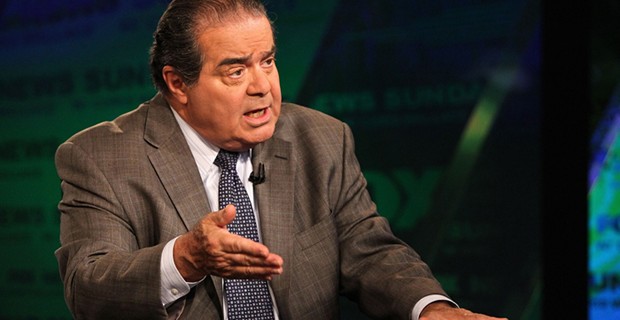
And now, the issue of legalizing/sanctifying gay marriage is at the forefront of the “culture wars.” Among the political/educational elite, there is no longer any room for civil discussion or debate. The lunatics are running the asylum… as Supreme Court Justice Antonin Scalia discovered.
Digging his heels in, [Scalia] put to the students the following question, which goes right to the heart of the matter: “If we cannot have moral feelings against homosexuality,” he pointedly asked, “can we have them against murder? Can we have it against other things?”
Where is all this leading us? Regis Martin reflects on this very question in his important article re-posted below –
If a nation to be loved, as Burke once said, must be lovely, where does that leave those of us who look upon same sex marriage with abhorrence? At what point does cultural approval, followed by juridical vindication from the highest court in the land, so diminish the loveliness of our country that to withdraw one’s love and loyalty from it becomes the only tenable course to take?
These are serious times and Christians are facing serious issues. Please read Martin’s original article here, posted here at Crisis Magazine.
Special thanks to servus fidelis for bringing this important post to our attention.
______________________________________________
Scalia Protest at Princeton Raises an Important Question
by Regis Martin
 When does it become impermissable for a self-governing people to pass laws that will ensure the survival of the things they love? When they no longer command a majority of the electorate? Is that the standard? Certainly among people of democratic disposition, it is a constitutional given that any time a plurality of voters take charge, they are more or less at liberty to set aside whatever arrangements were in place before they assumed control.
In other words, that massive tectonic shift in the culture we’ve been witnessing over these past fifty years, is about to be given formal and official sanction from the political process. All the awfulness of the culture, as it were, will sooner or later be codified into law.
Isn’t this what the debate over Gay Rights is finally about? It is not a civil liberties issue; the proponents of gay marriage are not preoccupied with matters of fairness. What they are determined on is nothing less than the destruction of the traditional family, which is an institution whose very survival depends on the maintenance of marriage as men and women have practiced it for thousands of years. Now that the popular culture is no longer on board with this, it is seen as a burden that increasingly nobody wants to bear.
Oh, sure, they’ll pay lip service to it and people will continue in large numbers to avail themselves of the experience. But tucked away under all that froth and enthusiasm for two people of disparate flesh joining their lives forever together, is a notion of marriage so etiolated, so utterly flattened out, as to be almost unrecognizable. If you ask young people, for instance, who are the ones destined not only to inherit the future but are in fact giving it shape by the attitudes and tastes which define them at this present moment, about two-thirds will happily tell you that we no longer need to shoulder that particular burden. The very idea of marriage, they insist, has evolved sufficiently to embrace any number of combinations of consenting adults. The tyranny of tolerance trumps everything else; and it will have its way over all of us.
Indeed, if the Youth Brigade were not convincing enough to document the vastness of the sea change we’ve undergone, there are now nine states and the District of Columbia on record as actually having repealed the very meaning of marriage; as an historic institution, that is, rooted in both nature and the God of nature. How long do you suppose it will be before the Supreme Court, which is scheduled to take up the matter, decides to extend across-the-board constitutional protection? To protect what? The practice of sodomy, that’s what. That which, until fairly recently, had been widely, universally even, regarded with civilized scorn as an unnatural perversion could, before long, be solemnly enshrined into law from sea to shining sea.
Leaving us still, however, with the question of how to preserve the things we love. If a nation to be loved, as Burke once said, must be lovely, where does that leave those of us who look upon same sex marriage with abhorrence? At what point does cultural approval, followed by juridical vindication from the highest court in the land, so diminish the loveliness of our country that to withdraw one’s love and loyalty from it becomes the only tenable course to take?
And can we seriously defend what for large and increasing numbers of people has become indefensible? Here I think of poor Justice Scalia, who found himself the other day accosted by six hundred or so students at Princeton University, many of them positively ferocious on the subject of gay marriage, who had come out in protest of his atavistic views. An eighteen year old, self-professed homosexual spearheaded the assault, calling the Justice to account for a comparison he’d earlier made between laws prohibiting sodomy and those directed against such atrocities as murder and bestiality. That apparently was the warhead. And did Scalia strike an irenical tone before his student critics? Did he try and defuse the bomb? No, he did not. Digging his heels in, he put to the students the following question, which goes right to the heart of the matter: “If we cannot have moral feelings against homosexuality,” he pointedly asked, “can we have them against murder? Can we have it against other things?”
In other words, what are we to do with this sense of instinctive revulsion some of us continue to feel when faced with sexual perversion? Is it healthy and natural to feel this way? Or must we move actively to suppress it on the grounds that, enlightened opinion having educated us to view all forms of sexual expression as equally valid and good, only rank bigotry can explain the persistence of the outrage we nevertheless feel? And if that is the case, then what on earth do we do about other expressions of disgust and revulsion that seem to well up spontaneously from within? If it is no longer permissible to be revolted by the one, how do we justify the other? Is it plausible that aversion to homosexual behavior can safely be pronounced as old fashioned, vestigial, and thus no longer a matter of moral importance, but not, say, homicidal behavior, aversion to which we need to preserve and even to stoke up now and again lest our appetite for justice weaken? Can we really have it both ways? Or is it an all or nothing proposition?
We’re going to have to face this question pretty soon. Either that or we simply resign ourselves to being lost souls, stranded on sandbanks of sentimentality, for whom the compass of nature (not to mention the God of nature) is no longer reason’s guide. In the meantime, to quote a line from Chesterton, “We don’t know what we’re doing, because we don’t know what we’re undoing.”
 The Peanut Gallery
“If we cannot have moral feelings against homosexuality,” he pointedly asked, “can we have them against murder? Can we have it against other things?”~Justice Scalia
This article and Justice Scalia’s statement are also the subject of a book I am reading: ‘The KinderGarden OF Eden: How The Modern LIberal Thinks’ by Evan Sayet. It’s an striking analysis of the liberal mind which he says strives for ‘indiscriminateness’. Nothing is to be discriminated for or against, not success, not morality, not race, not anything. So the answer to Justice Scalia’s question is, of course, no. We can not discriminate against any ‘moral’ law or anything else.
This is the mental illness of adult and permanent narcissism and it has become very prevelant in our culture. If I may quote from the last paragraph from this book:
“Today we are at a tipping point where the people of God and science will soon be overwhelmed by the demands of taking care of the permanently infantilized. It is unsustainable. If the system collapses under the weight, the future is not merely a slightly less wonderful existence, it is a return to what life had been like for the overwhelming majority of people in all other places–and still is for those in lands where the balance between God and science does not well exist. That life was described by Thomas Hobbes as ‘nasty, brutish and short.'”
Thank you for your comment. I have been thinking for quite a while, “Where are the grown-ups?”
God help you. The lunatics are already running the asylum here in Canada.