
Culture-Changing Christians – Thomas Kidd (Patheos)

Culture-Changing Christians by Thomas Kidd (Patheos)

Many disappointed Romney supporters have suggested that his defeat spoke to an American culture in decline. For politics to change, they say, culture must change. Glenn Beck, for example, tweeted that “the time for politics is over. I’m doubling down on my efforts to shift the culture.”

Evangelical Christians are especially attuned to talk of changing culture. But what culture is, and just how it changes, is often less clear.

Books such as Andy Crouch’s Culture Making and James Davison Hunter’s To Change the World should be required reading for any Christian making plans to change culture. Both books show that culture, or “what human beings make of the world,” in Crouch’s words, is extraordinarily complex, and not susceptible to quick change, especially through politics.

image

We can certainly point to Christian politicians who have helped change culture in explicitly Christian ways. The great abolitionist William Wilberforce is an excellent example.

But think over the past century: many of the culture-changing Christians that jump immediately to mind have not been directly engaged with politics.

For example:
image

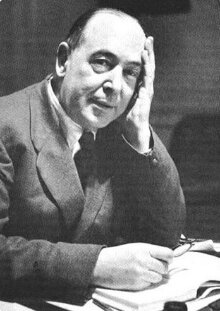
C.S. Lewis, the Oxford professor whose greatest influence came through writing children’s books.
image

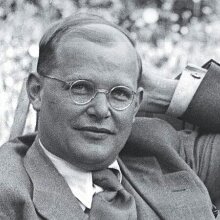
Dietrich Bonhoeffer, the German pastor and theologian martyred for his resistance against Nazi tyranny.

image

Mother Teresa, the Albanian-born nun who devoted her life to caring for lepers and AIDS patients, who testified to the dignity of all human life, including the outcast and unborn.

Each of these heroes had things to say of political consequence, but they did not see politics as their method of Christian witness or culture change.

So before we plunge headlong into changing the culture before the 2016 election, let’s think about a few principles for how evangelicals can influence culture.

1) James Davison Hunter argues that culture is shaped most by institutions that have great “symbolic capital,” including universities such as Harvard and Yale, and newspapers such as the New York Times. Popular Christian books may sell millions of copies, but they do not have the symbolic capital or cultural influence of a Pulitzer Prize winner.

Christians not only need to engage with institutions of high symbolic capital, but we need Christian voices to be present in those institutions, as professors, journalists, and artists. Christian parents and teachers need to cast a winsome vision of Christian cultural engagement for children and students.

2) Christians should worry as much about preserving orthodox Christian culture as they do about changing secular culture. Indeed, preserving traditional Christian culture is an essential precondition to any wholesome changes in the broader culture.
If American Christian culture is infected by theological vacuousness and historical ignorance, by shallow consumerism, or by ethical corruption, then on what basis can we hope to transform the broader culture? As Christopher Dawson’s classic Religion and the Rise of Western Culture demonstrates, Christians have often found themselves having to preserve the heritage of biblical Christianity from a hostile surrounding culture. There’s nothing especially new in our situation today.

3) While some Christians may be called vocationally to institutions of high symbolic capital, all of us can take responsibility for the mini-cultures of our family, church, and neighborhood.

I’m afraid that I can’t do much about the voting patterns of Ohio, but I can sure do something about the culture of my dinner table. When Mother Teresa received the Nobel Peace Prize, she was reportedly asked what we can do to promote world peace. She answered “Go home and love your family.”

Evangelicals can certainly participate in politics, but we should remember that politics tends simply to reflect culture. And culture is not easy to change, especially at the broadest levels.

Christians can (and must) do more to bring a witness into institutions of high symbolic capital, but we should never underestimate the sanguine influence we can have, by God’s grace and prayer, on the little cultural spheres we inhabit on a daily basis.

by Thomas Kidd, patheos.com November 13th 2012
Please click on link below-
Culture-Changing Christians

Rev Billy Graham Calls Christians to Repentance and Prayer in Wake of Election – Public Catholic

<strong>Rev Billy Graham Calls Christians to Repentance and Prayer in Wake of Election

Billy Graham wrote a letter to America after the election this week which I think is worth reading for all of us. He calls Christians to repentance and prayer. He asks us specifically to pray for America, for our leaders and for one another.

He also announced that he and his son, Franklin Graham, are starting a ministry called New Hope. They plan to “bring the Gospel of Jesus Christ to every possible place in America” during the next year.

This dovetails so well with the Year of Faith and the New Evangelization inaugurated by the Holy Father that I believe it signifies the Holy Spirit, speaking with one voice through the people He has given us as shepherds. It is time for Christians to unite and stand for Christ together. I feel the leadership to do this is stepping forward. It is up to us to be wise followers.

Here is Billy Graham’s letter in full. You can read more about it at Billy Graham Evangelistic Association.

A Fresh Vision for America

BILLY GRAHAM CALLS NATION TO REPENTANCE AND LASTING HOPE IN JESUS CHRIST

image

November 8, 2012 – A day after turning 94, Billy Graham writes: “I plan to spend the next 12 months, if God permits, doing all that I am able to do in helping to carry out a fresh vision God has given us —a vision to bring the Gospel of Jesus Christ to every possible place in America by the time of my 95th birthday.”

At the climax of My Hope one year from now, if God enables me, I want to call the entire nation to repentance and lasting hope in Jesus Christ.

From the Desk of Billy Graham

All of us care a great deal about our country. The intensity of opinions and feelings during the long political campaign showed the depth of that concern.

Now with the votes counted, it is important to remember that whether we are personally pleased with the outcome or not, God wants us to pray for those chosen to be our leaders—at the national, state, and local levels. The Bible urges us to do so with both respect and thanksgiving (see 1 Peter 2:17; 1 Timothy 2:1–3).

We must also remember that no election will ever solve America’s most basic problems. That is because the trouble, at its root, is in the human heart, and the only path to true restoration—for a person or for a nation—is through repentance. The Bible says, “Repent therefore, and turn back, that your sins may be blotted out, that times of refreshing may come from the presence of the Lord” (Acts 3:19–20, ESV).

Only the Gospel, God’s Good News, has the power to change lives, heal hearts, and restore a nation.

I want that to happen in America, and I know you want that as well. I turned 94 on the day after the election. Although my age and health have limited me physically in recent years, I plan to spend the next 12 months, if God permits, doing all that I am able to do in helping to carry out a fresh vision God has given us—a vision to bring the Gospel of Jesus Christ to every possible place in America by the time of my 95th birthday. It’s called My Hope, and I pray that you will partner with us.

In the days of the Prophet Jeremiah, God commanded His people to “seek the peace and prosperity” of the land where He had placed them and to “pray to the Lord for it” (Jeremiah 29:7, NIV). I ask you to join me in committing the next 52 weeks to faithful, even fervent, prayer for this land in which we live. You can start by making a list of people you know personally who need Jesus Christ and then begin praying regularly for them, individually by name.

Pray also for your neighborhood and your city, asking God to bring men, women, teens, and children —people from your own community—to Himself during the next 12 months. And pray along with me for the nation, asking God for mercy on America and for a great spiritual awakening.

image

My son Franklin is spearheading this vision and outreach, working in partnership with thousands of churches across every state in the country (ask your pastor if your church plans to take part). Franklin will be sending you more details on how this will work through the coming months and how you can participate.

At the climax of My Hope one year from now, if God enables me, I want to call the entire nation to repentance and lasting hope in Jesus Christ. The message I give will be presented in a fresh format, different from preaching at a Crusade, but the same Gospel. I believe we will see God work in a mighty way.

It is my passionate, heartfelt desire to see God change hearts and lives in every community in America, and I pray He will stir the same desire in you.

Will you join Franklin and me in this bold venture?

May God bless you,

Join the Discussions of the Year of Faith

Click here throughout the Year of Faith, as the Catholic Channel at Patheos.com invites Catholics of every age and stripe to share what they are gleaning and carrying away from this gift of timely focus.

by Rebecca Hamilton, patheos.com November 11th 2012

Morning Reading: Luke 17.20-21 ESV

Luke 17:20-21 ESV

image

[Jesus was] asked by the Pharisees when the kingdom of God would come, he answered them, “The kingdom of God is not coming with signs to be observed, nor will they say, ‘Look, here it is!’ or ‘There!’ for behold, the kingdom of God is in the midst of you.”

Papal Nuncio: Threats to Religious Freedom Emerging in Western Democracies- Public Catholic

Papal Nuncio: Threats to Religious Freedom Emerging in Western Democracies

November 14, 2012 By Rebecca Hamilton 12 Comments

Archbishop Carlo Maria Vigano CNA
South Bend, Ind., Nov 12, 2012 / 07:08 pm (CNA/EWTN News).

image

– Archbishop Carlo Maria Vigano has told the University of Notre Dame that there is a concrete “menace” to religious liberty in the U.S. that is advancing in part because some influential Catholic public figures and university professors are allied with those opposed to Church teaching.

“Evidence is emerging which demonstrates that the threat to religious freedom is not solely a concern for non-democratic and totalitarian regimes,” he said. “Unfortunately it is surfacing with greater regularity in what many consider the great democracies of the world.”

The apostolic nuncio, who serves as the Pope’s diplomatic representative to the U.S., said this is a “tragedy” for both the believer and for democratic society.

Archbishop Vigano’s Nov. 4 speech keynoted the University of Notre Dame’s Institute for Church Life conference. He discussed martyrdom, persecution, and religious freedom, with a particular focus on the United States.

He cited Catholics’ duties to be disciples of Christ, not elements of a political or secular ideology. He lamented the fact that many Catholics are publicly supporting “a major political party” that has “intrinsic evils among its basic principles.”

“There is a divisive strategy at work here, an intentional dividing of the Church; through this strategy, the body of the Church is weakened, and thus the Church can be more easily persecuted,” the nuncio said.

Archbishop Vigano observed that some influential Catholic public officials and university professors are allied with forces opposed to the Church’s fundamental moral teachings on “critical issues” like abortion, population control, the redefinition of marriage, embryonic stem cell research and “problematic adoptions.”

He said it is a “grave and major problem” when self-professed Catholic faculty at Catholic institutions are the sources of teachings that conflict with Church teaching on important policy issues rather than defend it.

While Archbishop Vigano noted that most Americans believe they are “essentially a religious people” and still give some importance to religion, he also saw reasons this could change.
He said that the problem of persecution begins with “reluctance to accept the public role of religion,” especially where protecting religious freedom “involves beliefs that the powerful of the political society do not share.”

The nuncio said it is “essential” to pray for a just resolution to religious freedom controversies, including the controversy over the new federal mandate requiring many Catholic employers to provide morally objectionable insurance coverage for sterilization and contraception, including some abortion-causing drugs.

The issues that the Catholic bishops have identified in this mandate are “very real” and “pose grave threats to the vitality of Catholicism in the United States,” Archbishop Vigano said.

The nuncio also discussed other religious liberty threats.

He cited a Massachusetts public school curriculum that required young students to take courses that presented same-sex relations as “natural and wholesome.” Civil authorities rejected parents’ requests for a procedure to exempt their children from the “morally unacceptable” classes.

“If these children were to remain in public schools, they had to participate in the indoctrination of what the public schools thought was proper for young children,” the archbishop said. “Put simply, religious freedom was forcefully pushed aside once again.”

Catholic Charities agencies have also been kicked out of social service programs because they would not institute policies or practices that violate “fundamental moral principles of the Catholic faith.” (Read more here.)