
Peanut Gallery: It’s always a tenuous exercise when a member of one religious group presumes to explain the religious tenets of another religious group. Nevertheless, Tom McClusky (FRC) has ventured into this minefield.
His purpose is to prep Catholics for tonight’s Vice-Presidential Debate by providing a quasi-Catholic scorecard to rate the candidates. His effort is timely and to the point – since both vice-presidential candidates self-identify as Roman Catholics.
But does it past Roman Catholic muster? I’ll let you be the judge. Check it out – click here. For background documents – click here.
________________________________
How would the Pope vote? I have no idea, however . . . .
5 October, 2012 (17:56) | Adoption, Child Tax Credit, Economics, Education, Health Care, Human Life & Bioethics, Human Sexuality, Marriage & Family, Presidential Race ’12, Religion & Society | By: Tom McClusky |
But we have tried to put together a document to give the decision for Catholics some perspective.
Many of you know how important every vote is this year, especially the Catholic vote. Here is a scorecard, from a Catholic perspective, on the two Vice Presidential candidates. And here you can find the accompanying document that goes further into Catholic Church teaching on each subject.
 For the first time in American history, two Catholic vice presidential candidates are squaring off for America’s second highest office and while both Vice President Joe Biden and Representative Paul Ryan cite their shared faith in informing their positions, on many issues they could not be further apart.
To help clarify these differences in light of what the Catholic Church teaches, where they are permissible and where they are problematic, FRCAction has compiled a Catholic Voter guide. The guide is designed to help people of faith, Catholics as well as all Christians, better understand how well these two candidates’ positions comport with their faith by presenting the Church’s authoritative teaching on issues of conscience alongside the voting records and public statements of Joe Biden and Paul Ryan.
For Catholics, the Church’s guidance is principled, not partisan, and rightly understands various political opinions can be compatible with faith and the natural moral law:
From the specificity of the task at hand and the variety of circumstances, a plurality of morally acceptable policies and solutions arises. It is not the Church’s task to set forth specific political solutions – and even less to propose a single solution as the acceptable one – to temporal questions that God has left to the free and responsible judgment of each person. It is, however, the Church’s right and duty to provide a moral judgment on temporal matters when this is required by faith or the moral law.
Catholics must weigh prudential judgments when applying moral principles to specific policy choices in areas such as the war in Iraq, housing, health care, immigration and others. It is not uncommon for two people of faith to agree on principles while disagreeing on their implementation. That being said, in other areas, specifically 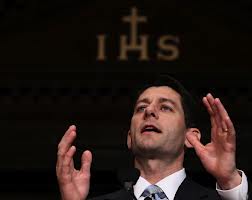 faith and morals, the Church teaches:
There are some things we must never do, as individuals or as a society, because they are always incompatible with love of God and neighbor. Such actions are so deeply flawed that they are always opposed to the authentic good of persons. These are called “intrinsically evil” actions. They must always be rejected and opposed and must never be supported or condoned. A prime example is the intentional taking of innocent human life, as in abortion and euthanasia. In our nation, “abortion and euthanasia have become preeminent threats to human dignity because they directly attack life itself, the most fundamental human good and the condition for all others”
The Catholic Voter guide includes abortion, torture, marriage, euthanasia, religious liberty, immigration, the death penalty and tax credits broken into categories of “Intrinsic Evils” and Prudential Judgements”.
It goes without saying I am not a spokesperson or representative for the Catholic Church (right now Pope Benedict XVI is breathing a sigh of relief). In the effort of explanation we put together the accompanying document to rely directly on Church teaching for how and why the issues selected where used and why they were broken down into the categories they are in, however as always interpretations can be varied. Hopefully if you find this of use you will share it with others.
The guide is not meant to offend anyone but to hopefully educate. As cited the views are either of the Catholic Church or the candidates
 The Peanut Gallery
Well presented! Thanks for sharing the article from the Cloak Room. The Pope may not vote in this country, and that’s probably a good thing. However, anyone who enters a voting booth with common sense should be able to tell the difference between what is right and what is wrong. Sure, there are policy decisions made based on imprudent judgments and we should oppose them. But when it comes to blatant violation of basic human dignity, any reasonable human being should just know that some things can never be accepted. I don’t need a Catholic cheat sheet to tell me that. Please, don’t get me wrong. I think voter guides and score cards are very helpful. I just find it a little disturbing that we need such things when we should just be able to take each candidate at his word (whether he is for or against abortion, for example, and to what extent, as in the case of Obama’s HHS Mandate). Based on that we should be able to discern for ourselves which candidate’s positions merit our vote. If the “all out abortion on demand and everyone is going to pay for this, by the way” candidate merits your vote for any reason whatsoever, it has nothing to do with voting “with the Pope”. It’s about voting against the basic demands of human justice.
Well said. Thank you.